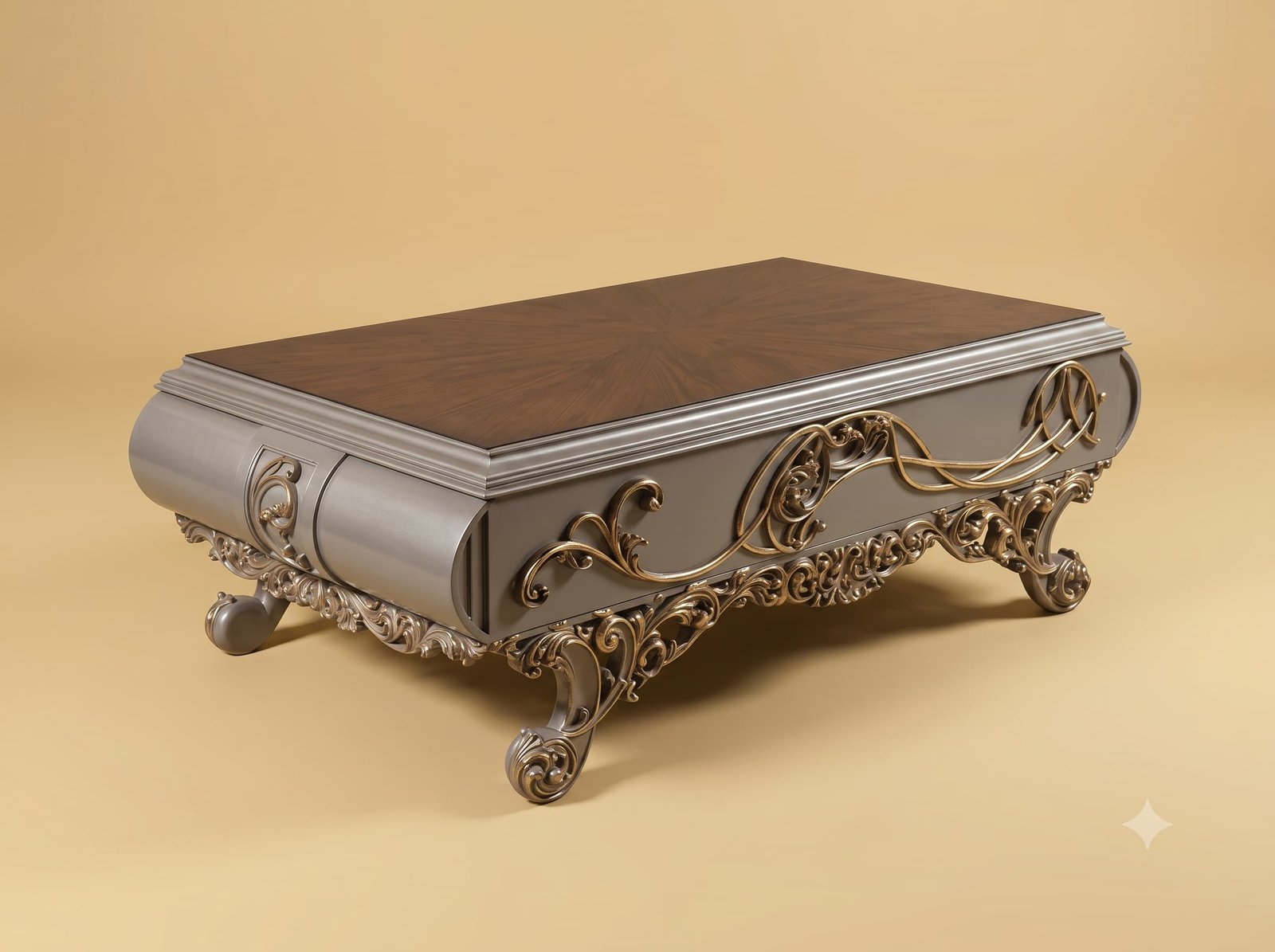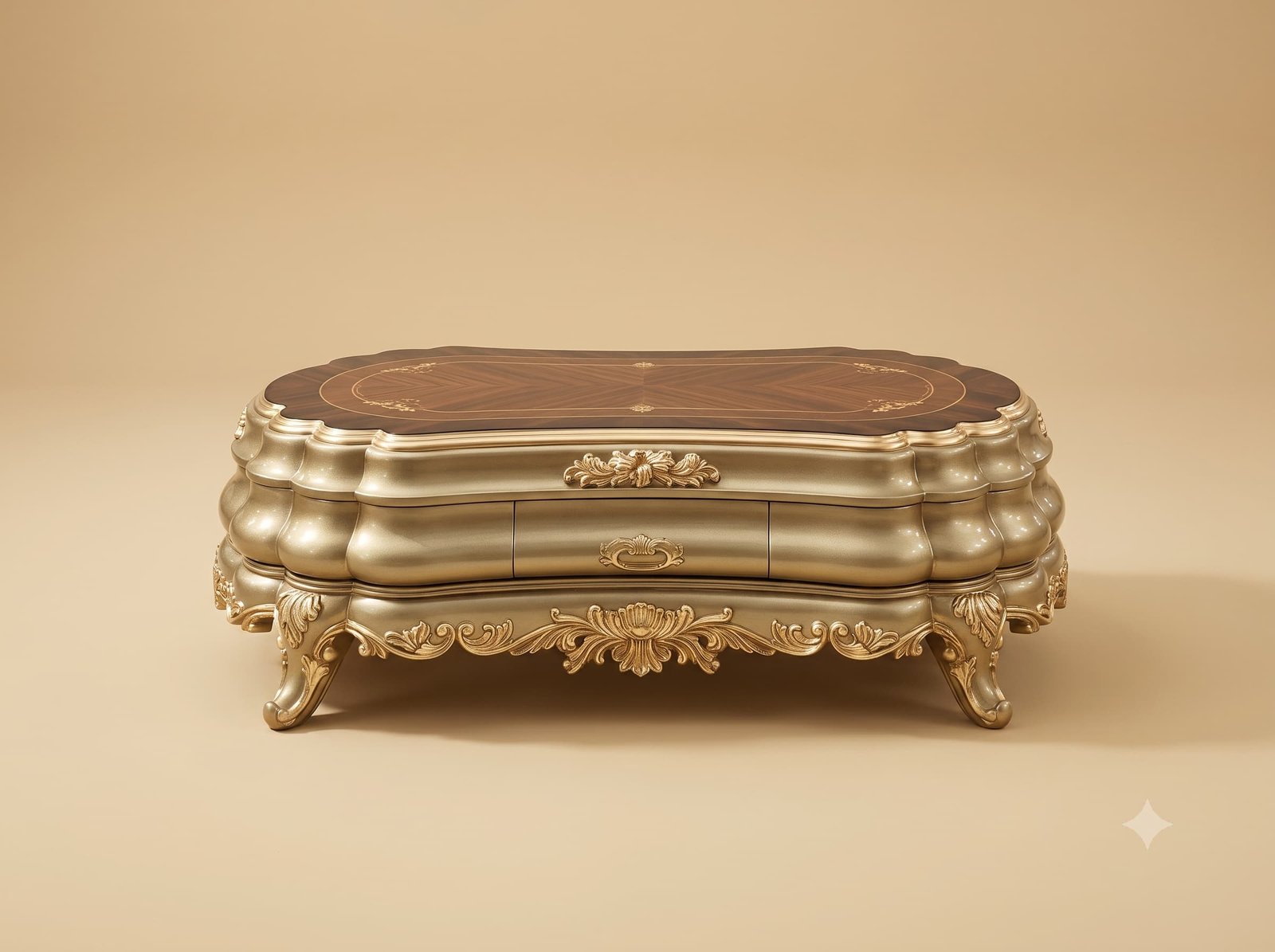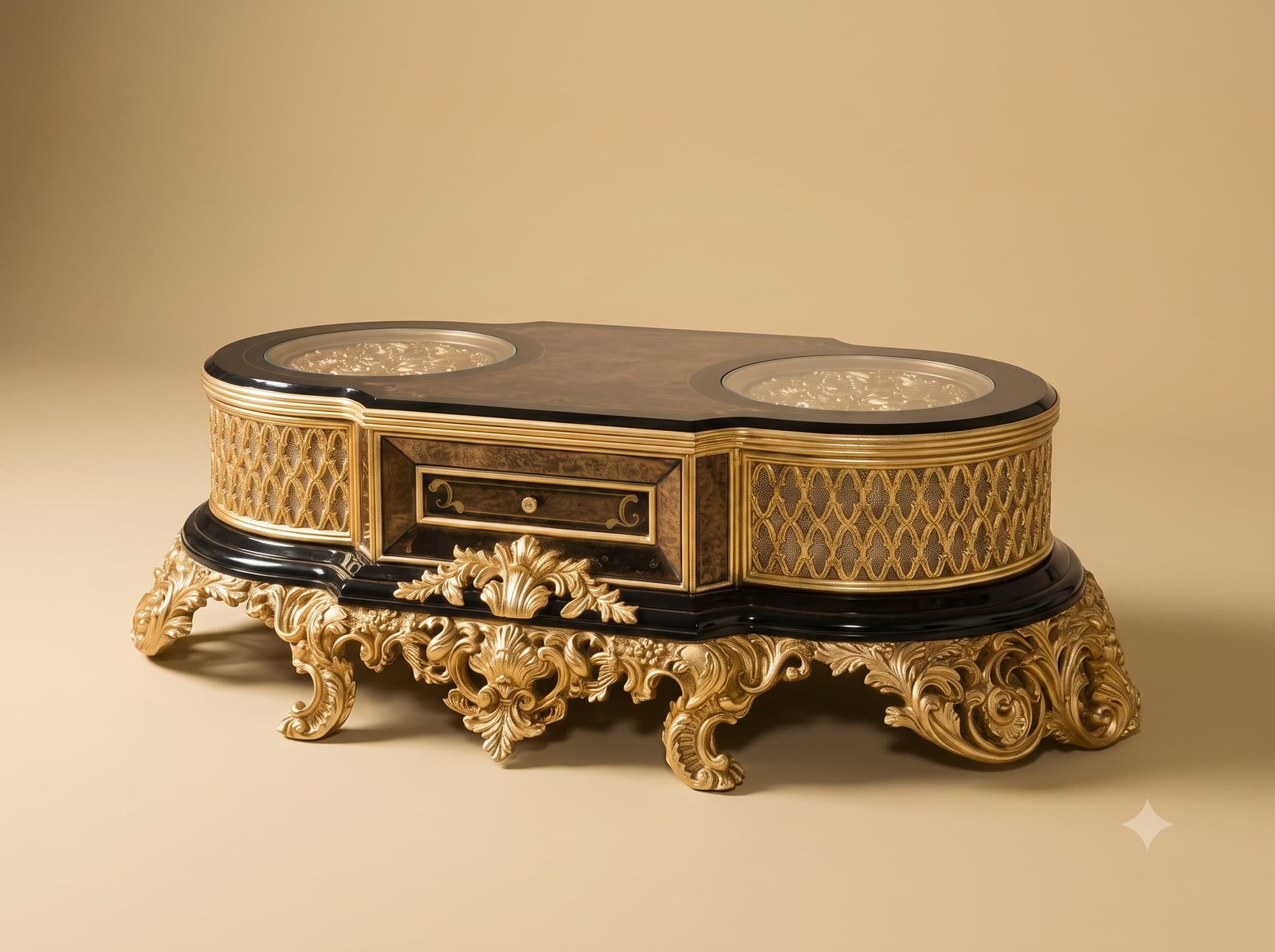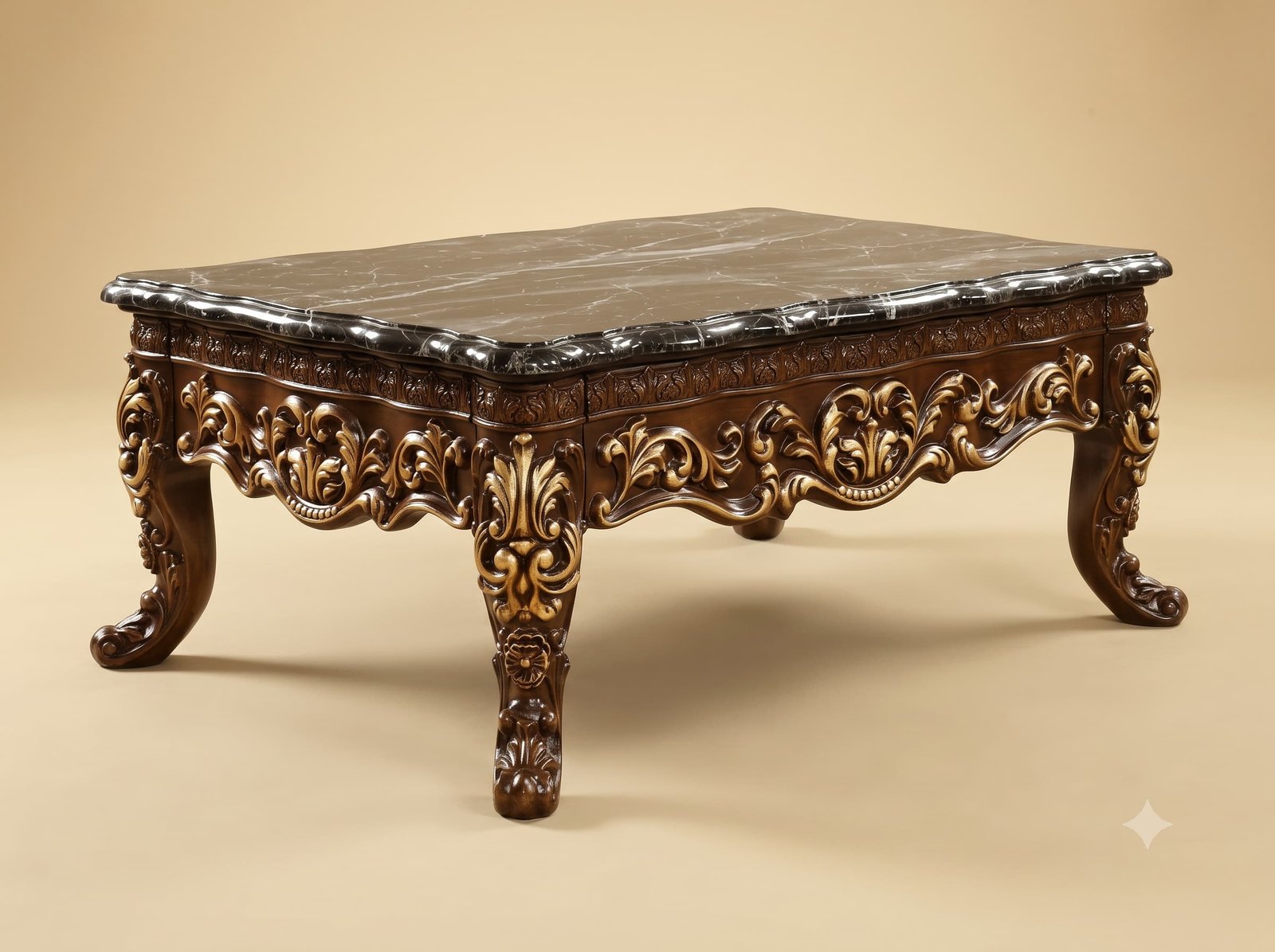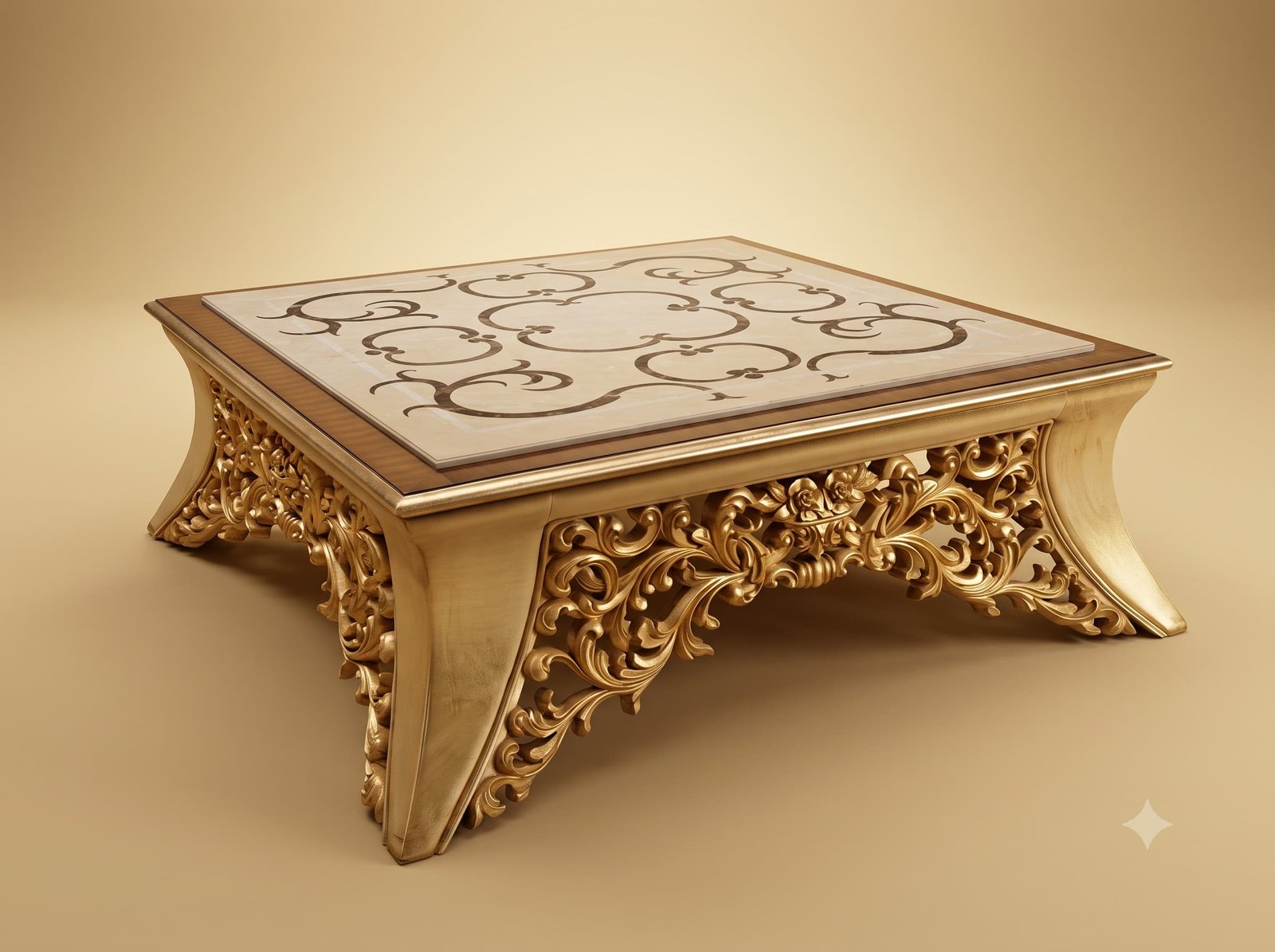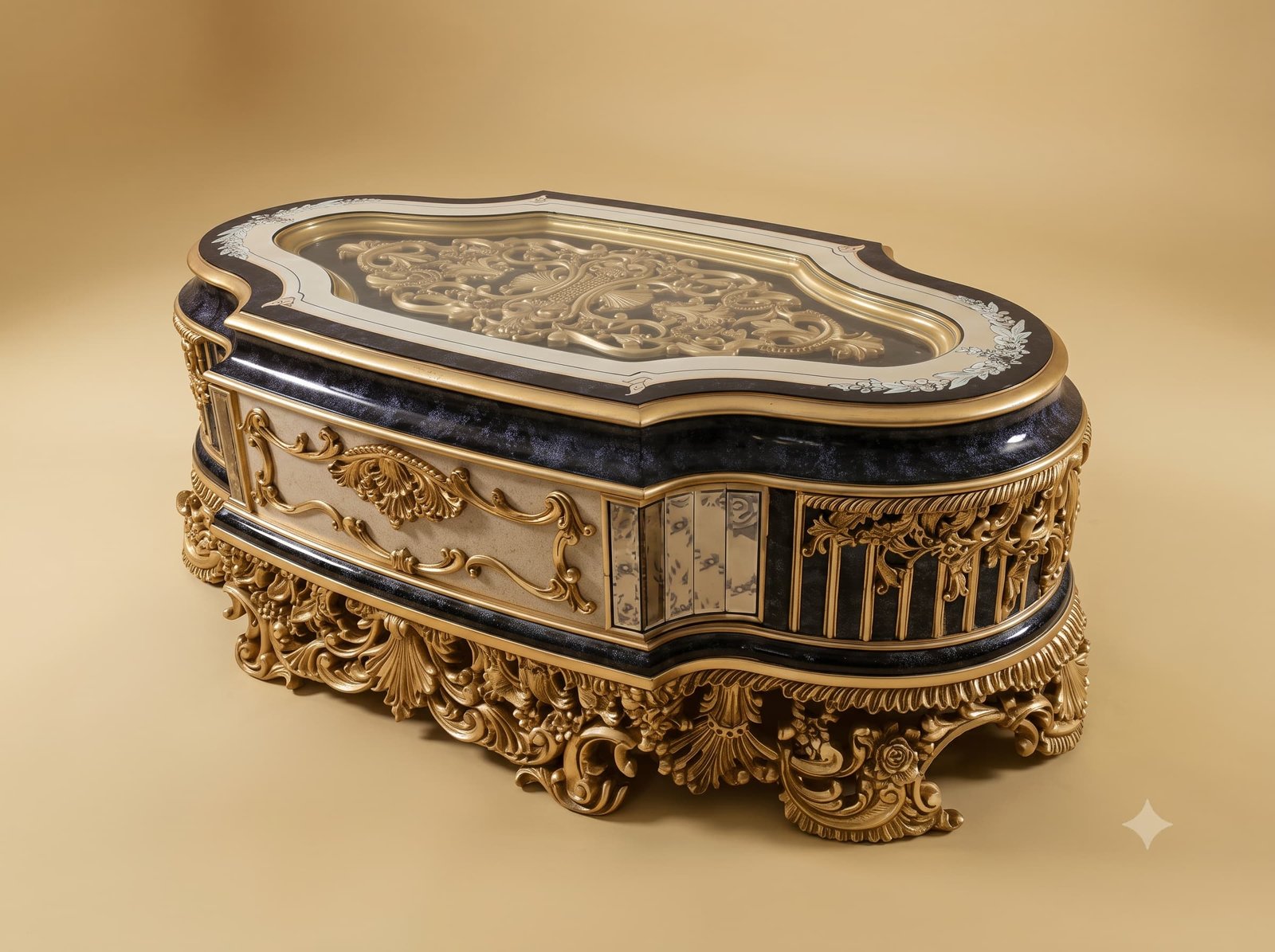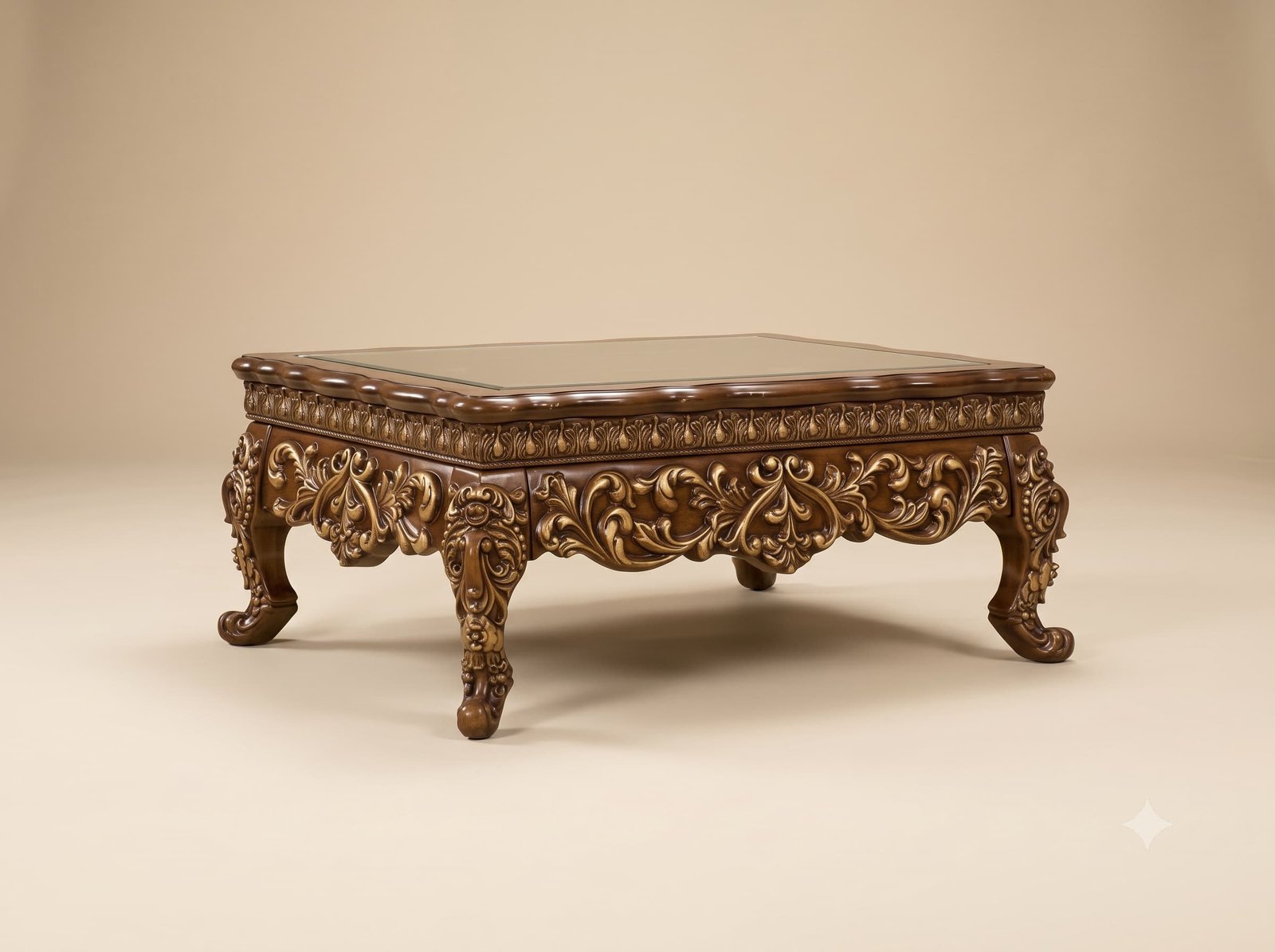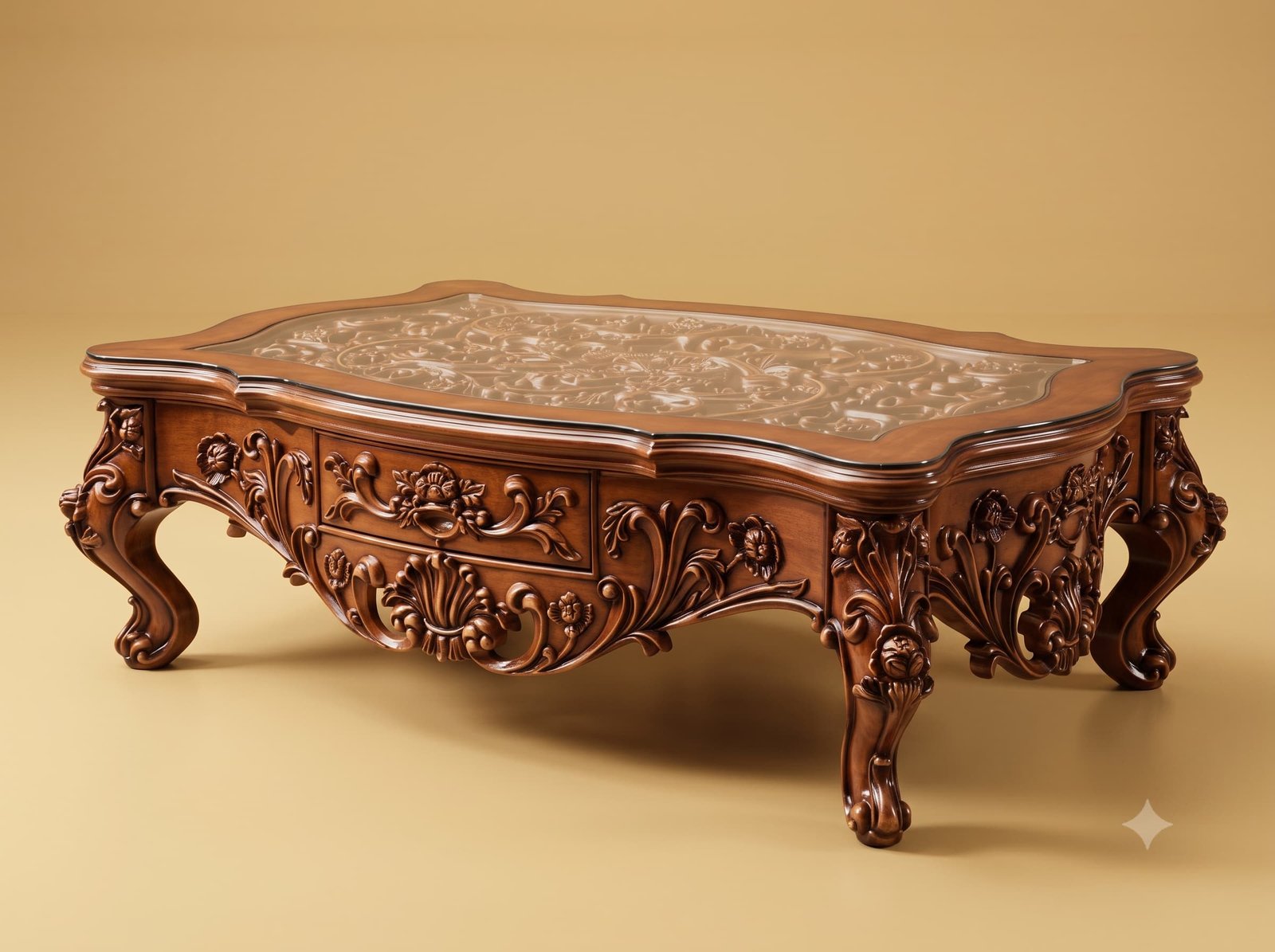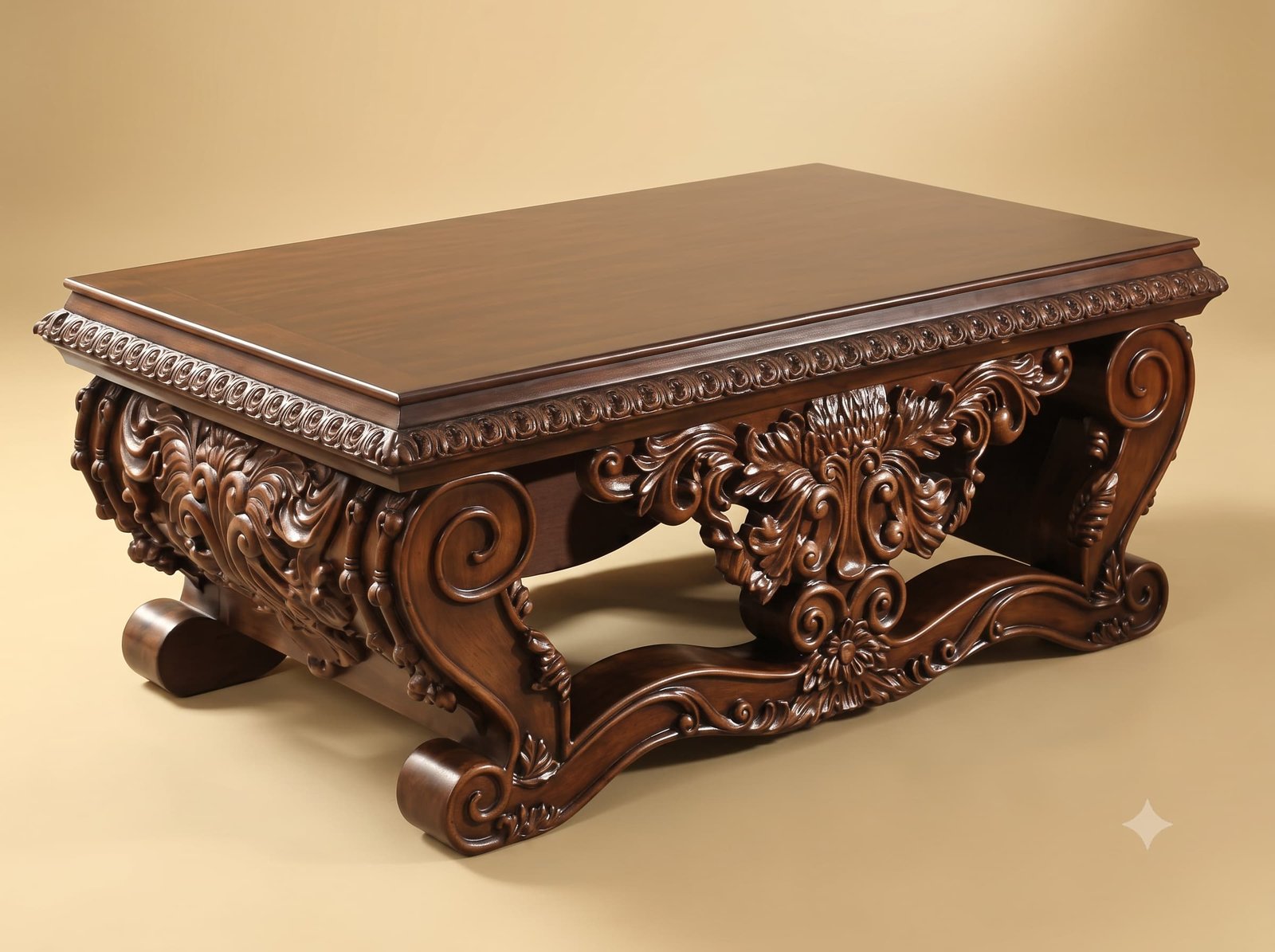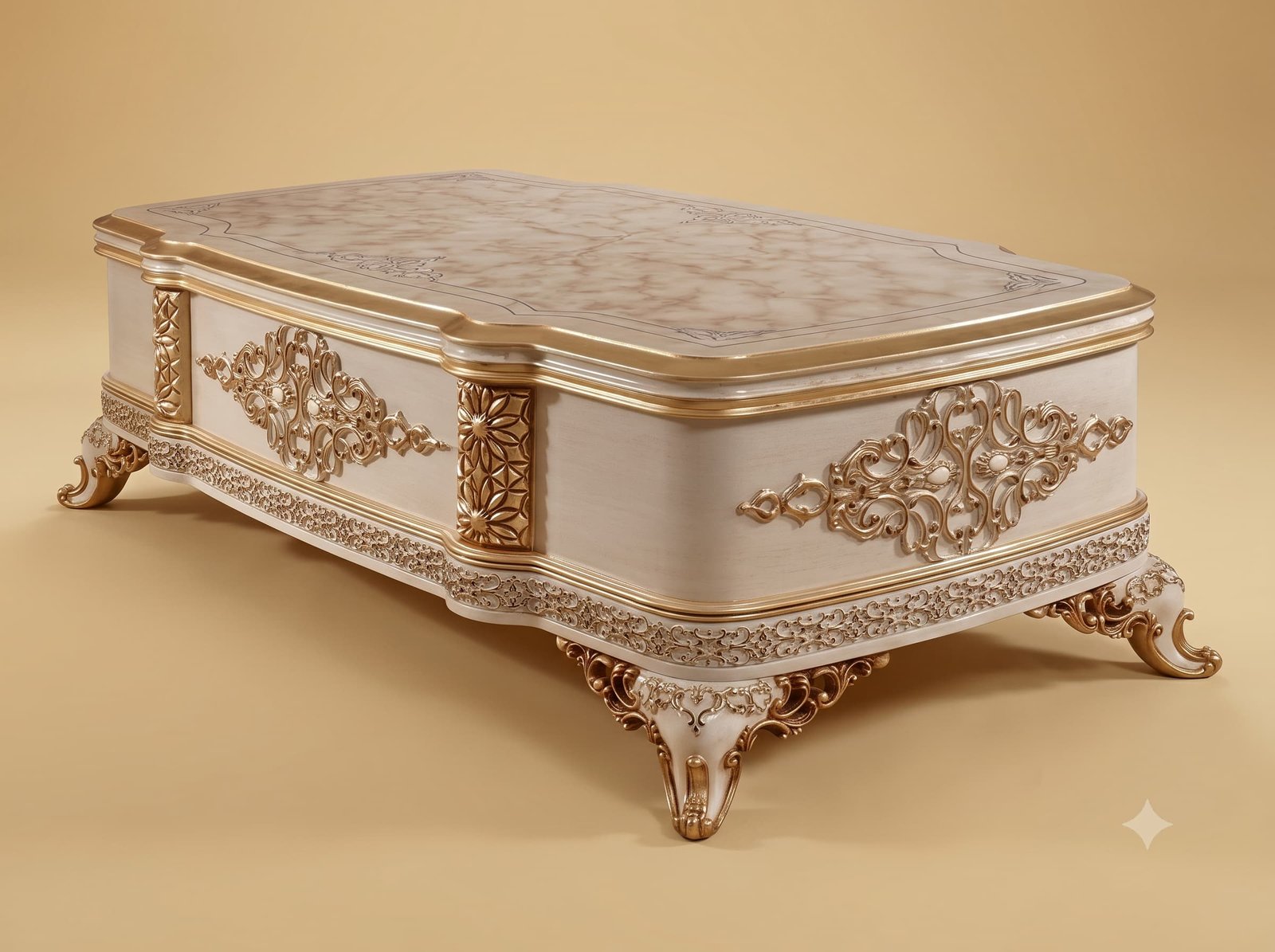
The gold ornament on this table is not painted onto the cream. It is a separate piece of carved wood, made on its own and fixed on afterwards - and that solves a problem that has no good solution otherwise.
Where two finishes meet on a flat surface, the line between them has to be cut by hand, and it is only ever as good as the steadiest hand on the day. Under close light, a painted boundary always shows slight waver, and on a curve it shows more. Worse, gold laid over a cream ground will bleed into it if the ground is not perfectly sealed, leaving a faint yellow halo along the edge.
Carving the ornament separately removes the boundary entirely. Each cartouche is cut as an openwork panel, gilded on its own bench where every edge is a real edge, and only then pinned to the finished cream field. The two colours never share a surface, so there is no line to waver and nothing to bleed.
It also means the ornament stands slightly proud, casting its own shadow - which is why it reads as metal applied to a surface rather than a pattern drawn on one.
 Ask Price On WhatsApp