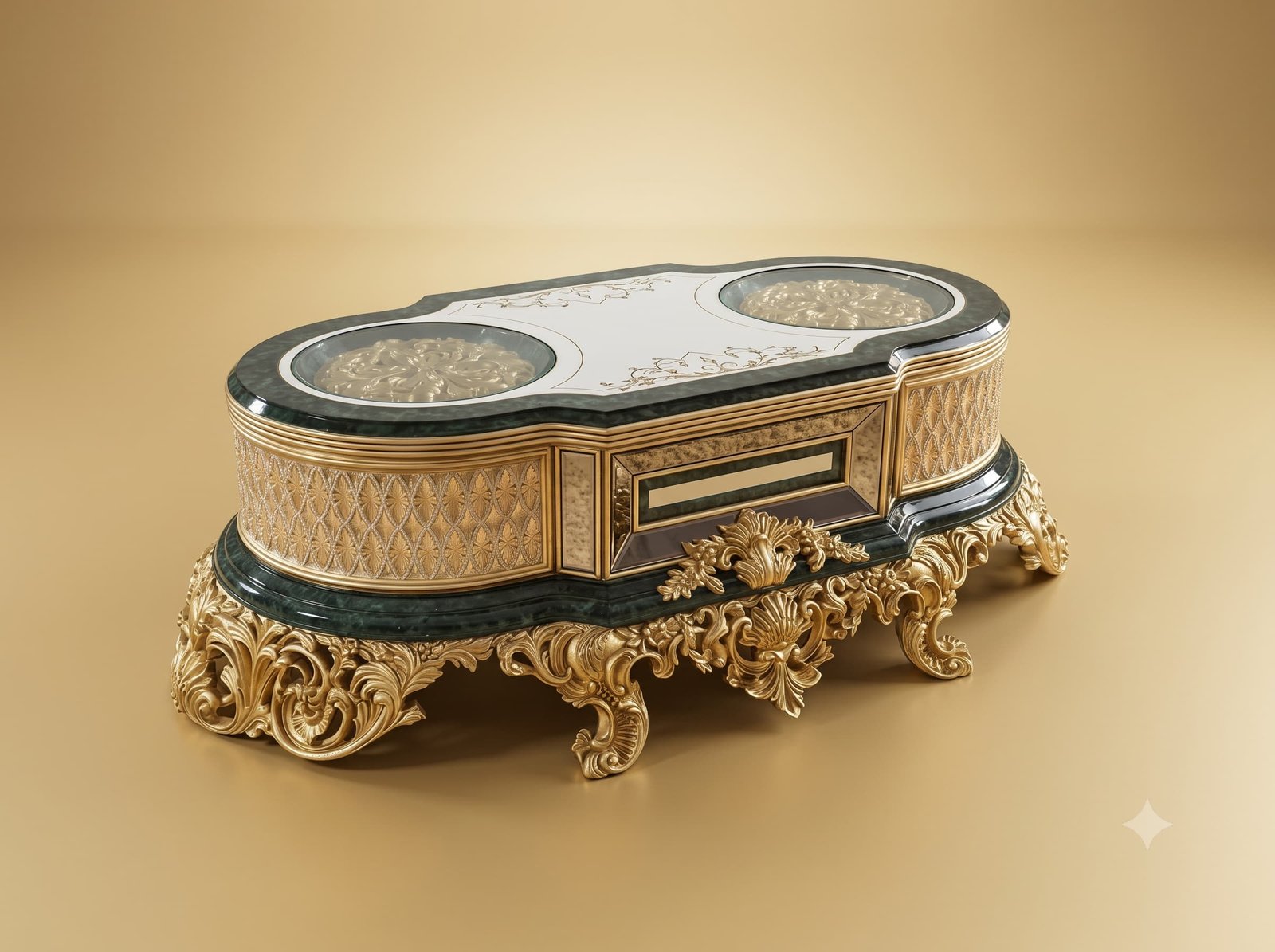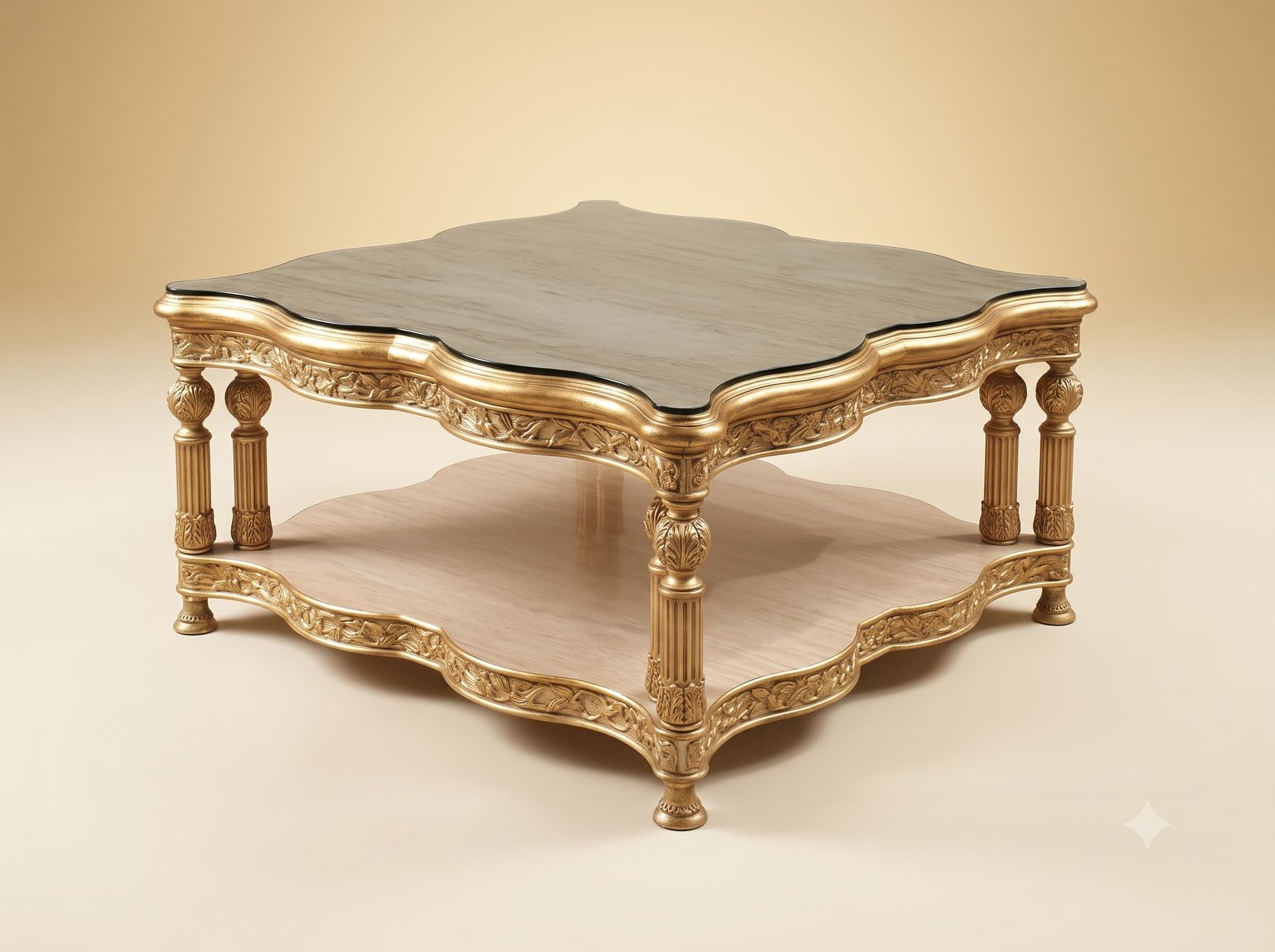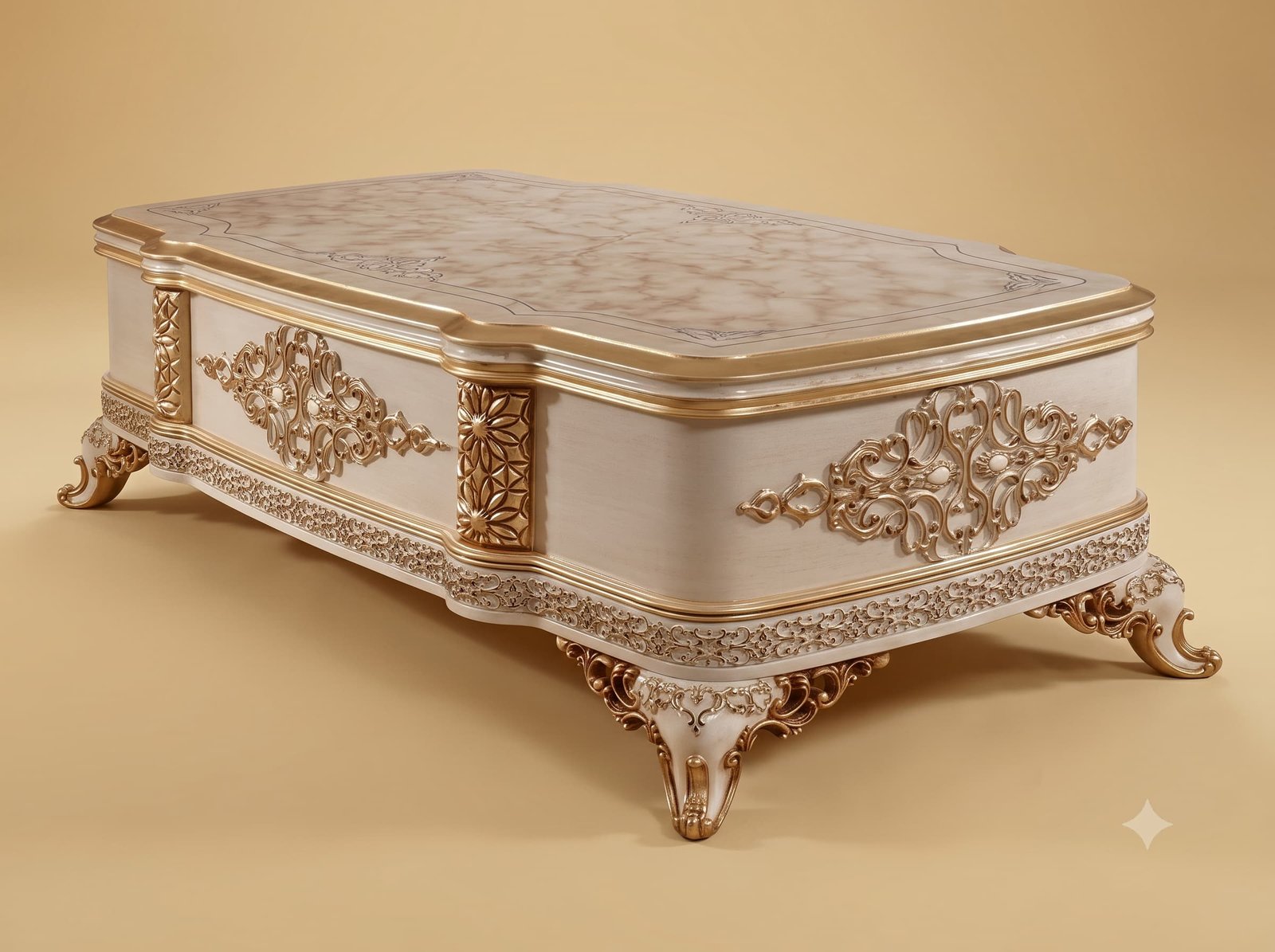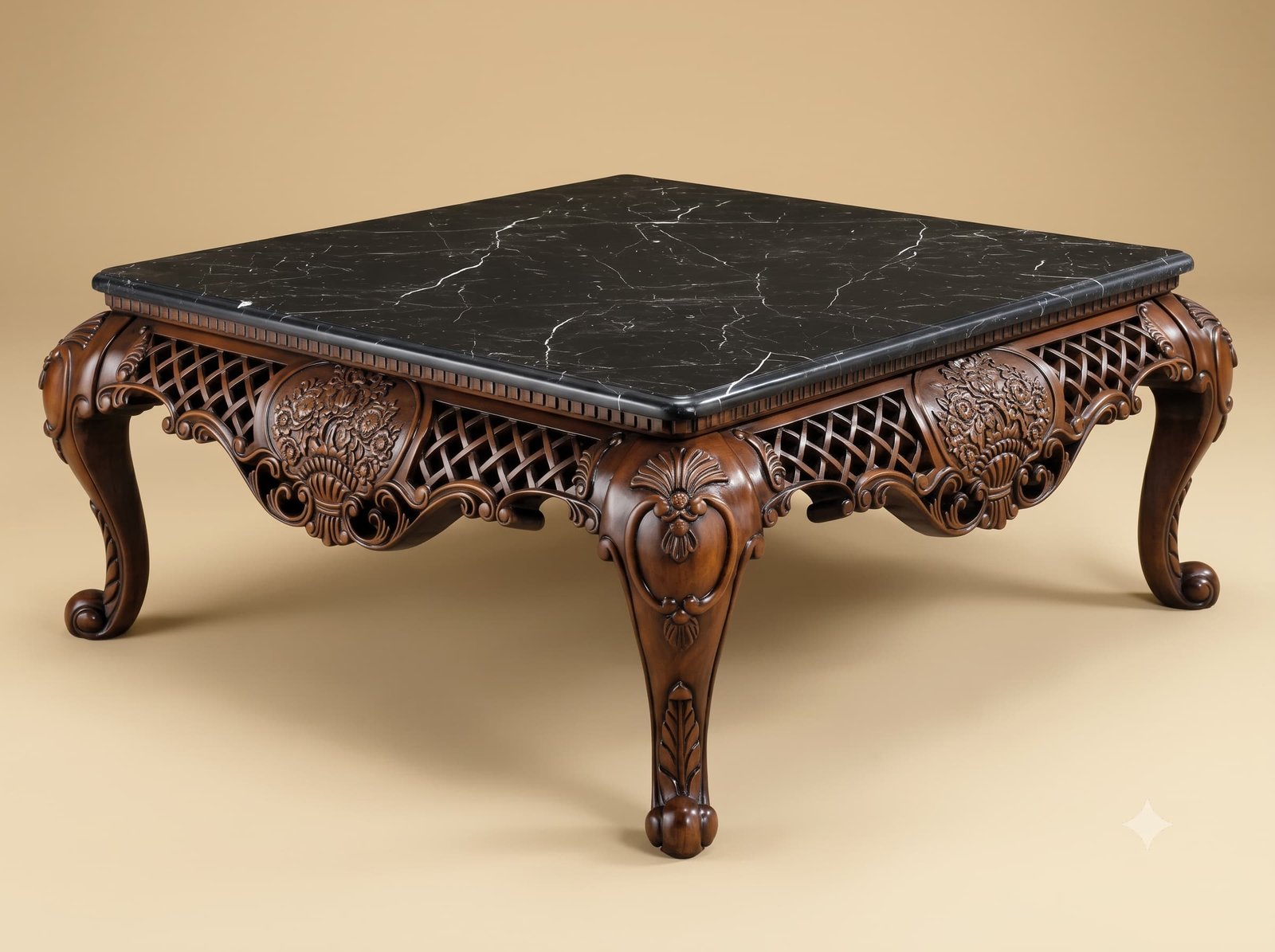
Choosing a veined slab is not about finding the best-looking piece of stone. It is about which way the veins run once the top is cut.
Black marble with white veining reads beautifully when the veins run diagonally across the surface - the eye follows them into the middle of the table and out again. Turn the same slab so a strong vein lies parallel to a long edge, an inch or two in from it, and the effect changes completely: it stops looking like veining and starts looking like a crack that someone has polished over. People will ask about it for years.
So a slab is not simply cut to size from wherever it fits on the block. It is laid out first, the dominant veins are marked, and the outline of the top is positioned on the stone so those veins cross it at an angle and, ideally, run off two opposite corners rather than stopping short of an edge.
That costs offcut. It is the same discipline a tailor uses laying a pattern on striped cloth, and it is the difference between a marble top that looks chosen and one that looks cut.
 Ask Price On WhatsApp