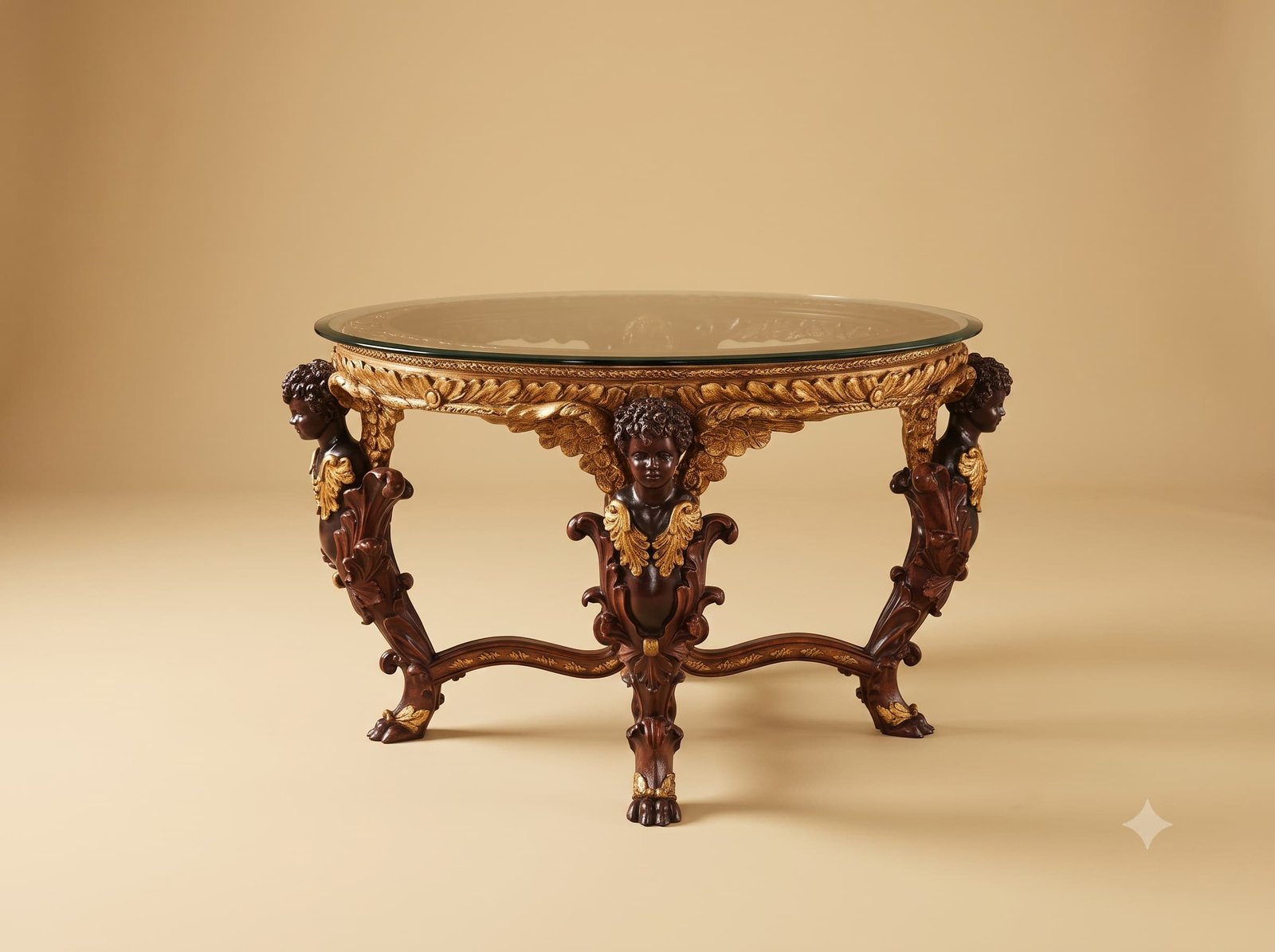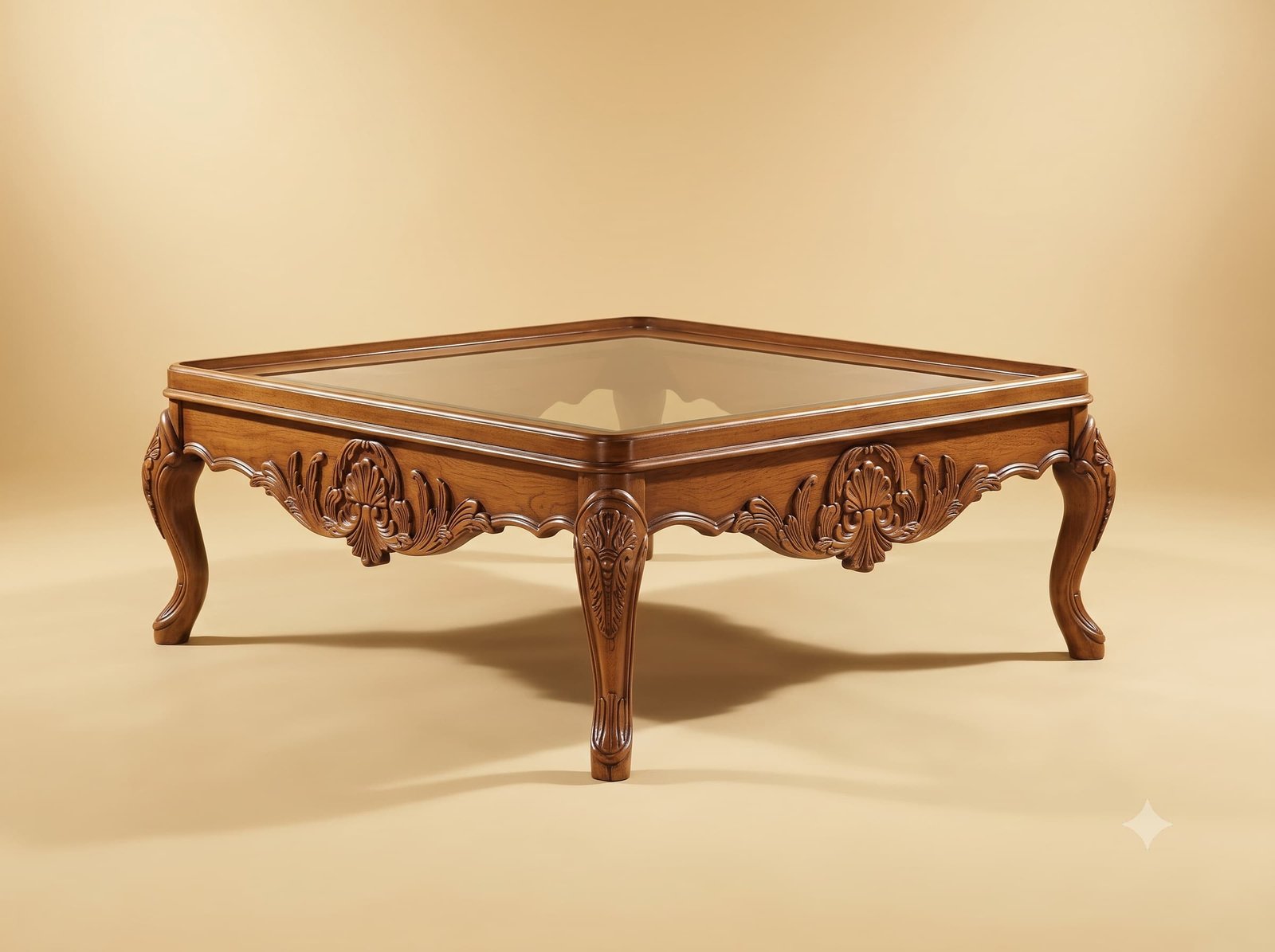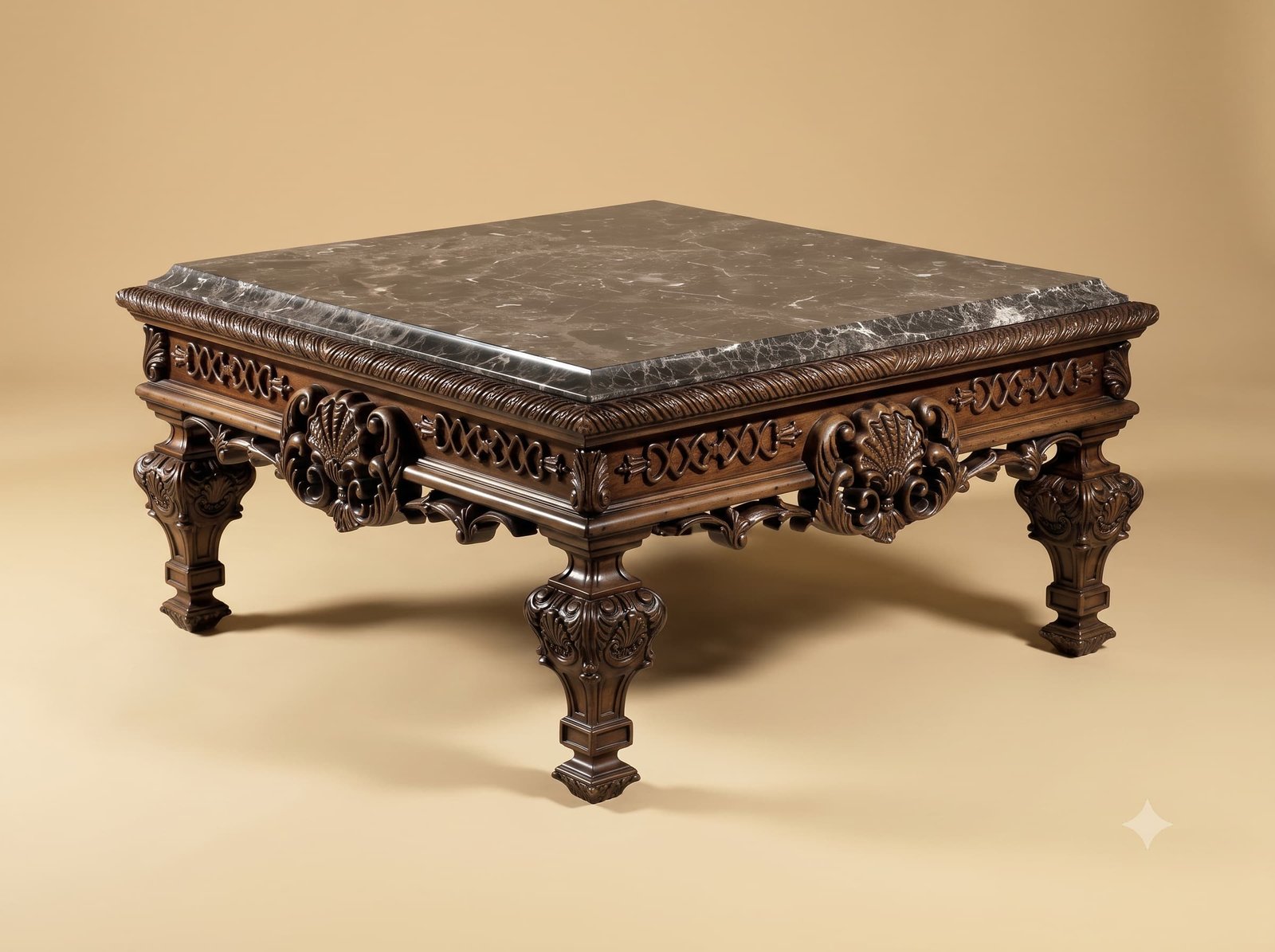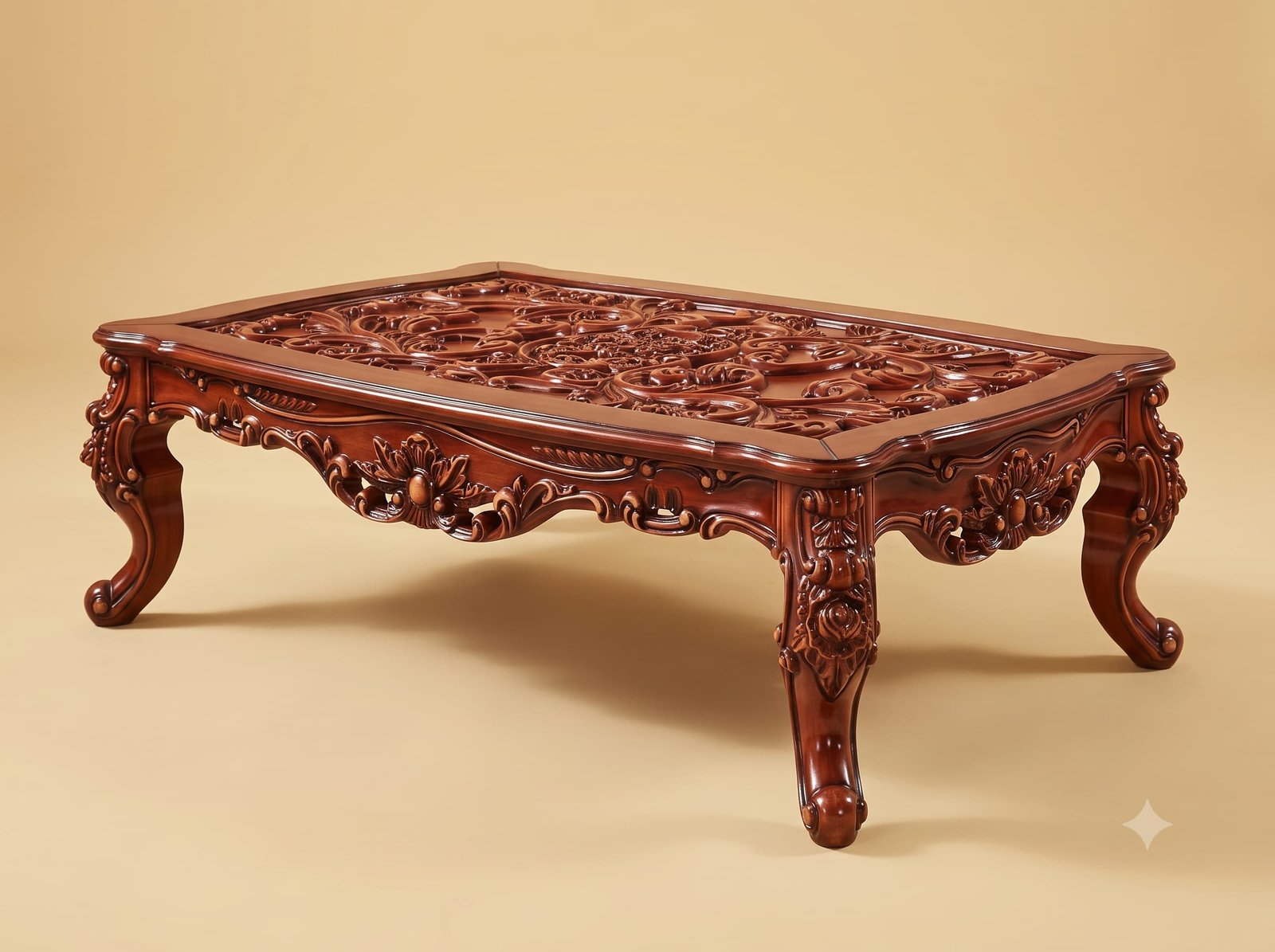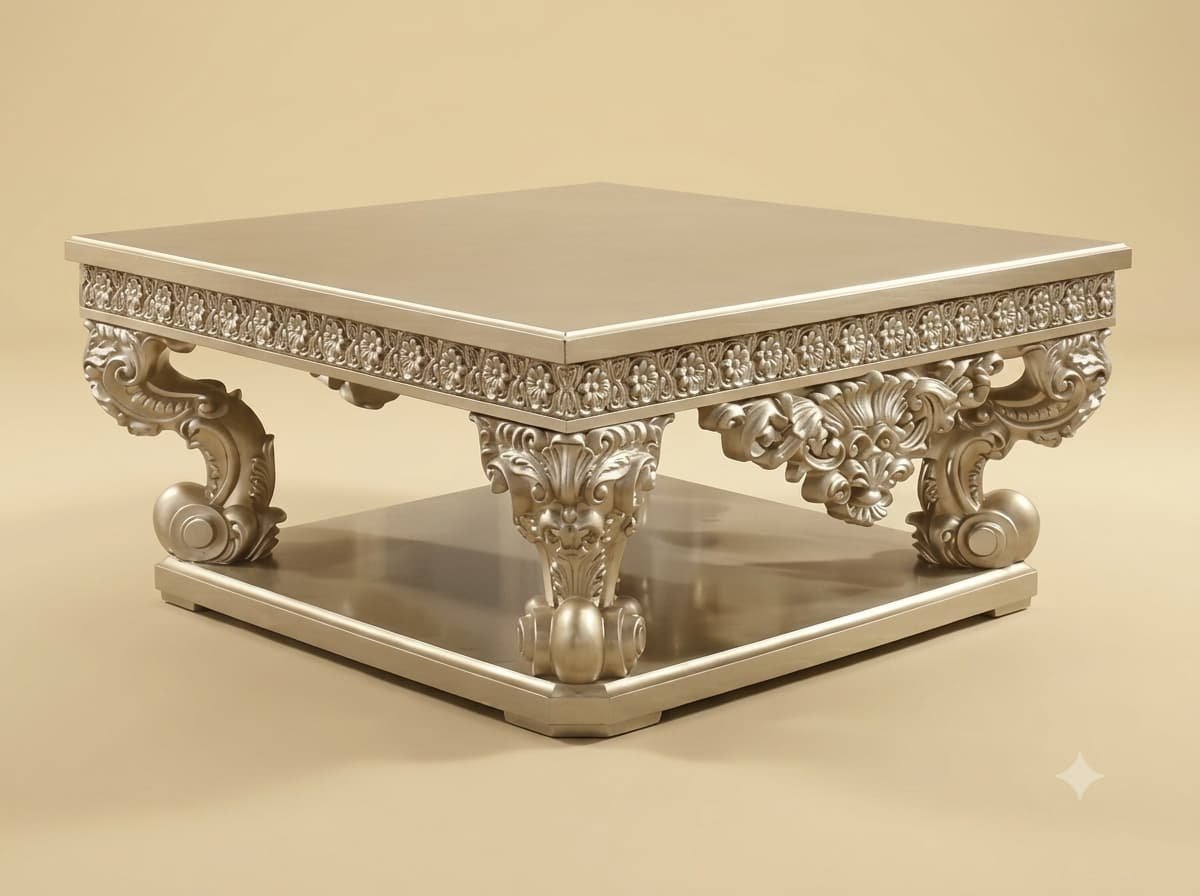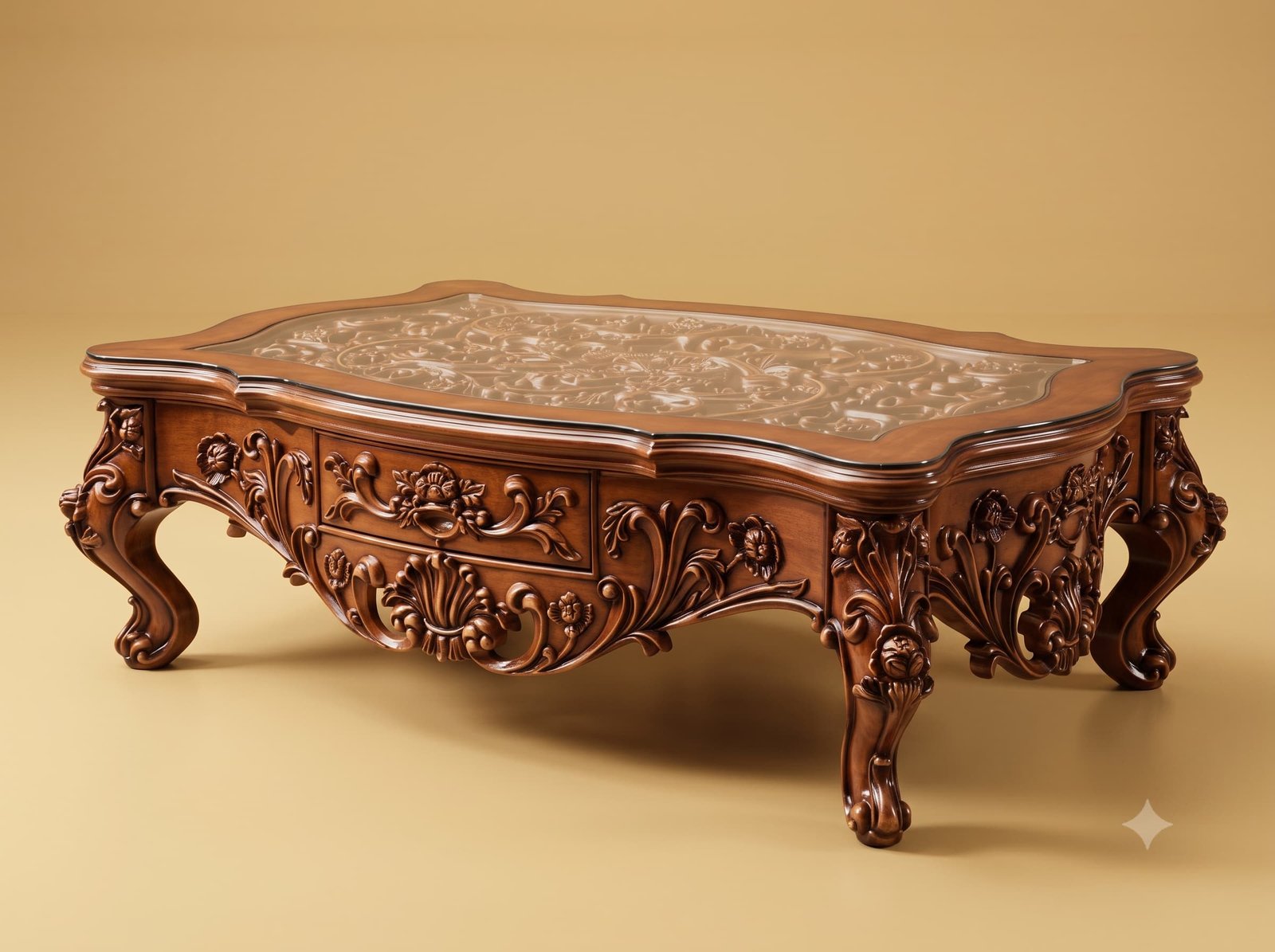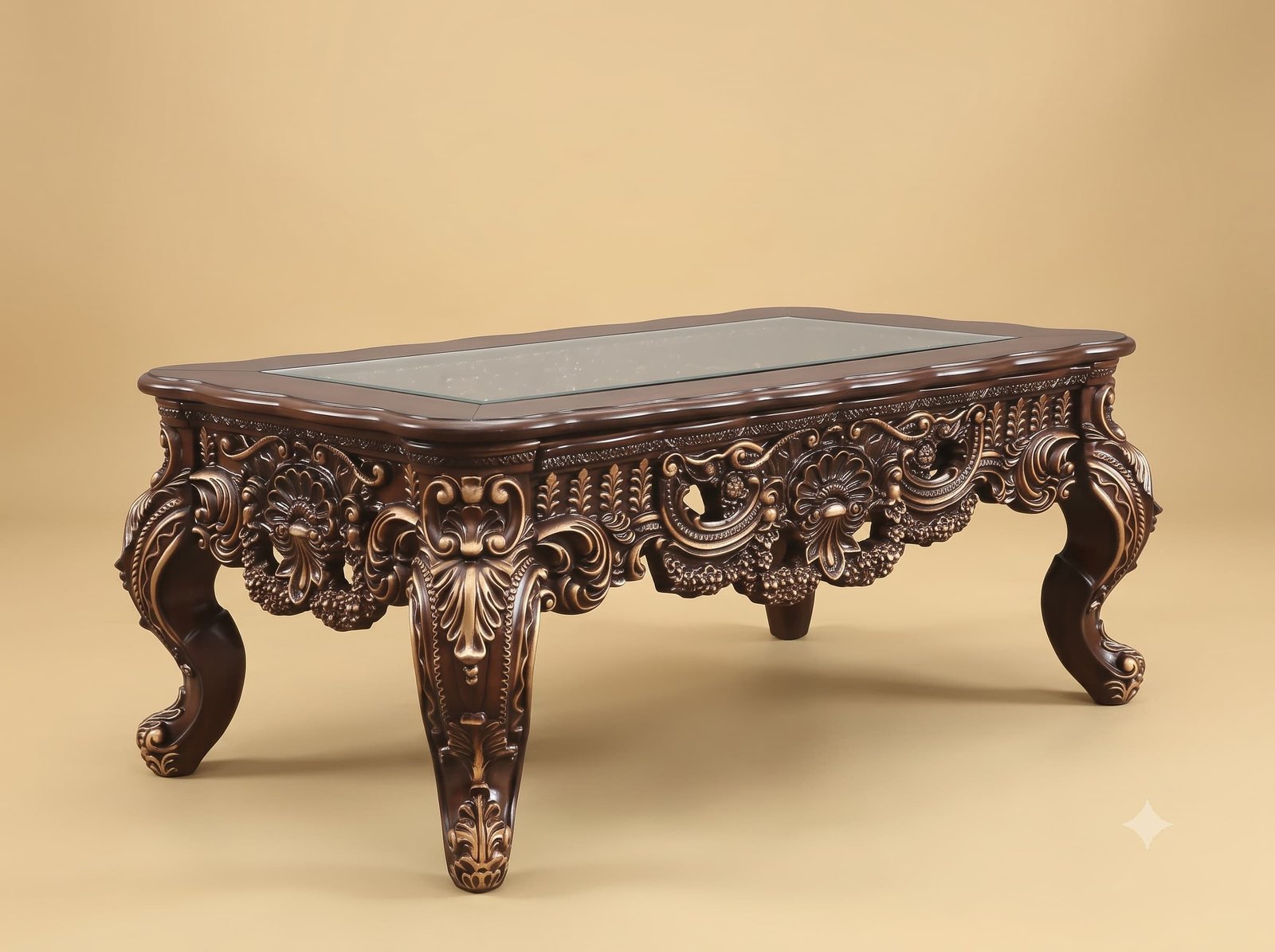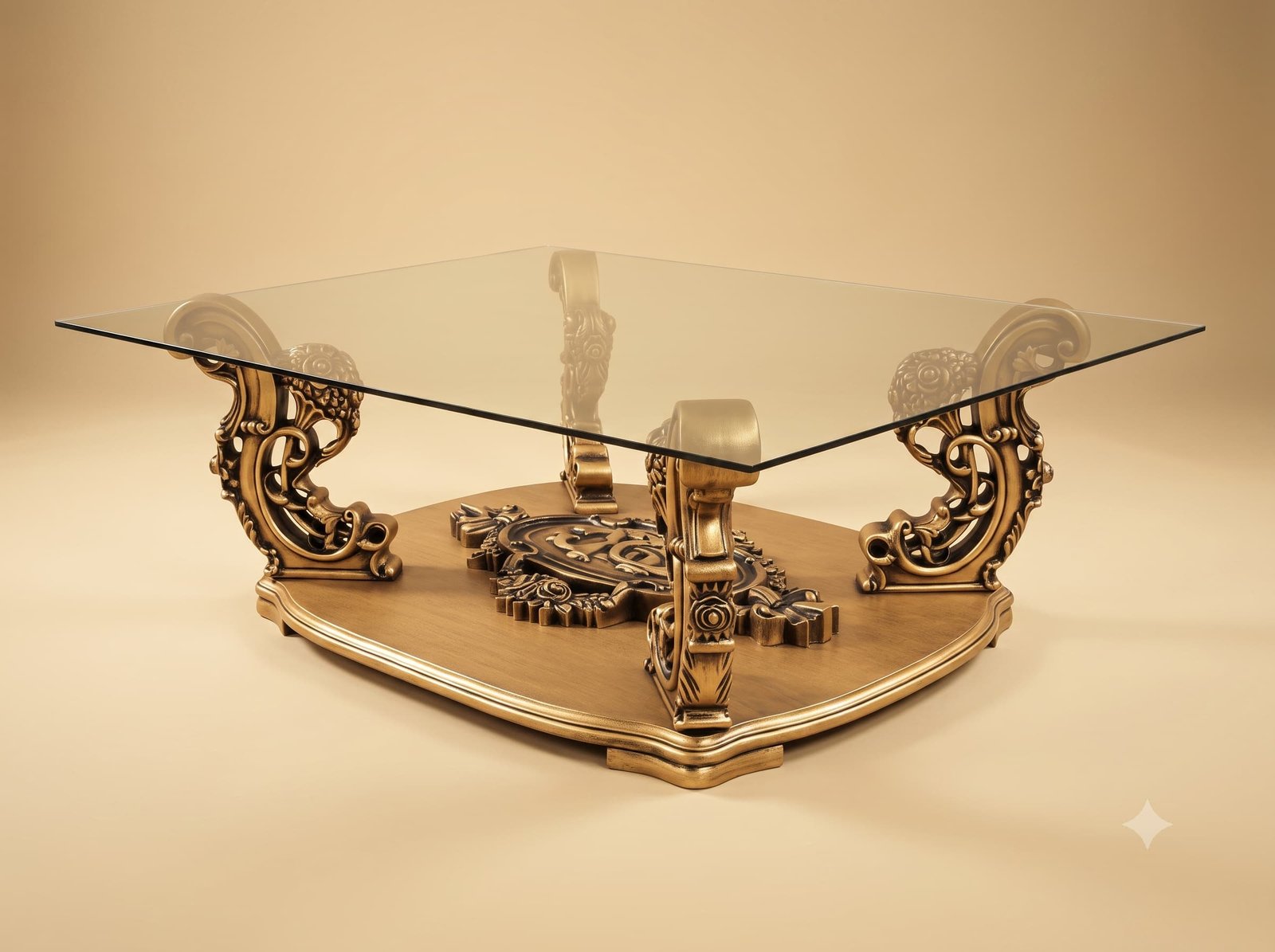
Glass does not bend to fit. That single fact governs everything about how this table is built.
The top rests on four separate points, and those four points have to lie in one plane to a tolerance far tighter than furniture normally needs. If one scroll finishes a millimetre high, the glass sits on three points and rocks on the fourth - and every time someone leans on the opposite corner, the whole load passes through those three contacts instead of four. A timber top in the same situation would flex slightly and absorb it. Glass does not: it concentrates the stress at the high point, and that is where a panel eventually fails.
So the four scroll tops are levelled together, not individually. The base is stood on a flat reference surface, a straightedge is laid across each diagonal in turn, and any high point is taken down by fractions until a straightedge sits dead on all four in every direction.
Then soft pads go on each contact - not to fill a gap, because there is none, but so the glass rests on something that yields a little rather than on bare timber. It is a quiet, unglamorous half hour at the end of the build, and it is the difference between a glass top that lasts and one that does not.
 Ask Price On WhatsApp