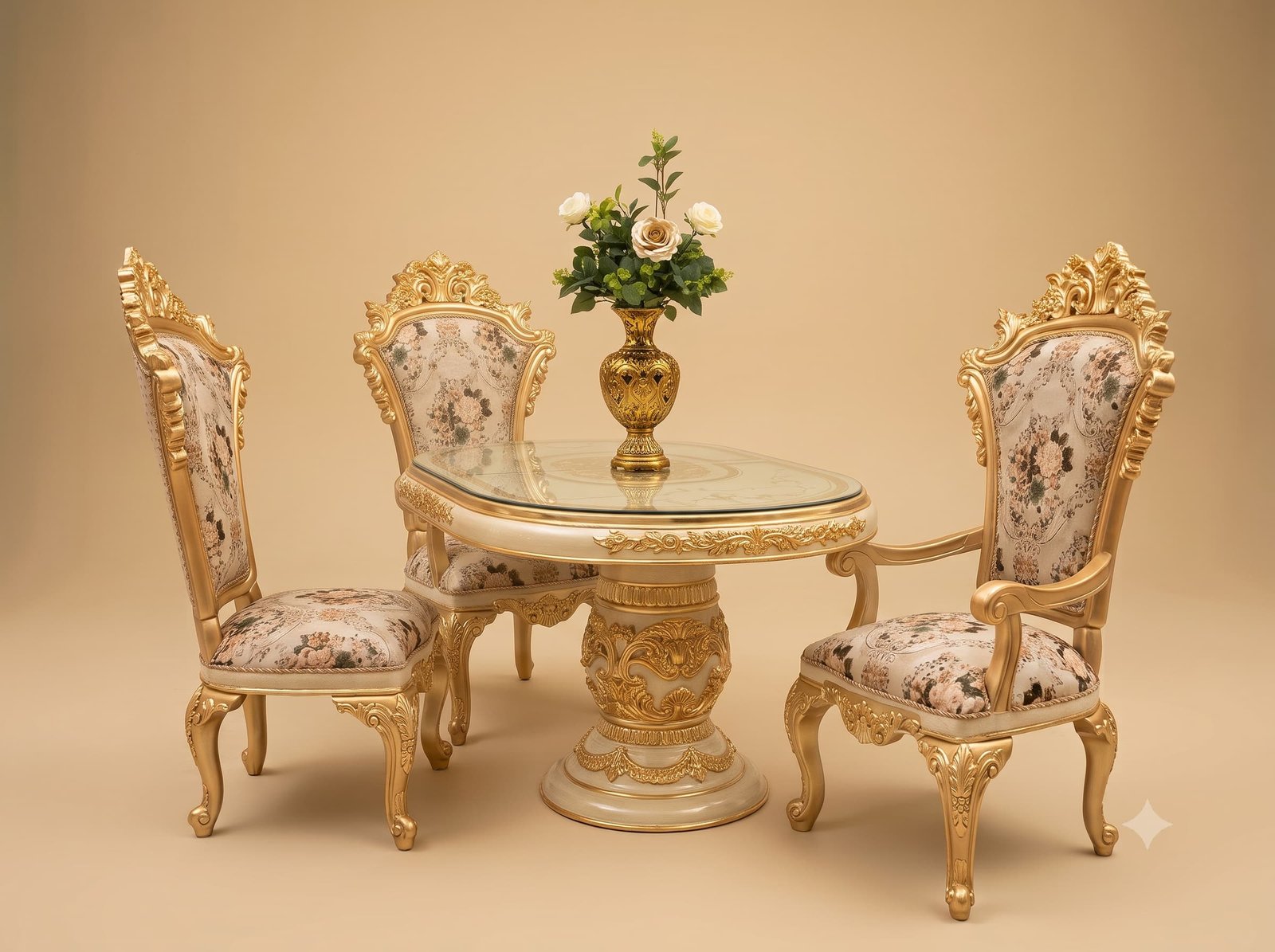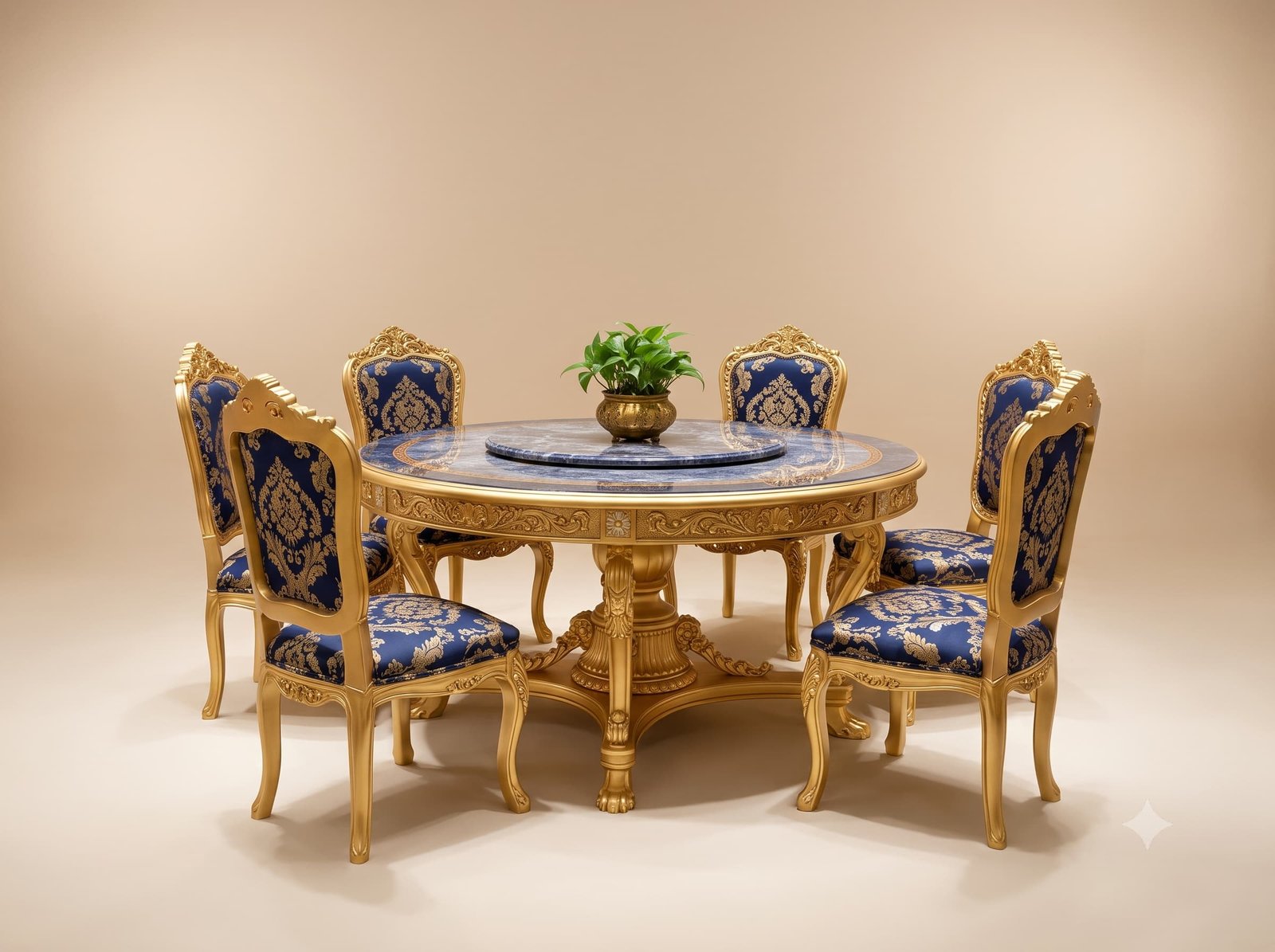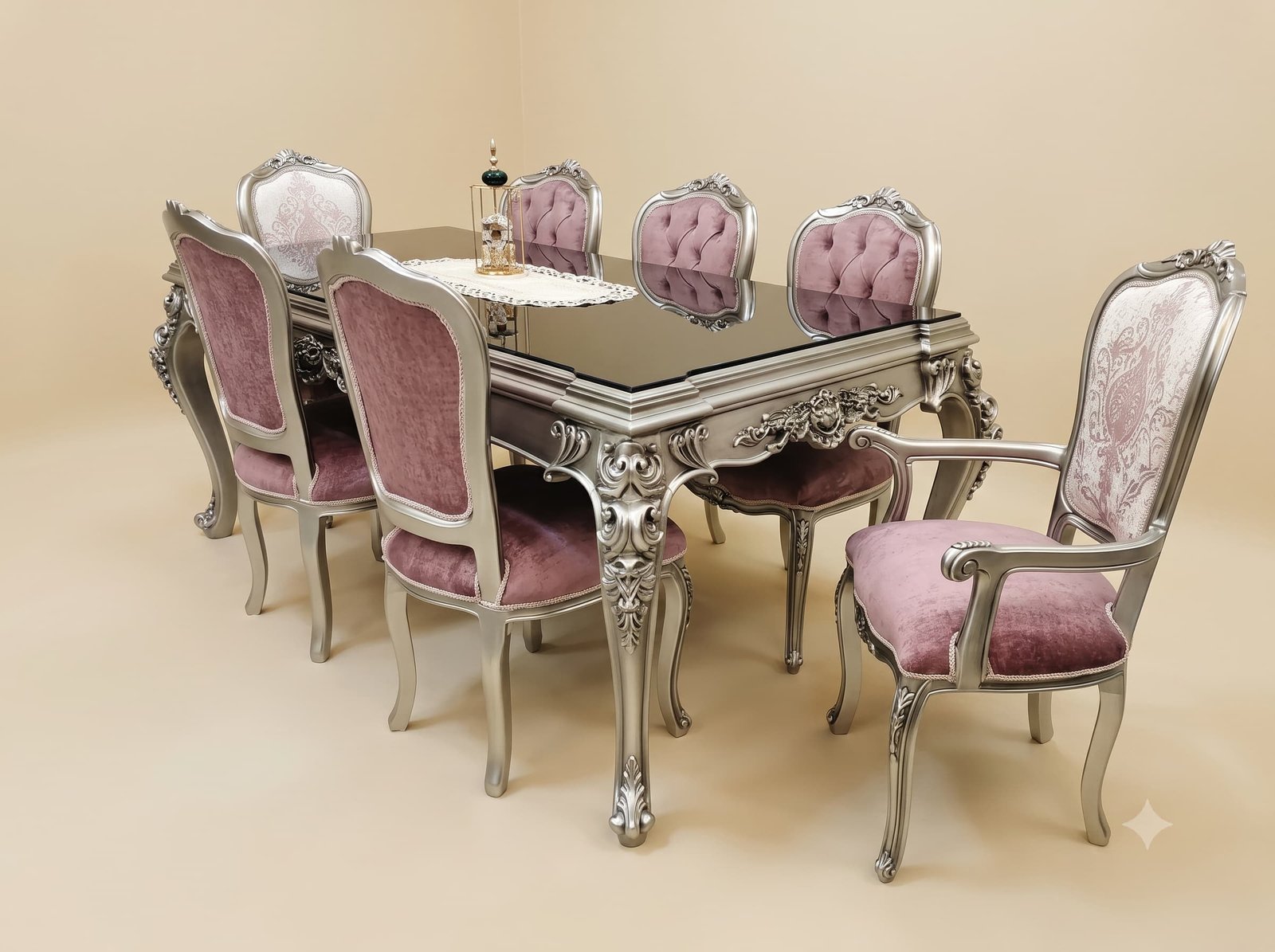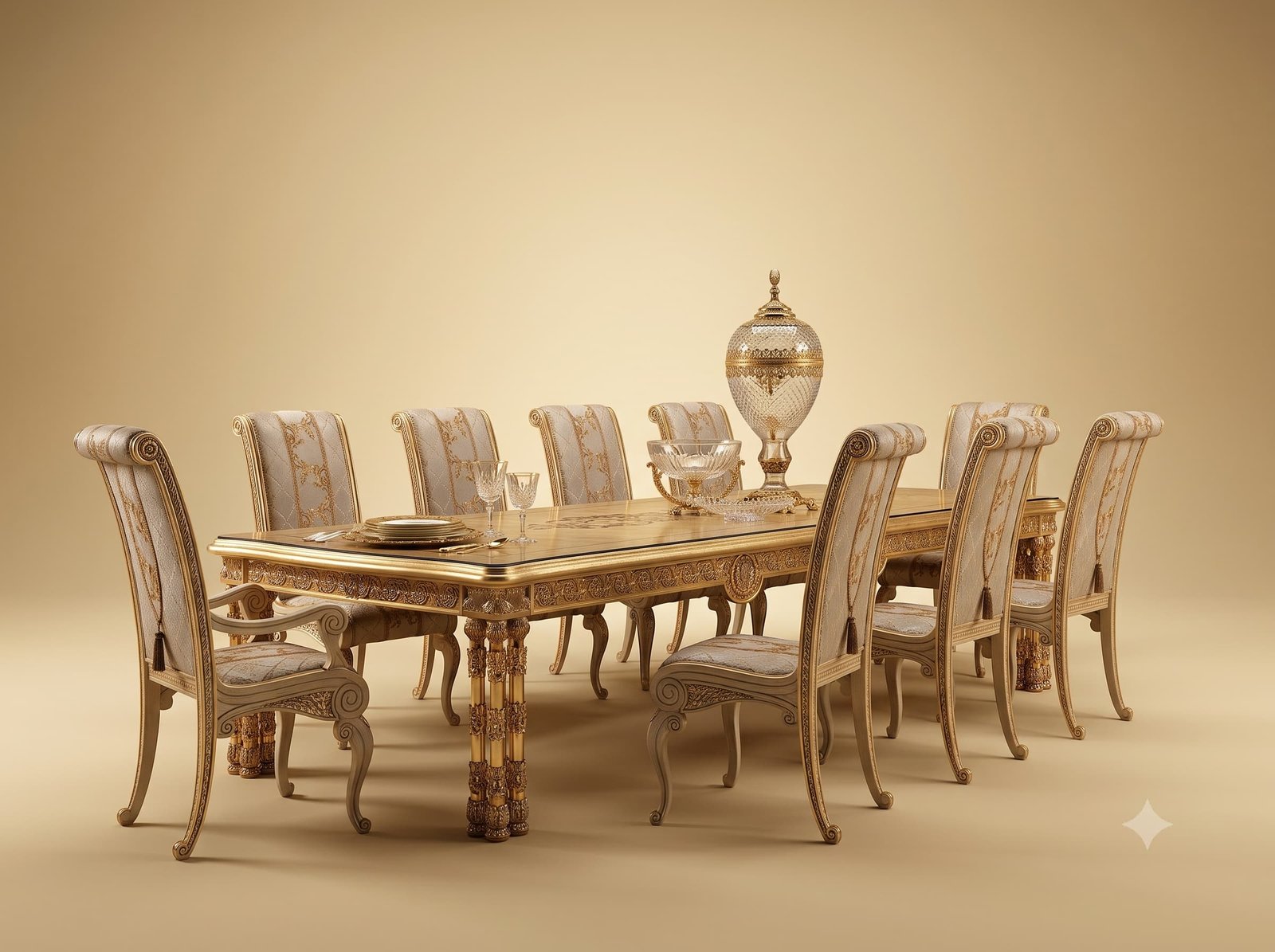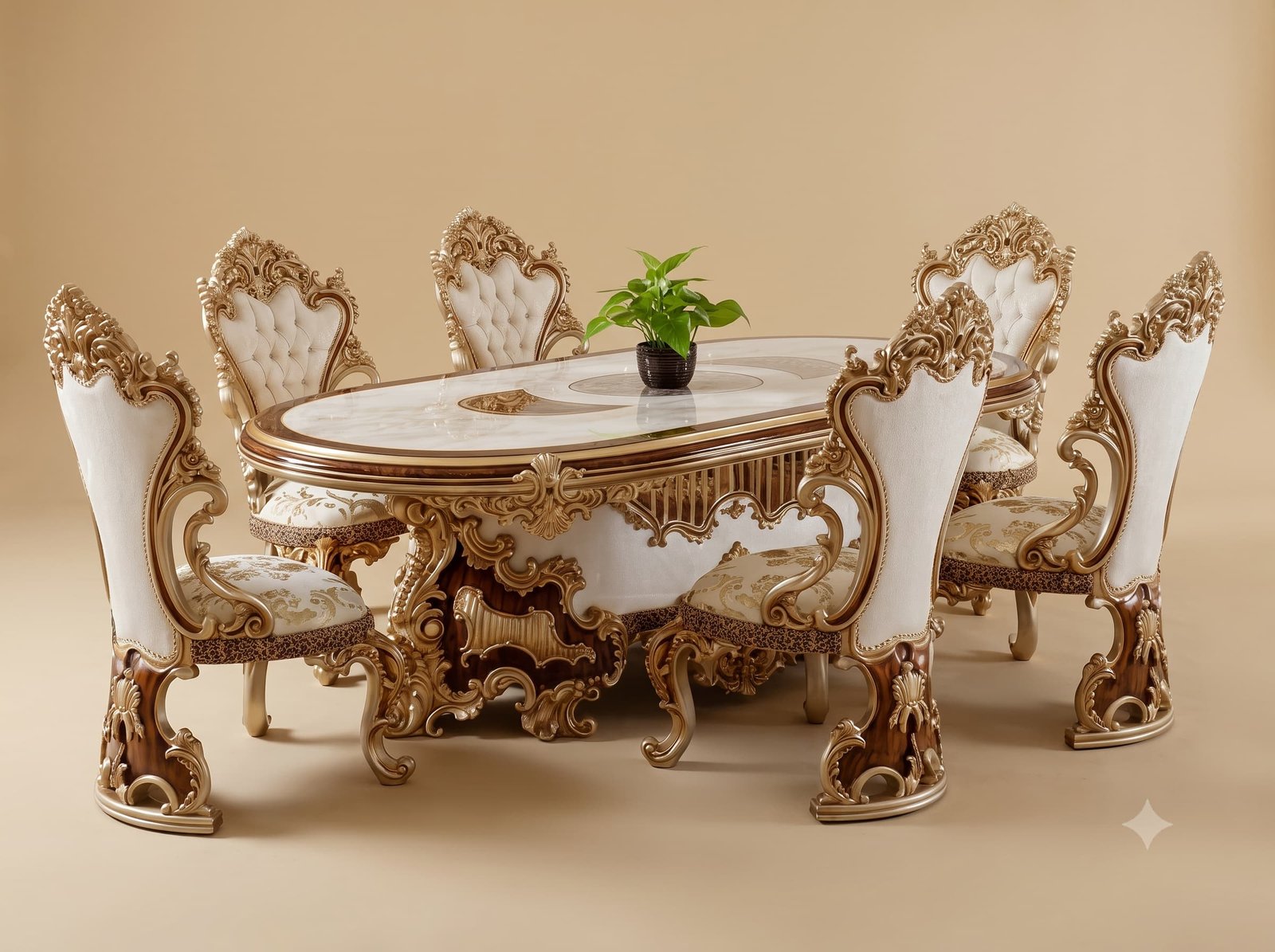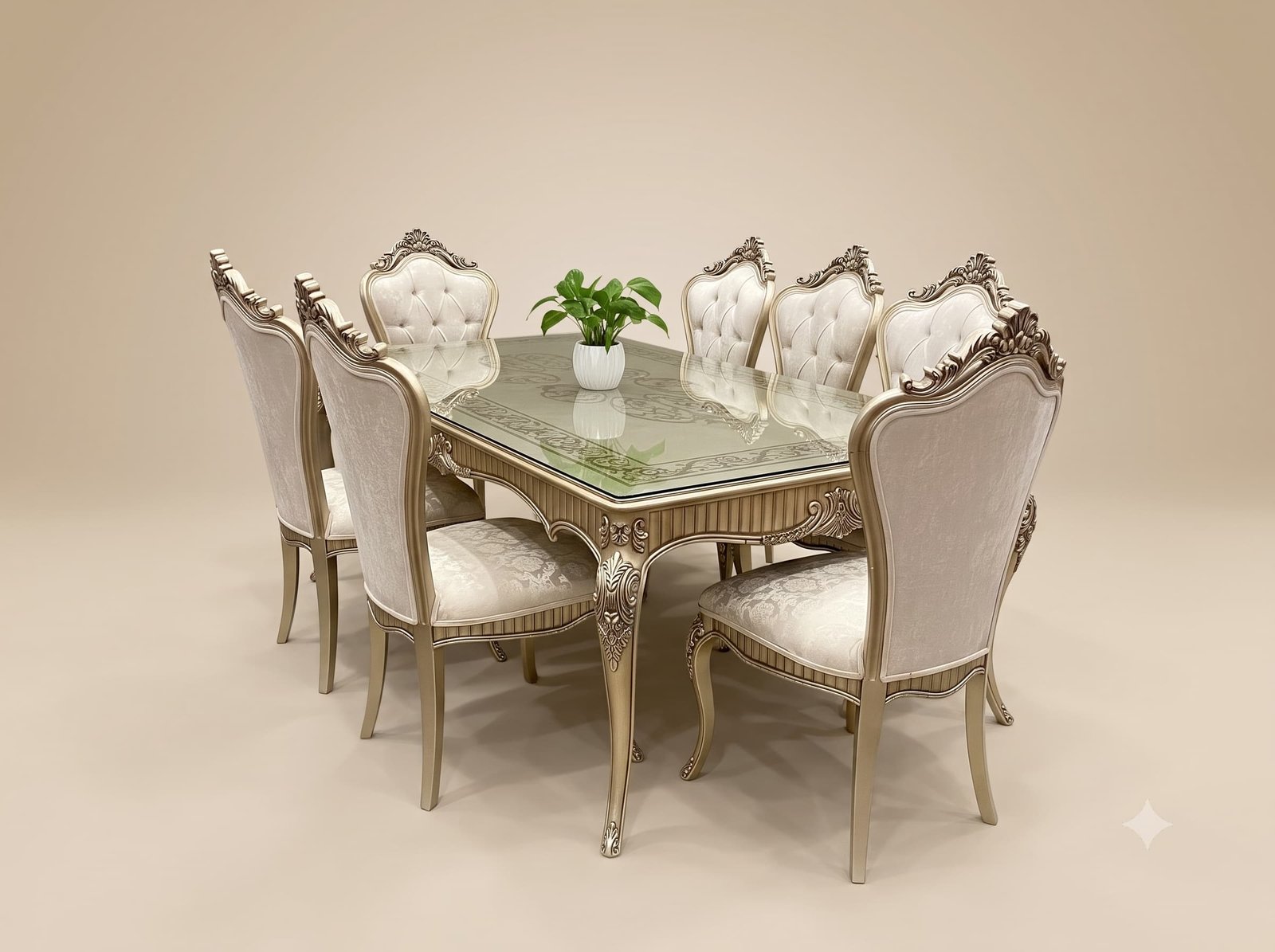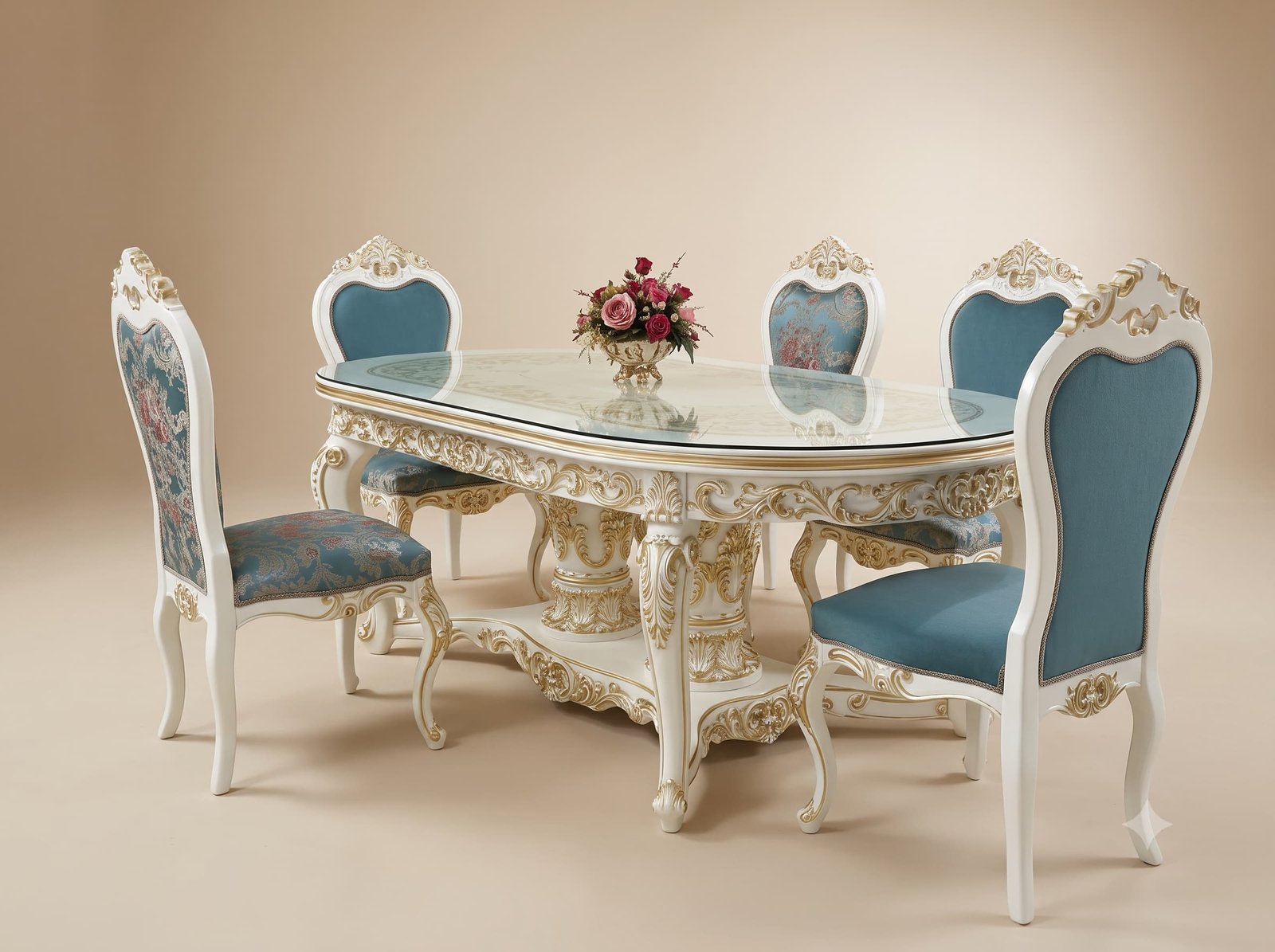
Most dining tables have a back. A long table lives against a wall or in a room with a clear front, and it is entirely normal for the carving on the far side to be a little simpler - nobody sees it, and the workshop hours go where they show.
A square table for four has no back. It gets pushed into a corner one year and pulled into the middle of the room the next; someone moves it to catch the light, or turns it ninety degrees when a sofa arrives. Whatever face was hidden last month is facing the door today.
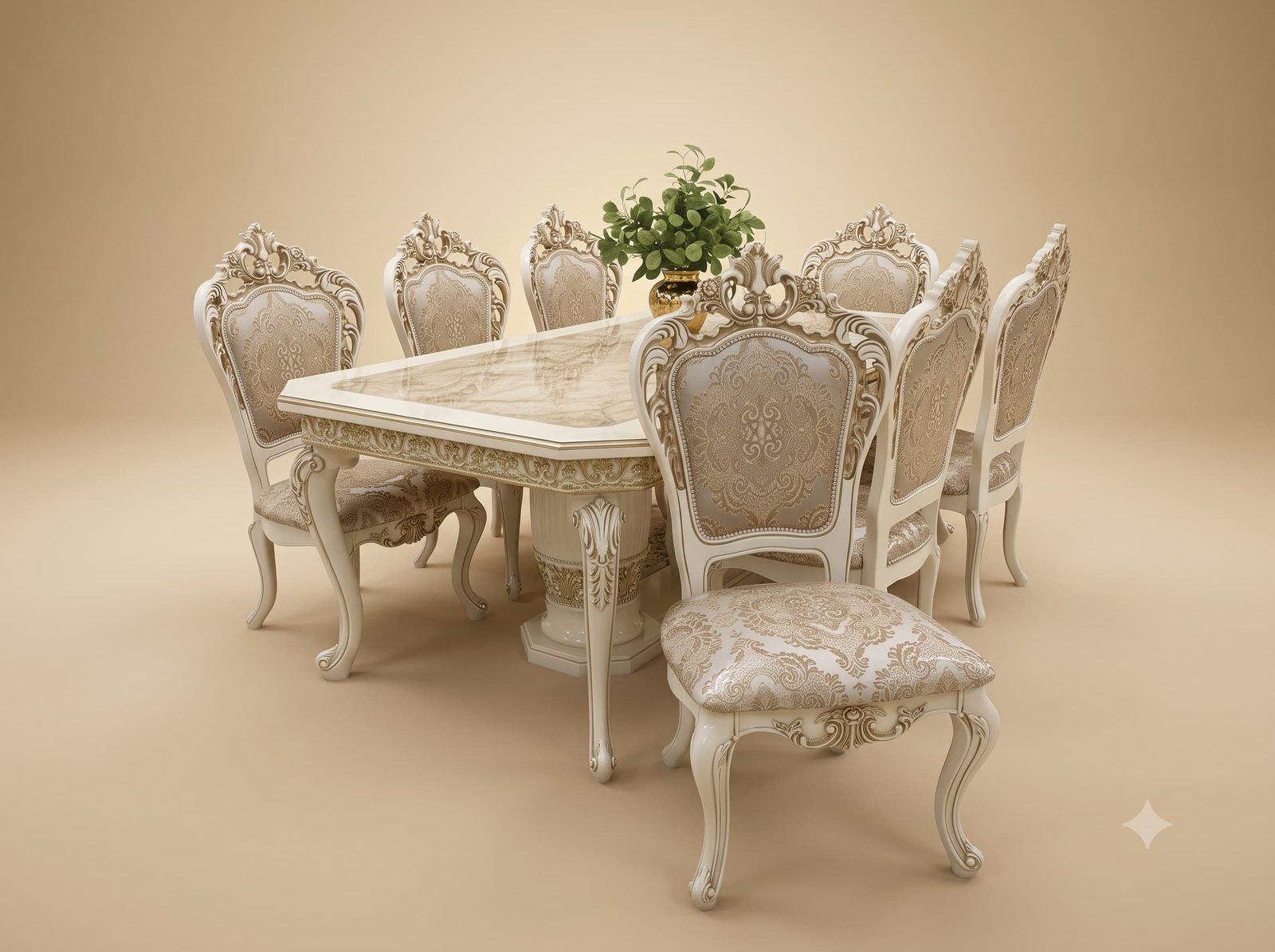
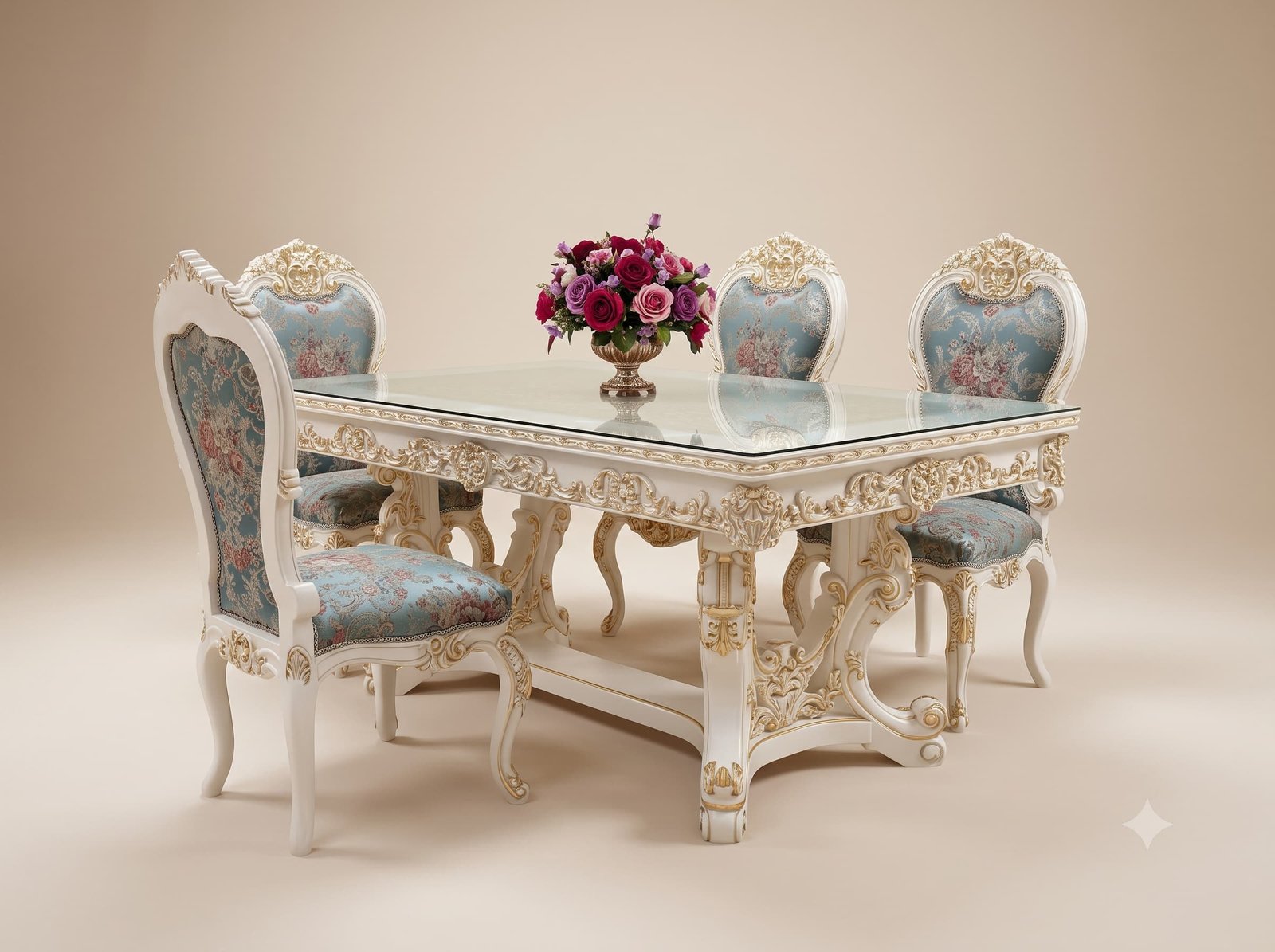
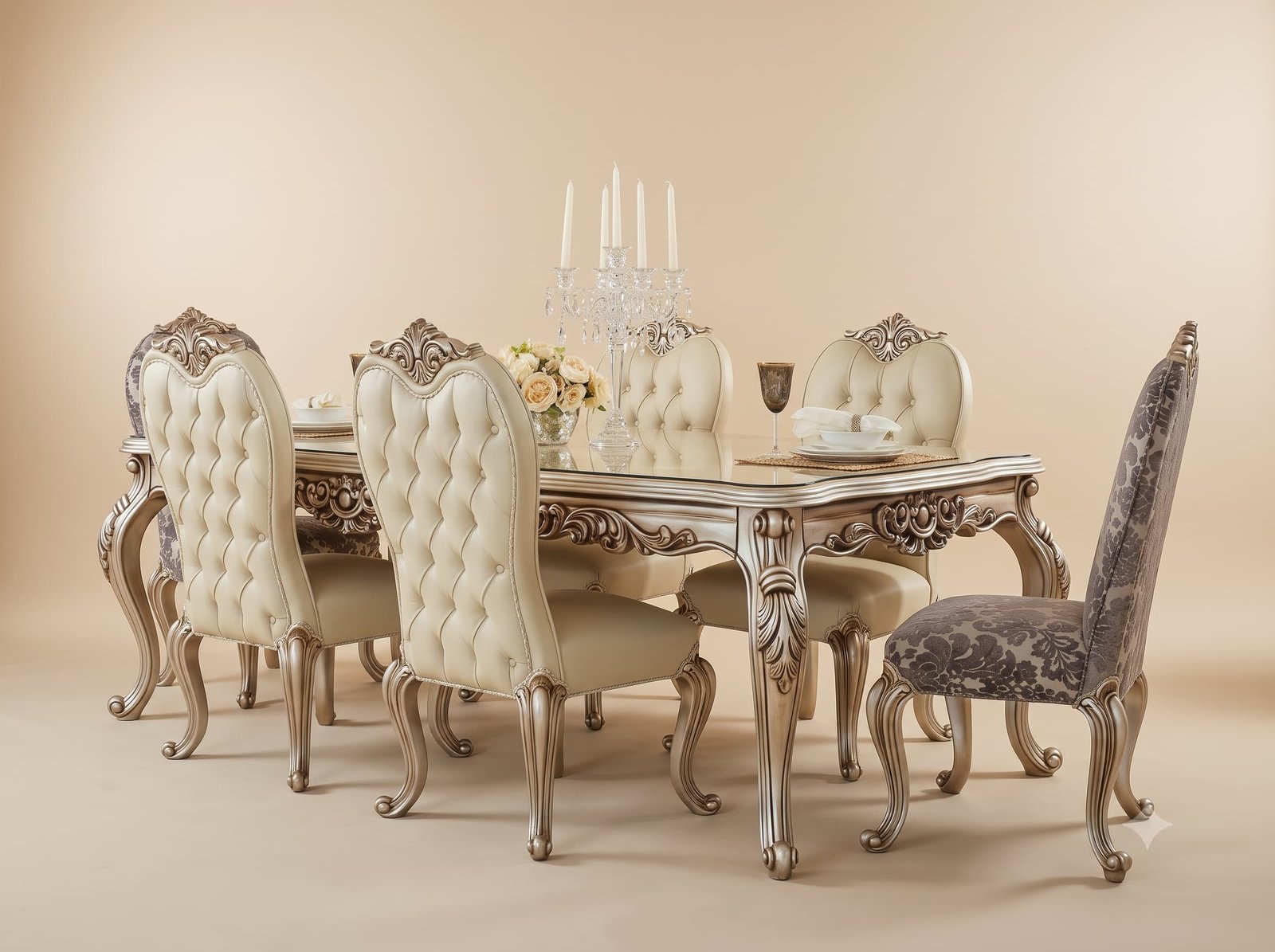
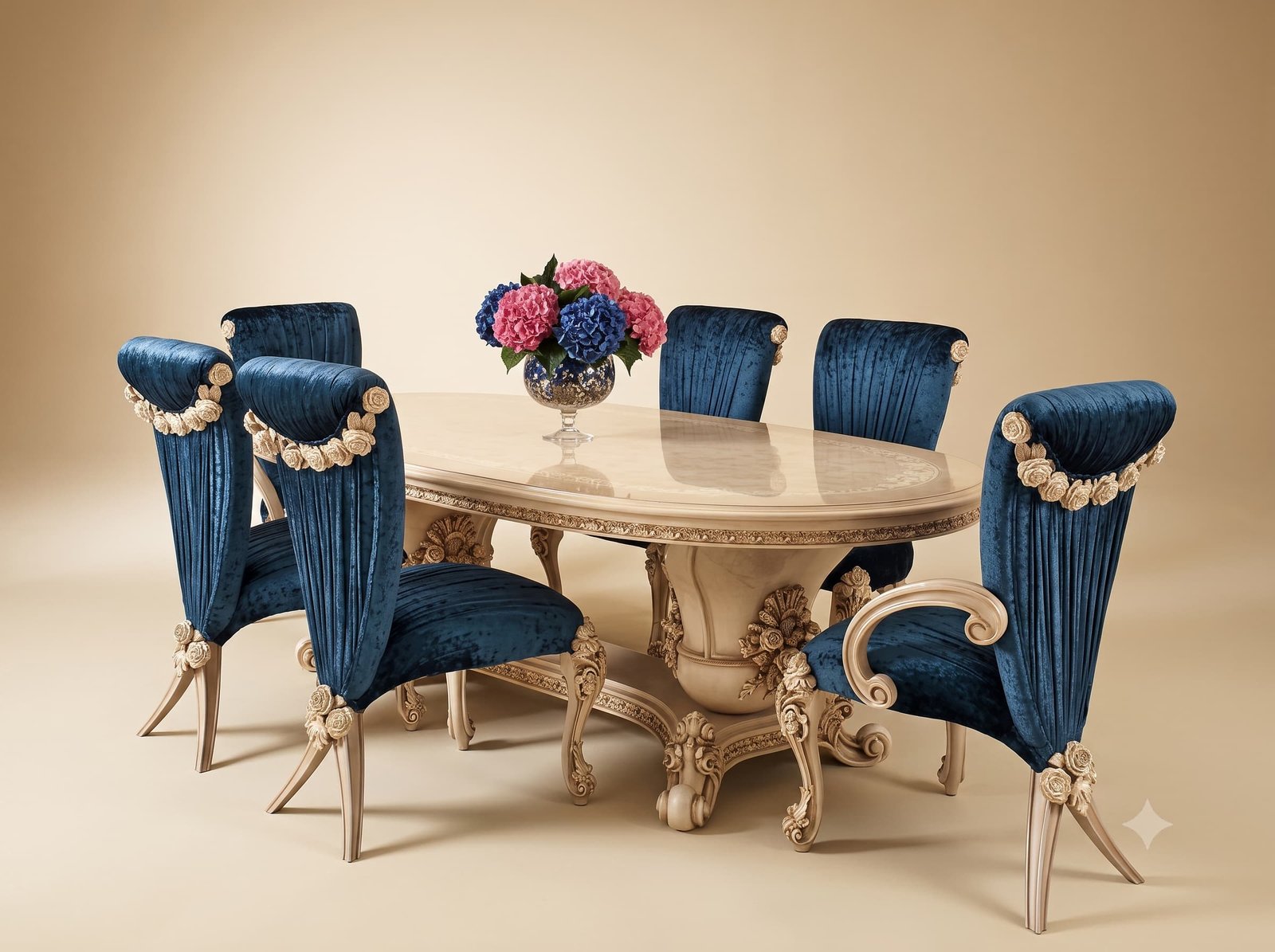
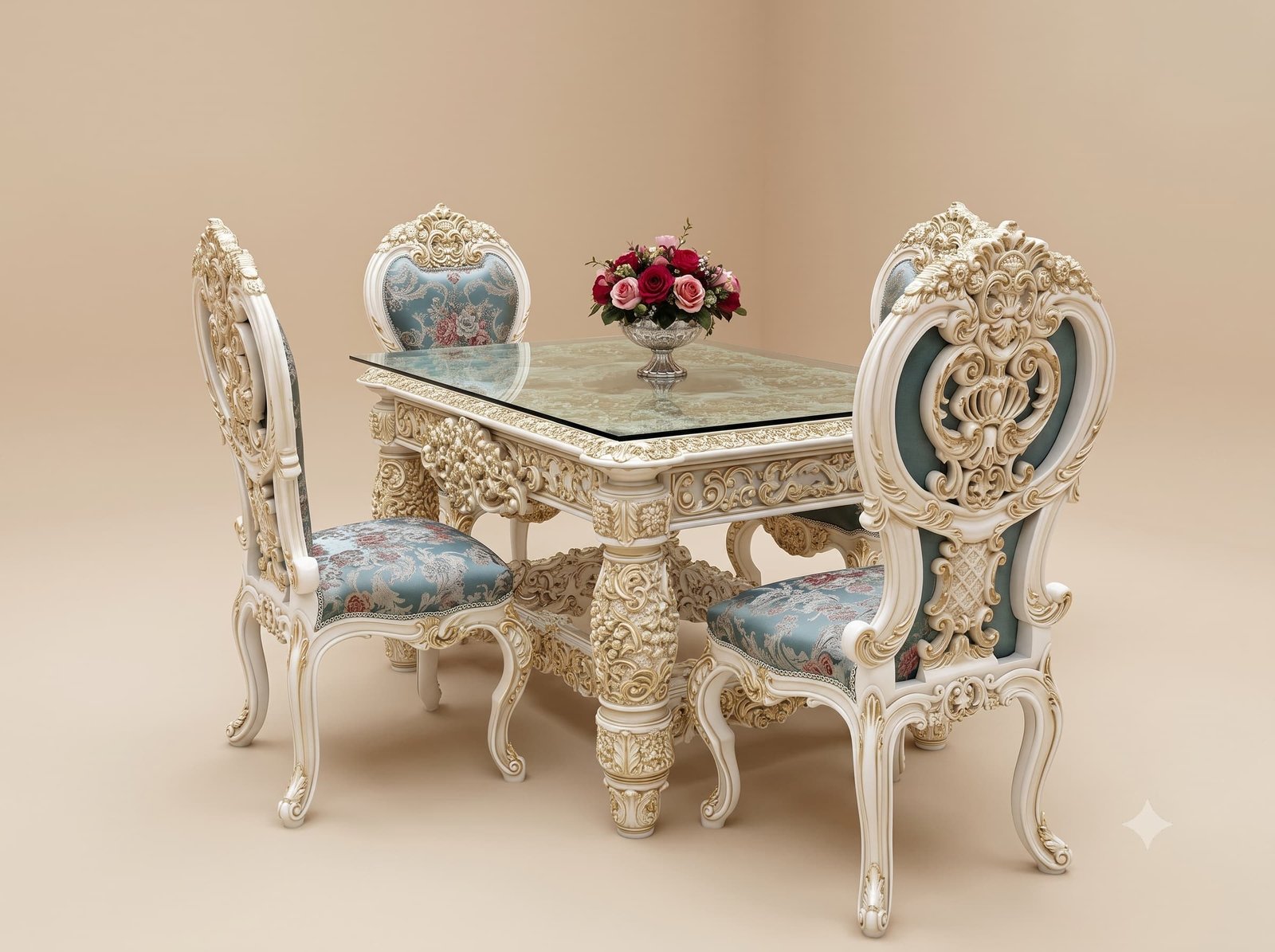
So on this table all four aprons are carved to the same depth with the same pattern, all four legs are worked identically, and the stretcher is finished on every side. There is no back and no front, and turning the table is not a decision anyone has to think about.
The same applies to the chairs: the pierced backs are carved on both faces, because at a square table the chair backs are seen from the room as often as from the seat.
It is more carving for the same table. It is what makes a small table one you can keep moving until the room is right.
 Ask Price On WhatsApp