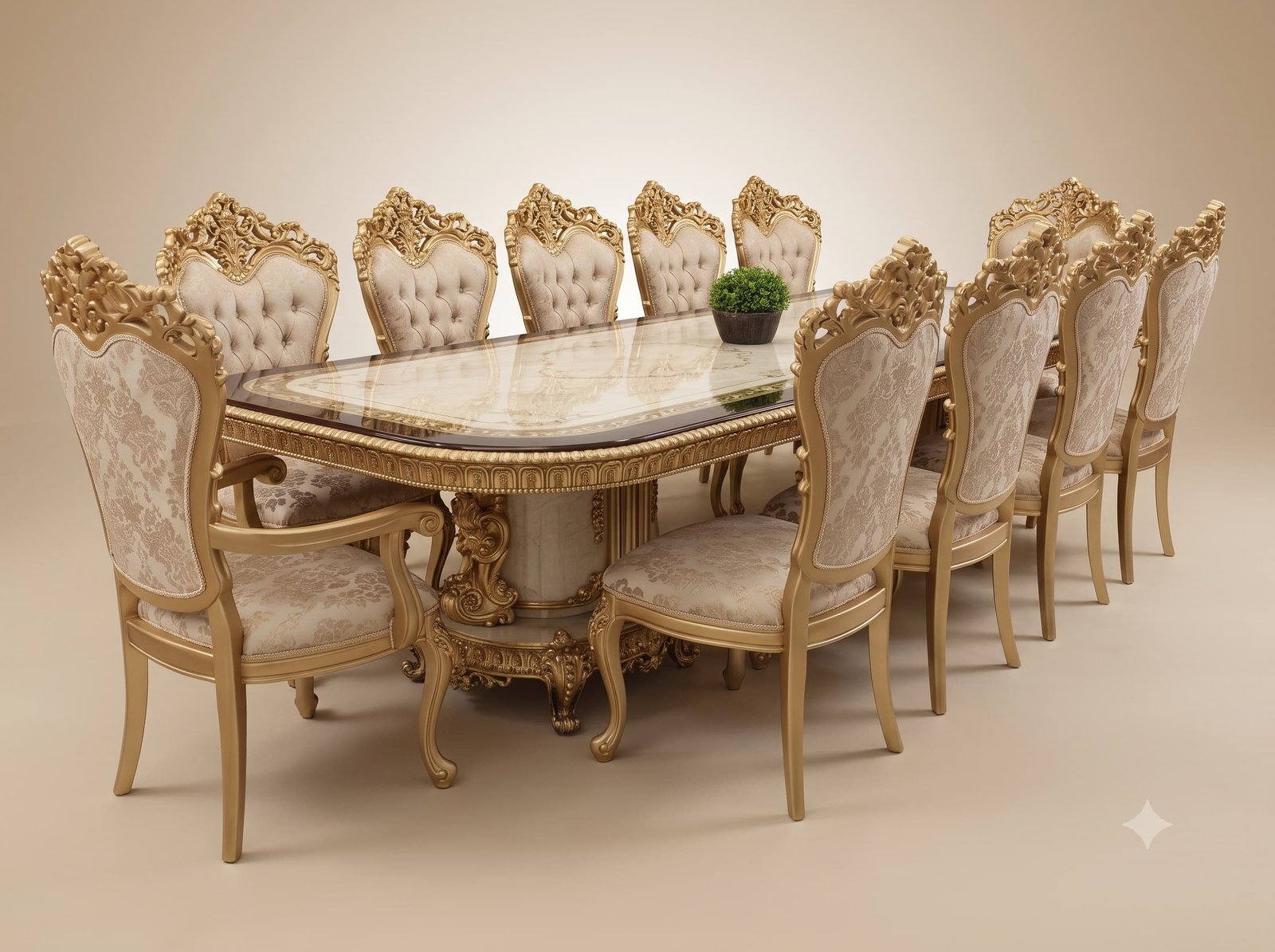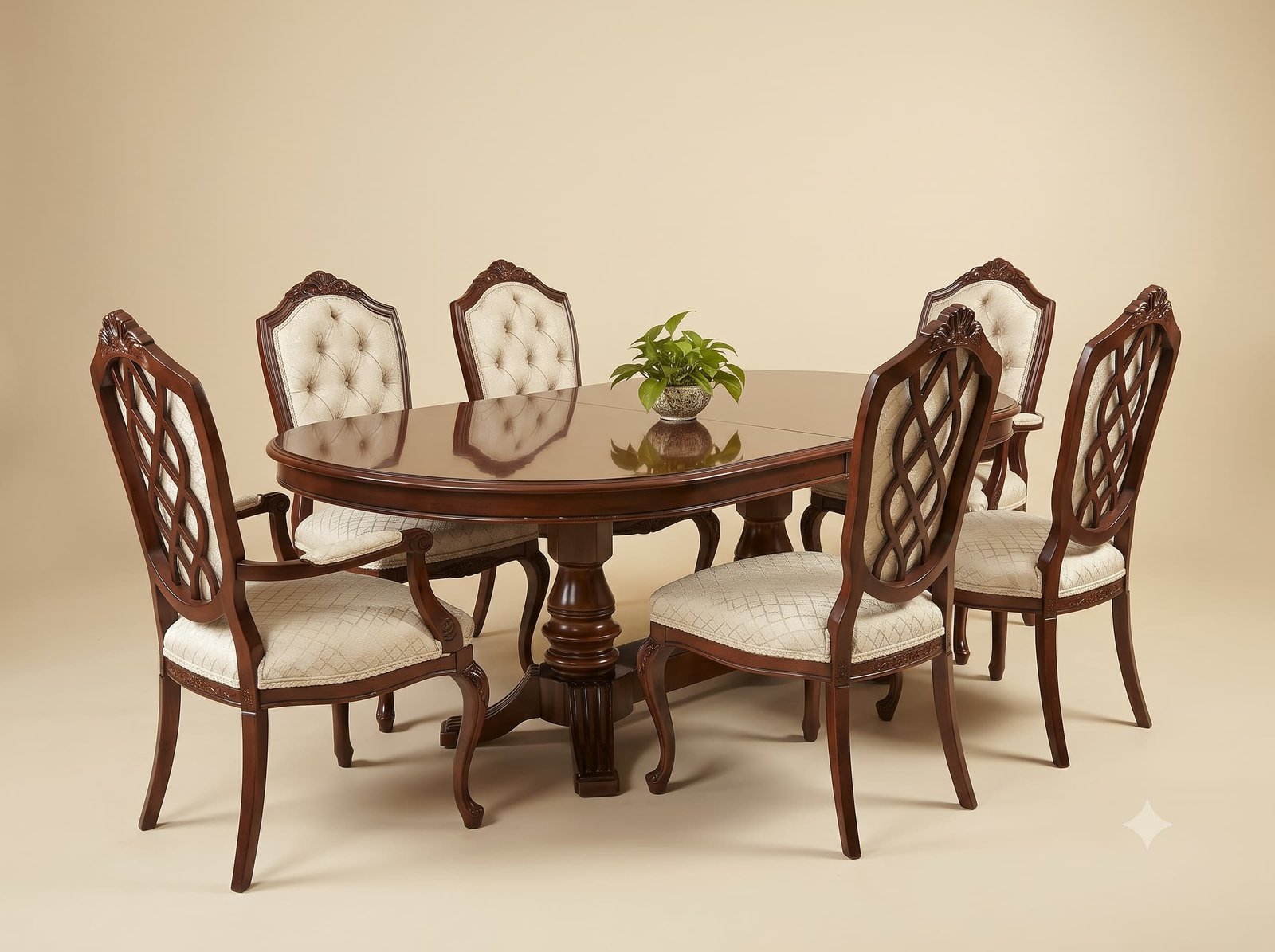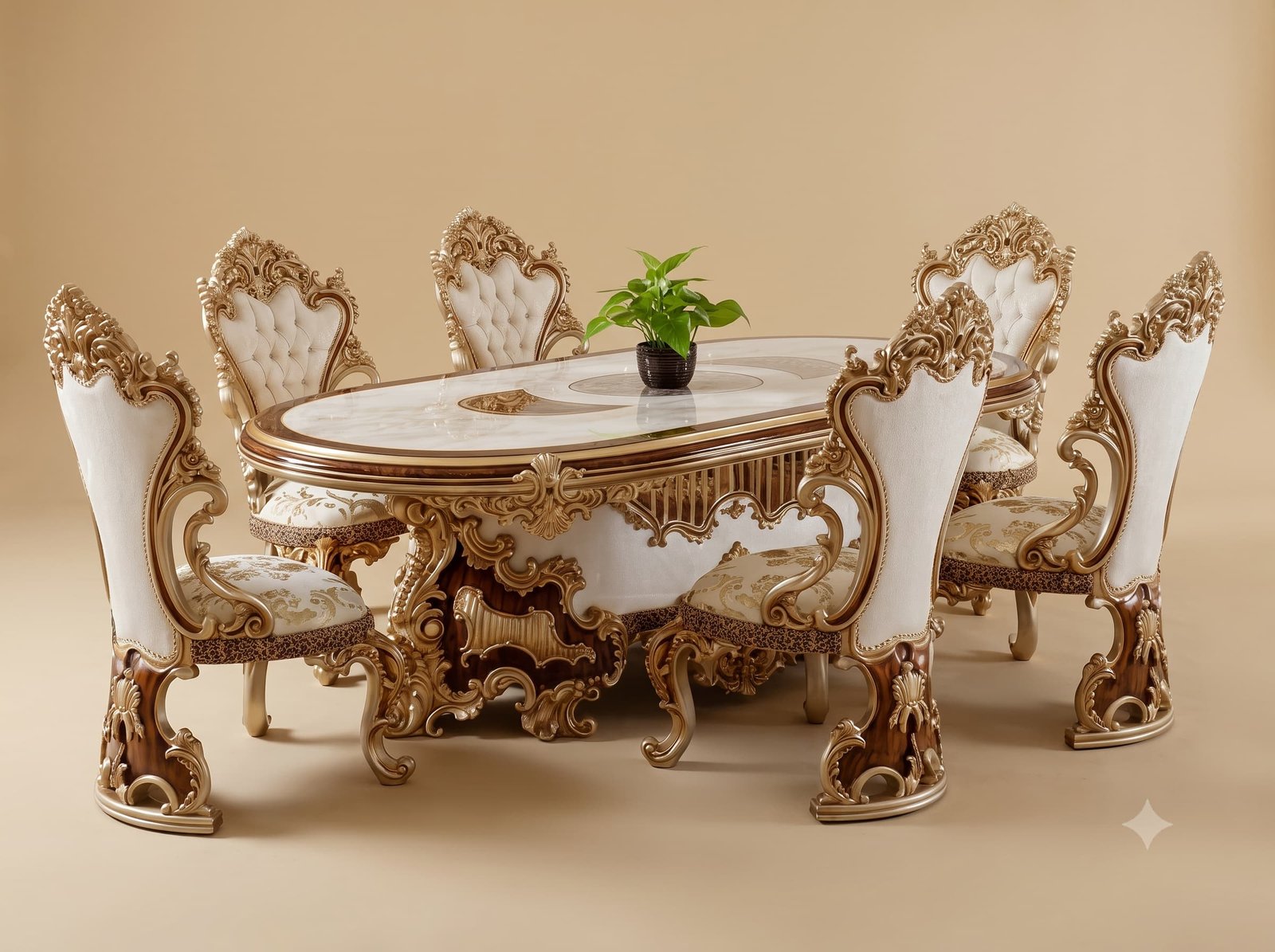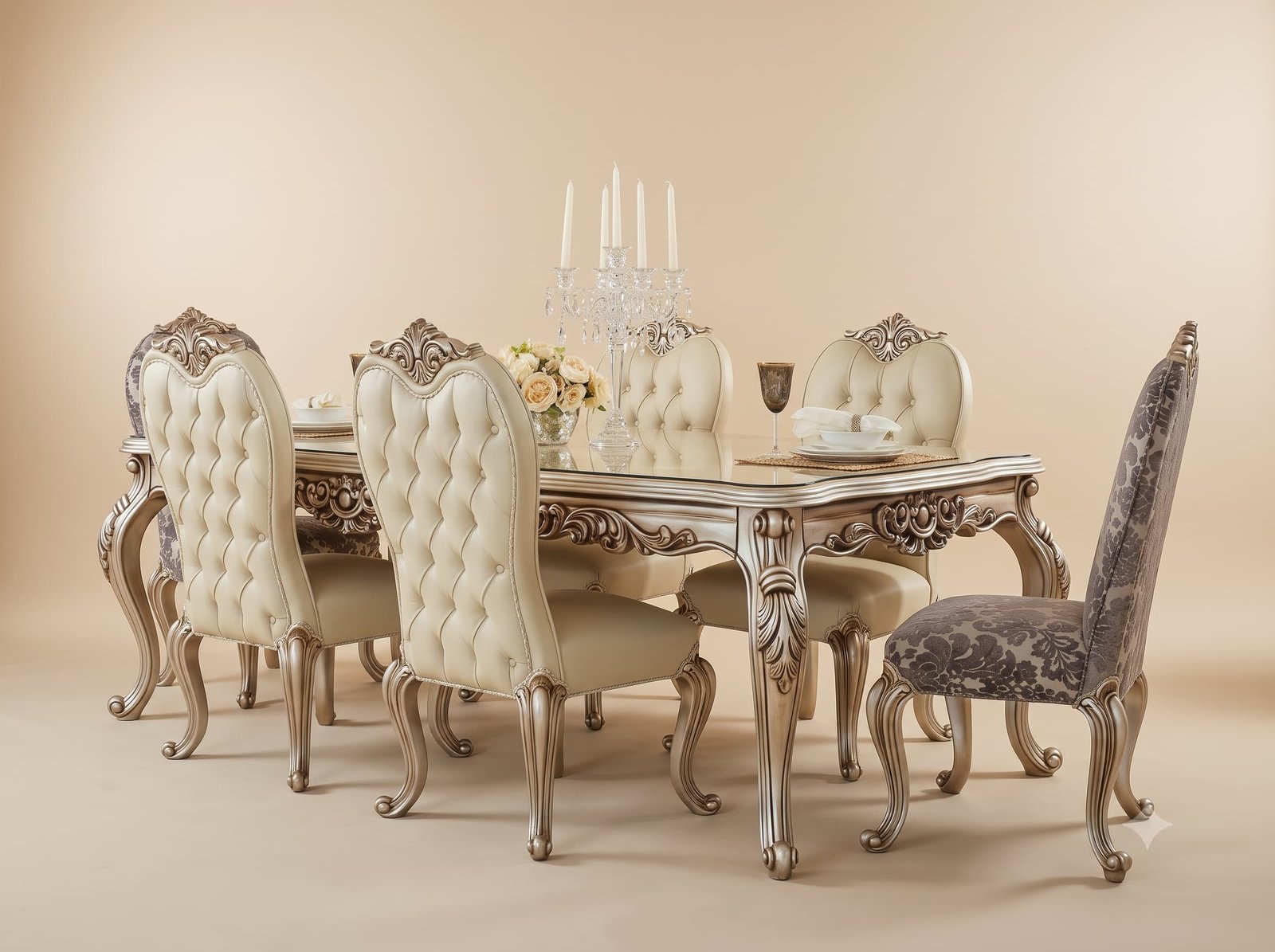
Deep buttoning on a dining chair back raises a question a sofa never has to answer: what happens when someone sits upright against it for two hours?
On a sofa you lean back into a deep, soft mass and the buttons disappear into the fill. On a dining chair the back is firmer and shallower by necessity - it has to keep you upright - so a button pulled tight is much closer to your spine, and the small of the back is exactly where it will make itself felt.
So the buttoning grid on our dining chairs is set out from the sitter, not from the panel. The lumbar zone - the area that meets the small of the back at normal dining posture - is placed between button rows rather than on one, so what rests there is the unbroken fill between buttons. The rows above and below it are spaced to make that work while keeping the diamonds even to the eye.
On a taller back, that means the grid is not always symmetrical top to bottom. It reads as symmetrical, because the diamonds are all the same size, but the whole grid sits slightly higher or lower than the geometric centre of the panel.
It is a compromise between what looks right and what feels right, resolved in favour of the person sitting there. On a chair meant for long meals, that is the correct way round.
 Ask Price On WhatsApp