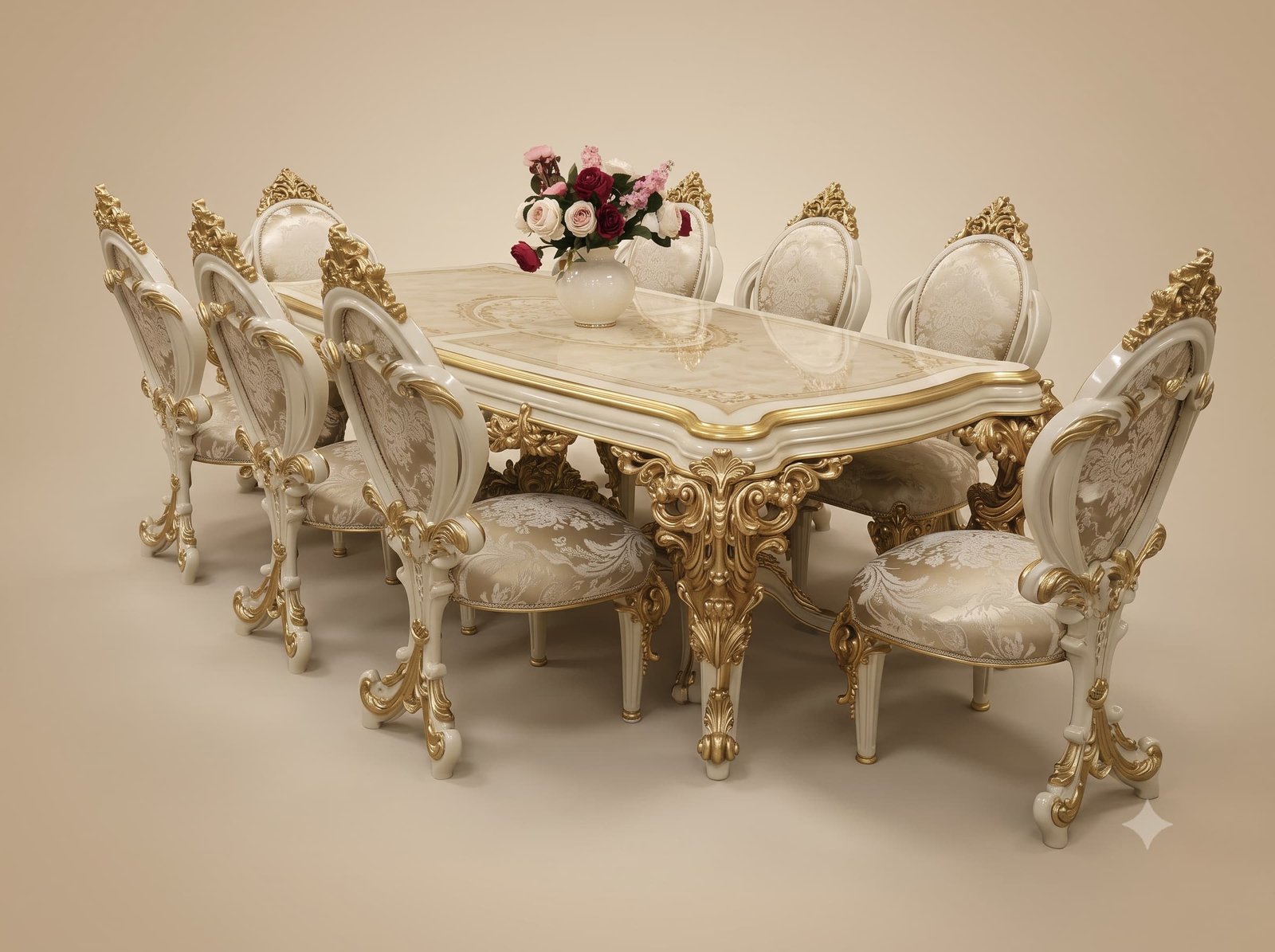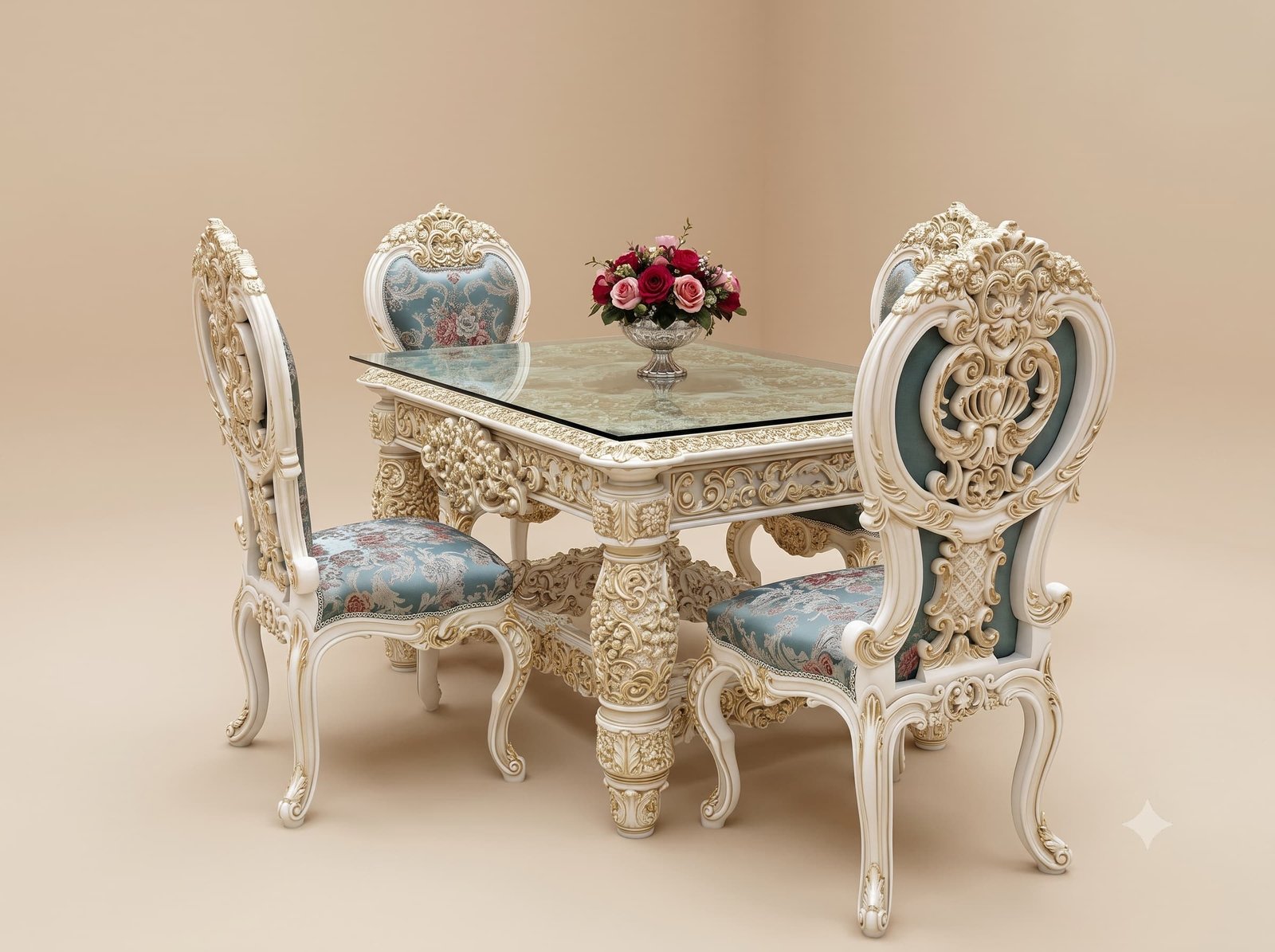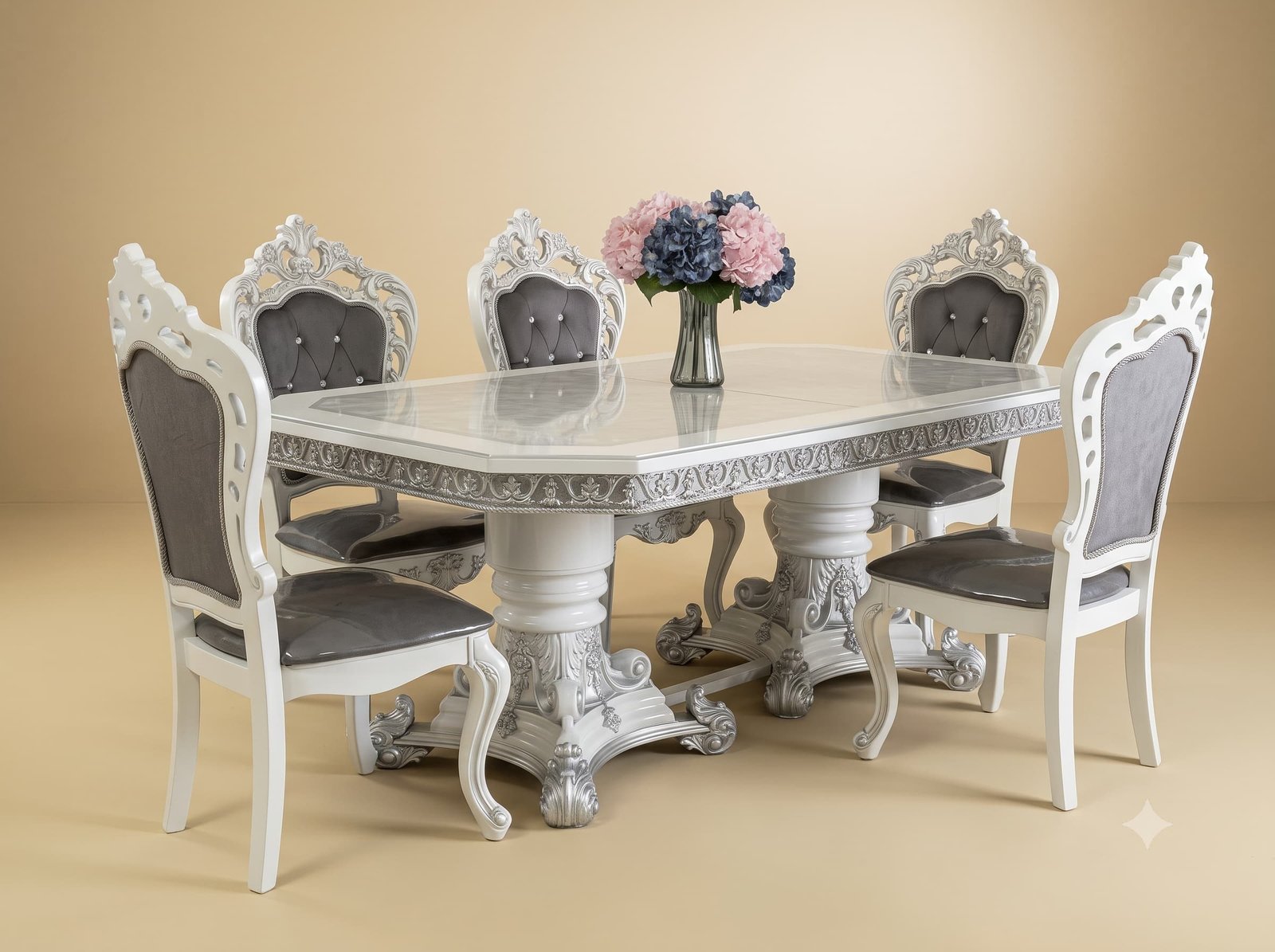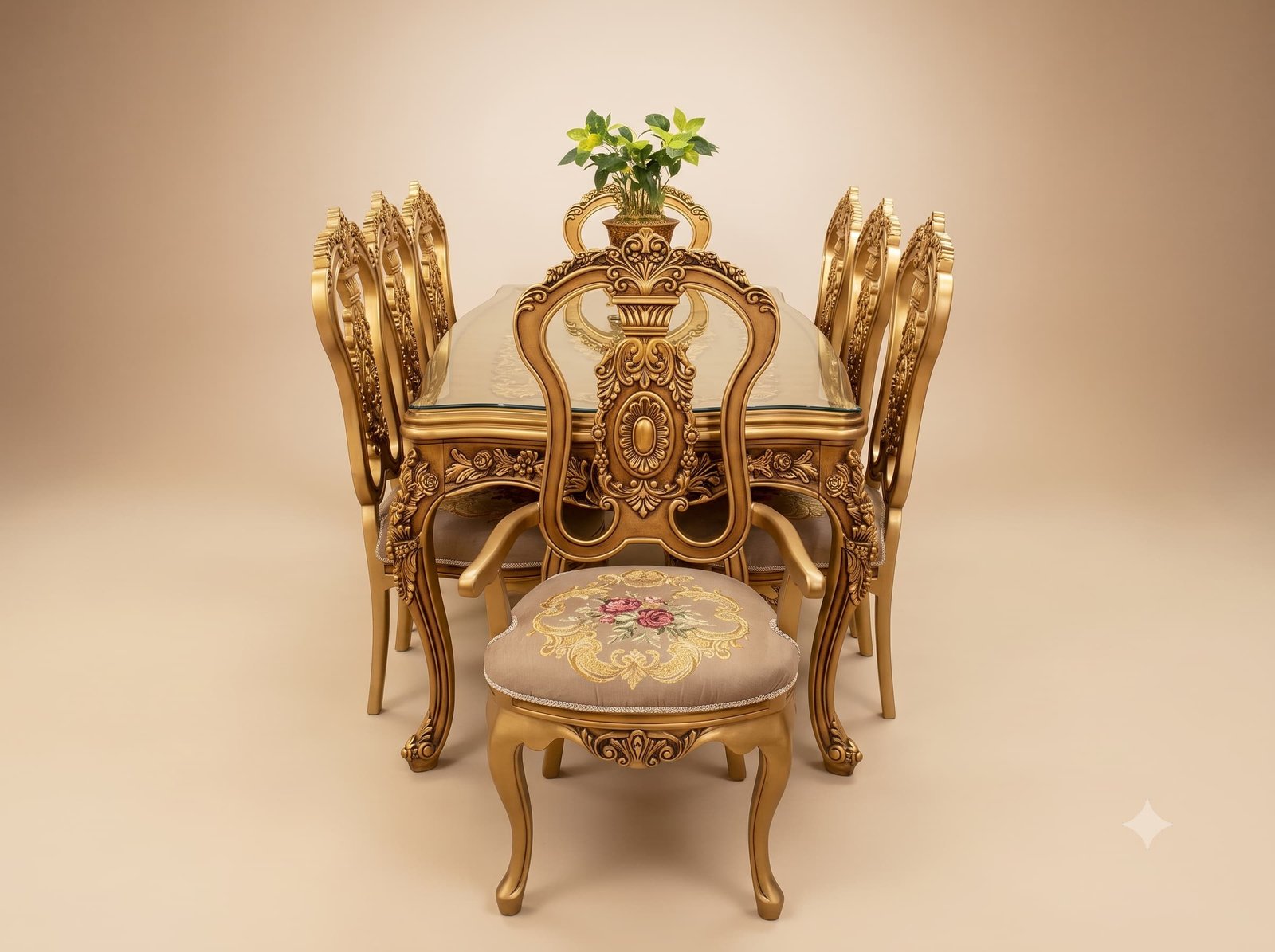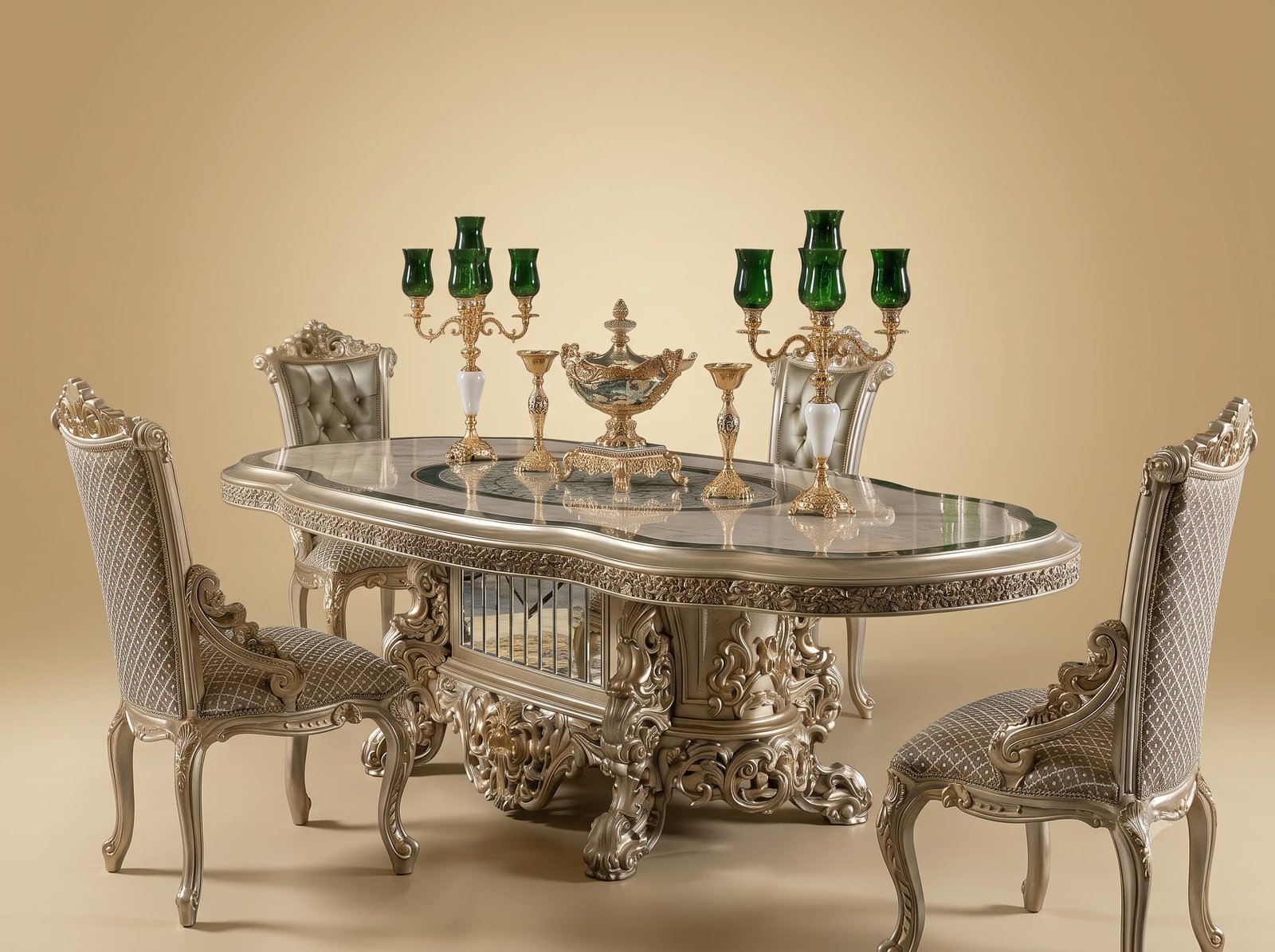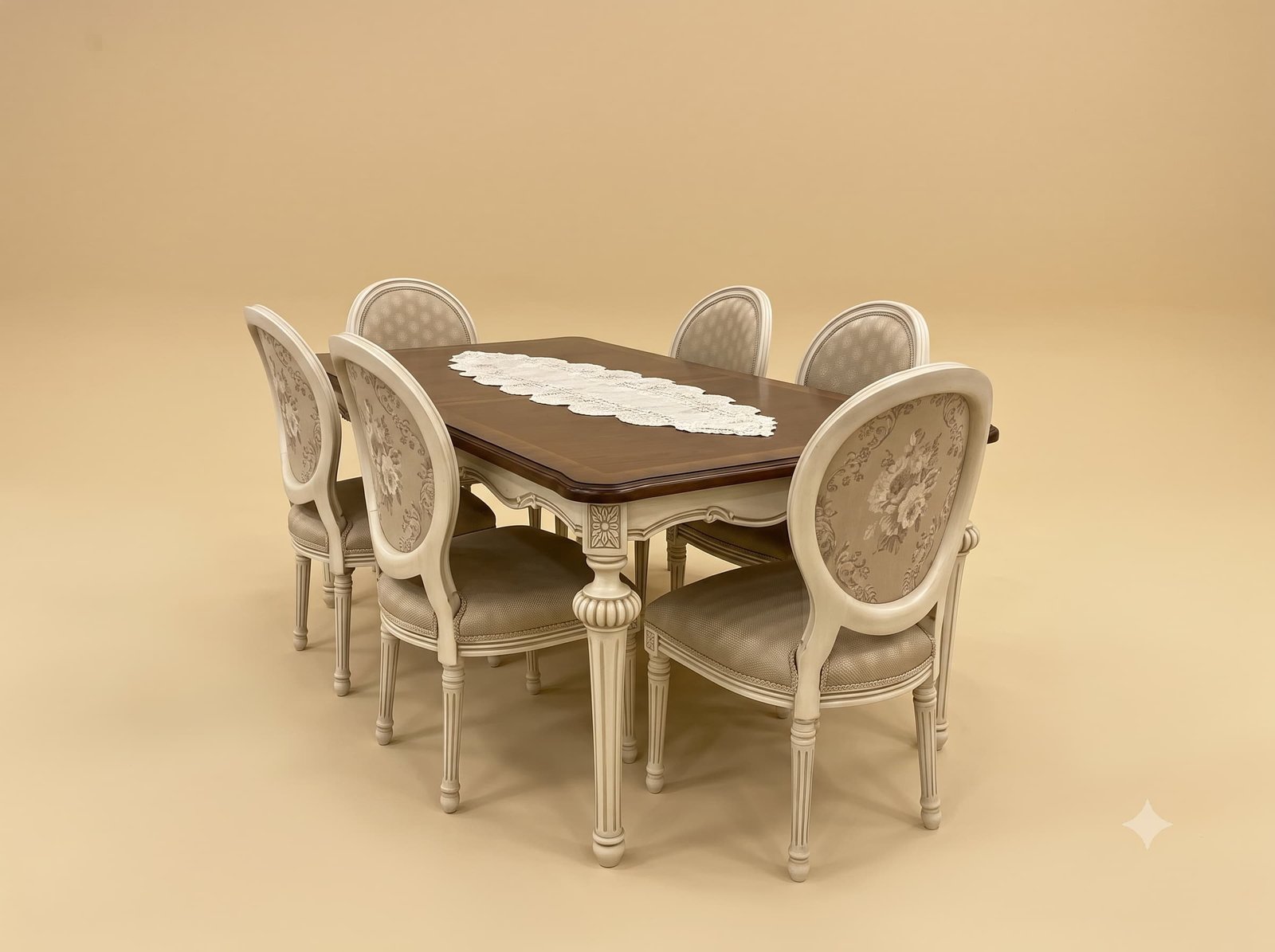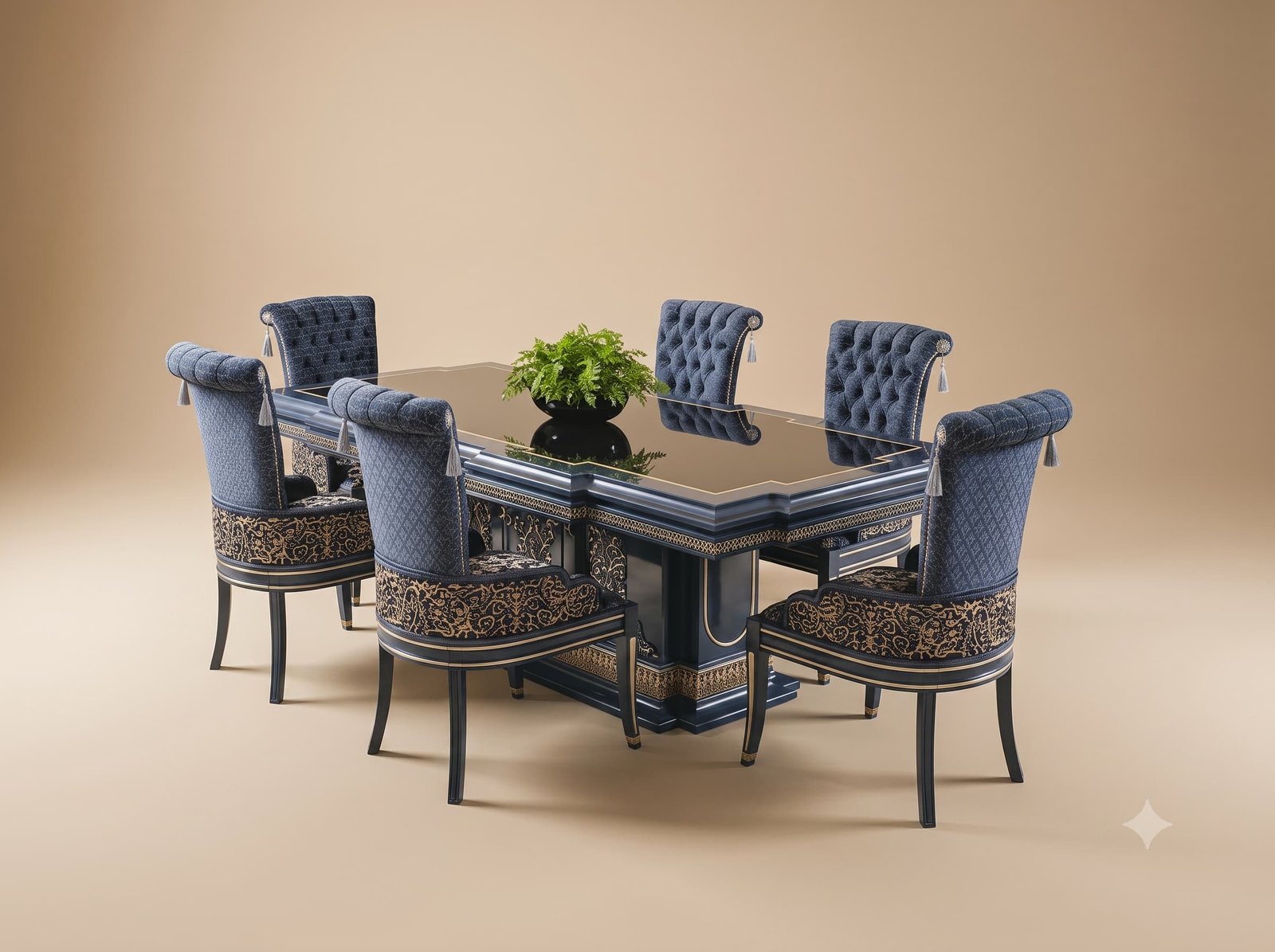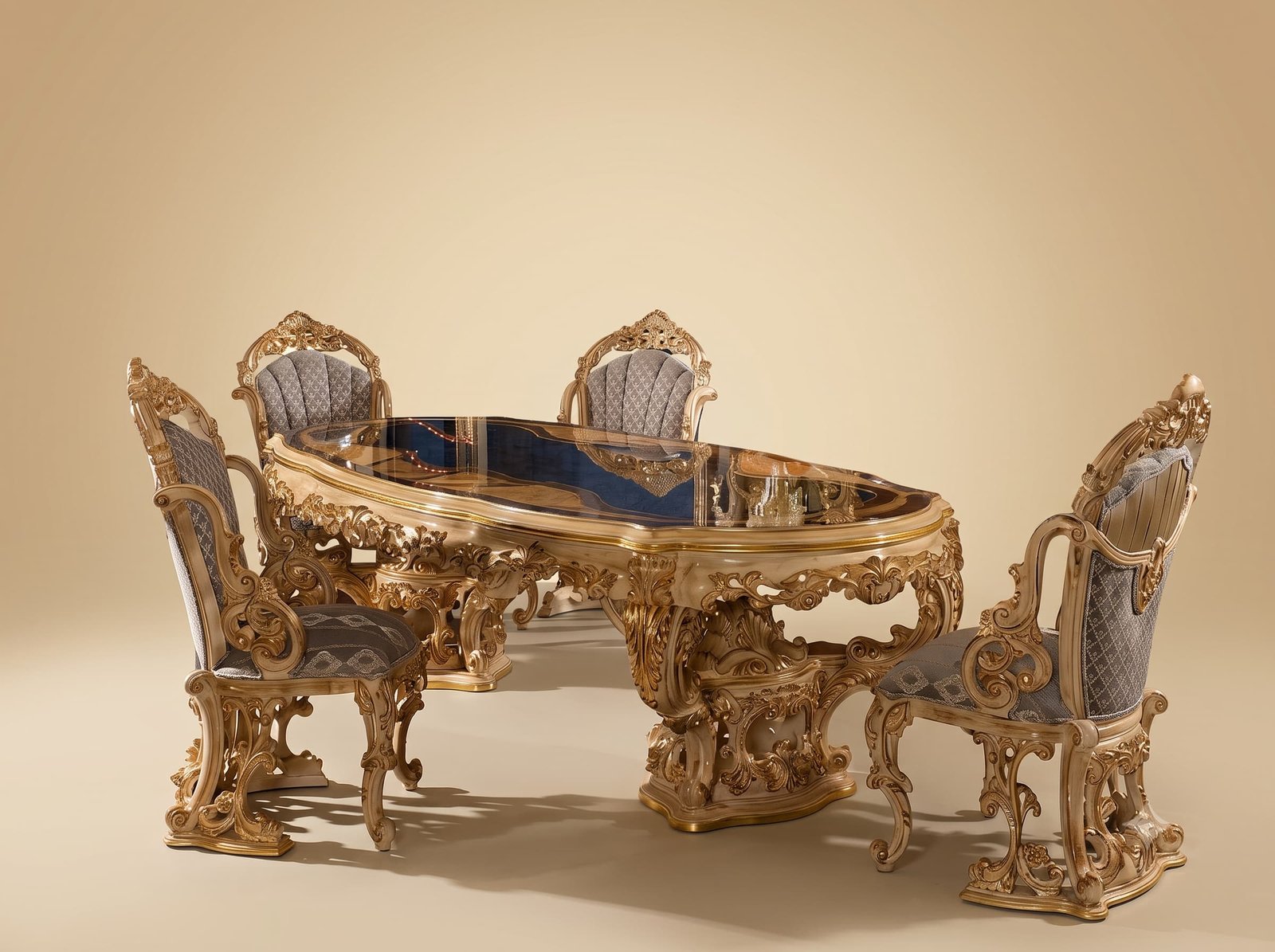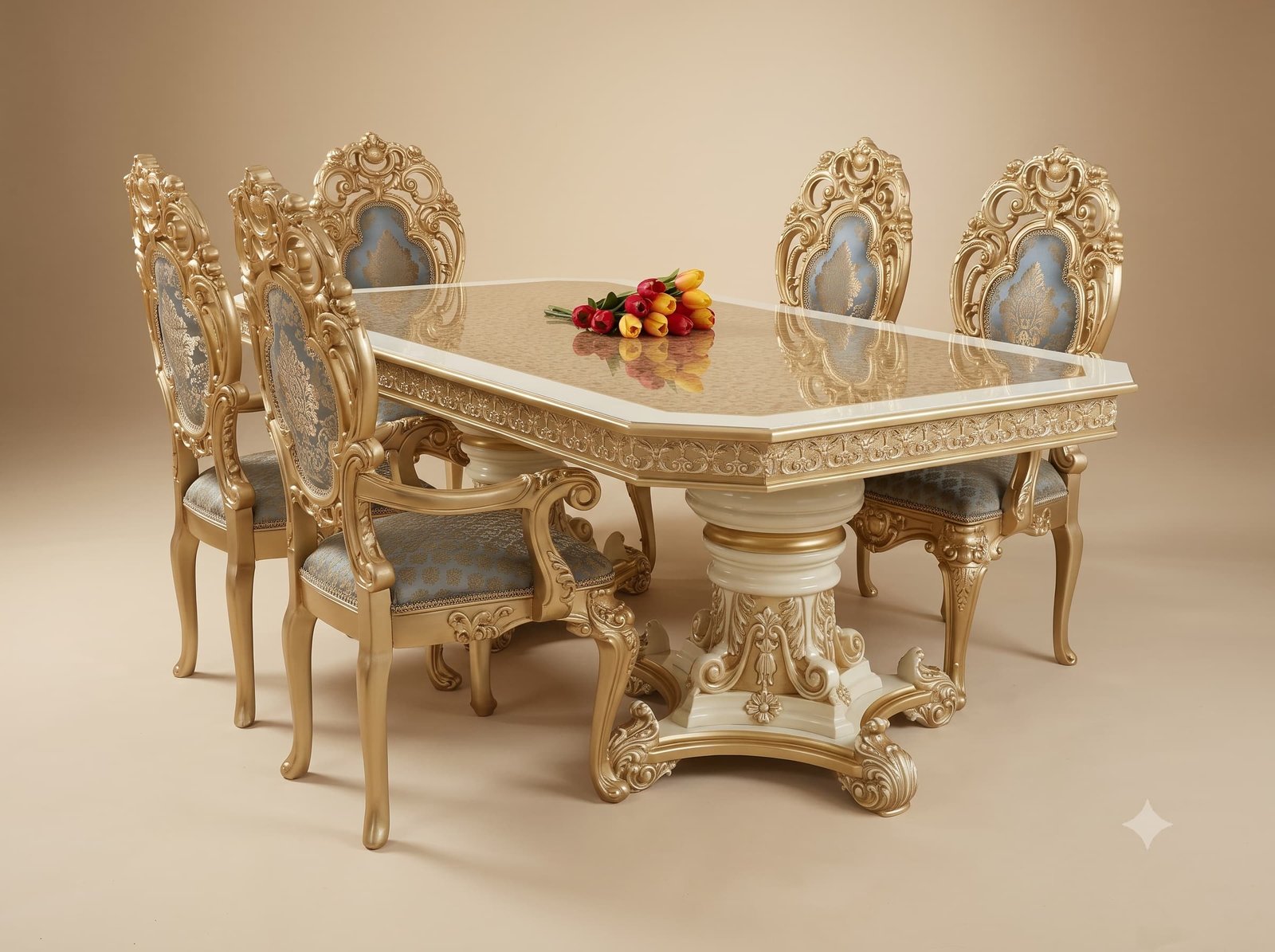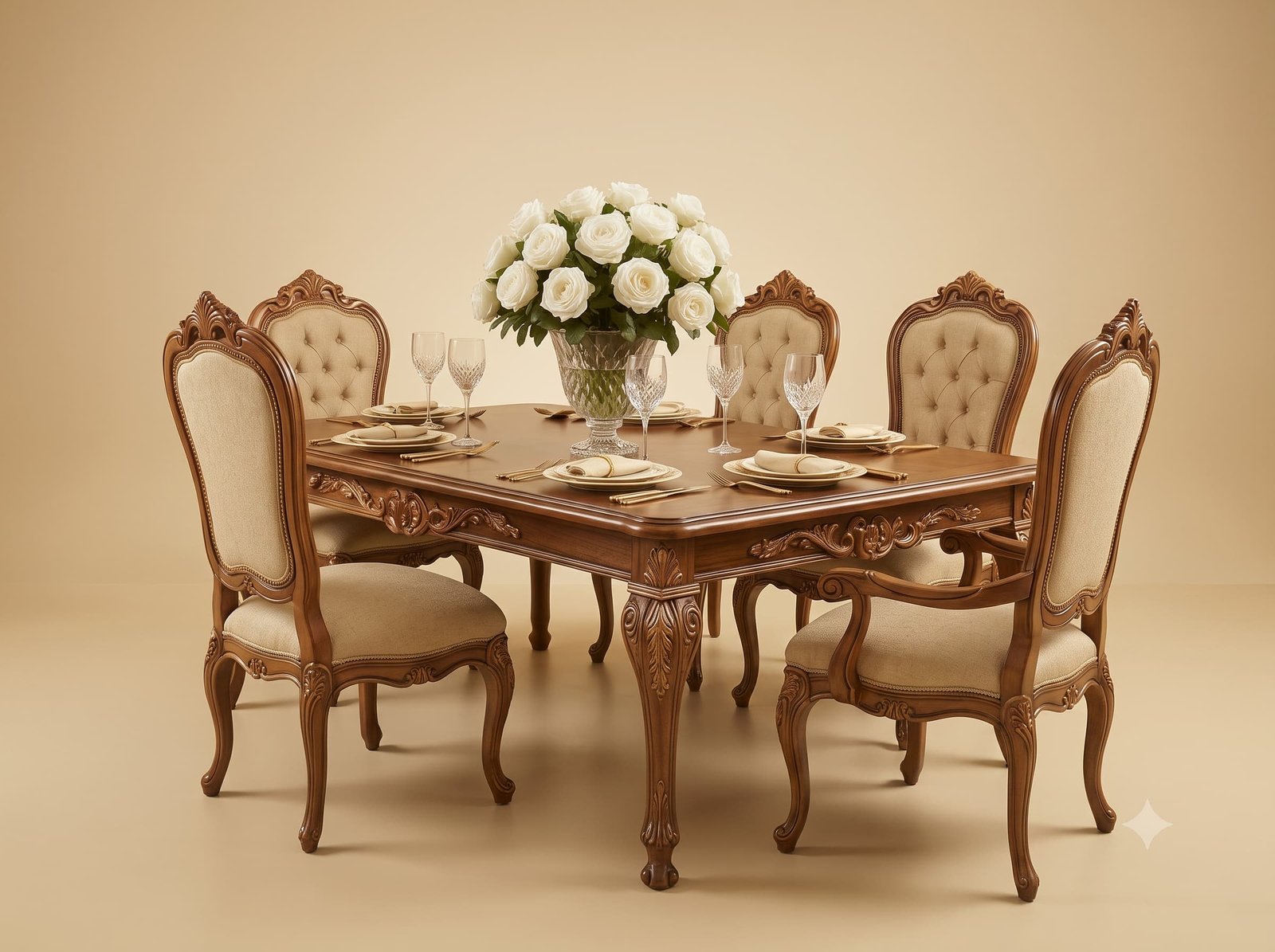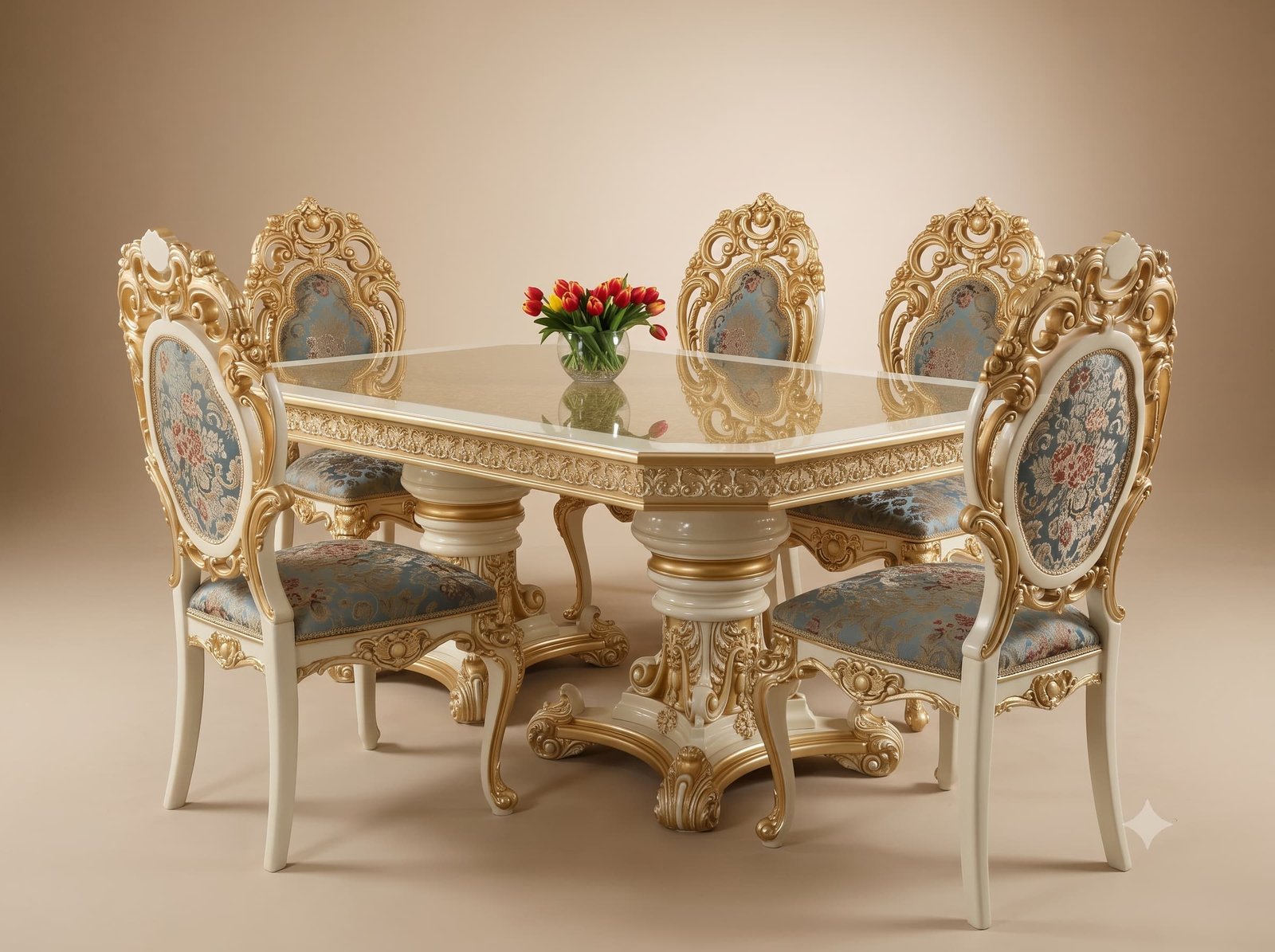
The usual way to upholster a chair back panel is to stretch the cloth over a pad and staple it round the back, then cover the staples with braid or a strip of the same fabric. It works, and on a dark frame it lasts well. On a white frame, it is the weak point: the fabric edge stands proud, it collects hand marks where people pull the chair out, and when it eventually frays, the fraying is the first thing anyone sees.
So we rebate the frame instead. A shallow step is cut around the inside edge of the carved back frame, and the finished panel drops into that step, sitting below the surface of the timber. A thin moulded bead then holds it in, pinned from the inside.
Two things follow from that. The cloth edge is protected by timber on all four sides, so nothing frays where hands touch. And the panel is removable: take the bead out, lift the panel, put a new one back. A chair can be re-covered without stripping the frame, which on a white gilded frame is the difference between a simple job and a refinish.
It is slower to build. It is the reason a white dining chair still looks white after ten years of family meals.
 Ask Price On WhatsApp