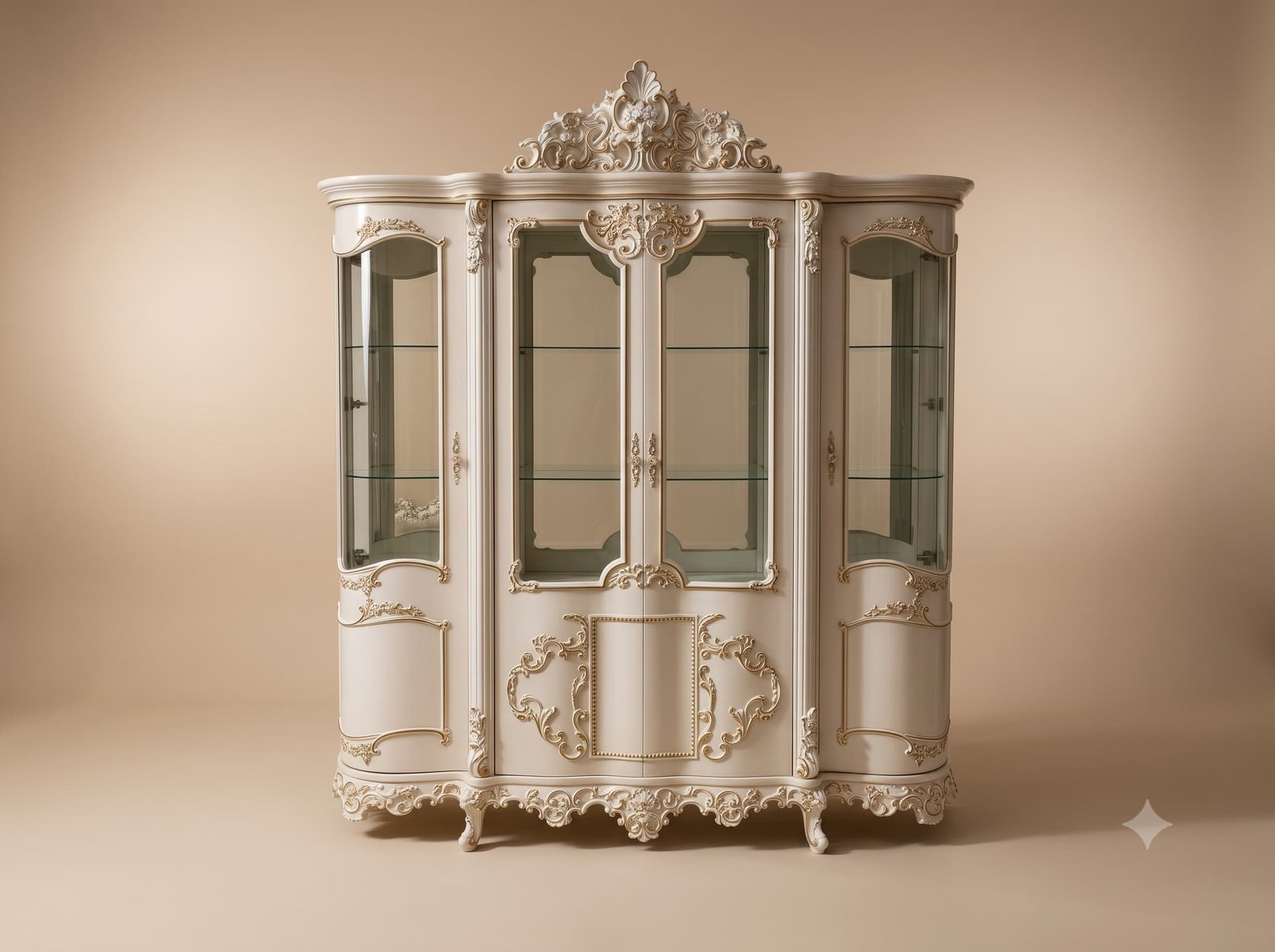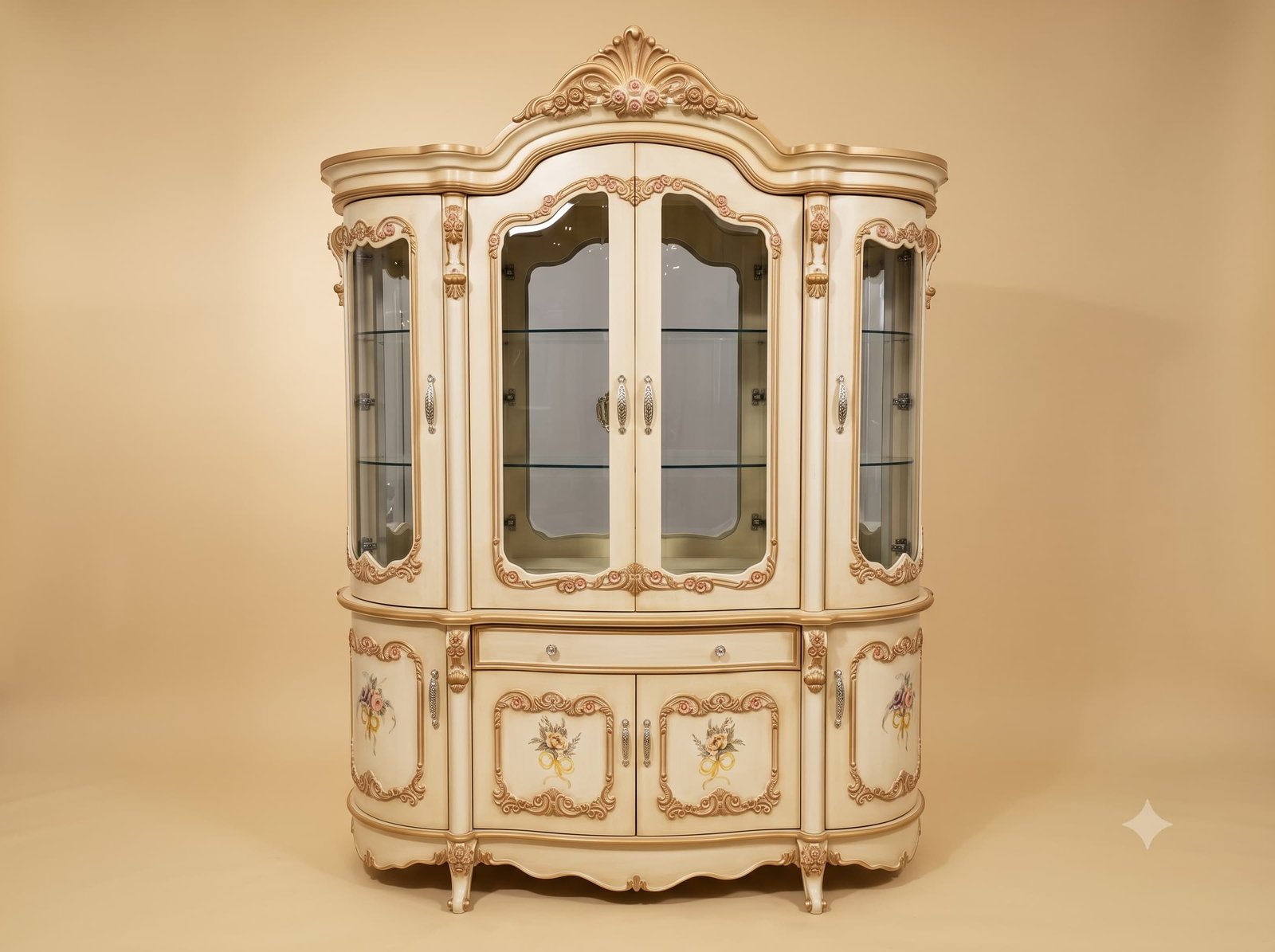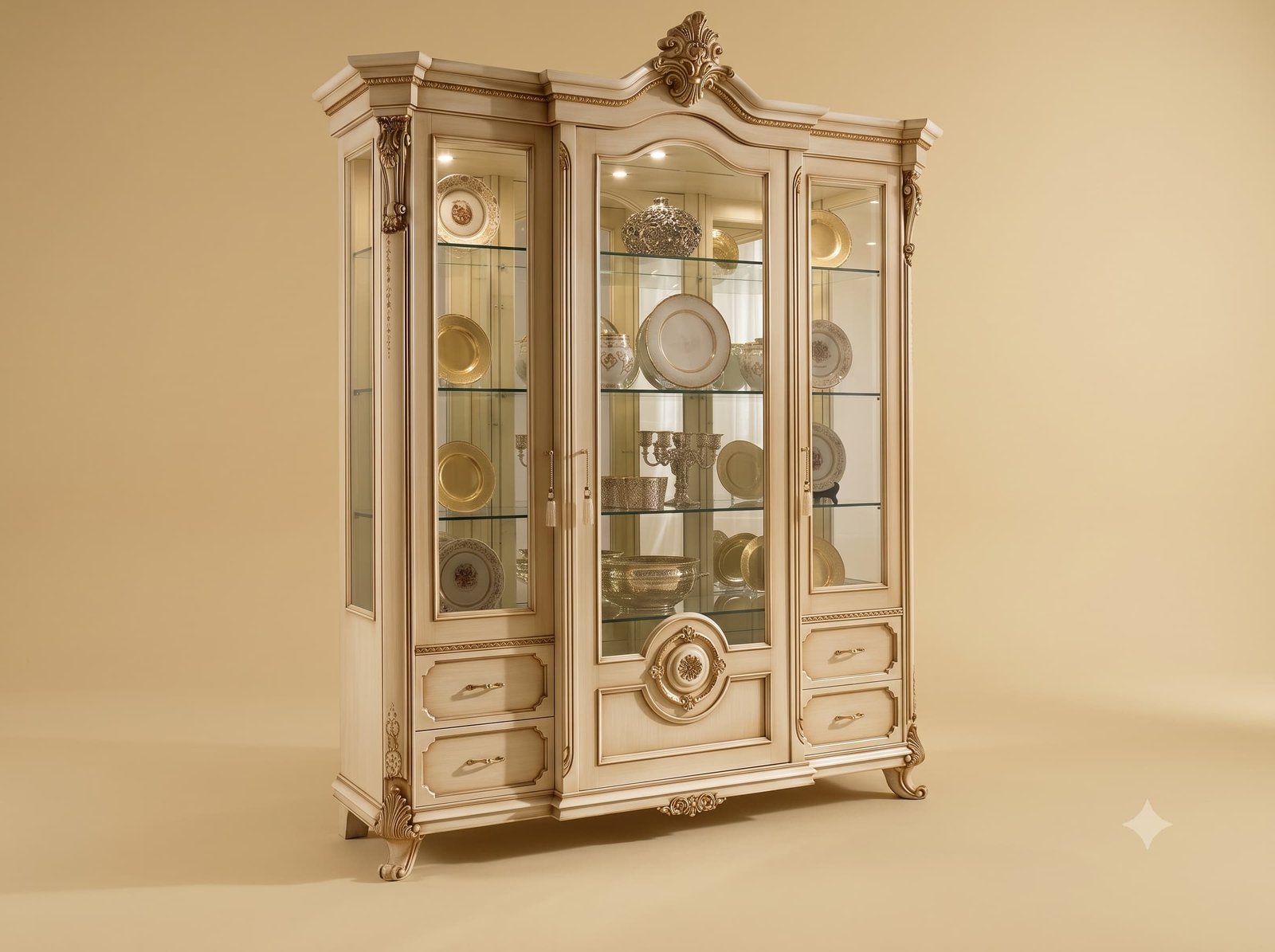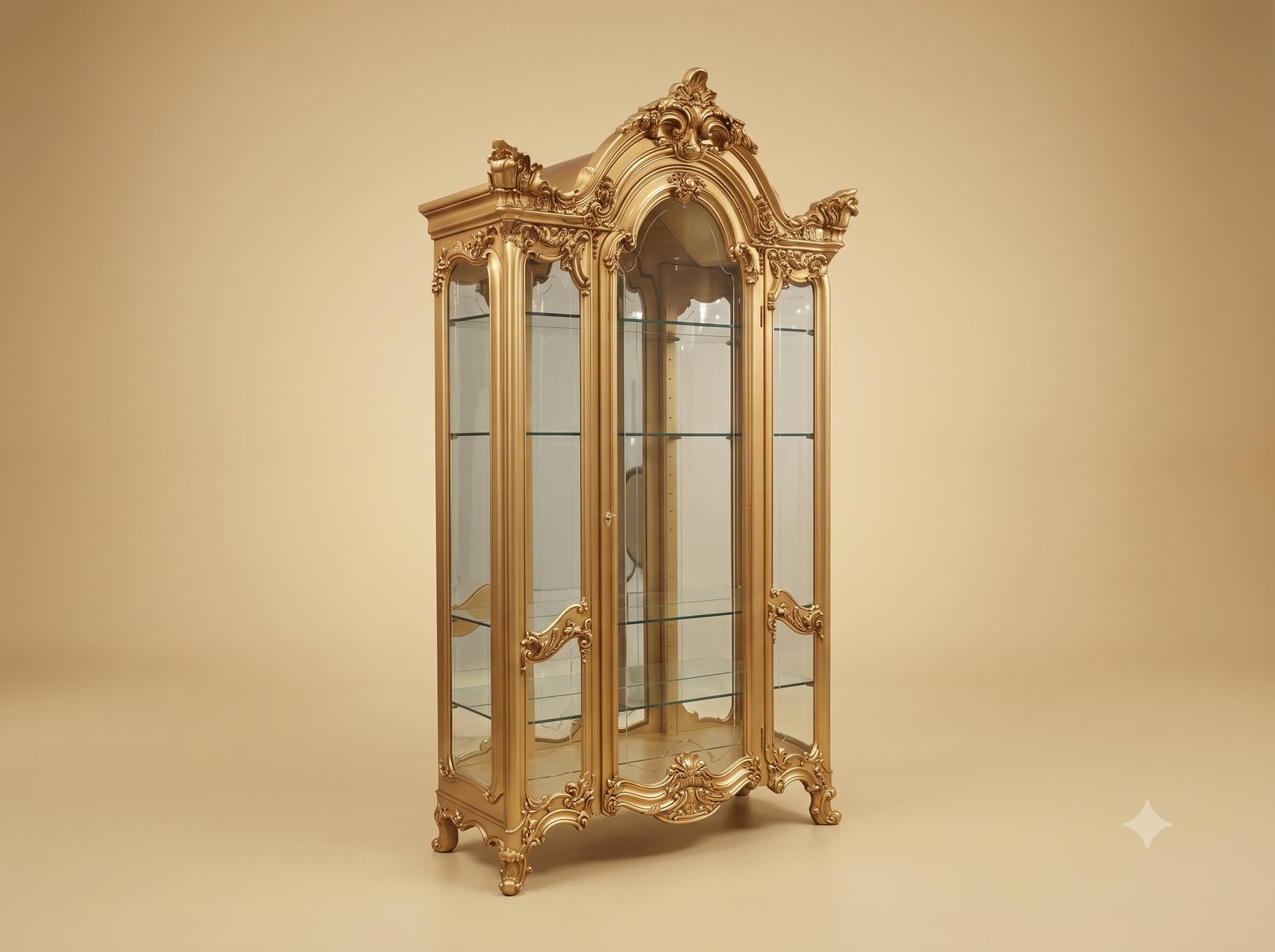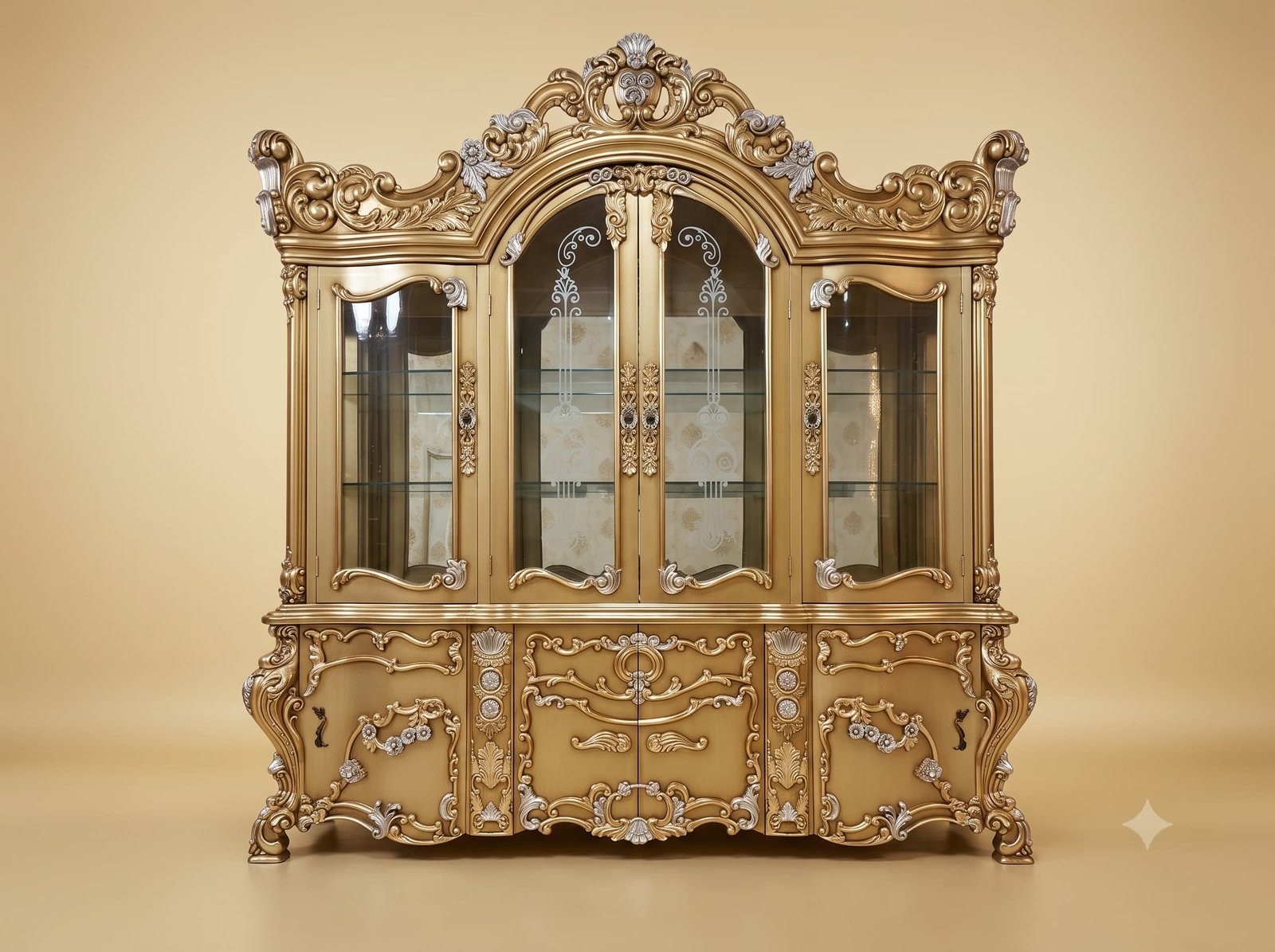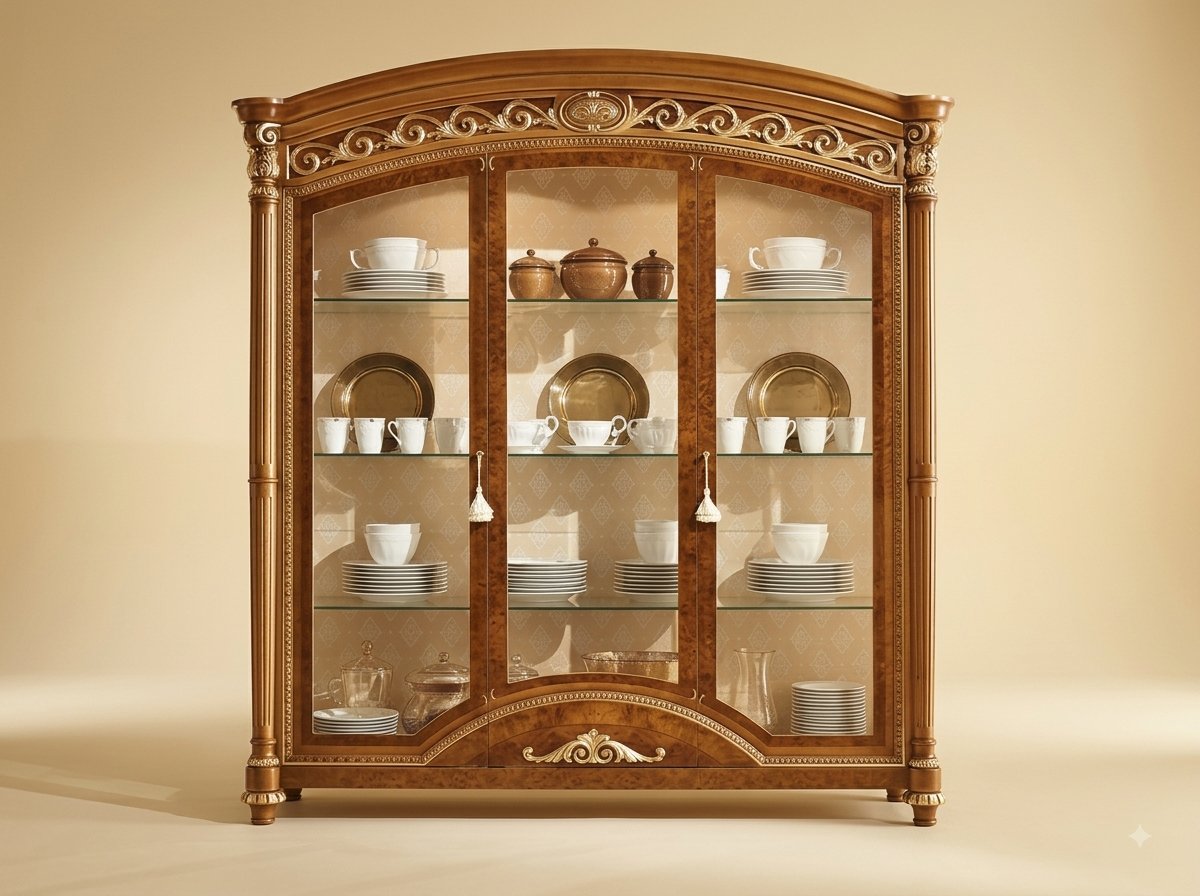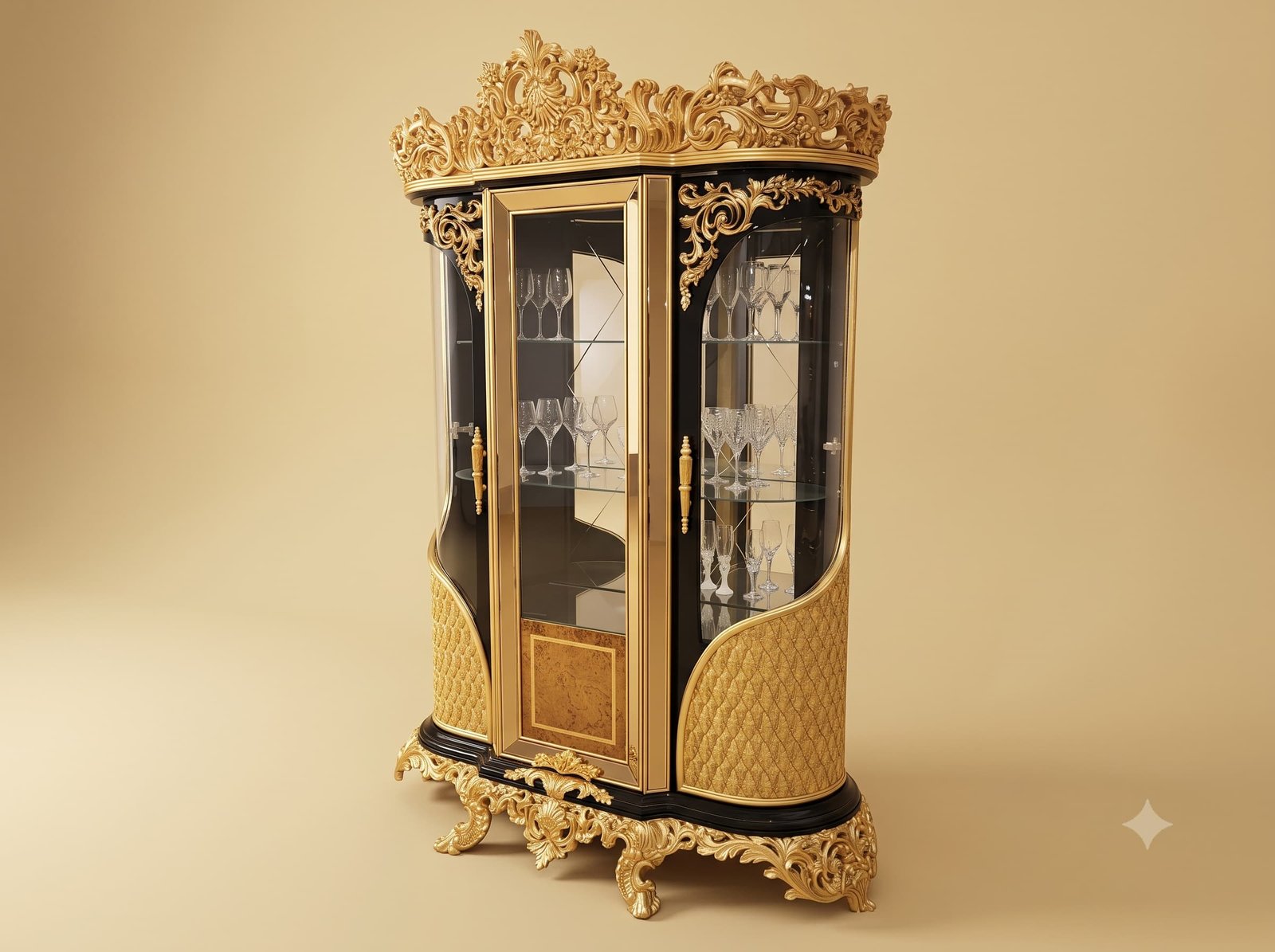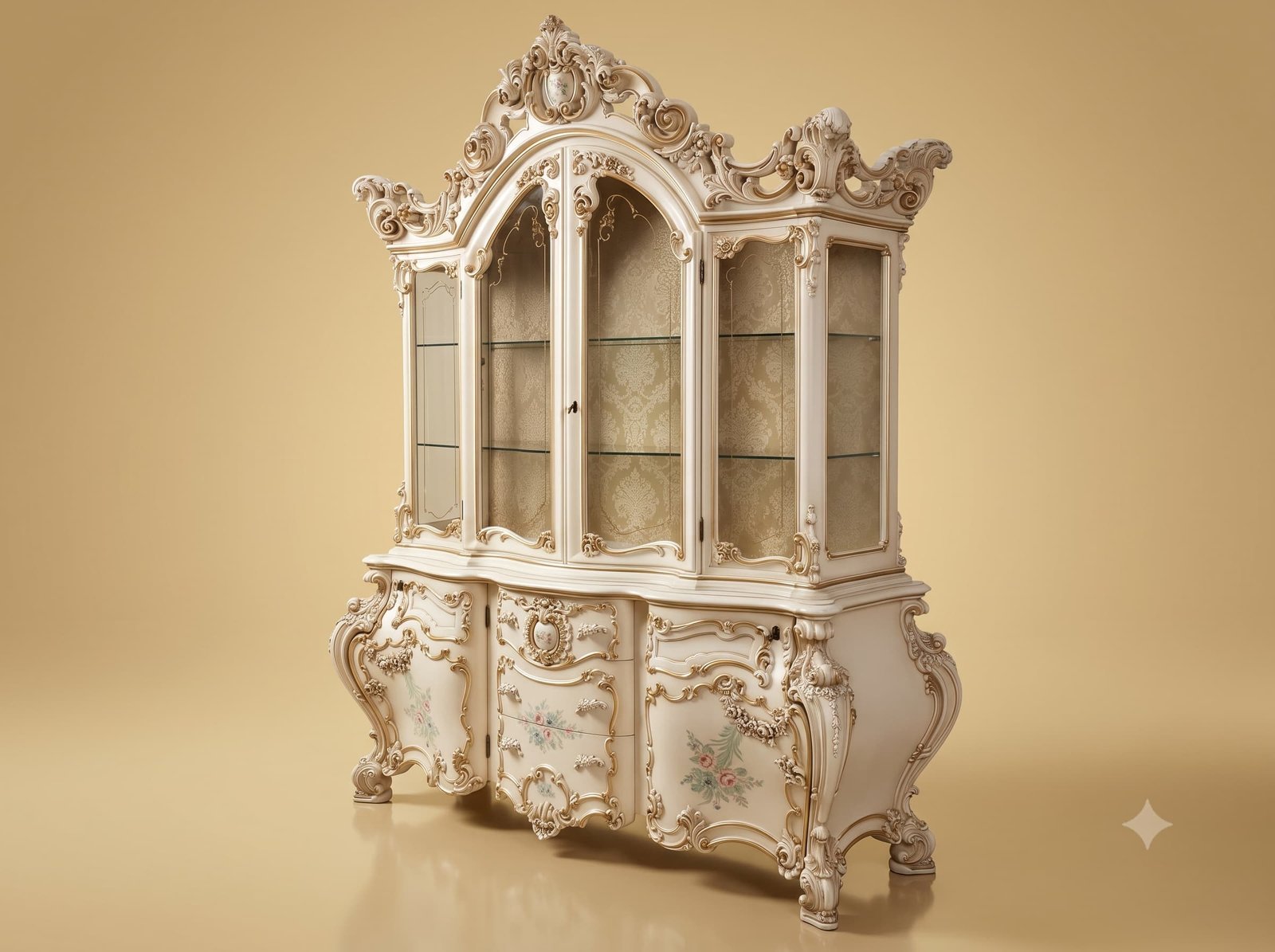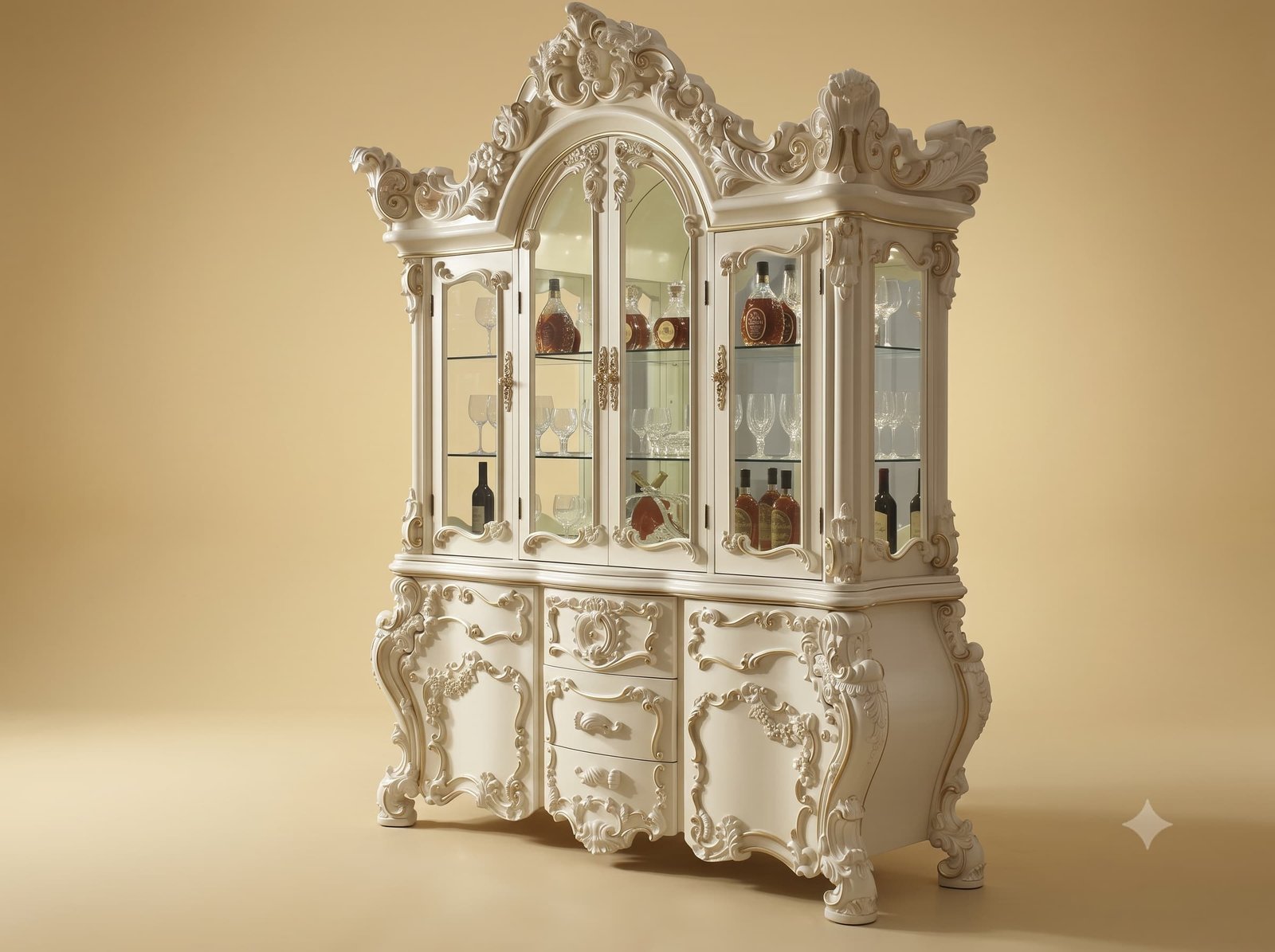
Most glass shelves in display cabinets are designed for objects. A bar shelf is designed for bottles, and the difference is not small - a row of full bottles across a shelf is a serious distributed load, applied continuously for years.
Two things change. The first is thickness: a bar shelf is specified thicker than a curio shelf of the same span, because glass deflects, and a shelf that sags a millimetre looks fine on day one and looks wrong after a year of standing bent.
The second, and the one that actually matters, is how it is carried. The usual method is four small pegs, one near each corner. That is adequate for light objects and it is the wrong answer under a bar load, because the whole weight of the shelf and everything on it is concentrated at four points - and the point where glass is weakest is a point.
So our master Indian artisans support bar shelves on continuous rails running the full depth at each side. The load is spread along the entire edge instead of being gathered into four spots, the deflection is halved, and the glass is never asked to bear on anything sharp.
You cannot see the difference when the cabinet is empty. You can see it very clearly ten years after it was filled.
 Ask Price On WhatsApp