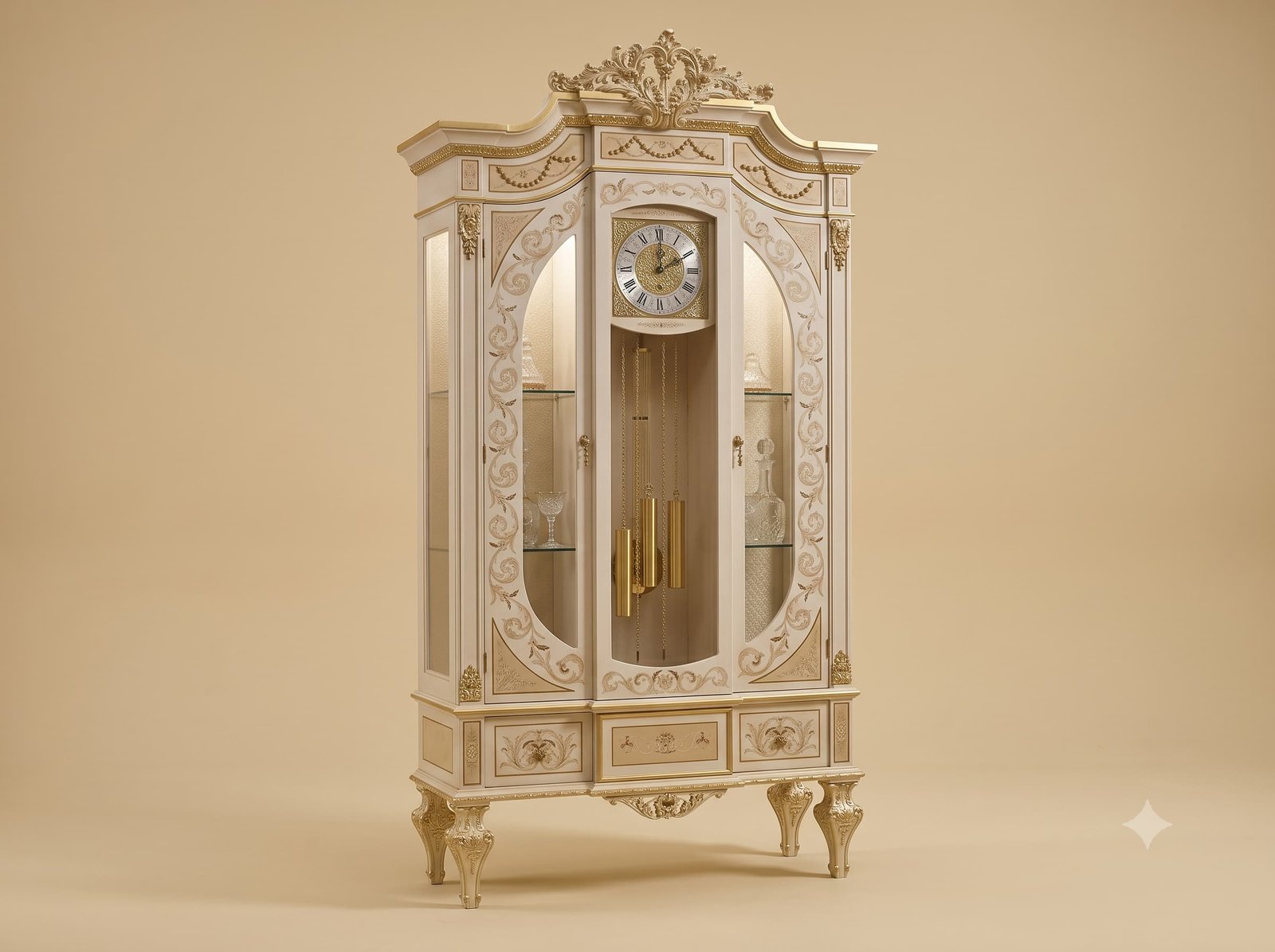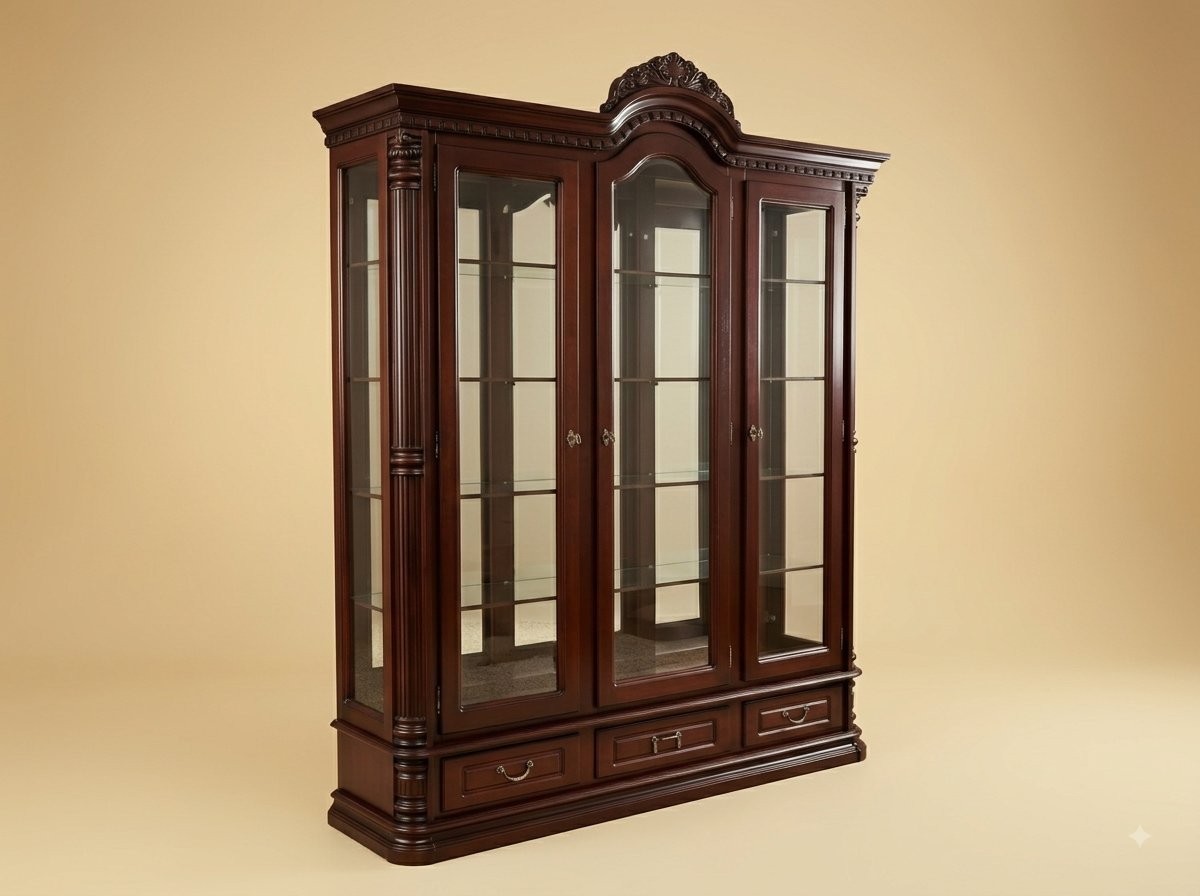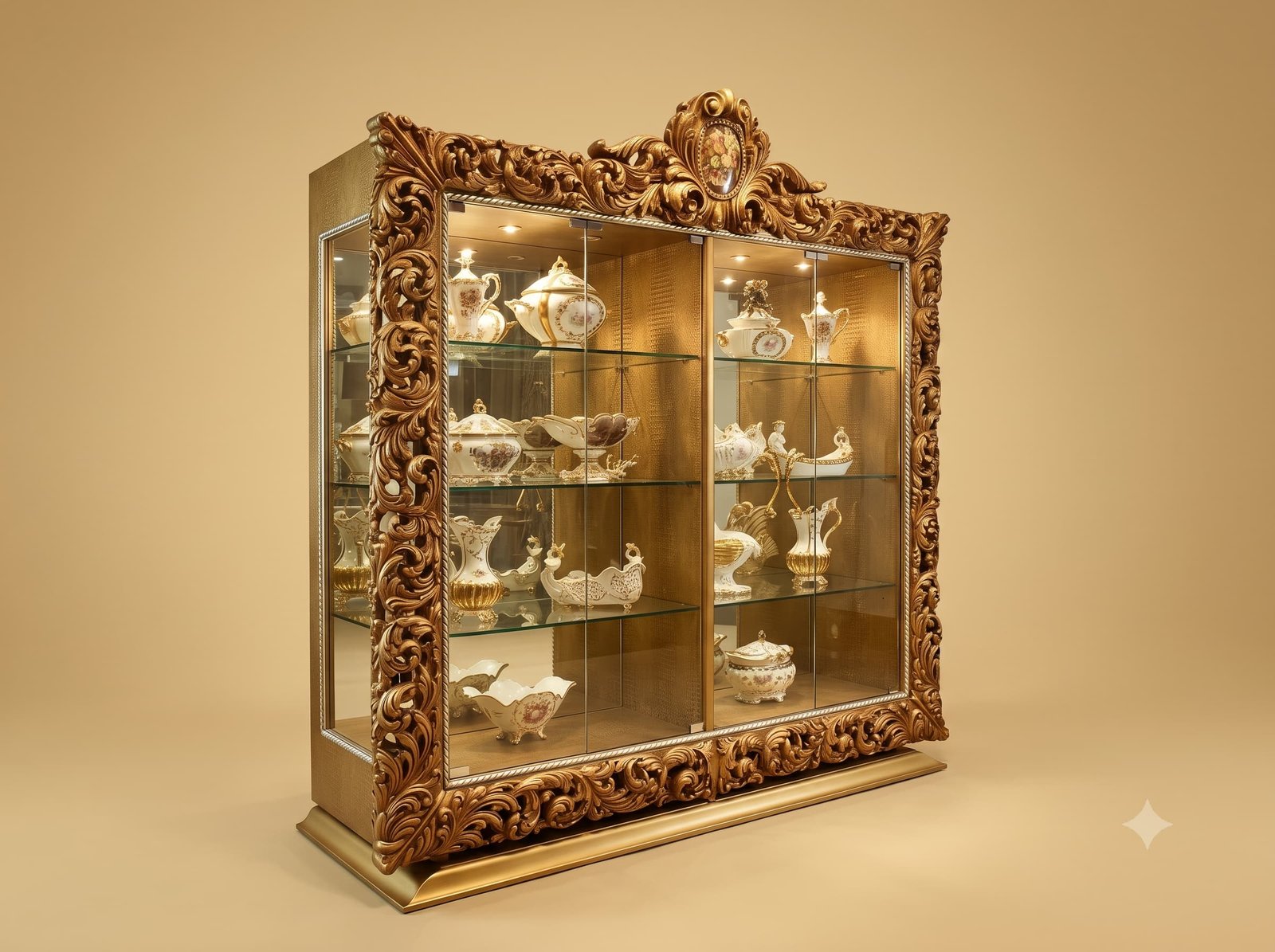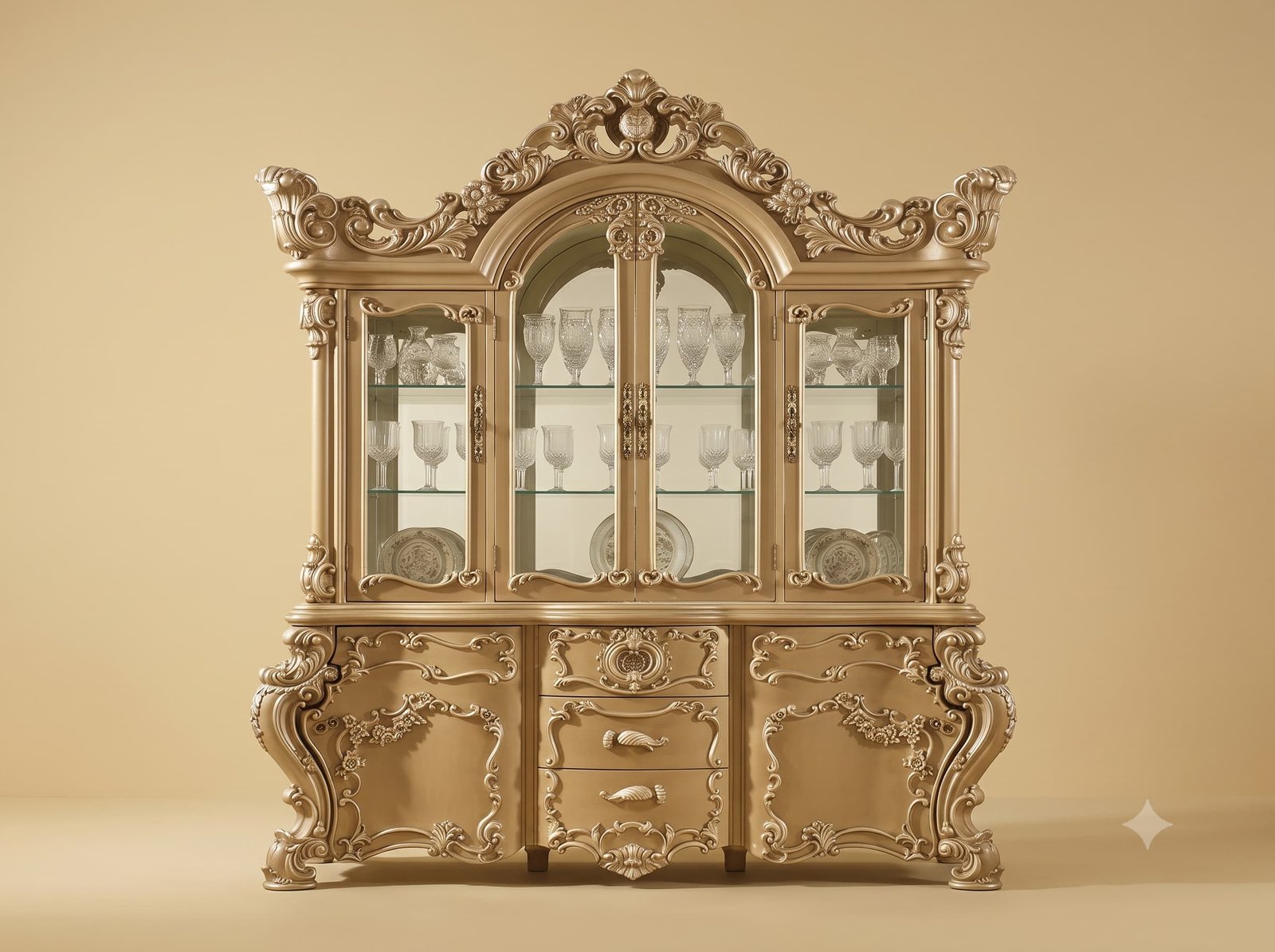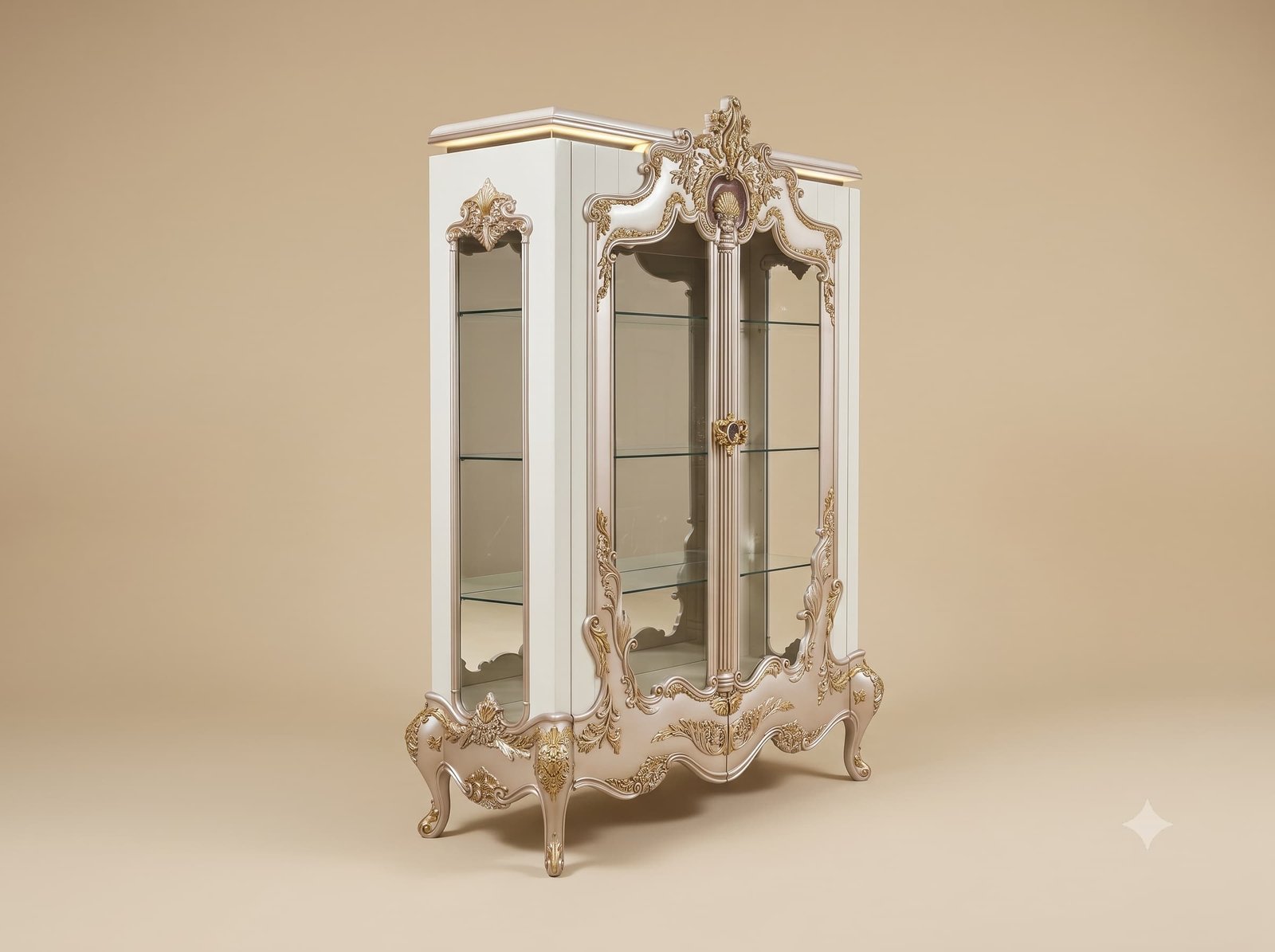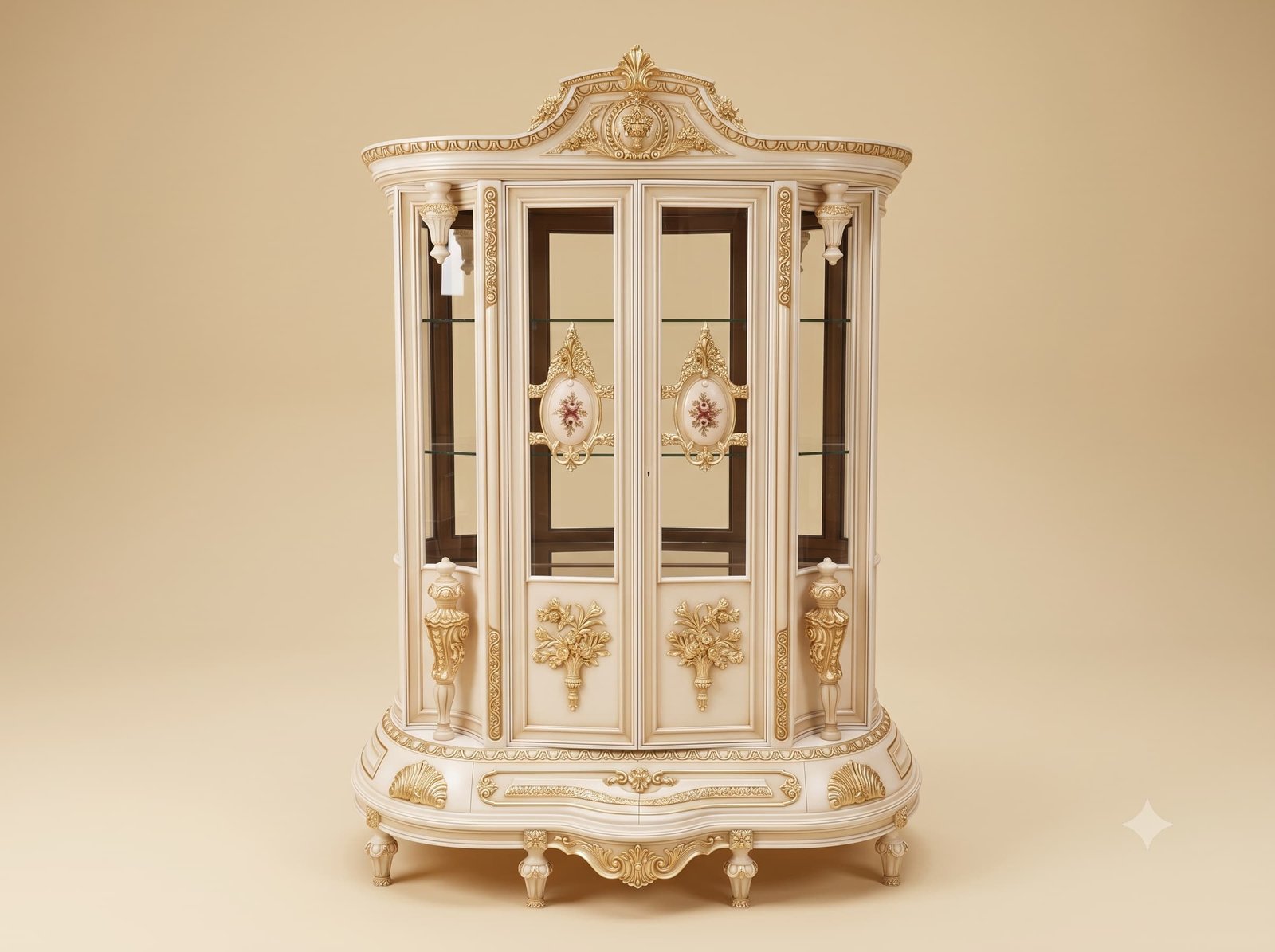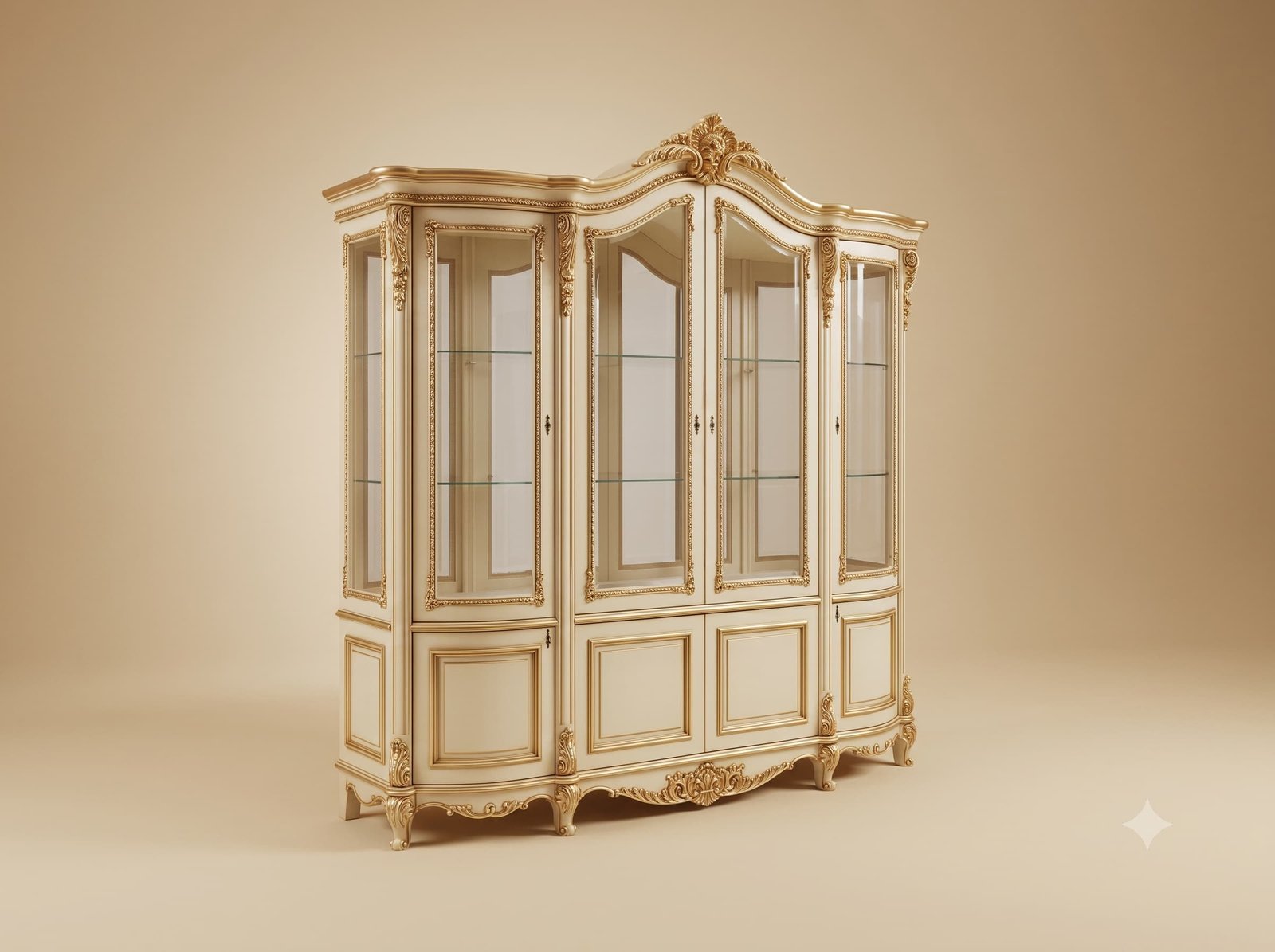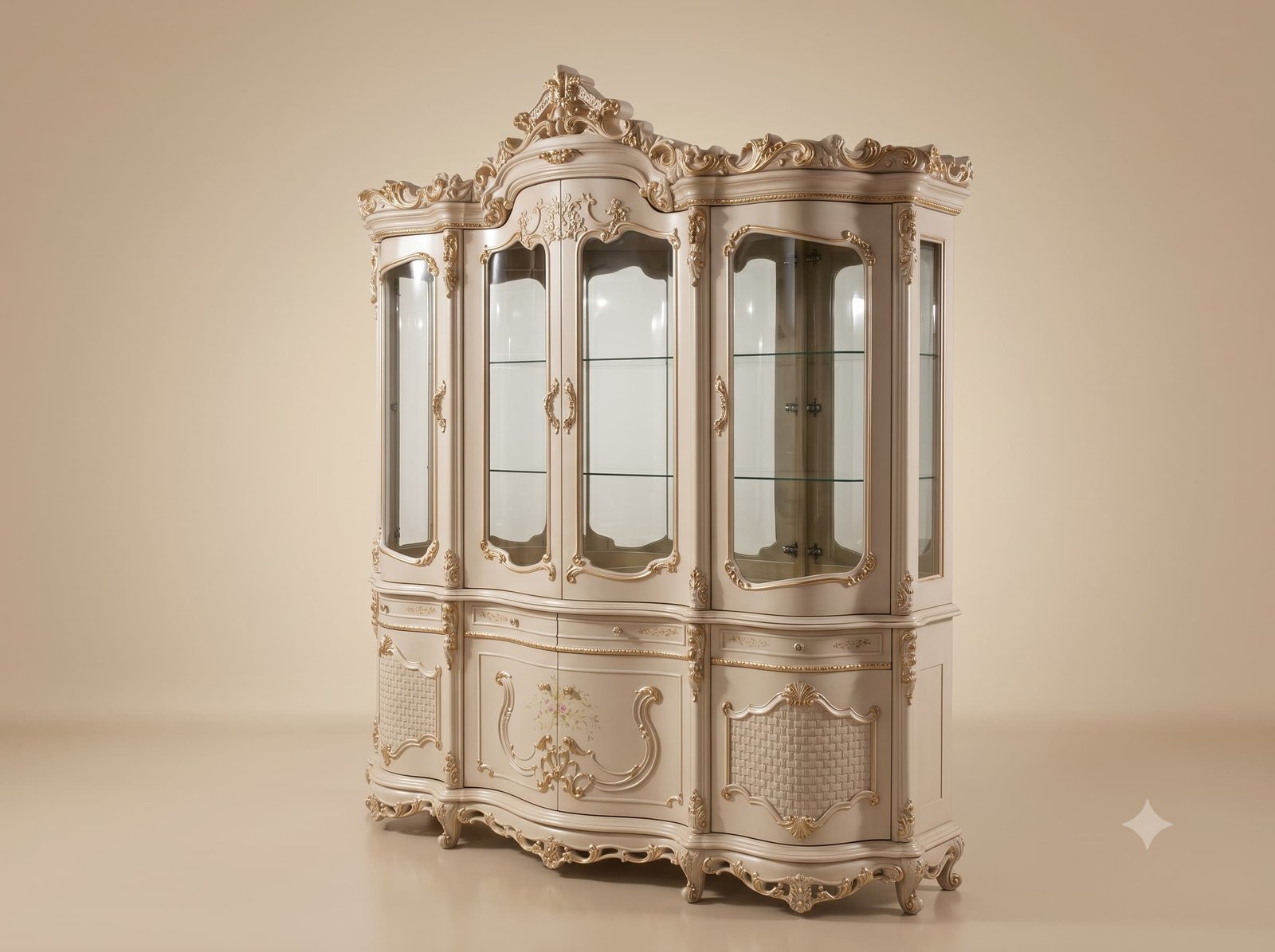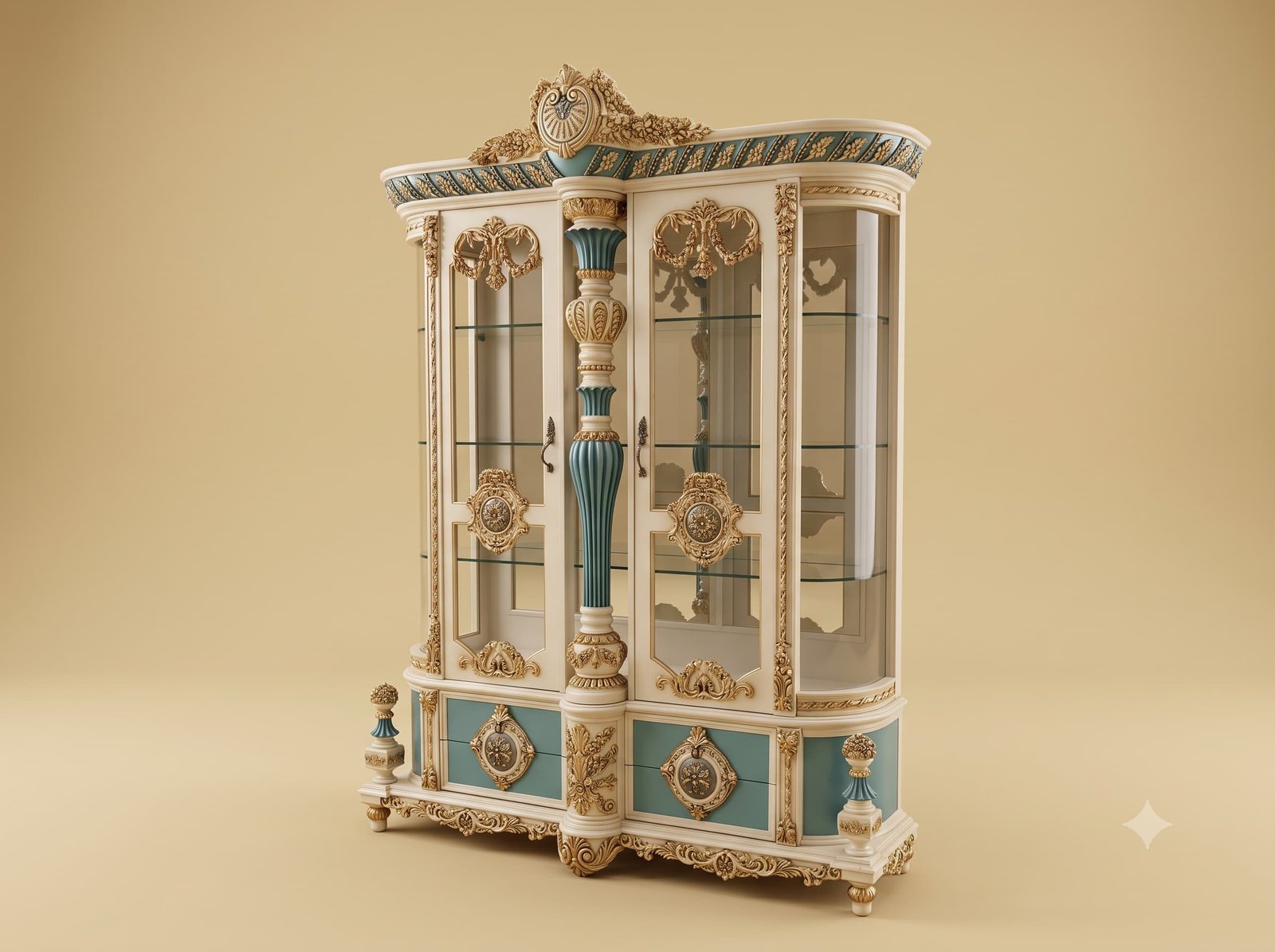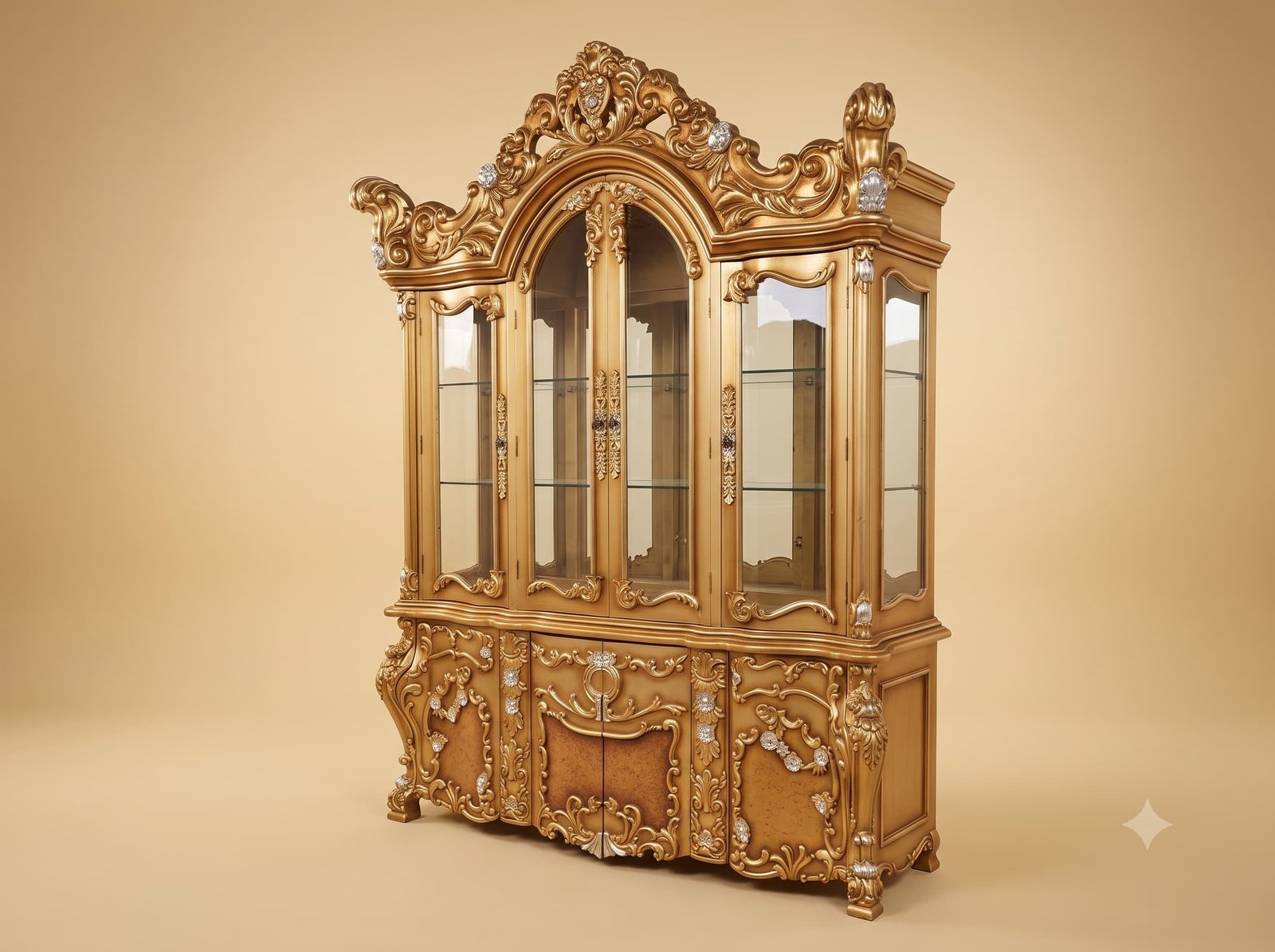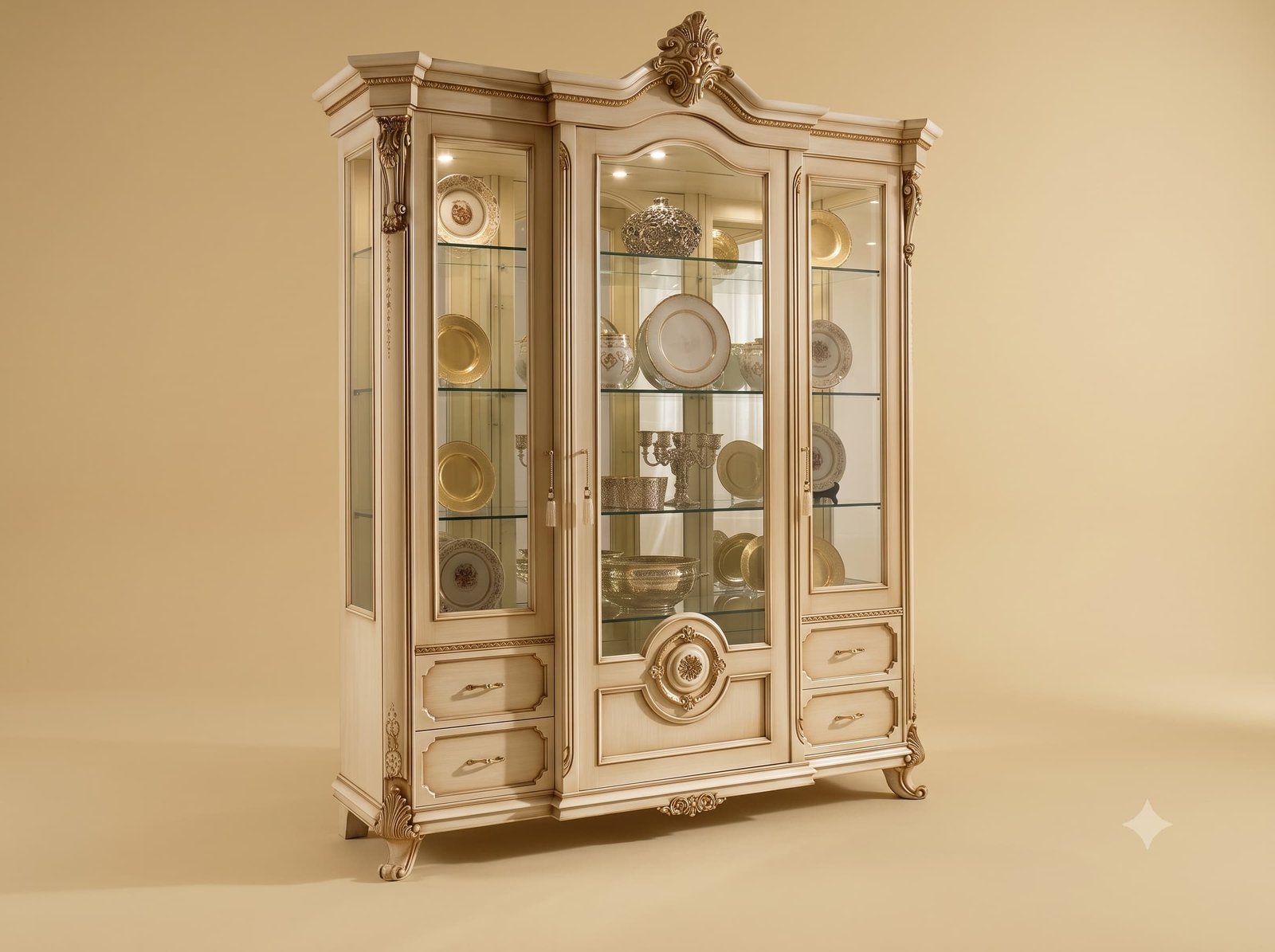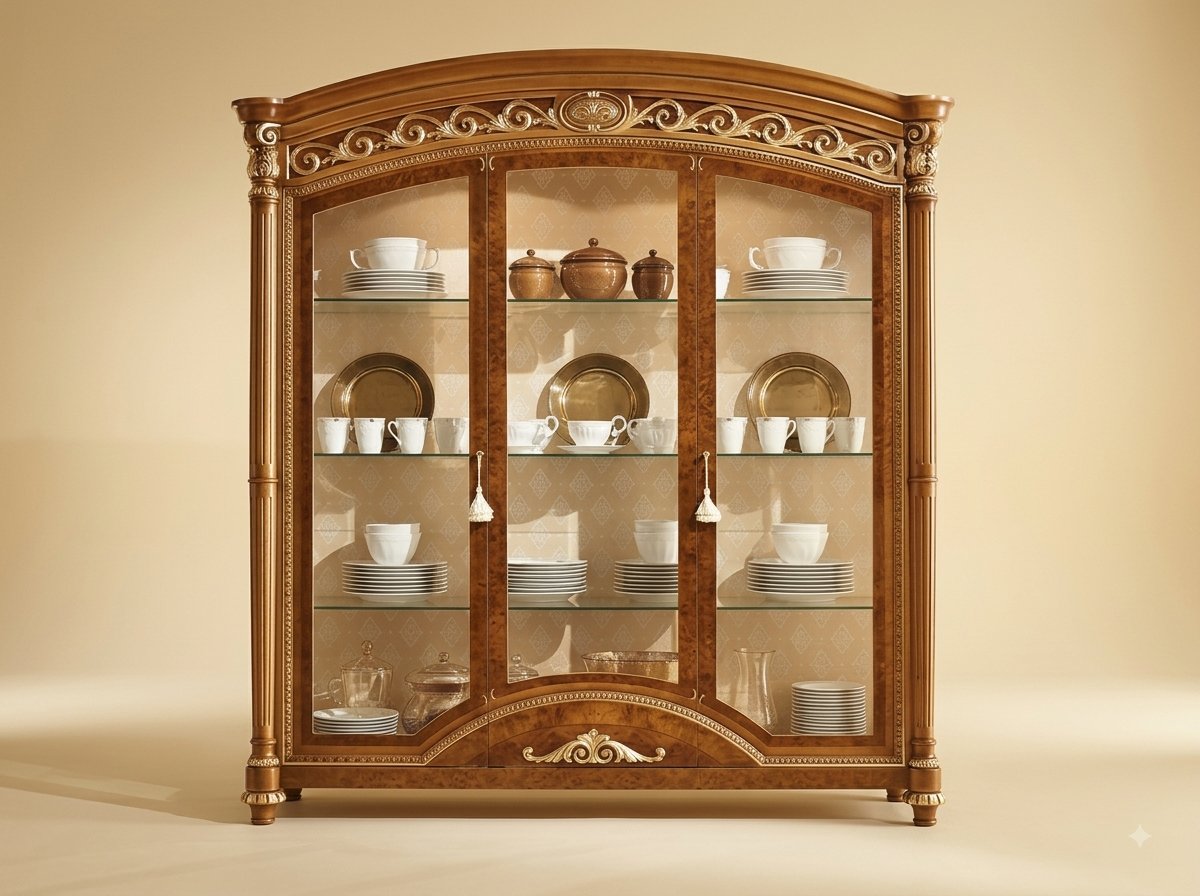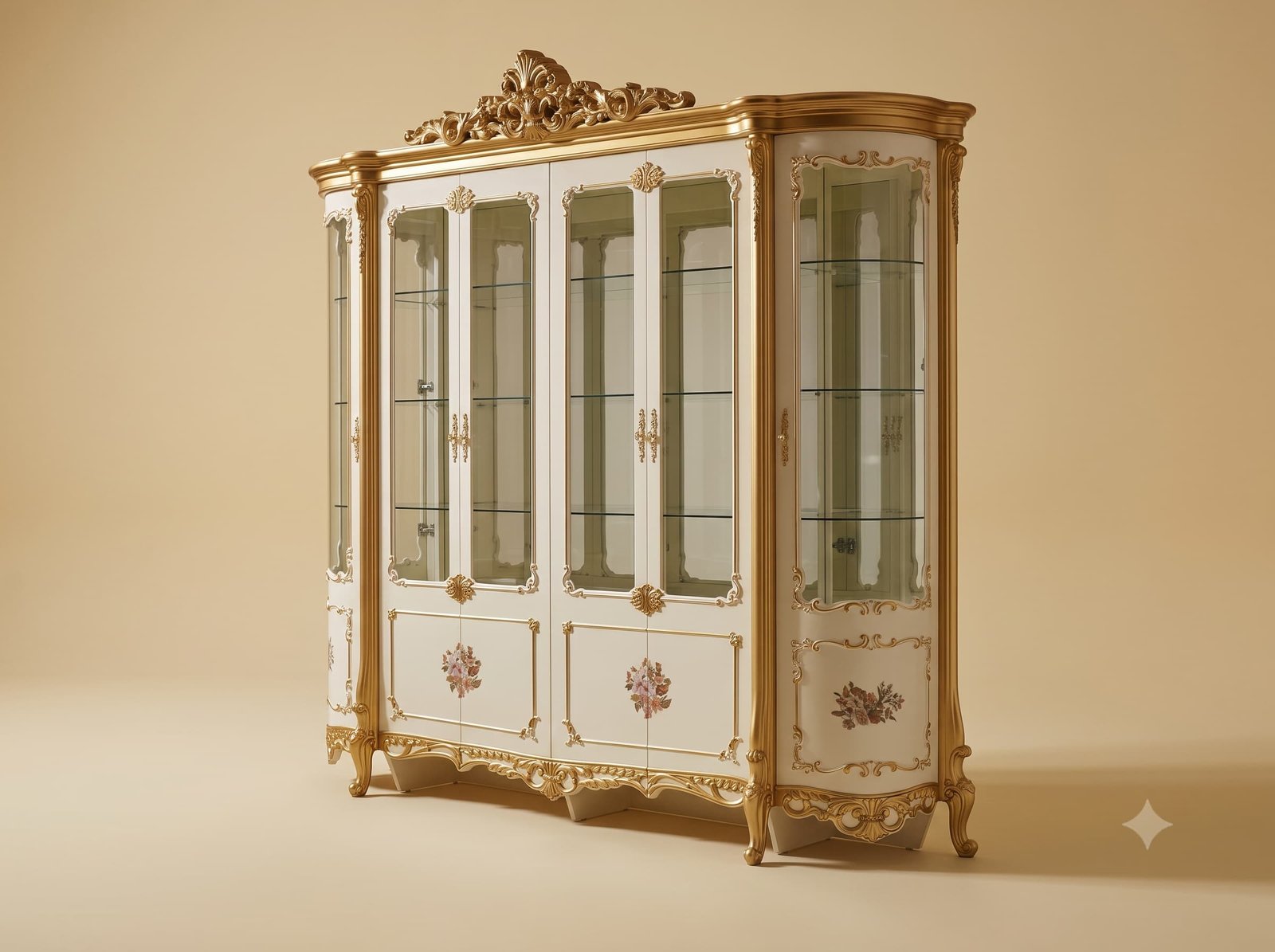
Four doors with shaped heads look like four of the same thing. They are not, and making them so is the mistake.
Each door head here is a shallow ogee - a curve that rises on one side and falls on the other. Cut all four to the same drawing and hang them in a row, and every one of them leans the same way. The eye follows that repeated slope and the whole cabinet appears to drift sideways, as though it were sliding gently towards one end.
So our master Indian artisans hand the doors in mirror pairs about the cabinet's centre line. The two doors right of centre carry the shape one way; the two to the left carry its mirror image. Each pair rises towards the middle and falls away at the outside.
The run then reads as symmetrical about its own centre, which is what the crest above and the carved apron below are also doing. Everything on the front agrees about where the middle is.
It costs nothing but a second template and the discipline to keep the left and right doors separated on the bench. Confuse them once during finishing and the whole effect is lost.
 Ask Price On WhatsApp