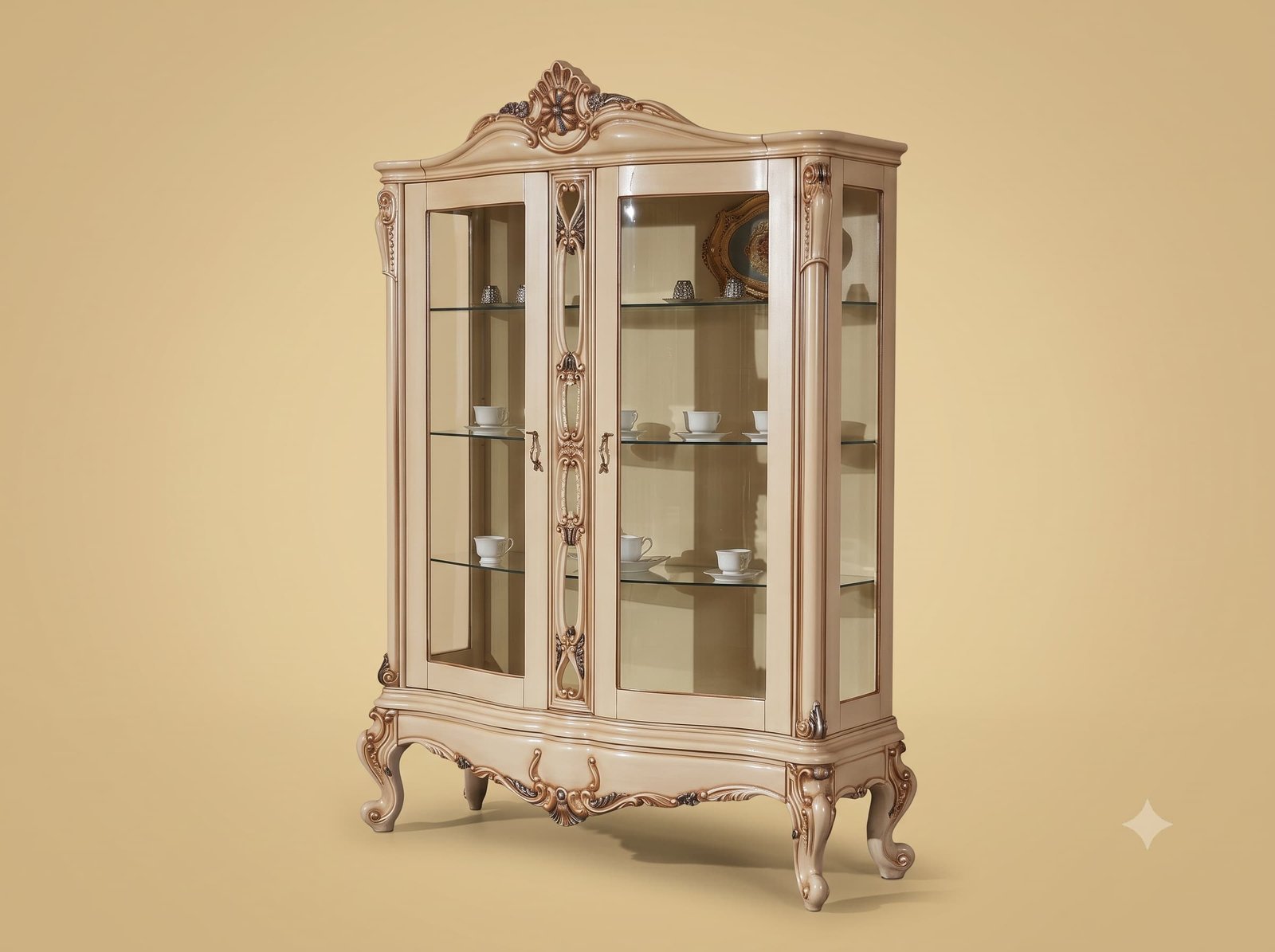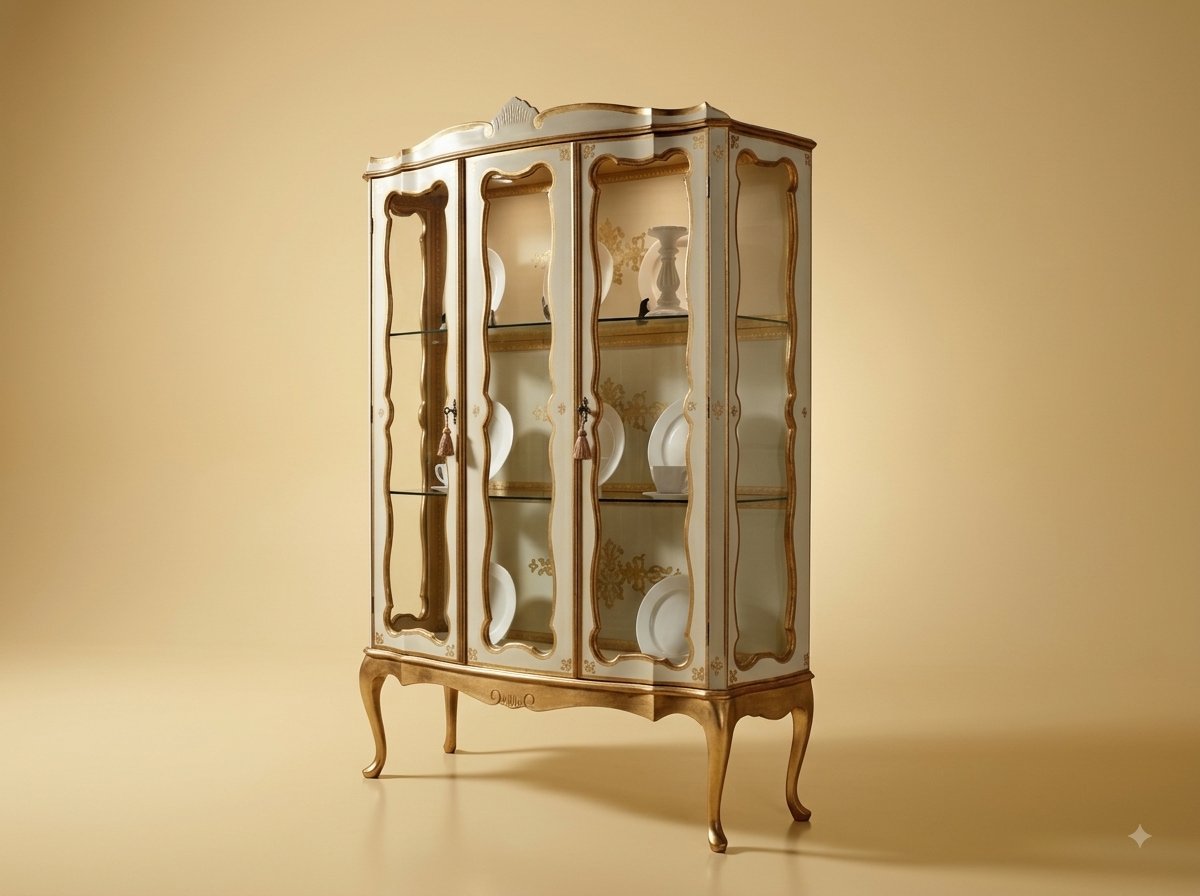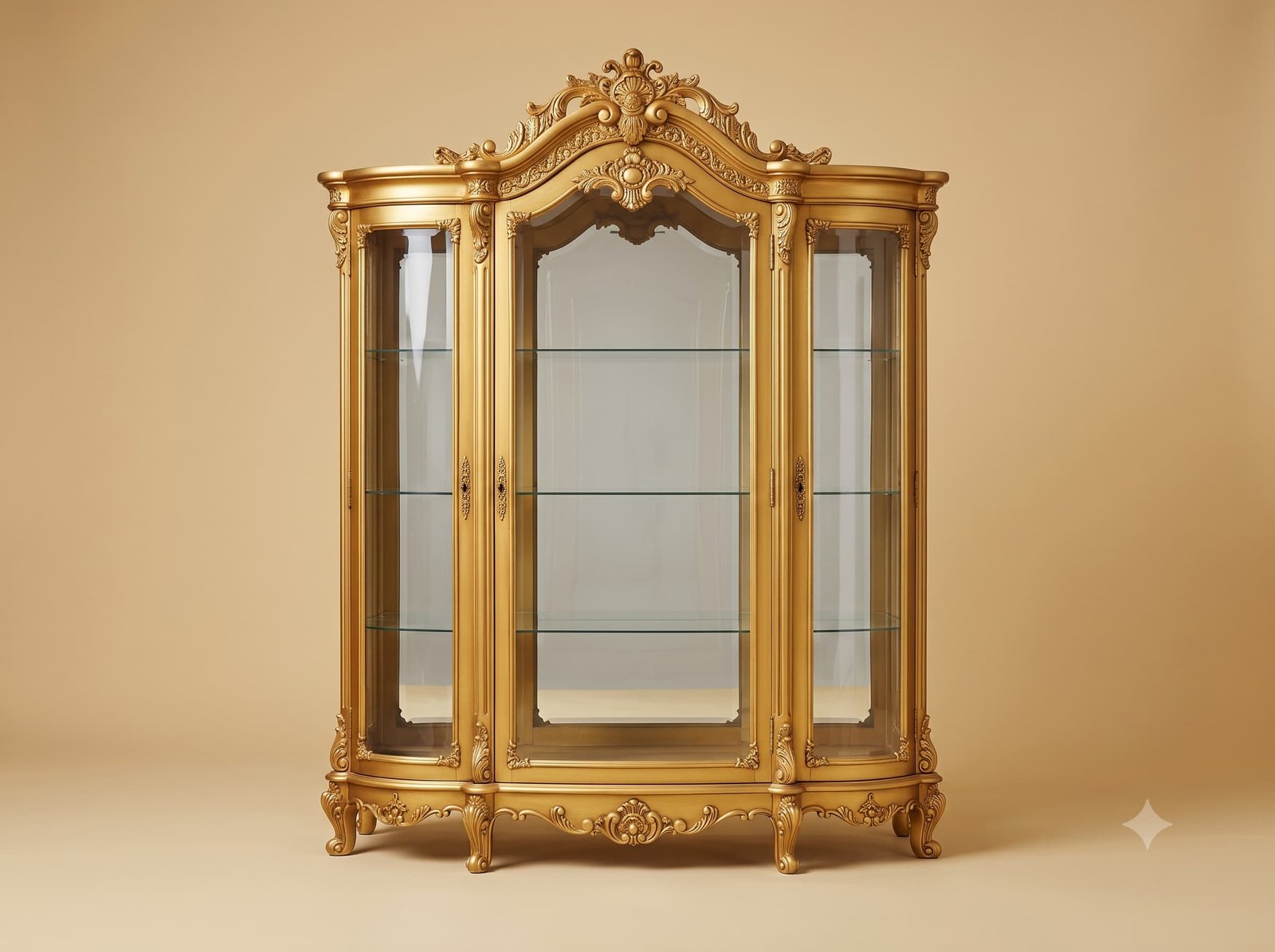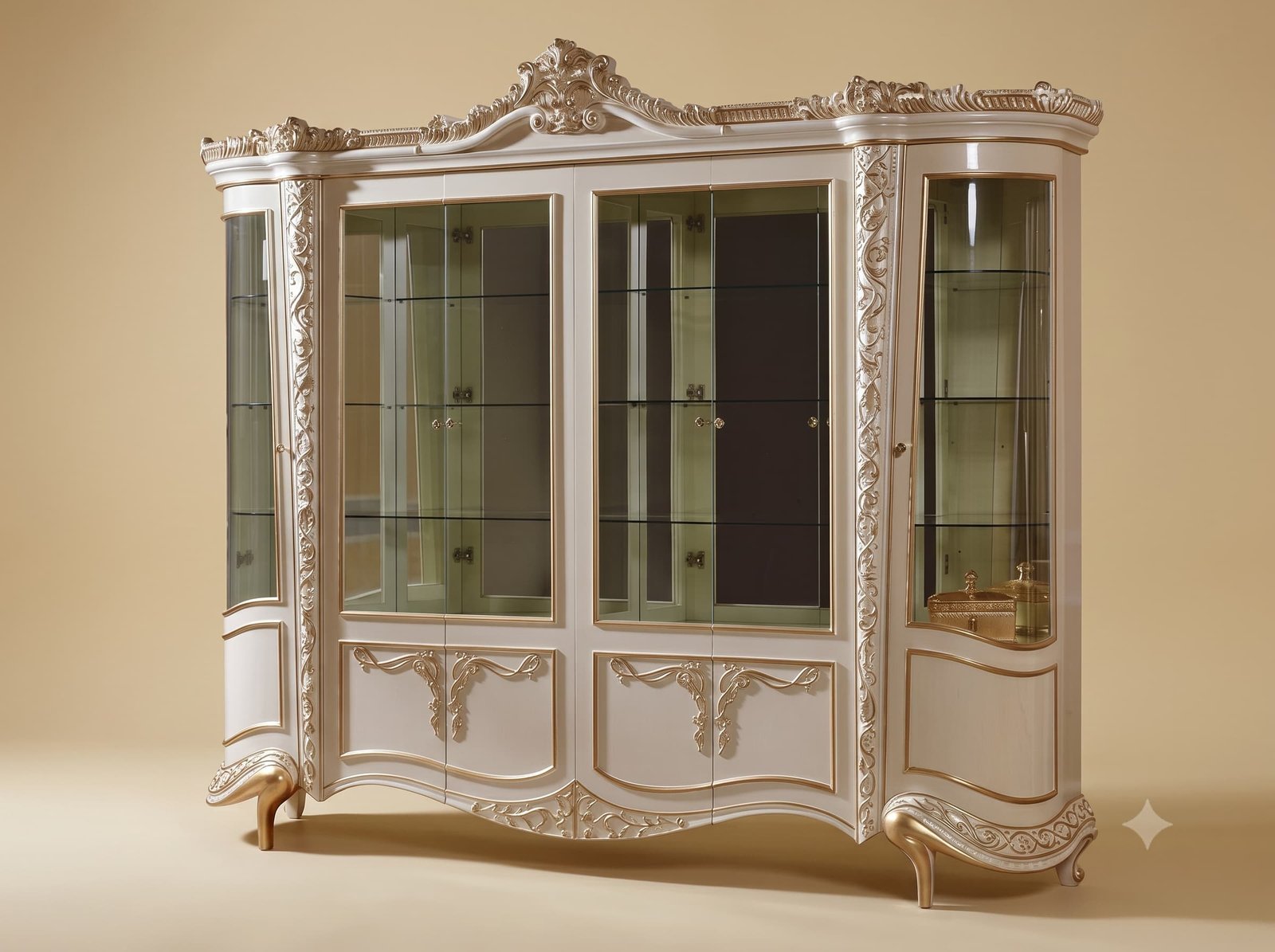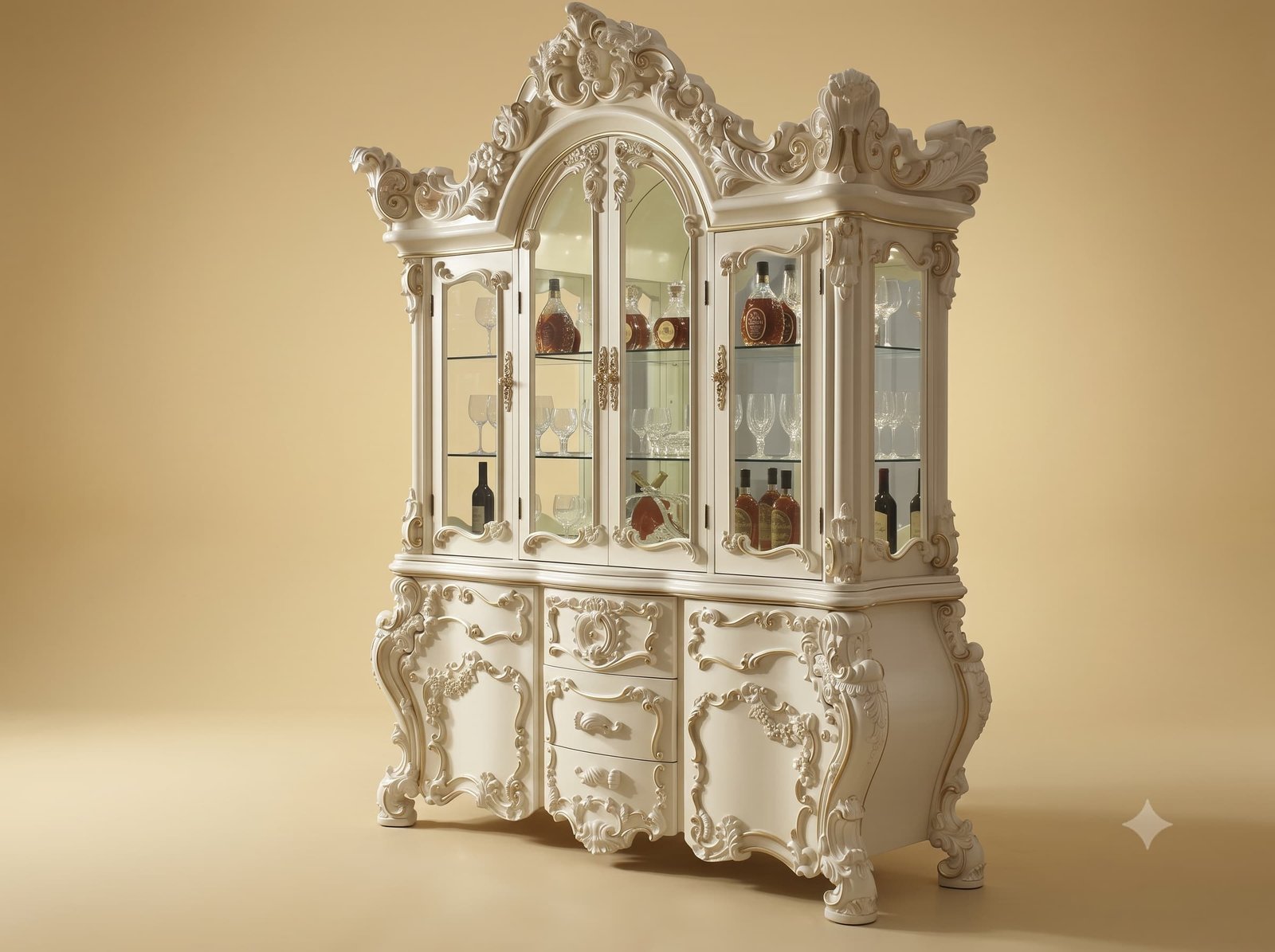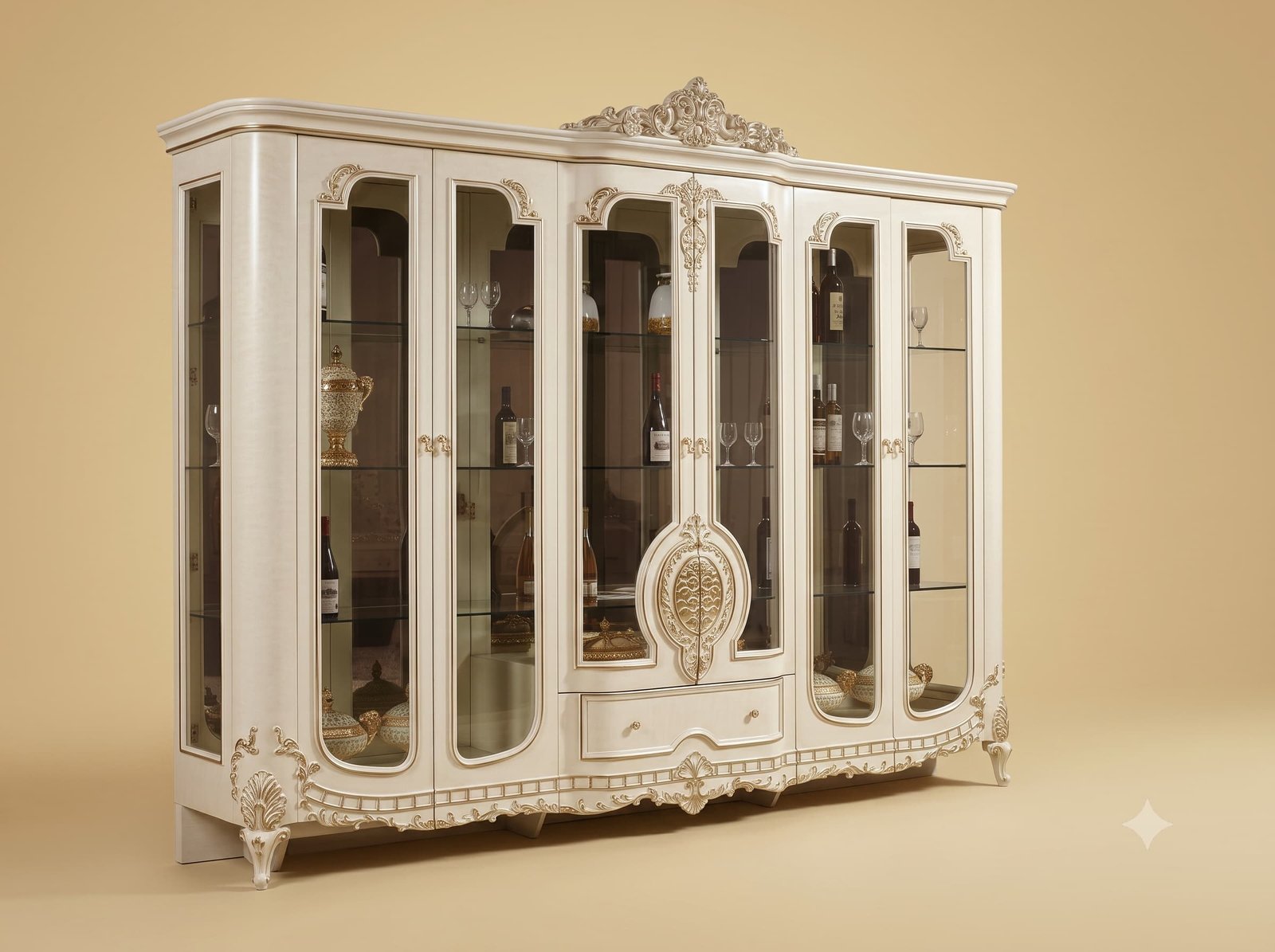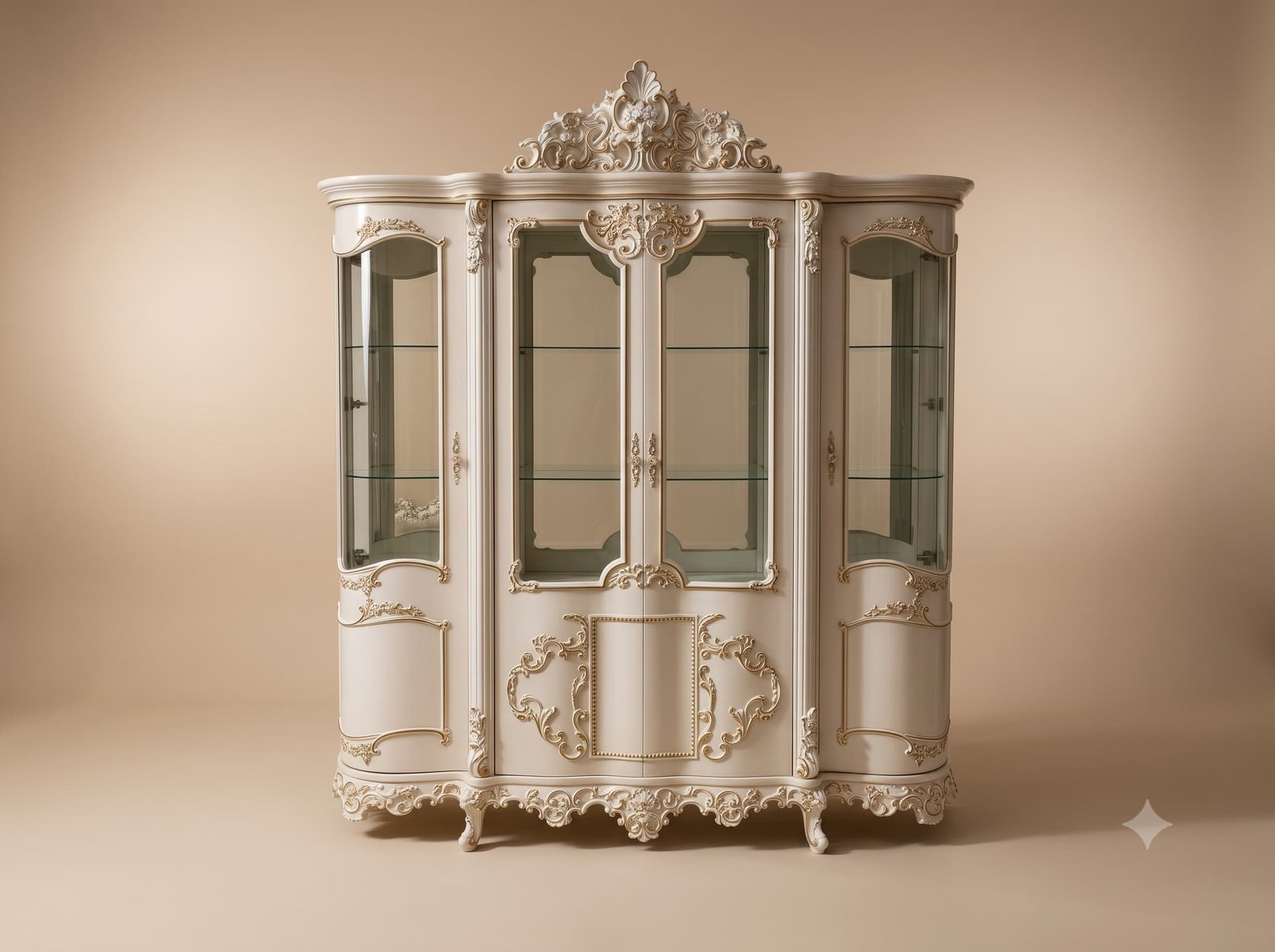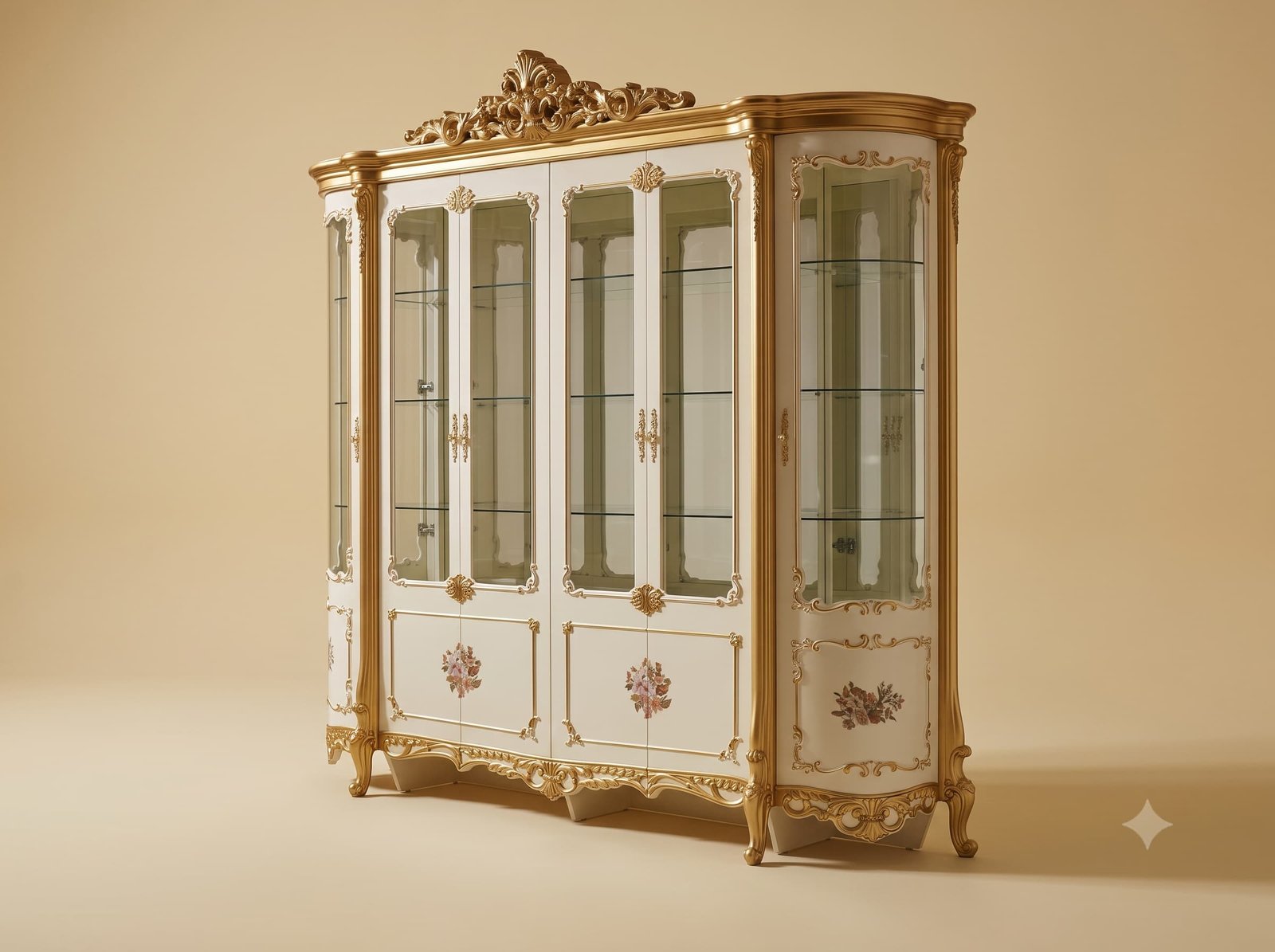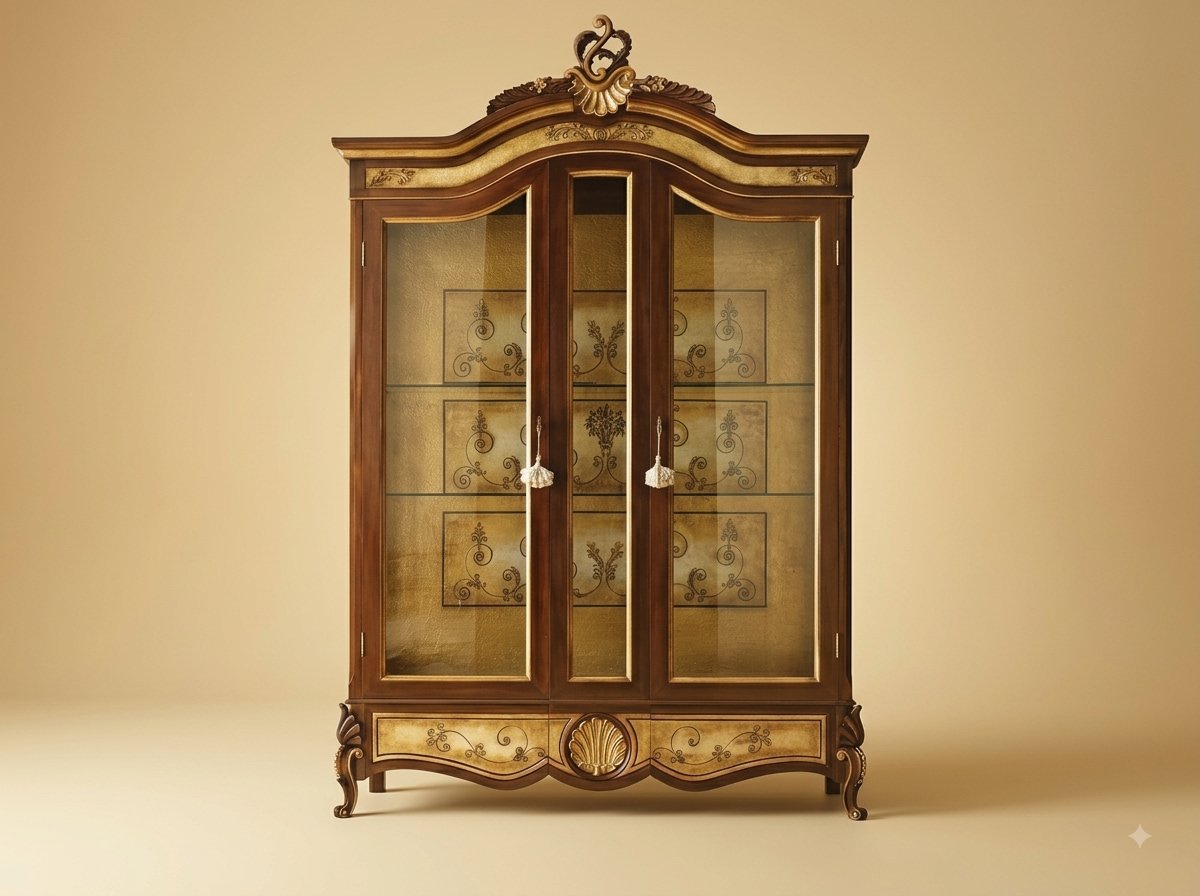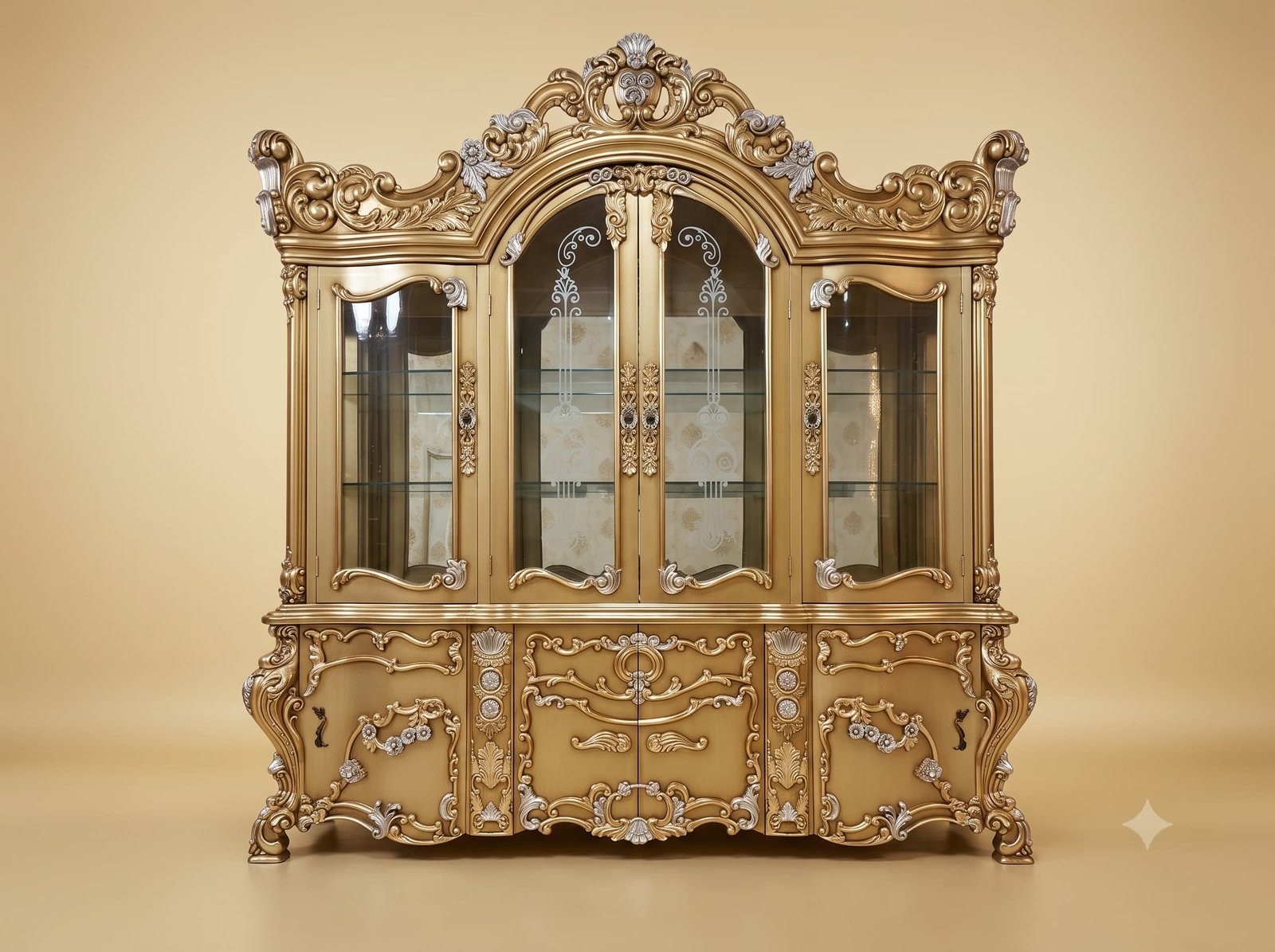
Two metals on one piece of furniture is easy to describe and difficult to do, for one reason nobody expects: gold and silver do not age the same way.
Gold leaf is chemically stable - left alone under a finish it will look the same in fifty years. Silver is not. Silver tarnishes, and it tarnishes fastest at any edge where air can reach it. Lay the two side by side on the same carving without thinking about it and the silver will darken first at exactly the boundary between them, drawing a grey line around every gold shape. It looks like dirt and it cannot be cleaned off.
So our master Indian artisans lay the gold first, seal it, and only then apply the silver to the highest points - each silvered element sitting on top of a sealed surface rather than meeting bare gold at a shared edge. Every silvered area is then sealed again on its own.
The silver is completely enclosed. Air never reaches it, so it stays bright.
The design rule follows from the technical one: because silver has to be applied as discrete islands, it can only ever be used sparingly - on the crest of a shell, the tip of a scroll. Which happens to be exactly where it should be used anyway.
 Ask Price On WhatsApp