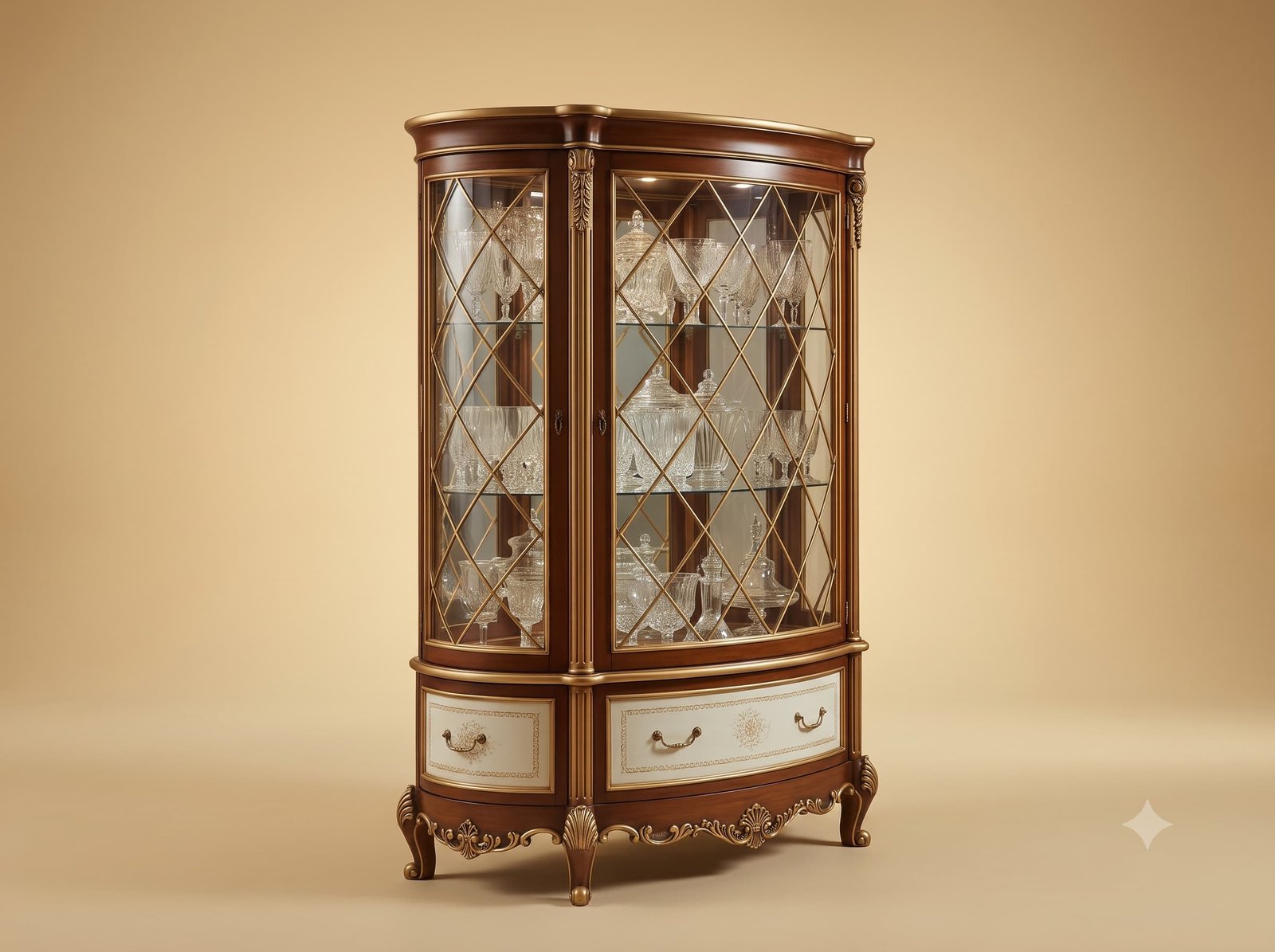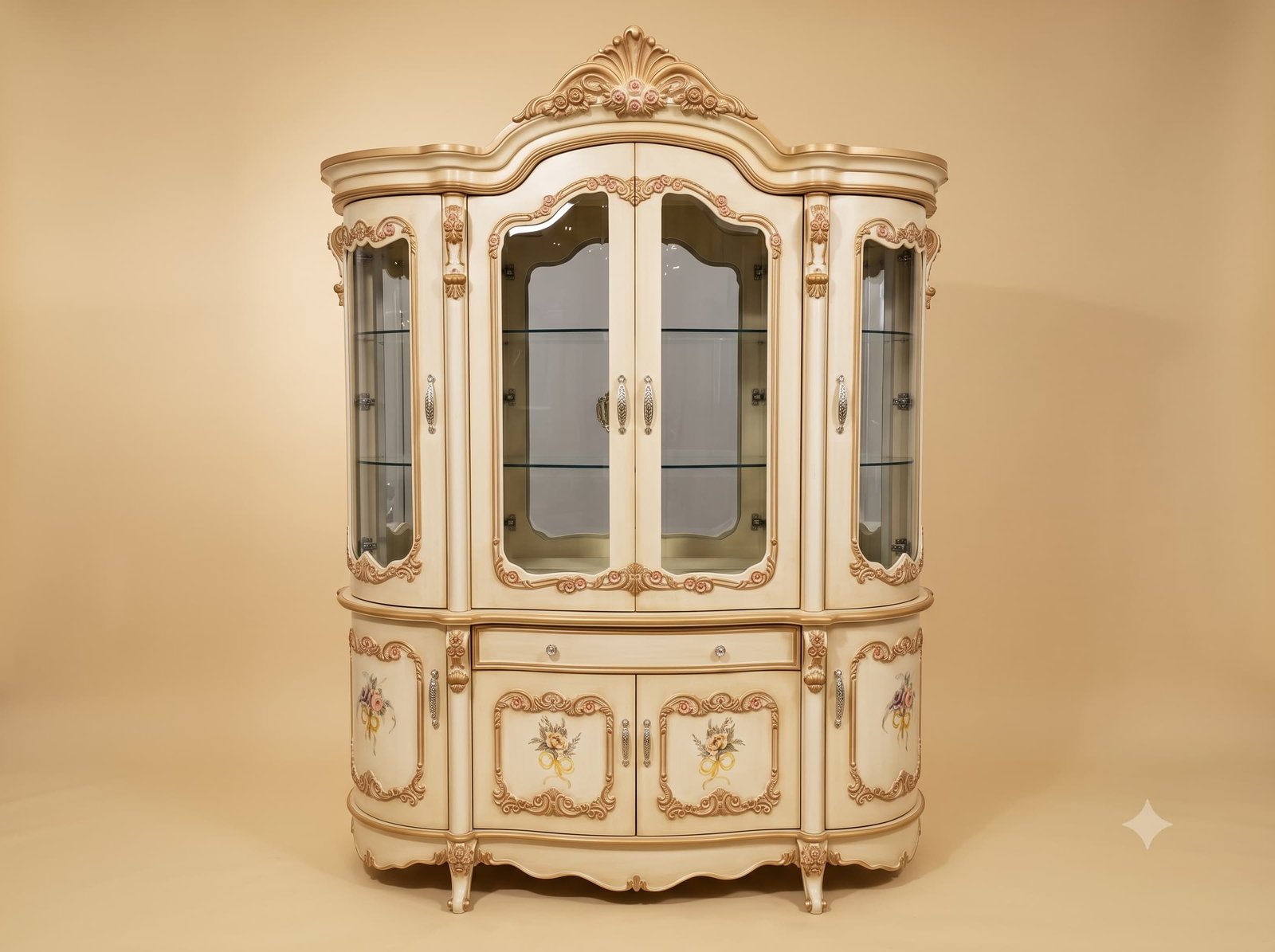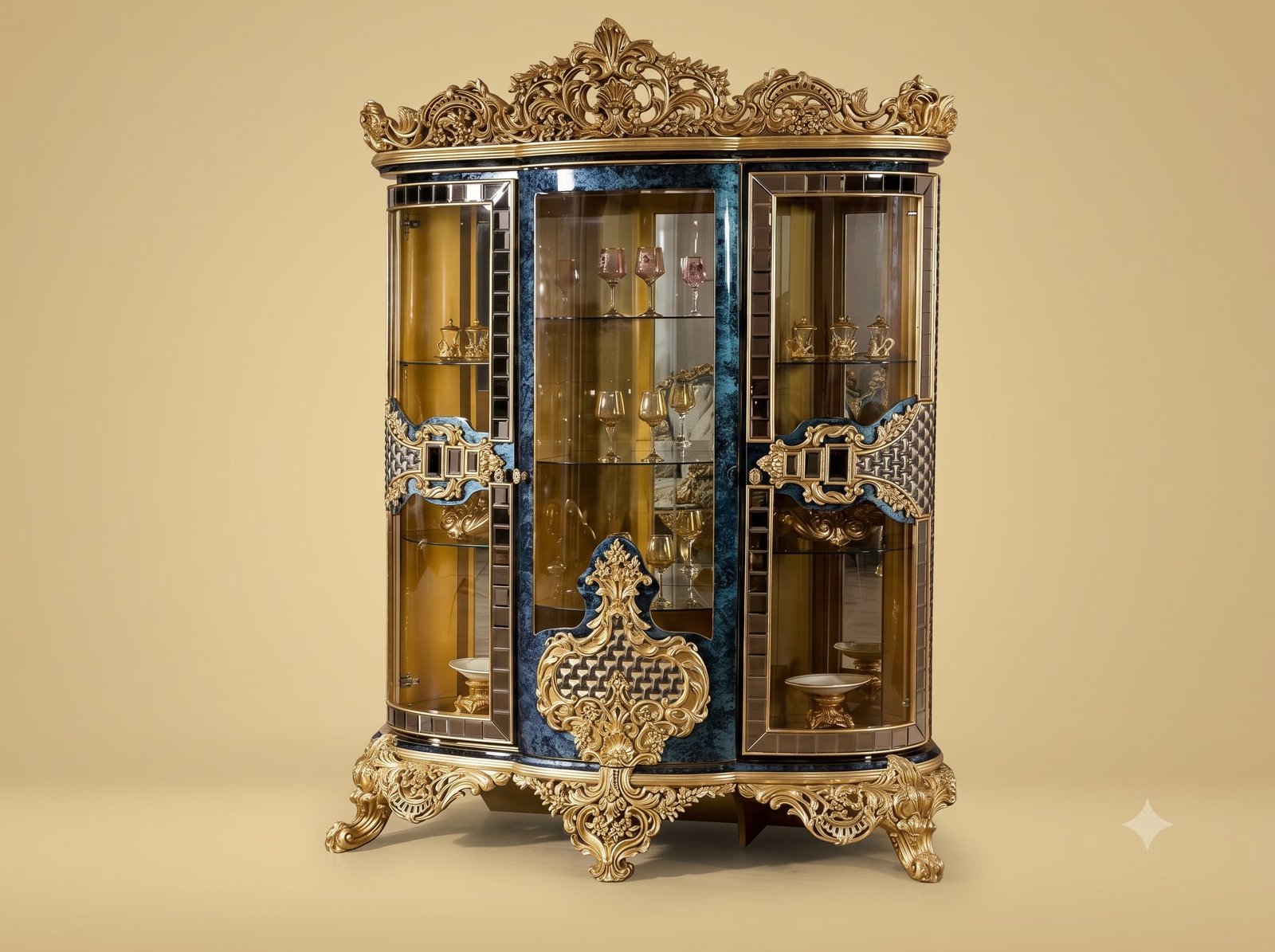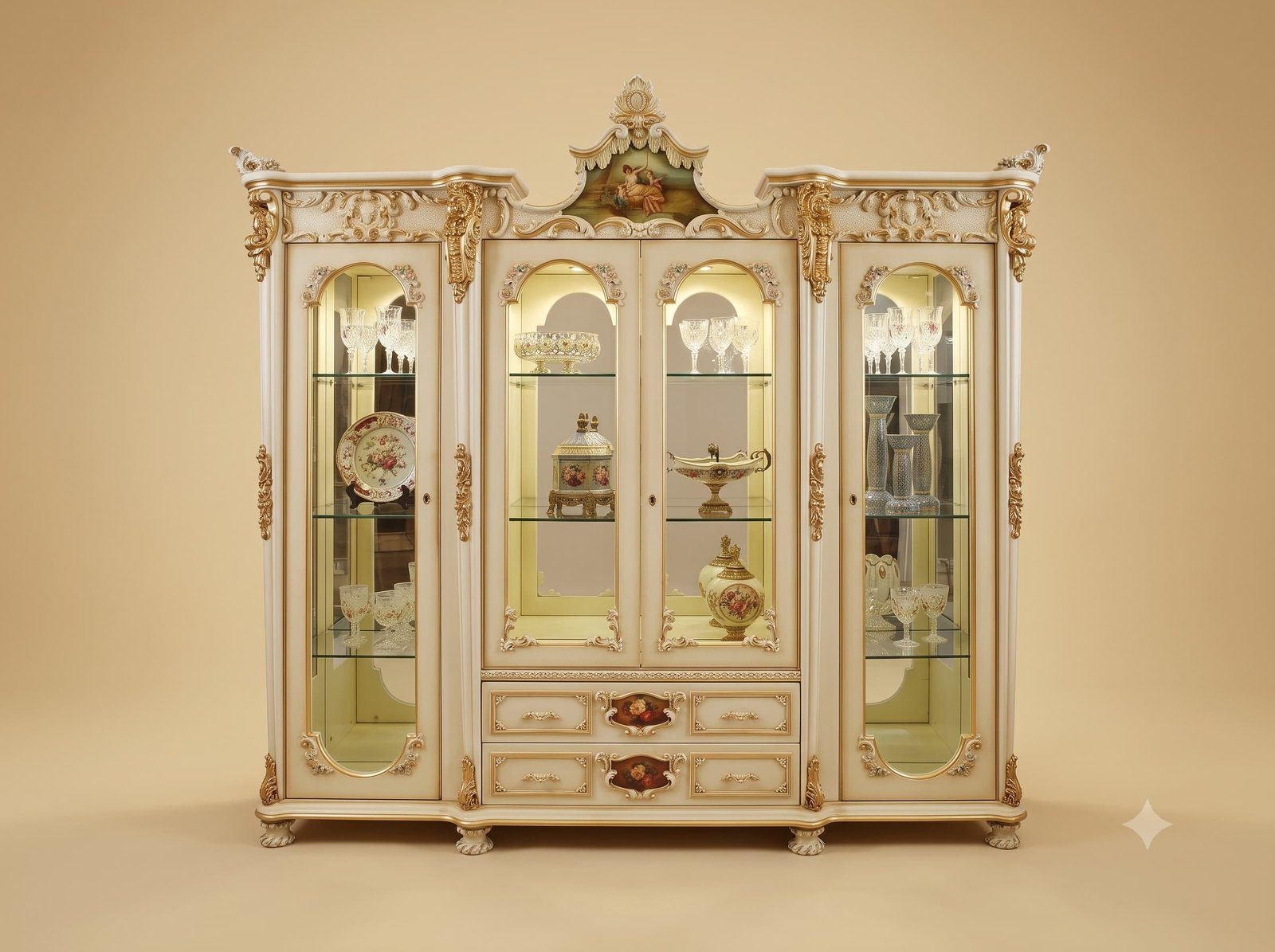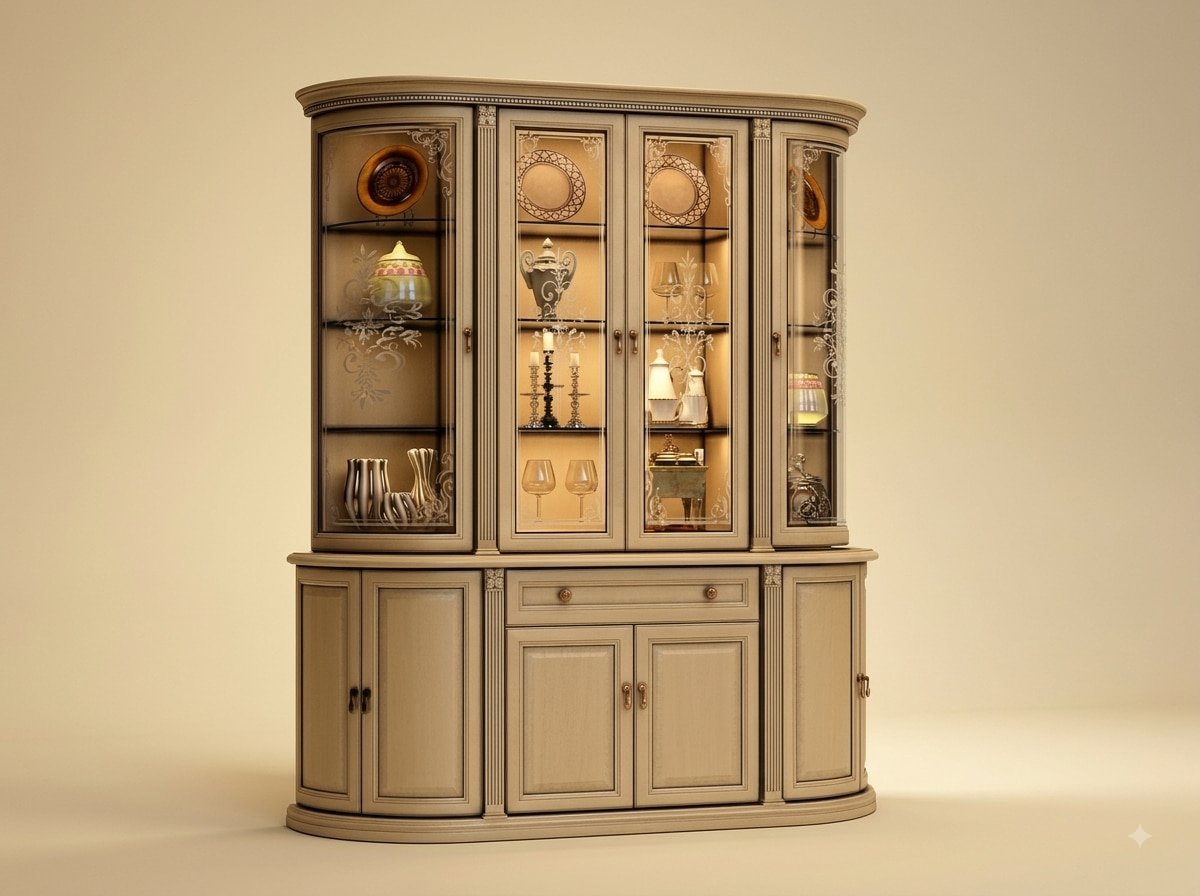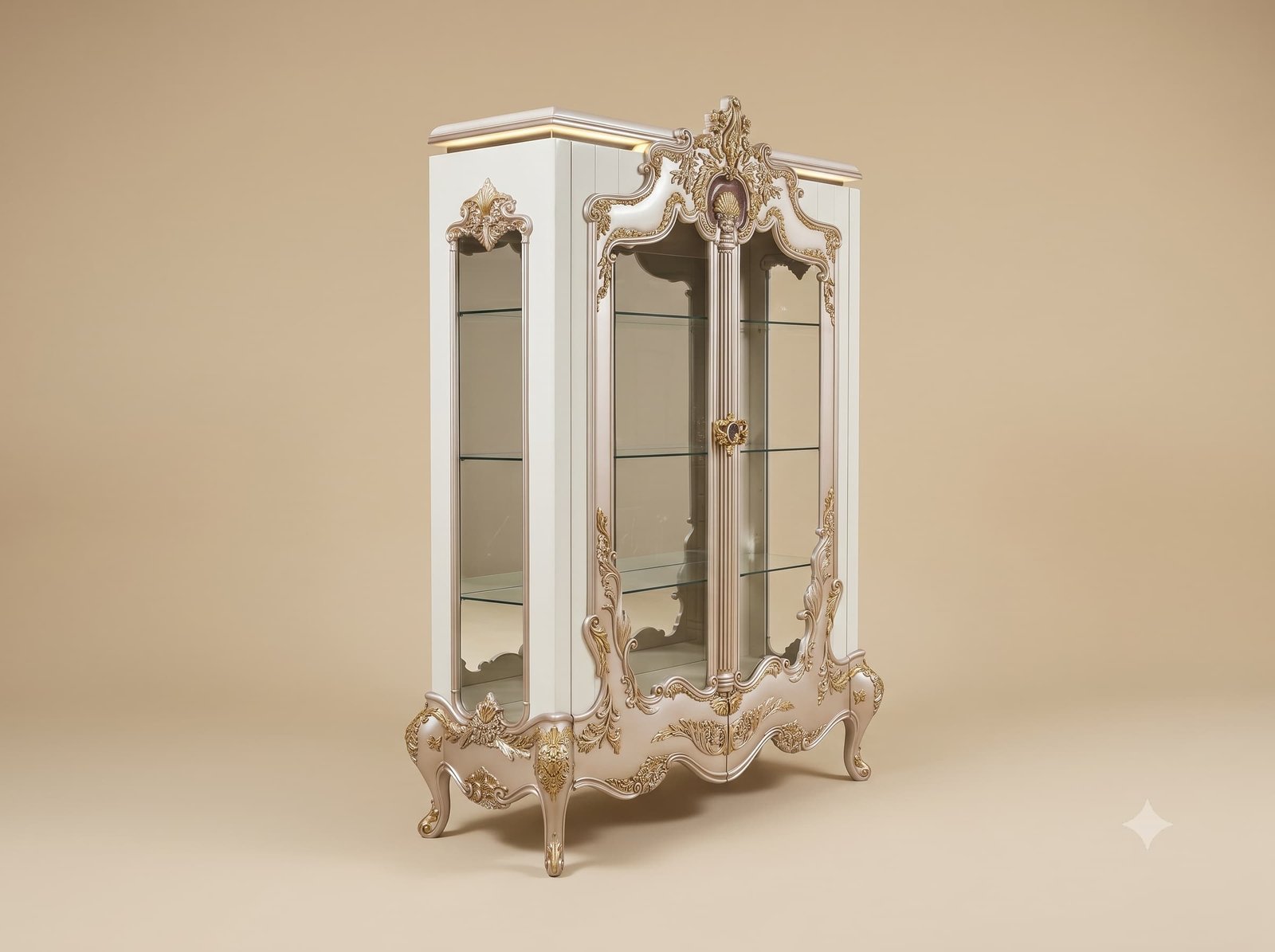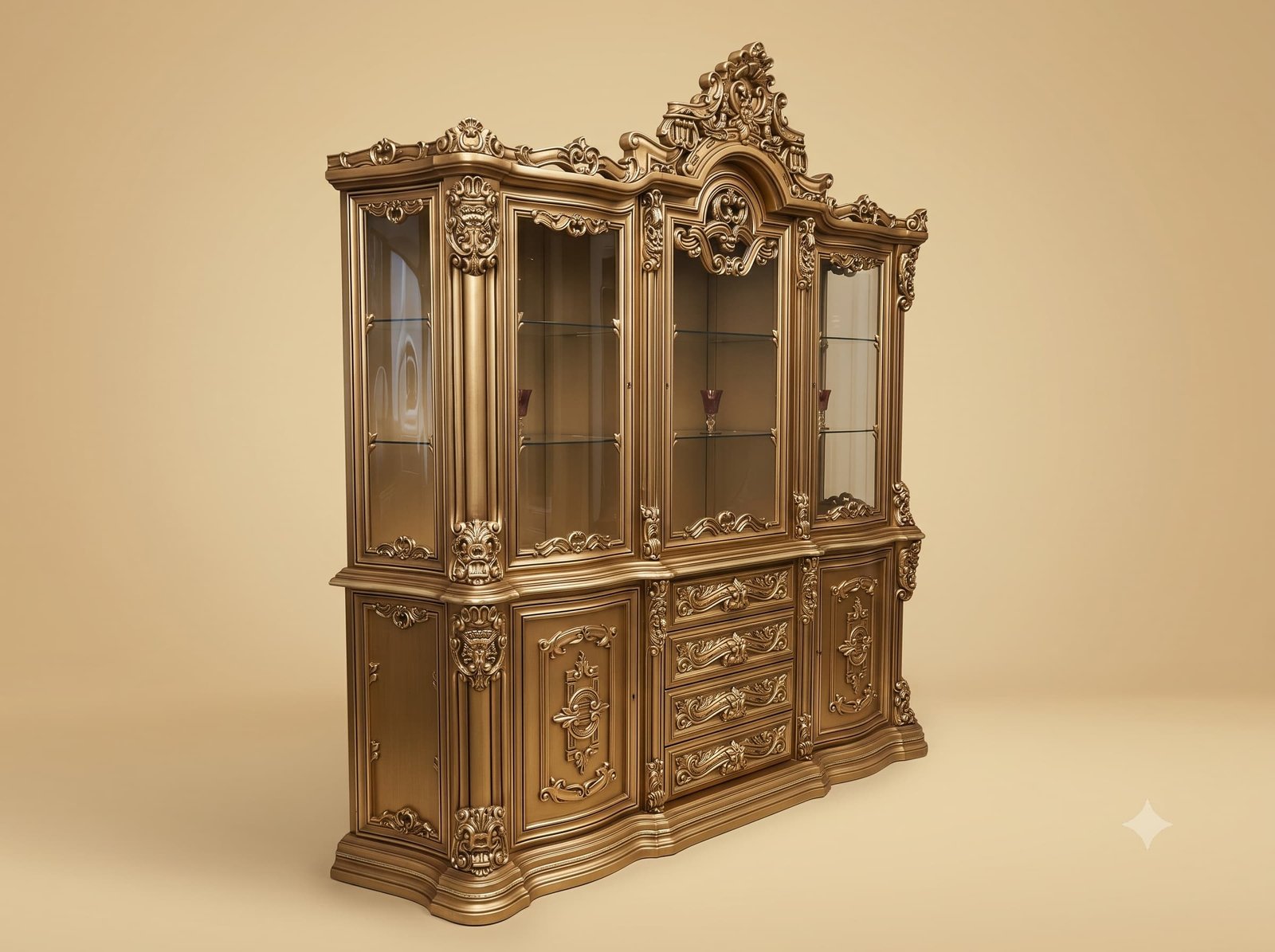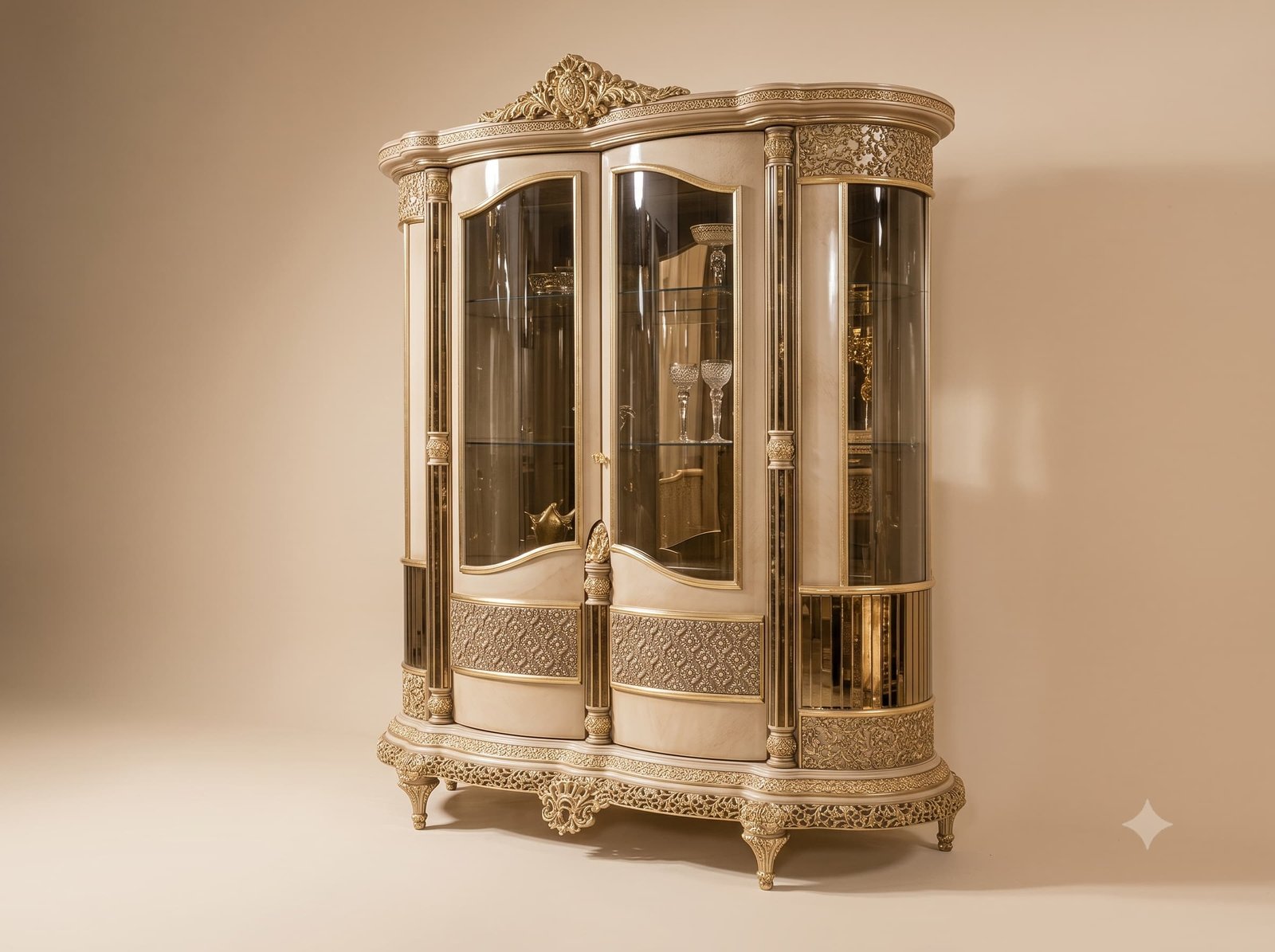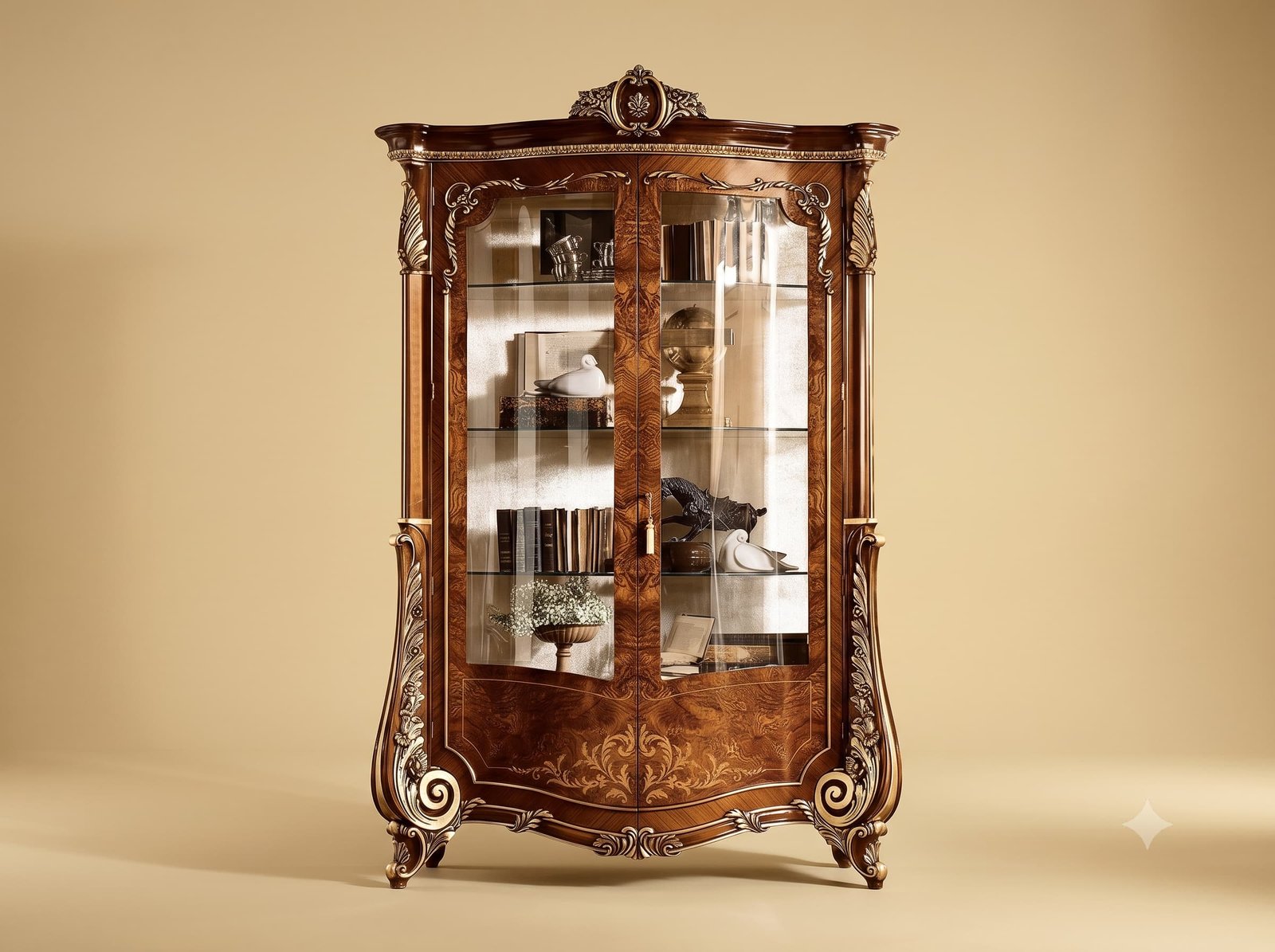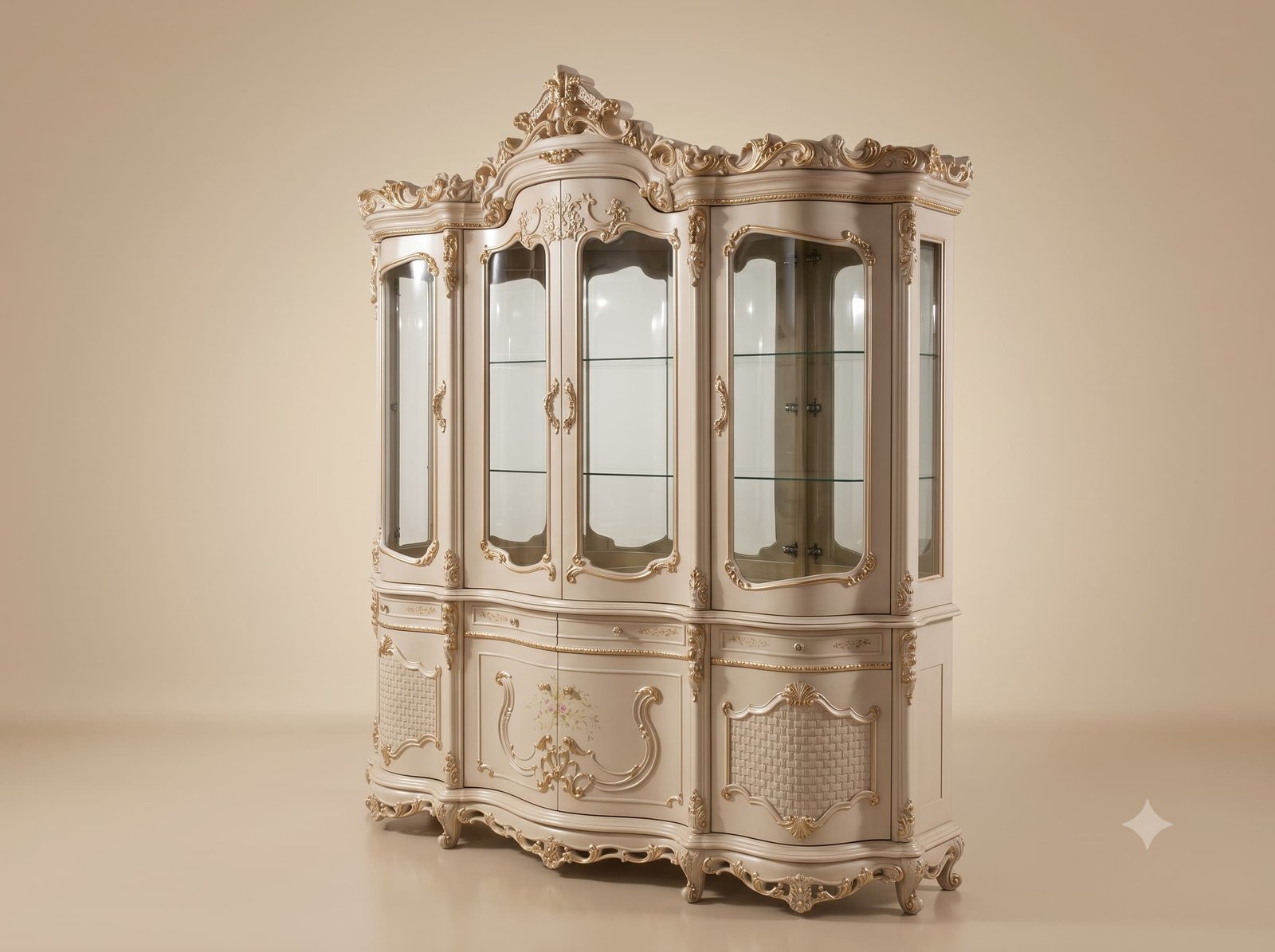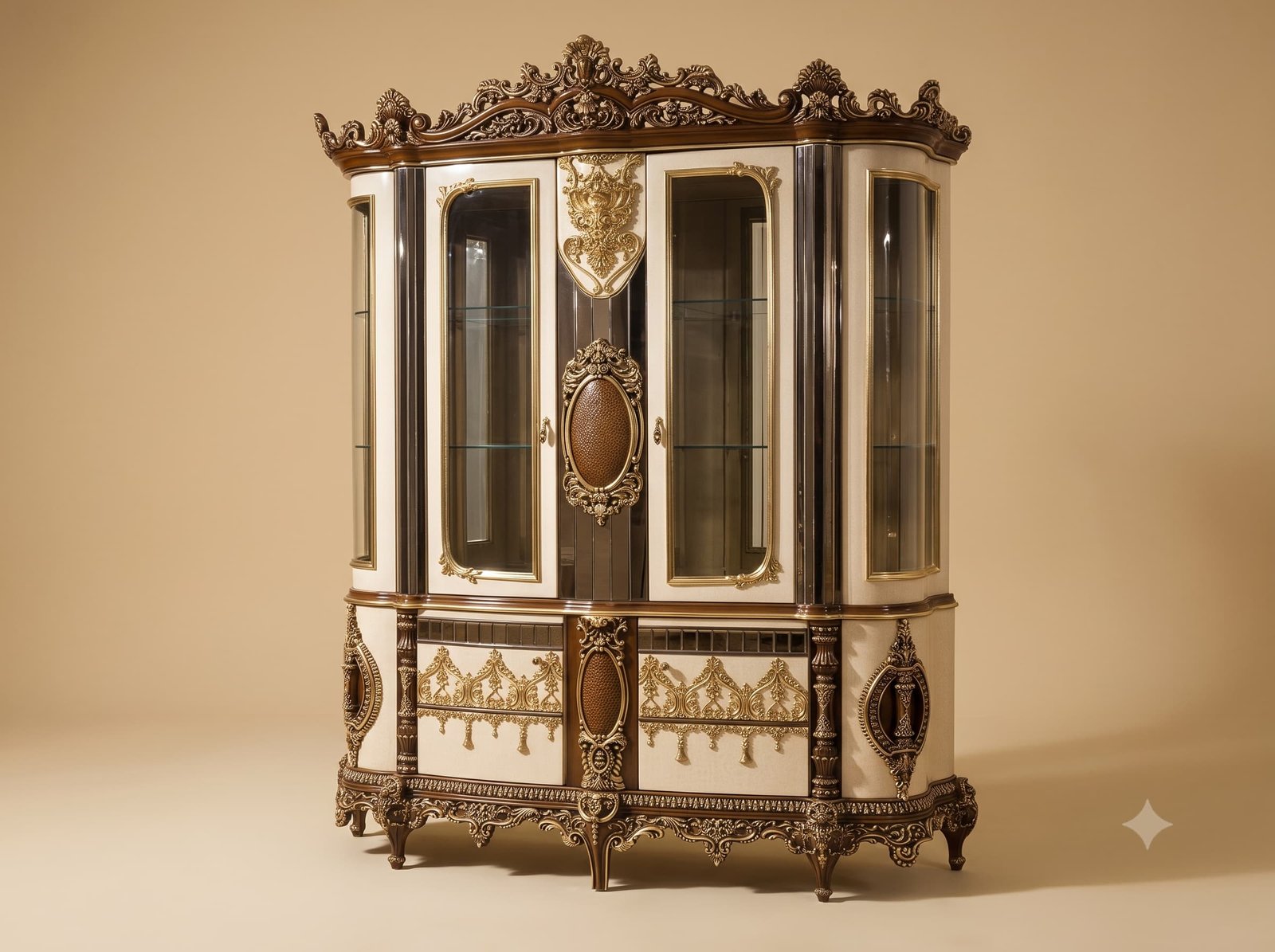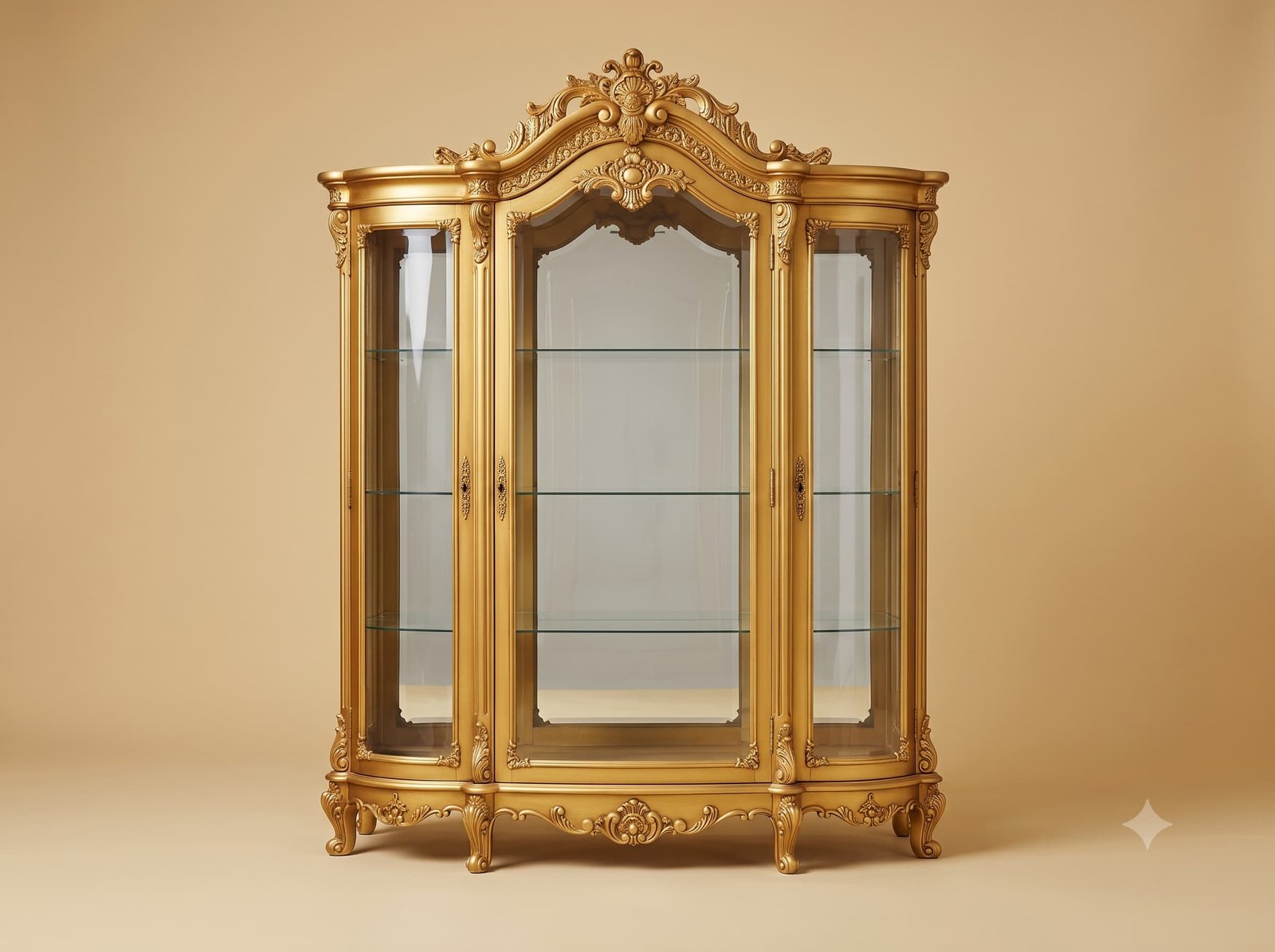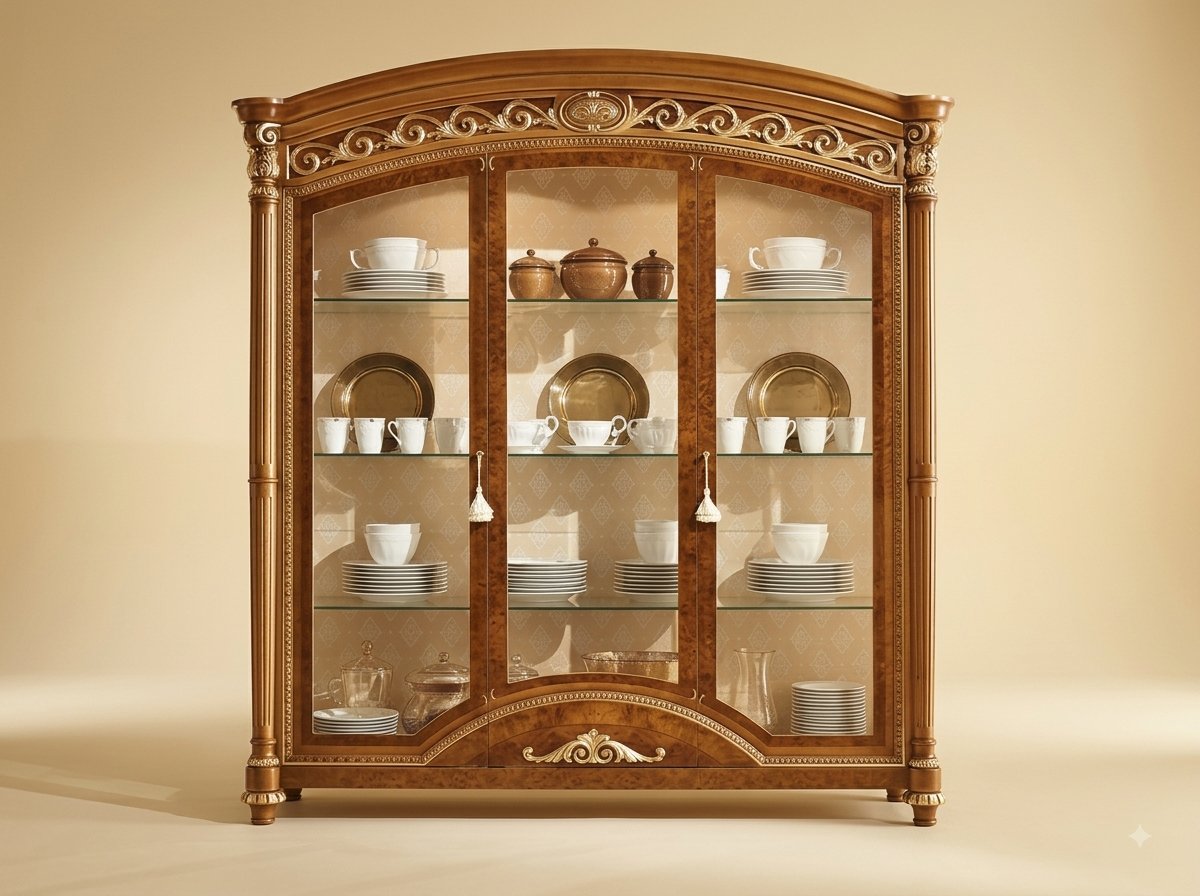
Most display cabinets hold ornaments. This one is expected to hold crockery, and crockery is heavy in a way that changes how the shelves have to be built.
A stack of twelve dinner plates concentrates real weight onto a small area, and a shelf loaded that way will bend long before it breaks. Glass does not fail dramatically here - it sags. The sag is slight, but a shelf in a lit cabinet is seen against a horizontal line, and even a small curve in a shelf that should be straight is obvious once you have noticed it.
So two things are done at the design stage. The shelf glass is specified thicker than it would be for a lightly loaded display cabinet, and the spans are broken: each shelf runs between the carcass side and a door division rather than crossing the whole cabinet in one unsupported length. Three shorter shelves in place of one long one, at every level.
Then we ask what you intend to keep in it, because a cabinet for tea services needs different shelf spacings from a cabinet for platters, and both are easier to decide before the supports go in than after.
 Ask Price On WhatsApp