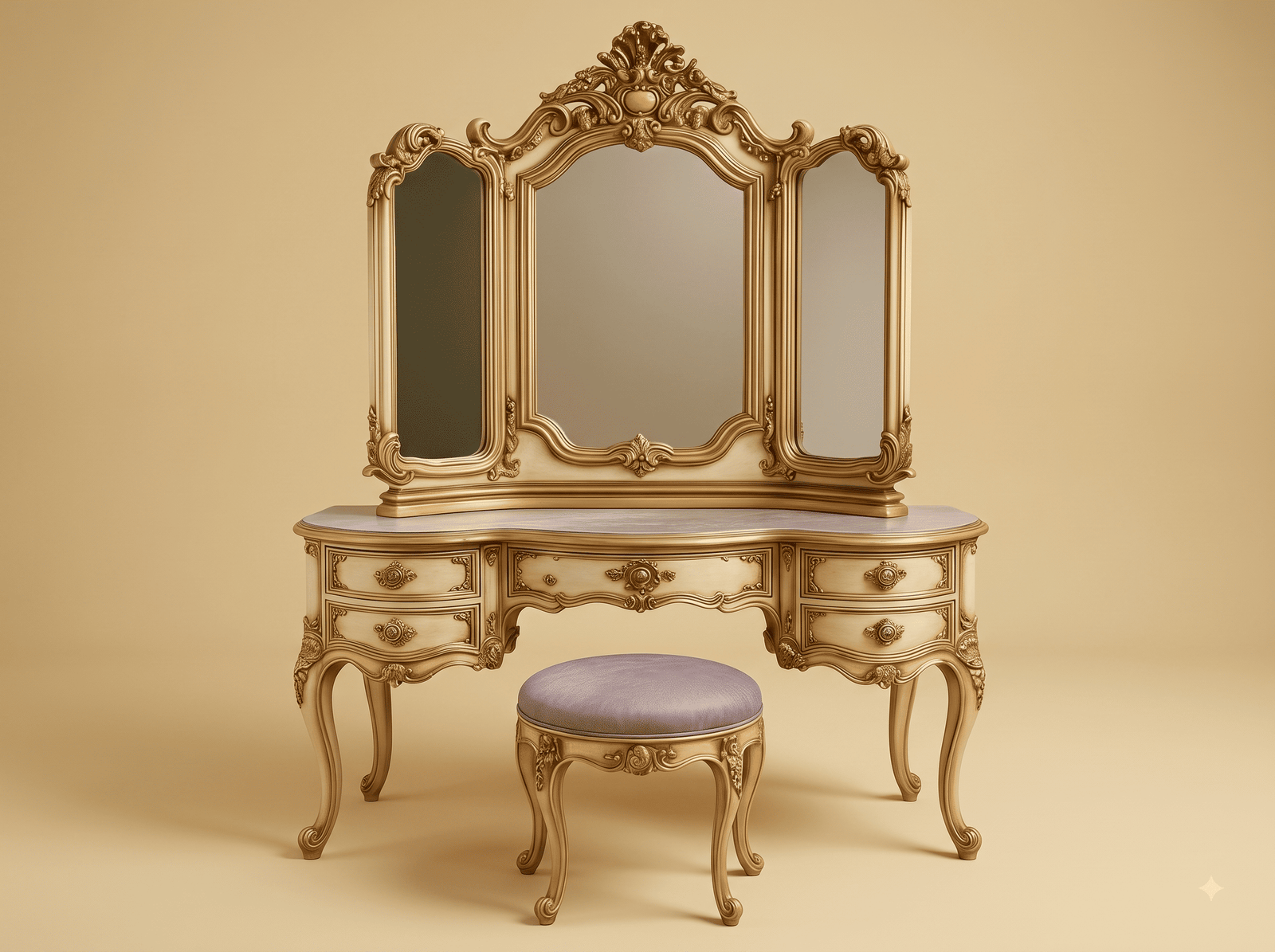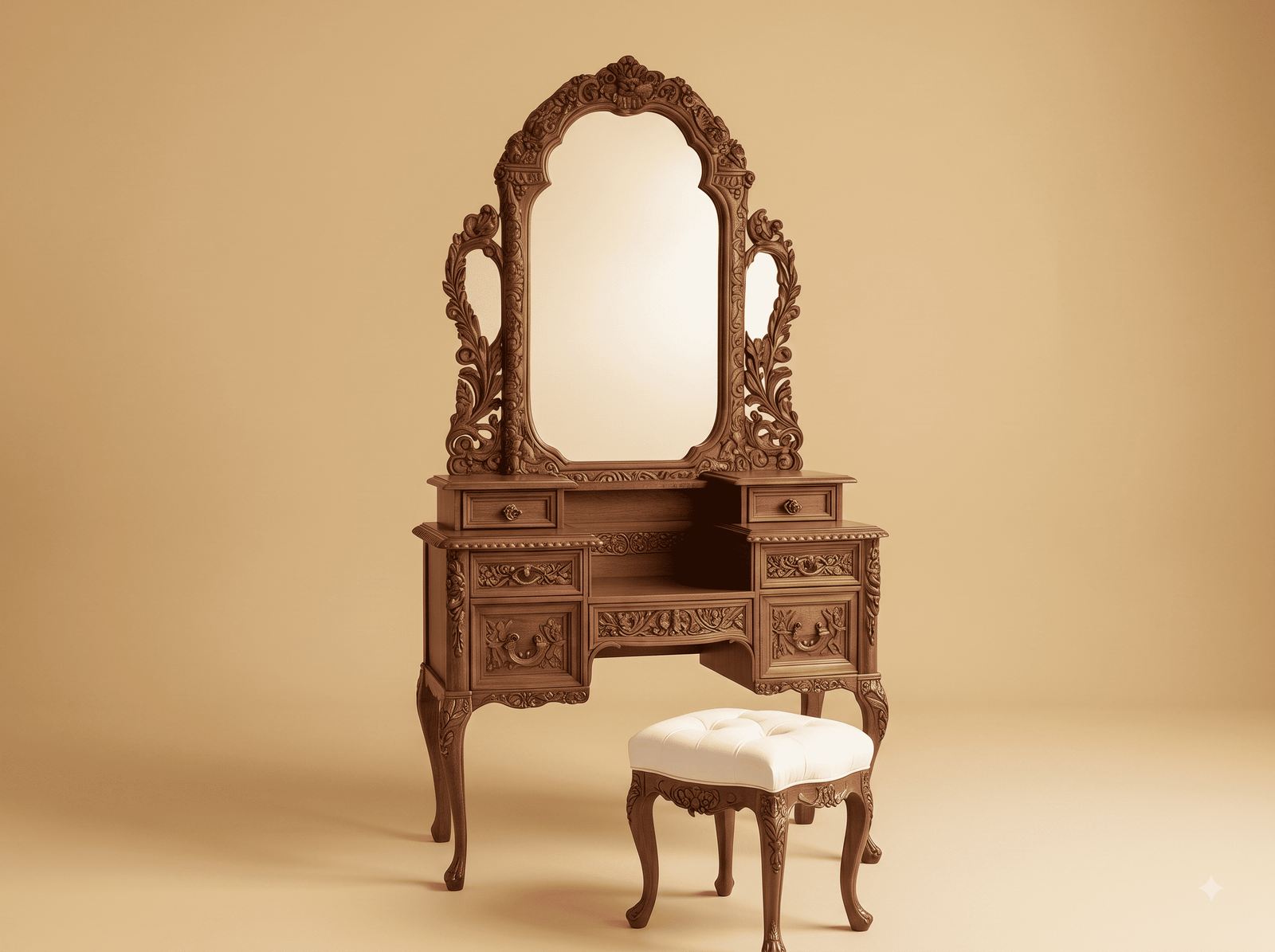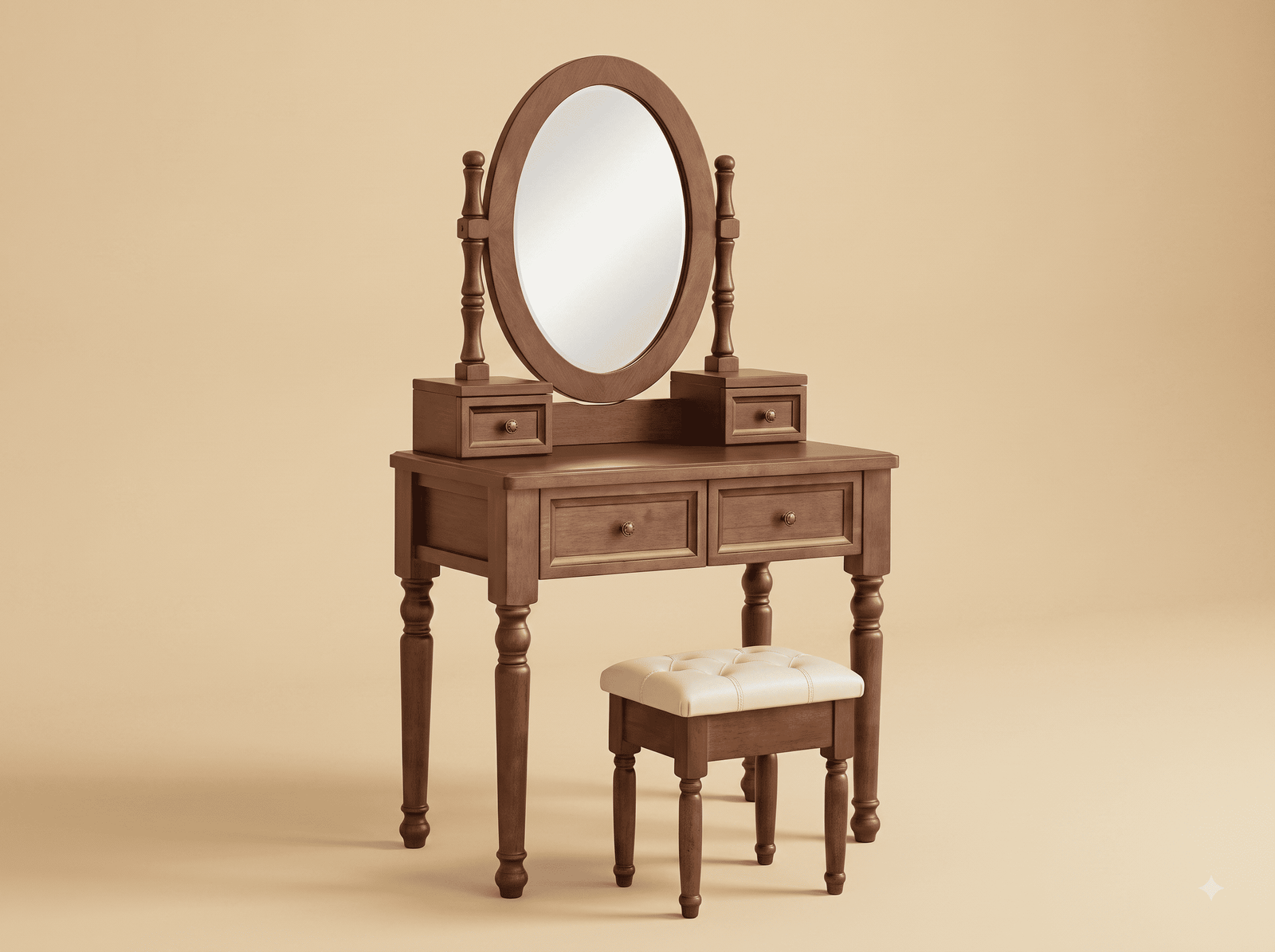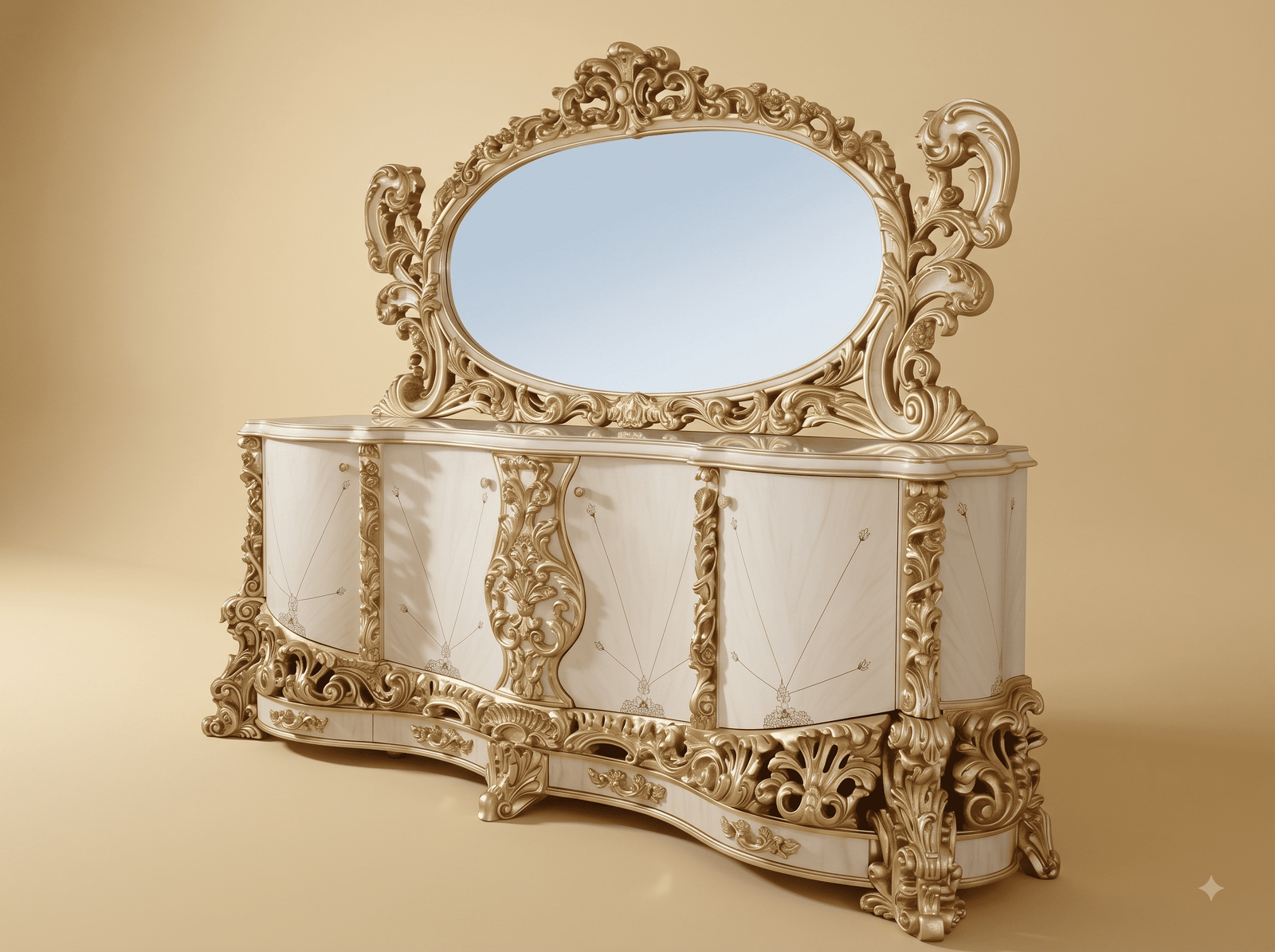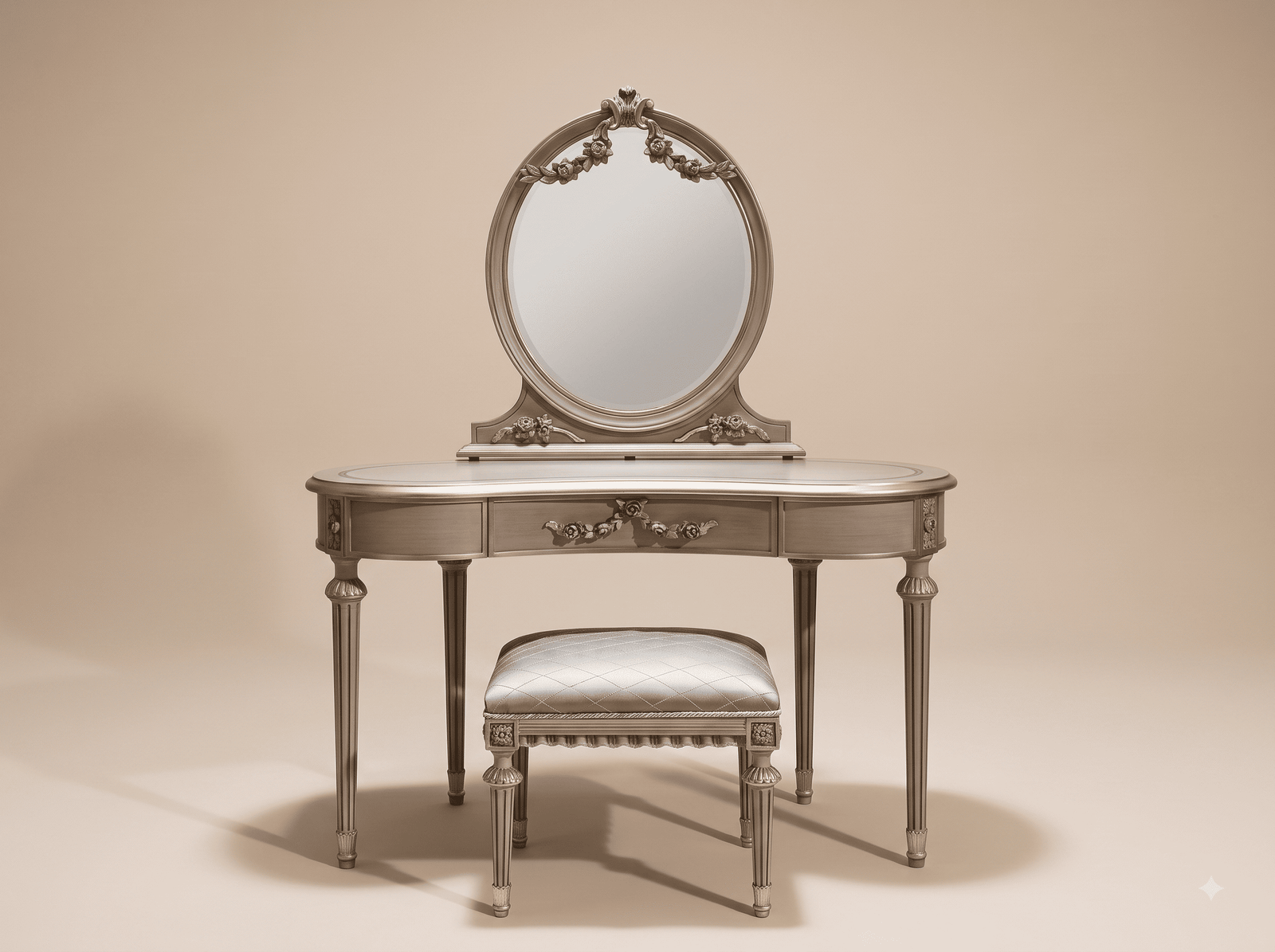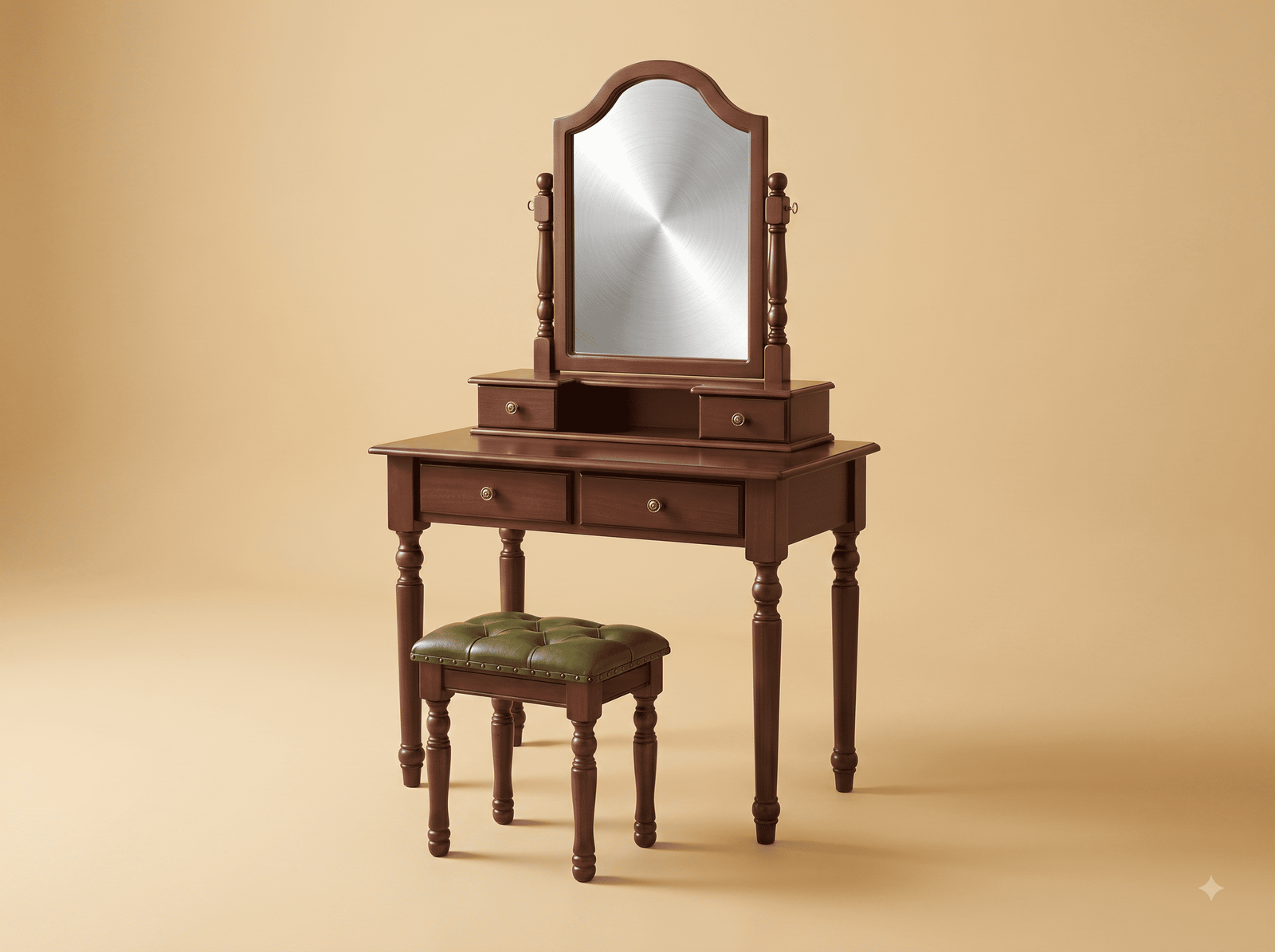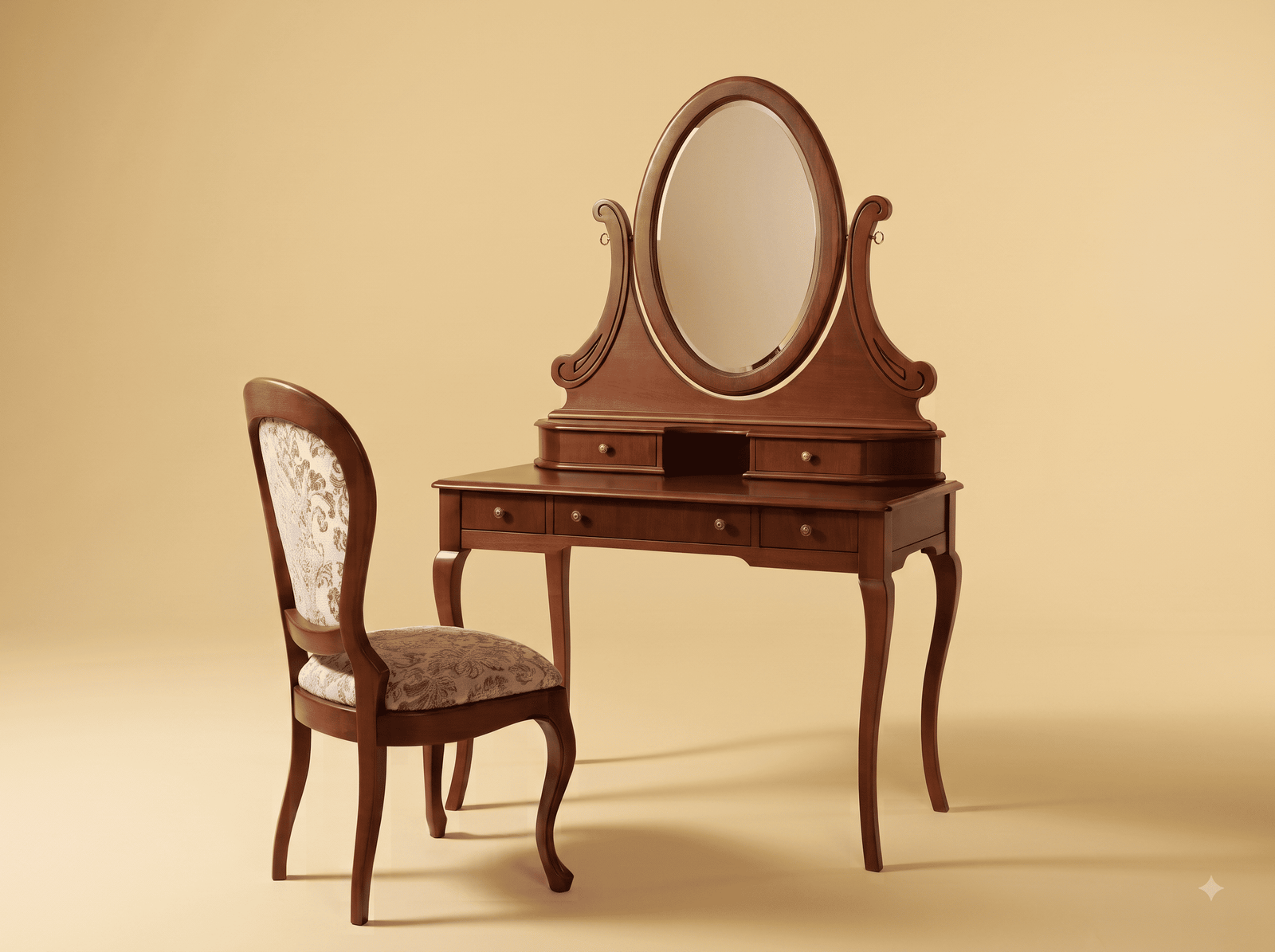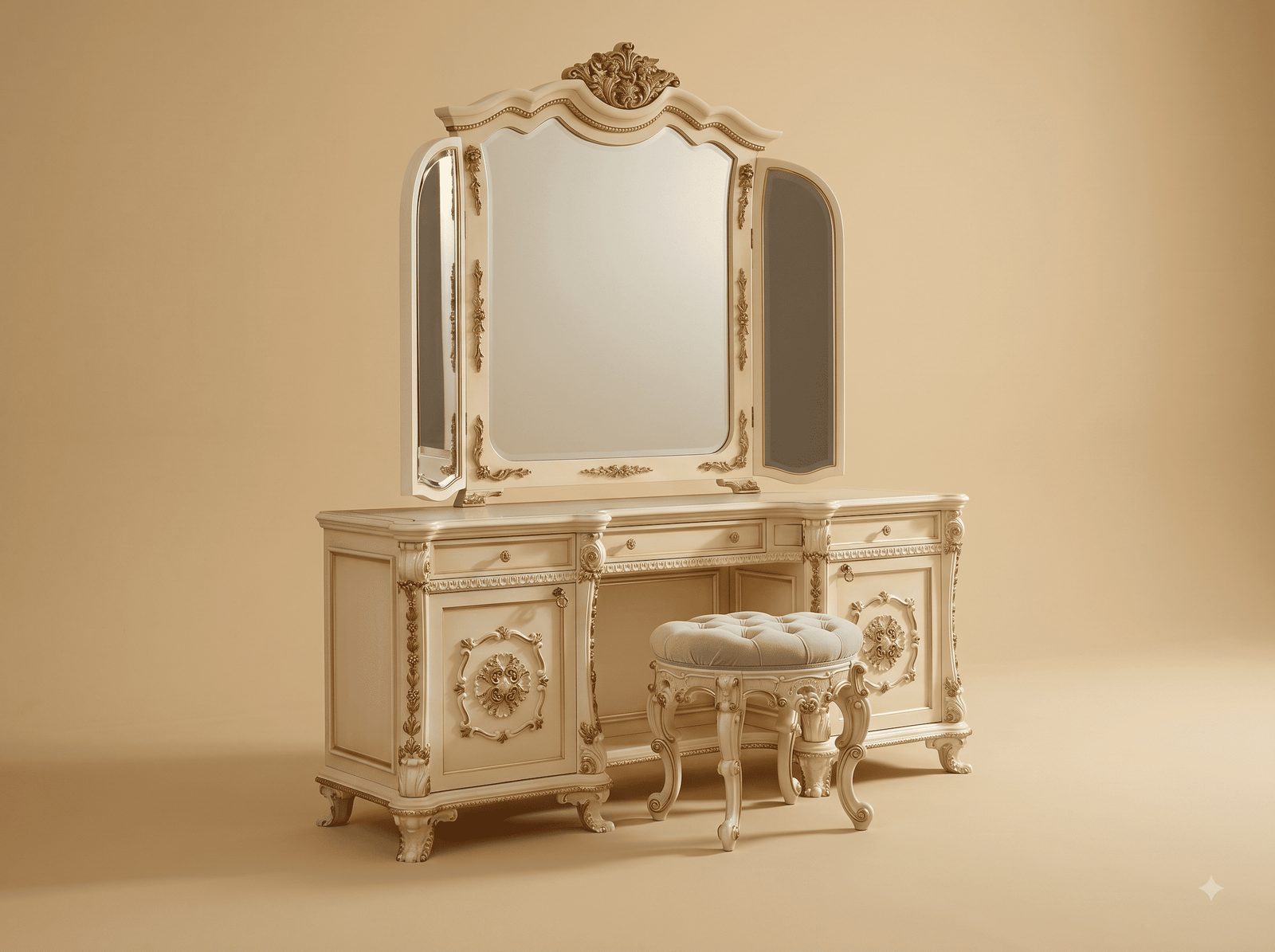
The rosette in the middle of each cupboard door looks like the simplest carving on this vanity. It is the one our carvers respect most.
A rosette is radially symmetrical - petals turning around a centre, each identical to the next, all converging on a single point. Human eyes are extraordinarily good at spotting failures of radial symmetry. A leaf carved slightly deeper than its neighbour on a scrolling border passes unnoticed; the same error on a rosette makes the whole medallion look as if it is falling over, and nobody can say why.
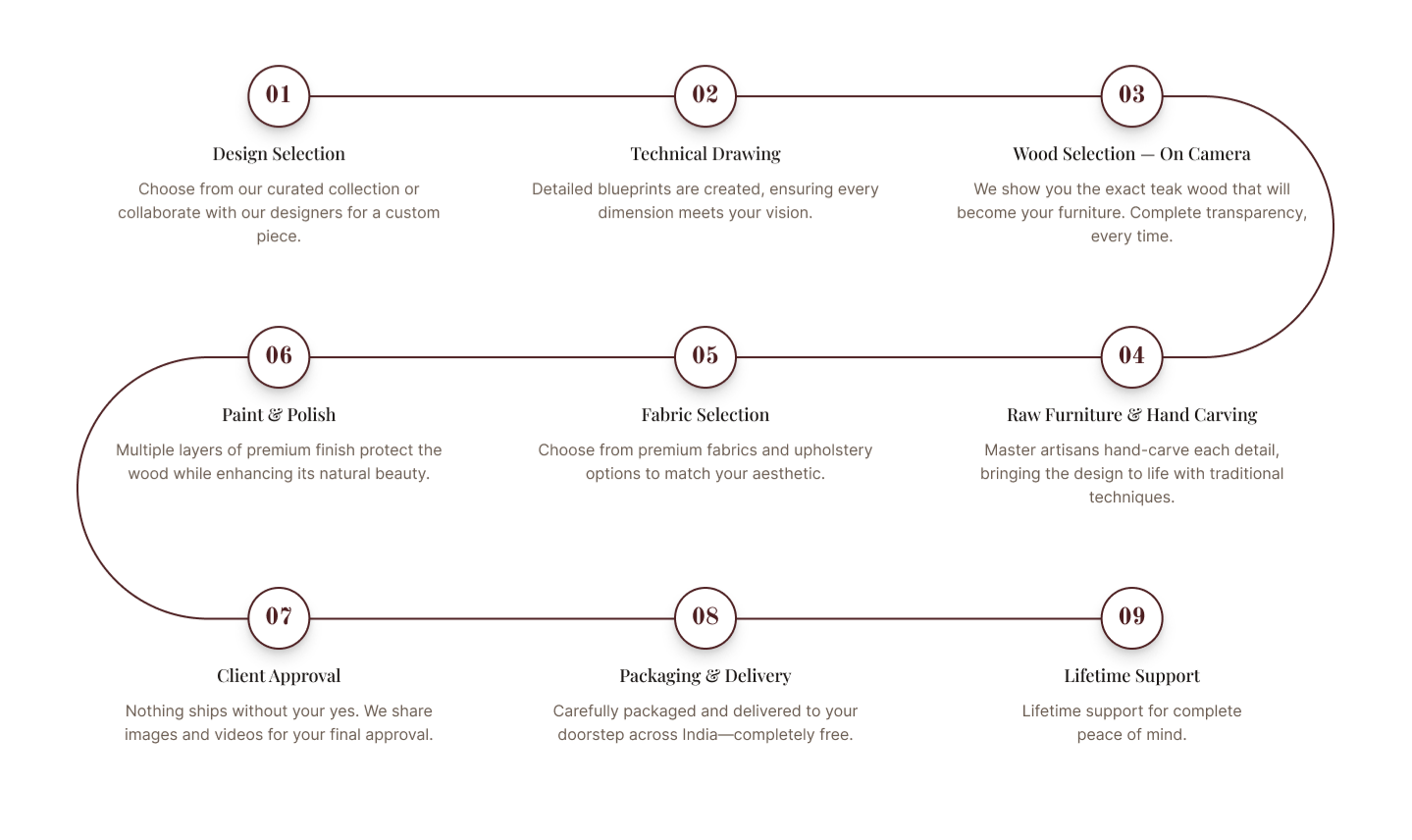
There is no way to cheat it. The centre is marked, the divisions are stepped off around the circumference with dividers, and every petal is roughed to the same depth before any of them is finished - because finishing one petal completely first means the carver is then matching to a moving target rather than to the block.
The carving is worked in rounds, not petal by petal: all the outlines, then all the hollows, then all the surface modelling, turning the piece continuously so the light falls from a different side each pass. Any petal that is off announces itself immediately when the light changes.
Two doors means two rosettes, and they have to match each other as well as themselves.
 Ask Price On WhatsApp