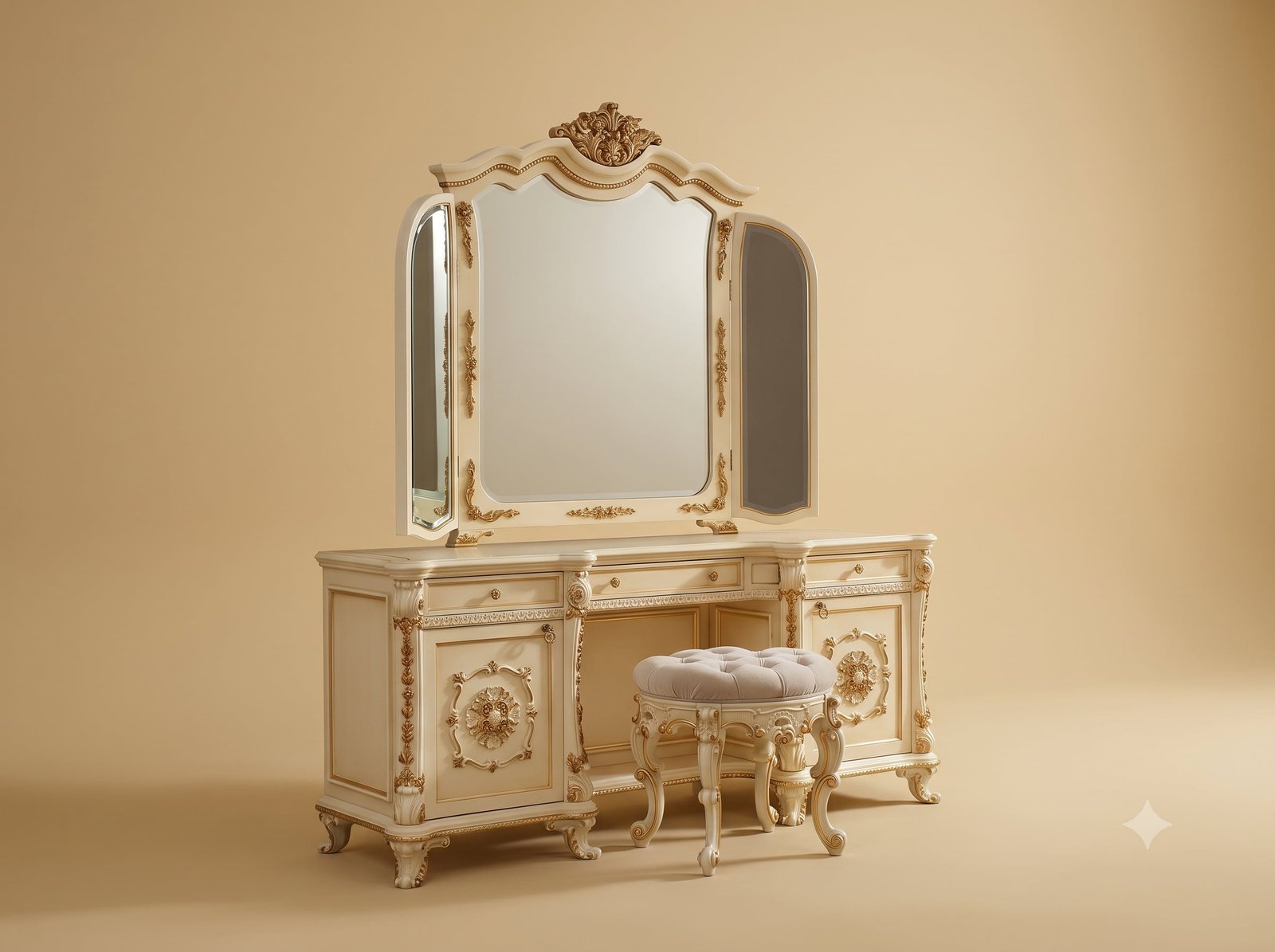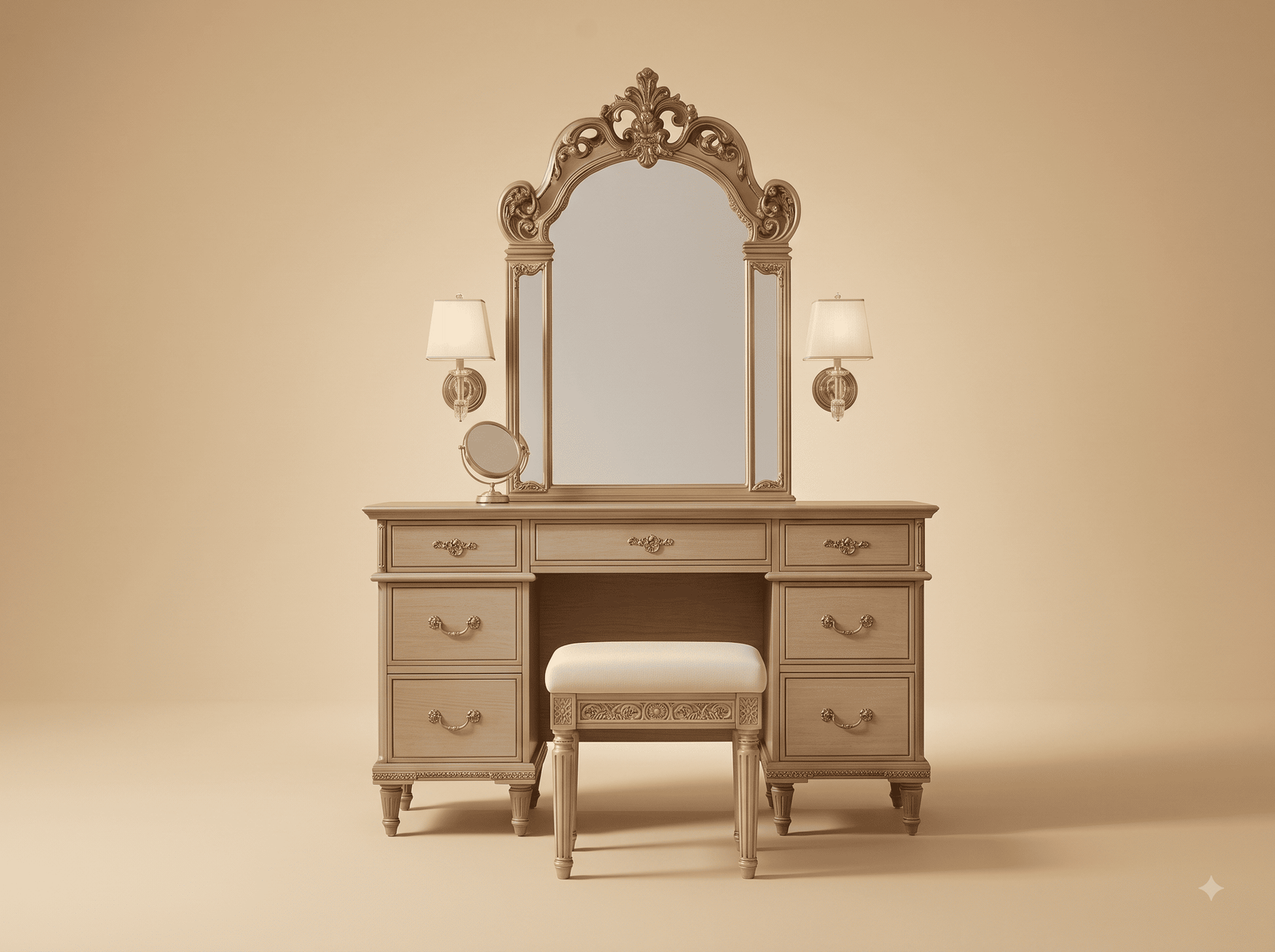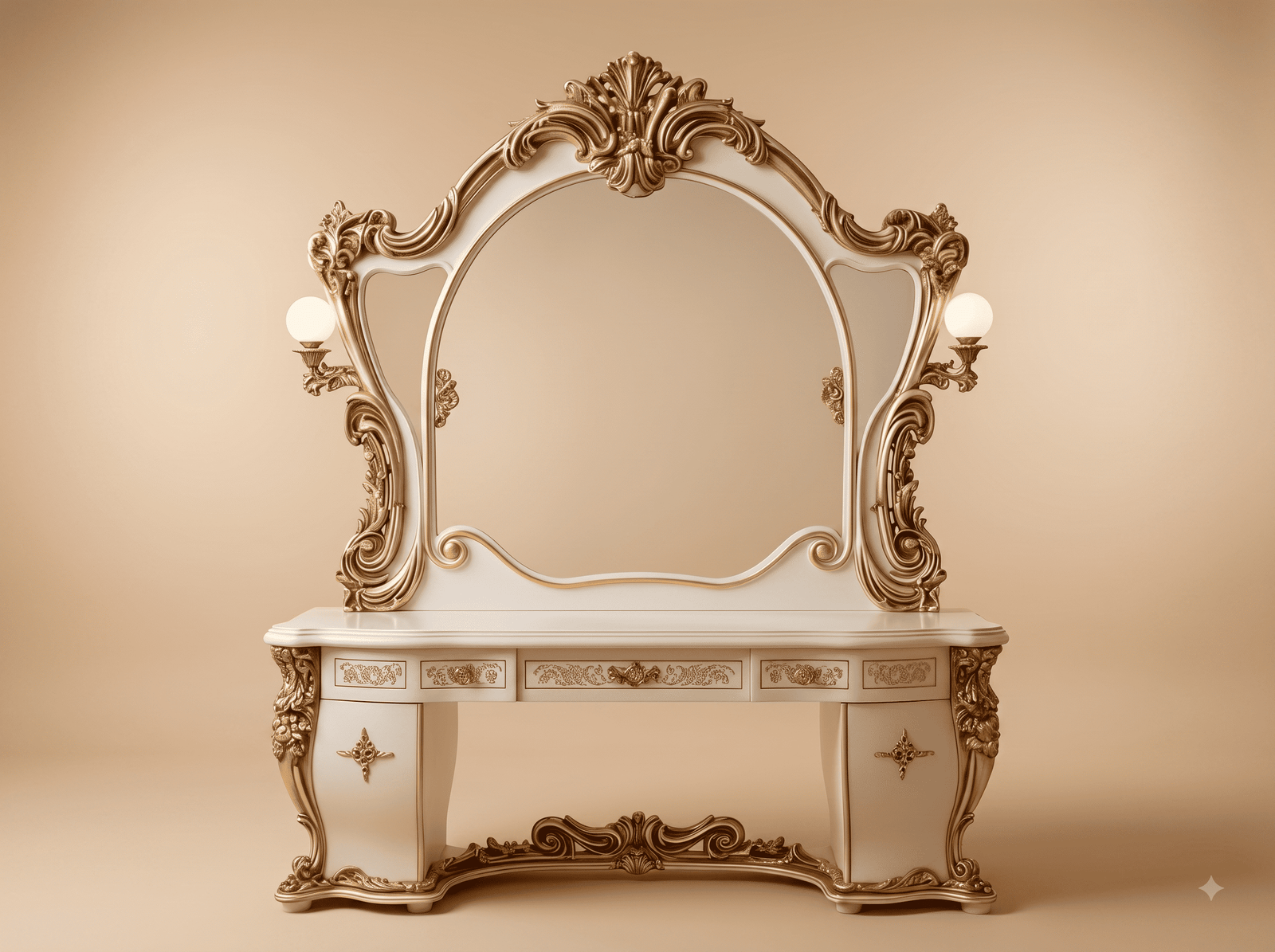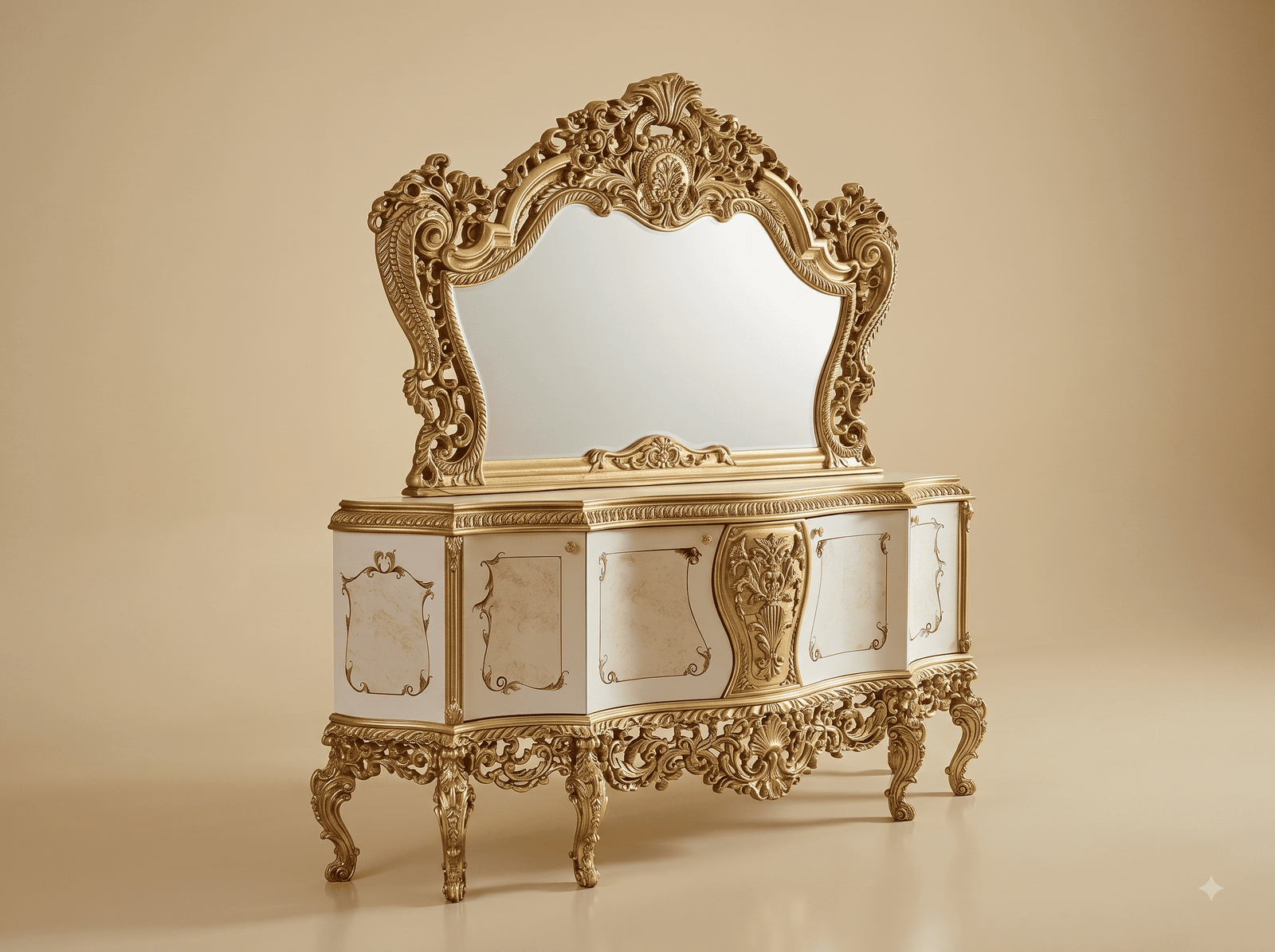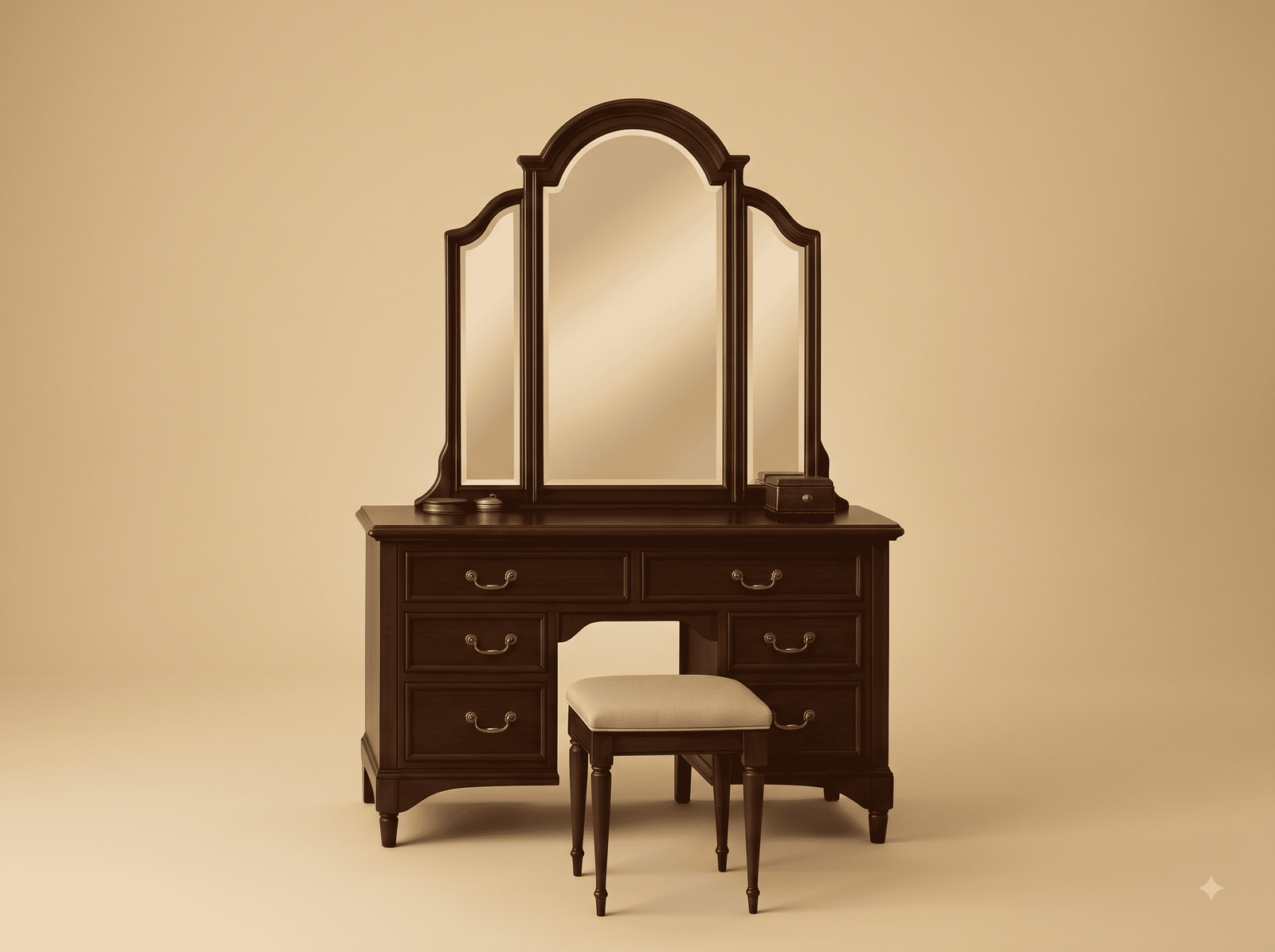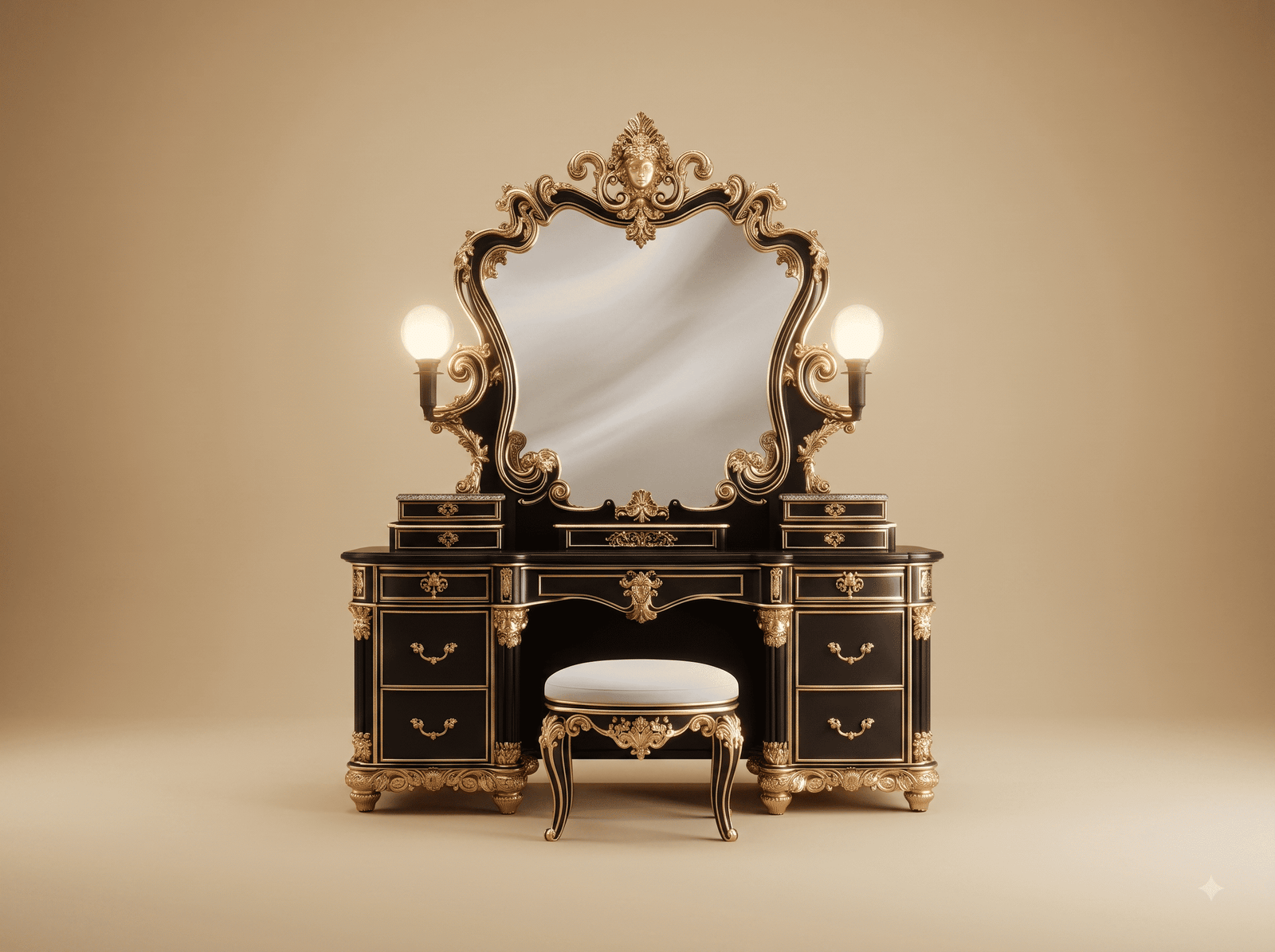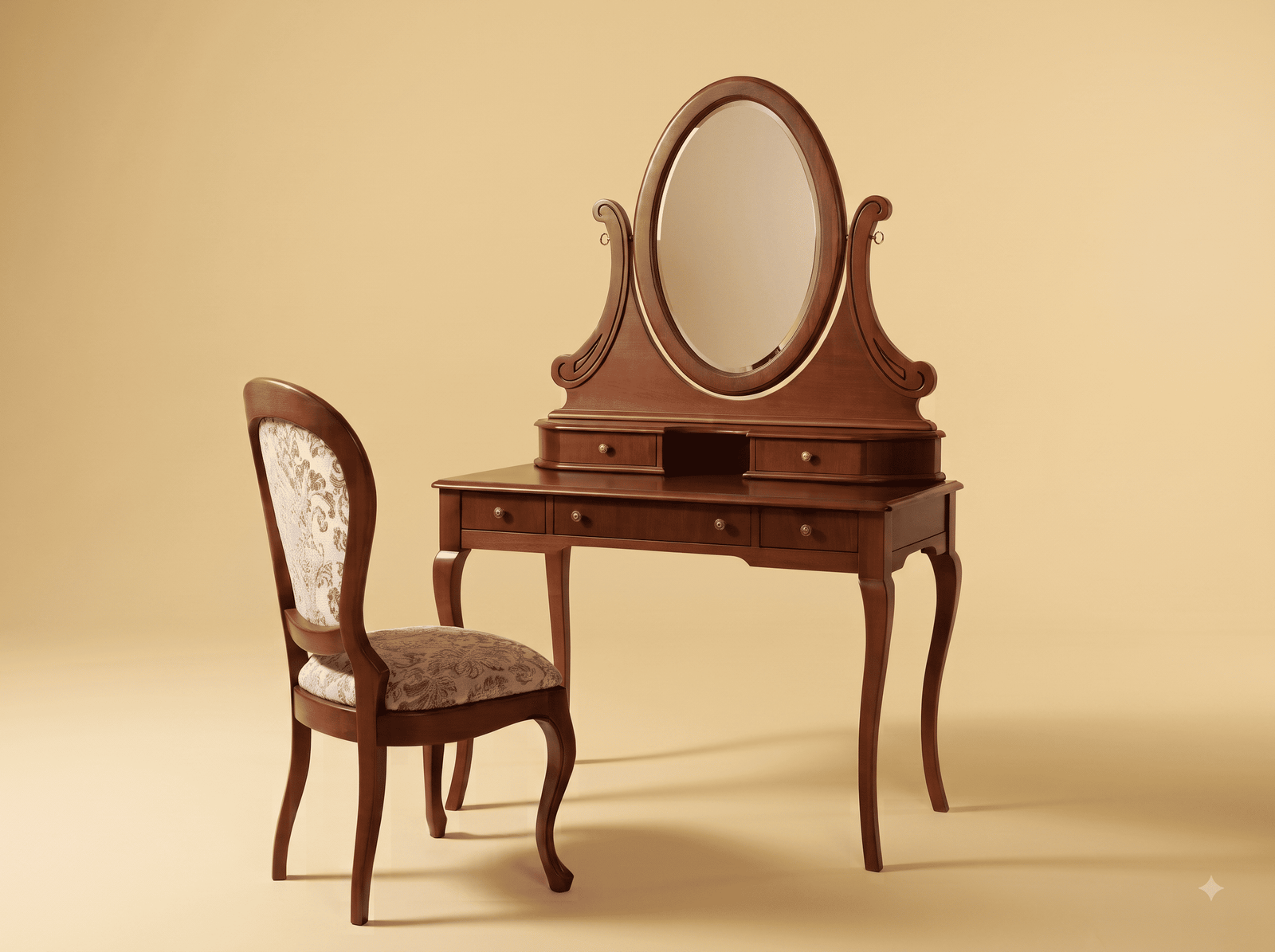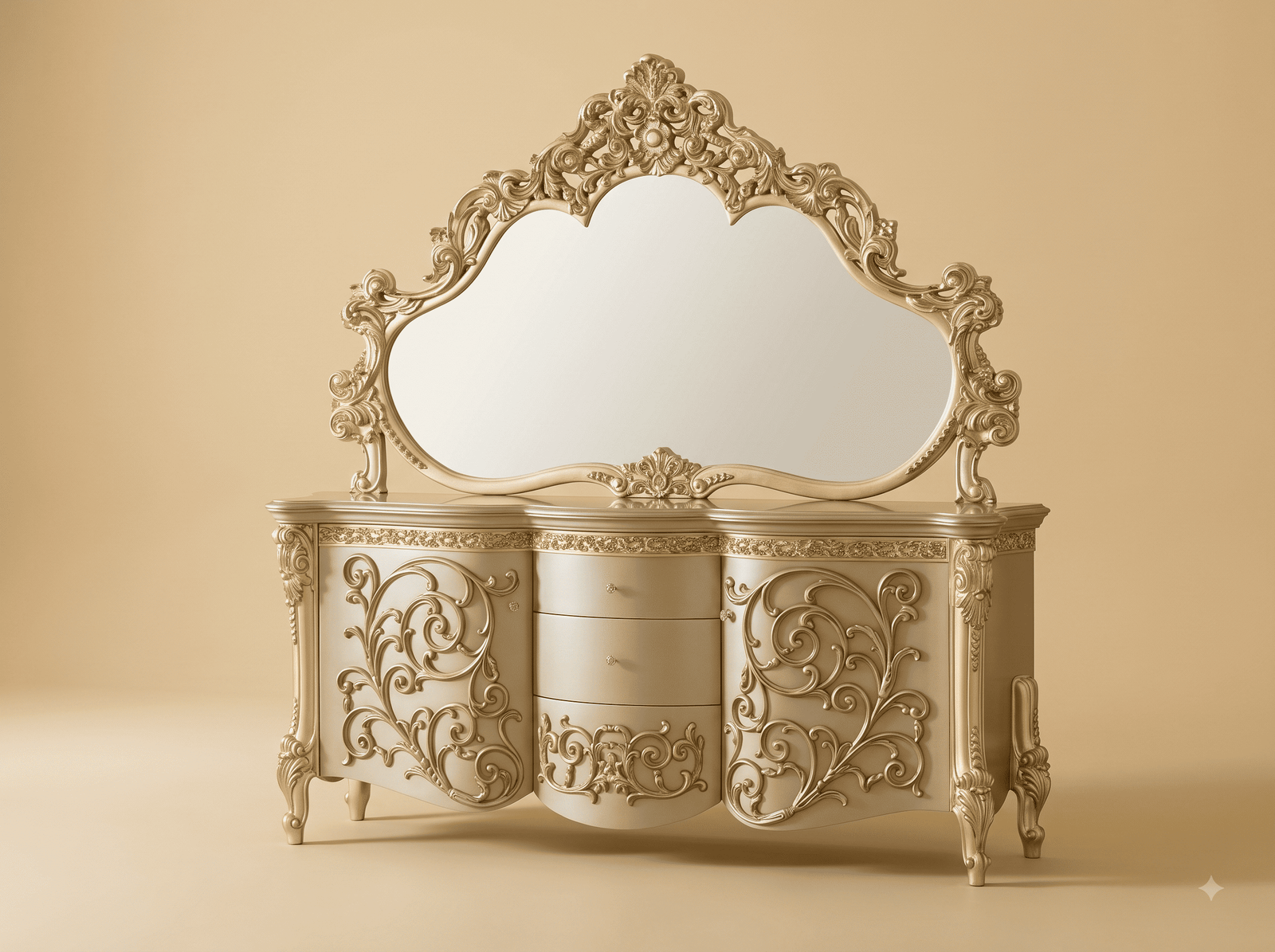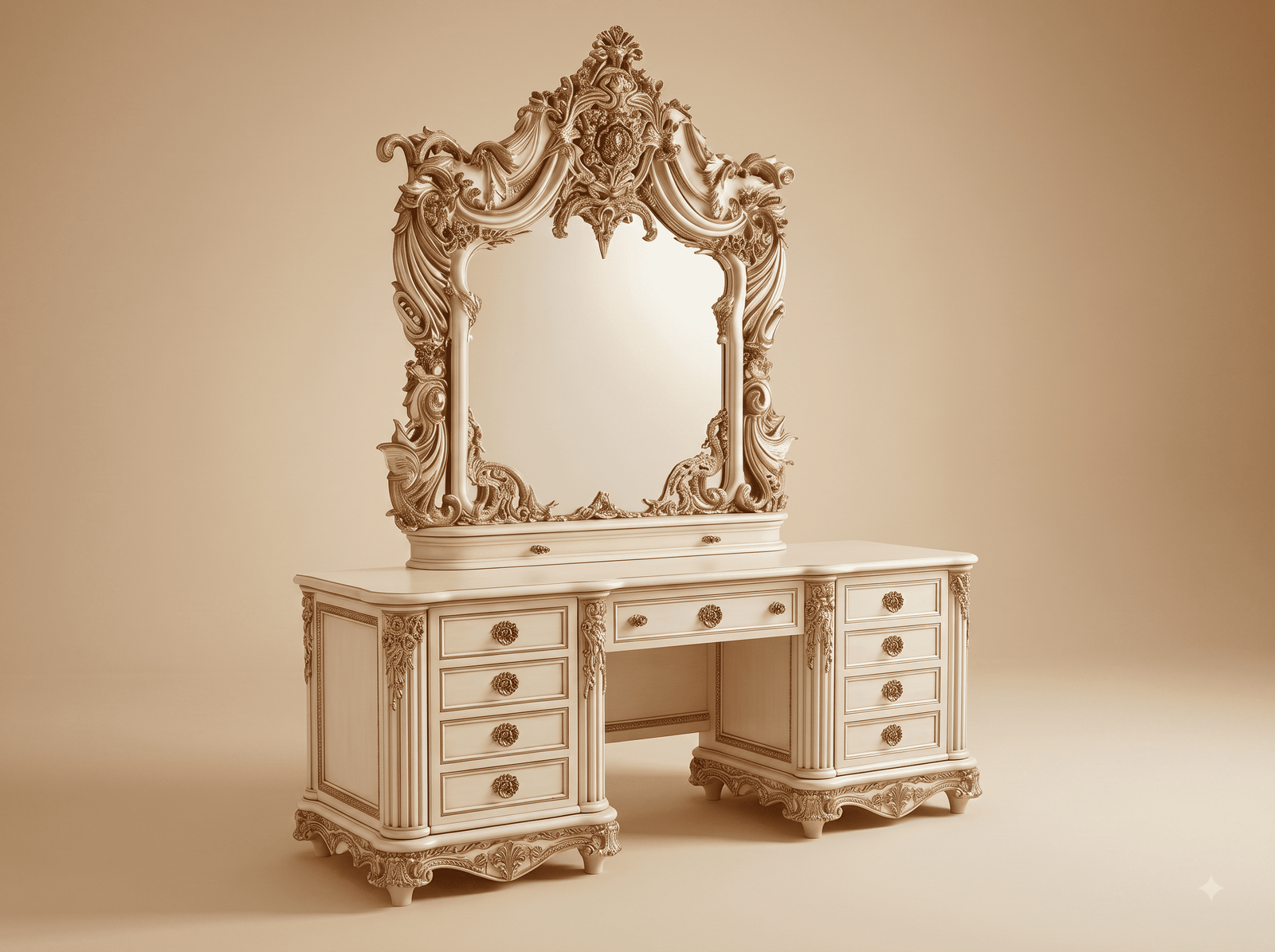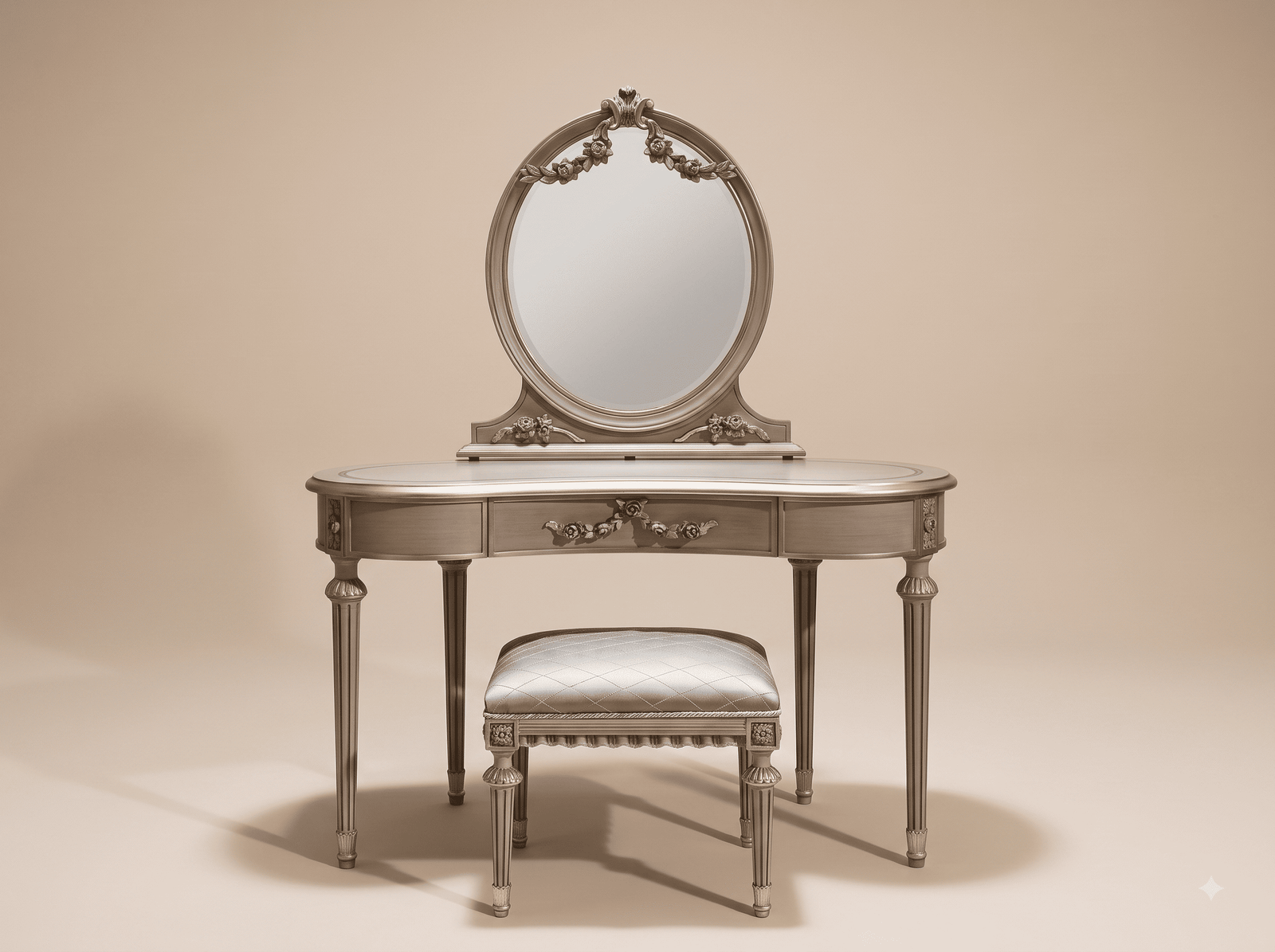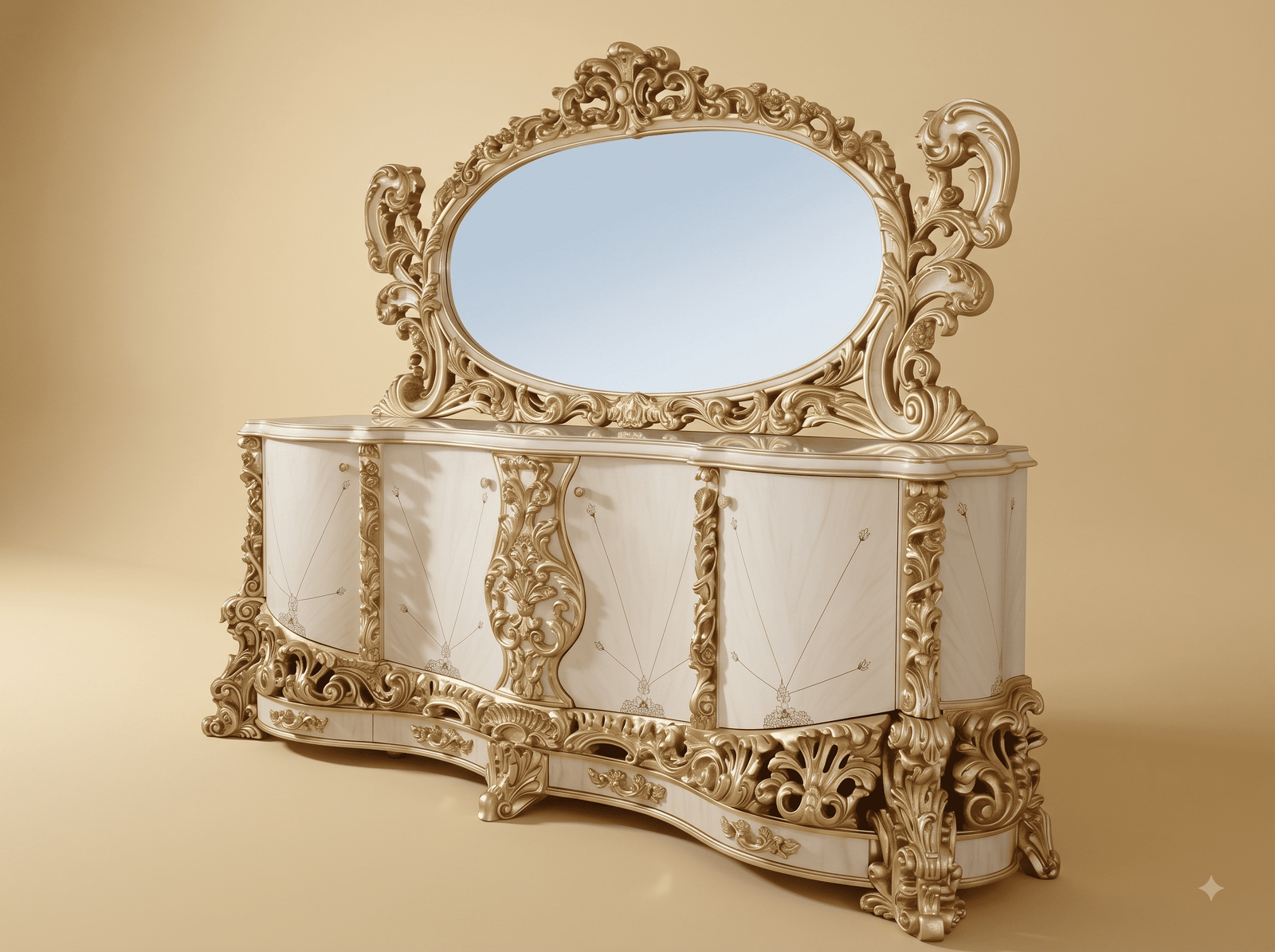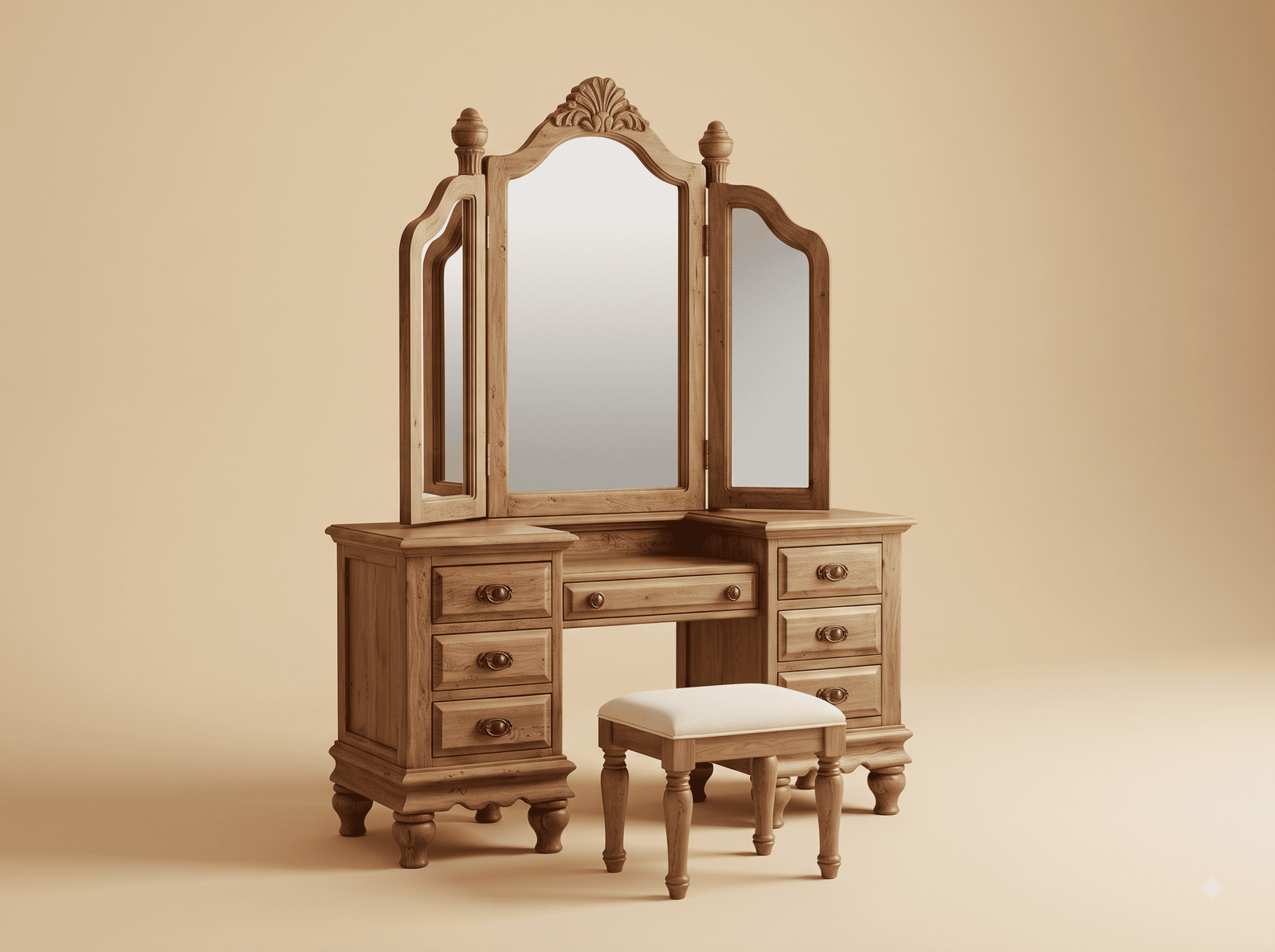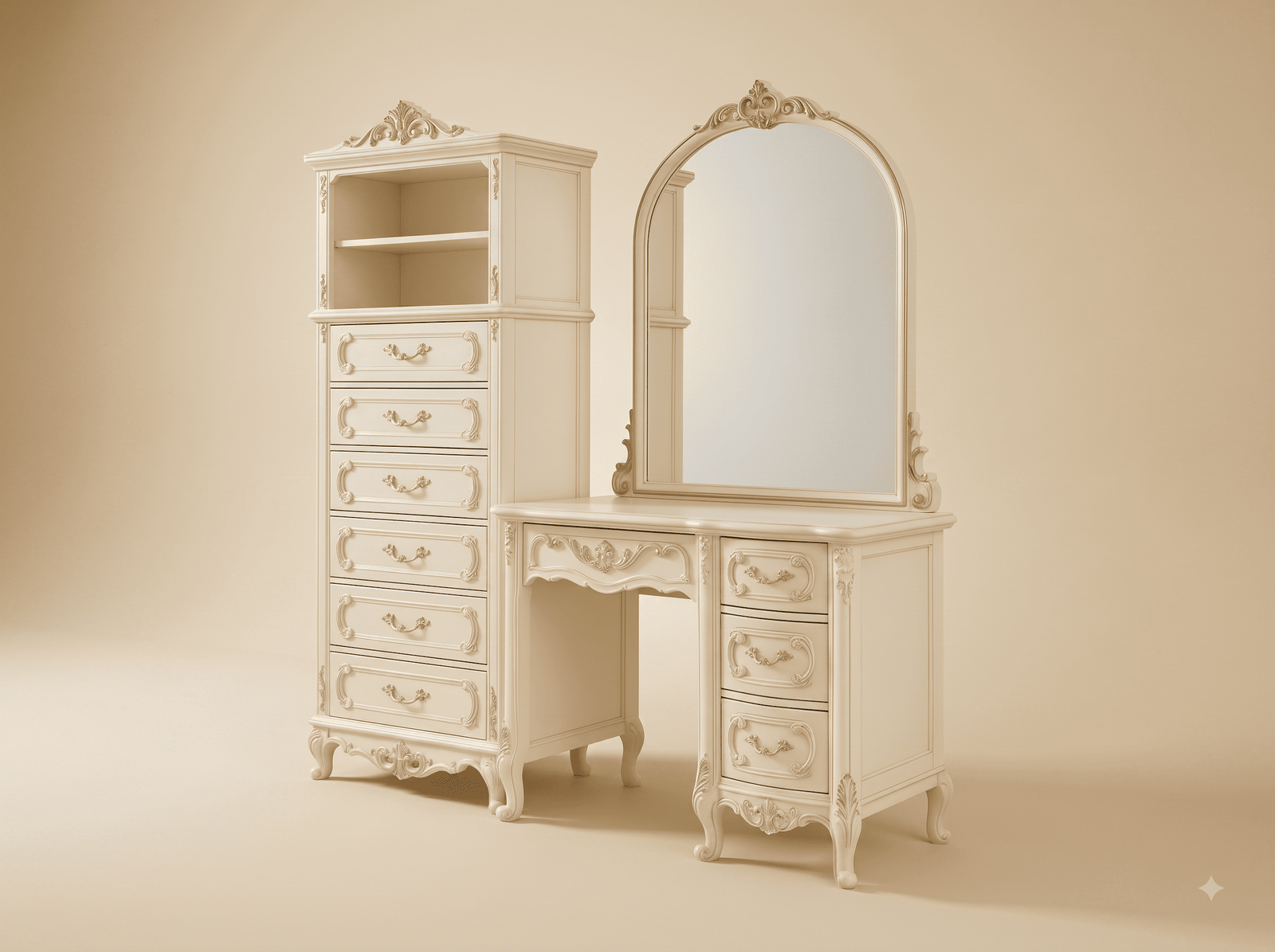
A bow front is one of those details that costs a great deal and announces itself very quietly. From the front you barely register it; from an angle, the light travels across the curve instead of stopping flat, and the drawer reads as furniture rather than as a box.
There are two ways to make one. The quick way is to bend a thin sheet over curved formers and face it. The slow way, and the one our artisans use here, is to take stock thick enough to contain the whole curve and shape it away - the drawer front starts as a heavy solid teak block and finishes as a curve with the grain sweeping continuously across it.
The consequence is in the details that follow. The carved cartouche on the front has to be cut into an already curved surface, so the carver works on a shape that falls away under the chisel in two directions at once. The drawer sides then have to be jointed into a front that is thicker at the centre than at the edges, which means the joint is cut to a varying depth by hand.
Three drawers built this way take longer than a dozen flat ones. It is the reason the vanity side of this piece feels different from the chest beside it, even before you notice why.
 Ask Price On WhatsApp