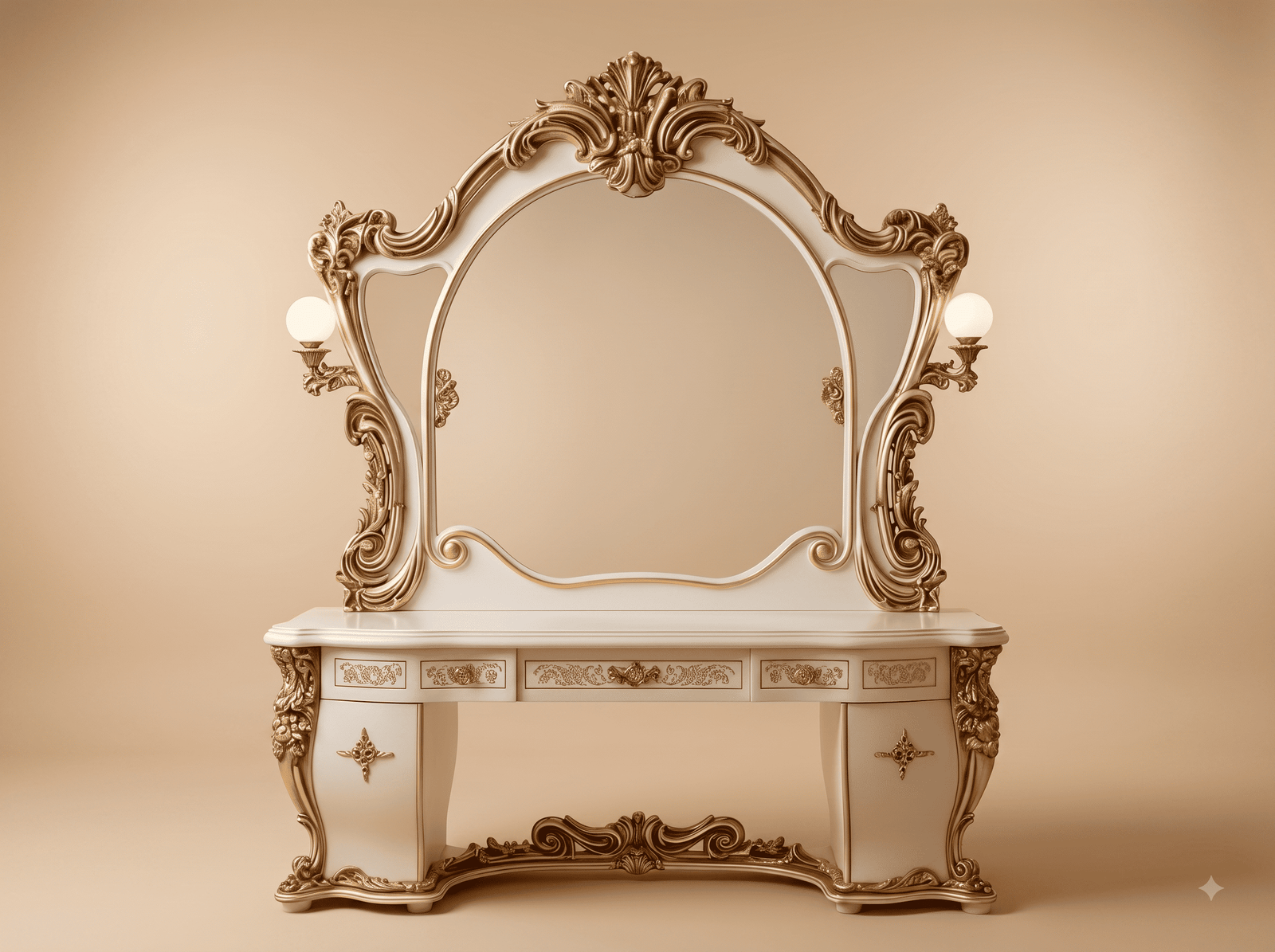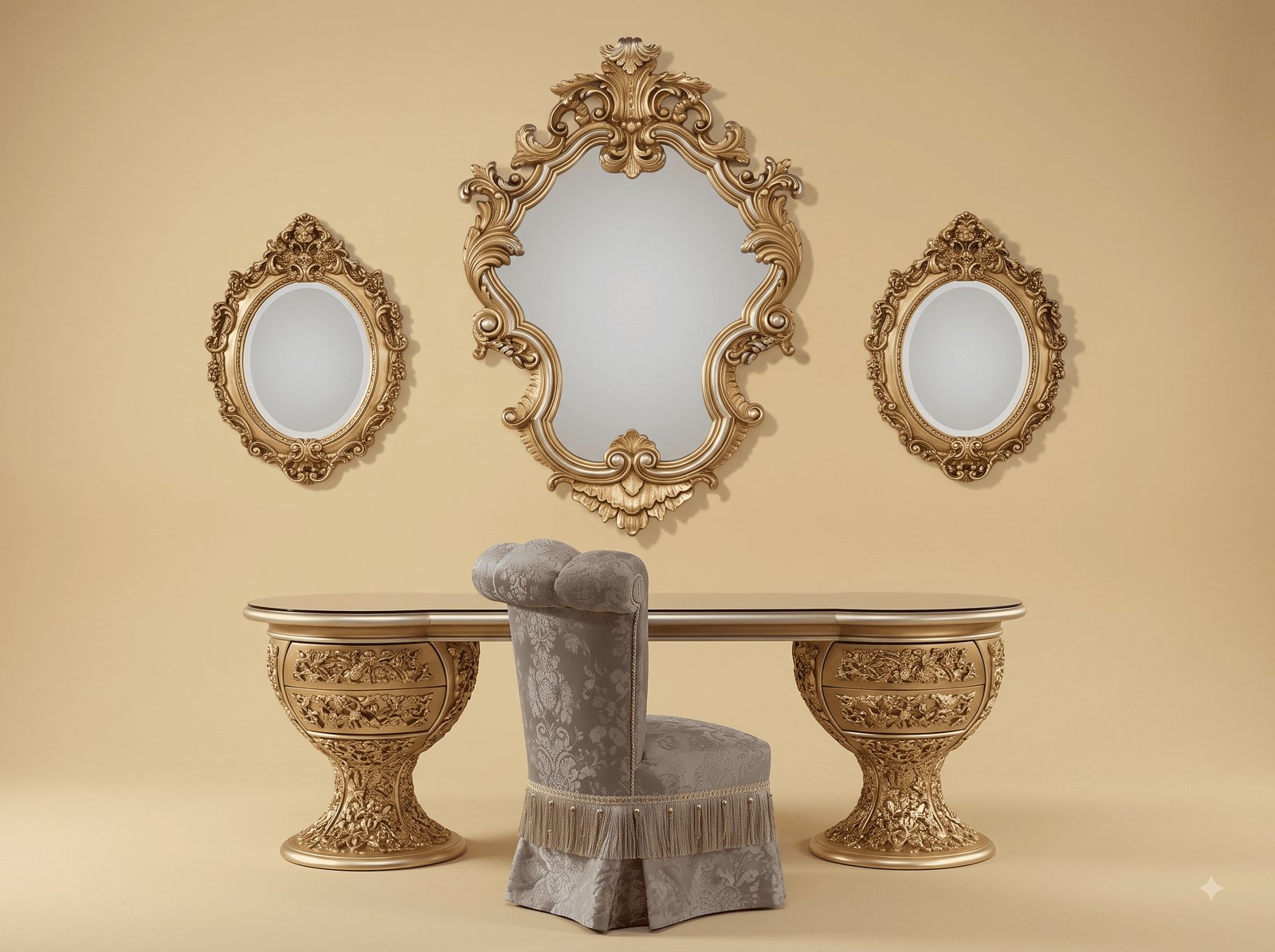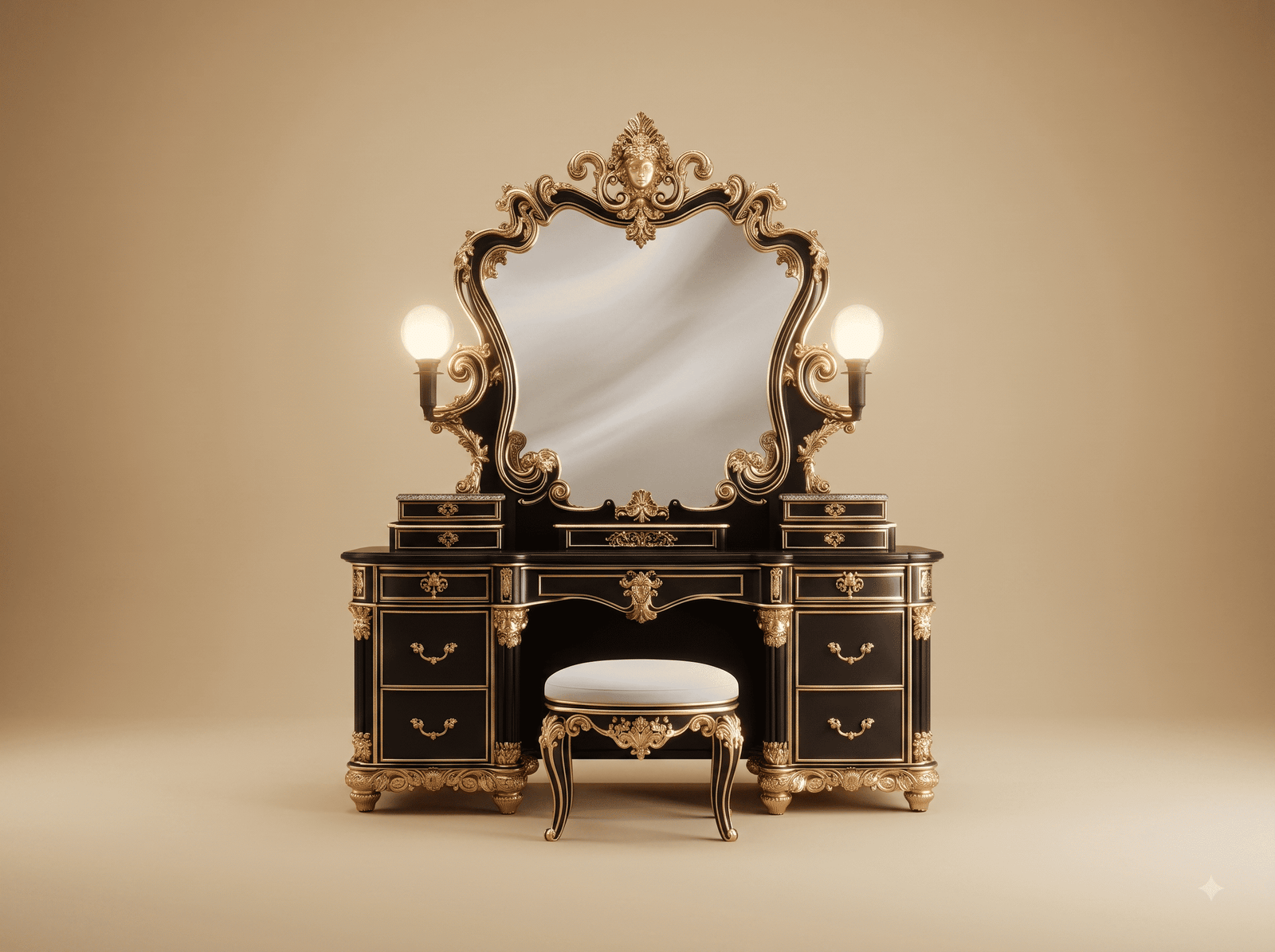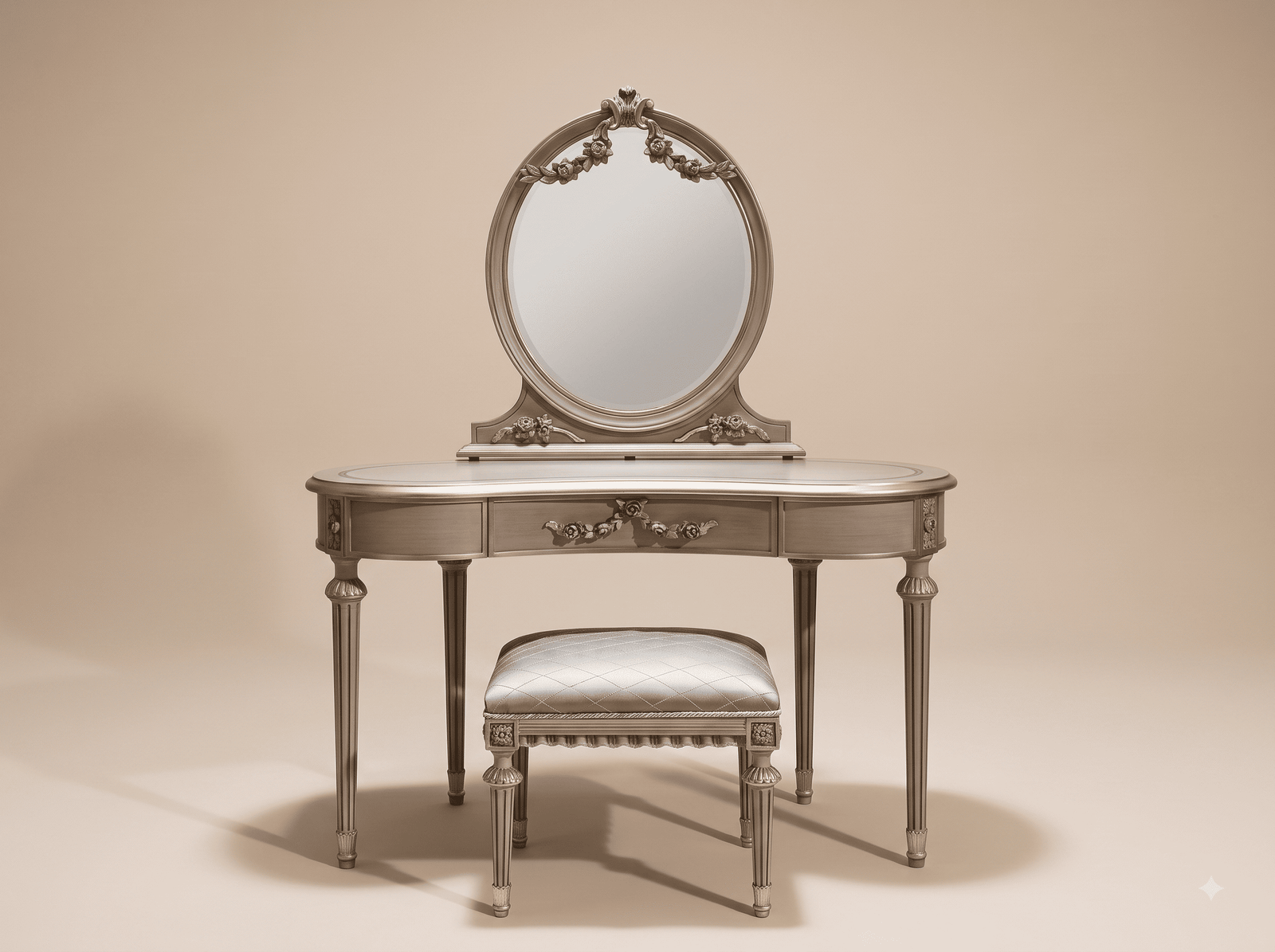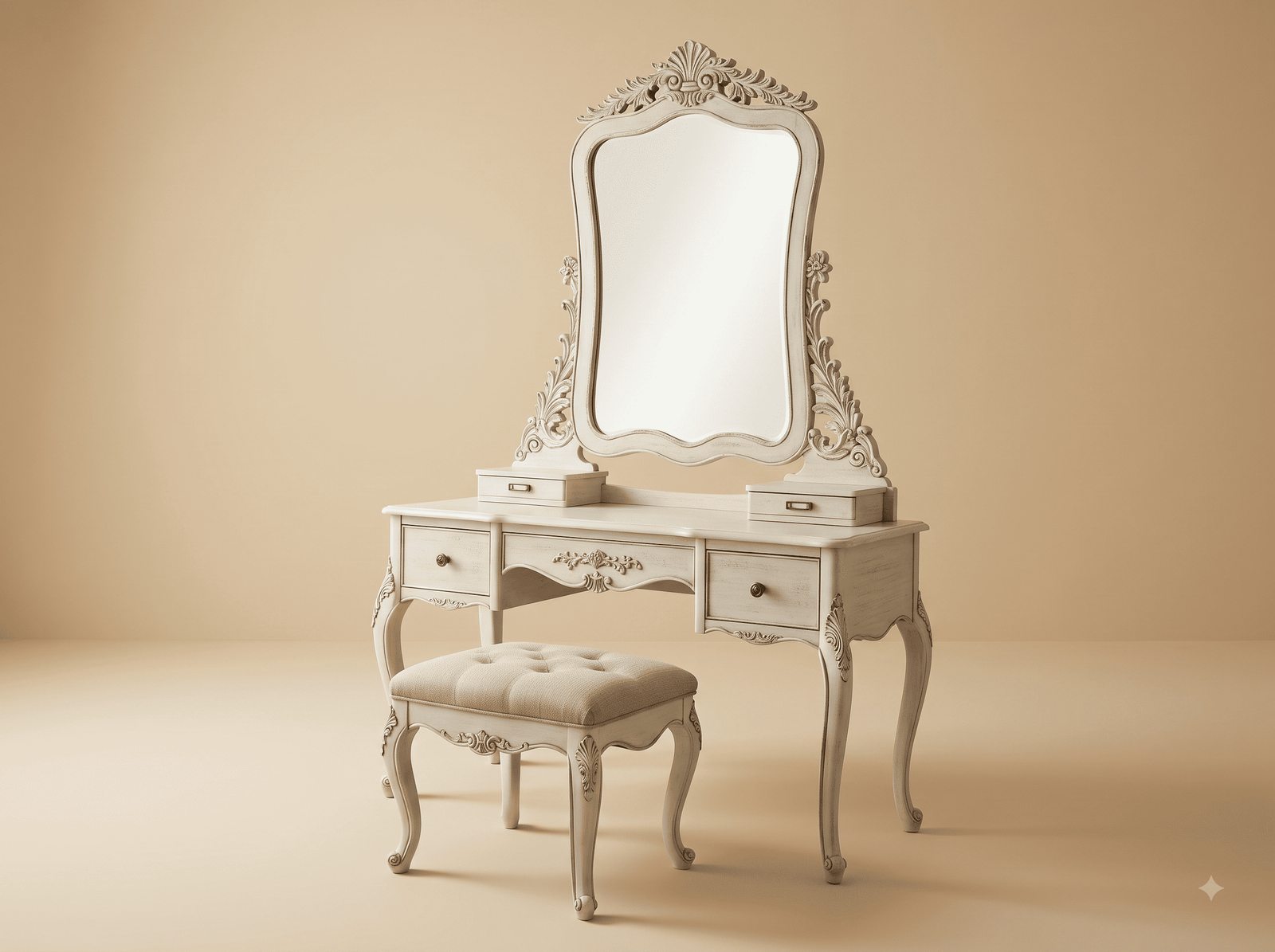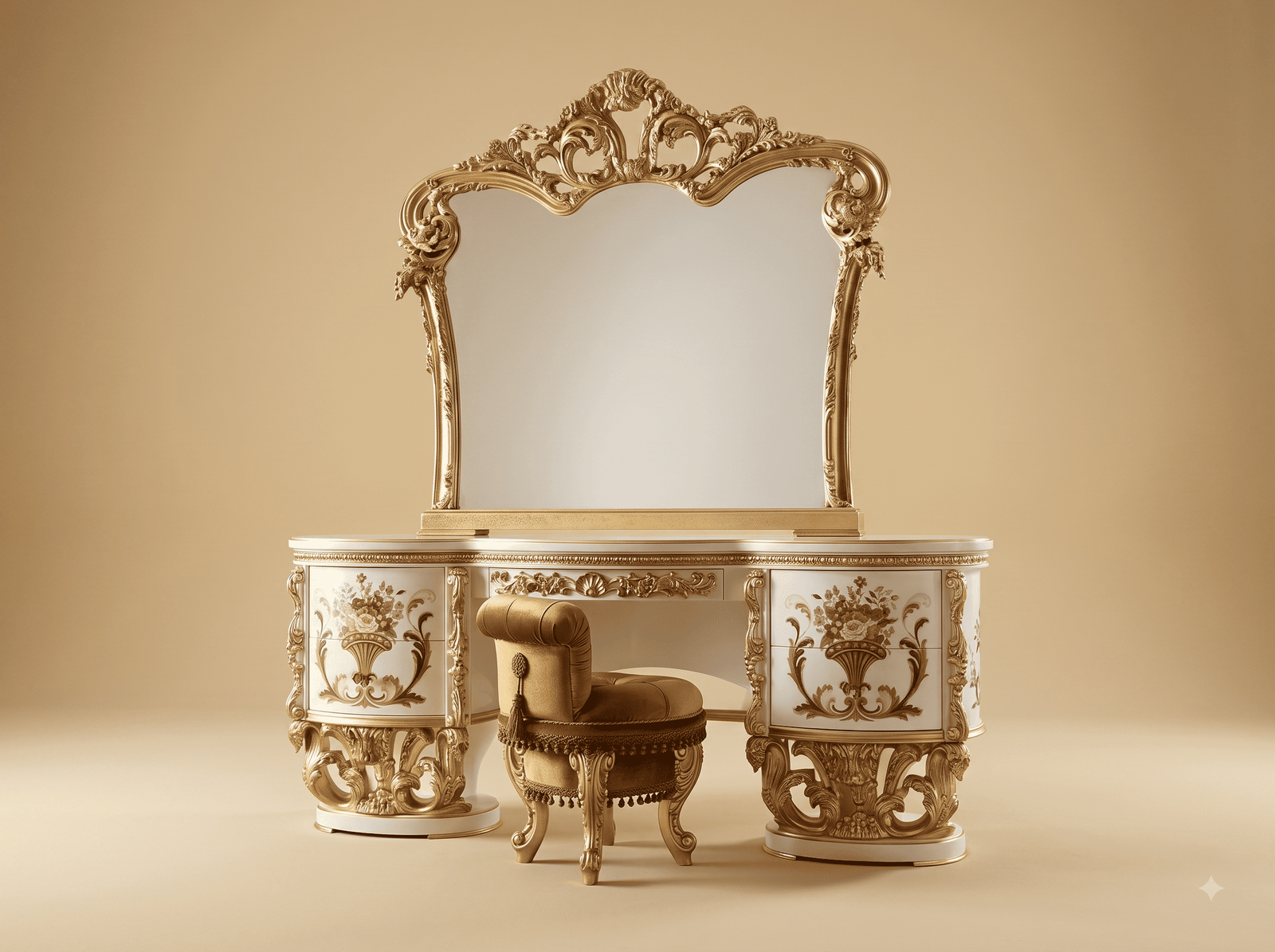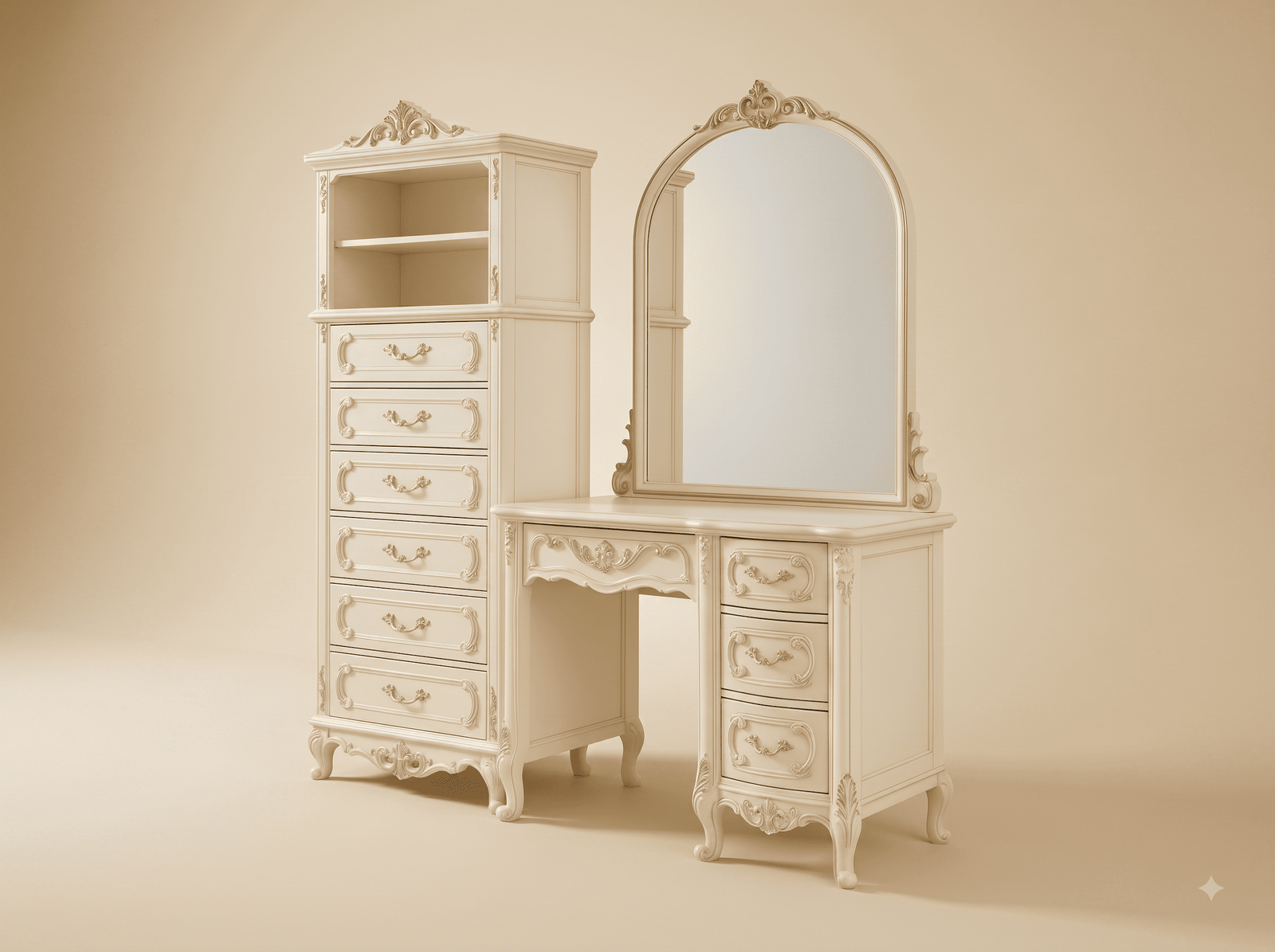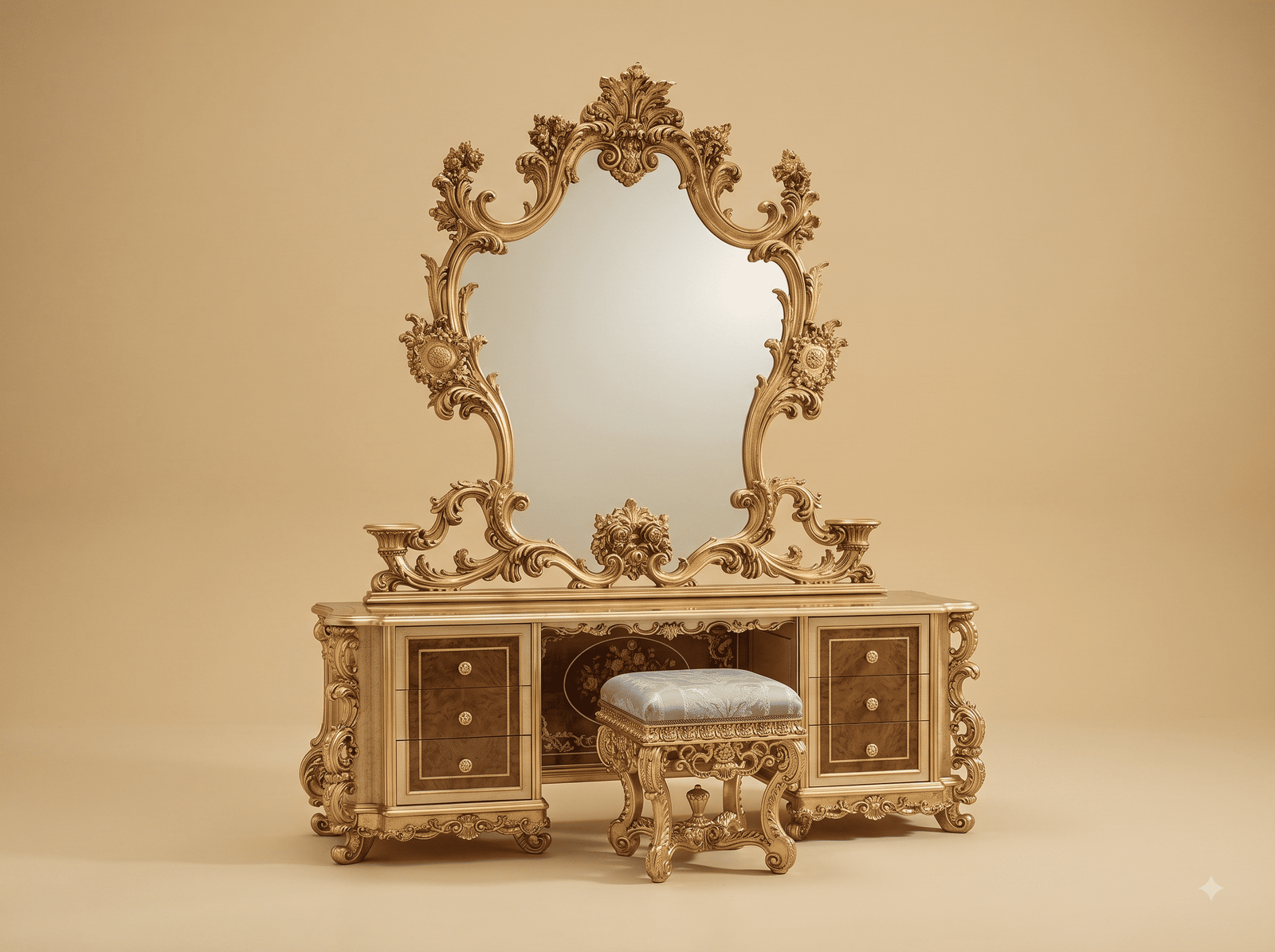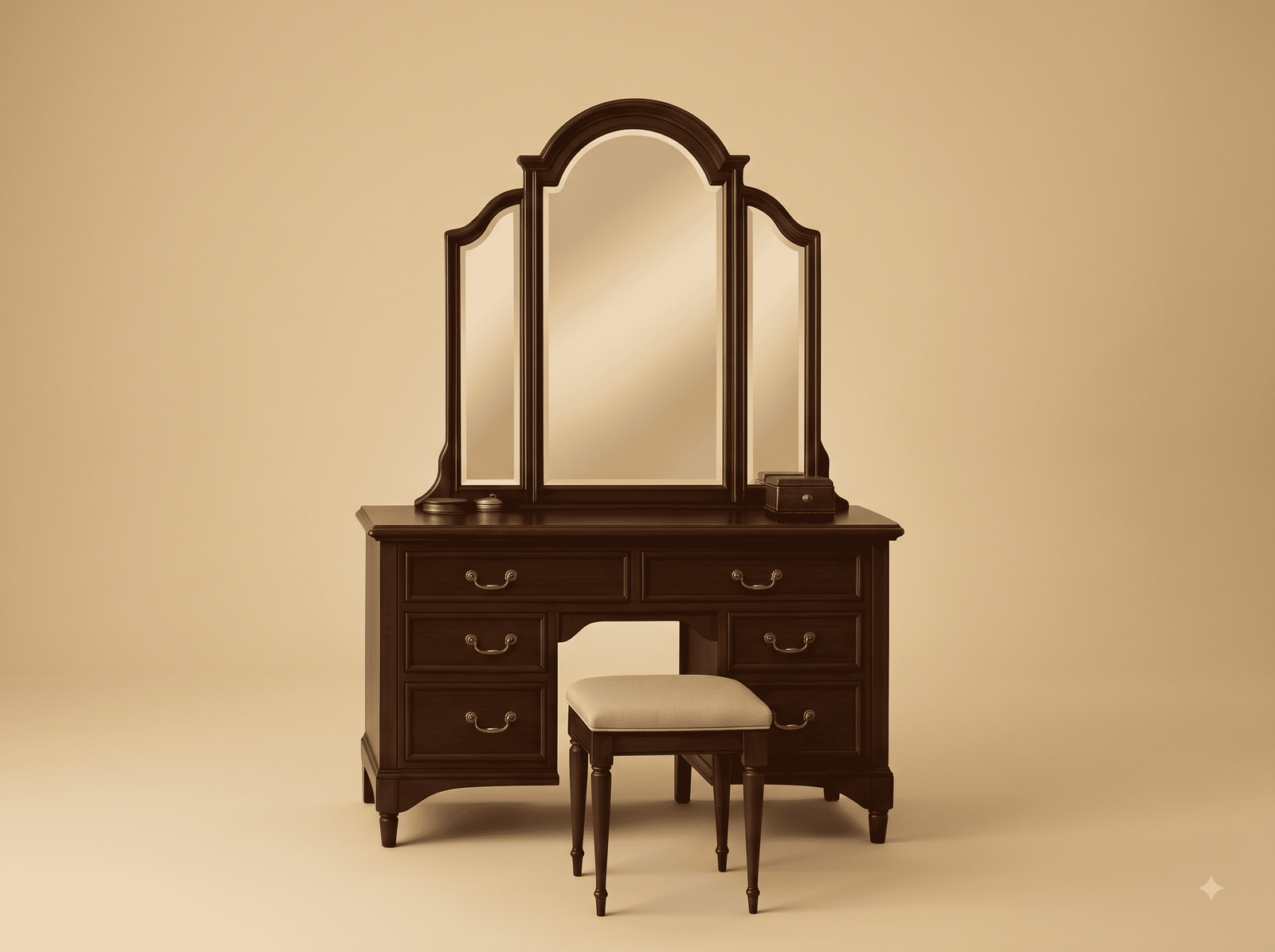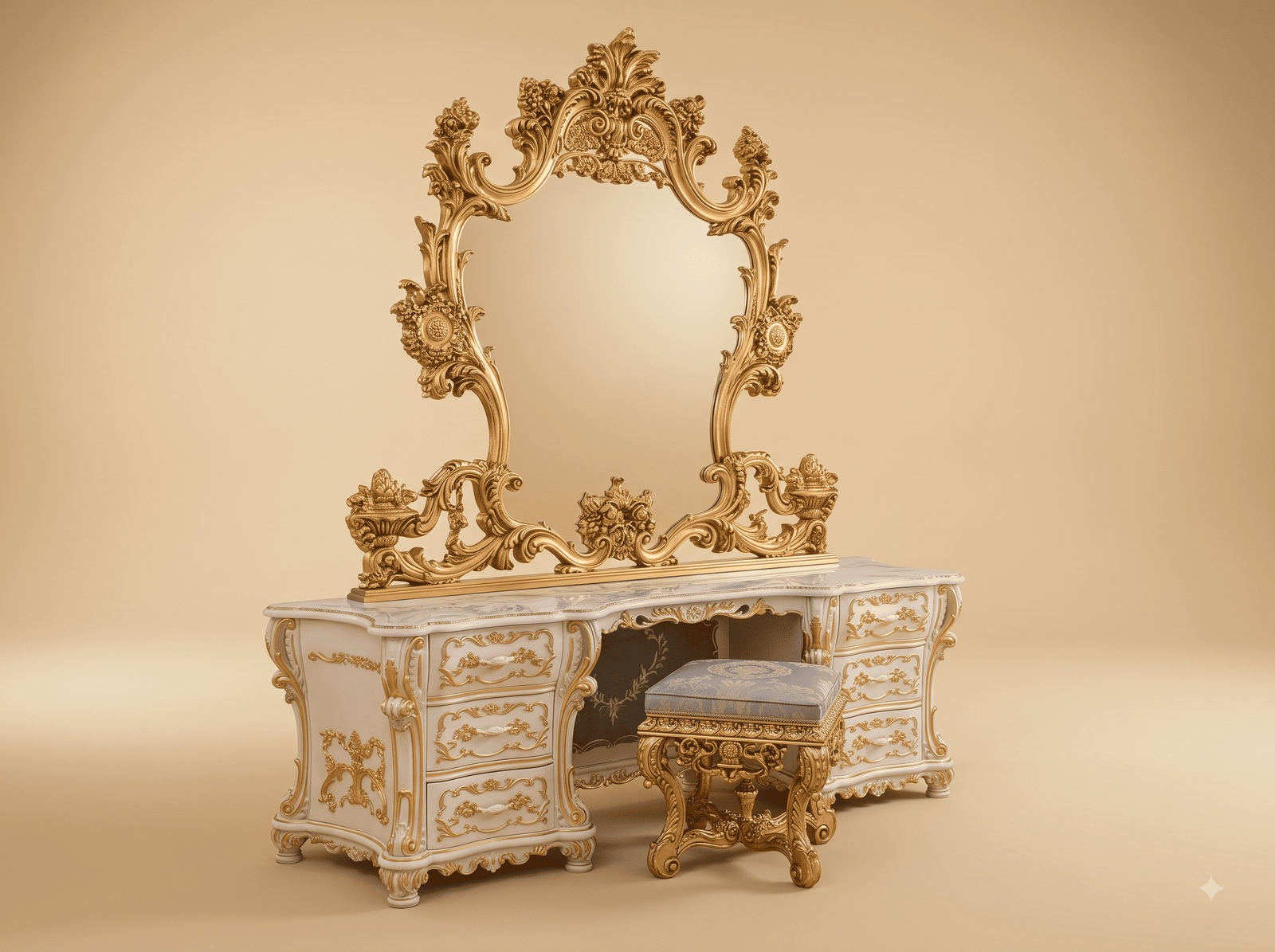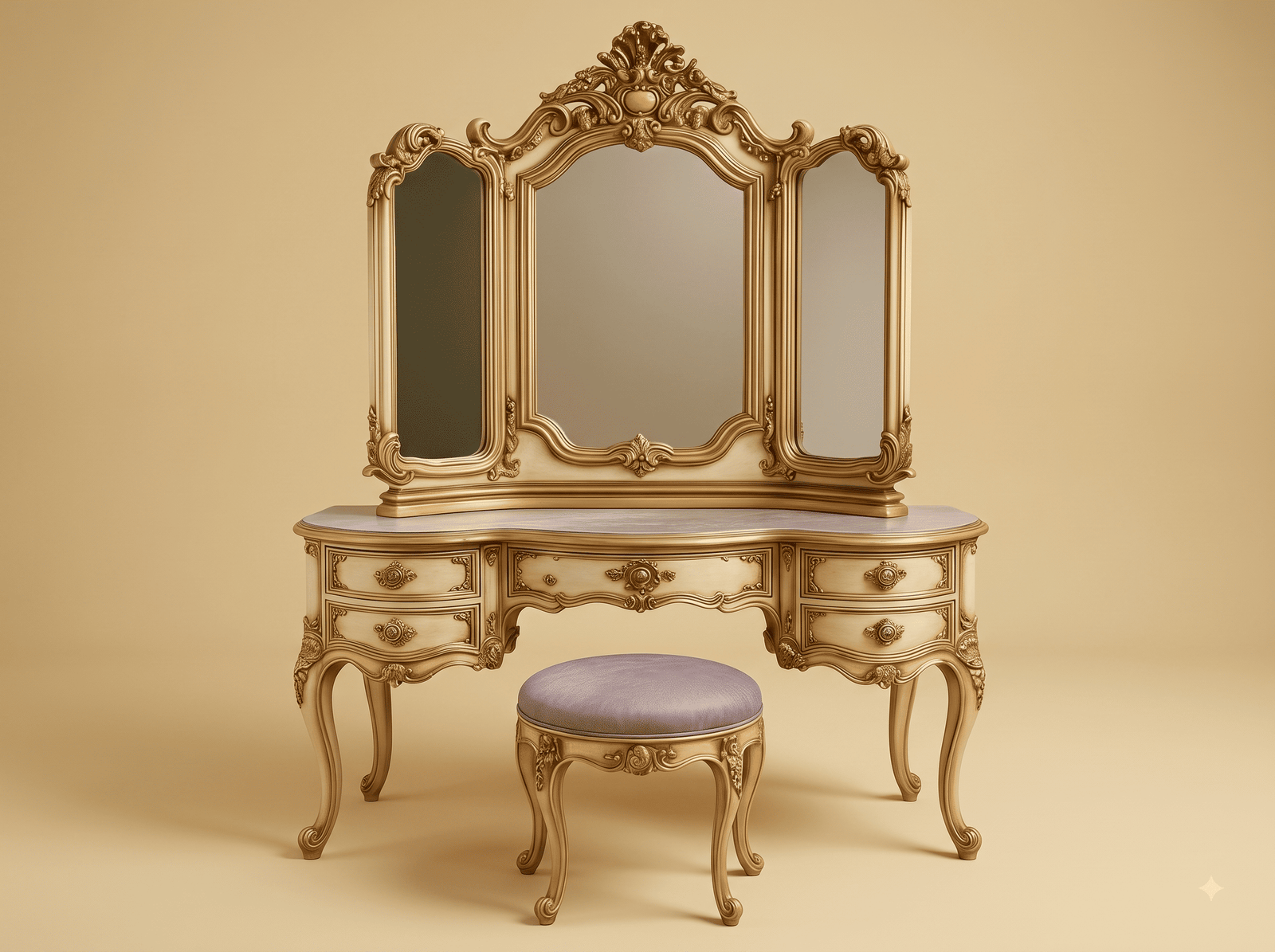
A folding mirror is a geometry problem disguised as a piece of furniture.
The wings have to do two contradictory things. Open, they must swing far enough forward to catch the sides of your head - which means the hinge has to sit well clear of the centre frame. Closed, they must fold flat against that same centre without their carved edges riding over one another, and without either of them fouling the pierced crest that rises above the centre panel.
Get the hinge line even slightly wrong and one of two things happens: the wings will not close, or they close but stand proud, and the whole assembly sits crooked against the wall.
The solution is to set the hinge back from the face of the centre frame by exactly the thickness of the wing frame, so a closing wing swings into the space its own thickness creates. Then the crest is designed to overhang only the centre panel - never the width the wings need to travel through.
Our craftsmen mark the hinge line before the frames are carved, and test the fold dry, repeatedly, as the carving develops - because a crest that grows by a few millimetres under the chisel is a crest that stops the wings closing. It is checked one last time on the finished, gilded assembly before anything is packed.
 Ask Price On WhatsApp