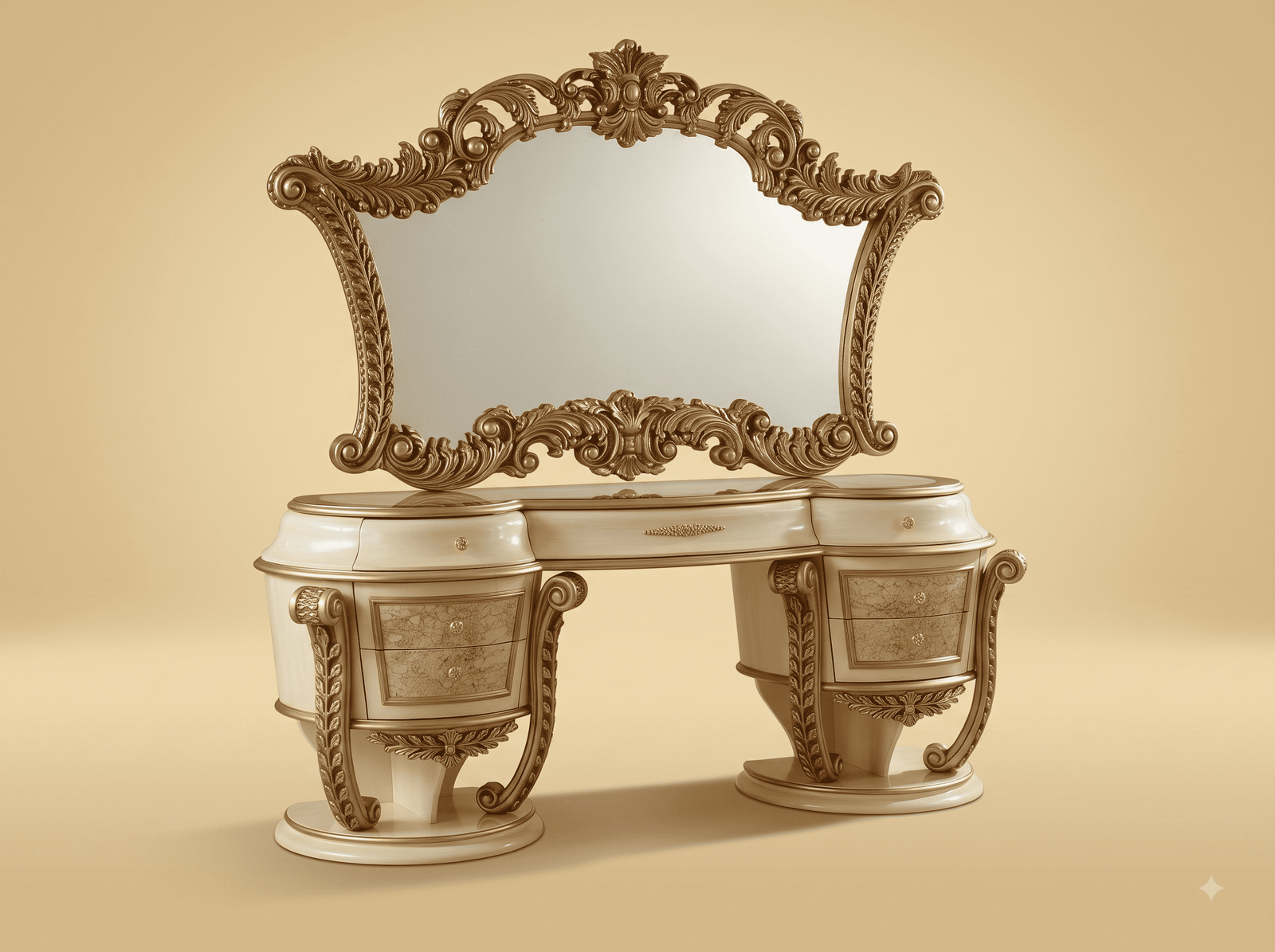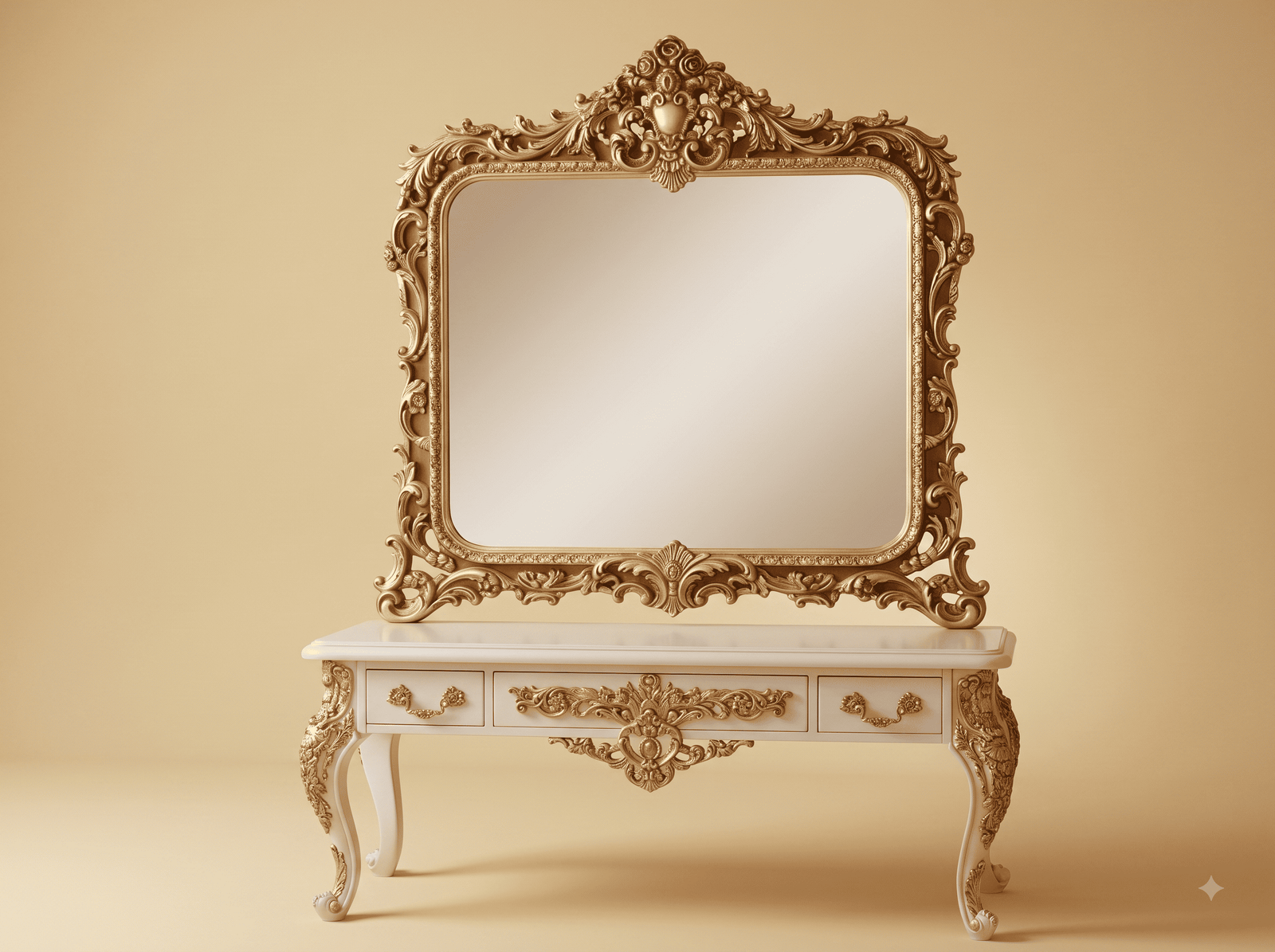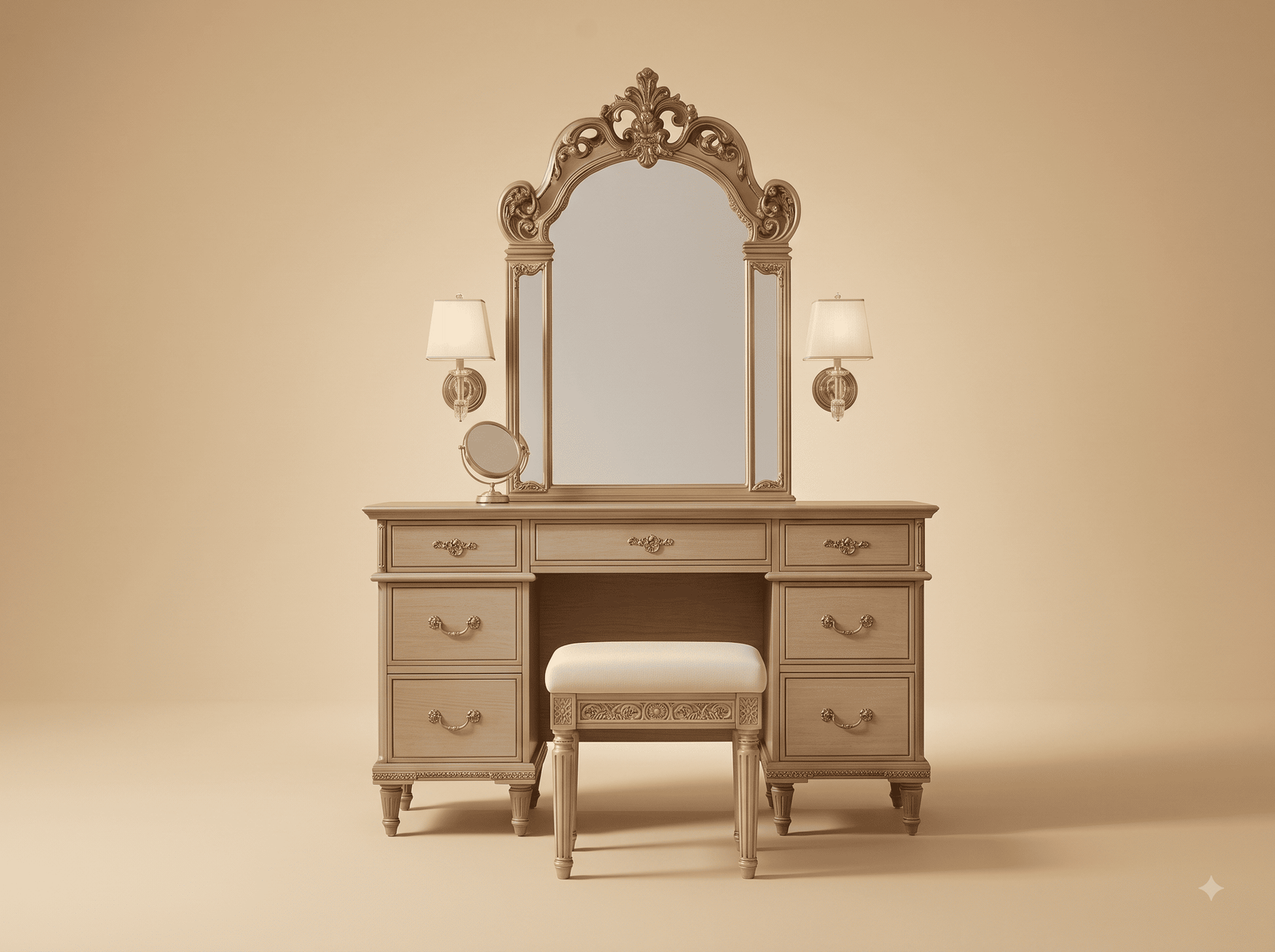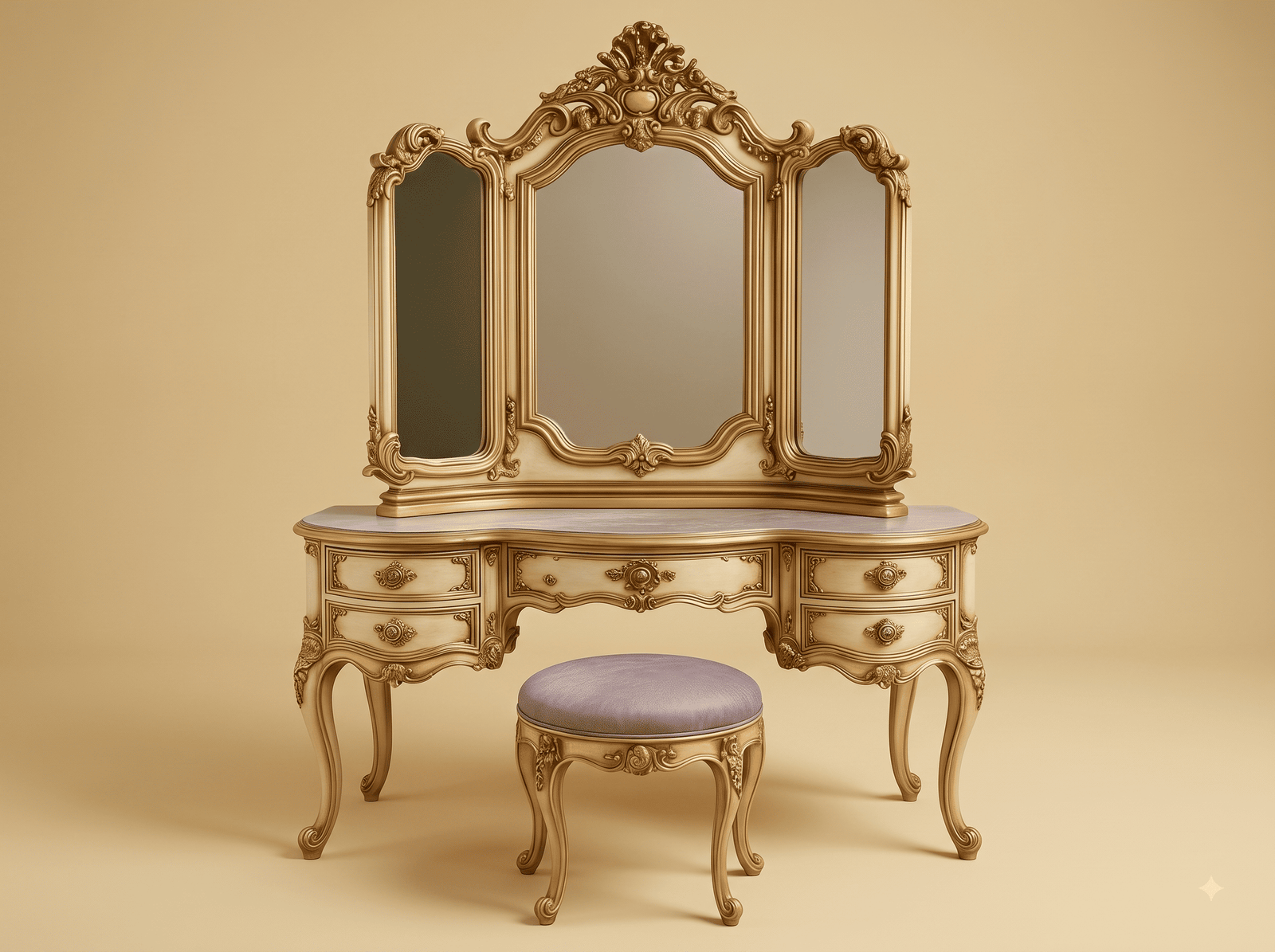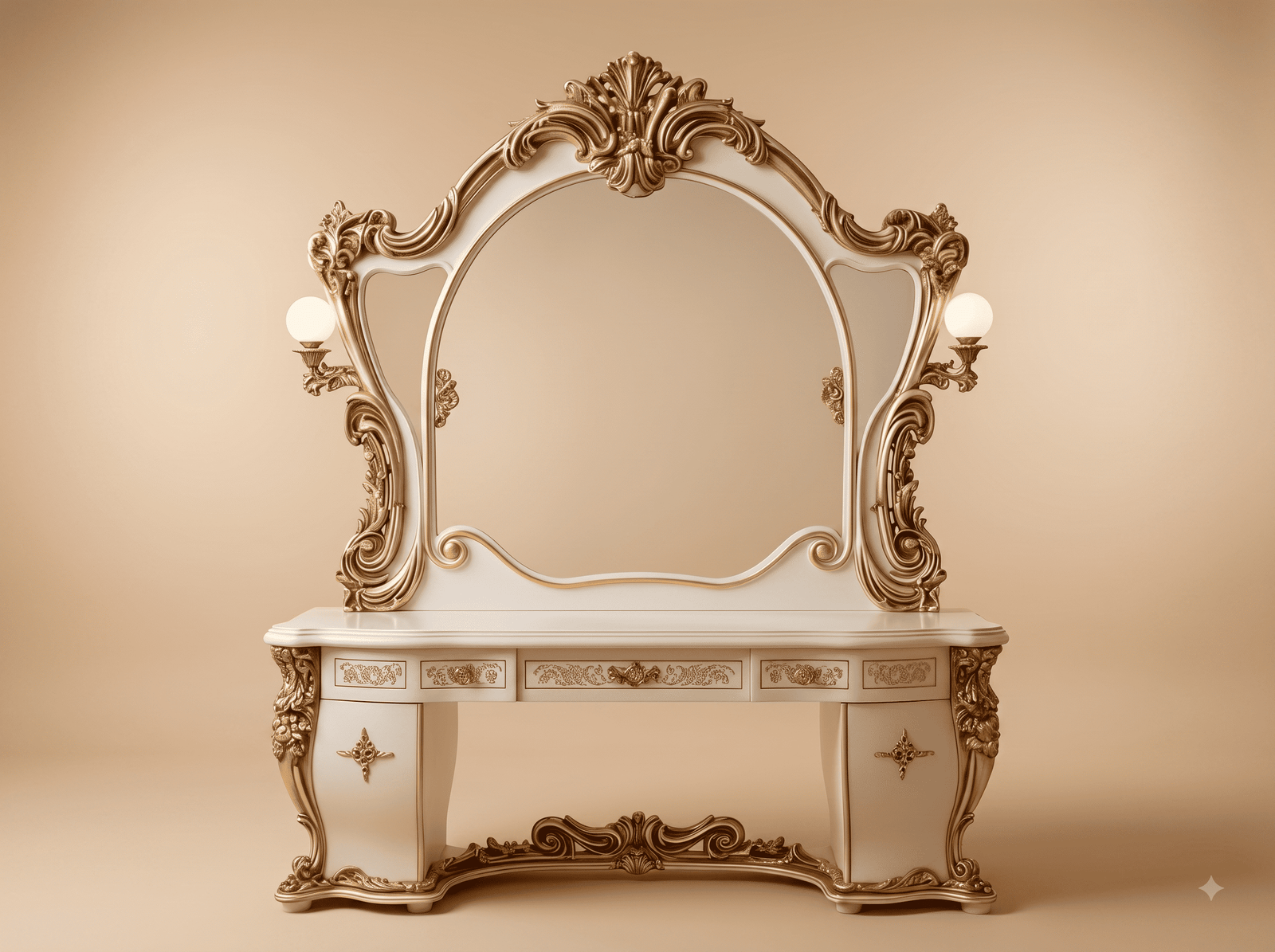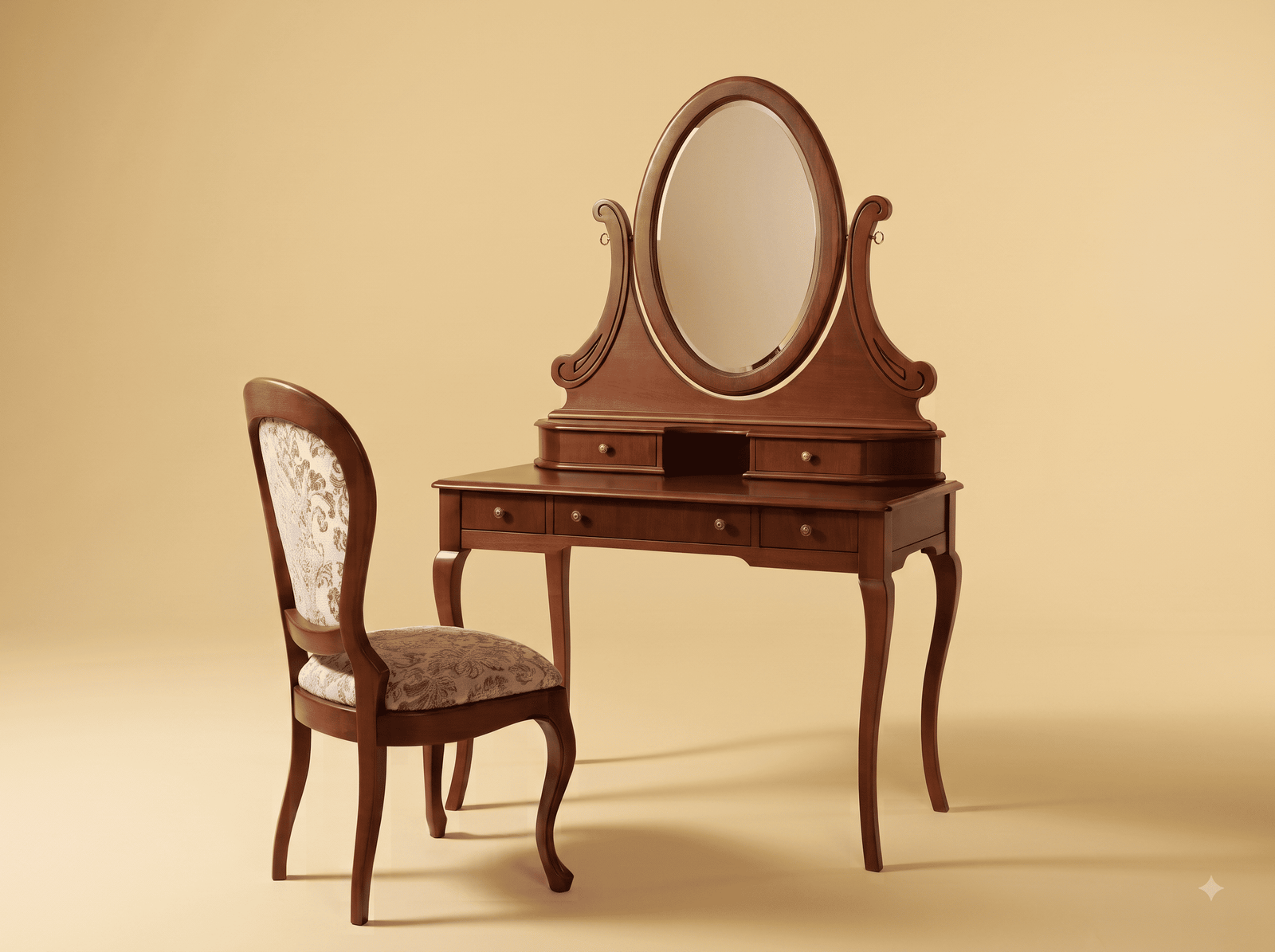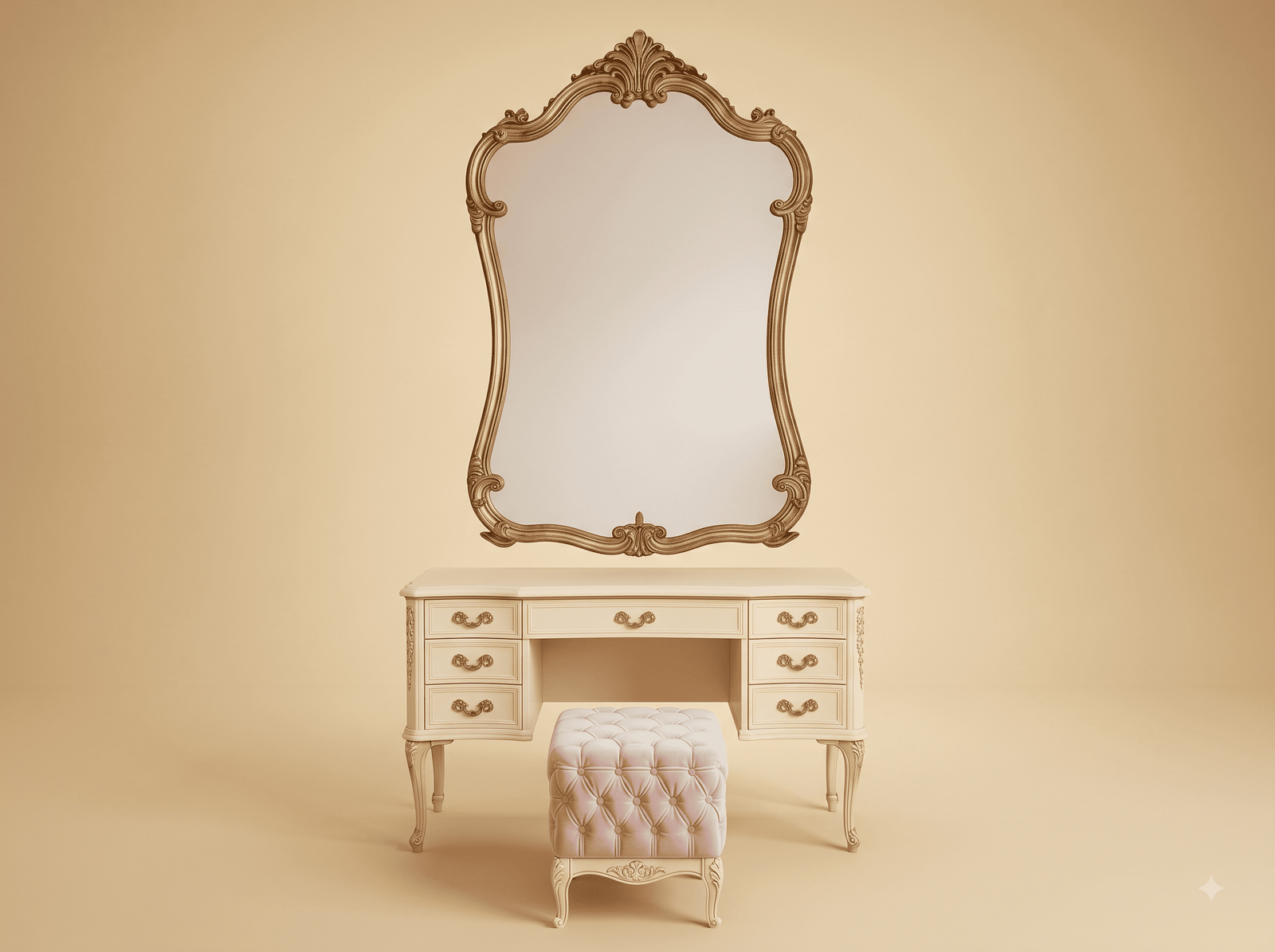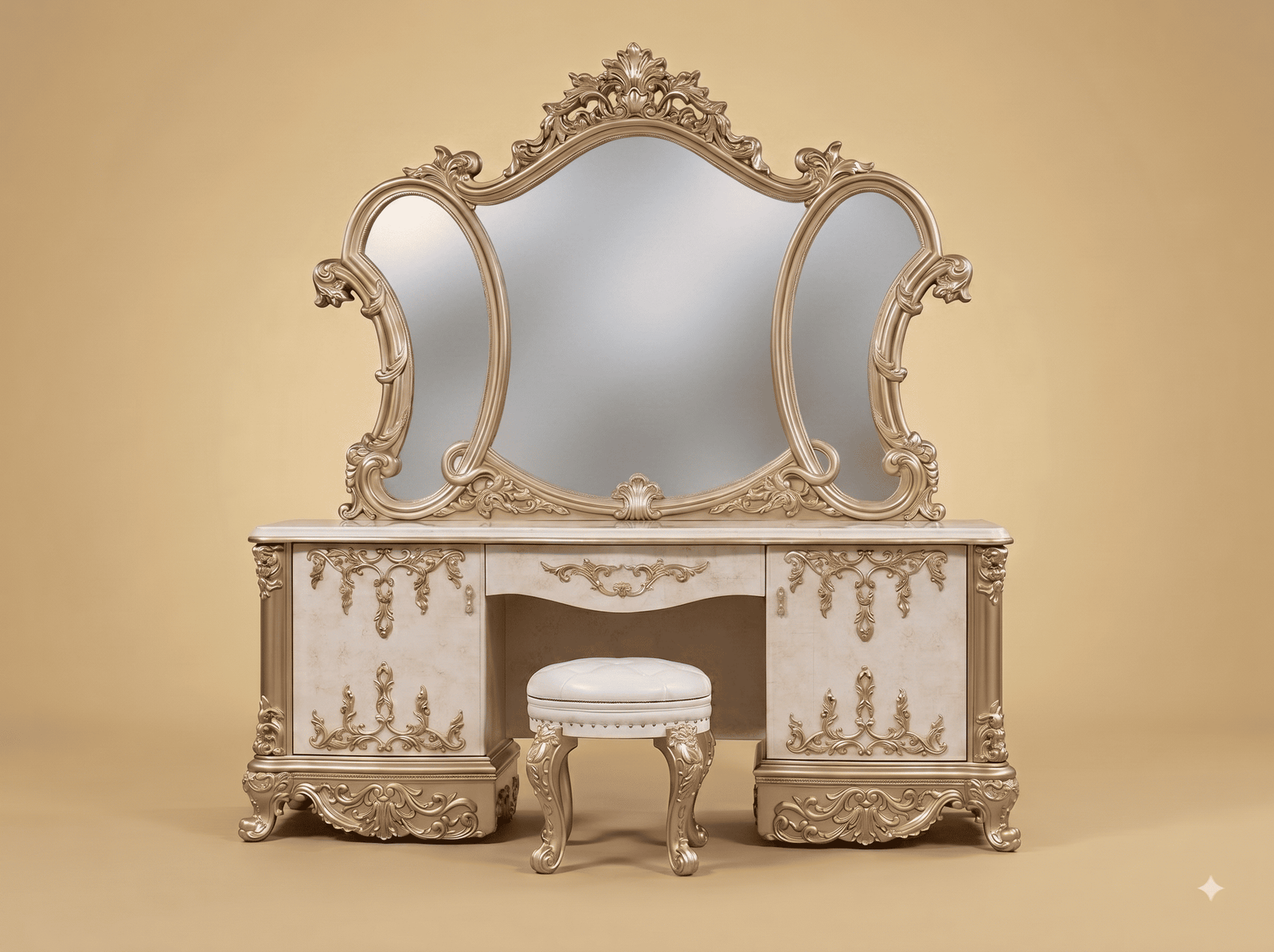
Putting fabric inside a piece of carved furniture sounds like a decorator's flourish. It began as the opposite - a fix for a practical complaint.
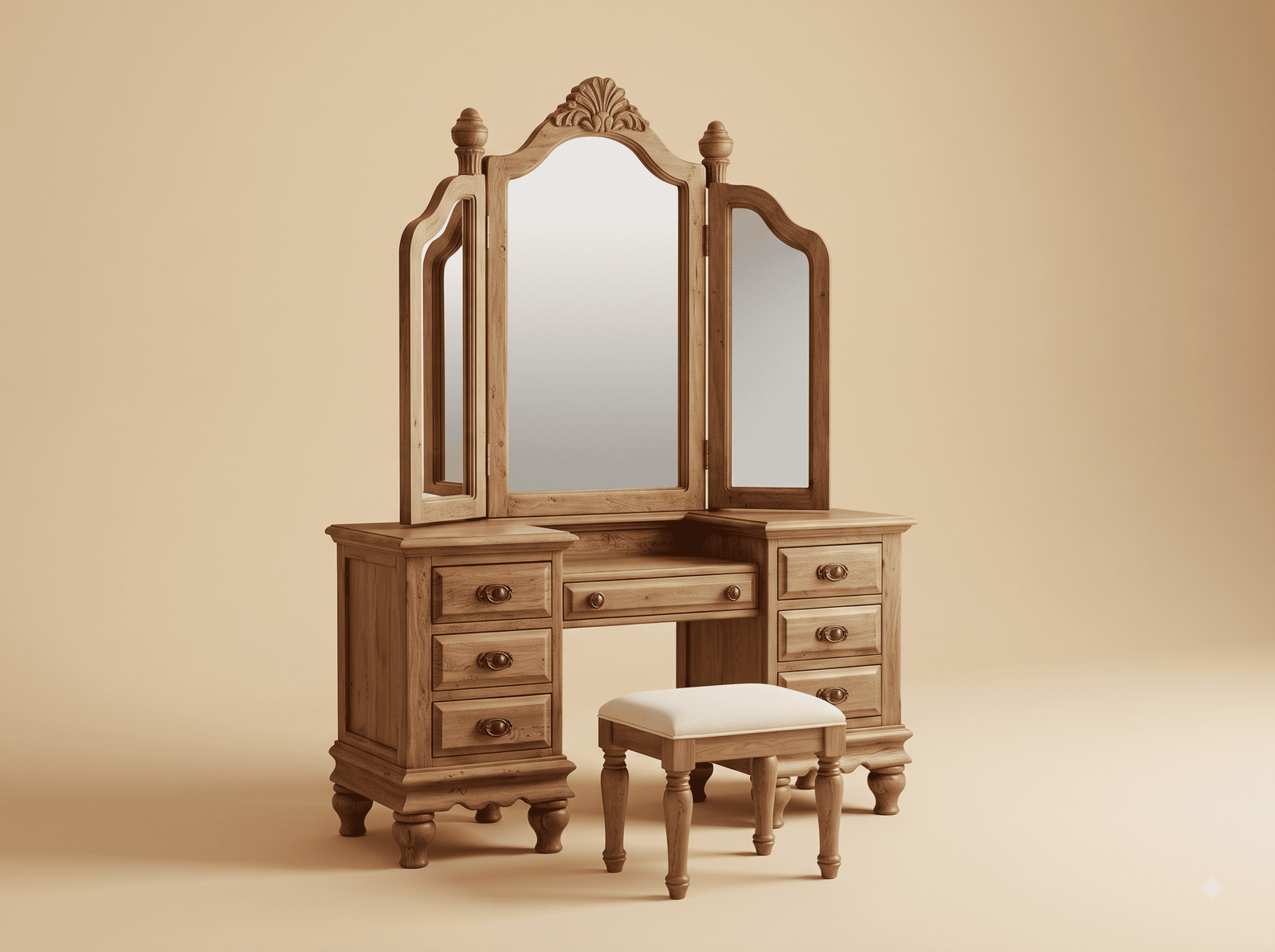
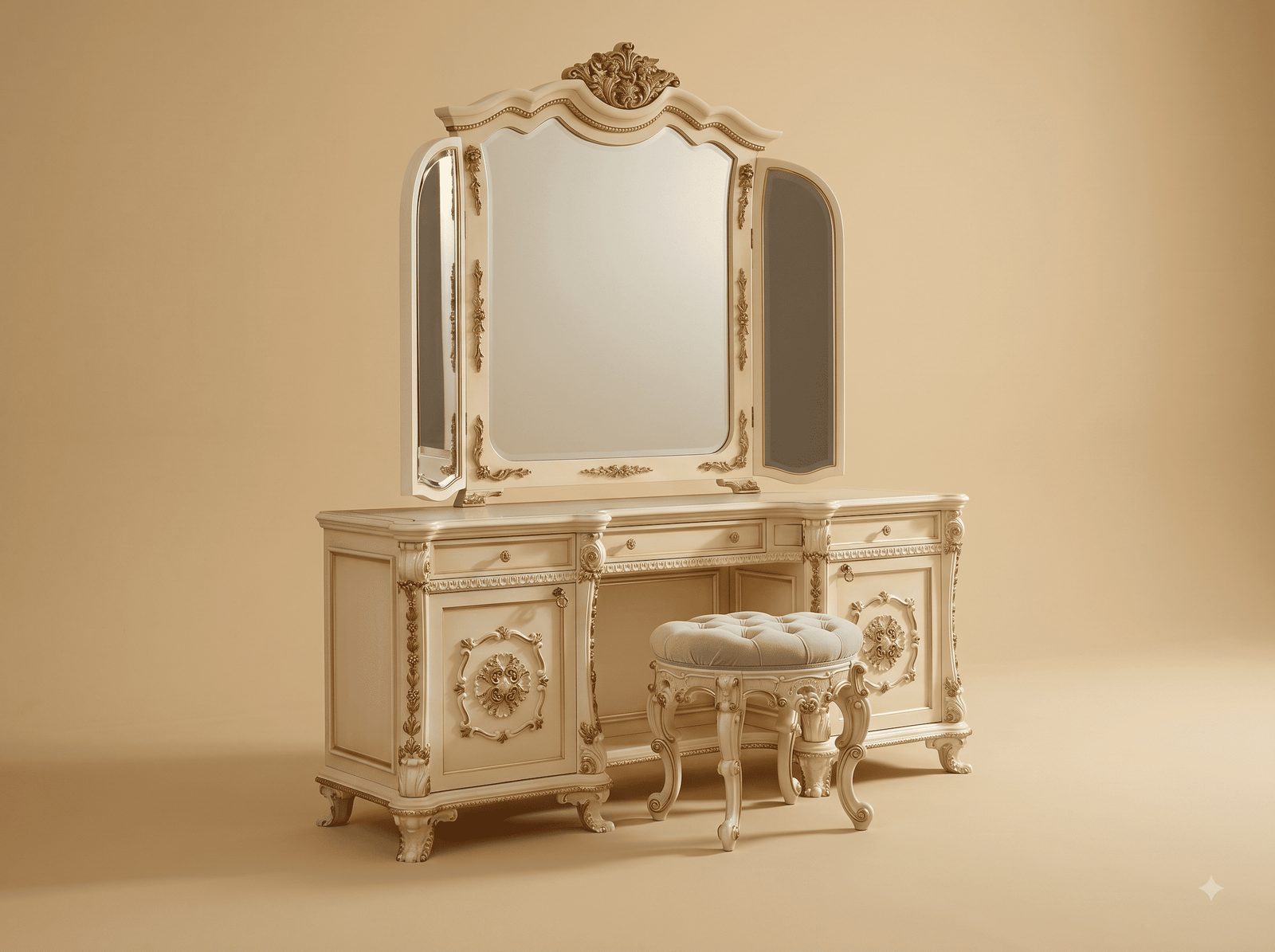
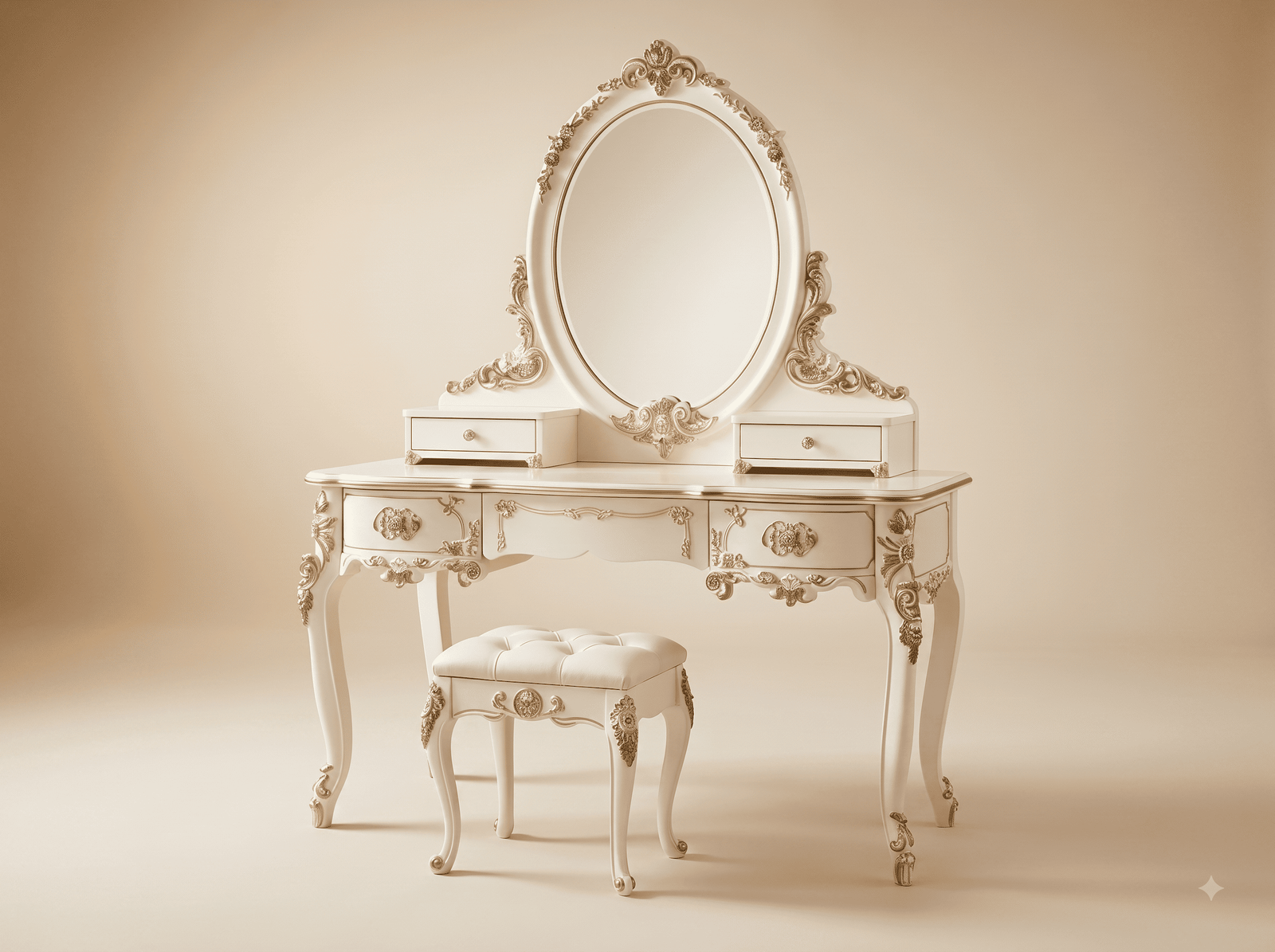
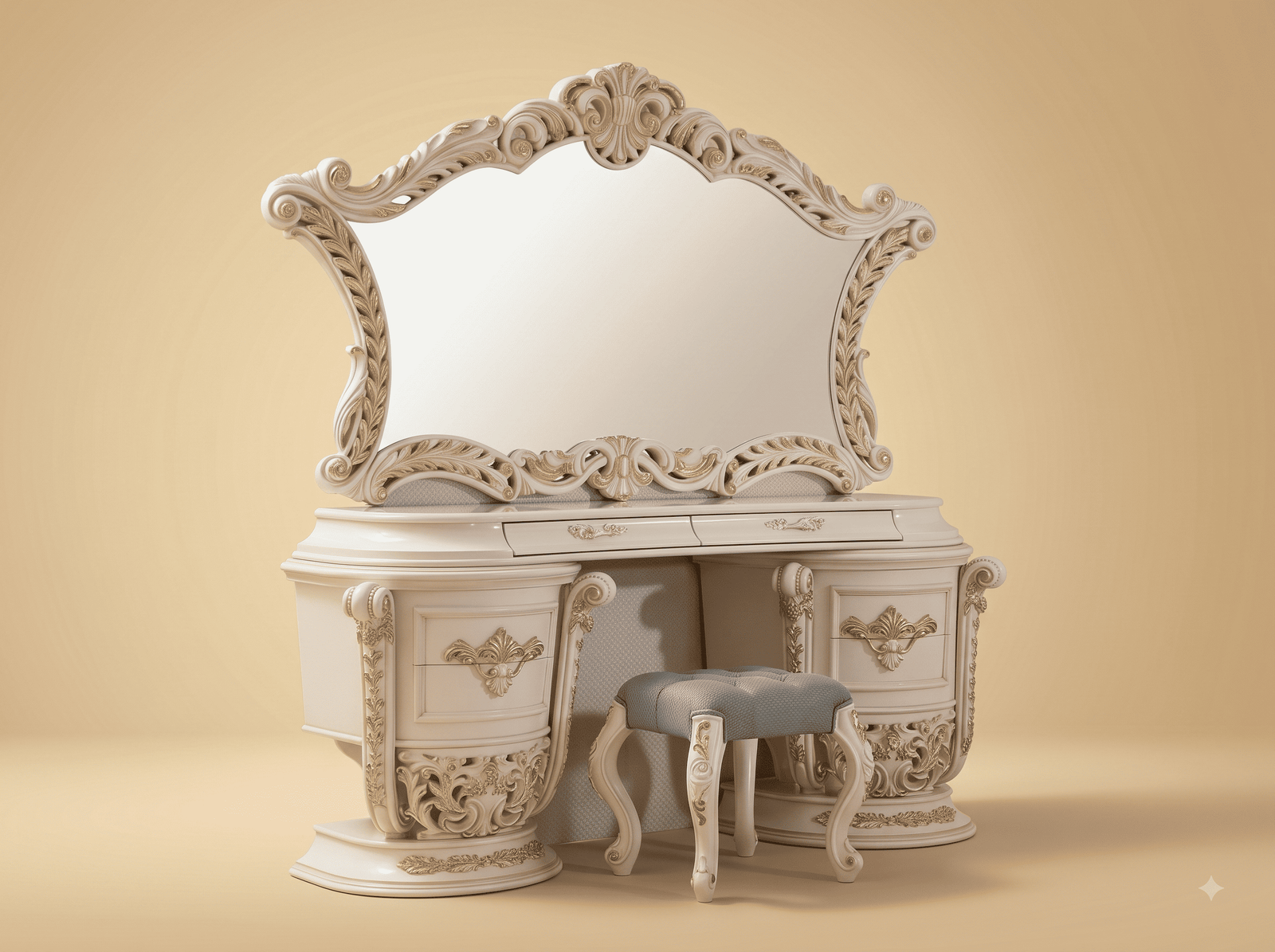
A dressing table is unusual among furniture in that you sit inside it. Your knees go into the recess, your feet go under it, and in a cold room the timber back panel is the coldest surface in contact with you. Cabinetmakers building for houses without heating started lining that panel with cloth for exactly that reason, and the habit survived into warmer rooms because it turned out to do a second job.
The recess is also a small dark box directly in your eyeline while you are seated, and a polished wooden panel in it bounces light and reflections upward in a distracting way. Fabric absorbs them. The space reads as quiet rather than as a cavity, and the eye stays where it belongs - on the mirror.
Fitting it is careful work. The panel is upholstered onto its own frame and set into the recess after the carcass is finished, so the fabric edge is captured behind the surrounding timber with no visible fixing anywhere. It can be lifted out and recovered years later without touching the vanity, which is why the detail is worth doing properly rather than gluing cloth to a board.
 Ask Price On WhatsApp