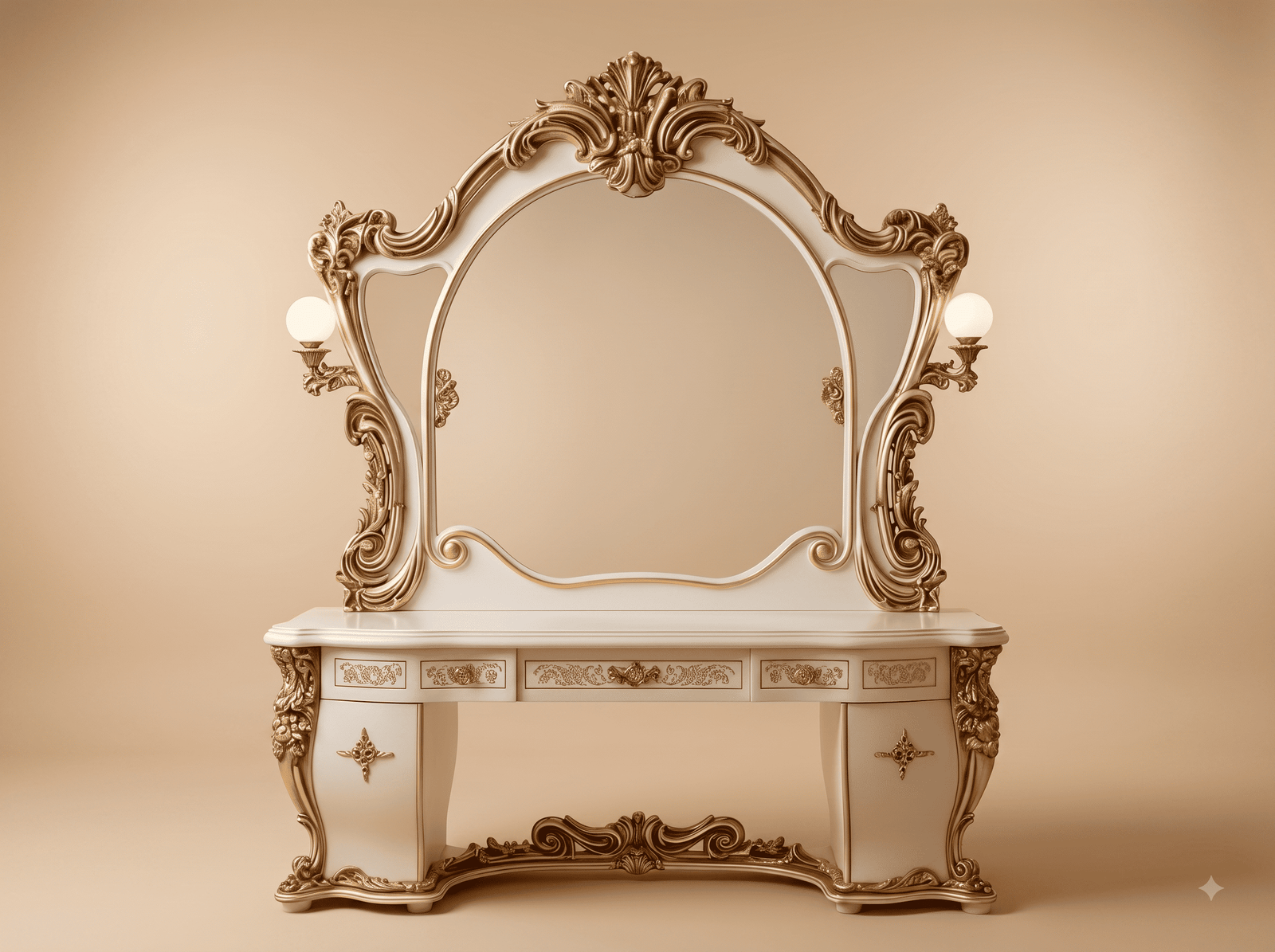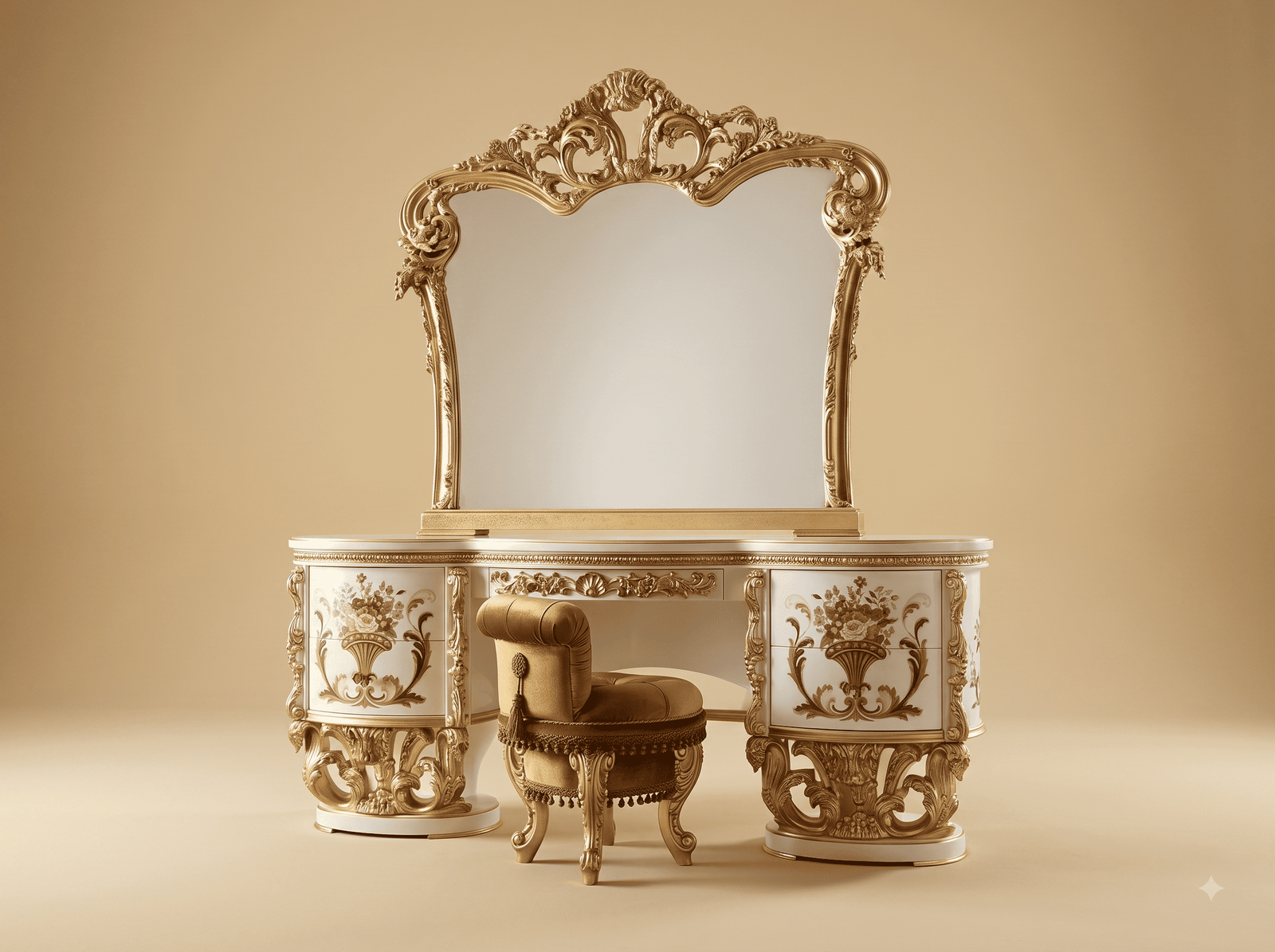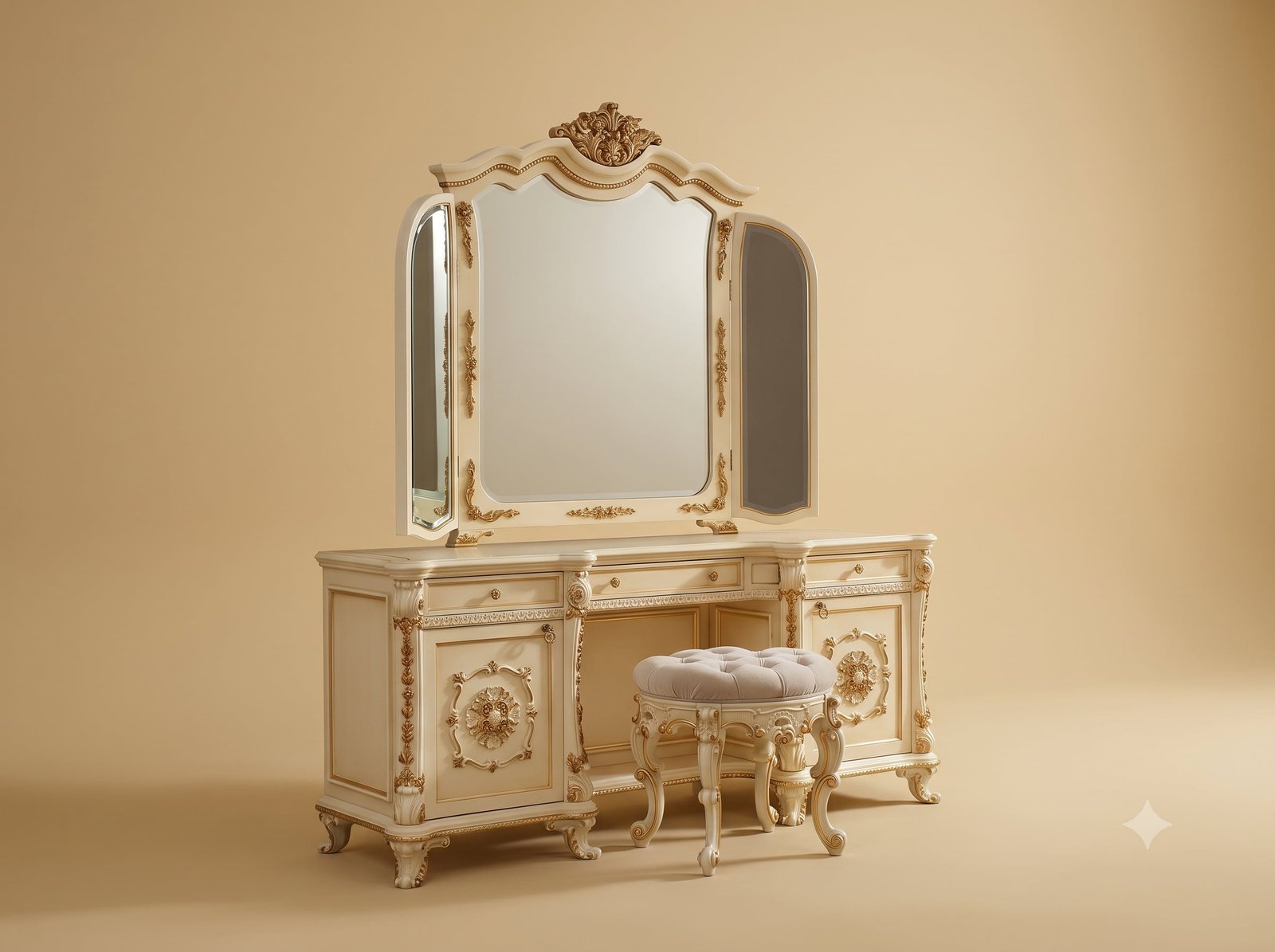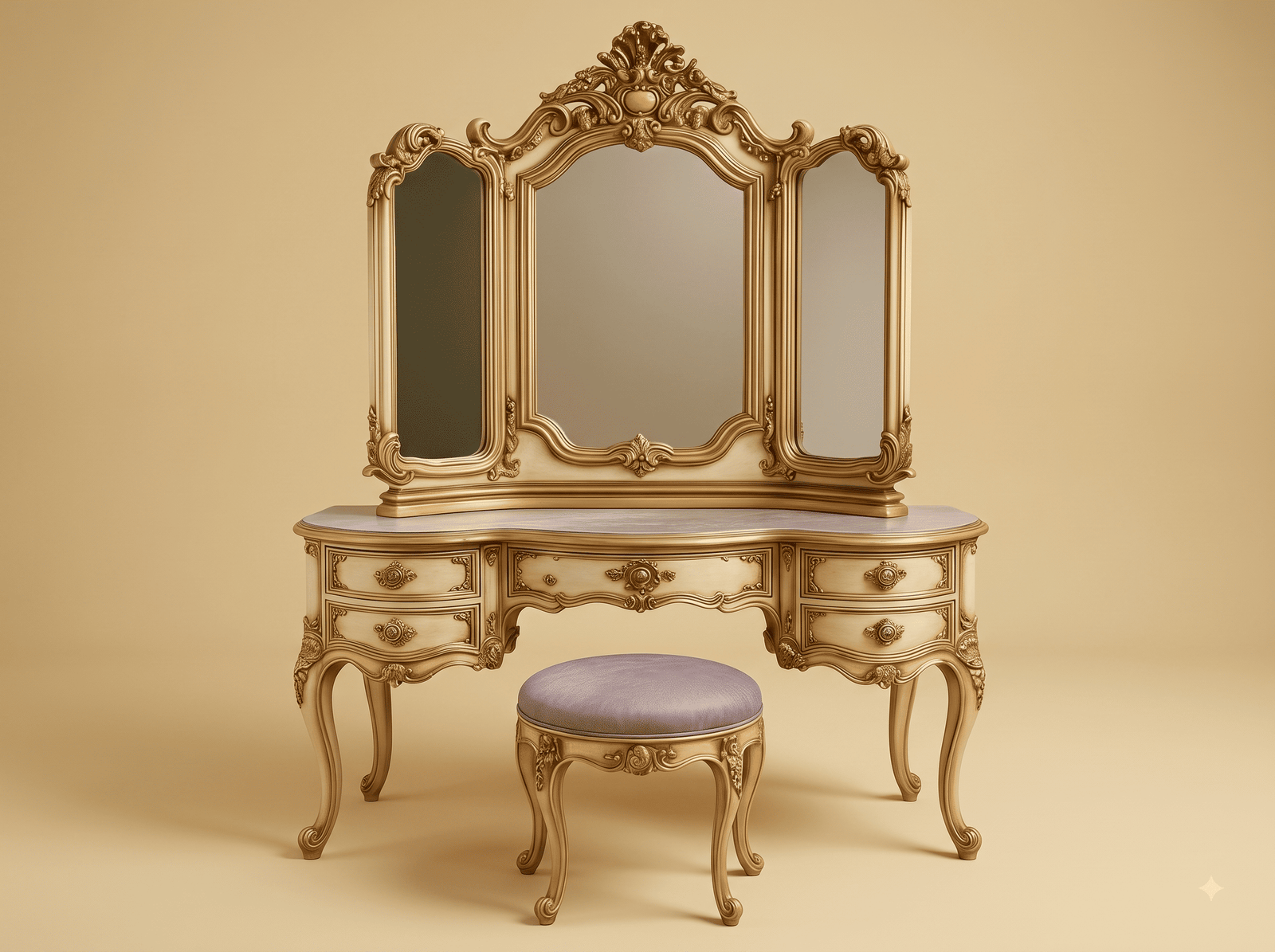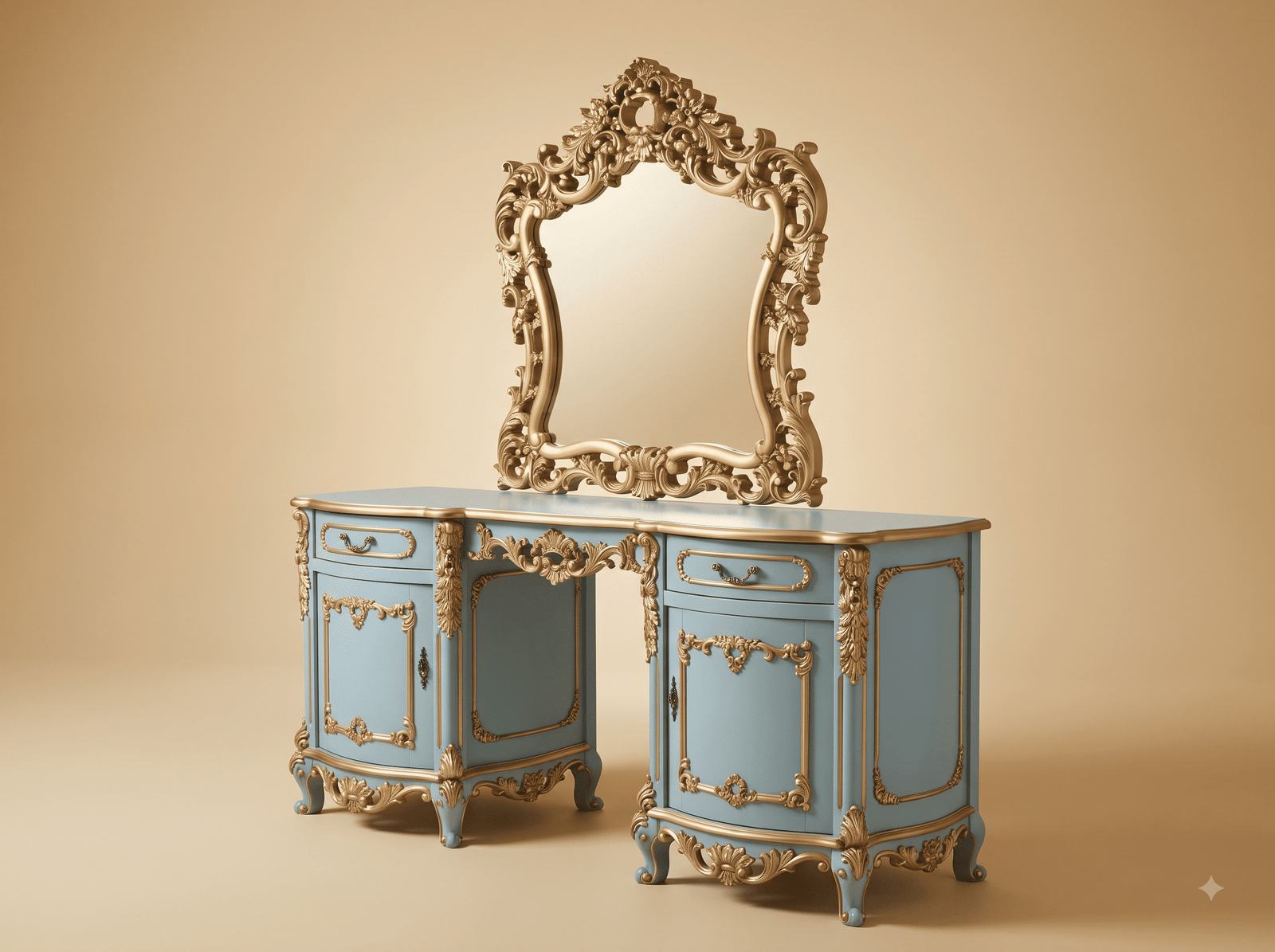
Fitting a flat door into a straight cabinet is ordinary work. Fitting a door into a carcass that curves is a different problem, and it is the one that shapes this piece.
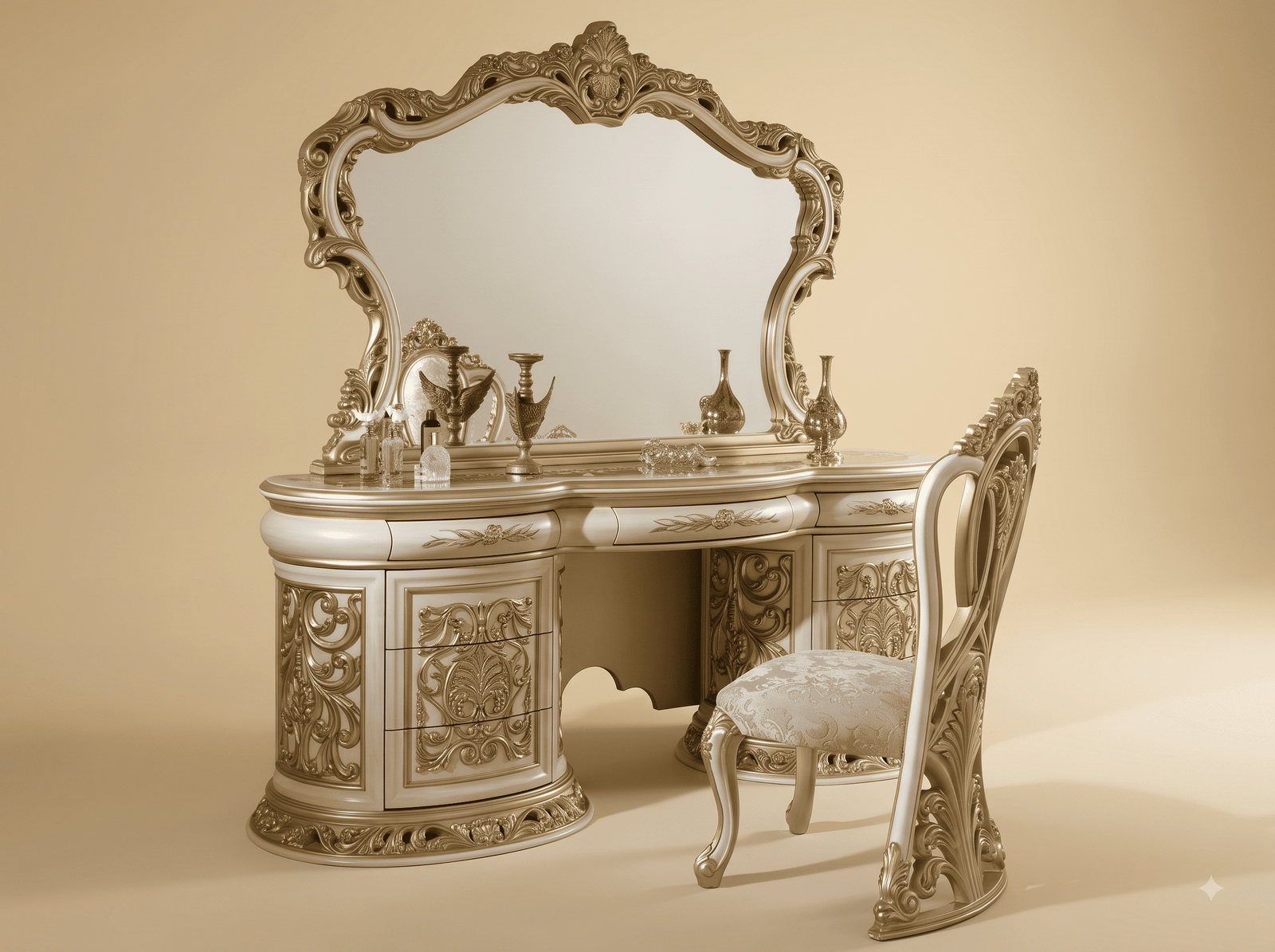
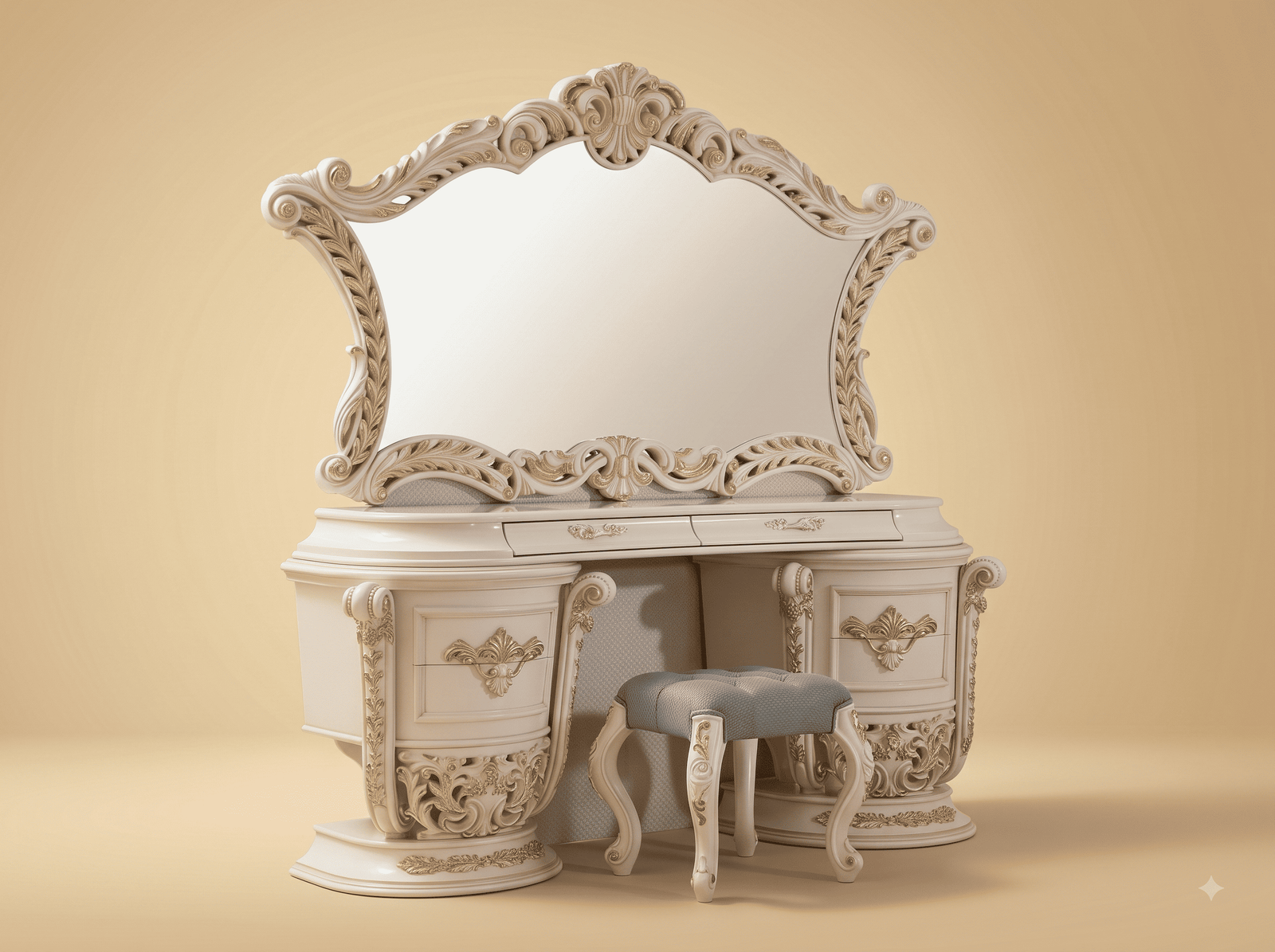
The pedestals sweep forward at their outer corners, so the door has to leave the opening on a curve and return to it on a curve, closing tight along a line that is never straight at any point. A flat door in a curved opening would show a widening gap at one edge as it shut. So the door itself is shaped - built from stock thick enough to carry the sweep, with its panel and its carved gilt moulding worked into the curve rather than laid across it.
Then there is the hinge. On a curved front the hinge axis has to be set back and angled so the door swings clear of the returning corner instead of binding on it. Our craftsmen fit each door individually to its own opening, adjusting the seating by hand and checking the gap along the full closing edge, because a curve made by hand is never identical to the one beside it.
It is why the two pedestals are built as a matched pair from the start, and why their doors are not interchangeable once fitted.
 Ask Price On WhatsApp