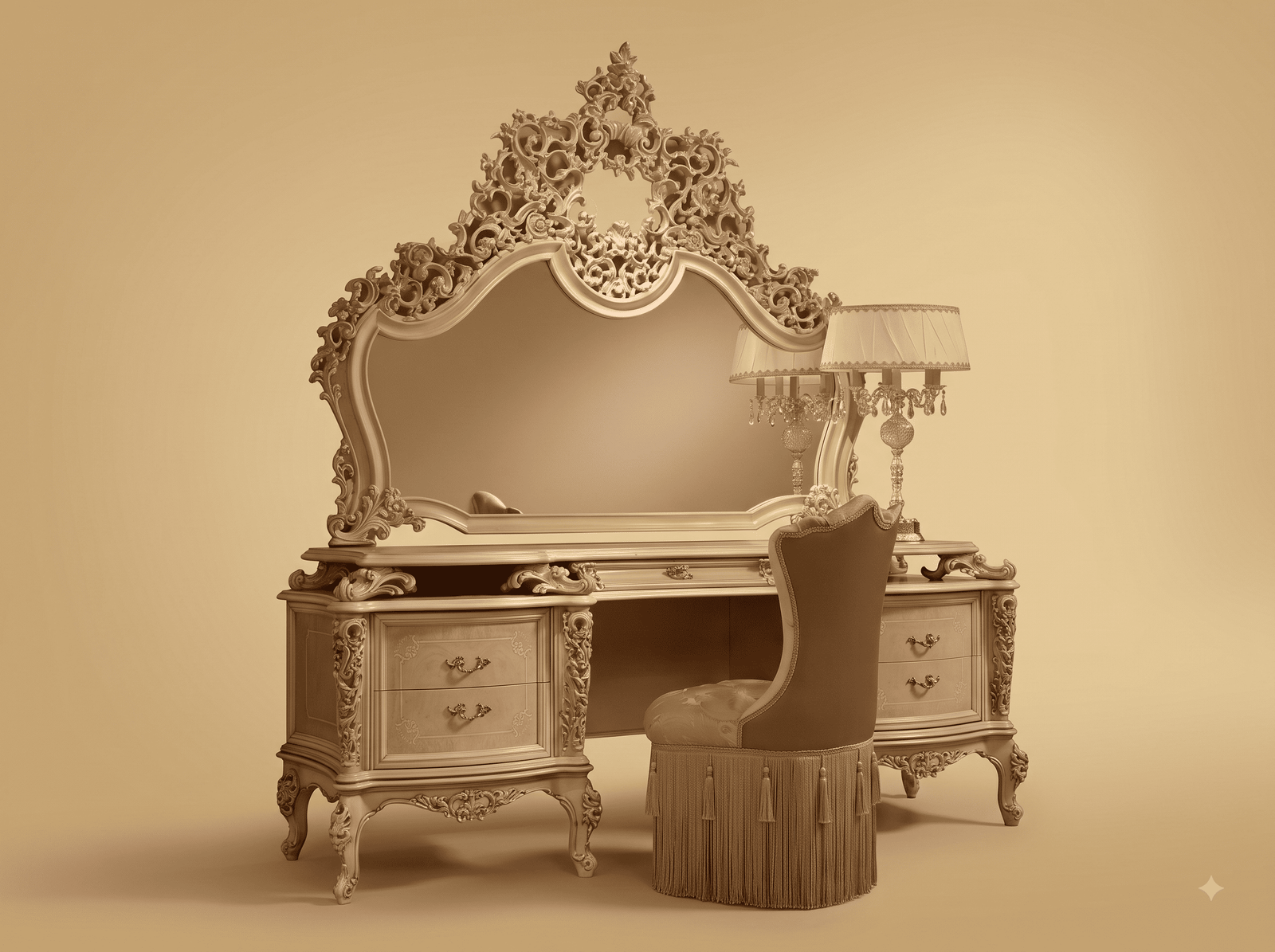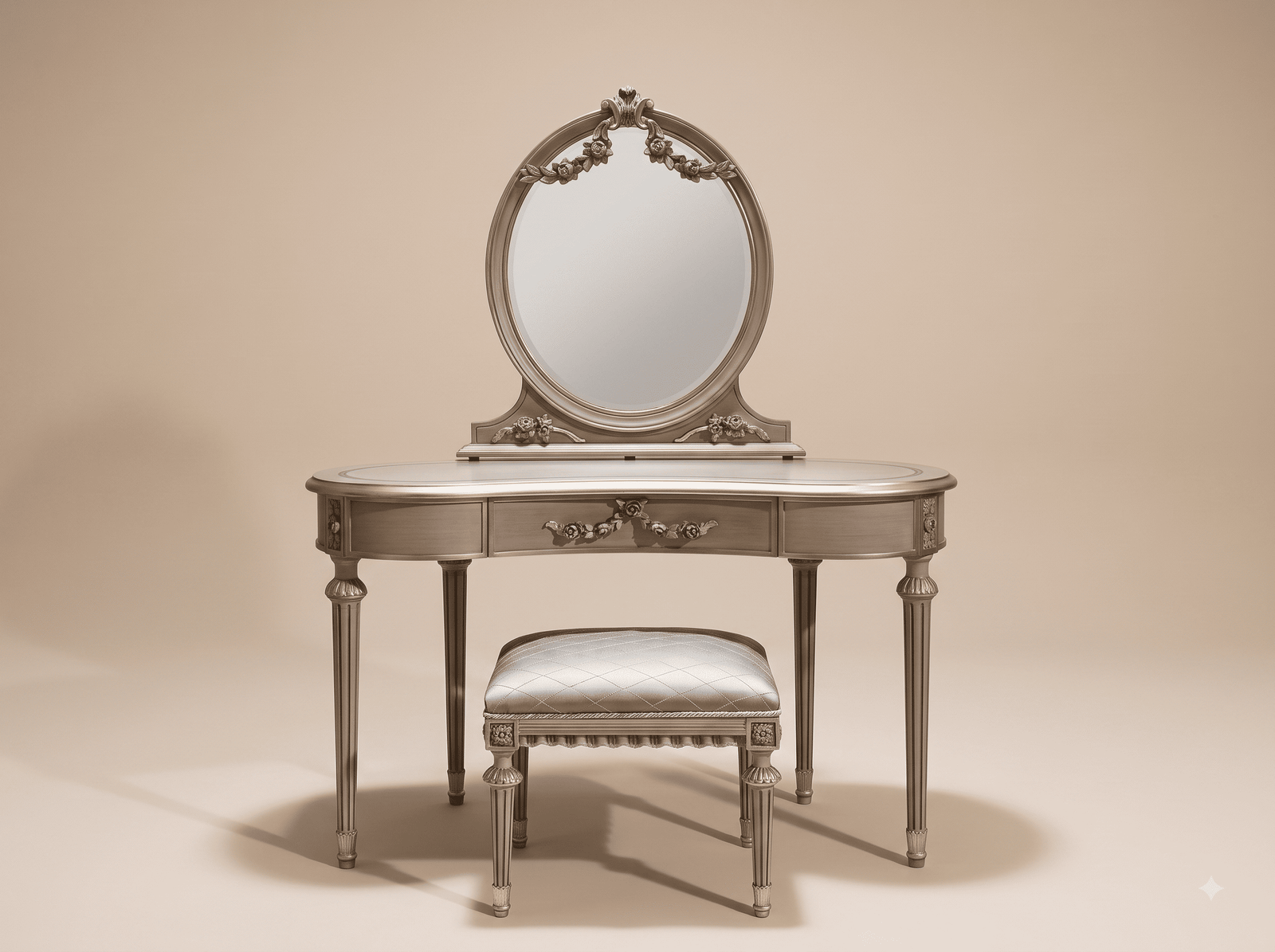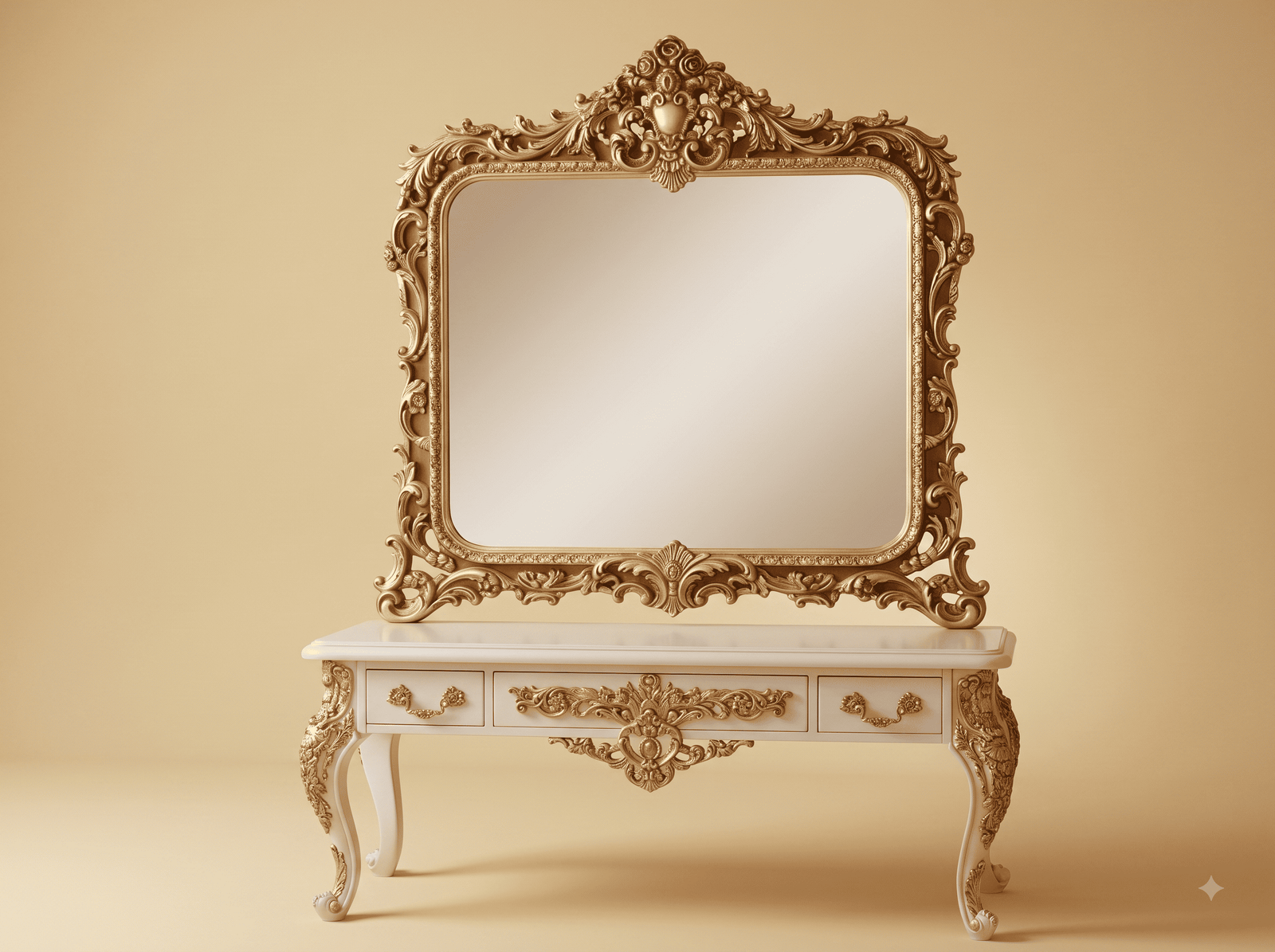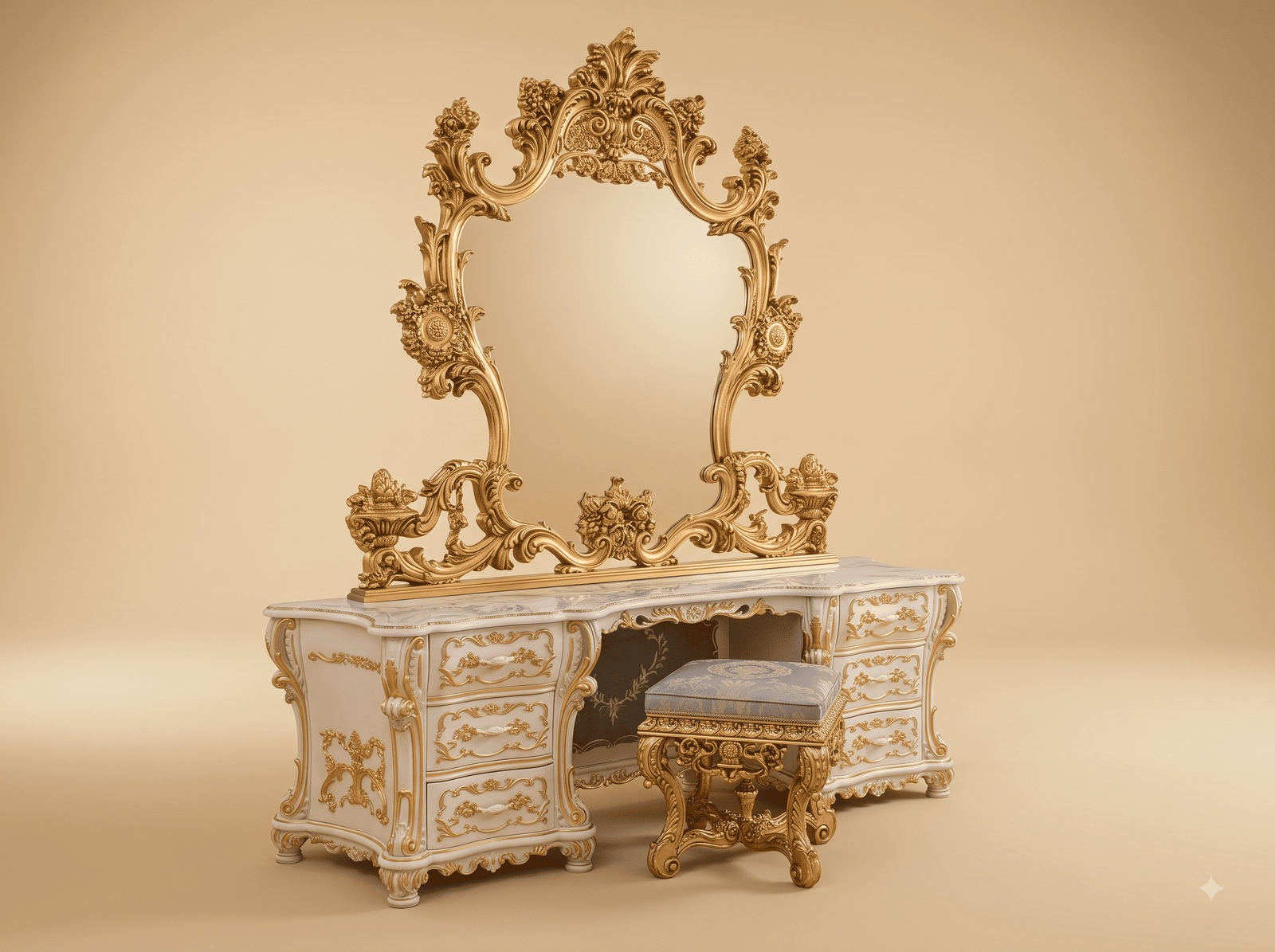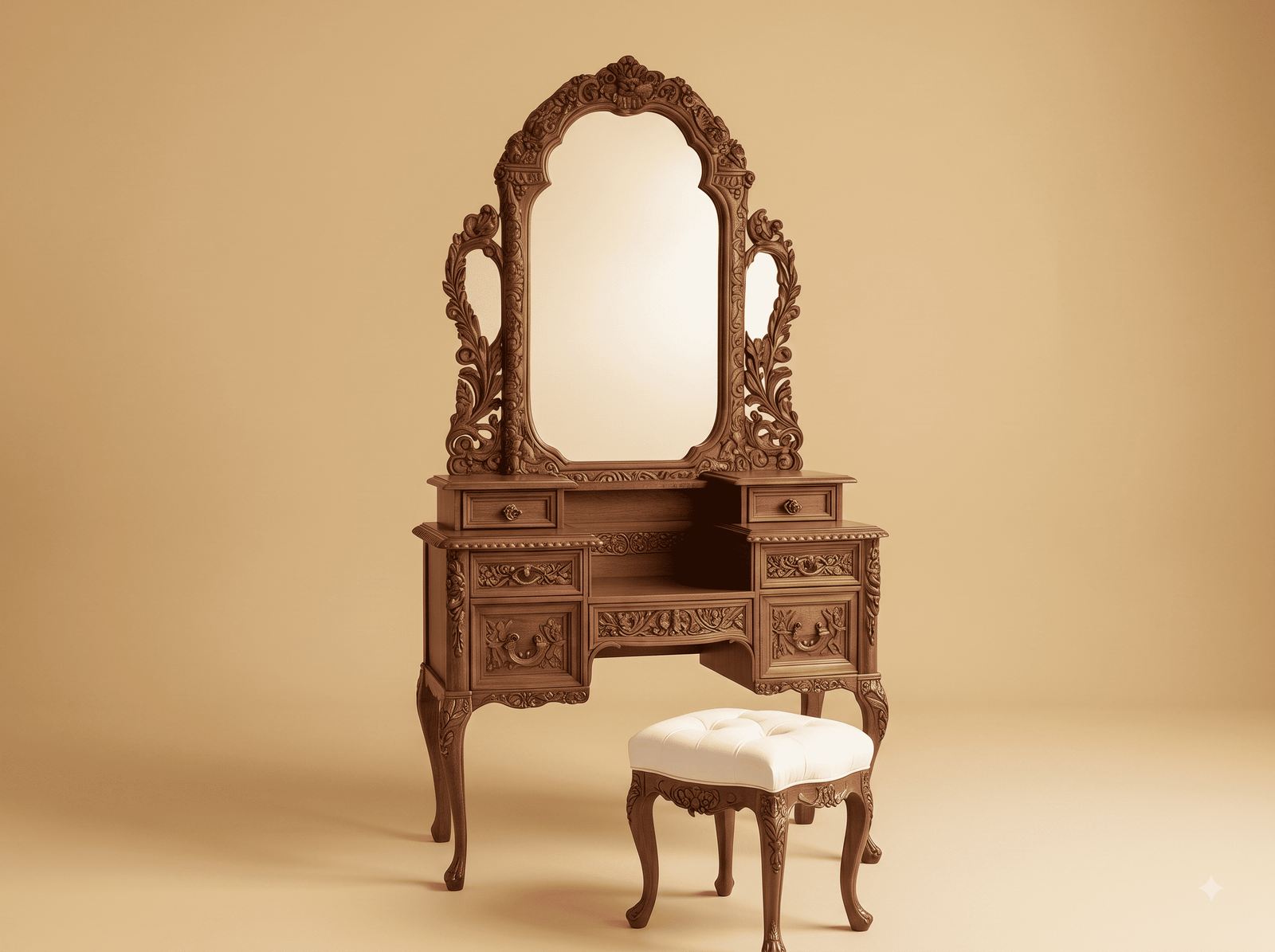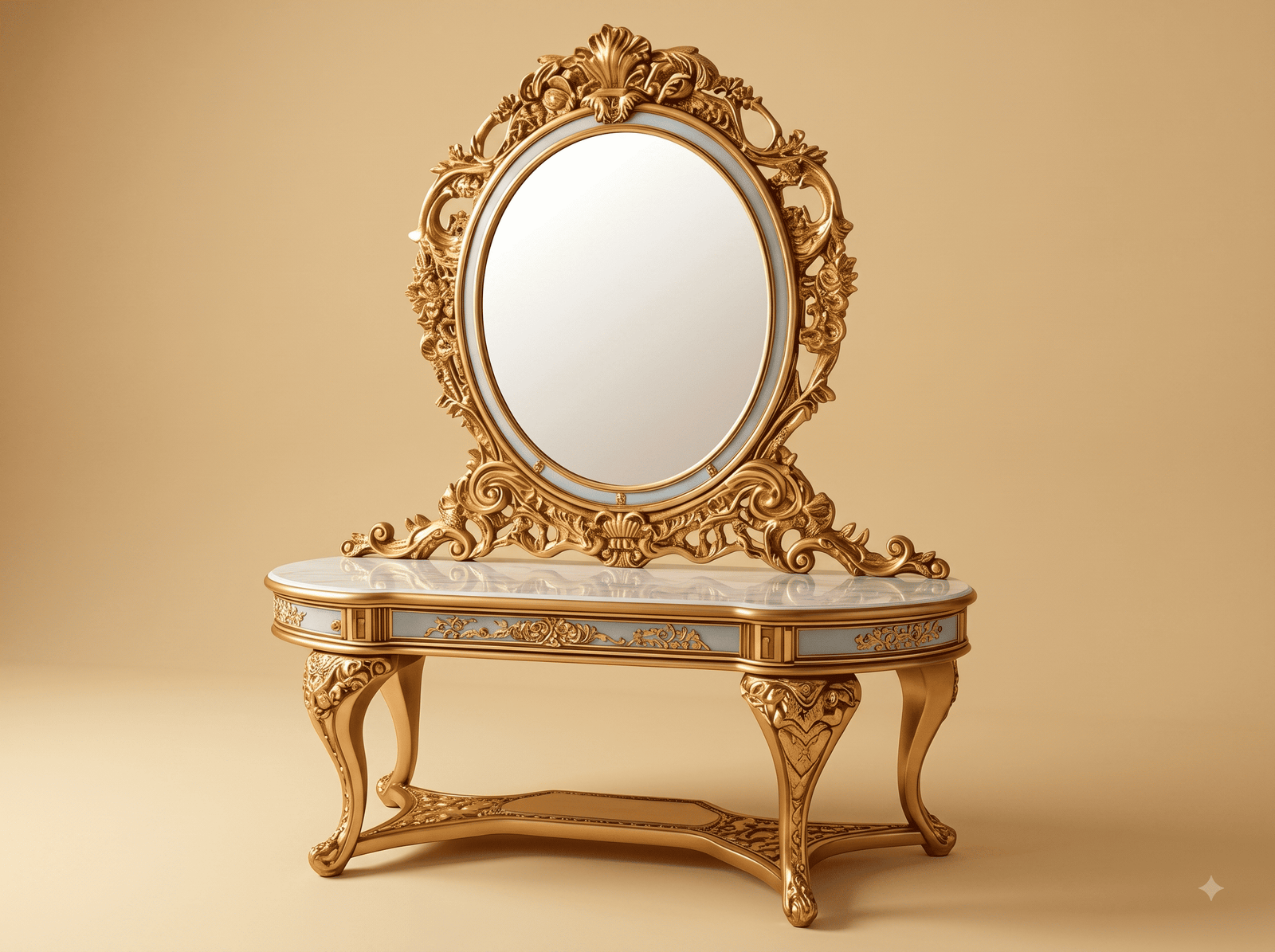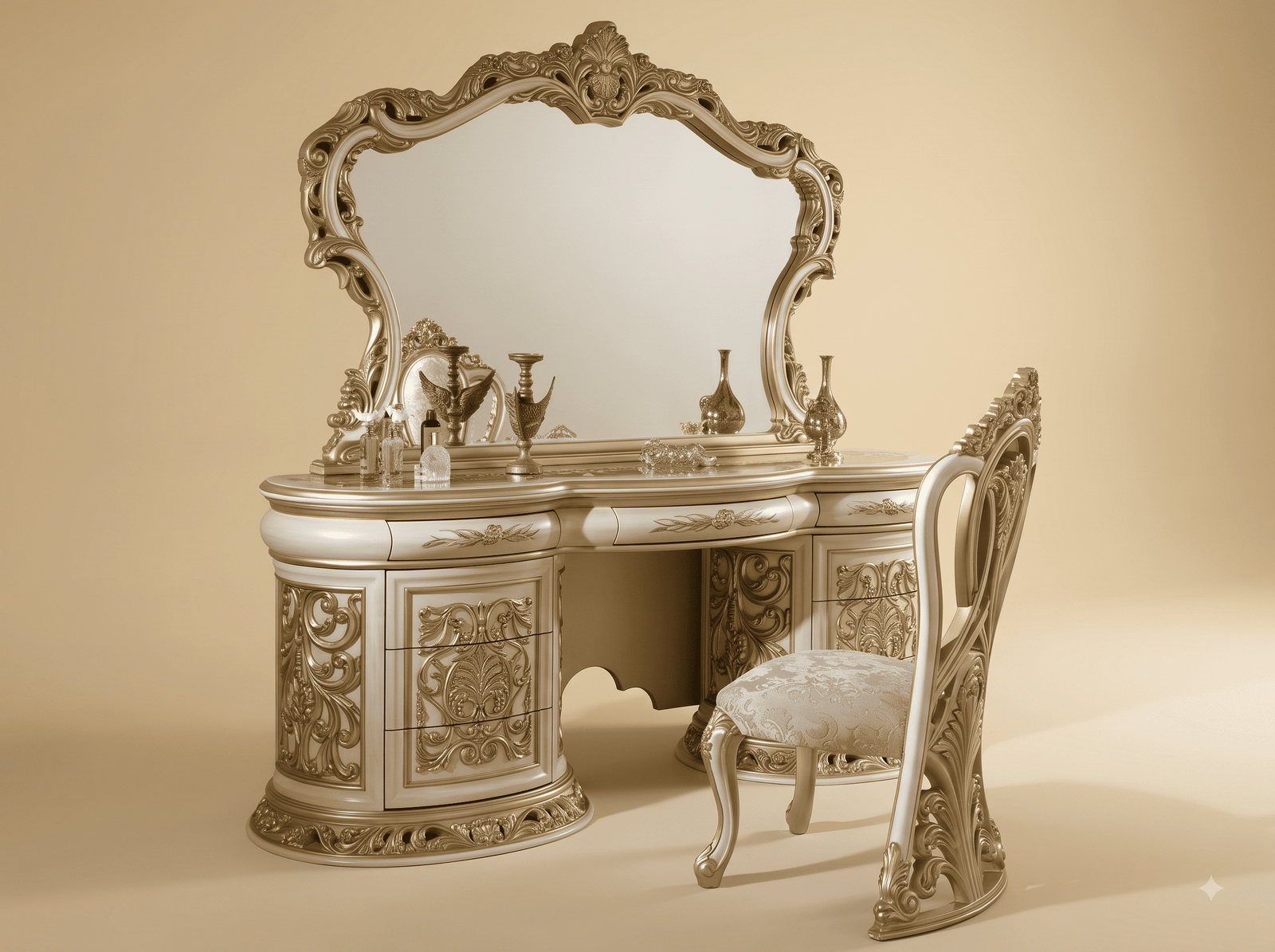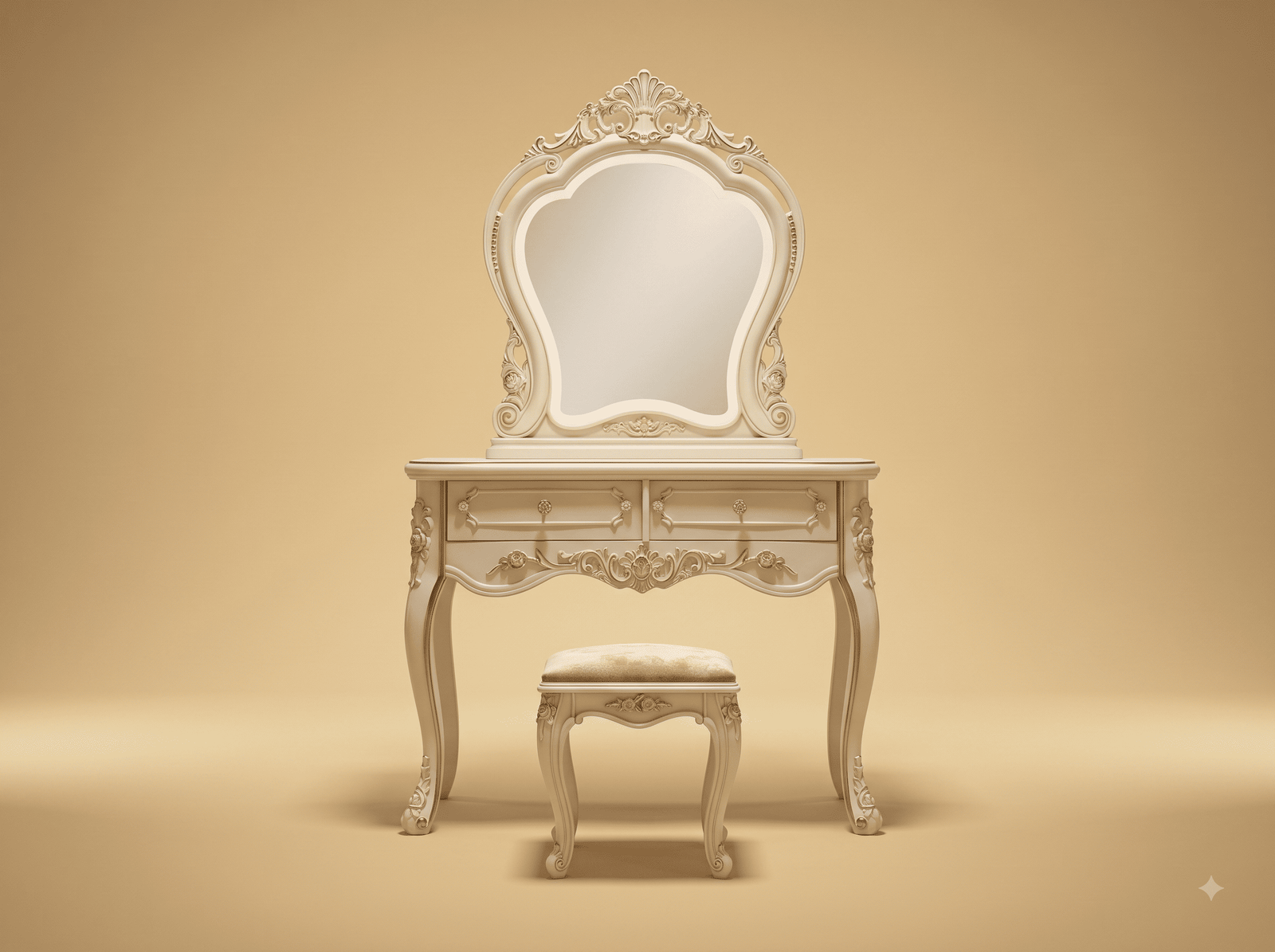
Carving cloth is the hardest thing a wood carver is asked to do, and the swags falling down the front of each pedestal here are exactly that.
The difficulty is that everything about wood argues against the illusion. Wood is rigid, heavy and grained in one direction; cloth is limp, light and has no grain at all. A carved swag that looks like carved wood pretending to be cloth is a failure, and the failure is instantly obvious to anyone who has ever seen a curtain.
What sells it is the behaviour of the folds. Real fabric gathers tightly where it is held and opens as it falls, the folds get deeper and further apart with distance from the fixing, and no two are the same width. A carver who spaces the folds evenly - which is the instinct - produces something that reads as a machined moulding rather than as cloth.
So our artisans work the gathering point first, establishing where the fabric is pinched at the top corner, and then let each fold follow from the one above it rather than from a drawn plan. The depth increases as the swag descends, and the undercutting at the lower edge is taken as far as the timber safely allows, because that shadow underneath is what tells the eye the cloth is hanging free rather than lying flat on the panel.
The tassel at the end is carved last, and it is the piece the carver signs off on - because a tassel that hangs straight down while the swag beside it is still moving gives the whole thing away.
 Ask Price On WhatsApp