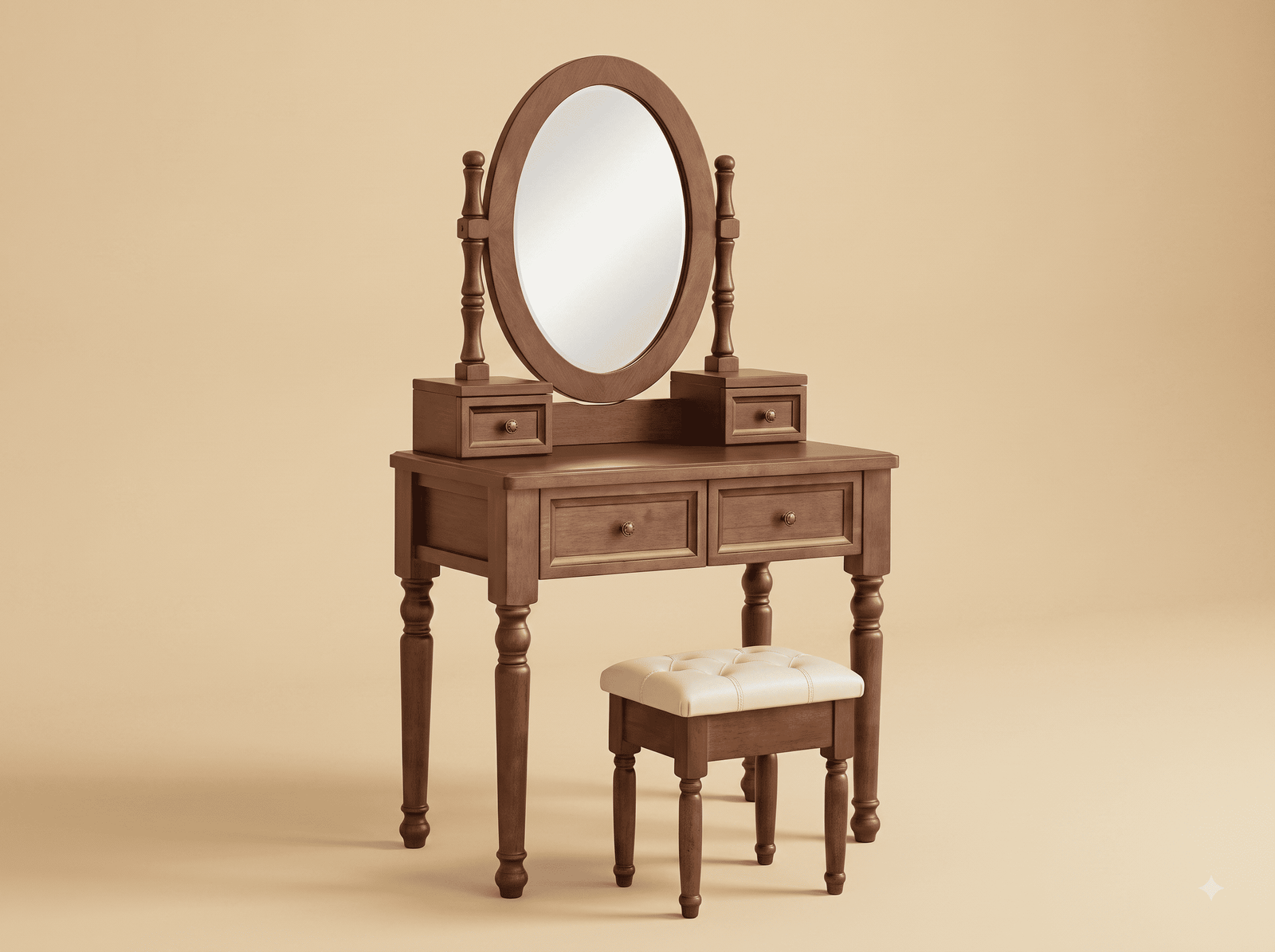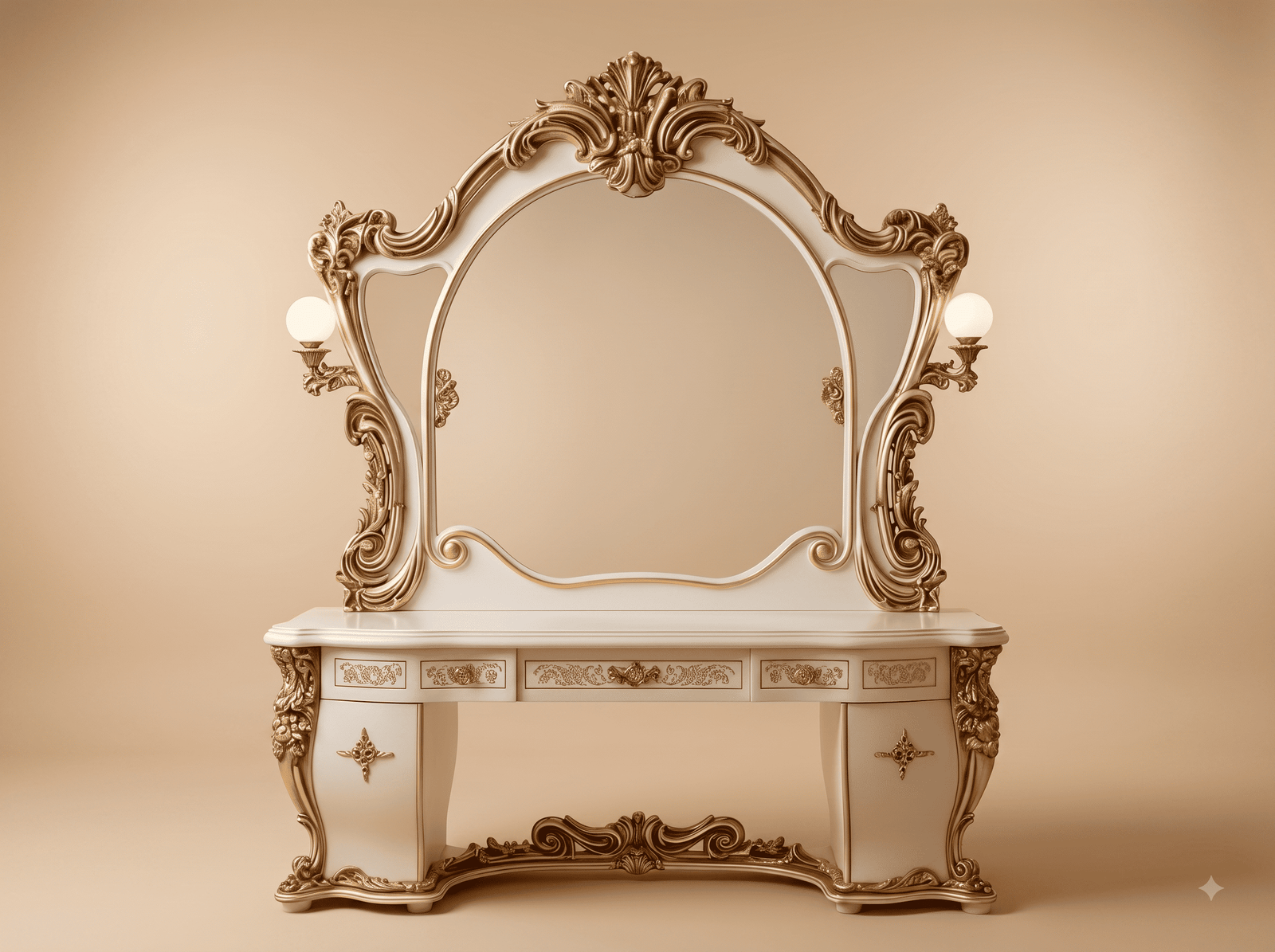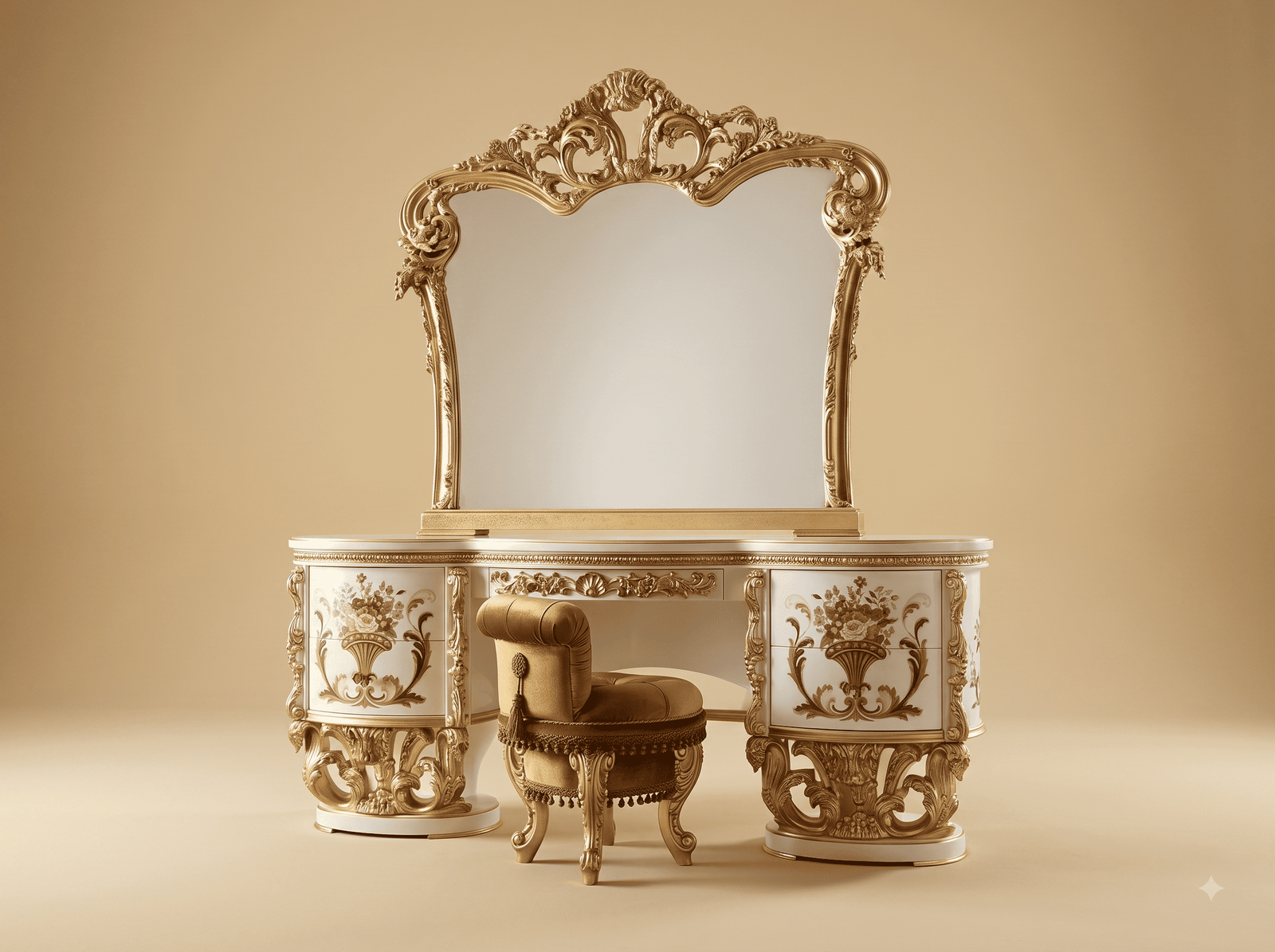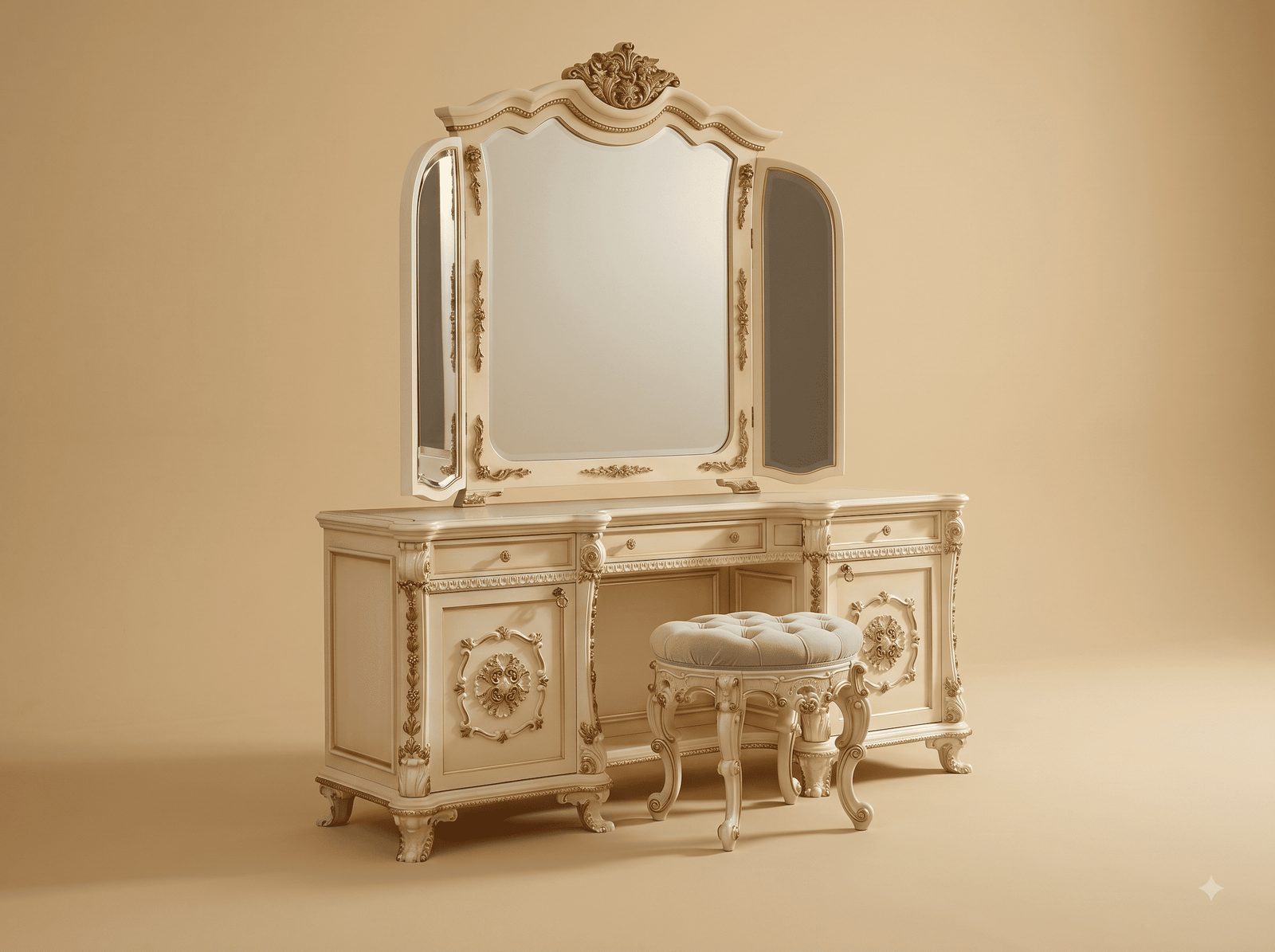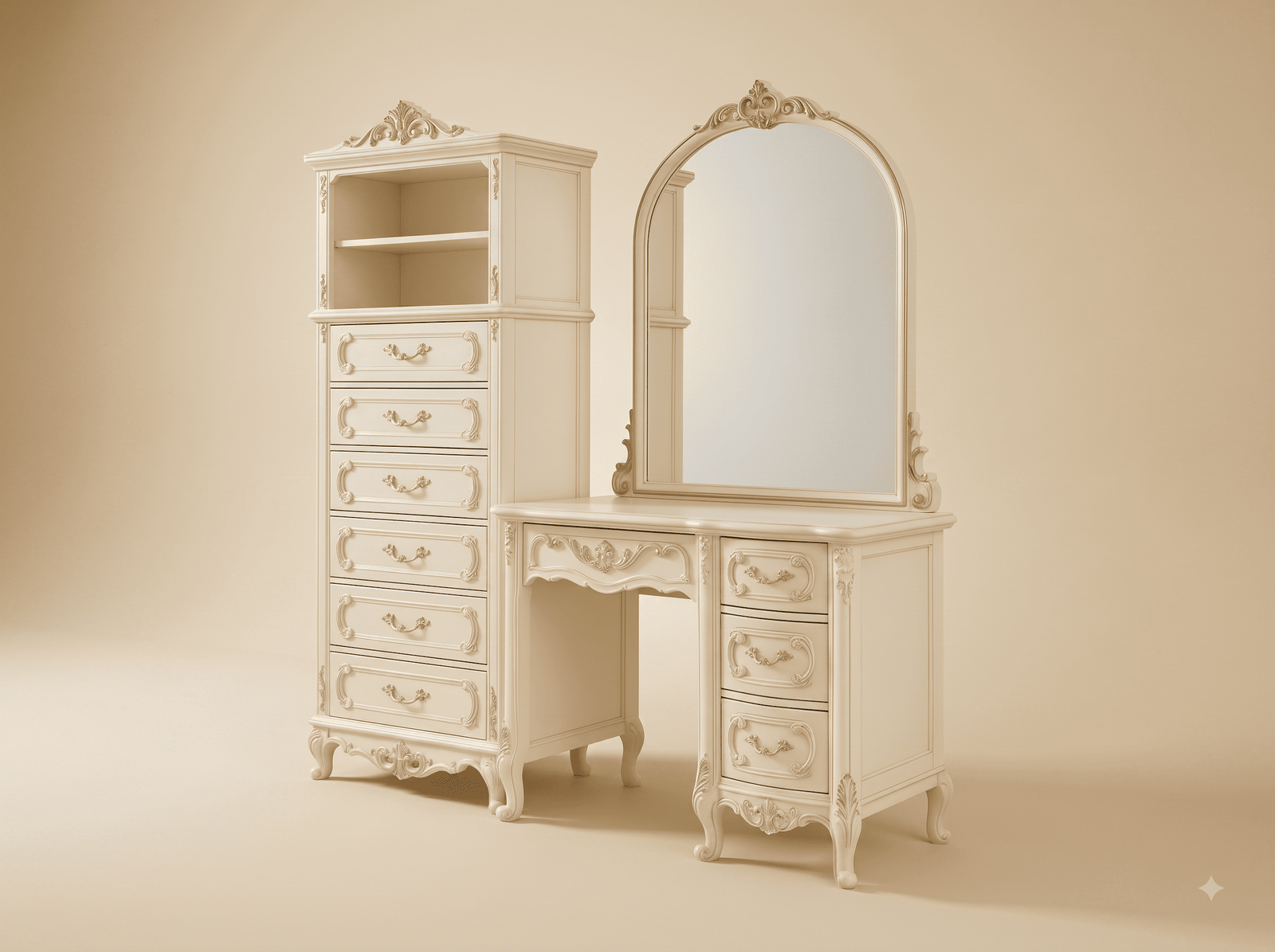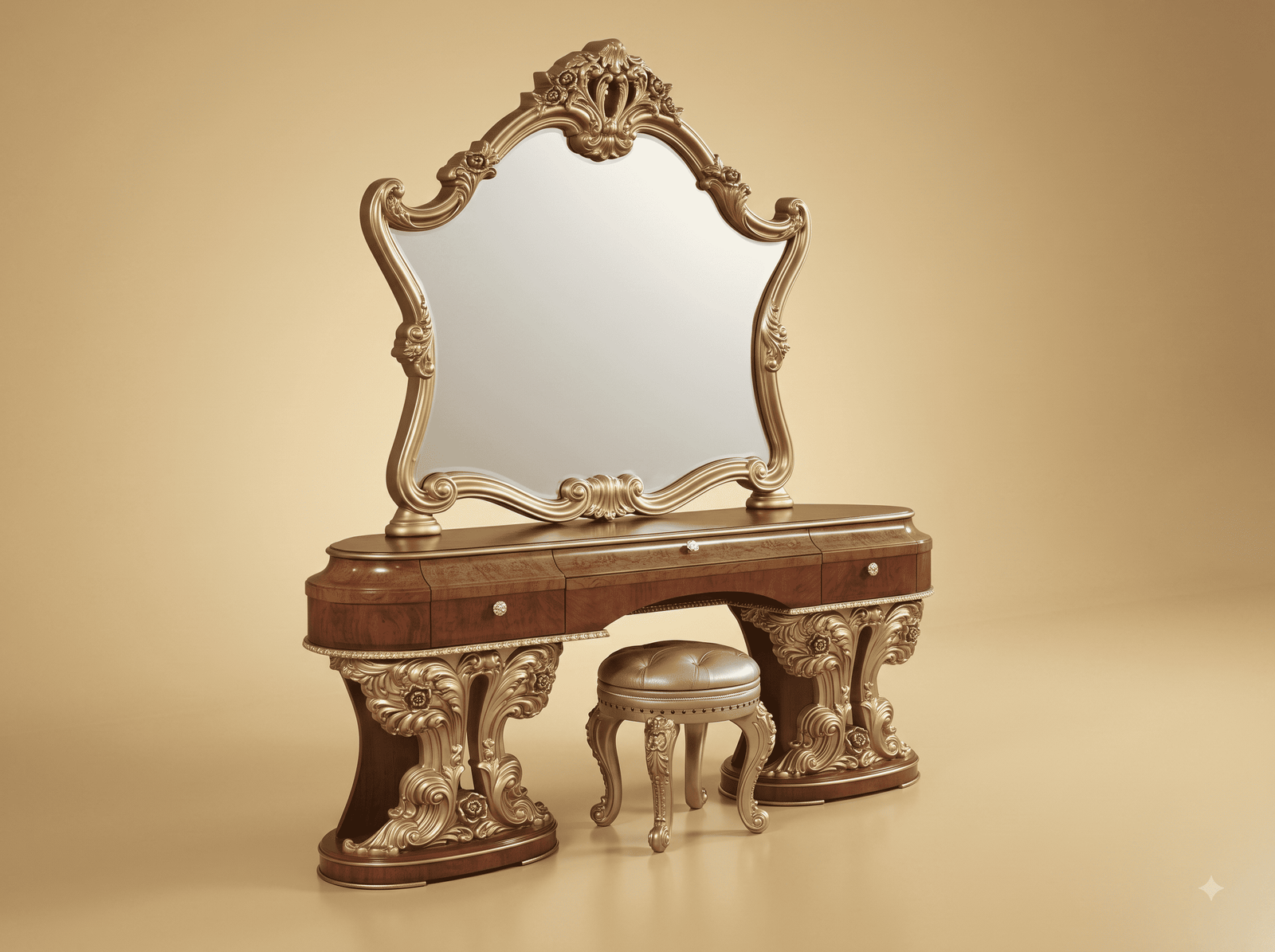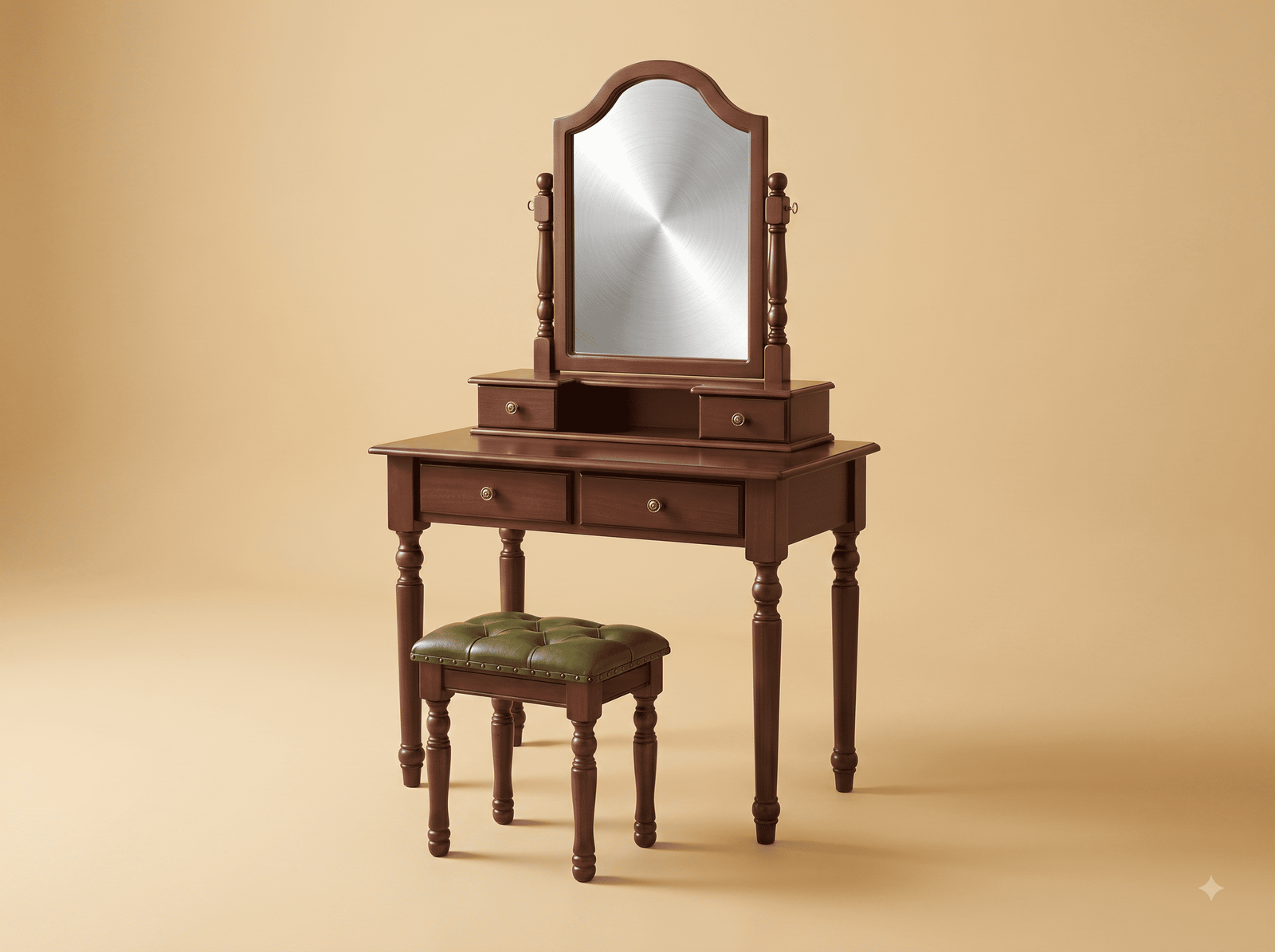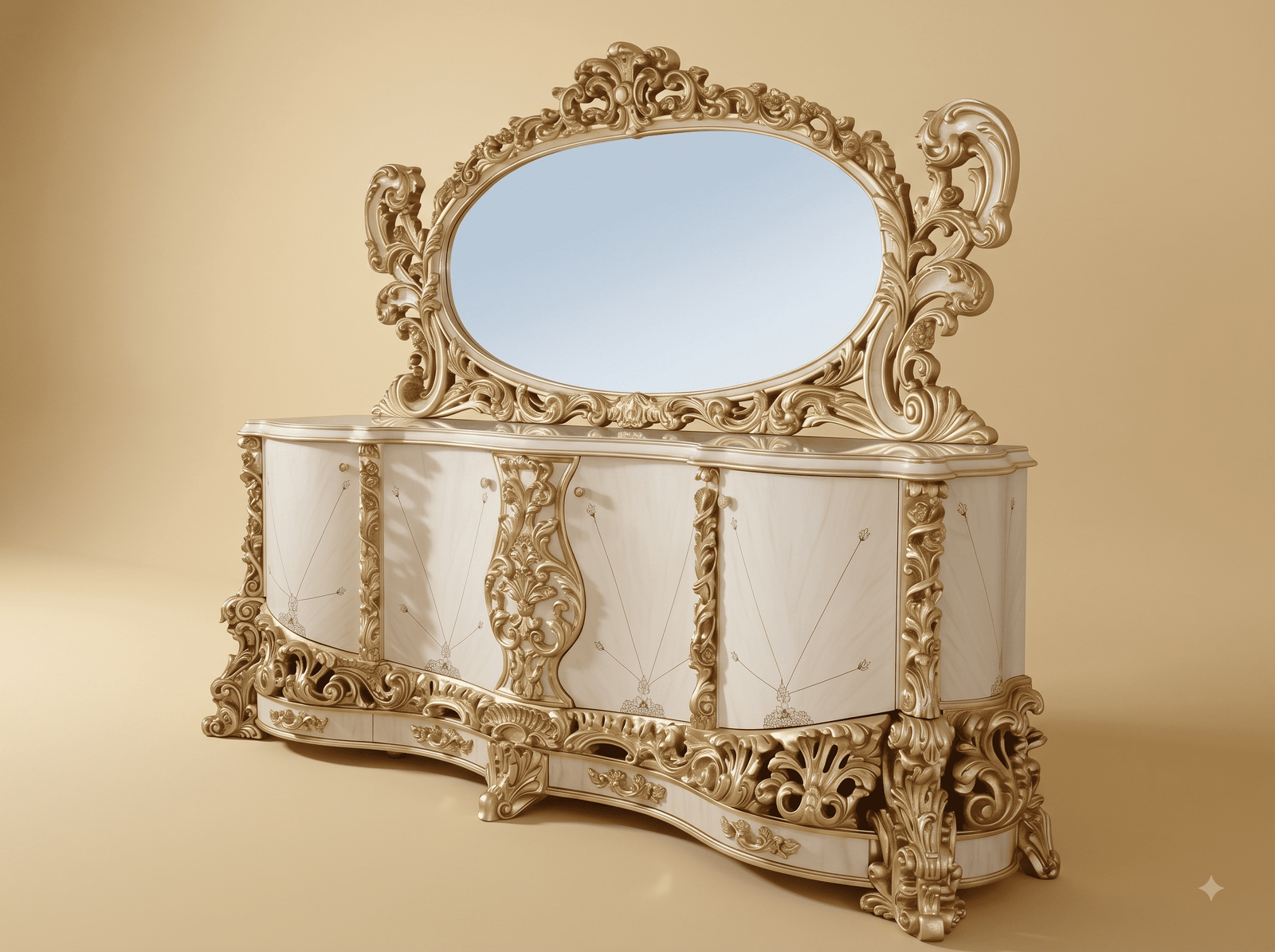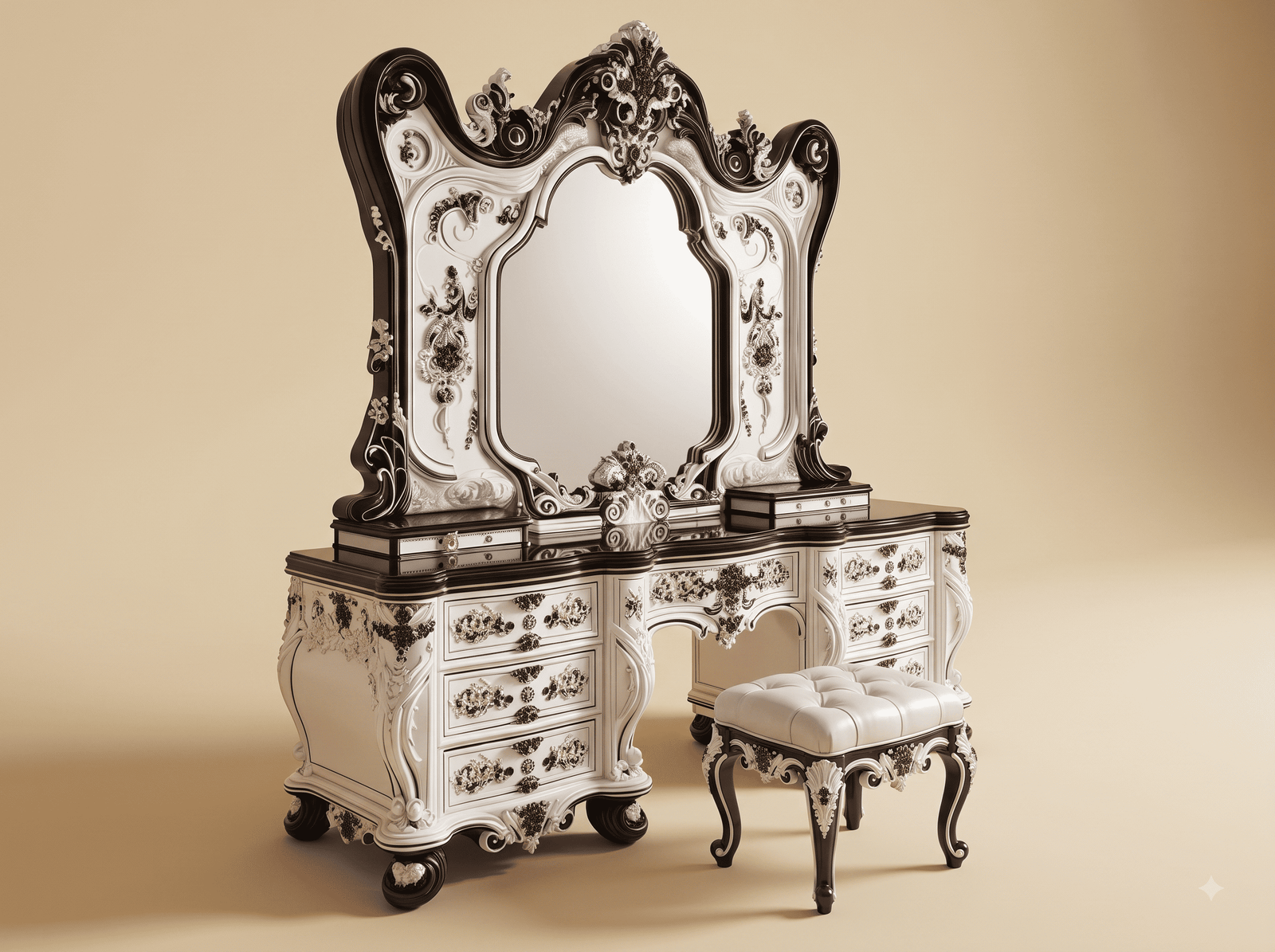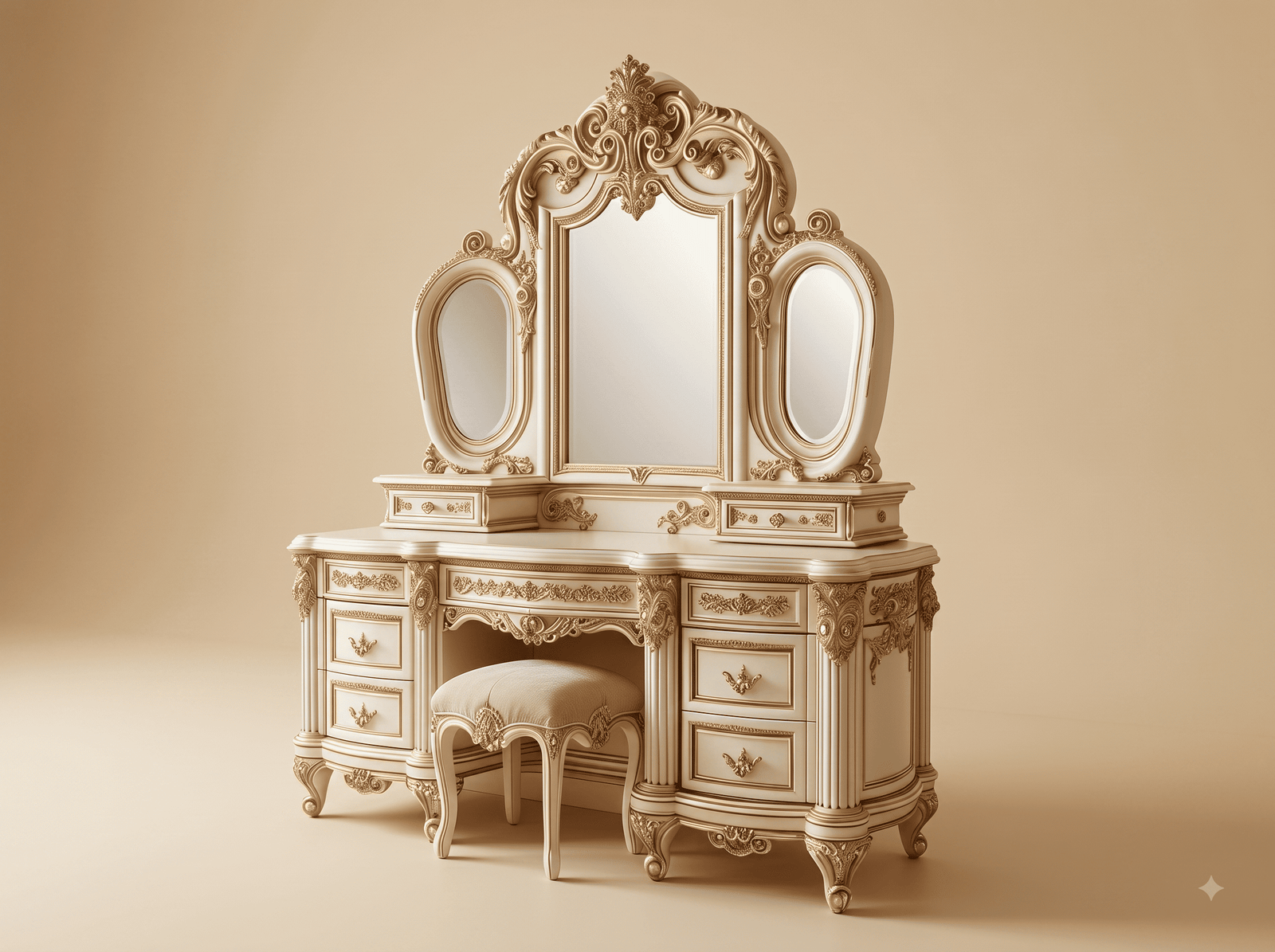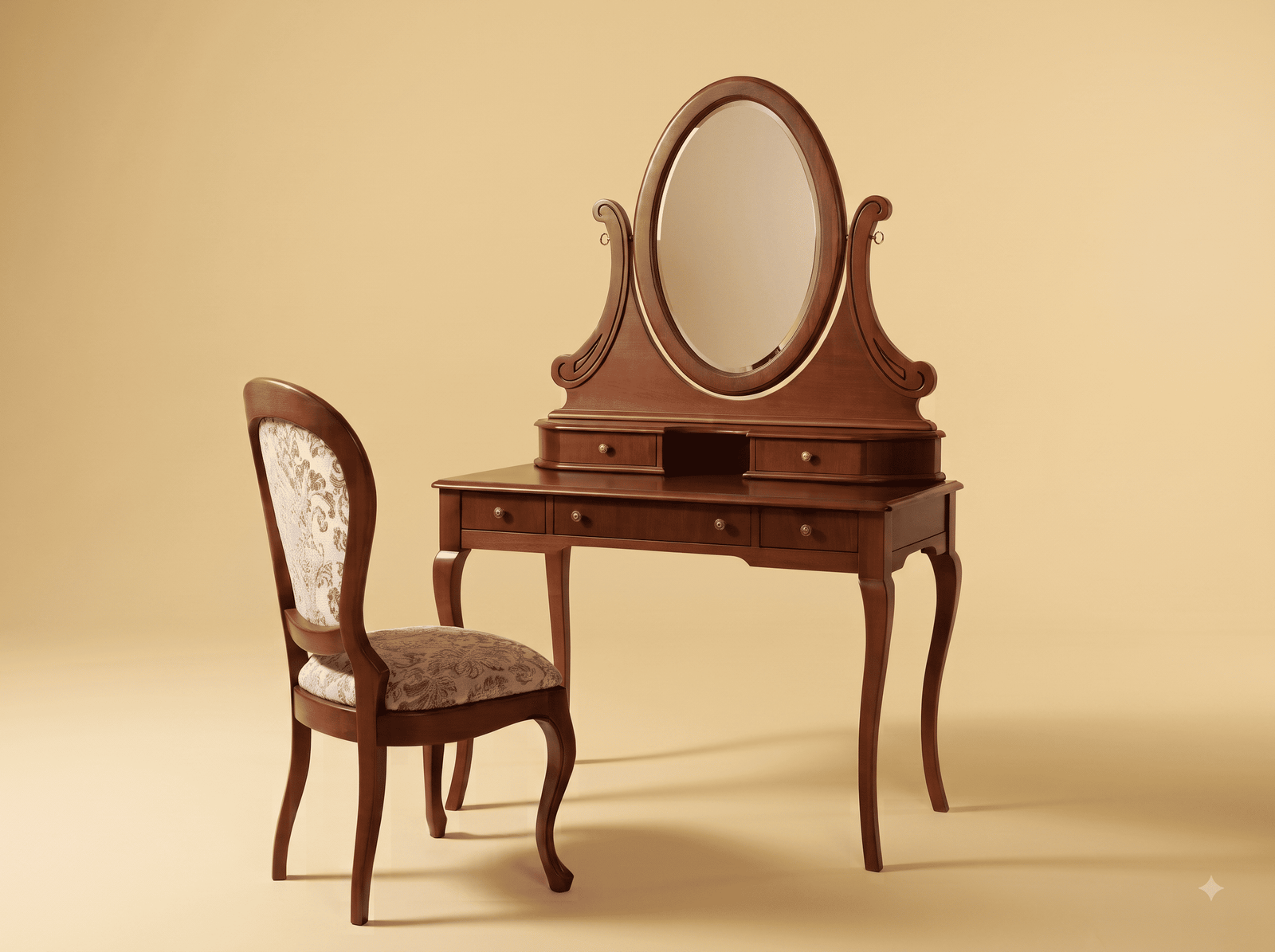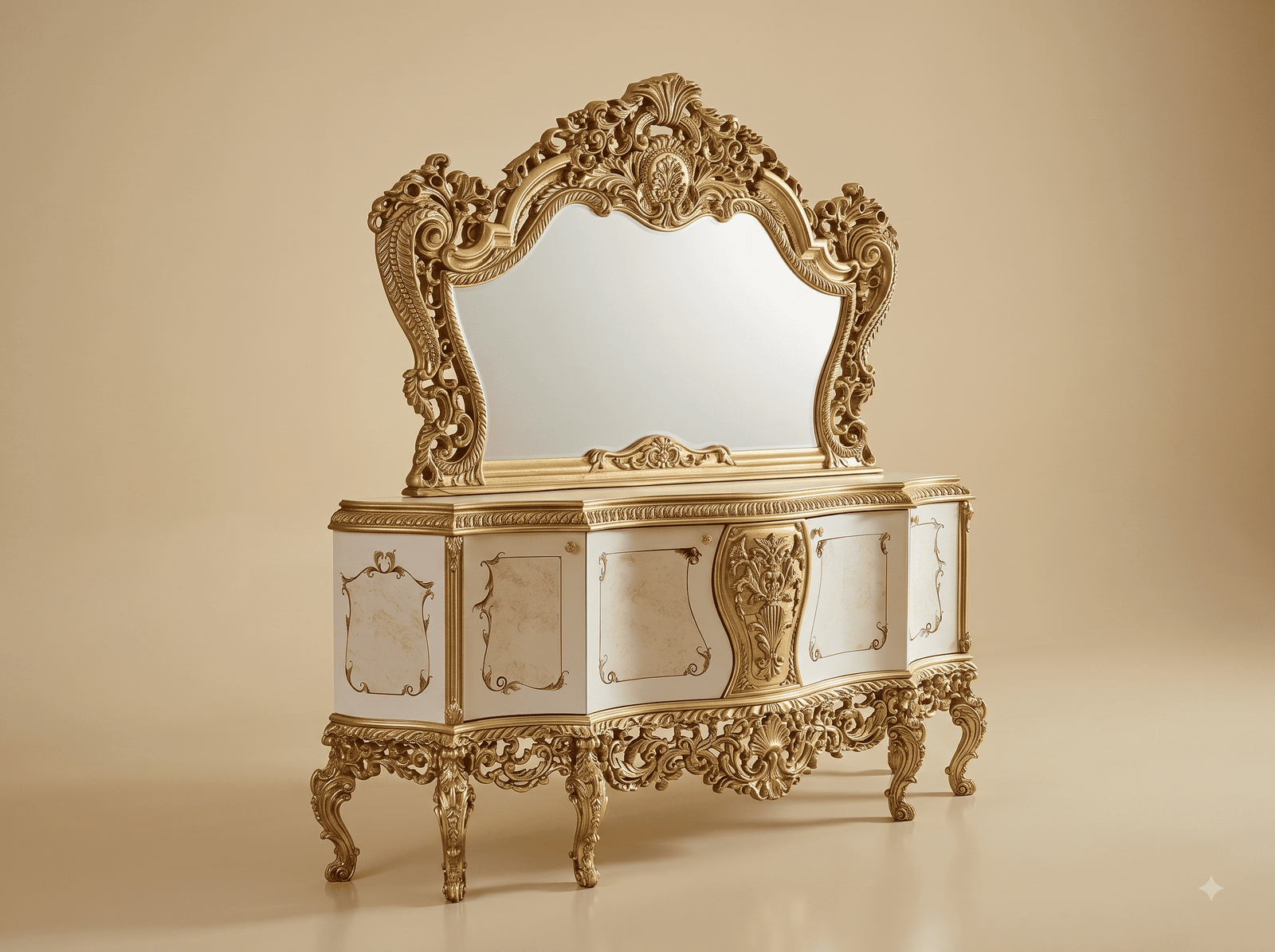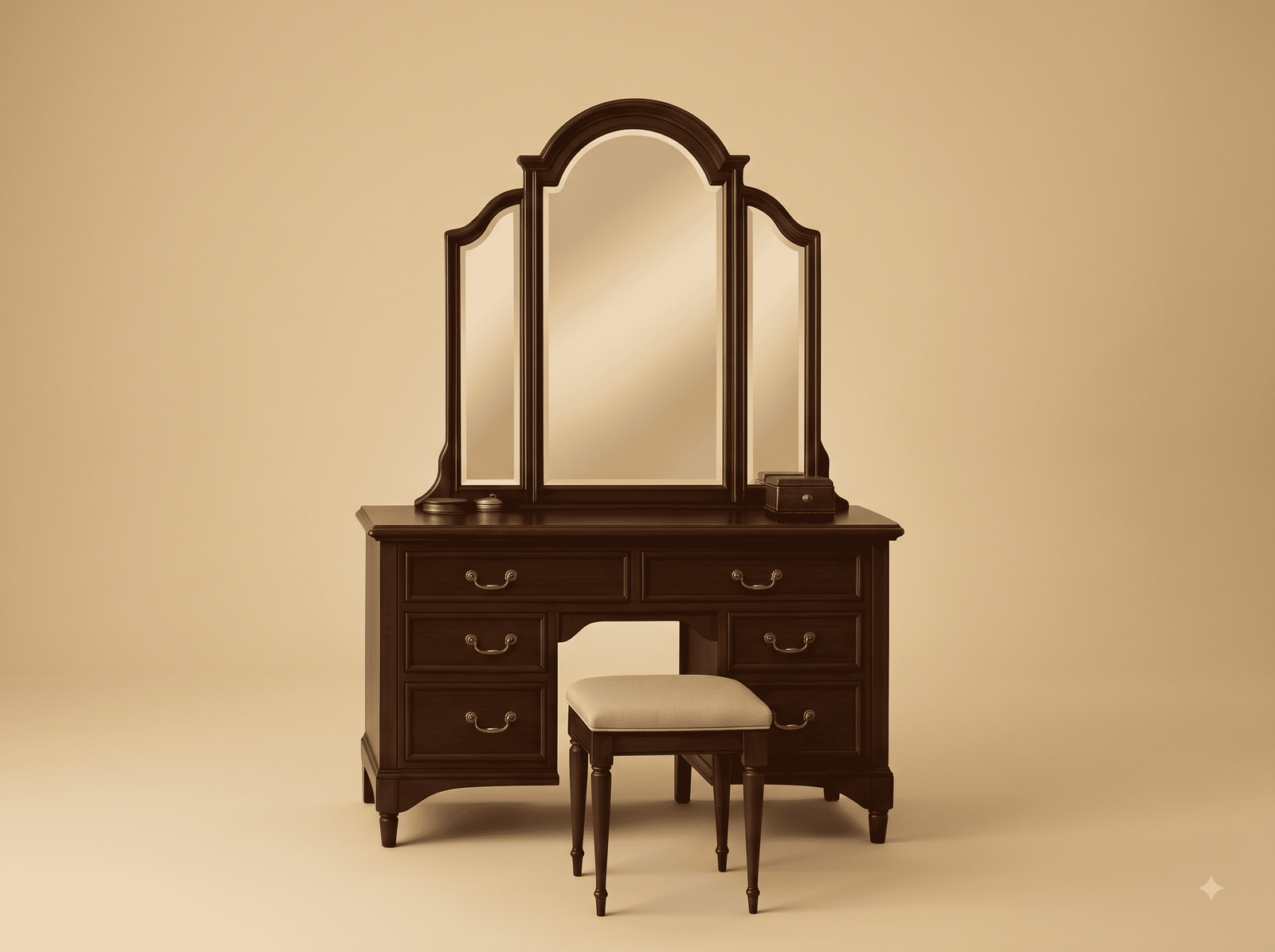
Look at the base. The carcass does not sit on legs - it sits on a plinth, a shallow box that runs around the bottom of the piece, and the feet are cut into the corners of that plinth as brackets rather than added underneath it.
That arrangement was invented to solve a real problem. Furniture standing on four separate legs concentrates its whole weight on four small points, and on an uneven floor it rocks. A plinth spreads the load along its full length and touches the floor as a continuous line, so a heavy loaded chest stays steady on boards that are not quite flat.
The bracket foot is what stops the plinth looking like a block. Cutting a shaped curve up into each corner lifts the visual weight, gives the piece a foot to stand on, and leaves the load path exactly where it was.
The craft is in the corners. Each bracket is mitred, so two shaped pieces meet at forty-five degrees with the profile continuing unbroken around the turn. A mitre that is a fraction open shows as a dark hairline exactly at eye level when you walk past - and on a piece with no carving to distract you, it is the first thing anyone would notice.
Our craftsmen cut, fit and glue those corners individually, testing each mitre dry against its own corner of the plinth before it is committed.
 Ask Price On WhatsApp