A Curved Slab and a Panel That Does Something
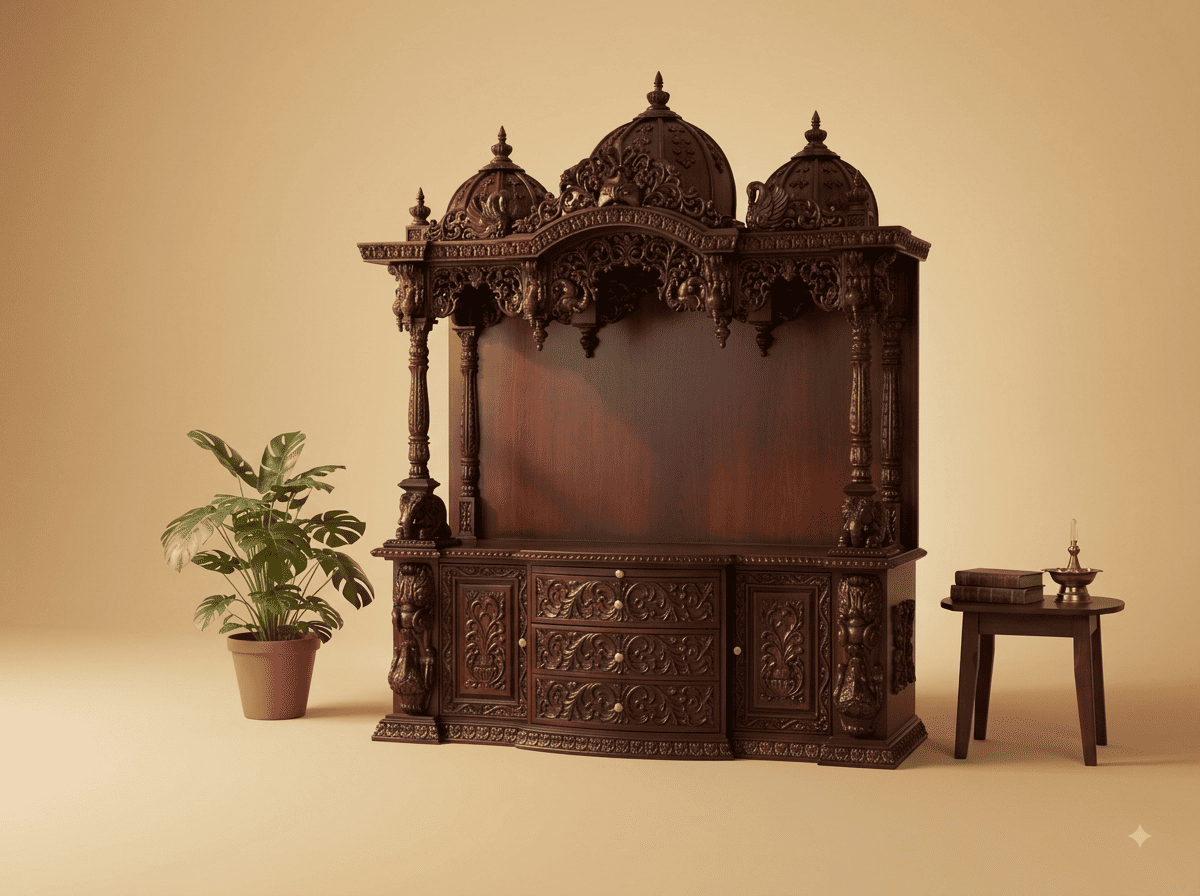
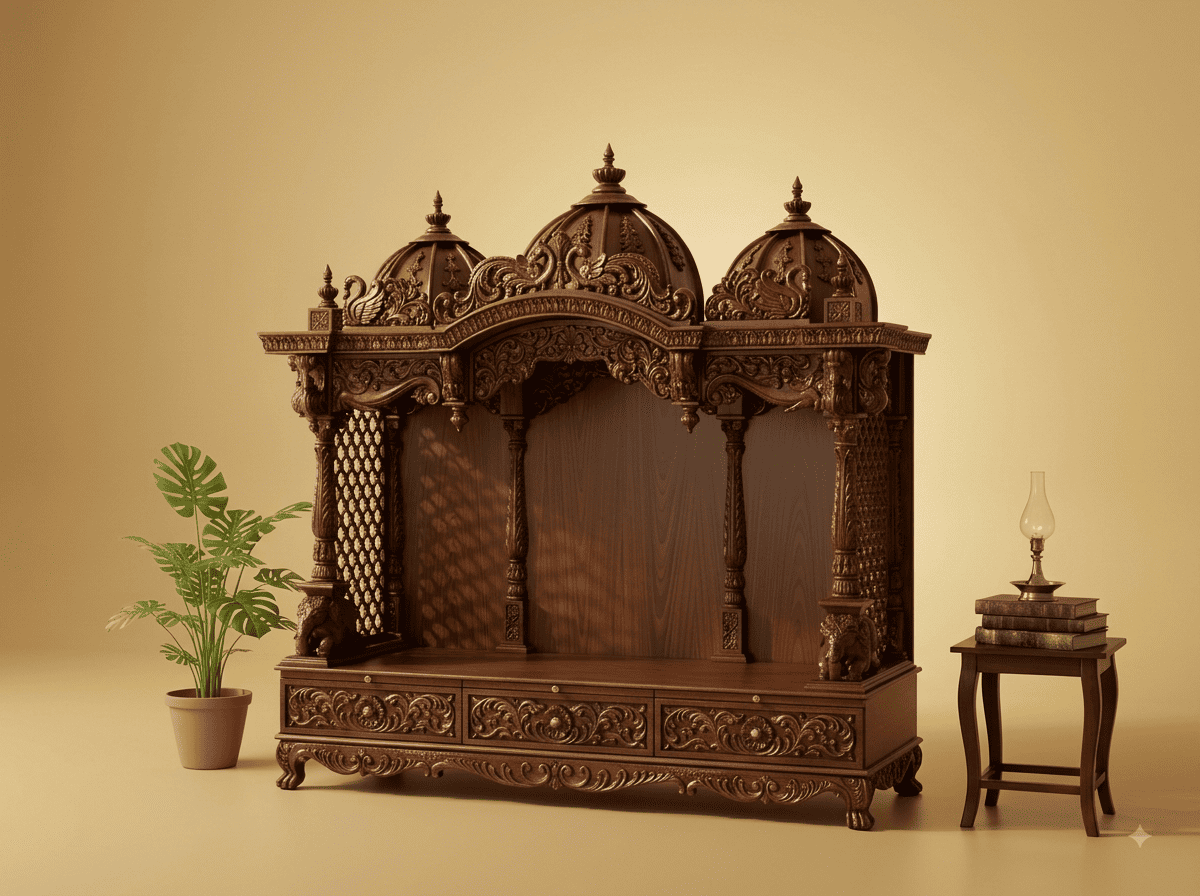
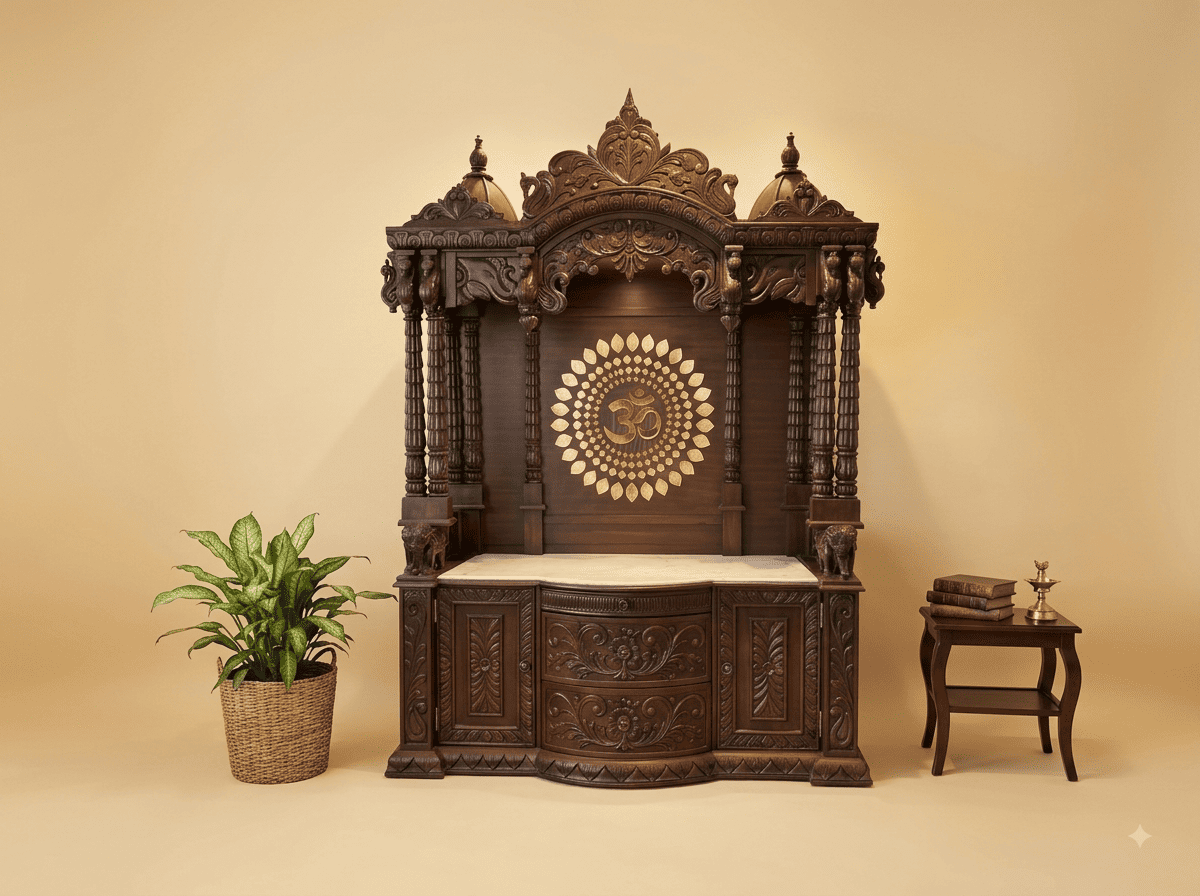
Cutting marble straight is routine. Cutting it to a curve is not. A bowed front edge has to be cut oversize, ground back to the line, then polished along the whole profile including the return at each end, and unlike timber a slab that cracks during any of those stages cannot be trimmed and used for something smaller. That is why the overwhelming majority of mandirs with a marble top have a straight-edged one, and why the curve here is a real cost rather than a styling flourish. It exists because the cabinet beneath is serpentine, and a straight slab sitting on a curved carcass looks like a mistake from every angle.
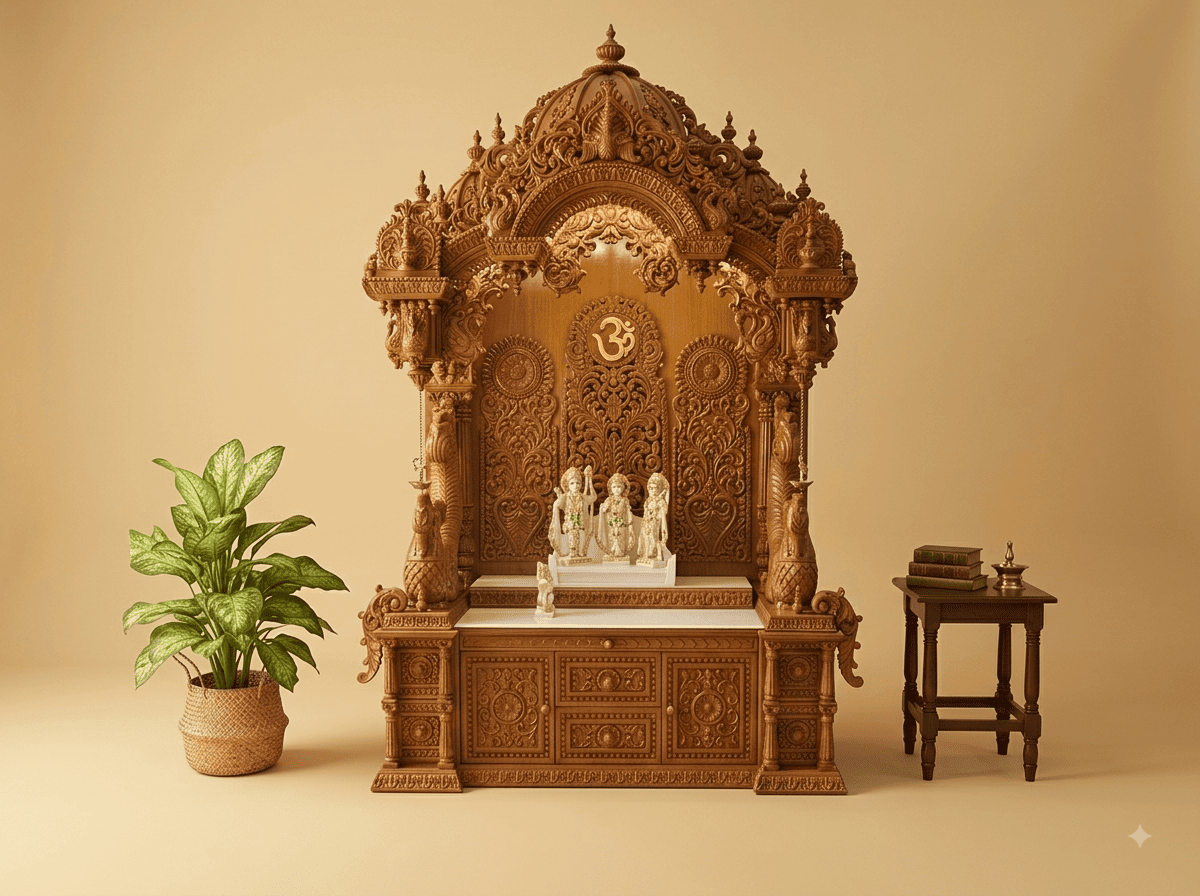
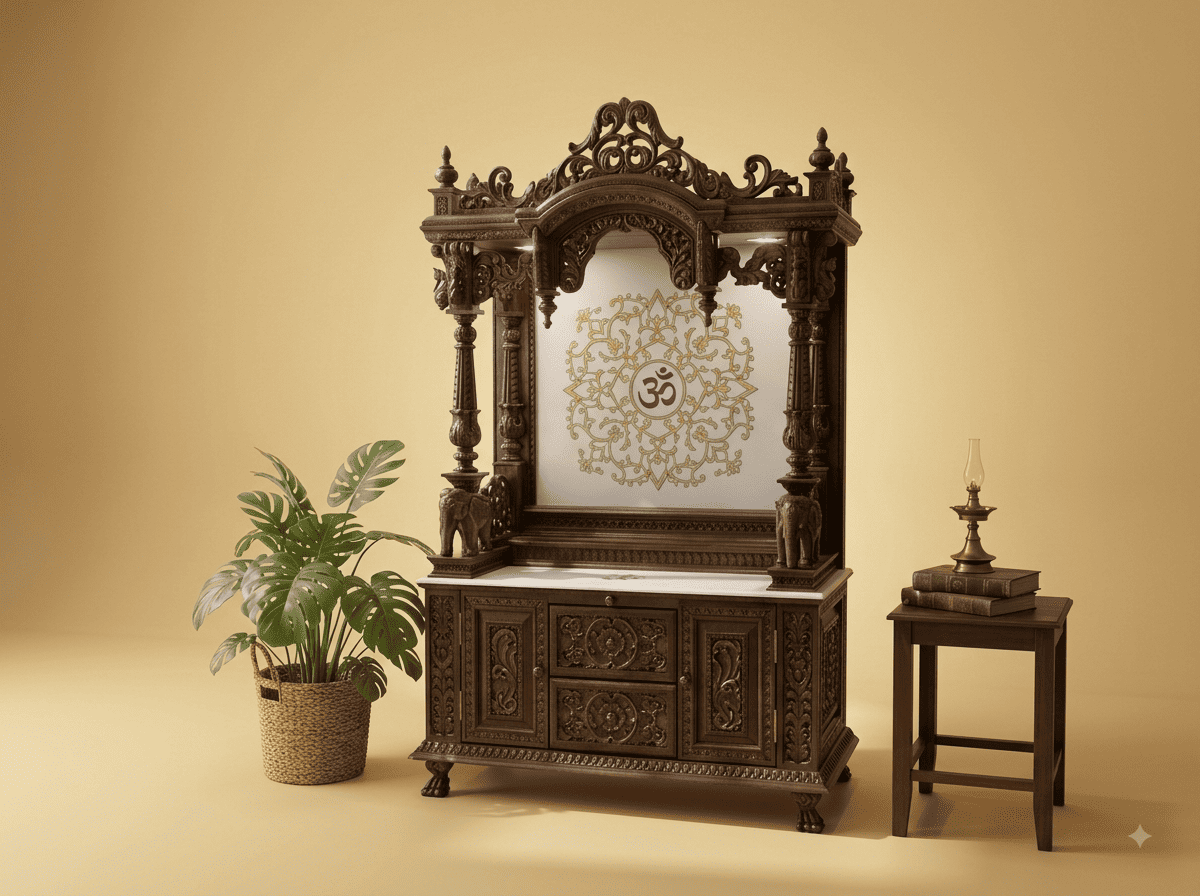
The back panel addresses a different oversight. On most mandirs the surface directly behind the deities is the least considered part of the whole piece: a flat board, sometimes with a printed motif applied to it. It is also the surface you look at most, because it frames everything else. Here it carries an Om at the centre of a radiating lotus-petal mandala, with every petal cut and gilded separately and the rings laid out to space evenly outward, so the panel gives the deities a setting rather than a backdrop. Both the carving and the gilding are done by hand by master Indian artisans, and the images on this page show the actual piece.
 Ask Price On WhatsApp