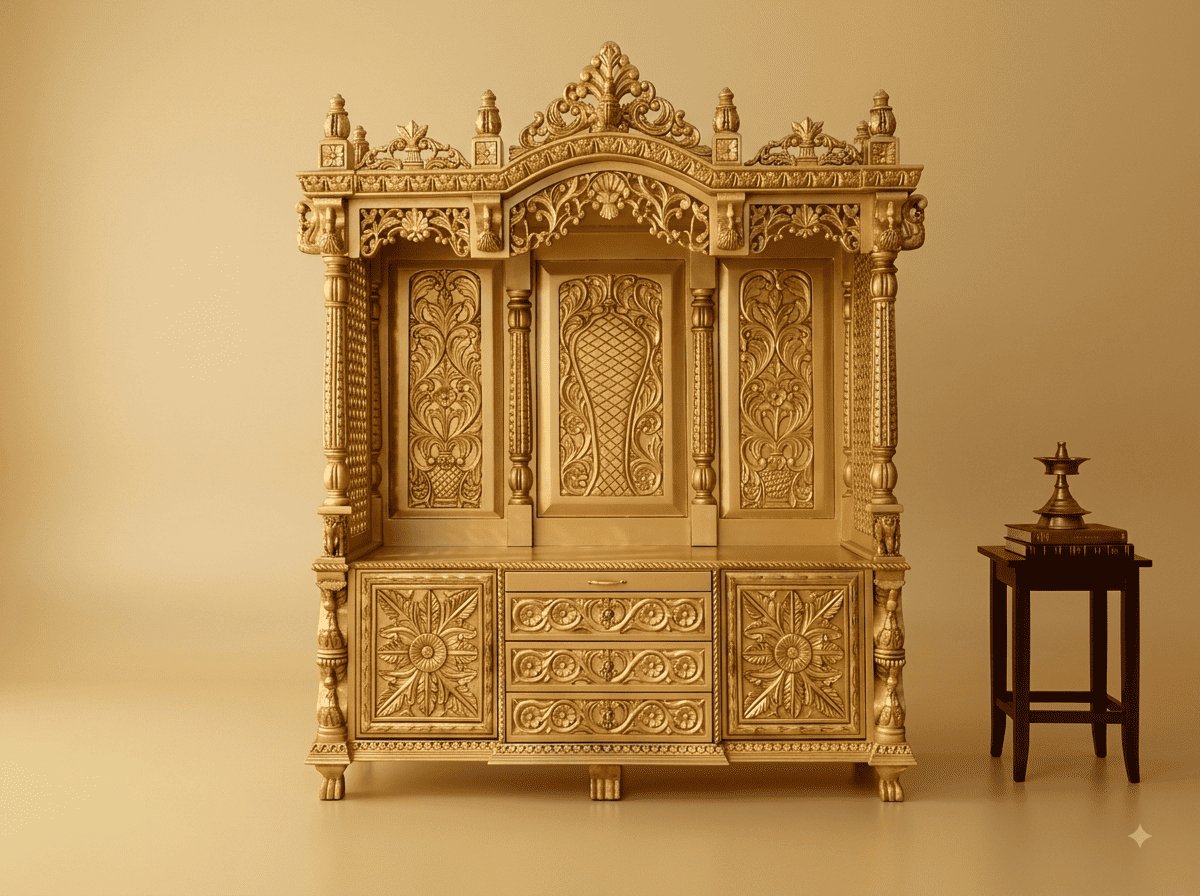
A Door That Closes Without Sealing
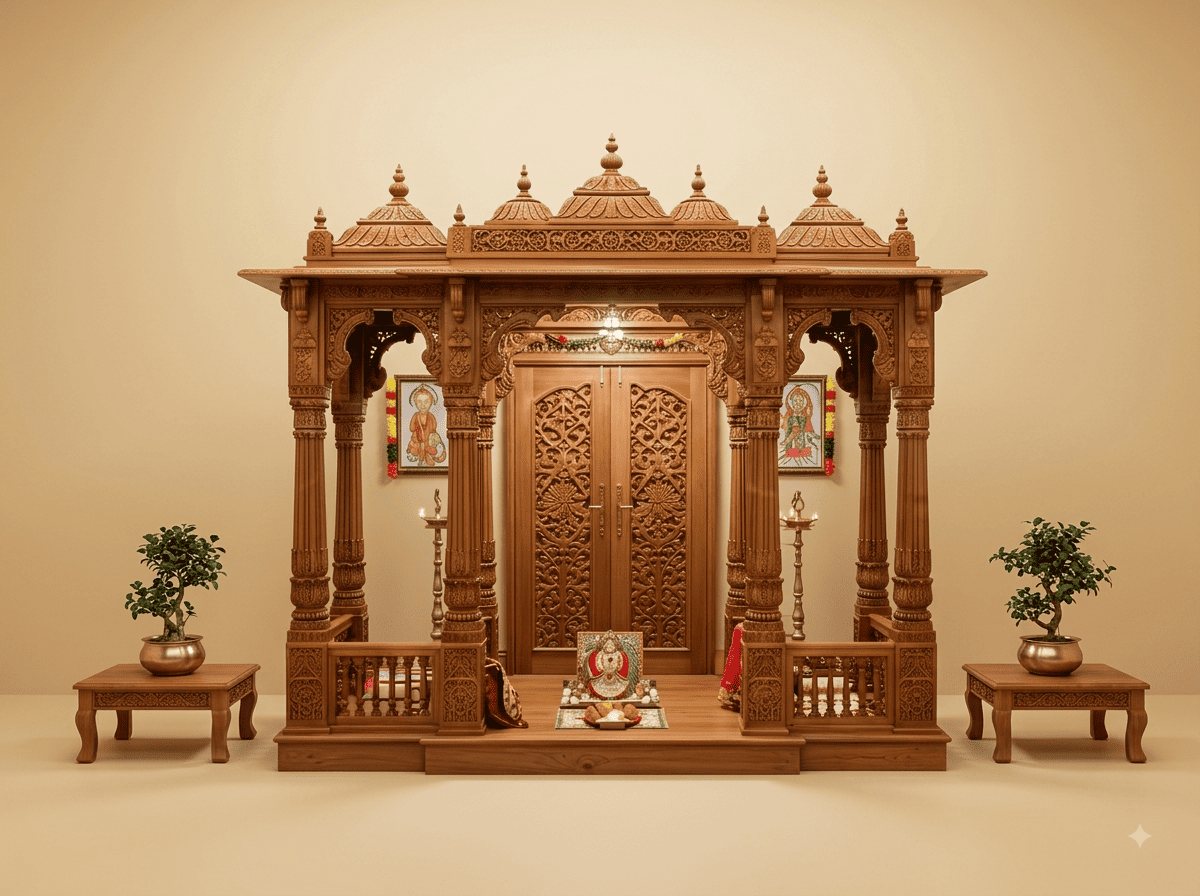
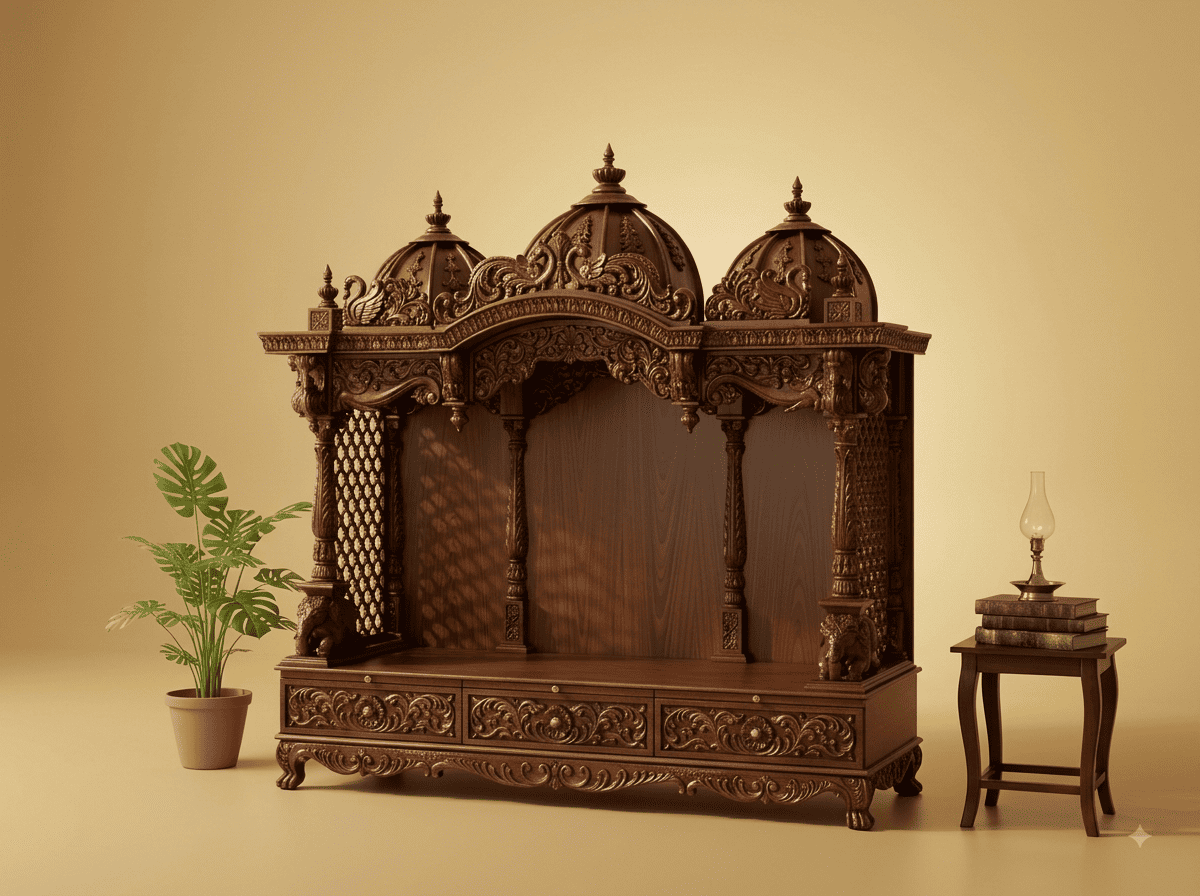
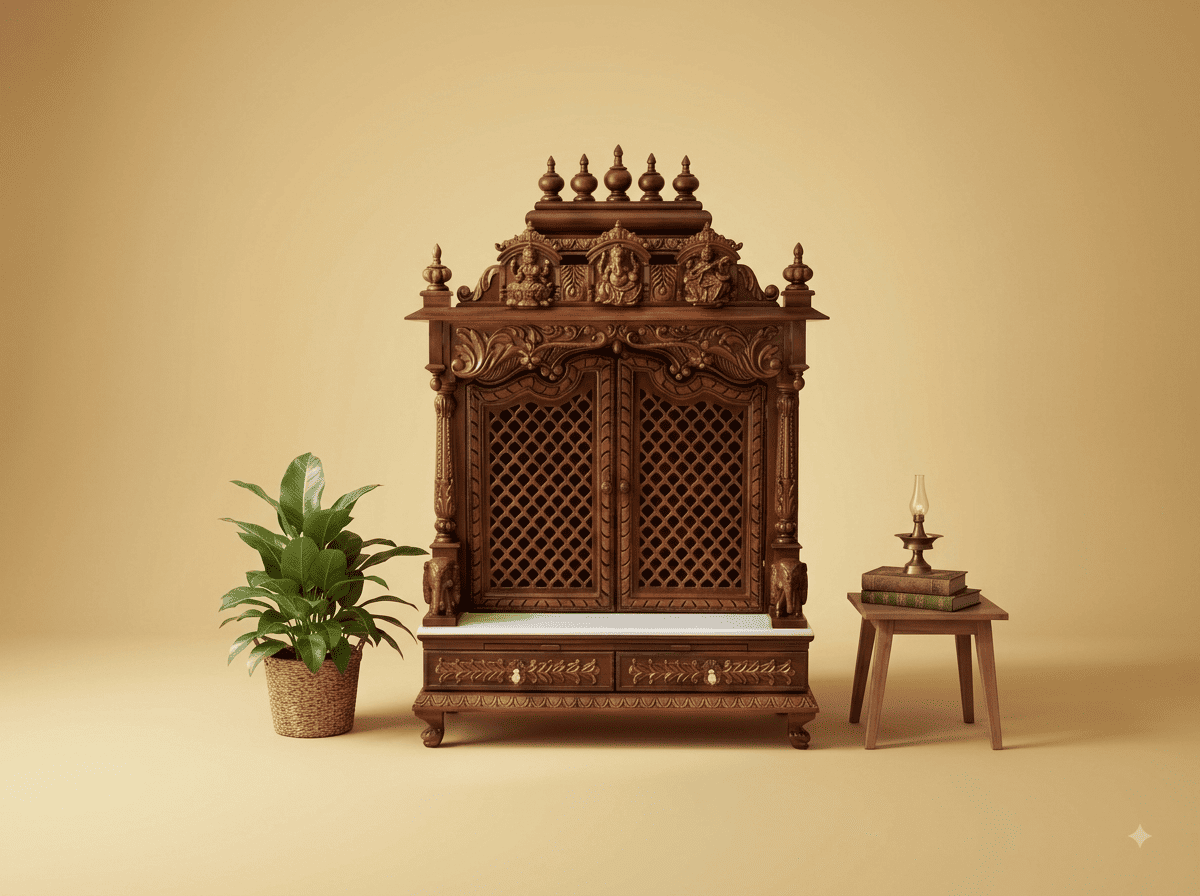
Closing a mandir gives you a great deal: it keeps the dust of a shared room off the deities, it lets the shrine be shut when the household is away, and it suits families who close the mandir at night as a matter of practice. Cutting the centre door as jaali is what makes this design work so beautifully. Lattice gives you a closed front while leaving a continuous path for air, so the interior stays fresh and clean year after year.
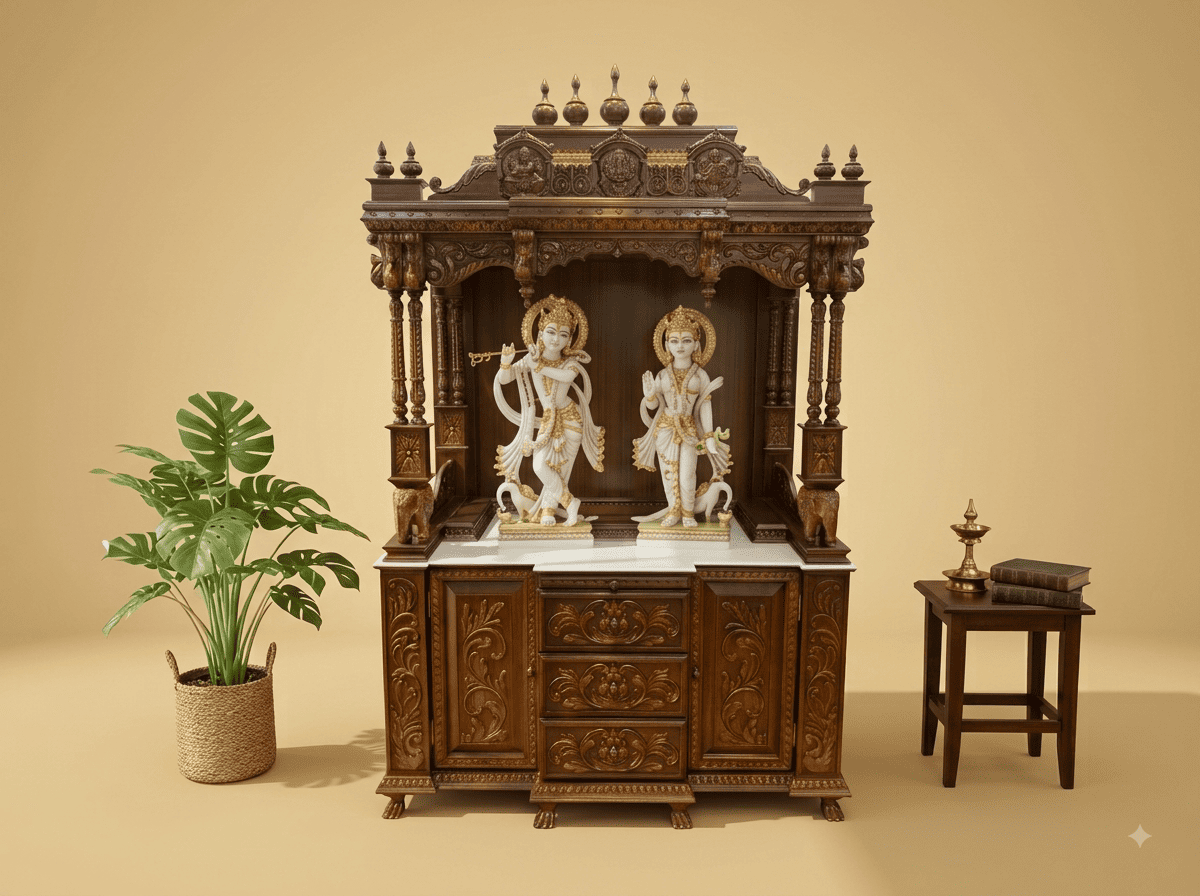
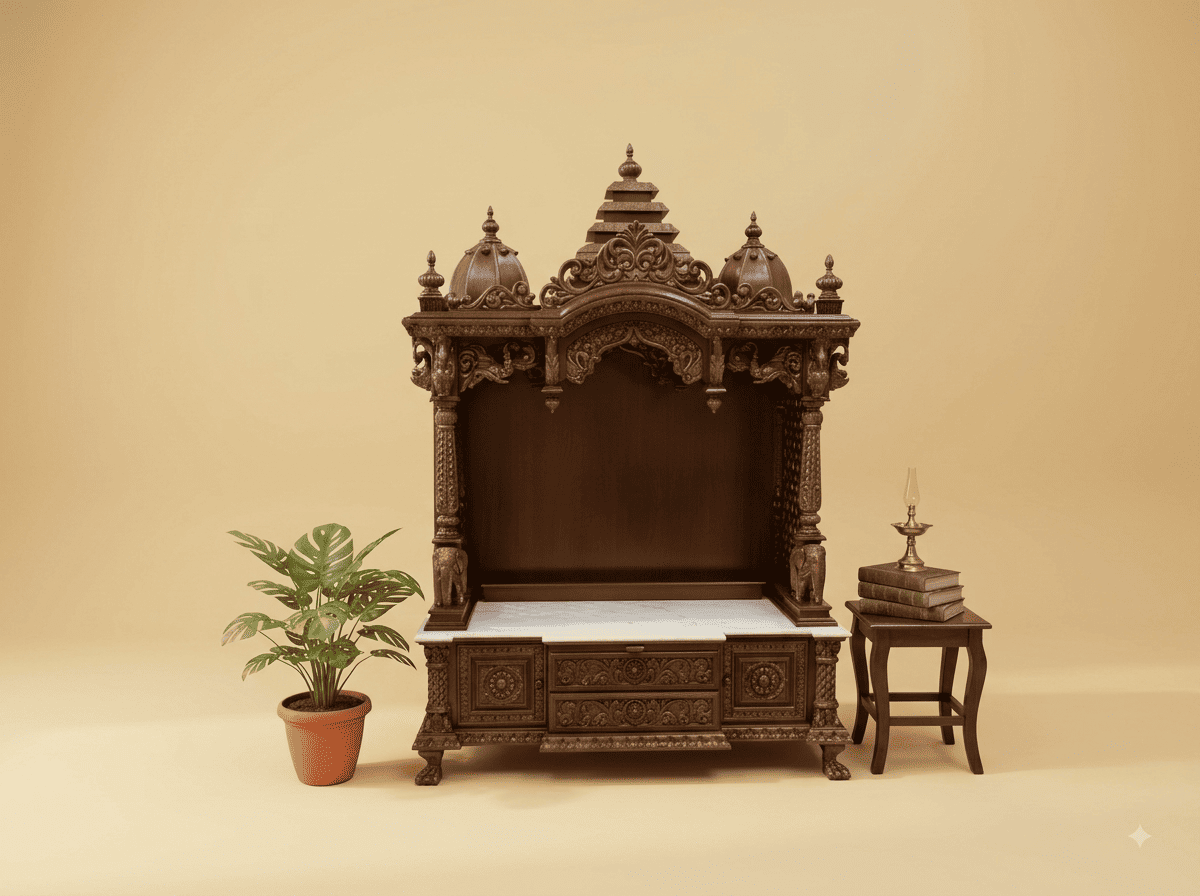
It also changes what a shut mandir looks like. Rather than a blank panel, you see the deities through the lattice, and a lamp burning inside throws its light out through the openings across the room. Cutting jaali by hand is slow work, since each opening is worked individually and the bars between them are narrow, and it is one of the details that tells you the piece was made rather than assembled. Every element here is carved and polished by hand by master Indian artisans, and the photographs show the actual mandir.
 Ask Price On WhatsApp