Why the Deity Platform Is Marble
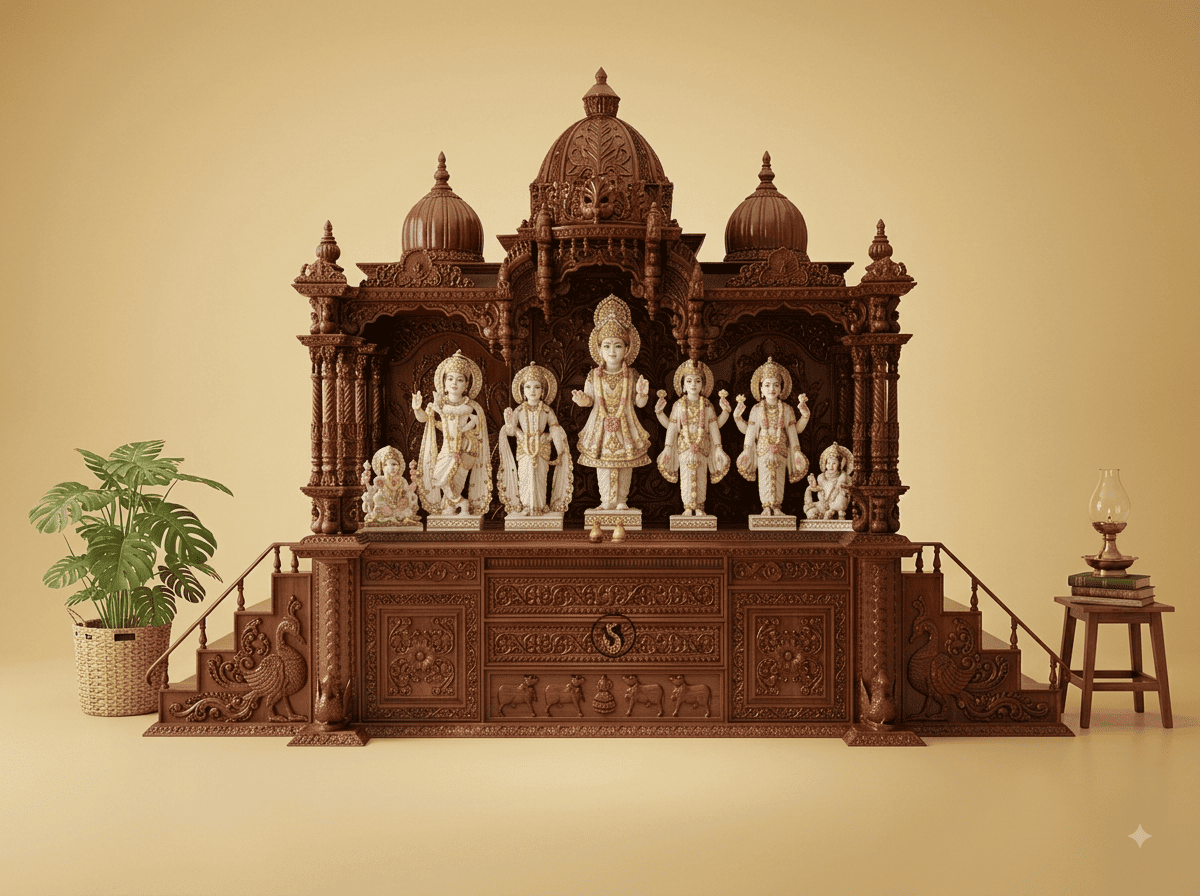
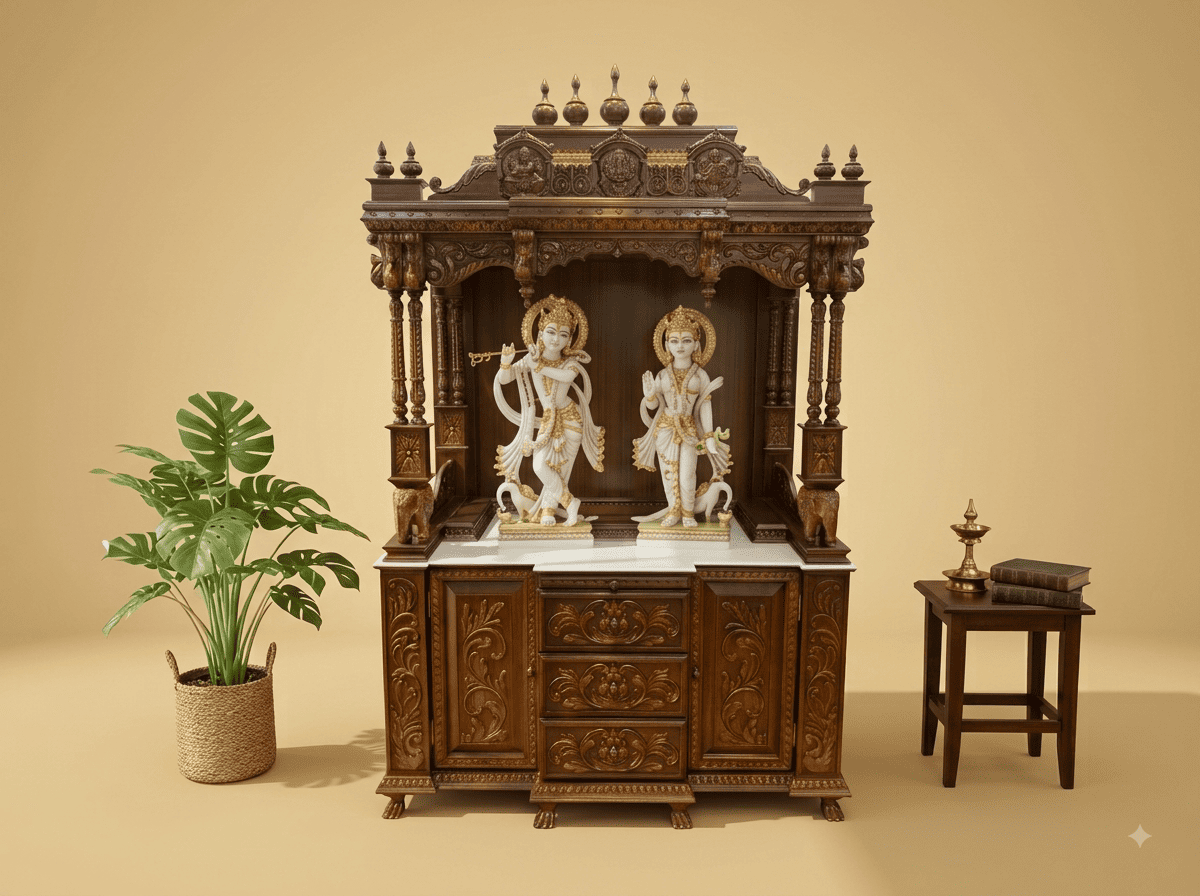
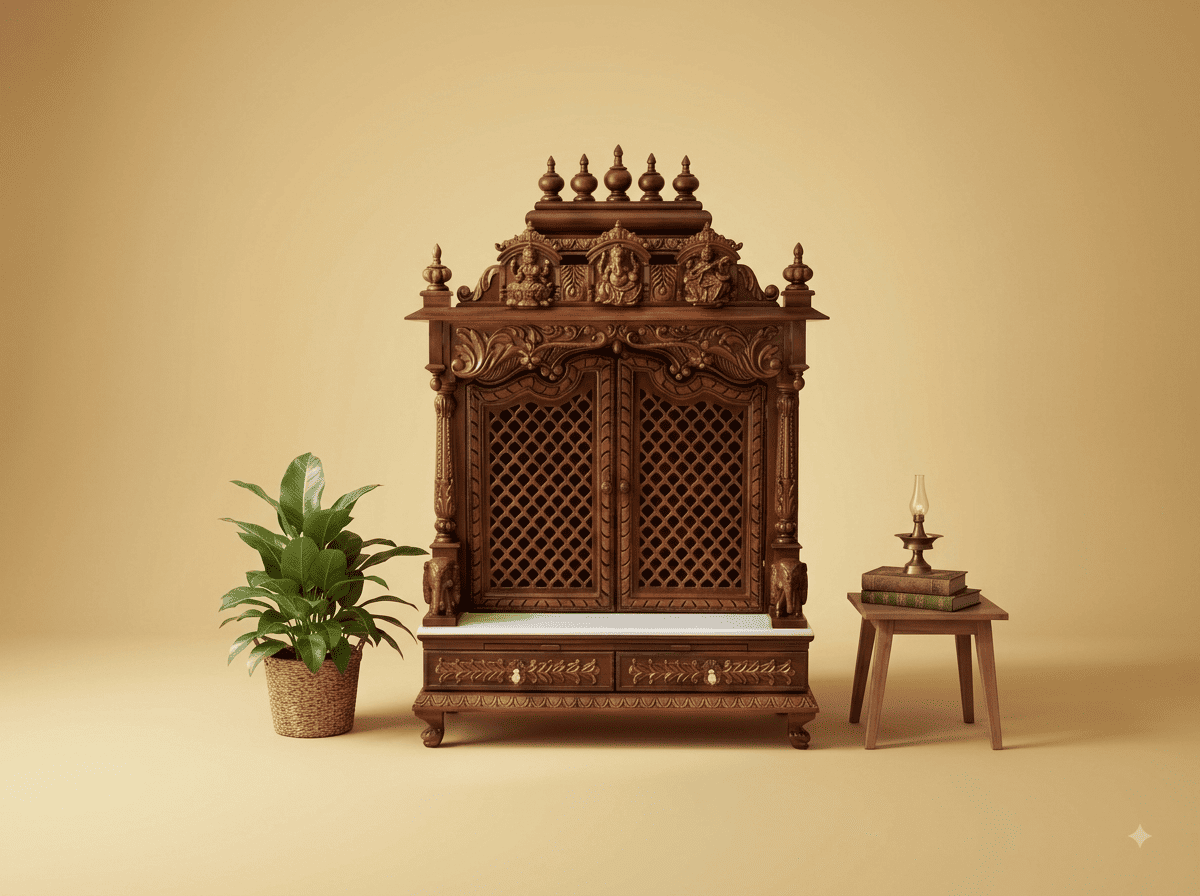
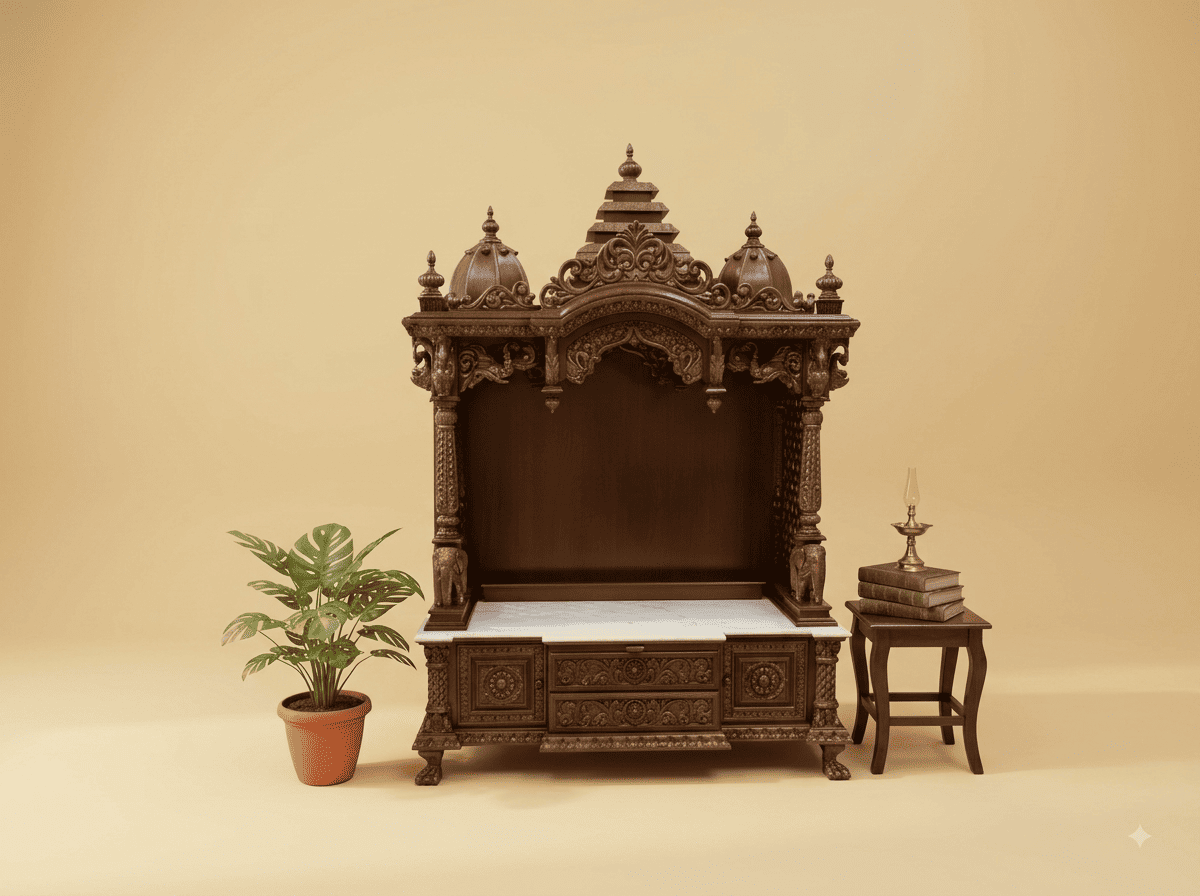
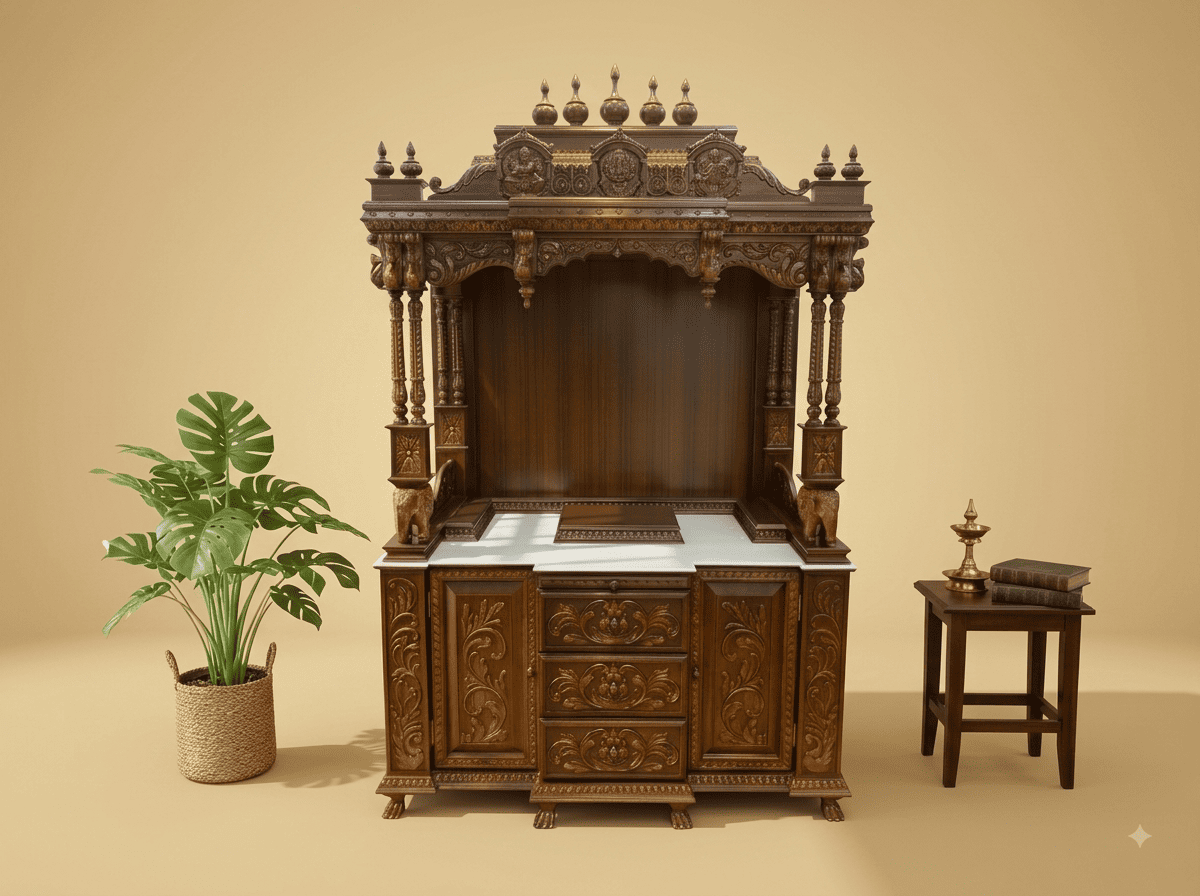
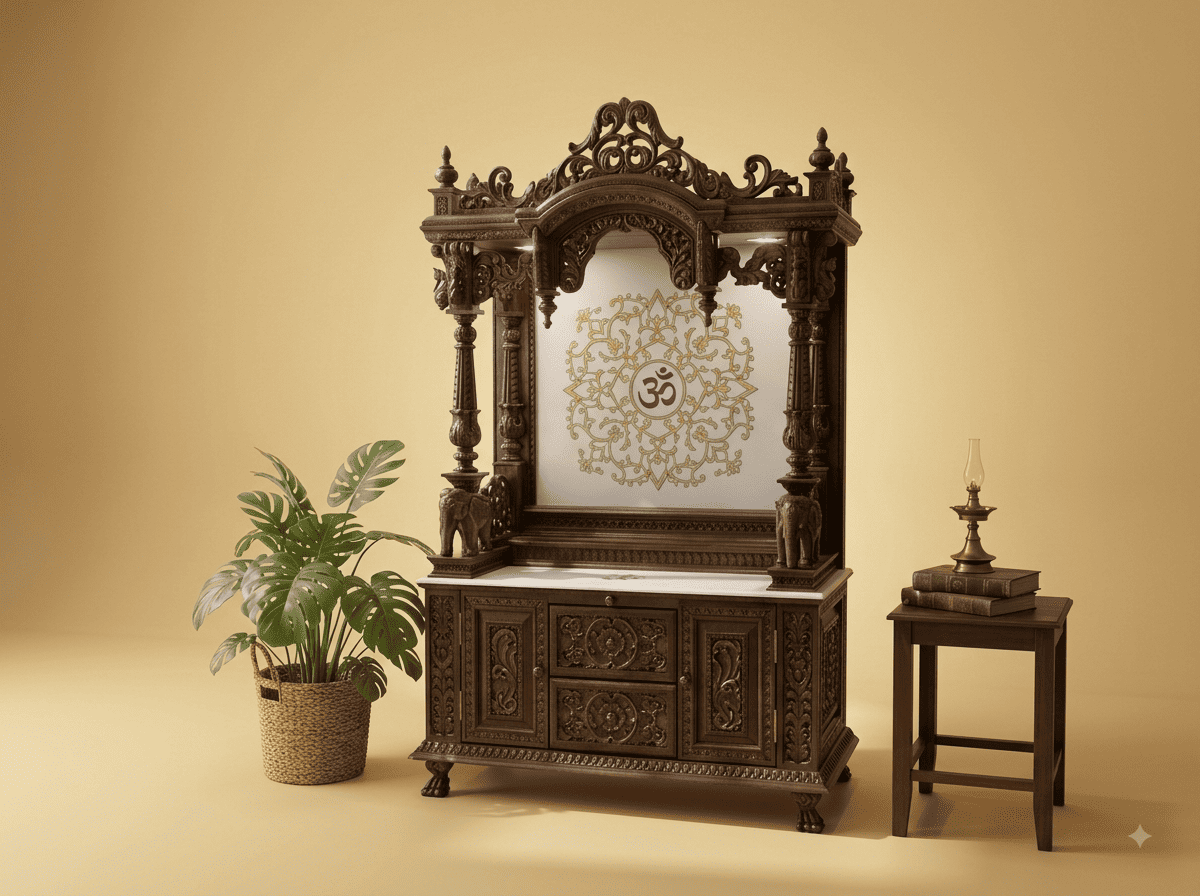
The surface directly beneath the deities is the hardest working part of any mandir. Diyas are set down hot on it, ghee runs across it, water is offered and wiped away, and camphor is lit on it. Setting a marble slab into that position gives you a surface that takes all of it in its stride: marble is unaffected by lamp heat, it does not absorb oil, and it wipes clean with a damp cloth in seconds. Years of daily puja leave it looking the same as the day it was fitted.
Marble is also the material used underfoot and underhand throughout temple building, for exactly these reasons, so it belongs here rather than being borrowed from somewhere else. The way it is fitted matters too. It is a set-in slab rather than a bonded surface, which means that if you ever want to change the stone or refresh it decades from now, it lifts out and a new one goes in without disturbing a single piece of the carved woodwork around it. That is a repair path built into the design from the start, and it is one of the reasons this mandir is made to last generations.
 Ask Price On WhatsApp