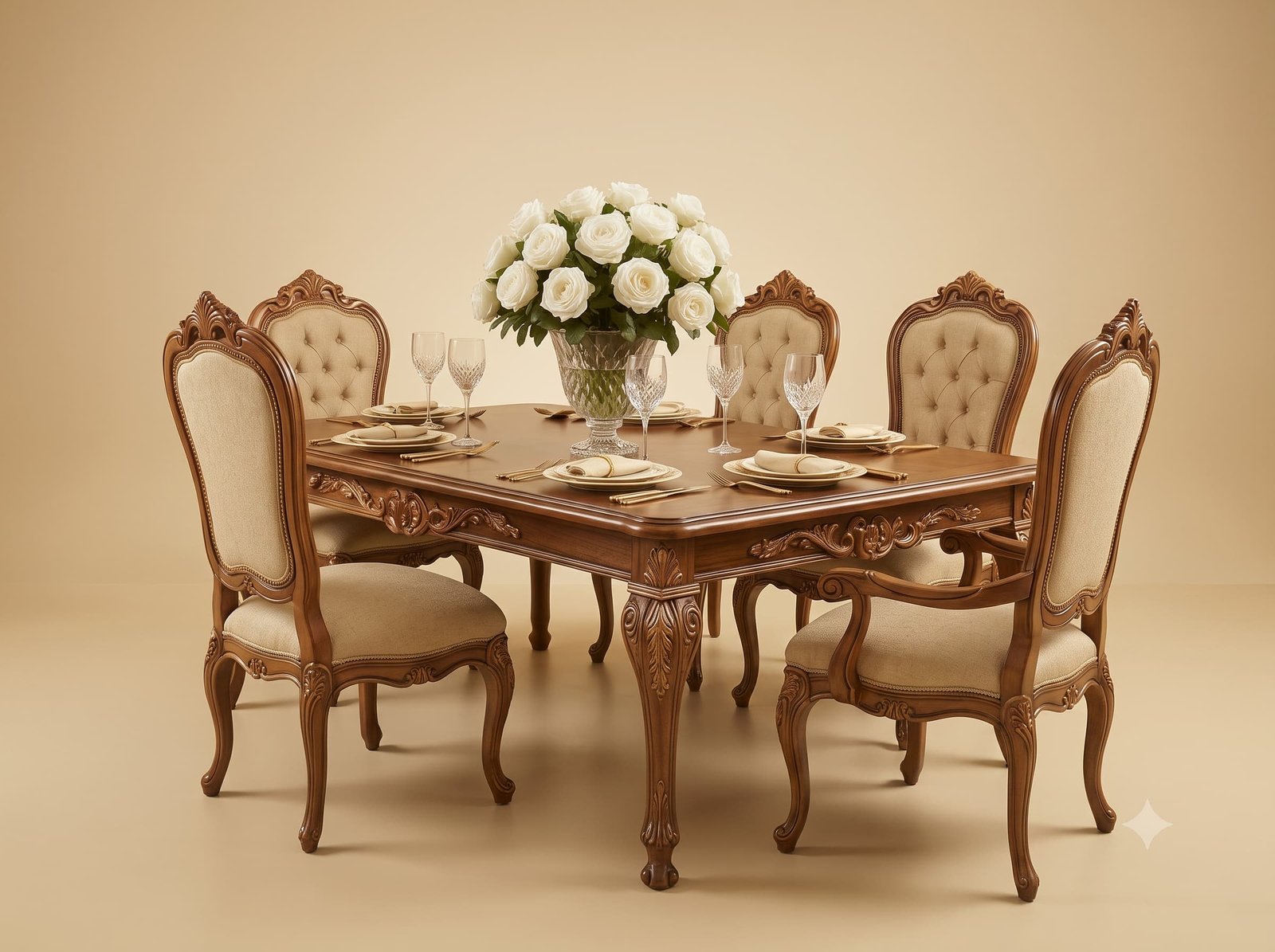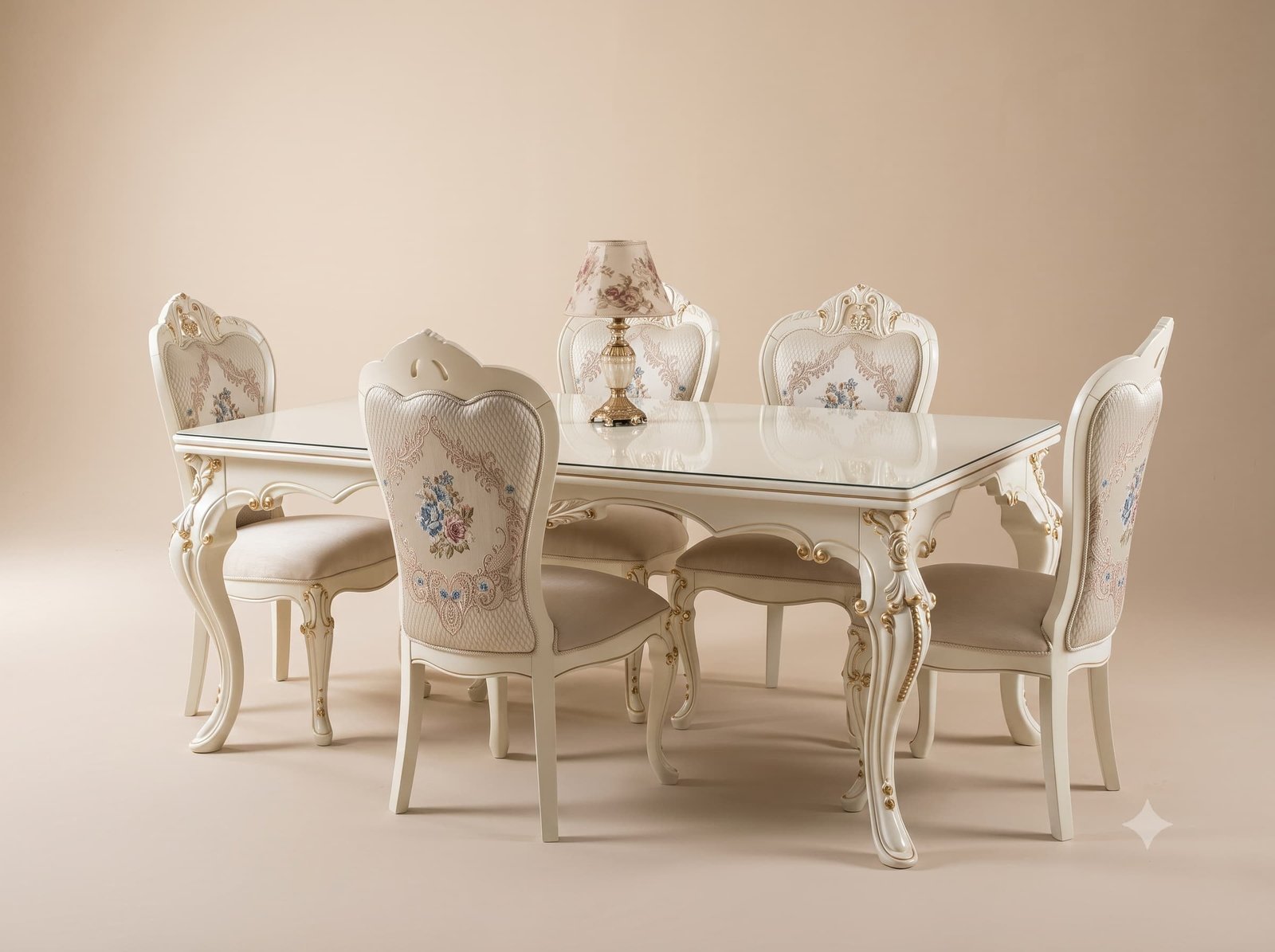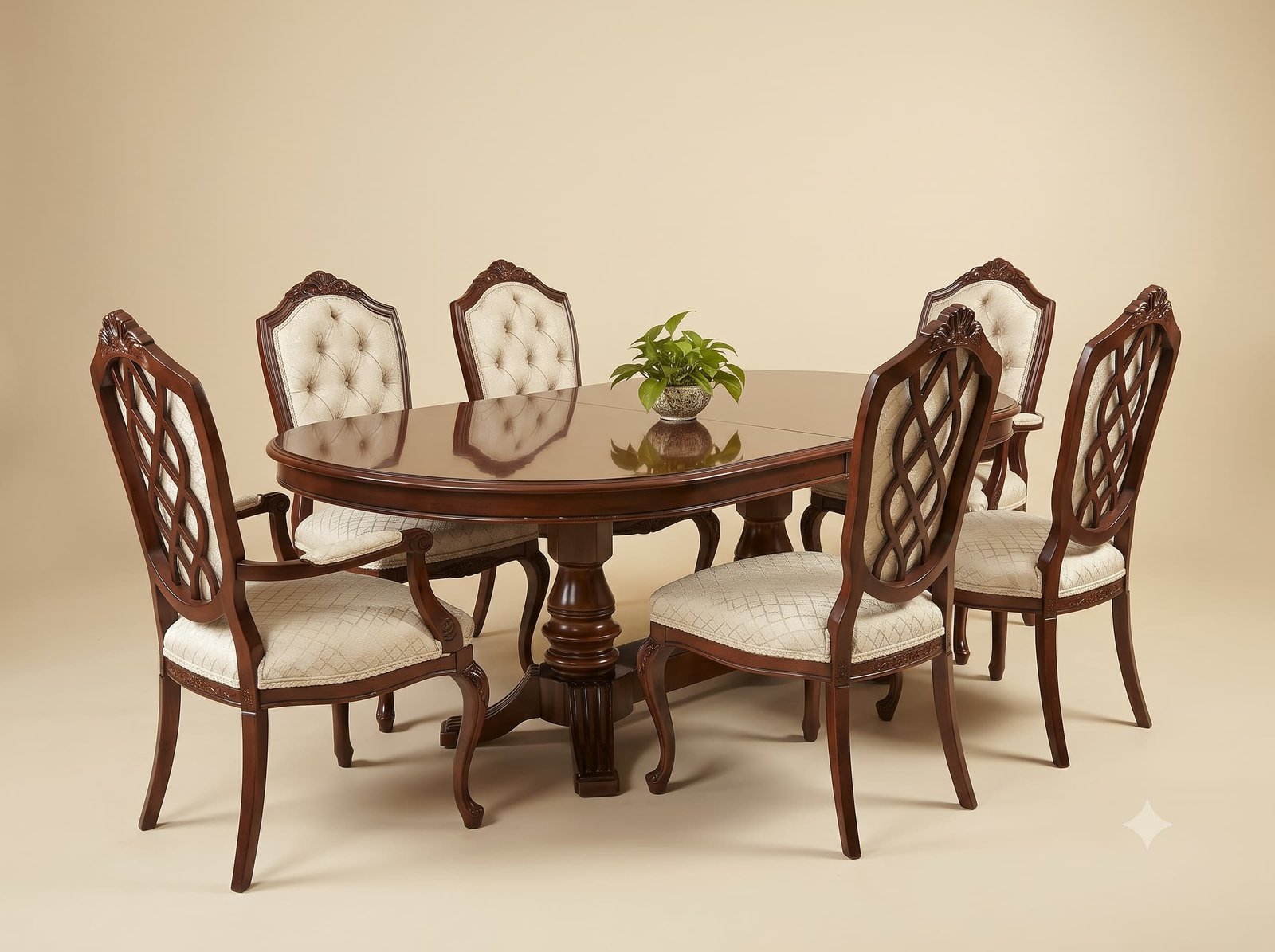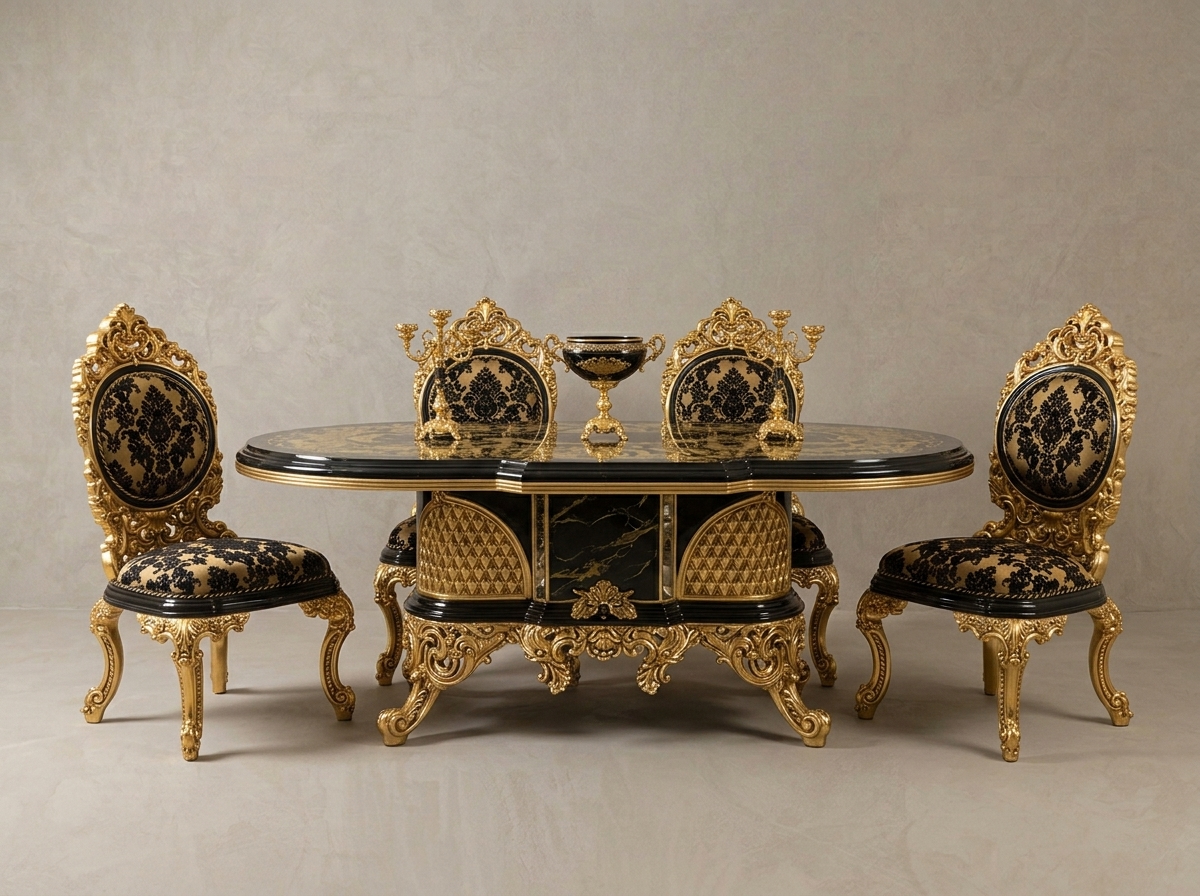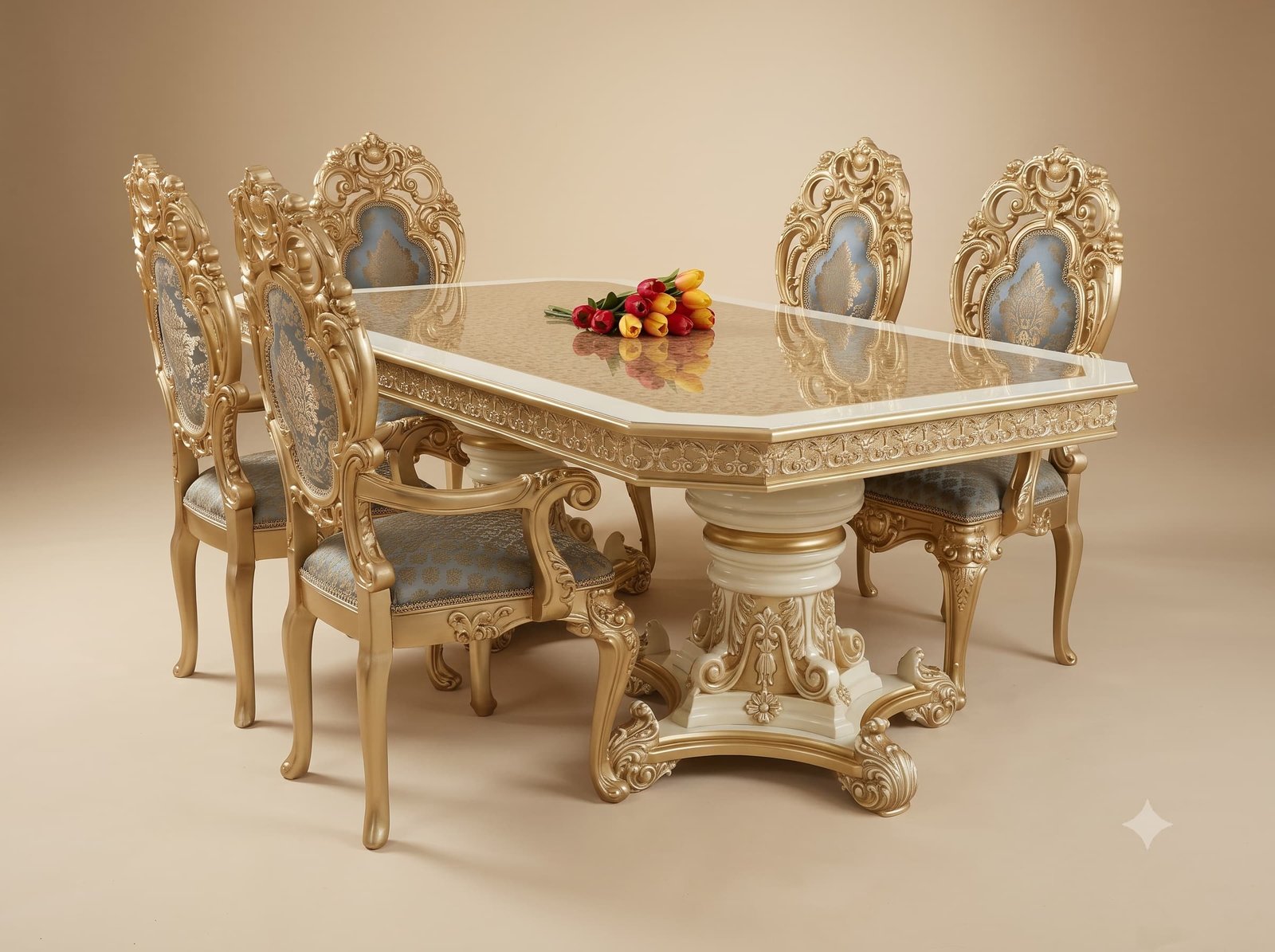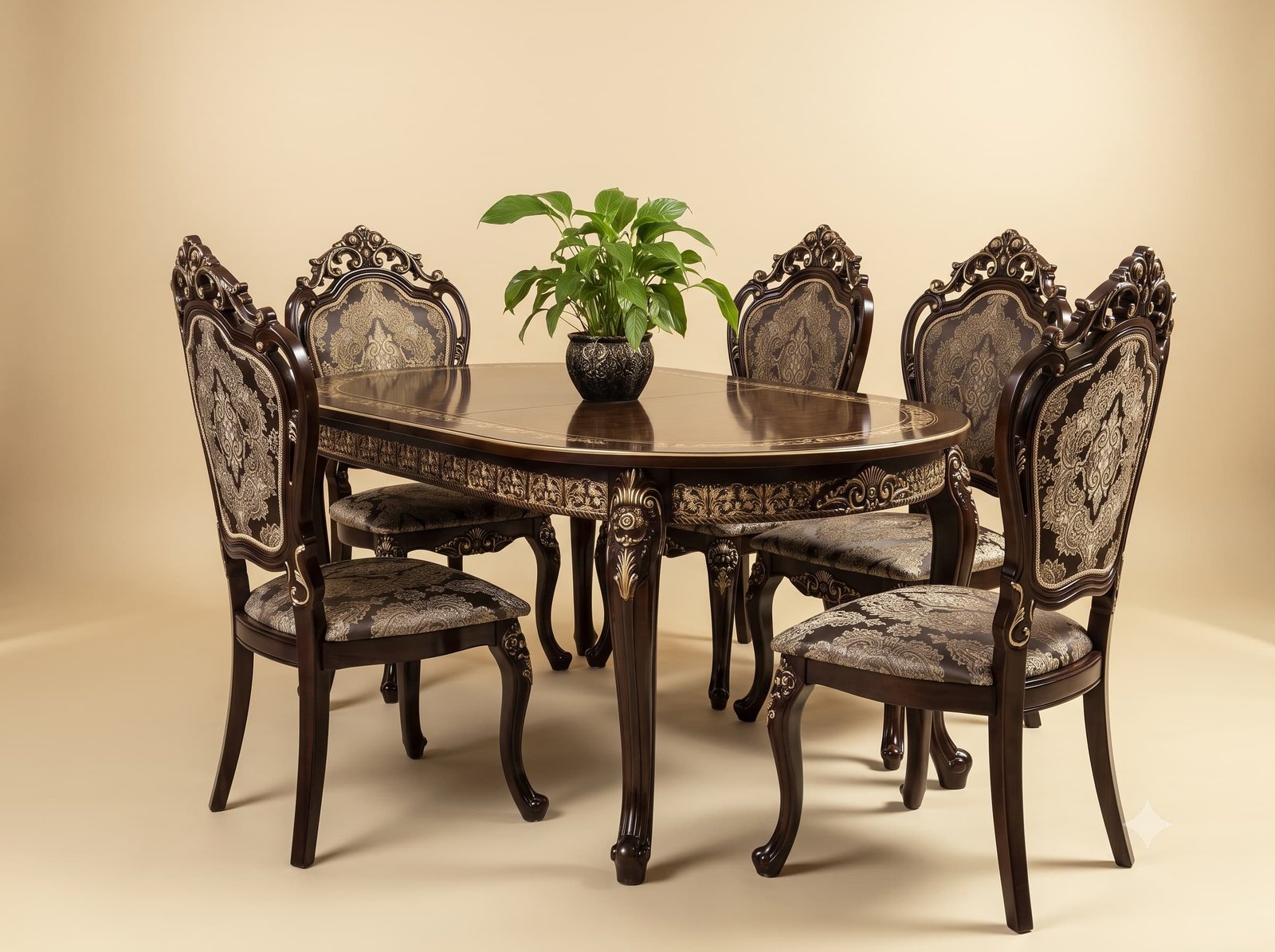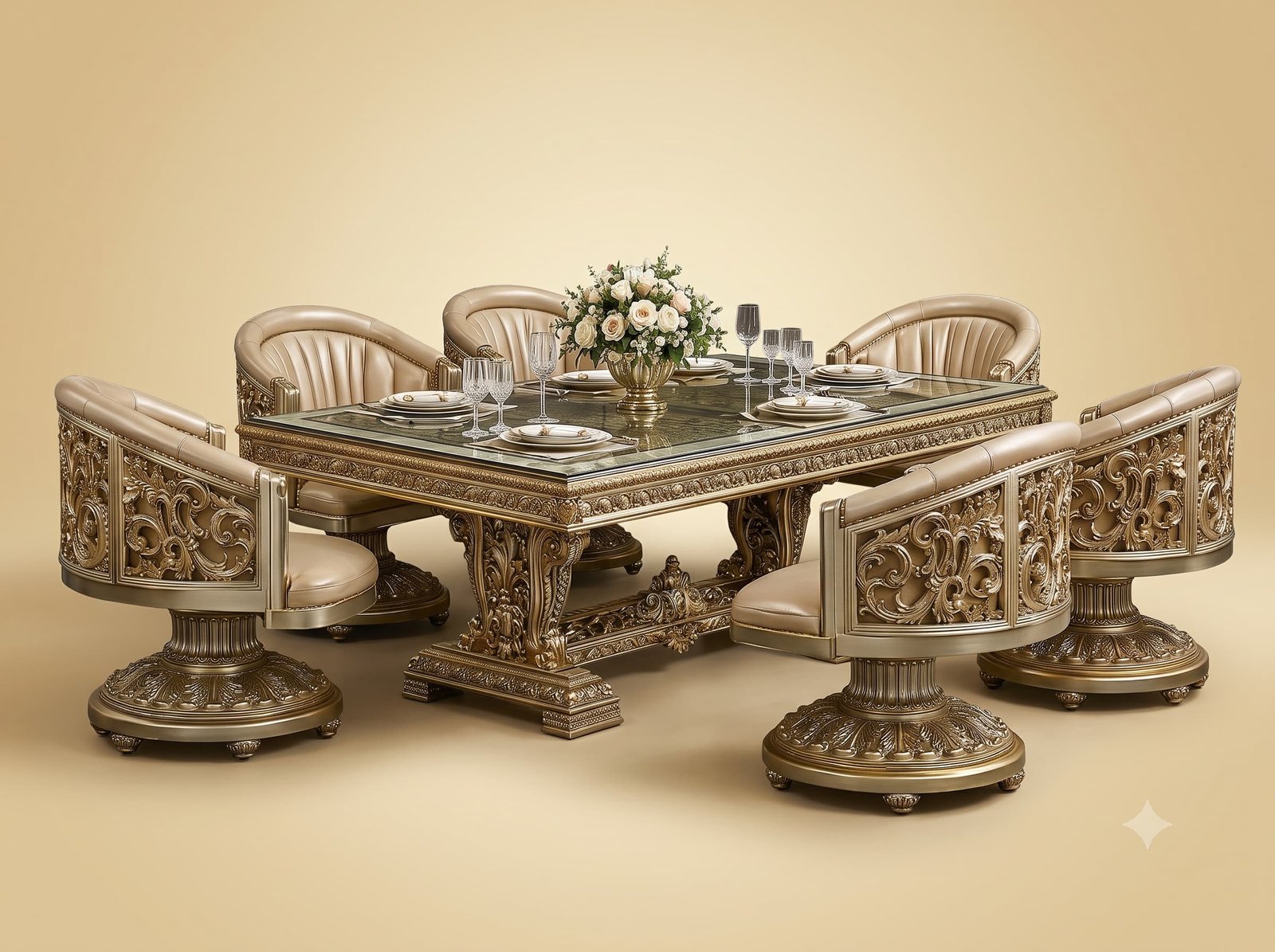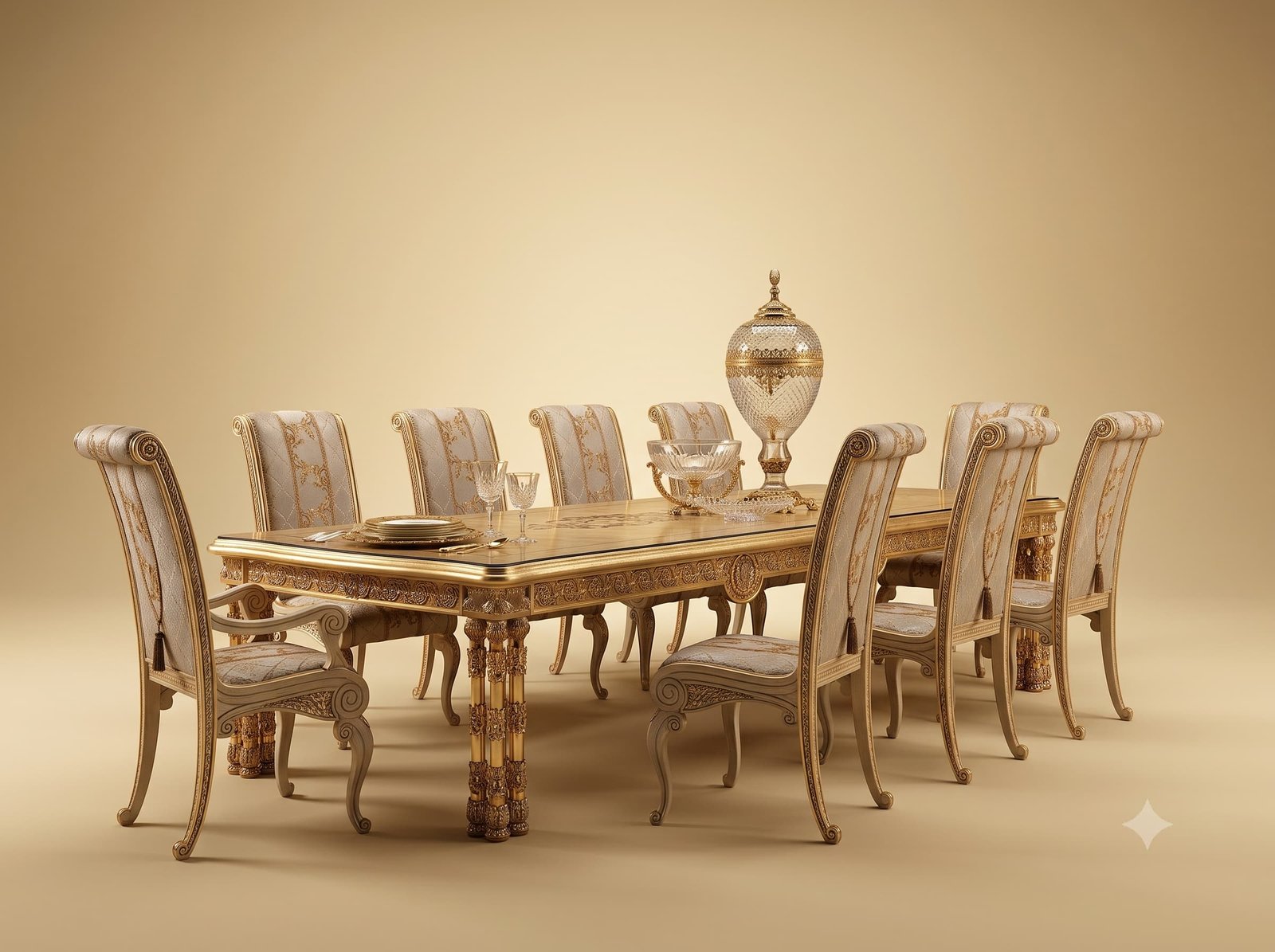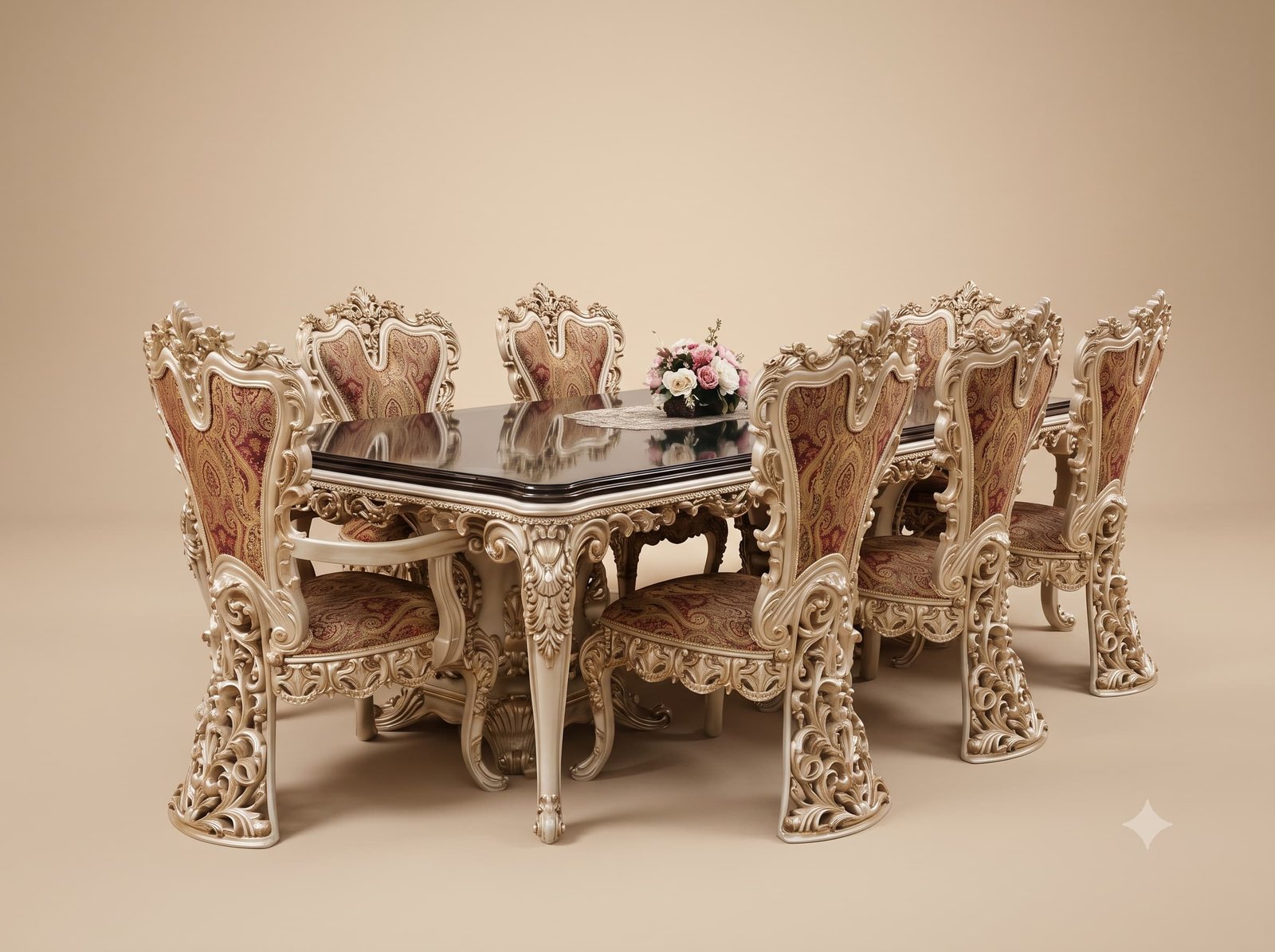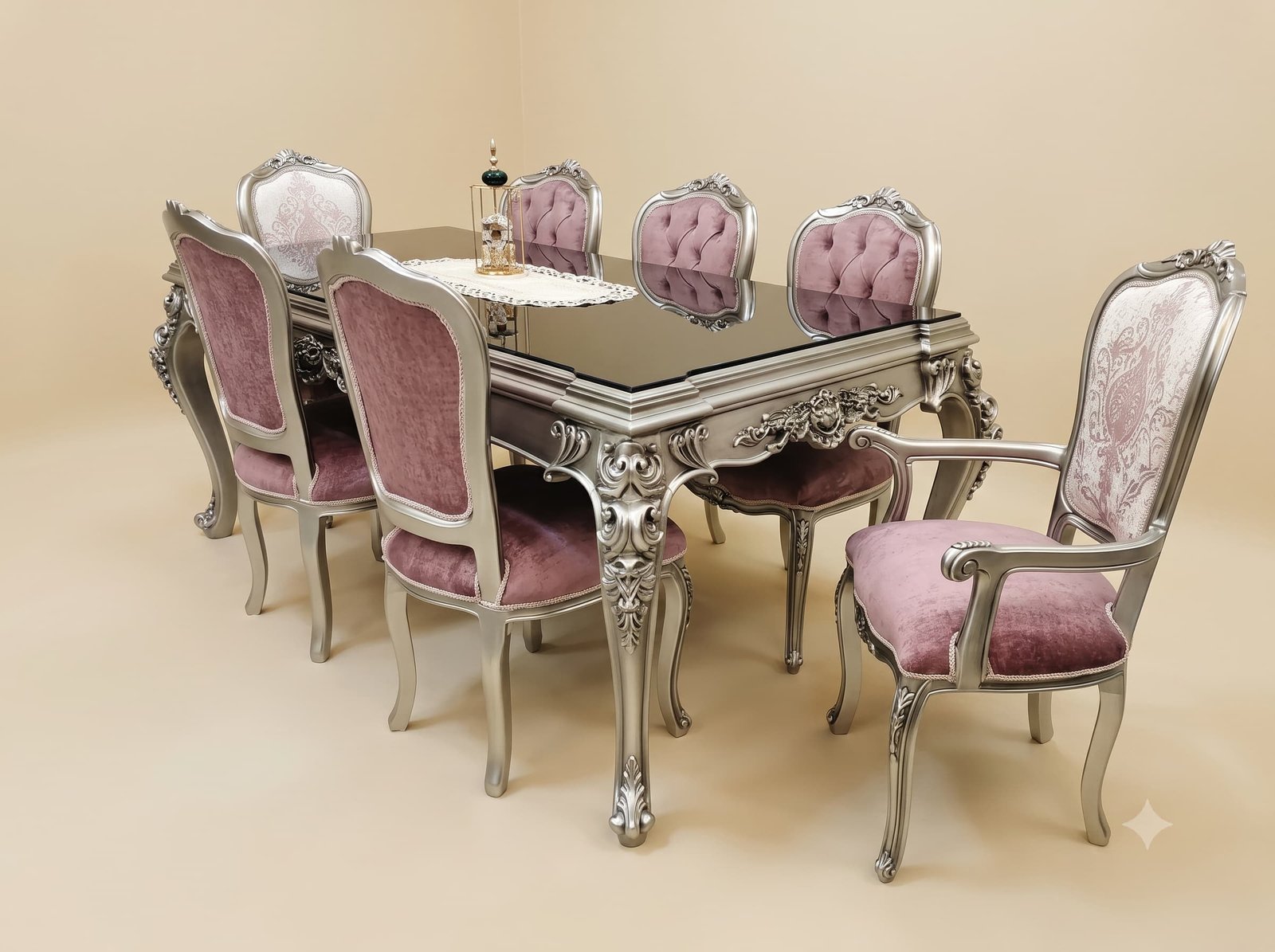
A carver has to slide under the table. That sounds obvious until you look at how a carved dining table is built: the apron below the top is where the carving goes, and the deeper the carving, the lower the apron hangs. Meanwhile the arms of a carver want to be at a comfortable height for the person sitting in it. Those two numbers meet under the table edge, and if they collide, the chair stops six inches short of where it should be.
So the carver arms are set from the table, not from the chair. We take the finished height of the underside of the apron, subtract a clearance, and that becomes the maximum height of the arm at the point where it passes beneath the table. The arm can then rise behind that point toward the back, where nothing is in the way, so the elbow is still supported at the right height.
The result is an arm with a gentle upward sweep from front to back rather than a level one. It looks like a design flourish. It is actually the shape that lets the chair push right in.
Because both pieces are made in the same workshop for the same order, we know the apron height before the arms are cut. It is one of the practical advantages of a table and chairs being built as one commission rather than bought separately.
 Ask Price On WhatsApp