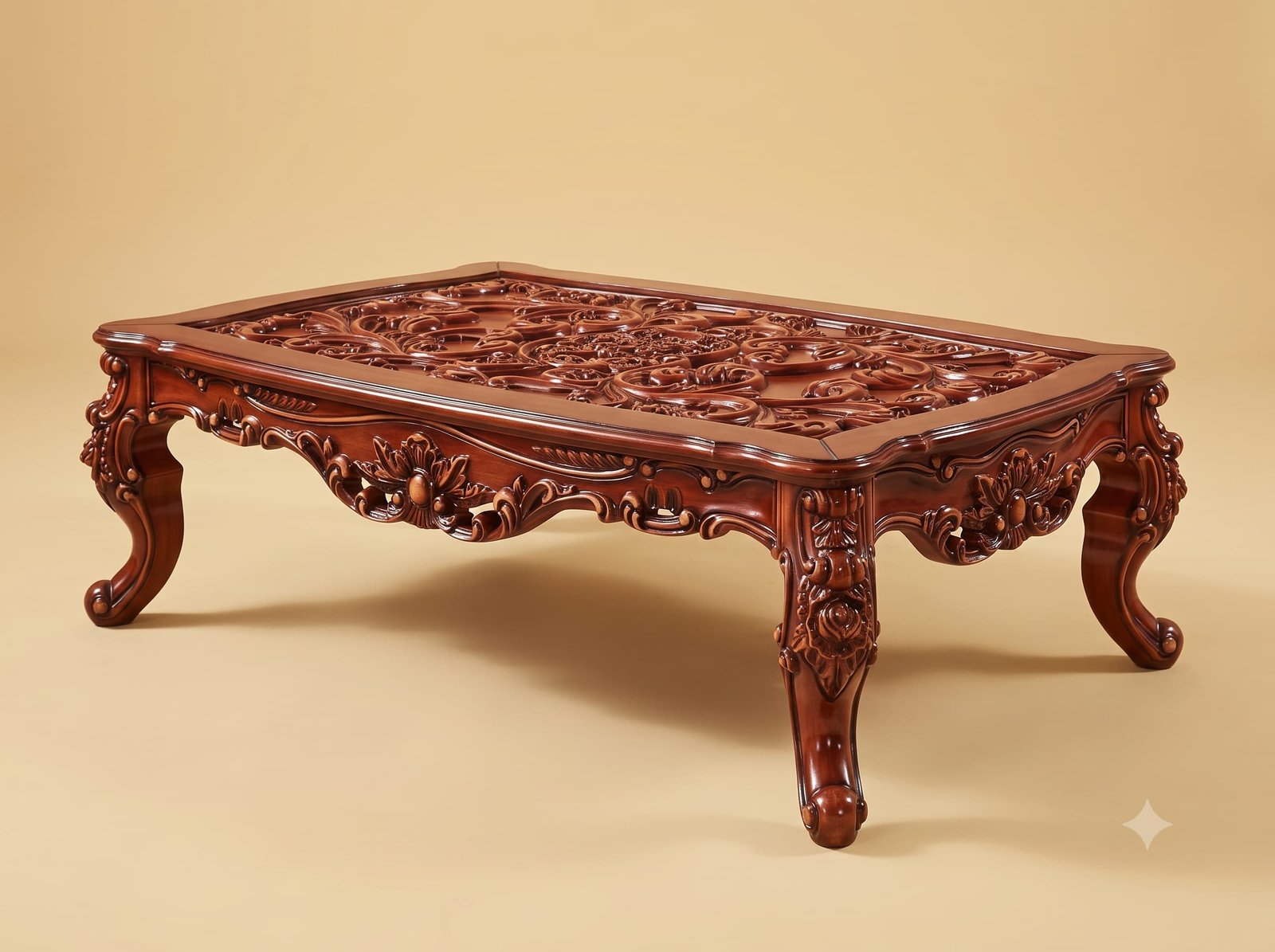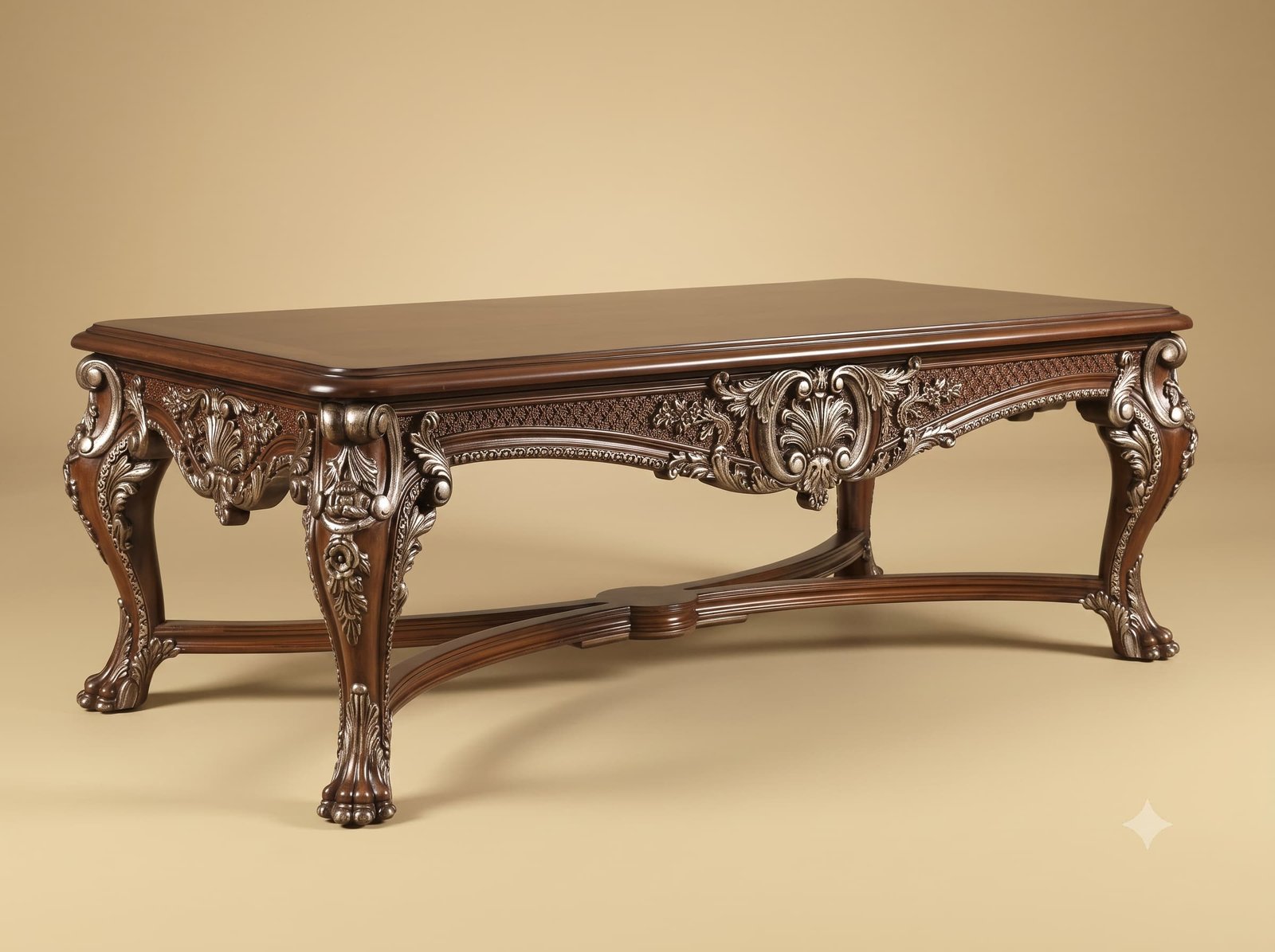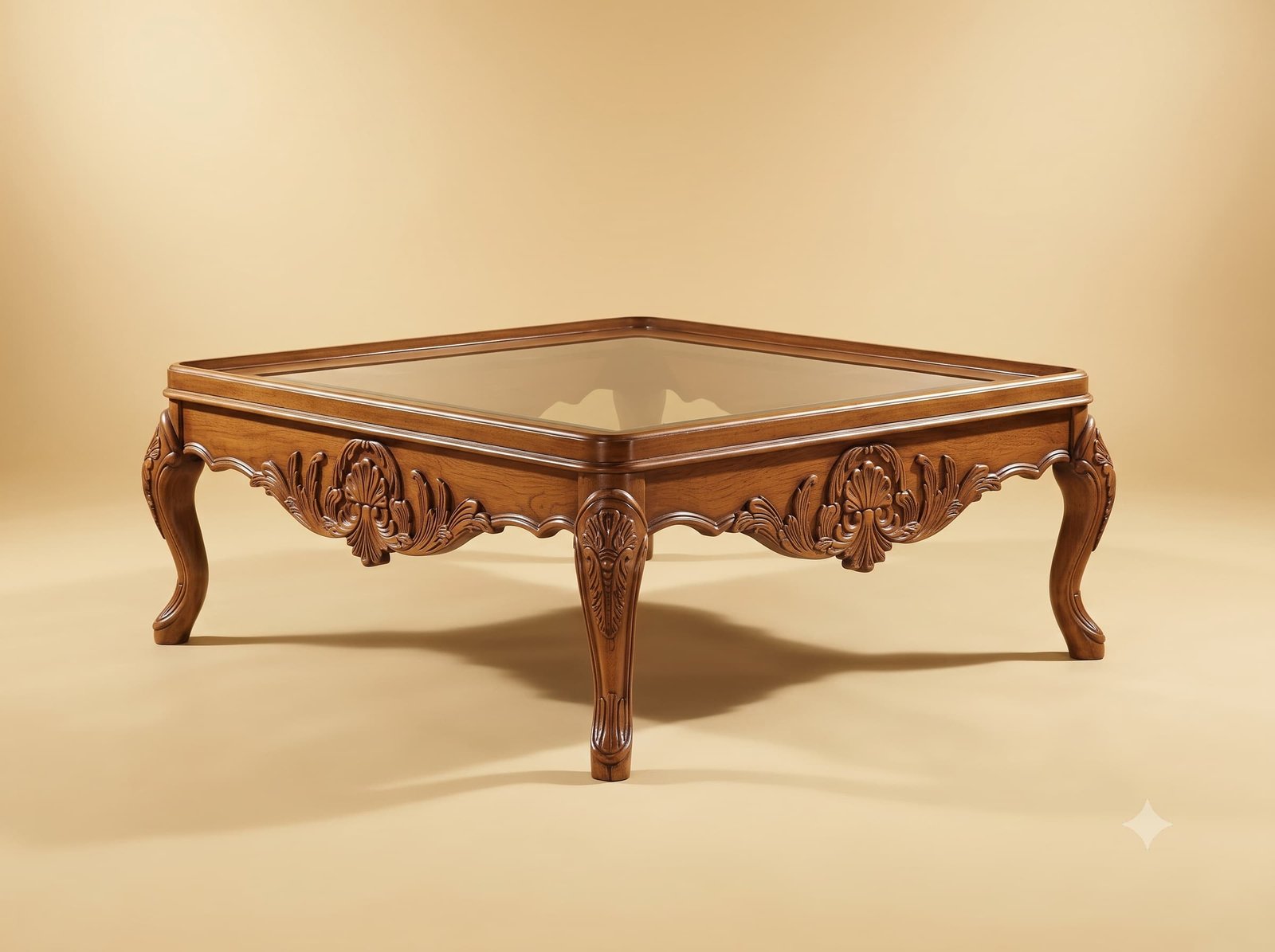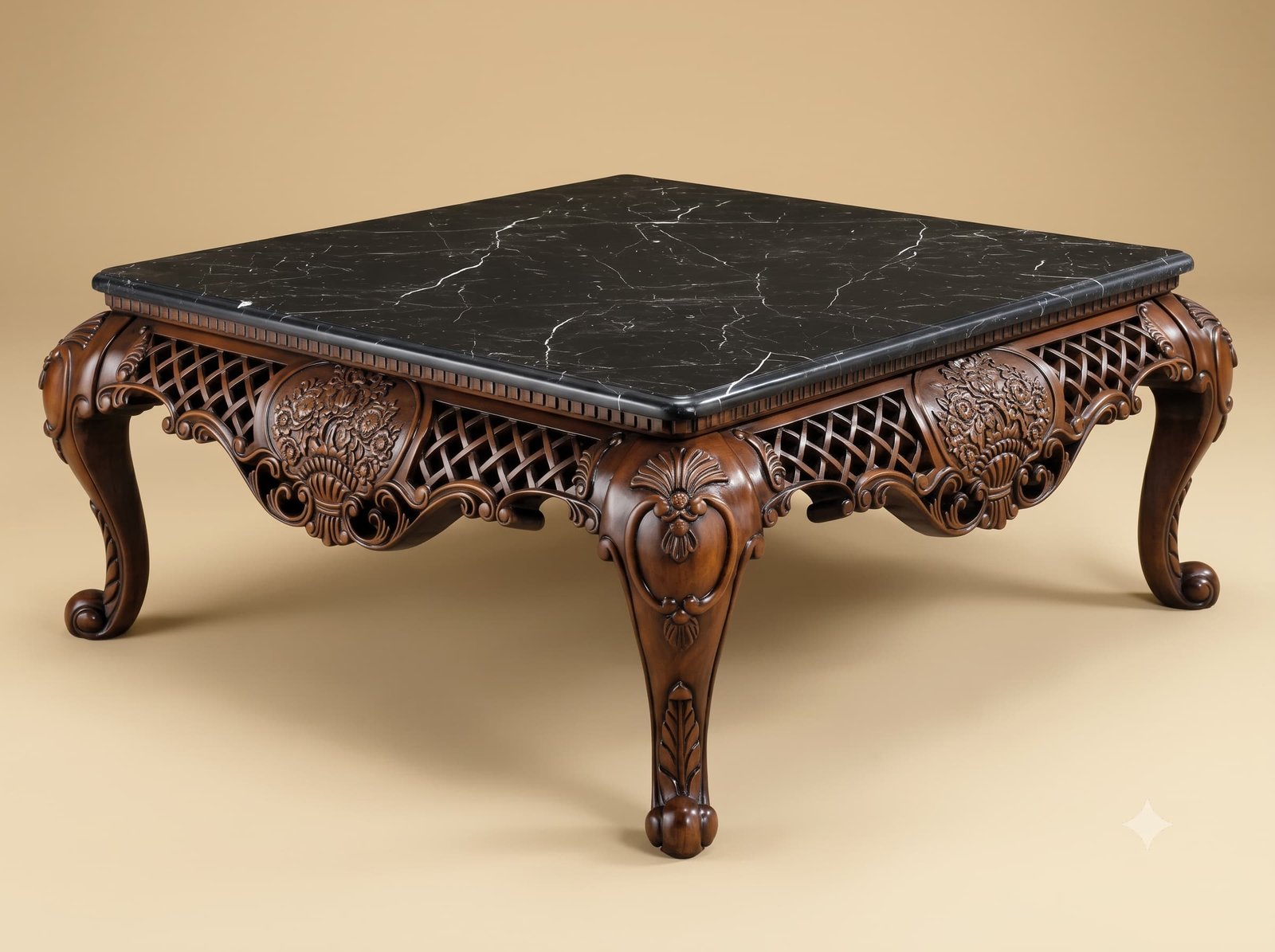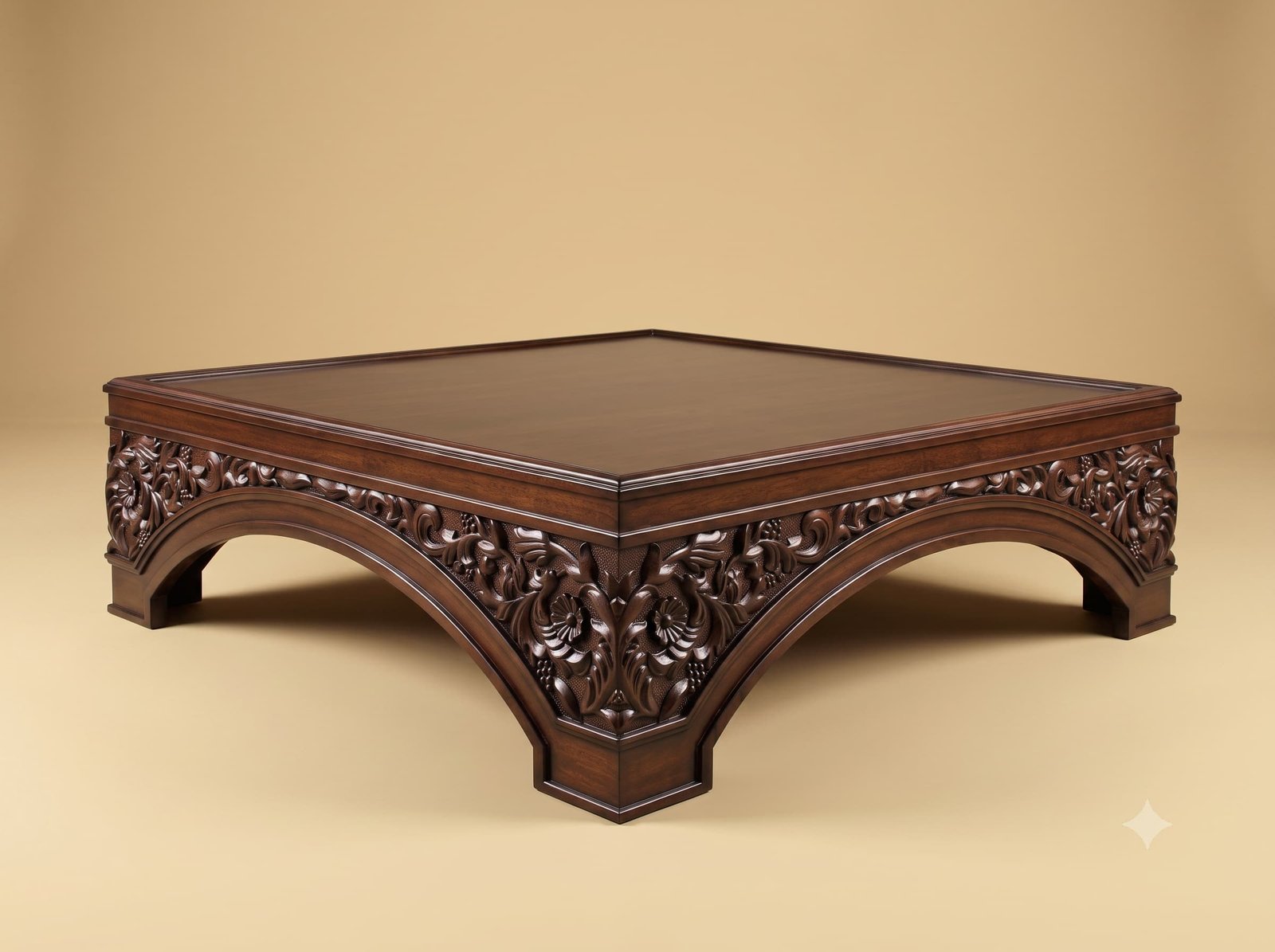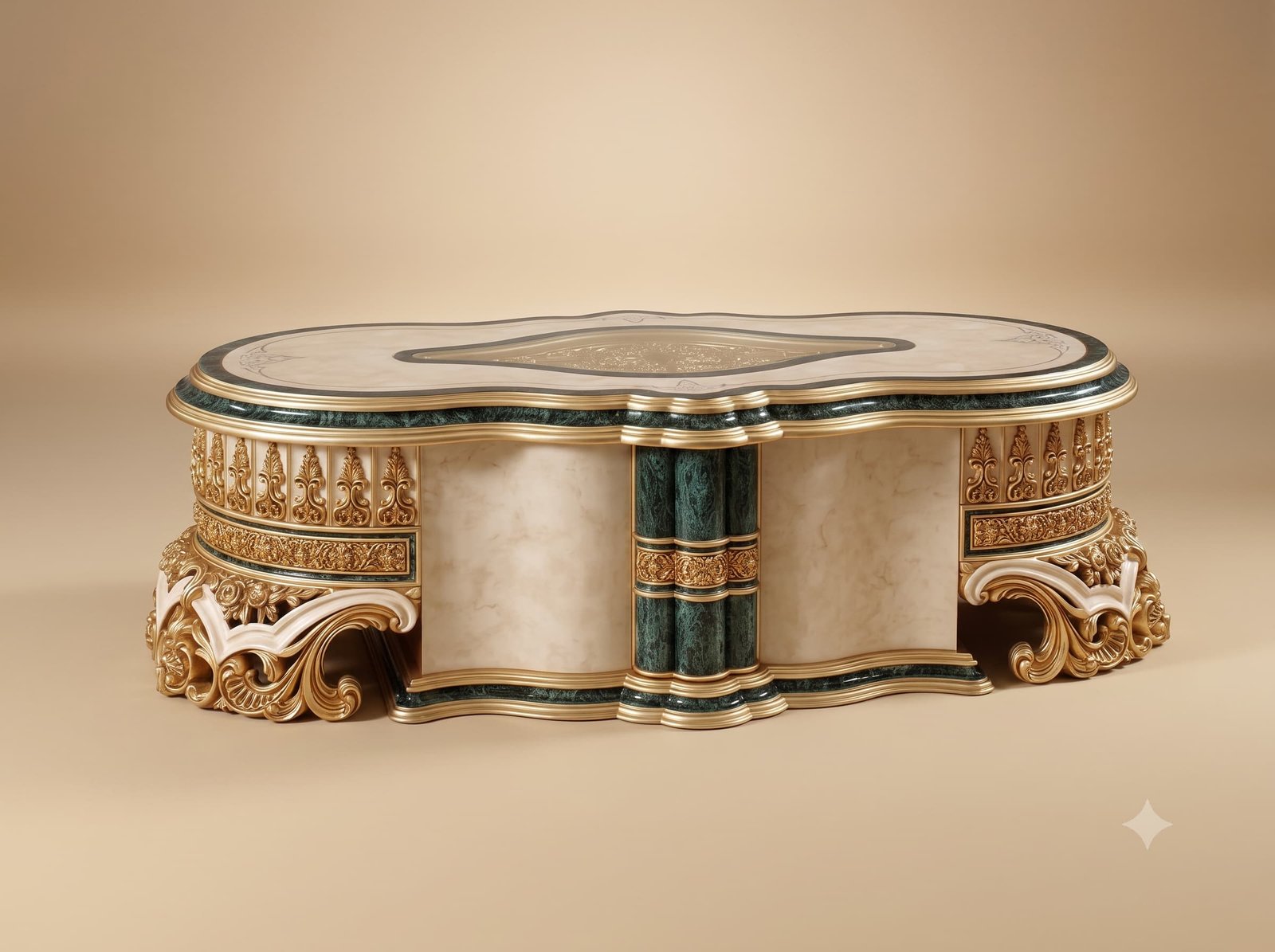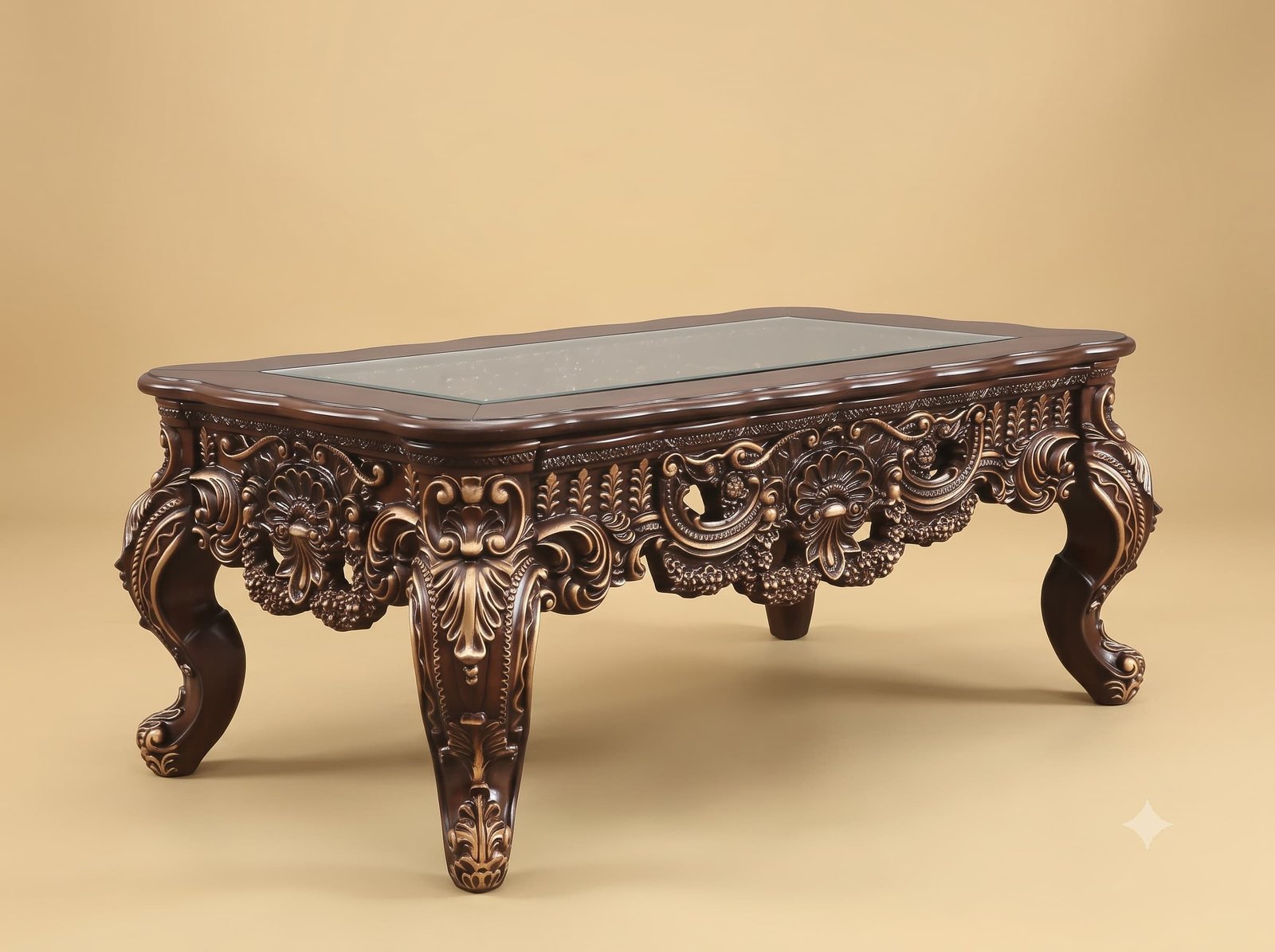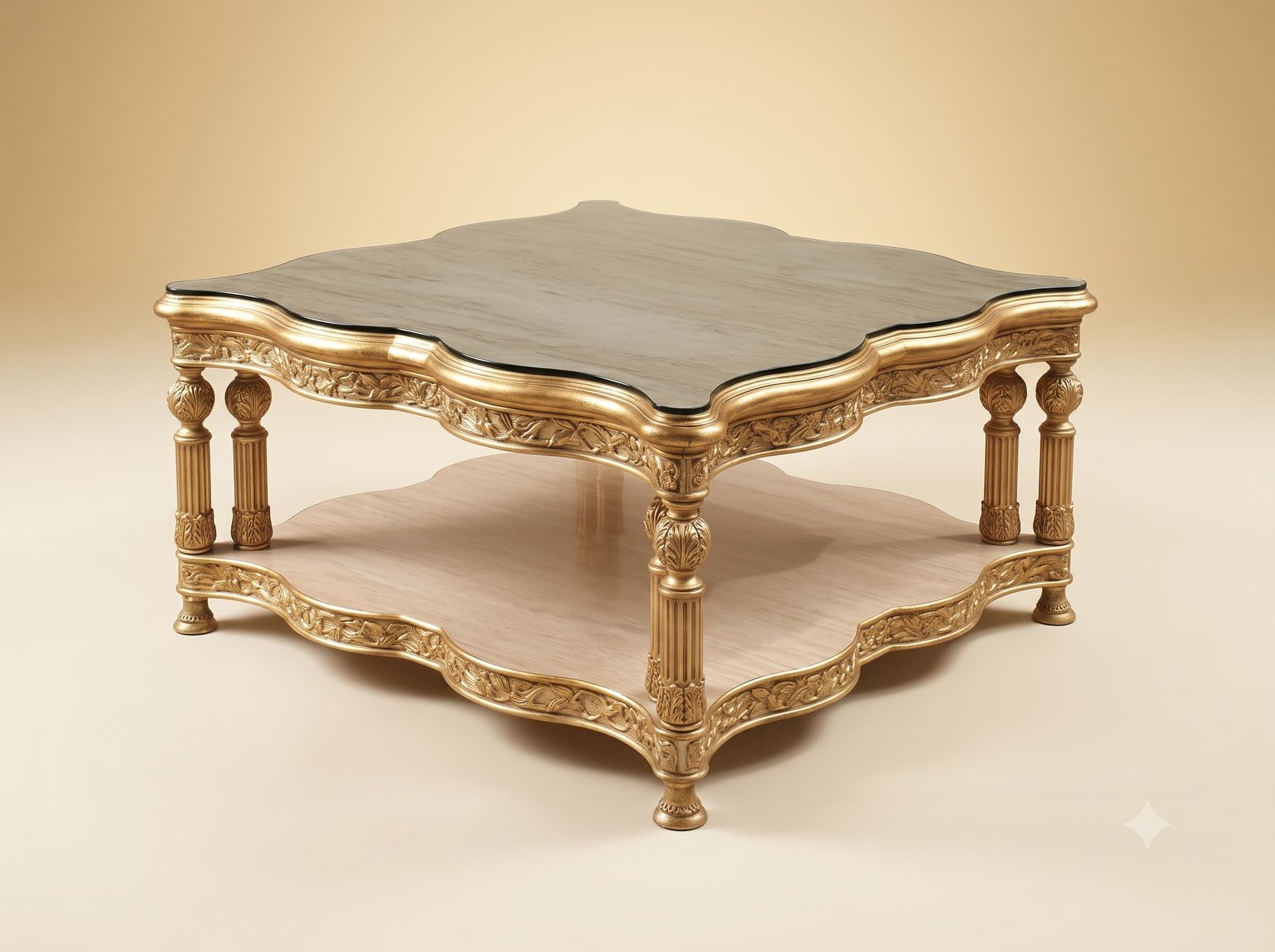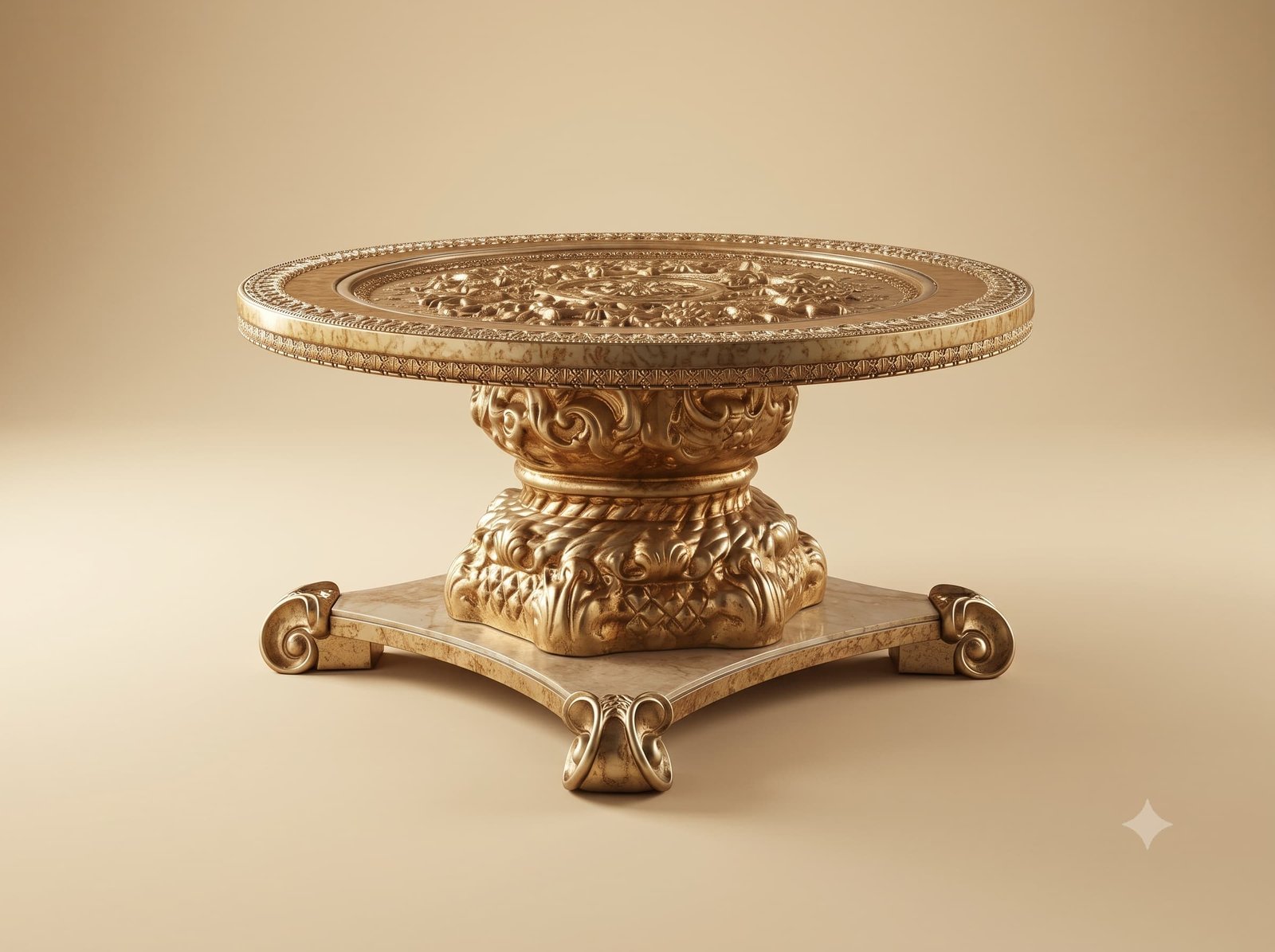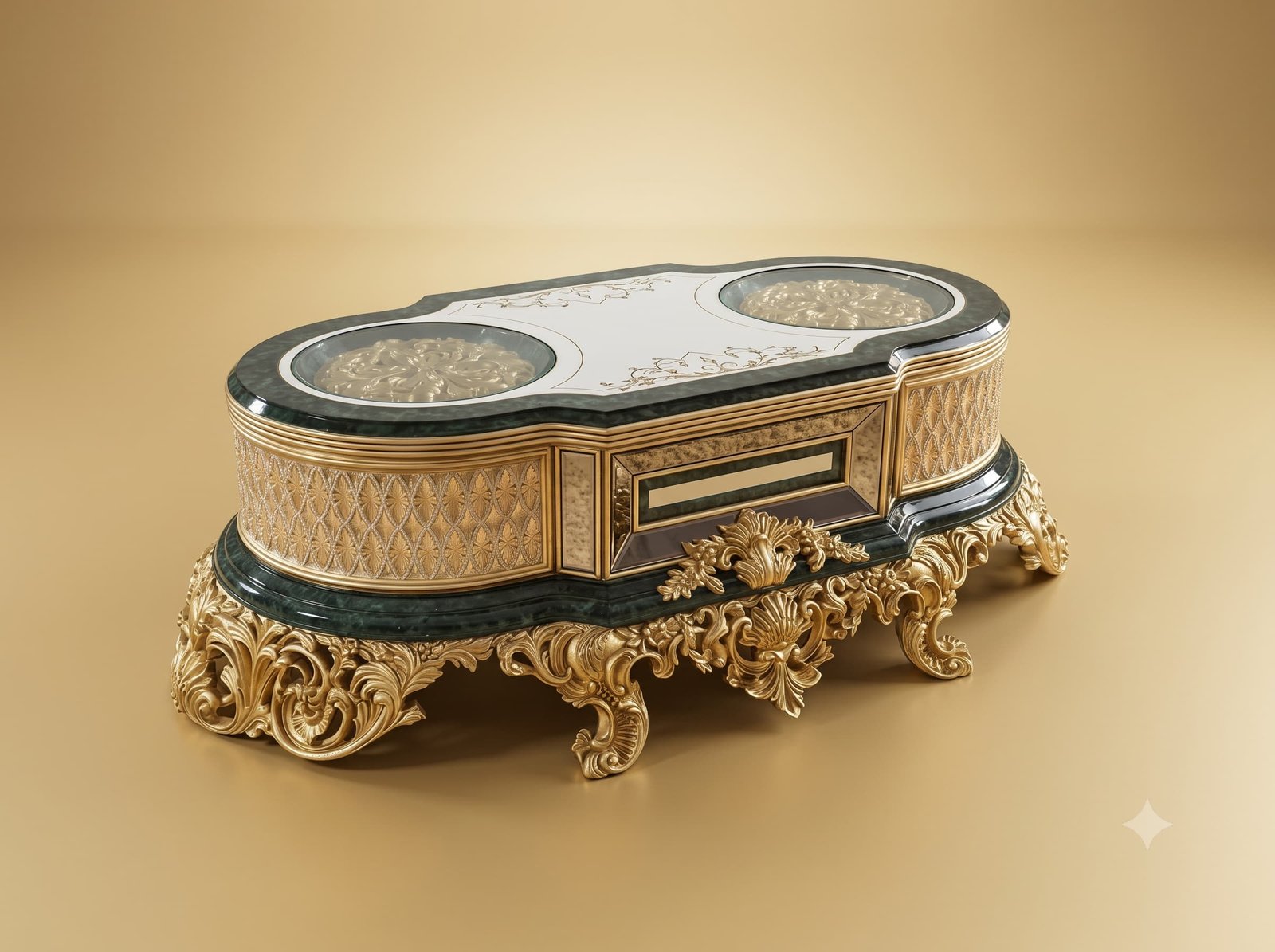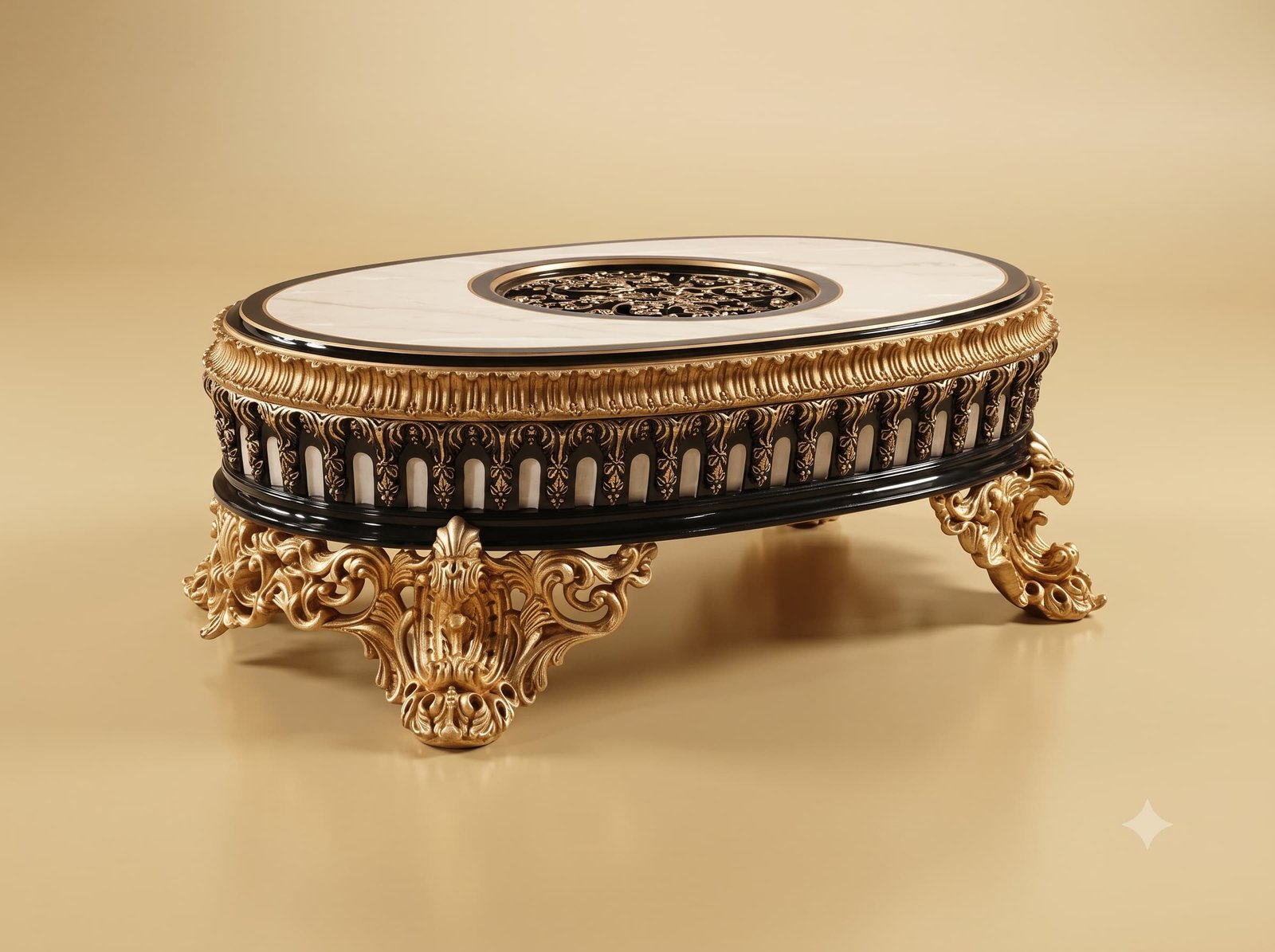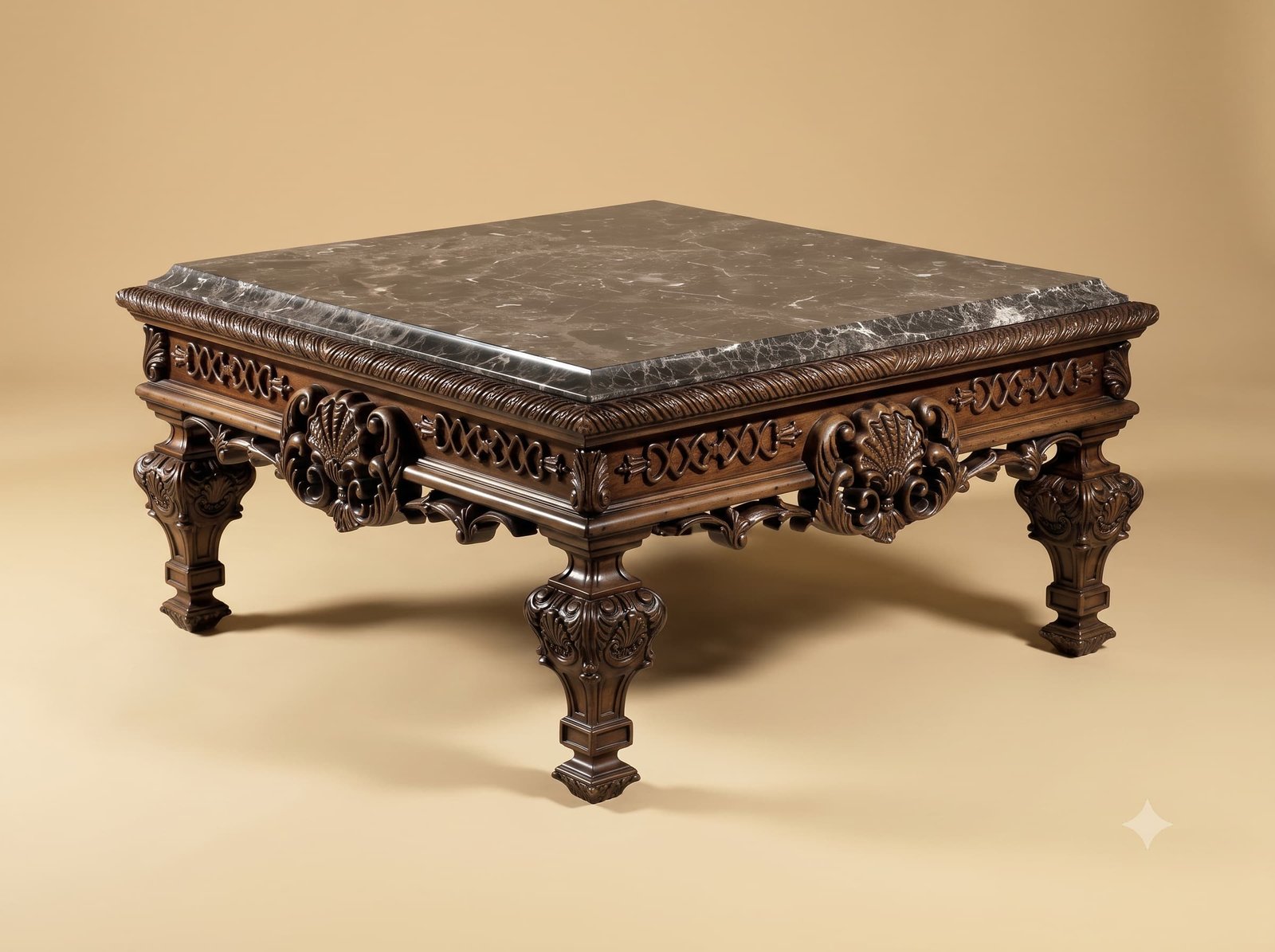
The rebate that holds this marble is cut last, not first - and the reason is that stone slabs are never quite the thickness they are supposed to be.
A slab ordered at a given thickness will vary by a millimetre or two across its own length, and from one batch to the next. That does not matter when a top simply sits on a frame. It matters completely when the stone is dropped into a recess and is meant to finish flush with the carved rim around it. A rebate cut to the nominal thickness leaves the stone either standing proud of the rim - which defeats the whole point of protecting its edges - or sunk below it, leaving a dust trap all the way round.
So the actual slab is measured first, at several points, and the rebate is cut to that measurement. If the stone varies across its area, the deepest reading governs and the high spots are bedded down with slightly thinner packing.
It means the timber cannot be finished until the stone exists, and the two are made as a pair rather than in parallel. What you get is a top where a fingertip run from wood to stone finds no step at all.
 Ask Price On WhatsApp