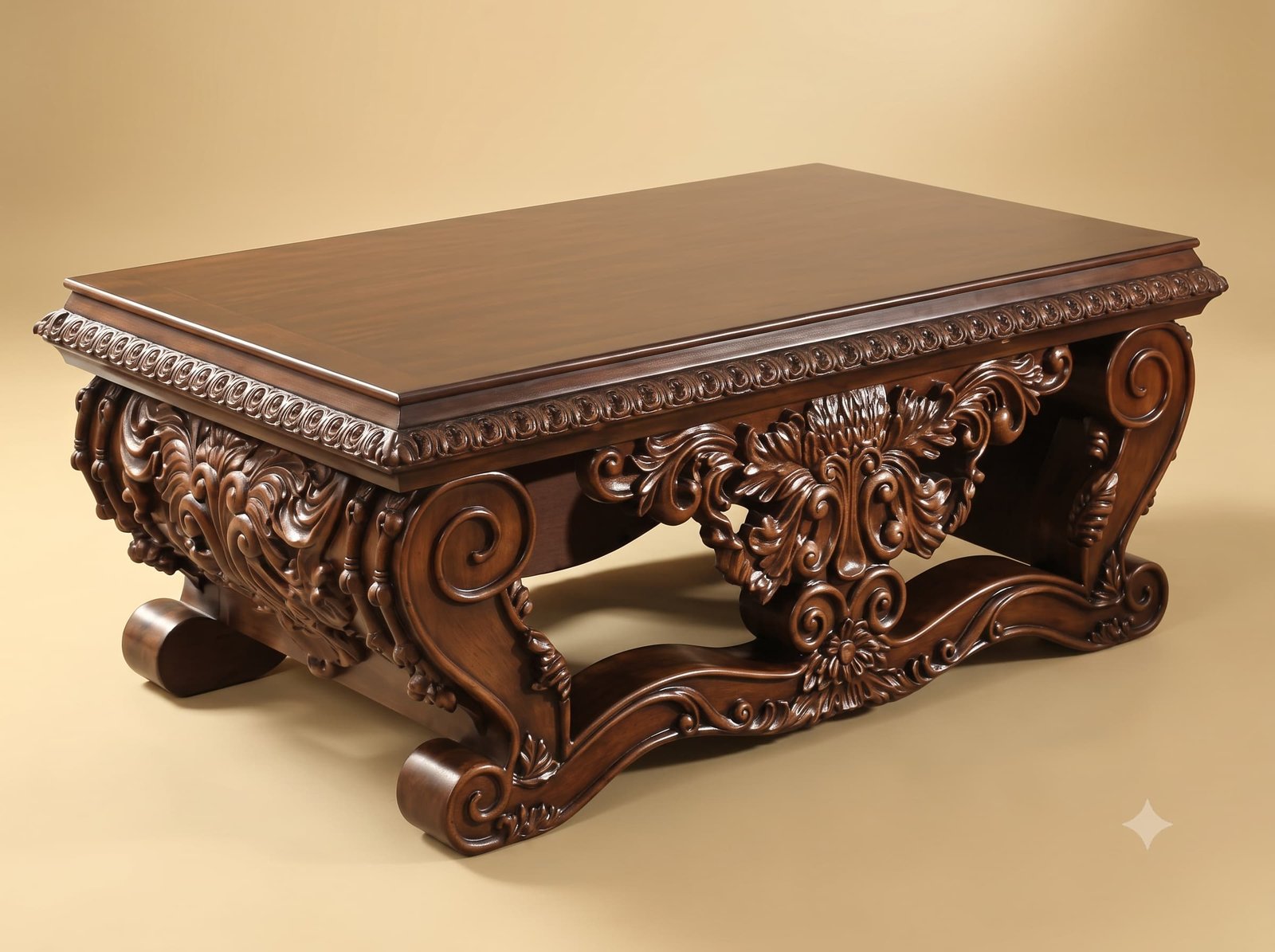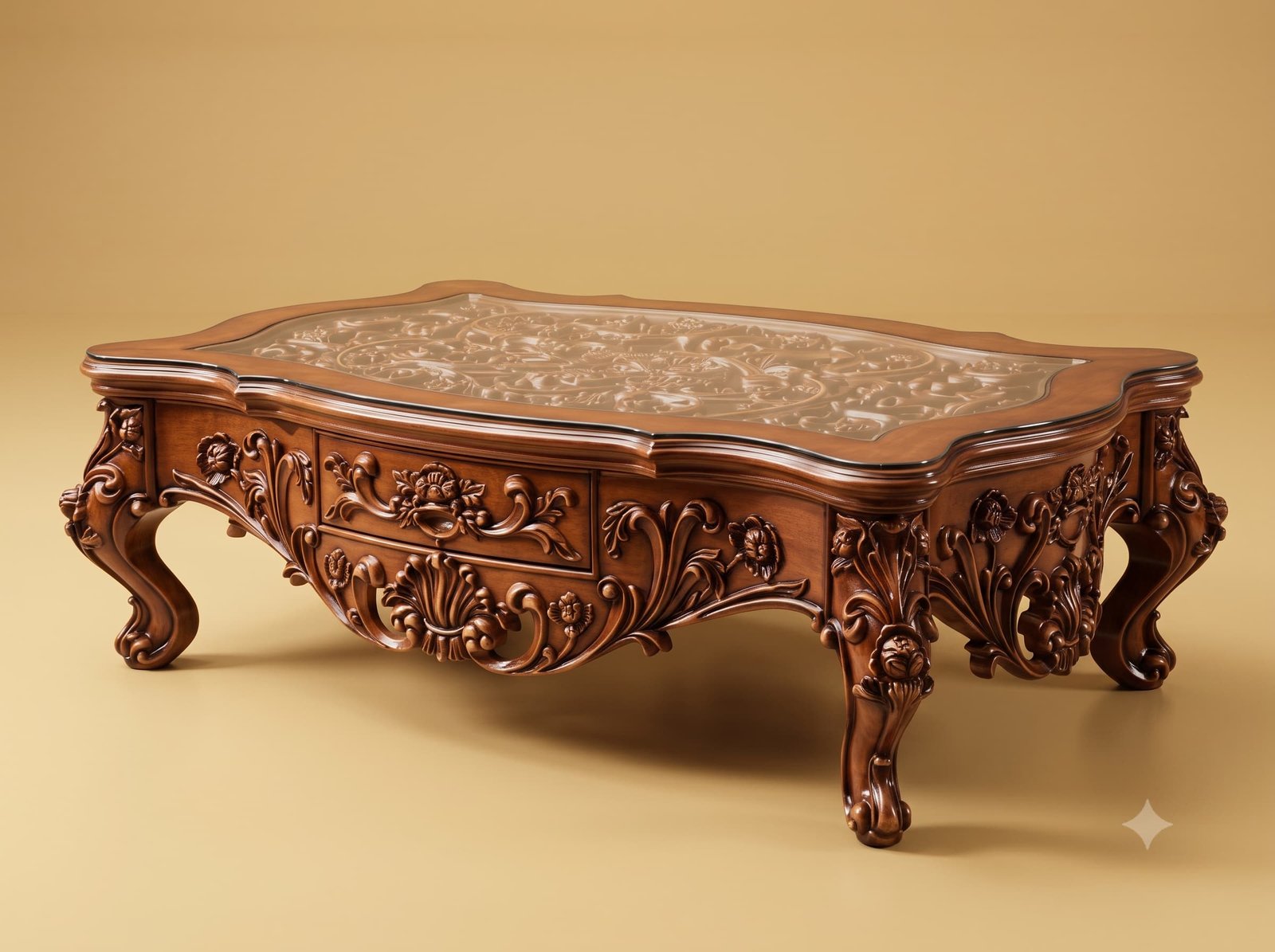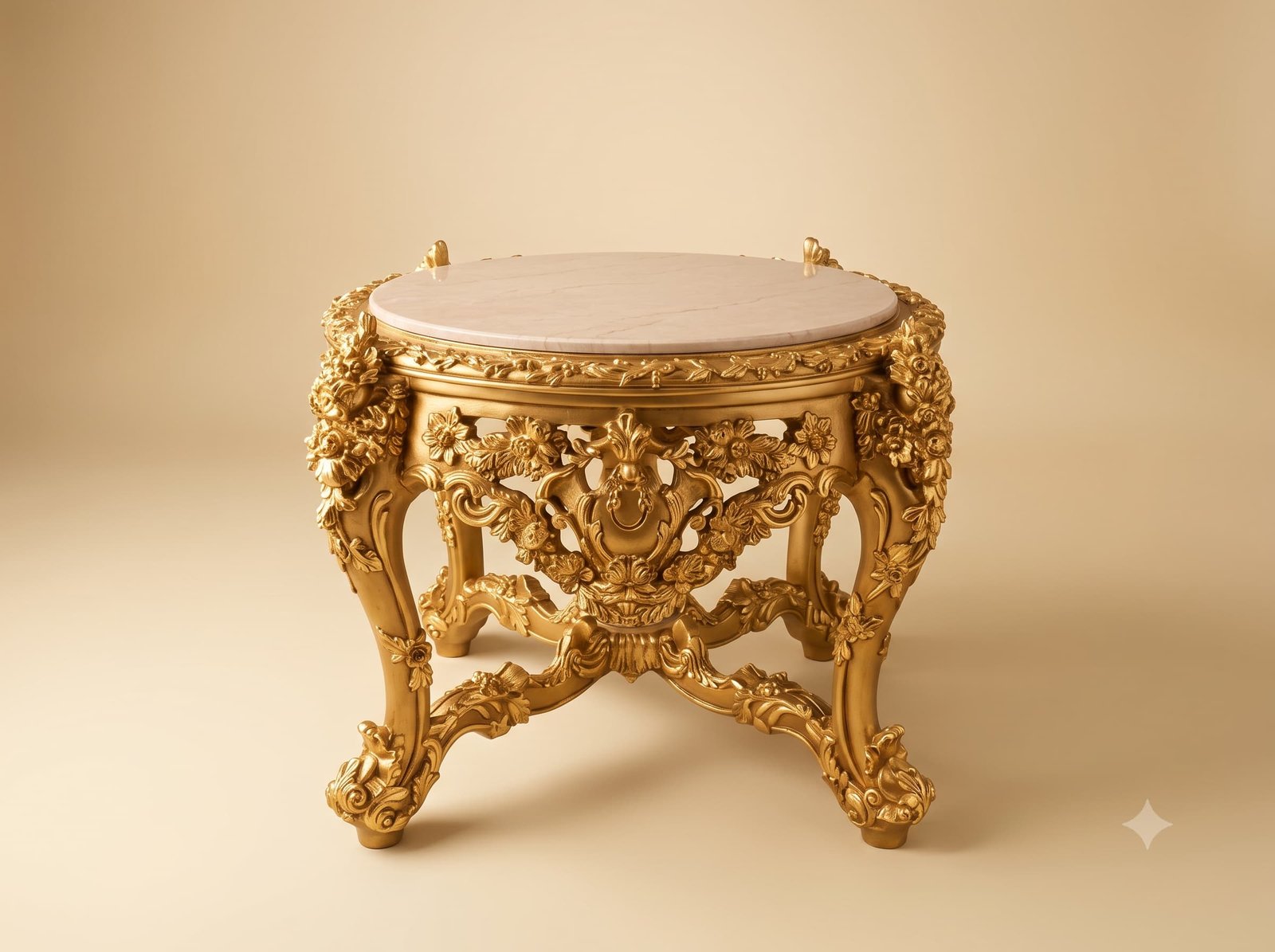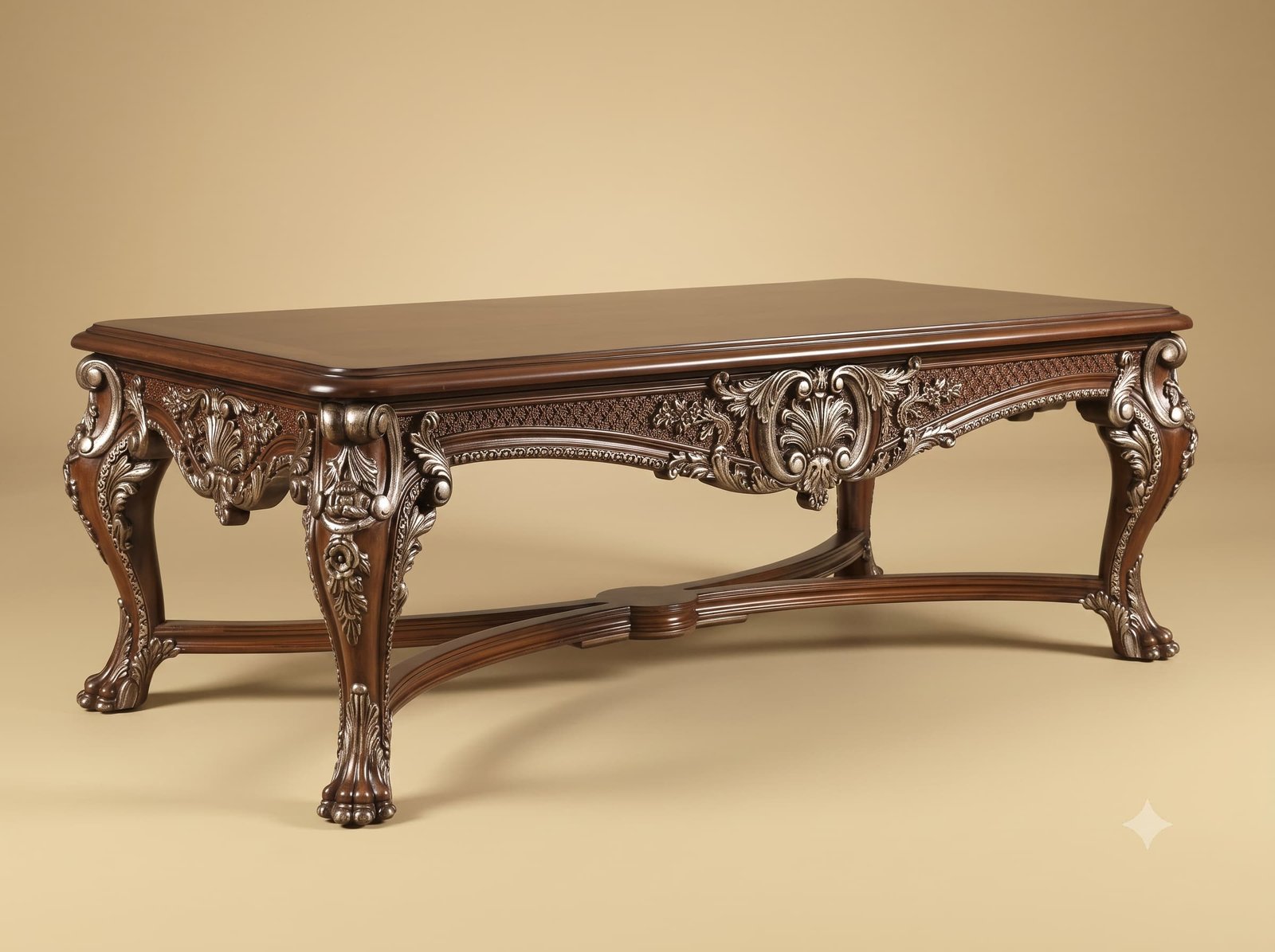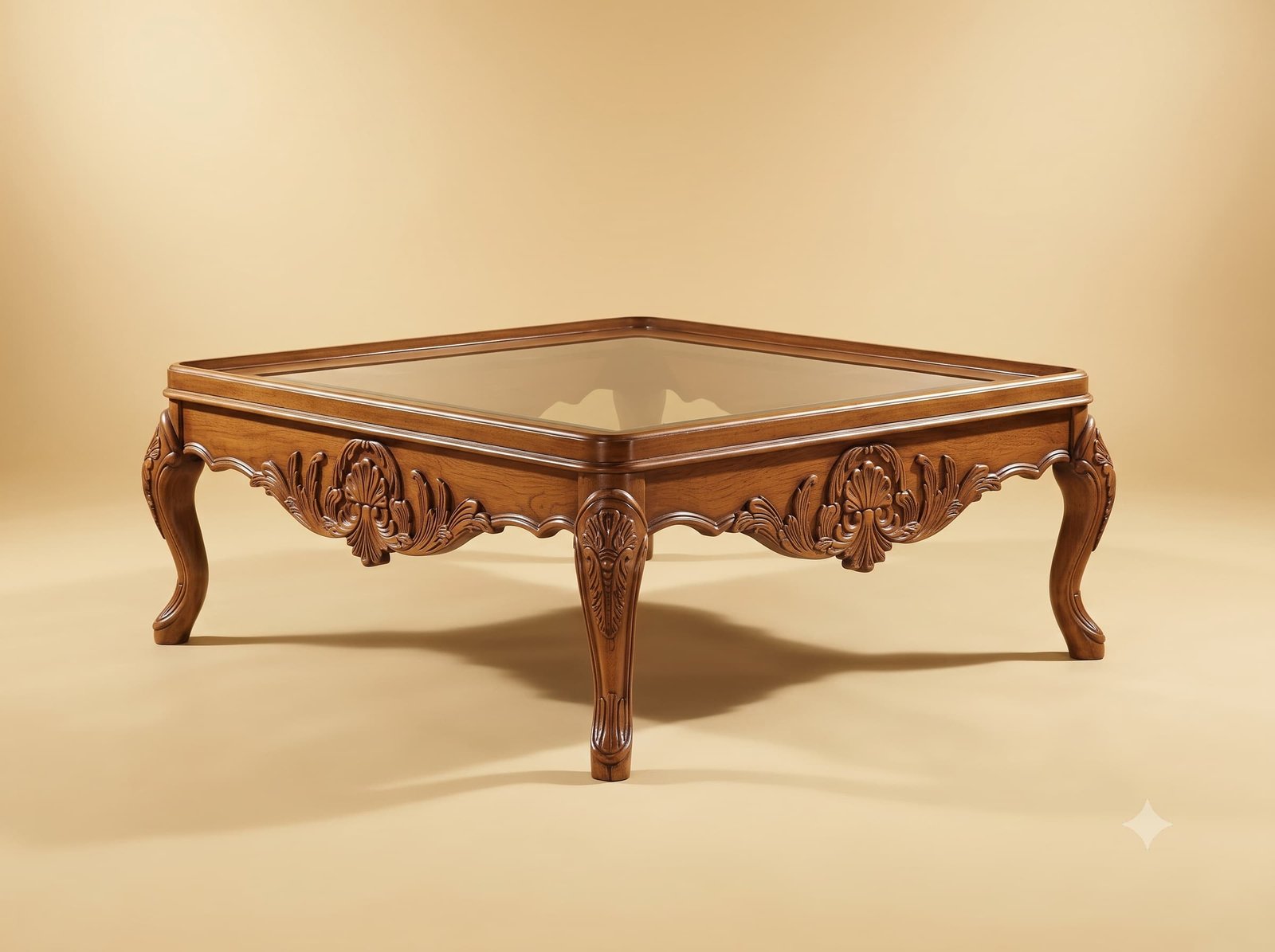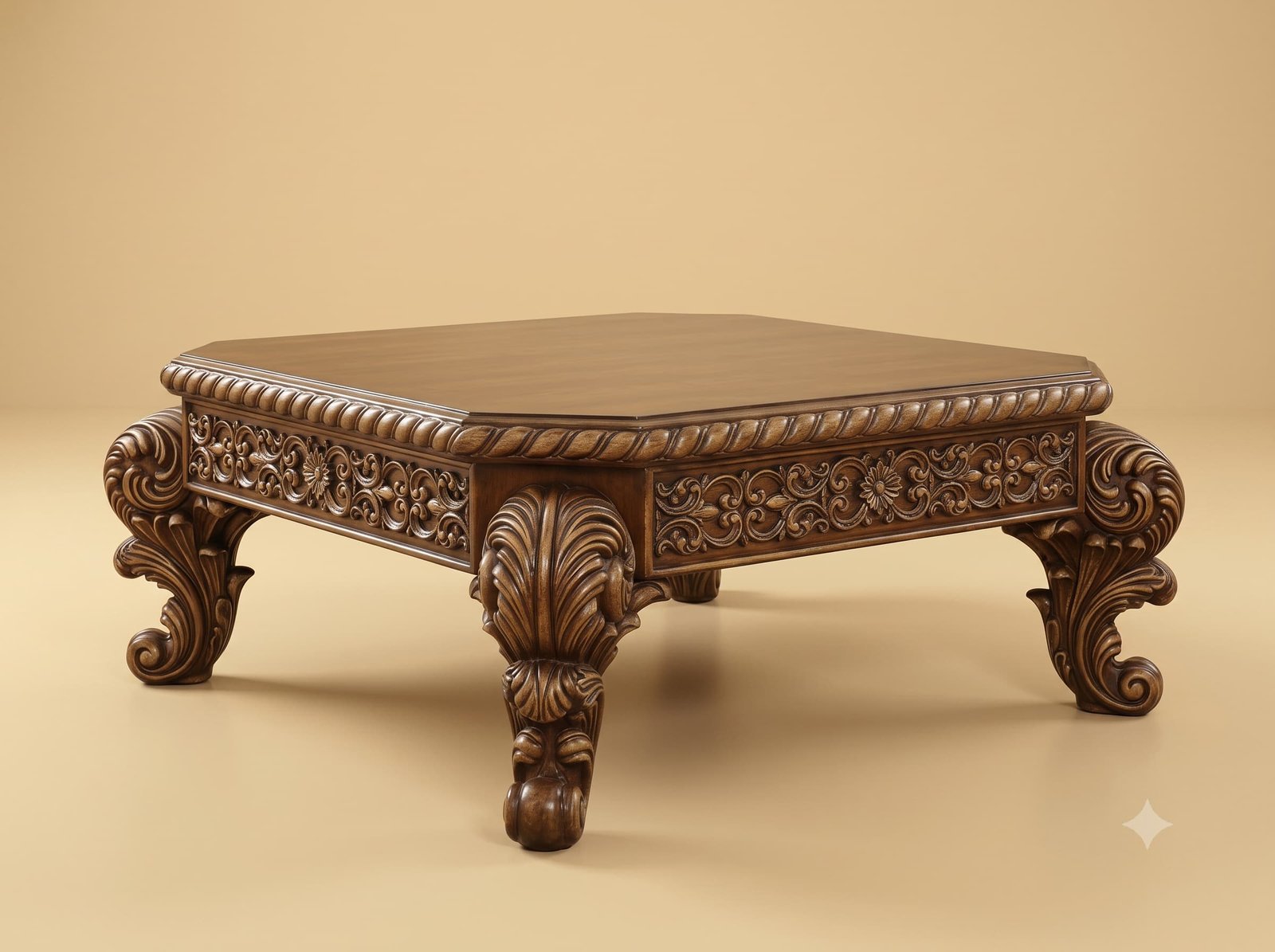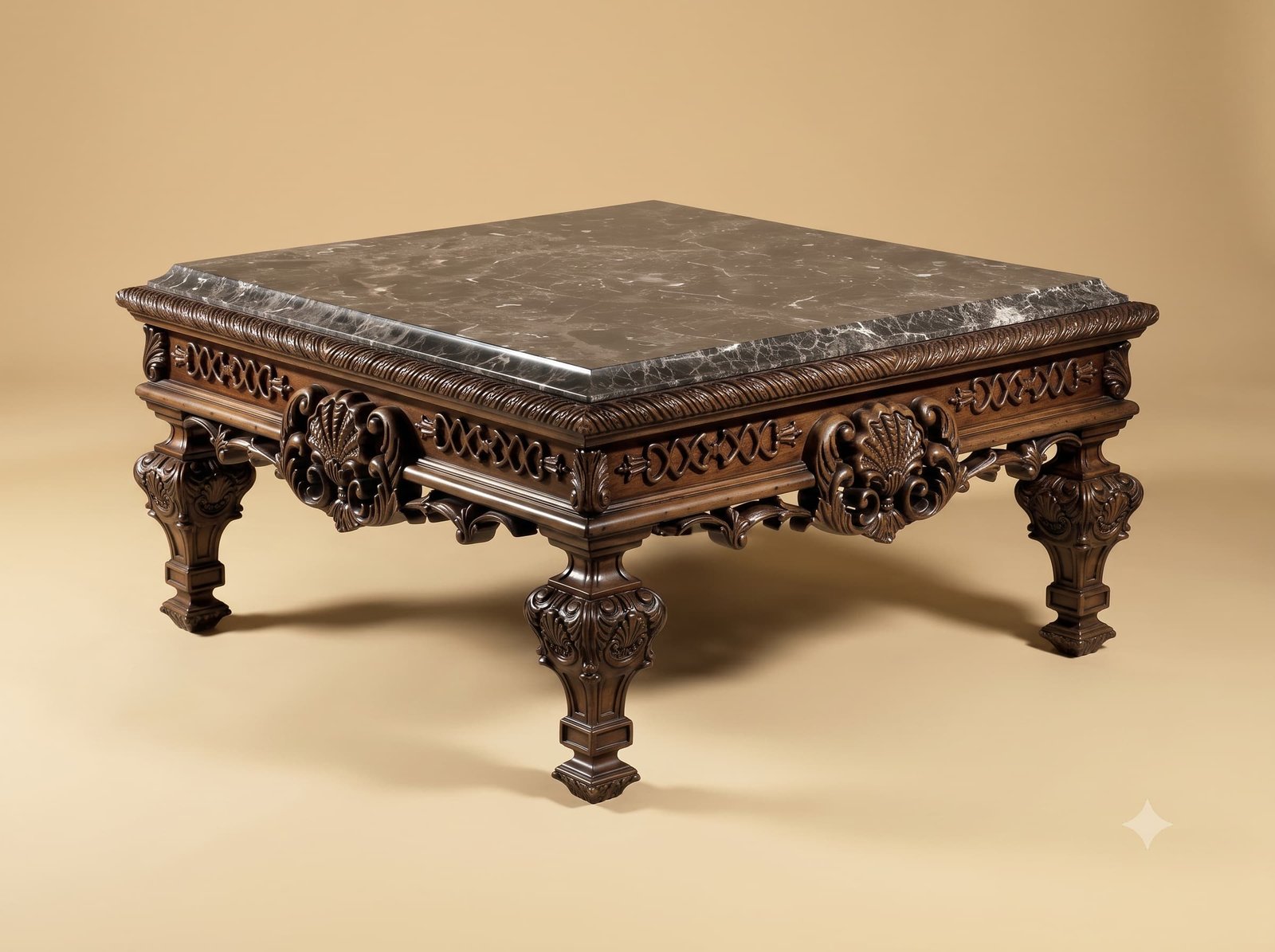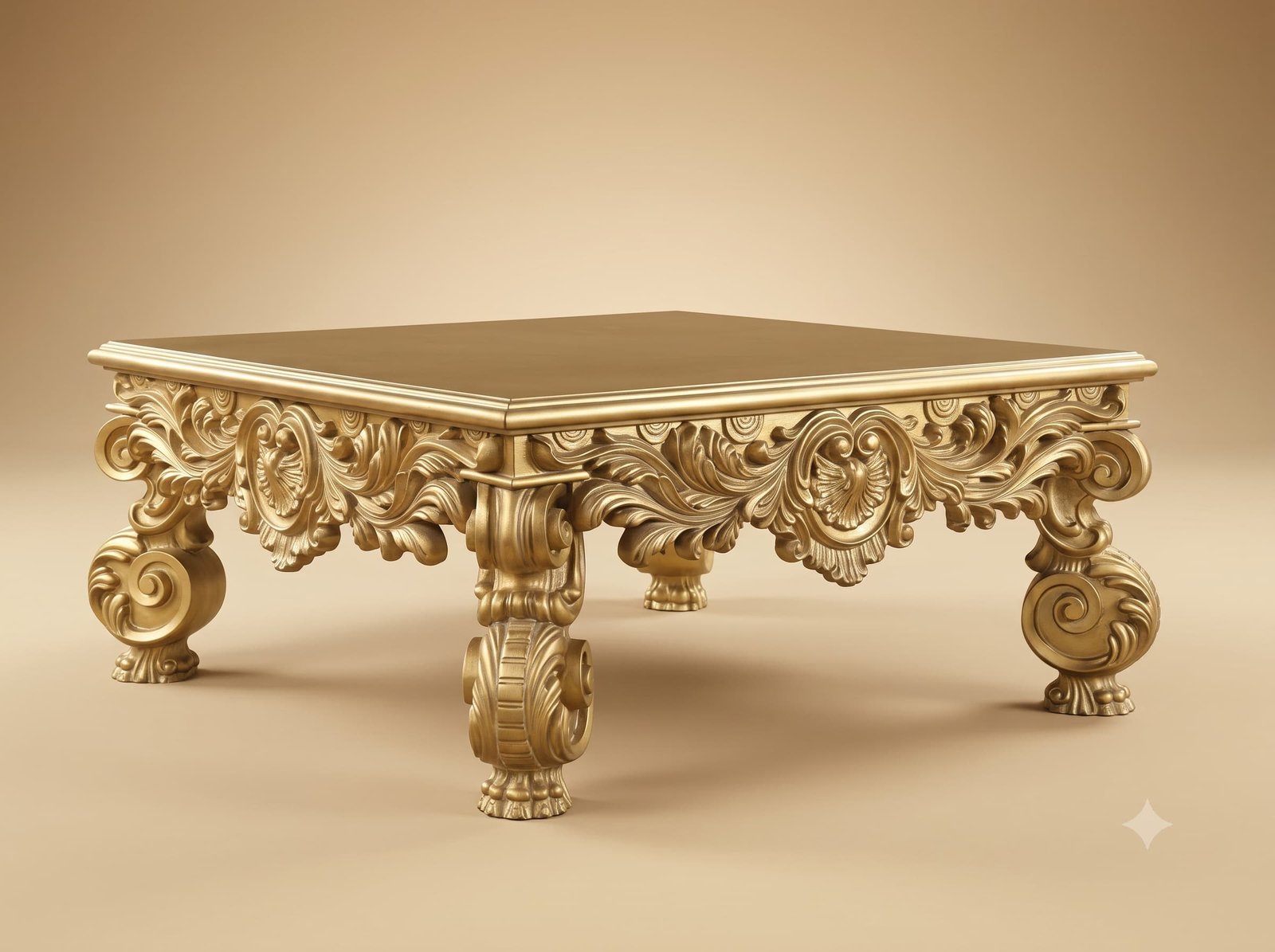
Each leg on this table starts as a block of teak roughly four times the weight of the finished leg. Almost all of it becomes shavings on the floor.
That is what a carved leg costs, and it is not obvious until you look at the shape. The volute at the top is far wider than the shaft below it, and the ball foot is wider again. A leg blank has to be thick enough to contain the widest point anywhere along its length, because carving only removes material - nothing can be added back. So the blank is sized for the volute, and the entire middle of the leg is then cut away to leave a shaft less than half that width.
The alternative, used almost everywhere, is to make a slim leg and glue extra blocks onto it where the shape needs to be wider. It saves a great deal of timber. It also puts a glue line exactly where the carving is deepest, and in twenty years that line will show as a fine crack running through a leaf.
We take the loss on the timber instead. A leg carved from one block has no joint in it, anywhere - which is why we are willing to warrant the frame for twenty years.
 Ask Price On WhatsApp