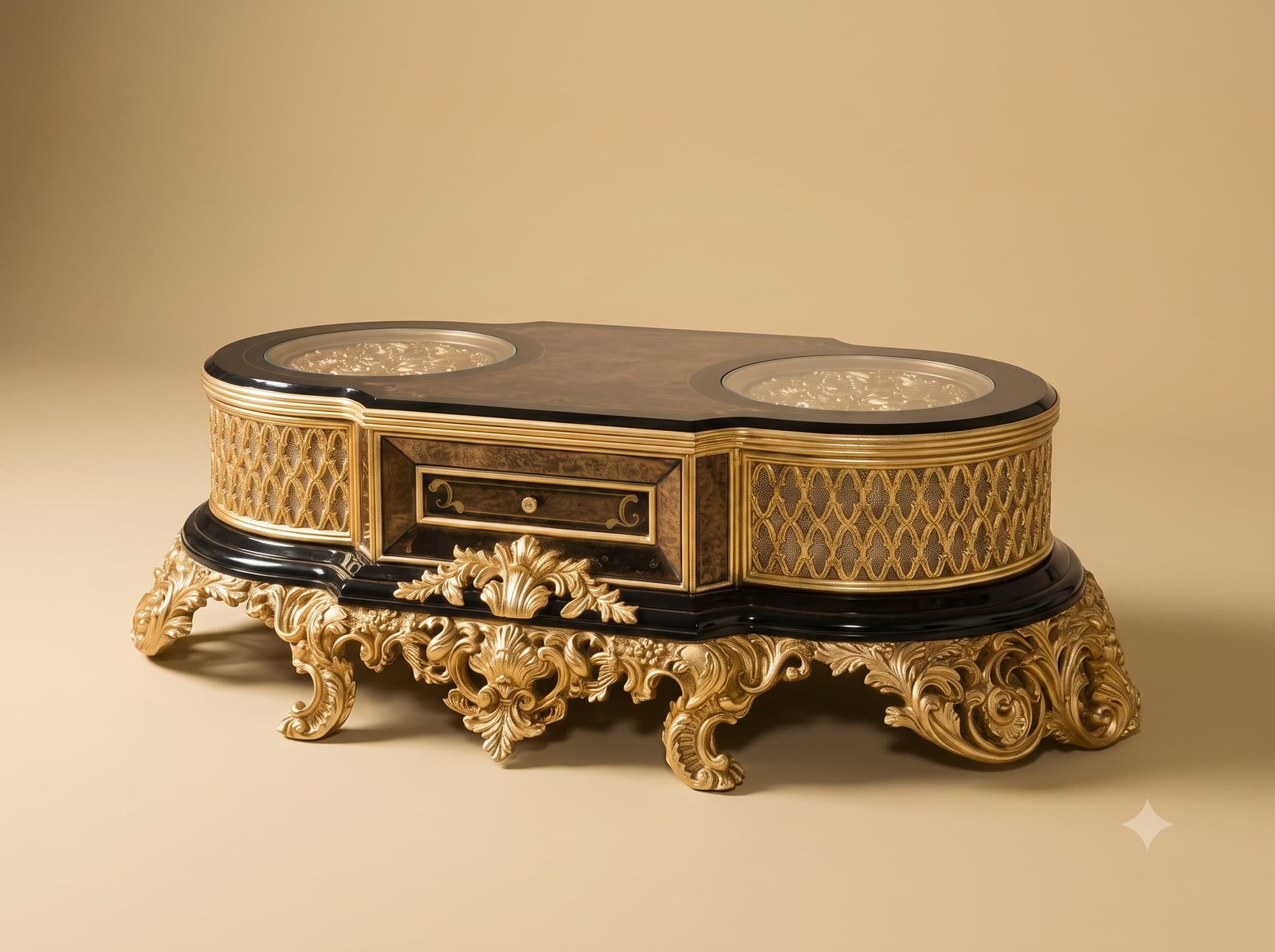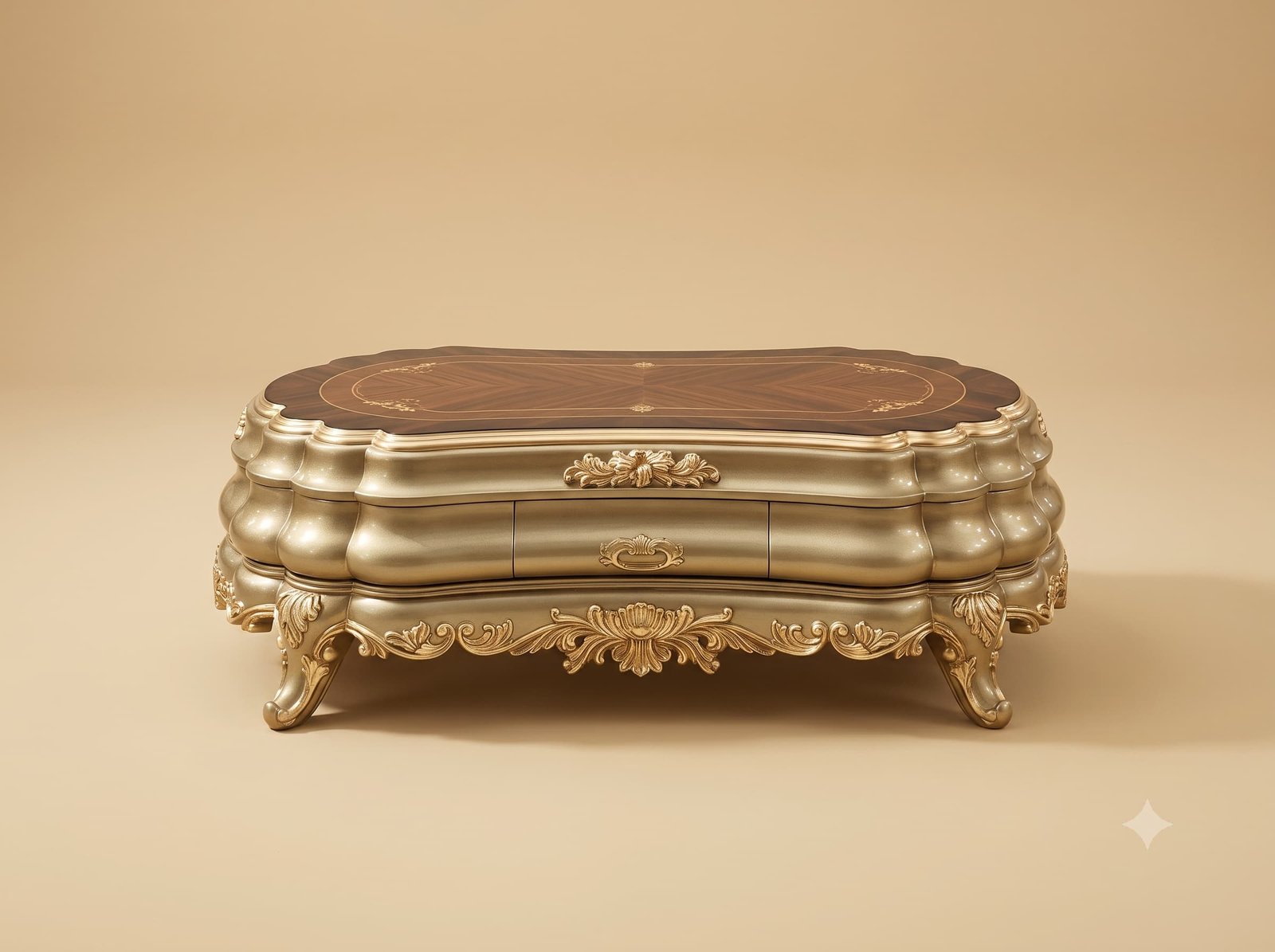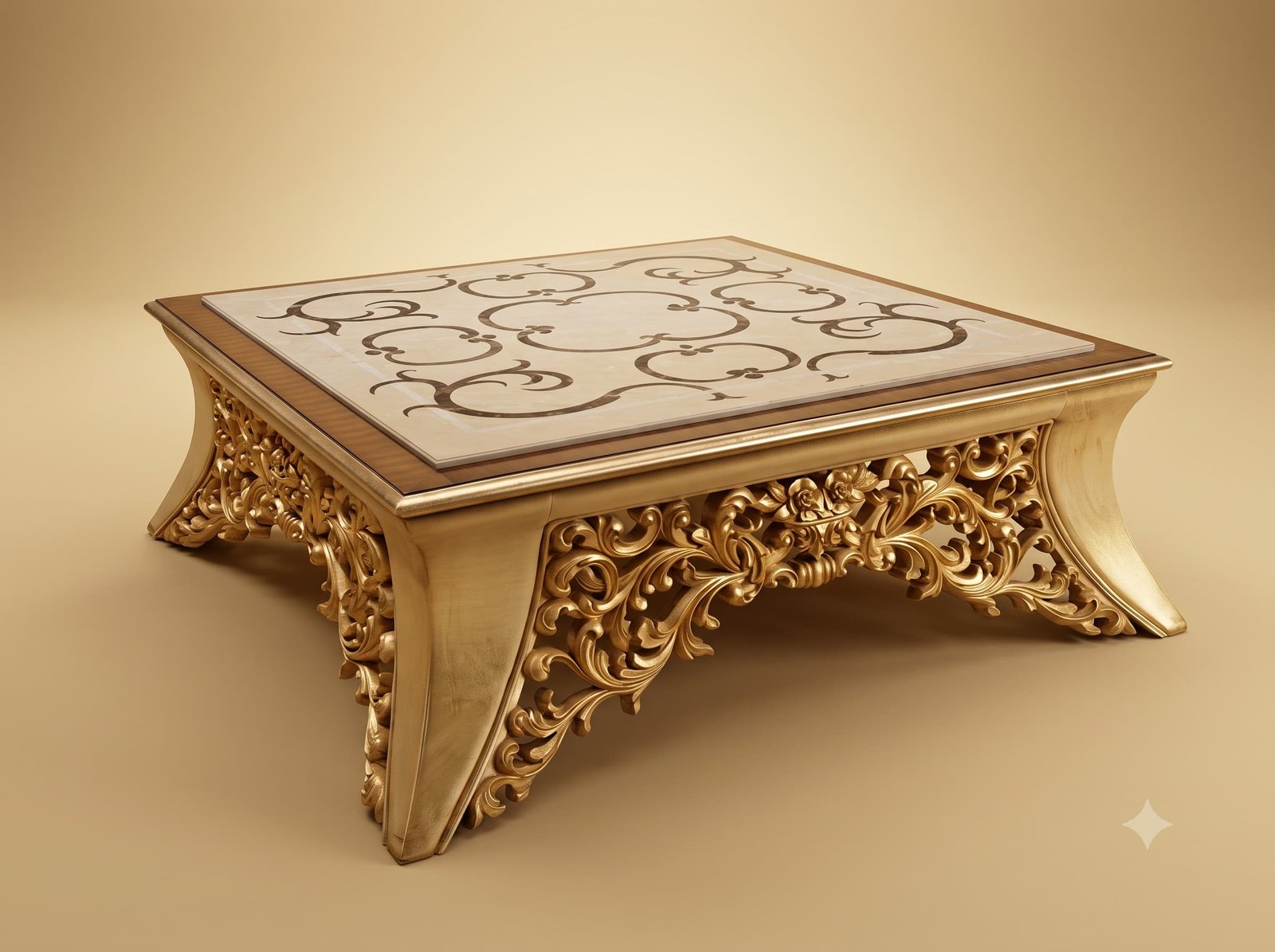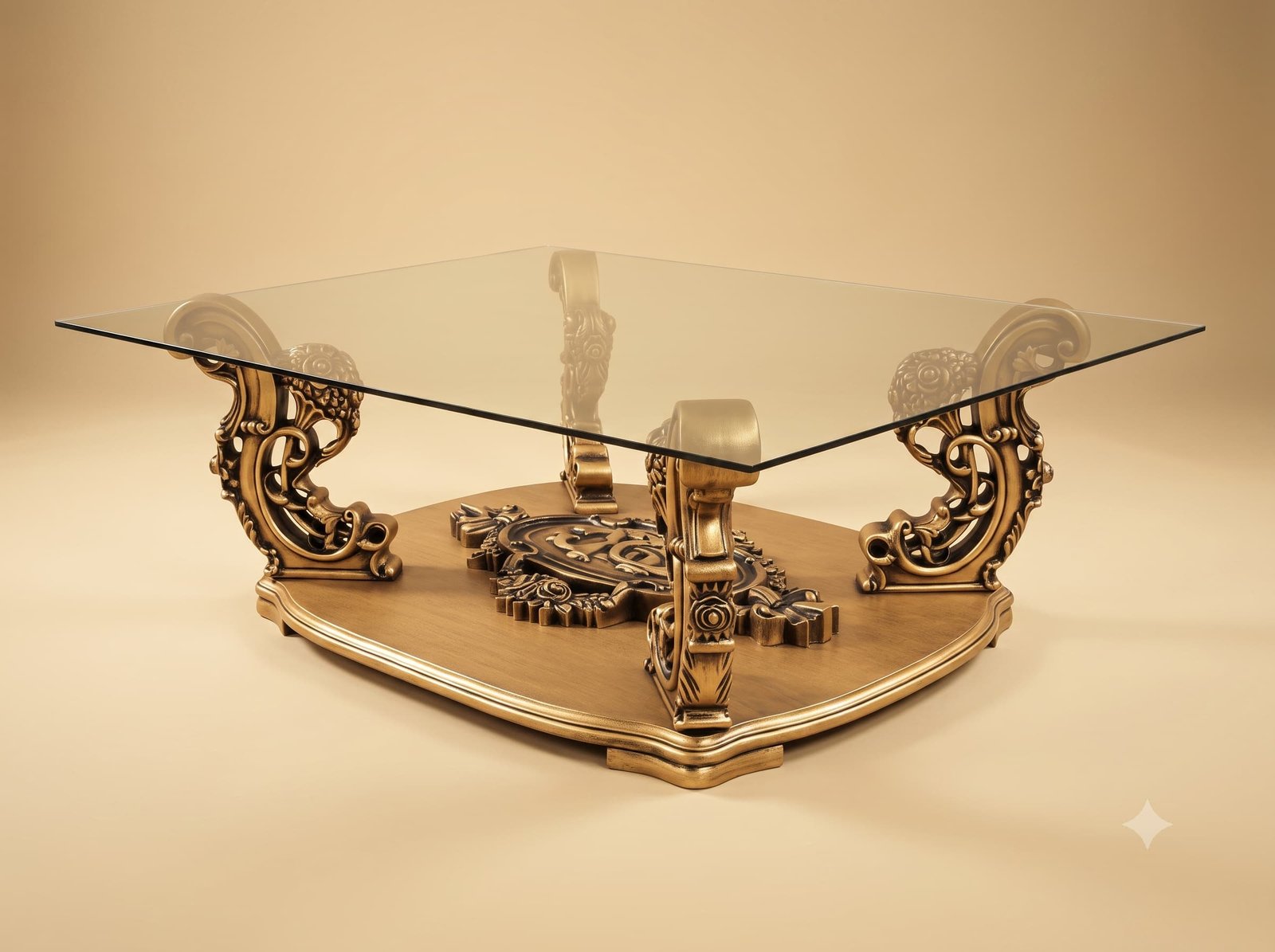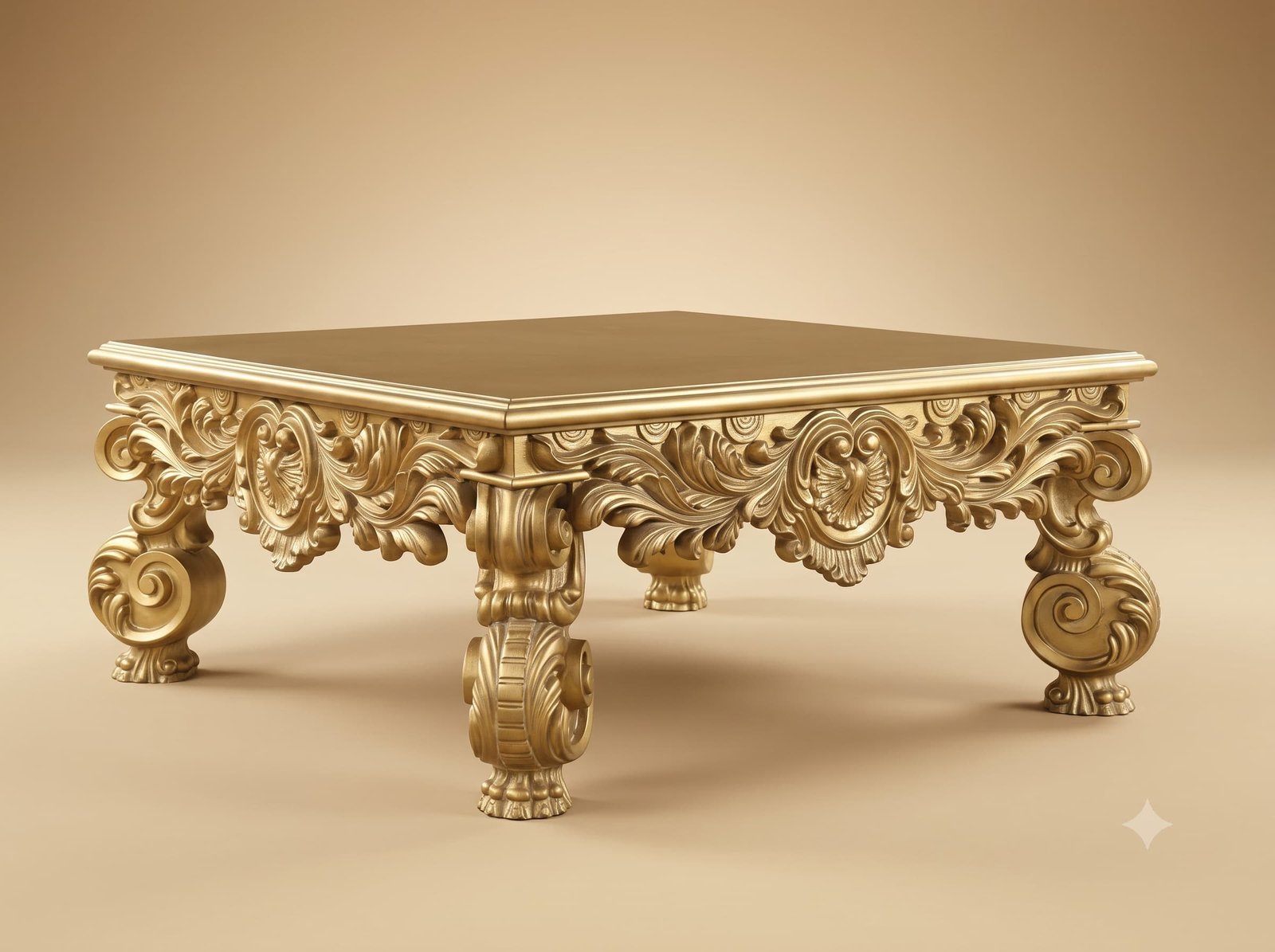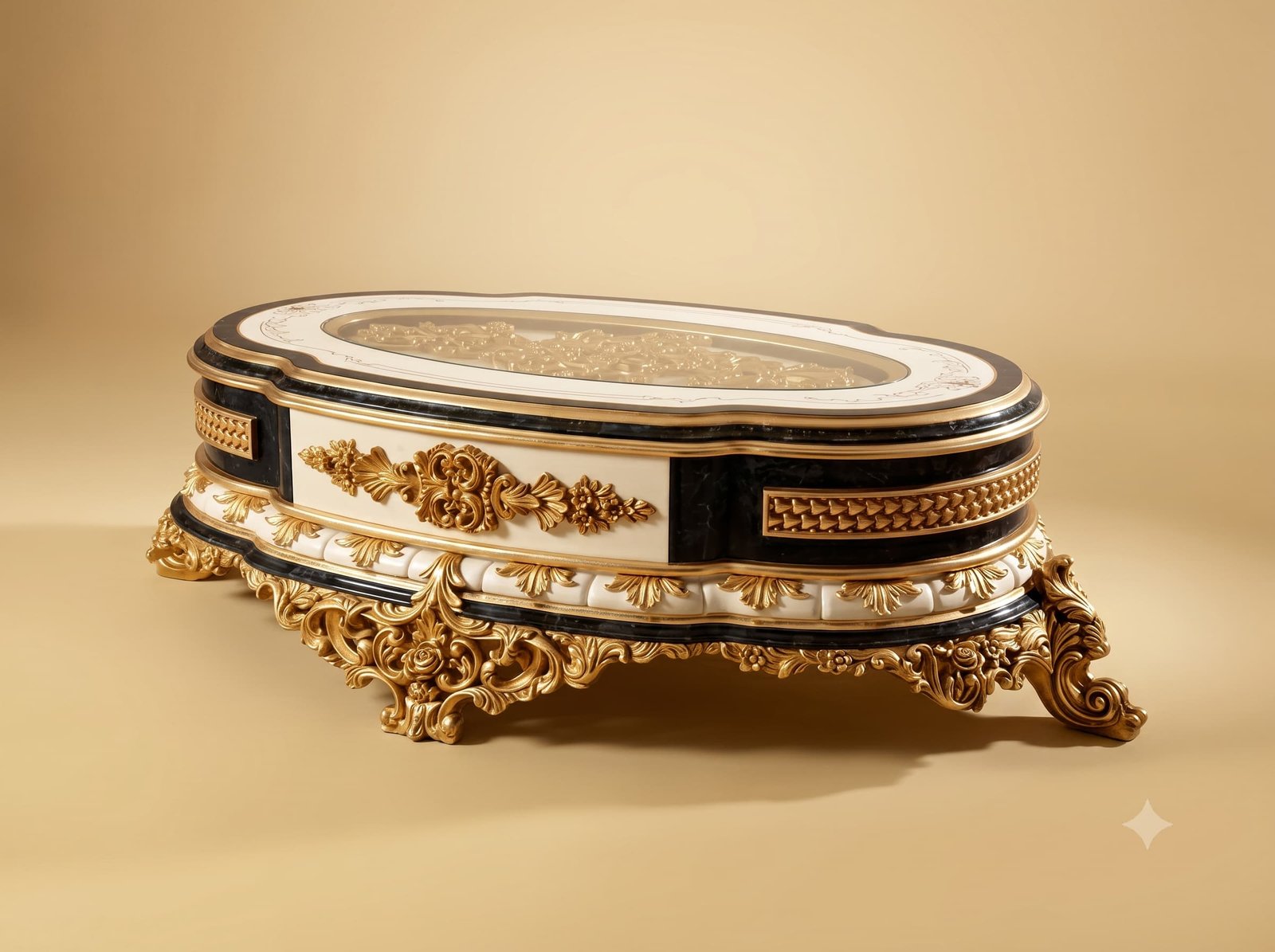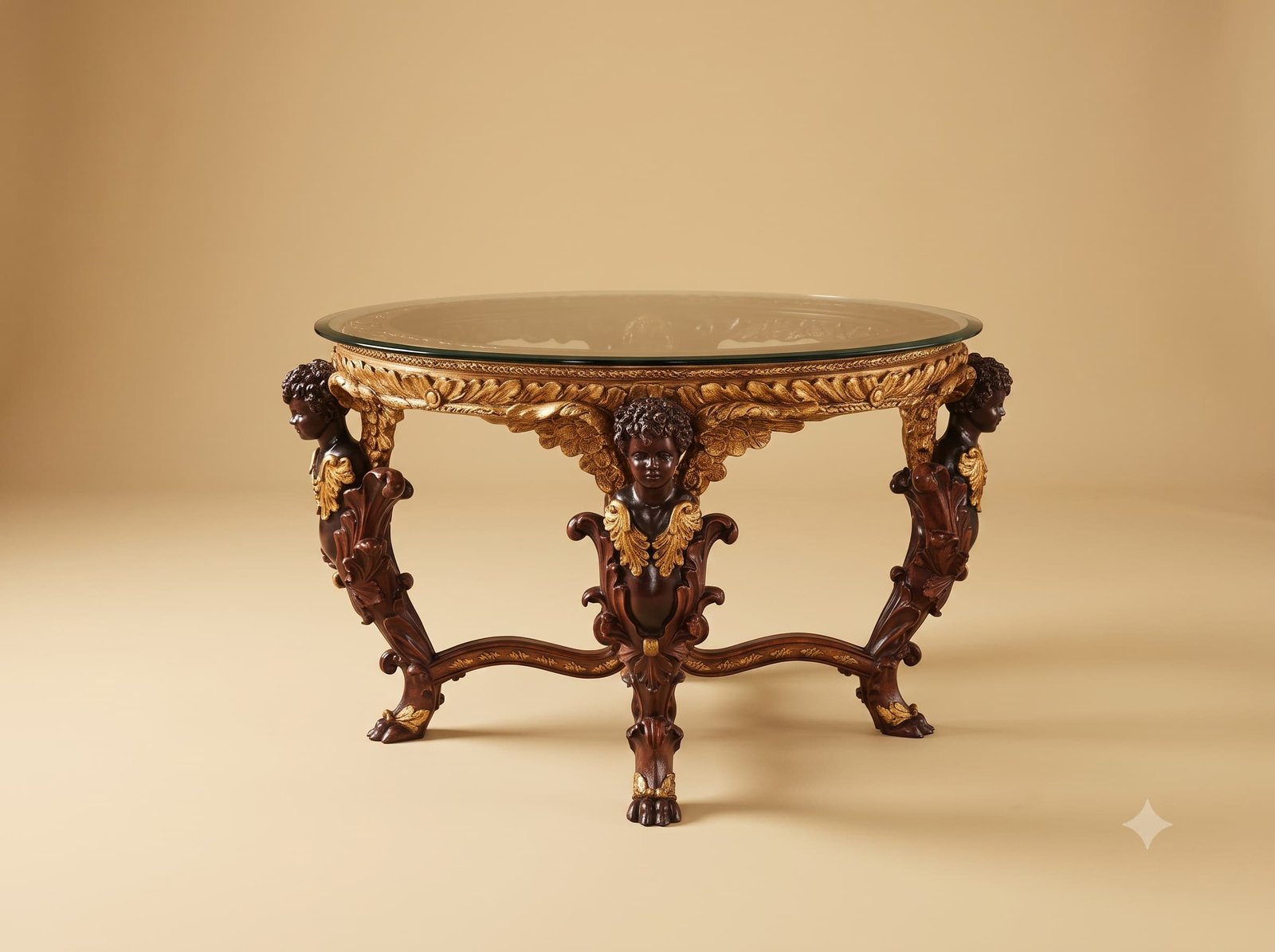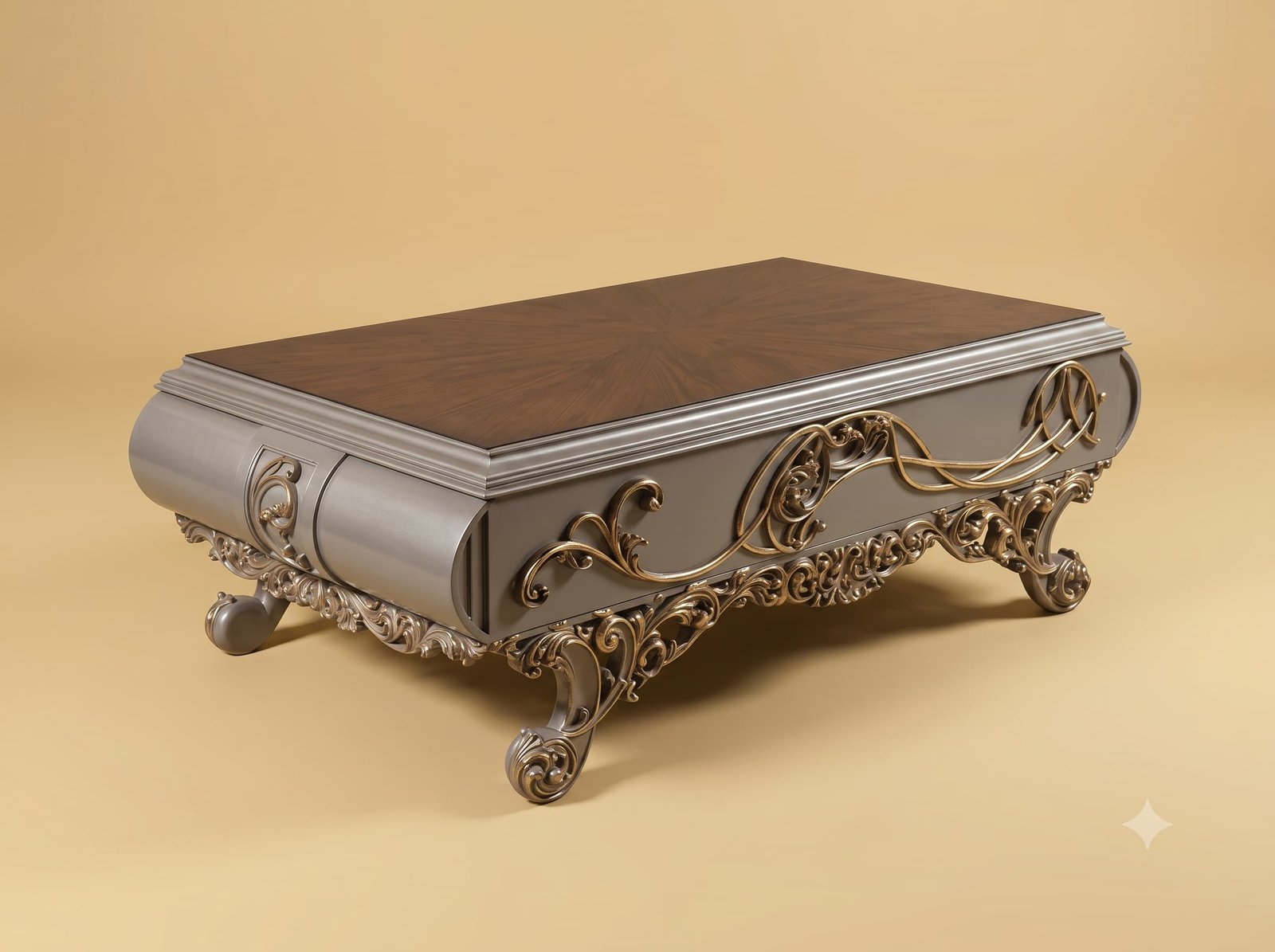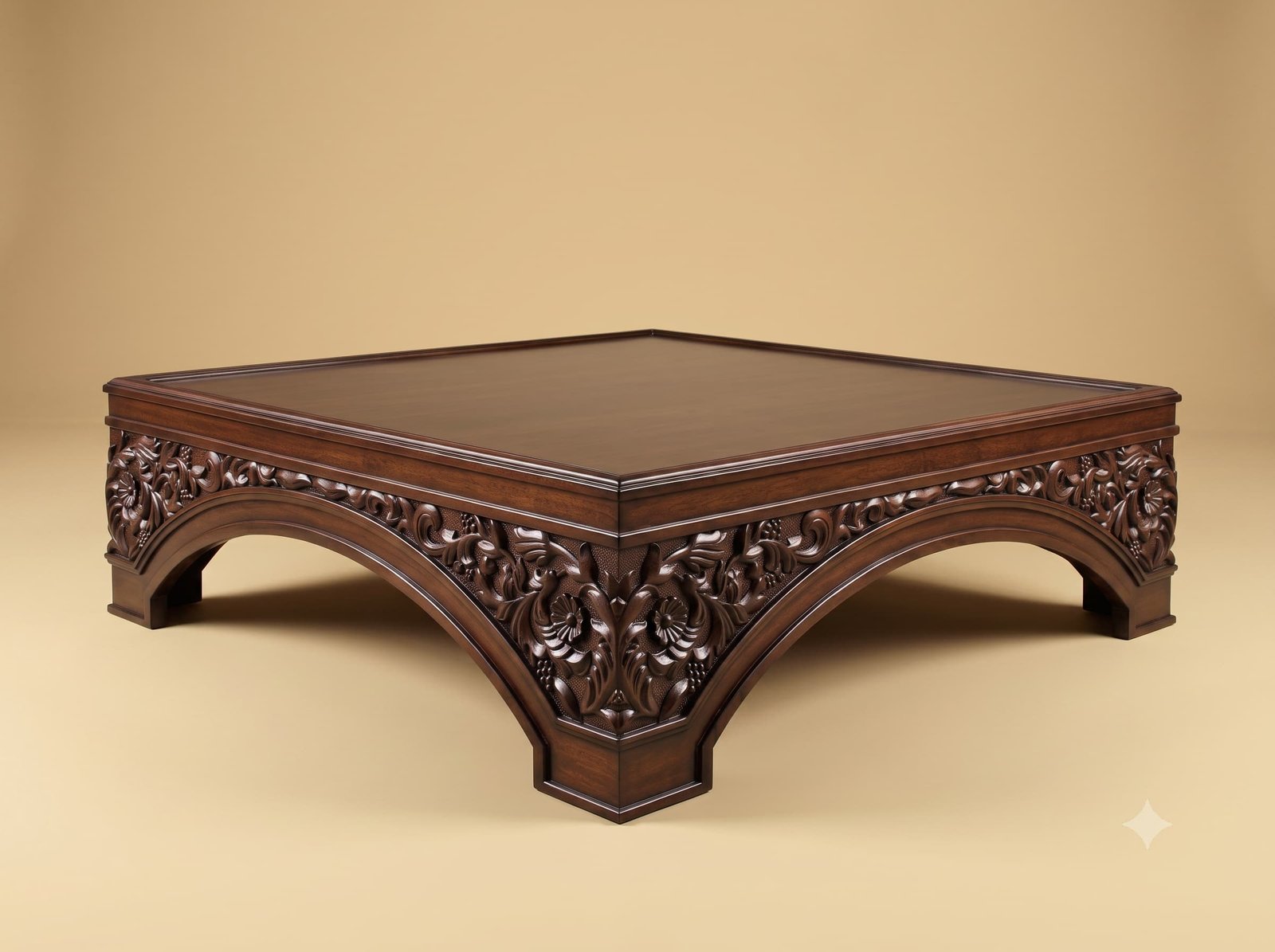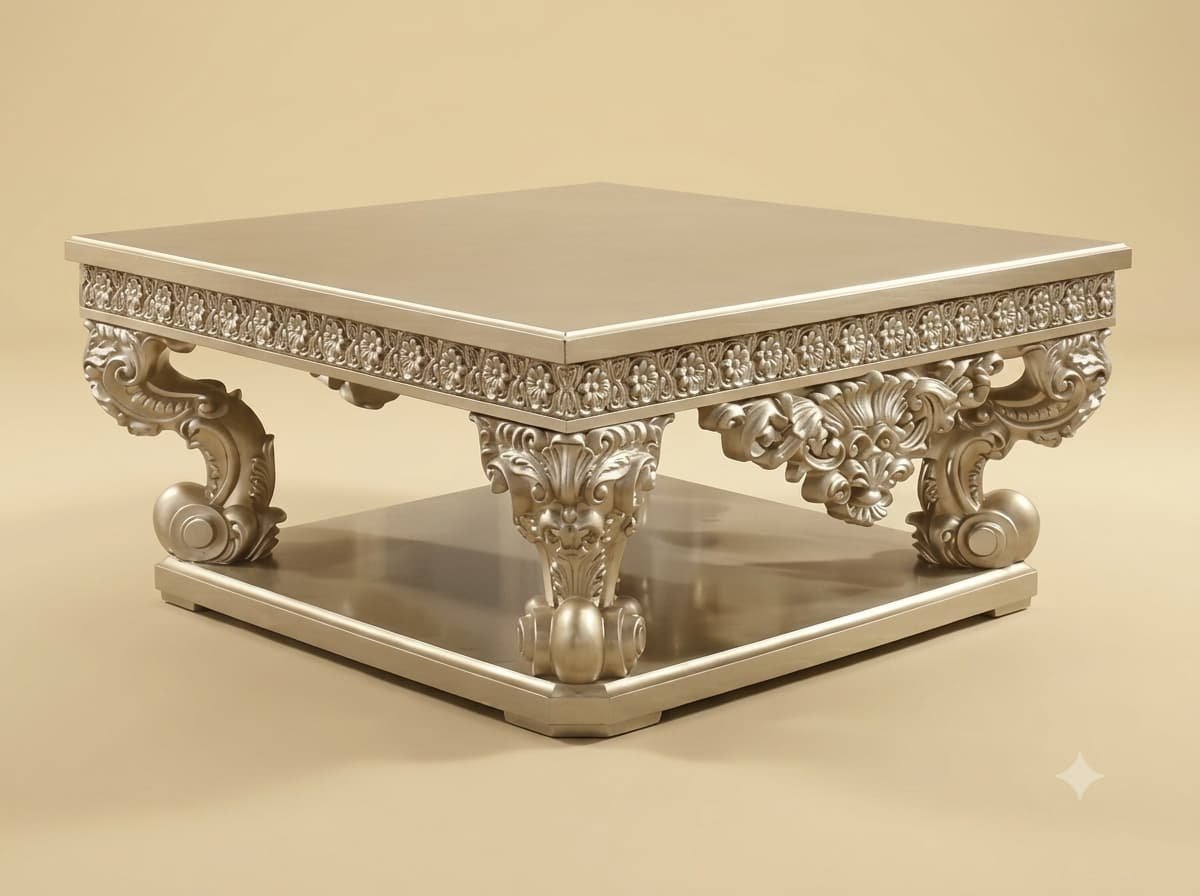
Champagne is not a colour you can apply in one pass. It is a silver ground seen through a warm glaze, and the difficulty is that the glaze has to be the same thickness everywhere.
Metal leaf or a metallic ground on its own reads cold and grey. The warmth comes from a translucent tinted layer laid over it, which lets the metal show through while shifting its colour towards gold. Where that layer sits thicker it reads warmer and darker; where it thins, the cold silver comes back through. On a small carved element nobody notices, because the eye is busy with the shape.
On a large flat top it is merciless. Any variation shows as a soft cloud in the middle of the surface, and once seen it cannot be unseen.
So the glaze on a top like this is worked wet, in one continuous pass, and pulled off evenly before it can begin to set - no stopping halfway, no going back over a section that has started to dry. The carved areas are done separately and can be worked more slowly, because their surface is broken up. It is the flat that decides whether the finish looks right.
 Ask Price On WhatsApp