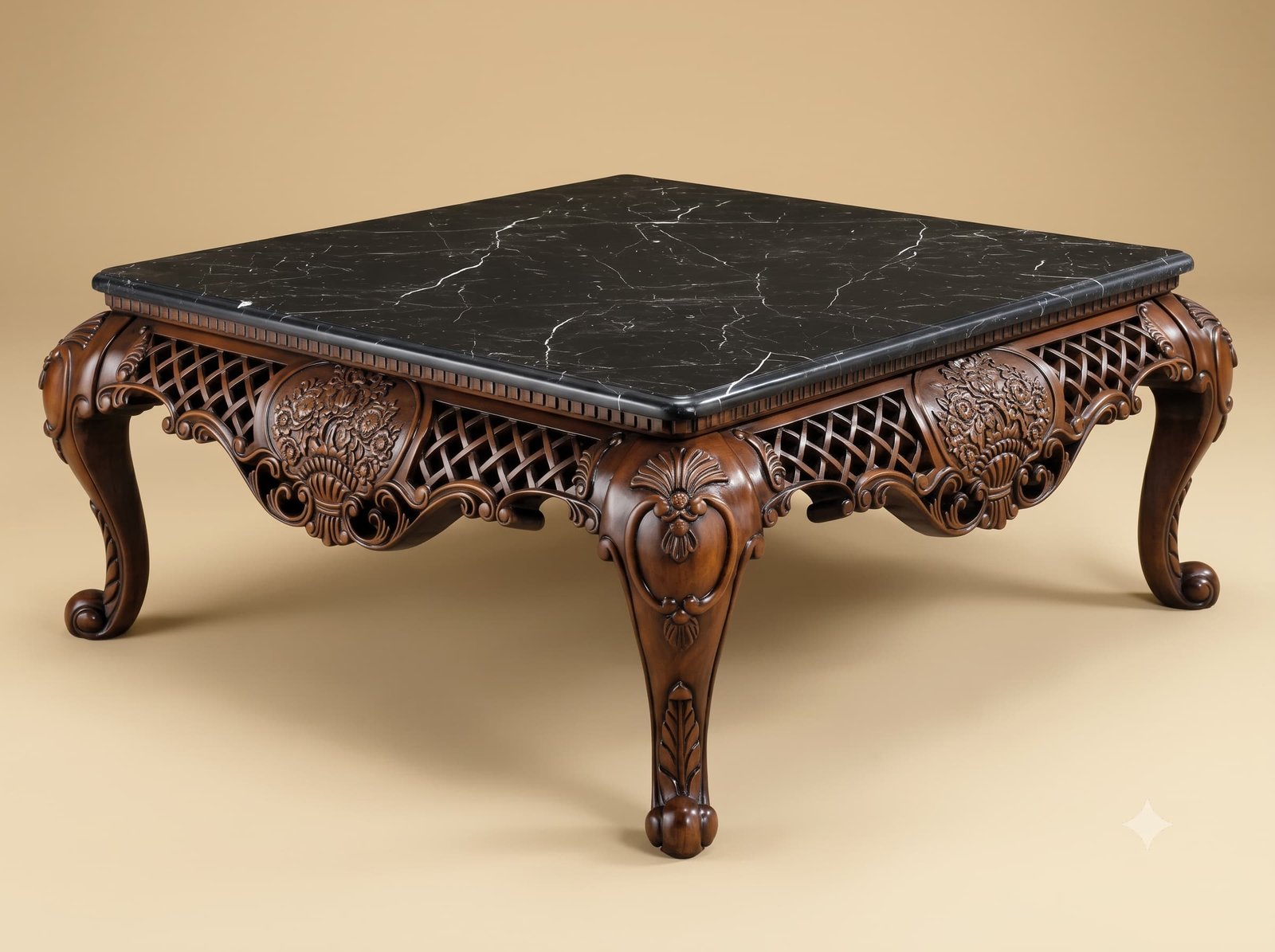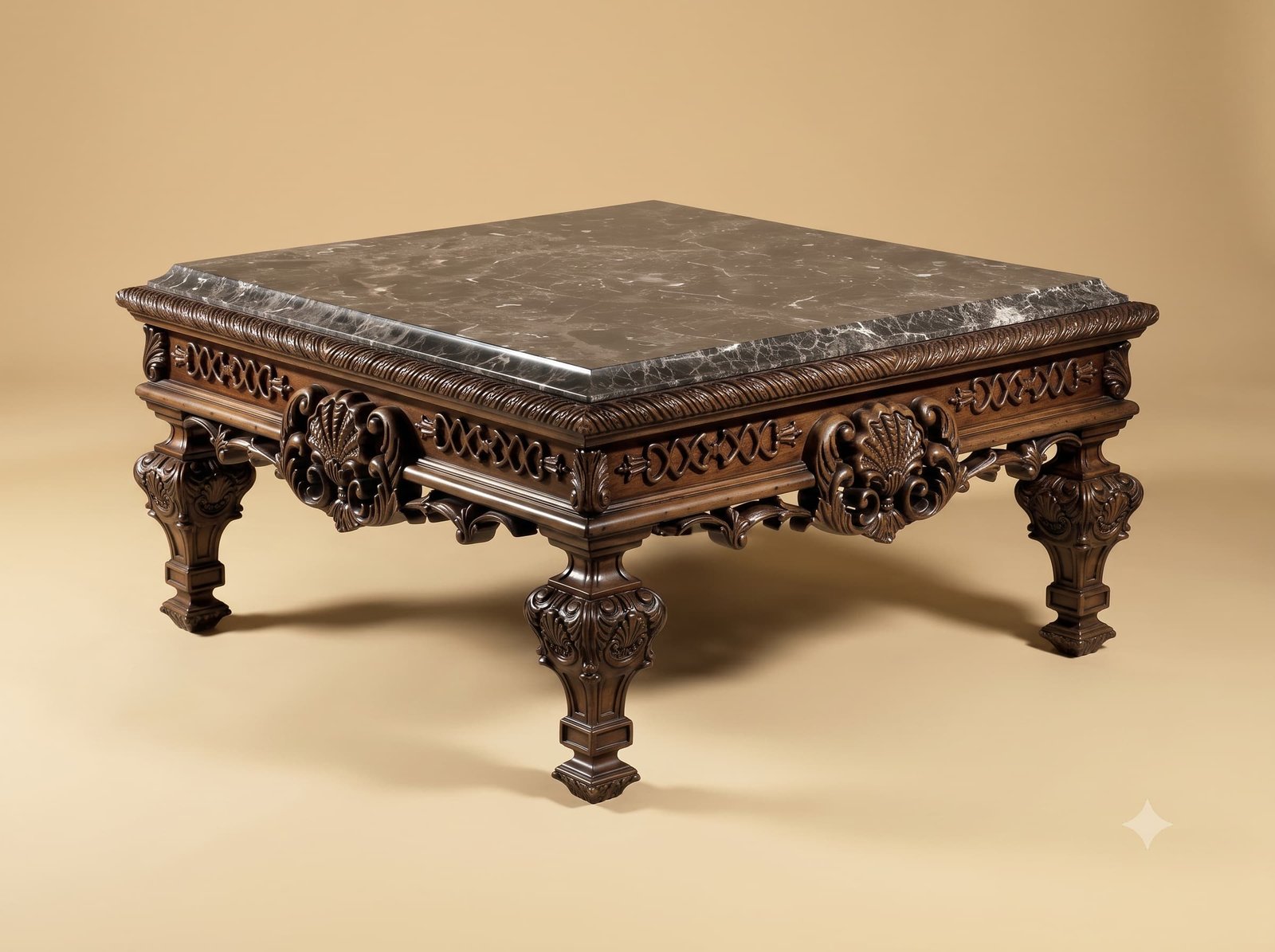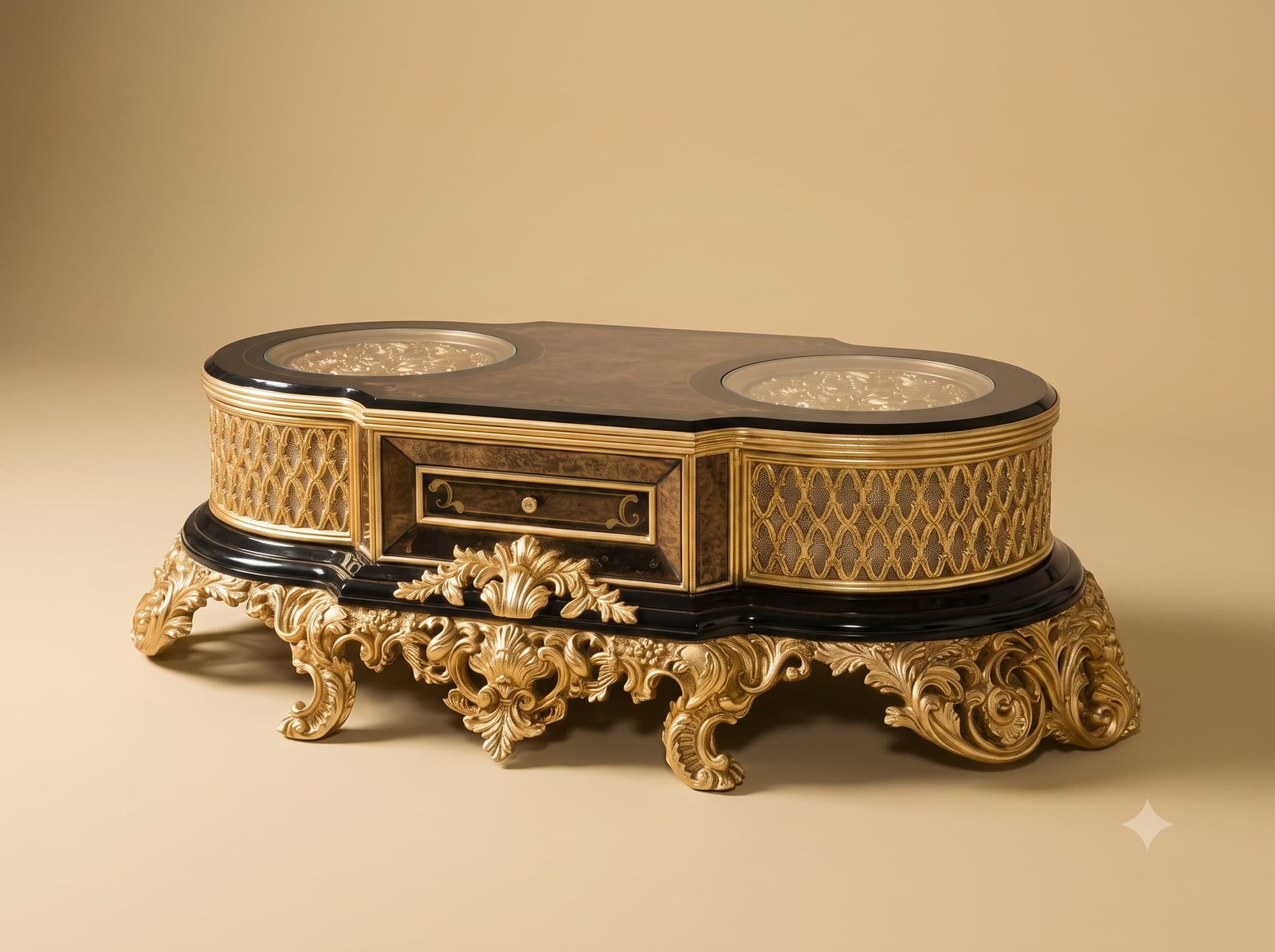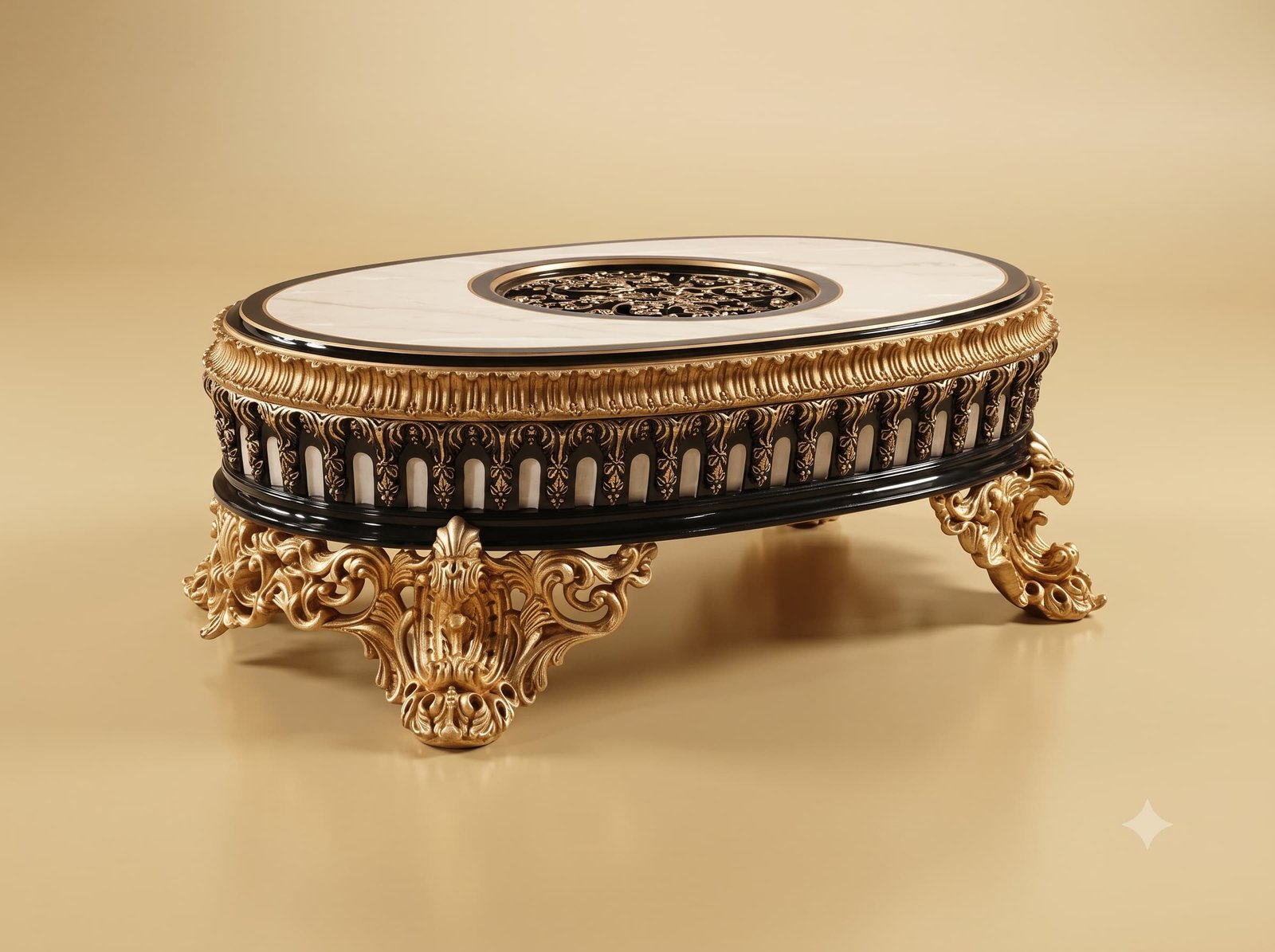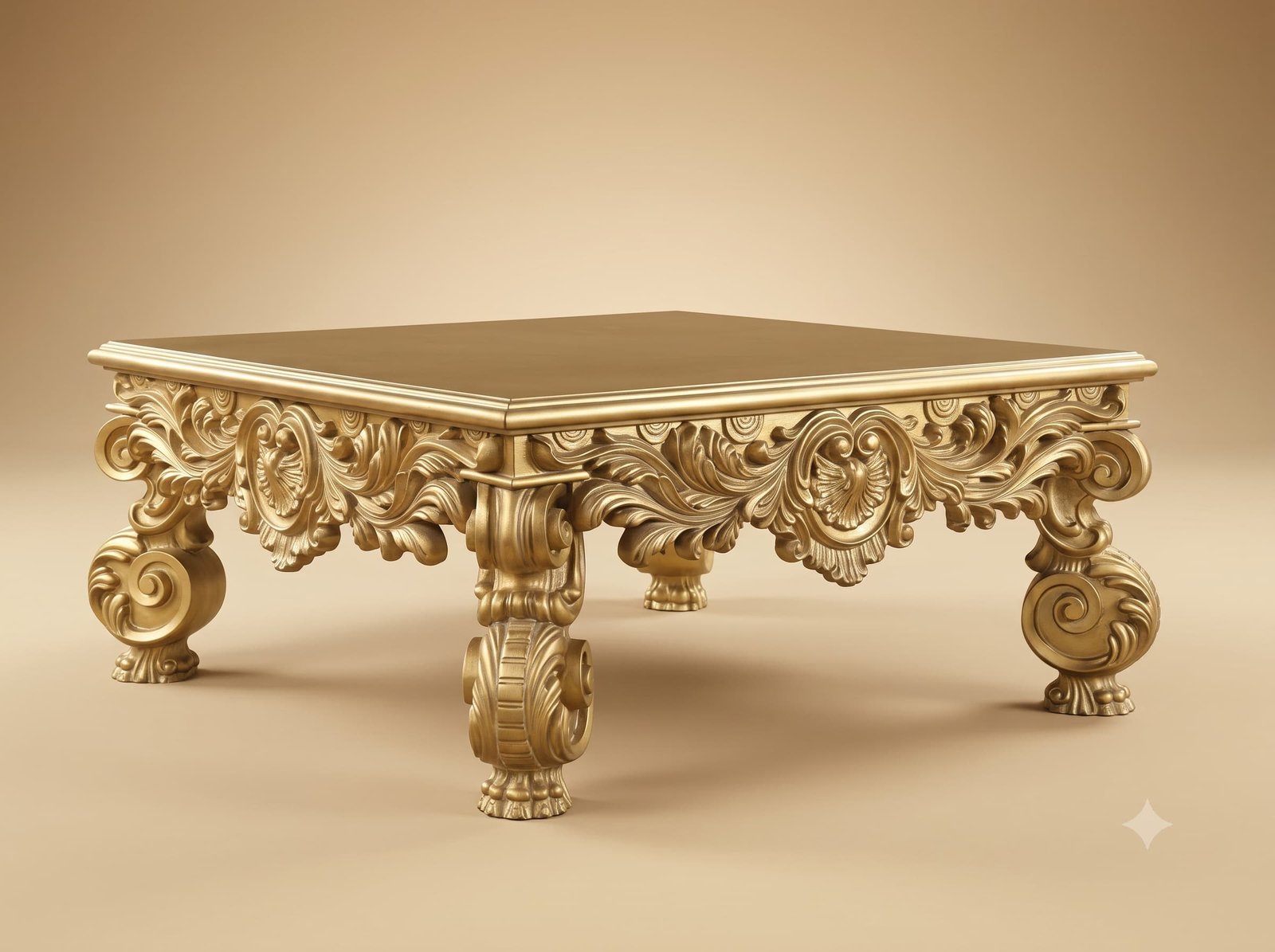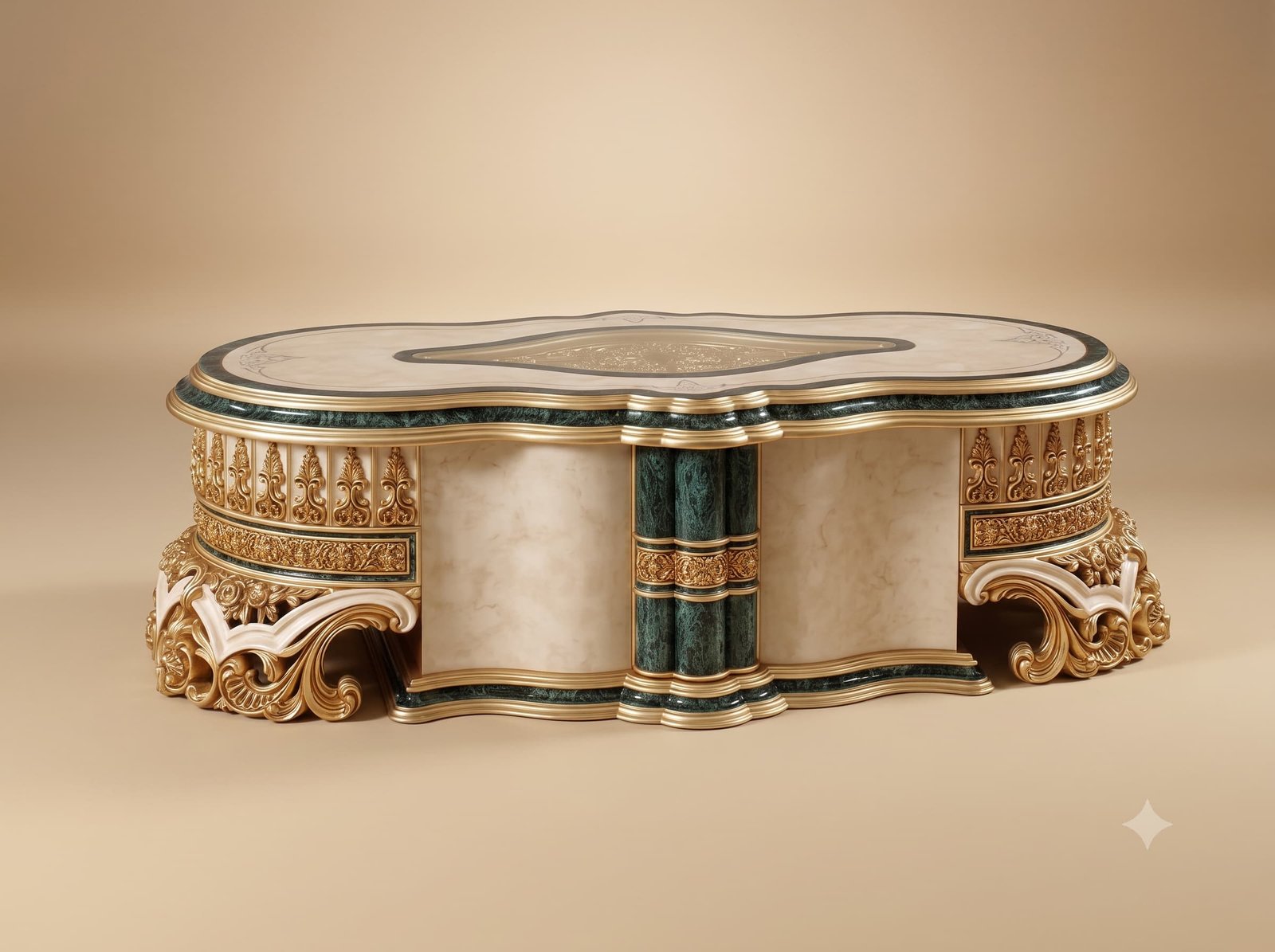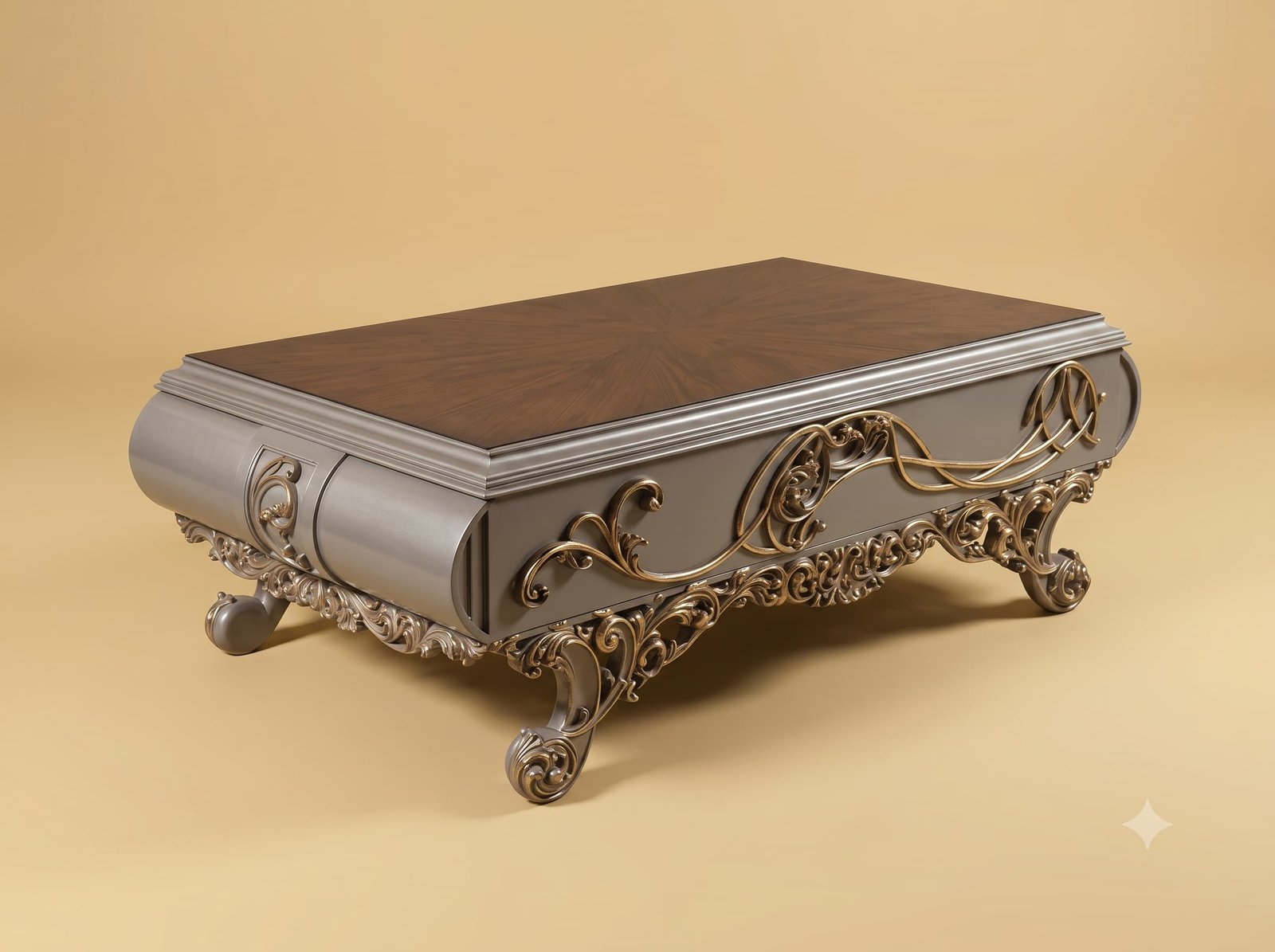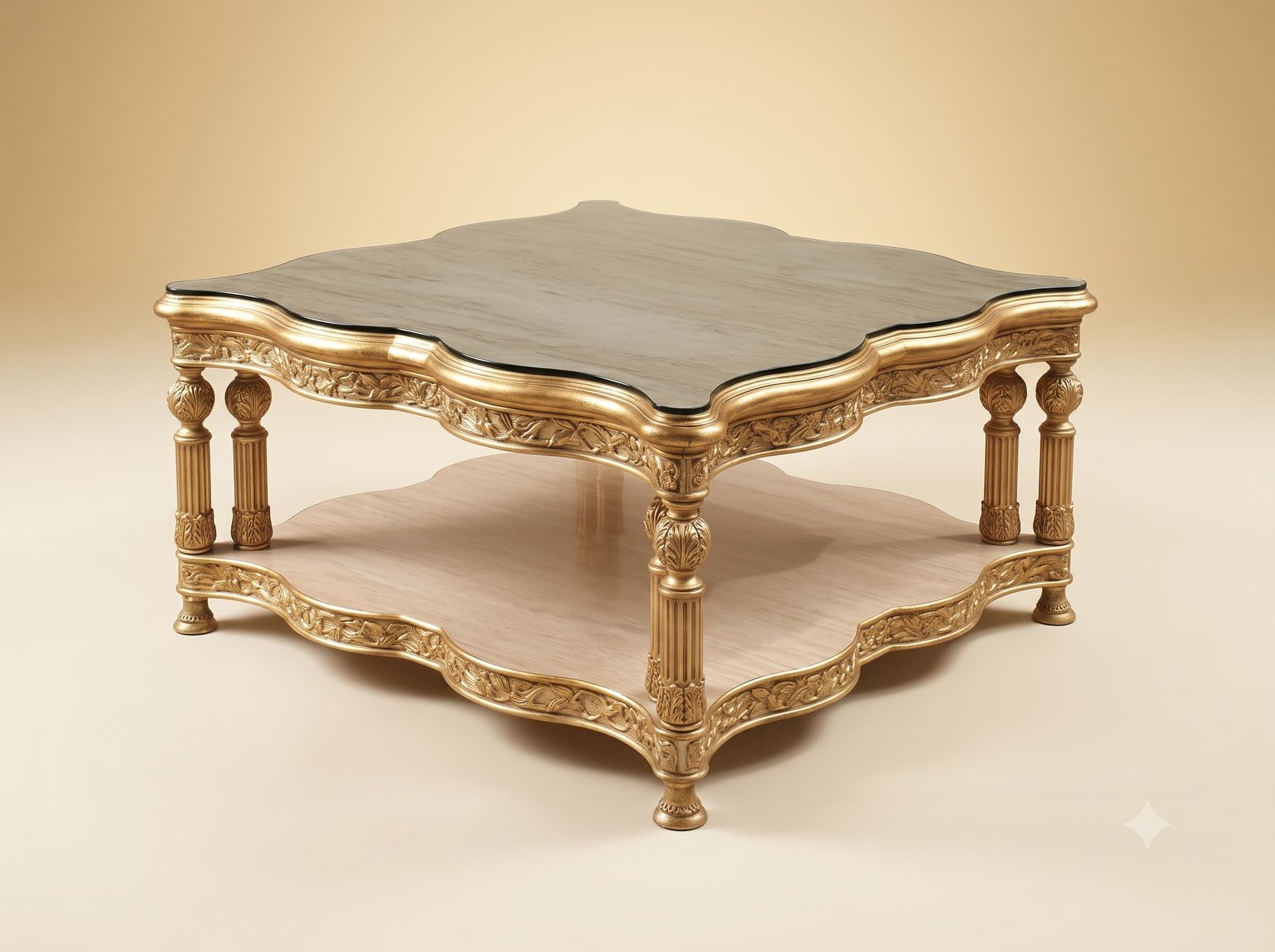
Stone and wood do not agree with each other, and the joint between them is where a marble-topped table either survives or cracks.
Timber moves with humidity. Across the width of a frame like this, that movement is real and seasonal - the wood is fractionally wider in the monsoon than in a dry April. Stone does not move at all. Glue a slab down hard onto a timber frame and the frame will shift underneath it while the stone stays put, and the load has to go somewhere: either the joint fails, or the slab cracks along its weakest line.
So the top is not fixed down. It is bedded on soft pads set into the frame, which carry the weight evenly and let the timber slide a fraction beneath the stone as the seasons change. The slab is held in place by the moulded lip around the frame - captured on all four sides, fixed on none - and by its own considerable weight.
It is the same principle as a floating panel in a door, applied to a material that will not bend at all. The result is a top that stays sound through a decade of Indian summers and monsoons, because nothing in the piece is fighting anything else.
 Ask Price On WhatsApp