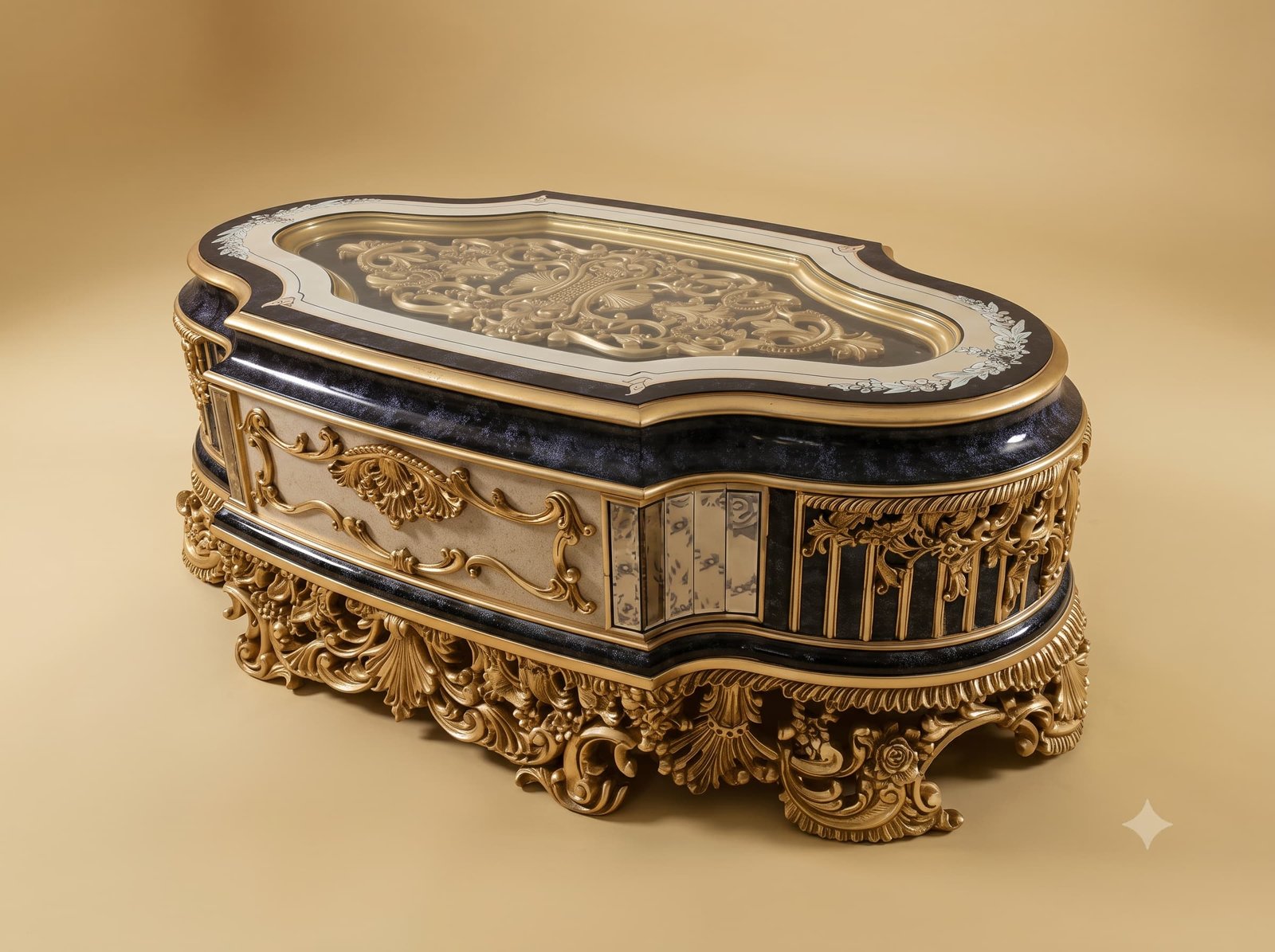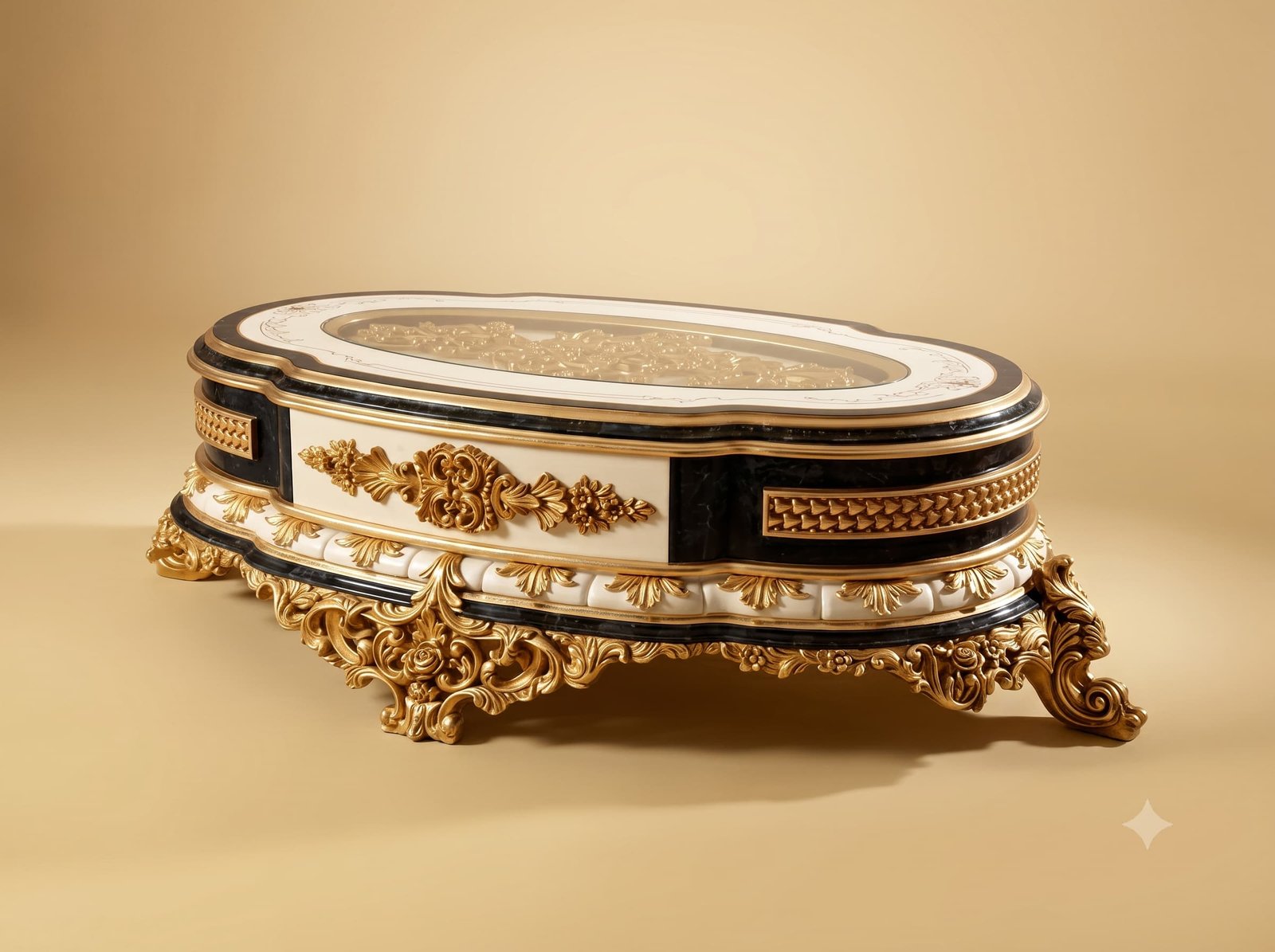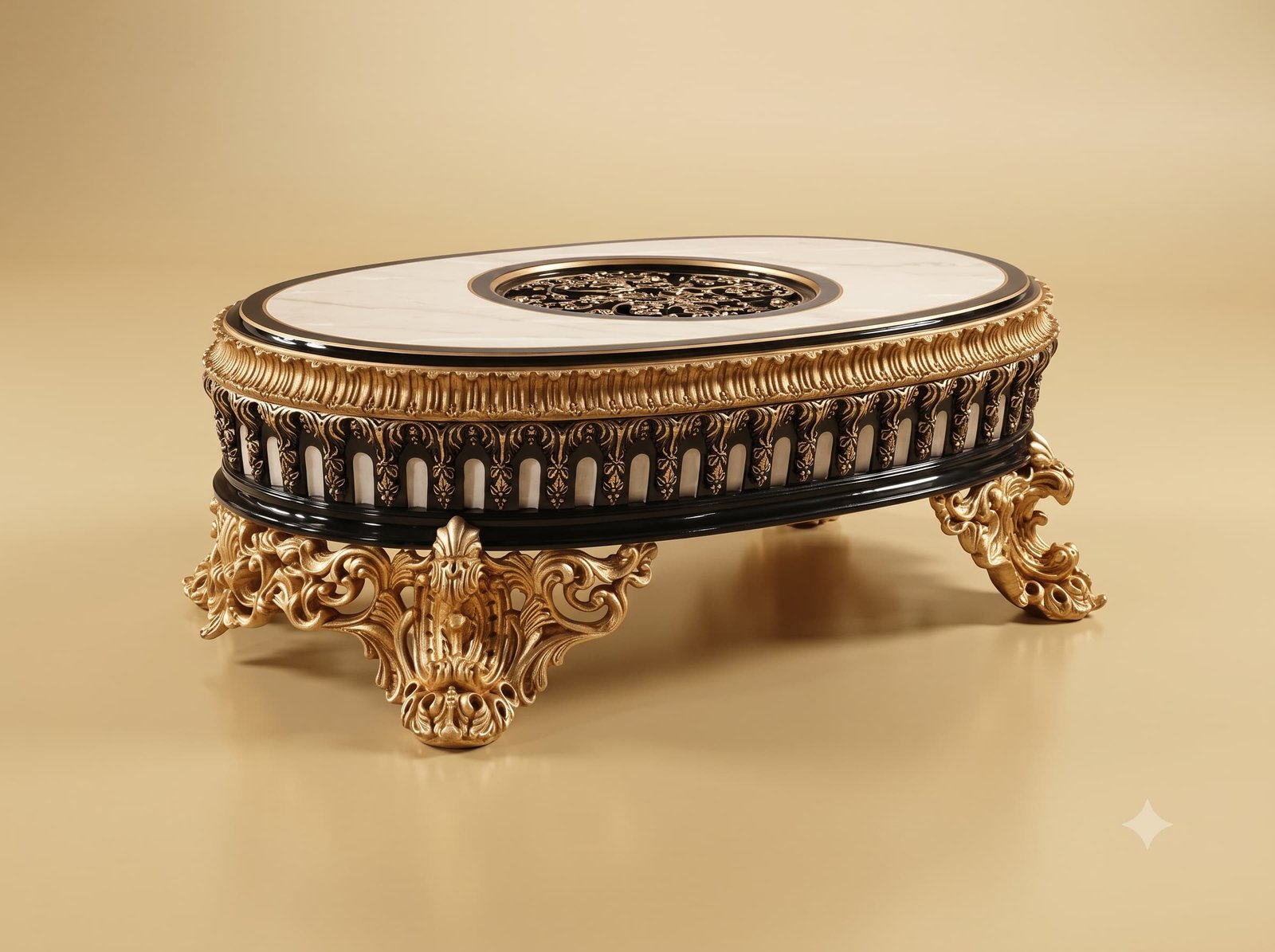
The balusters in the gallery are evenly spaced around an oval, and that is a harder thing than it sounds, because an oval has no single radius.
On a circle, spacing is trivial: set a compass to one step and walk it round, and the last division closes perfectly because every part of the curve is identical. An ellipse is not like that. It is tightly curved at the ends and nearly straight along the sides, and its radius changes continuously between them. Walk a compass around it and the steps will crowd at the ends and stretch along the flanks, and the gallery will look wrong long before anyone works out why.
So the spacing here is set out along the curve itself, not across it. A flexible strip is bent around the finished oval, the true length of the perimeter is read off it, and that length is divided into equal parts marked on the strip. The strip goes back onto the table and every mark is transferred to the wood.
Each baluster then sits the same distance from its neighbour measured along the curve - which is what the eye actually reads - even though no two of them stand at the same angle to the centre.
 Ask Price On WhatsApp