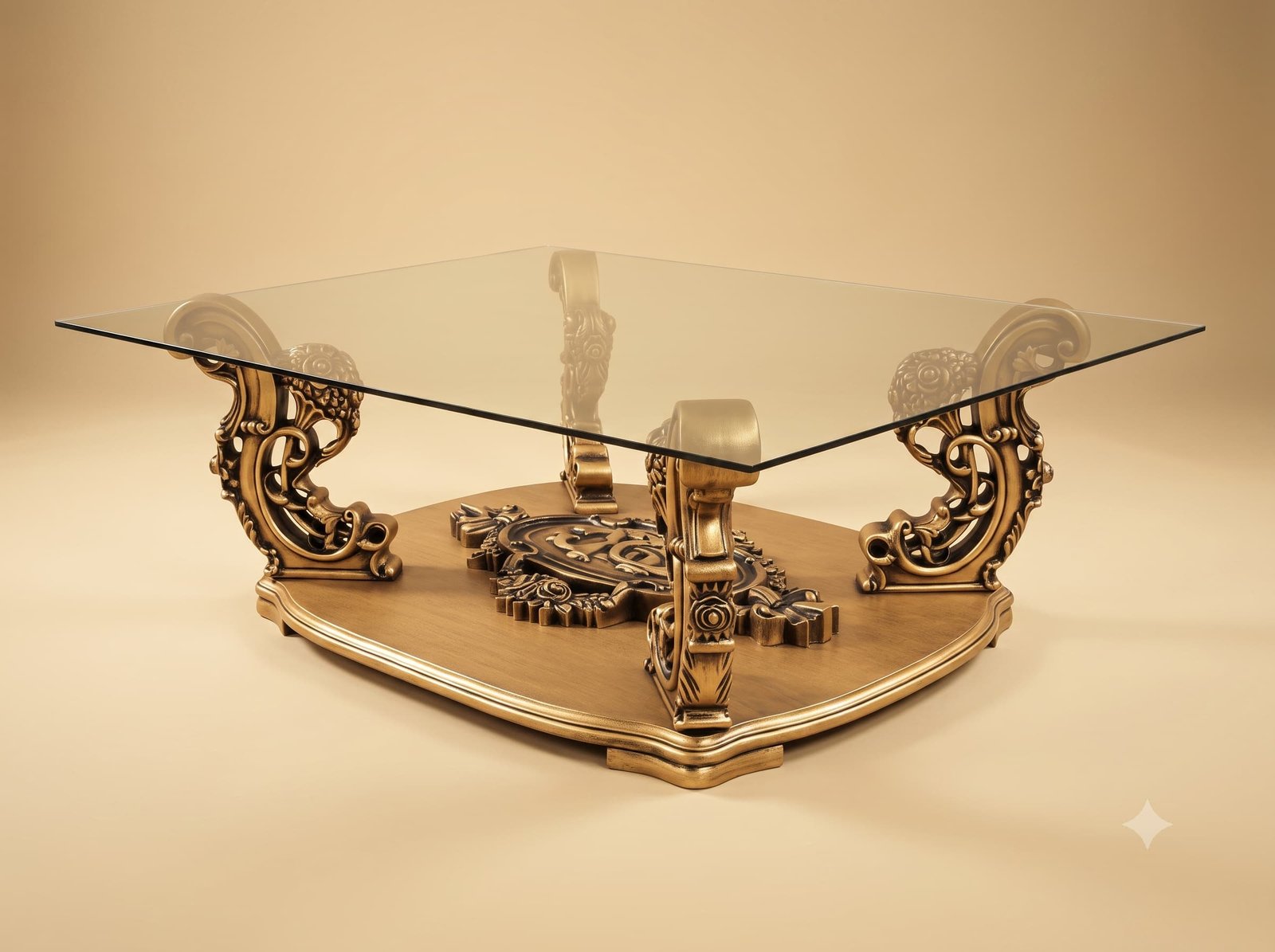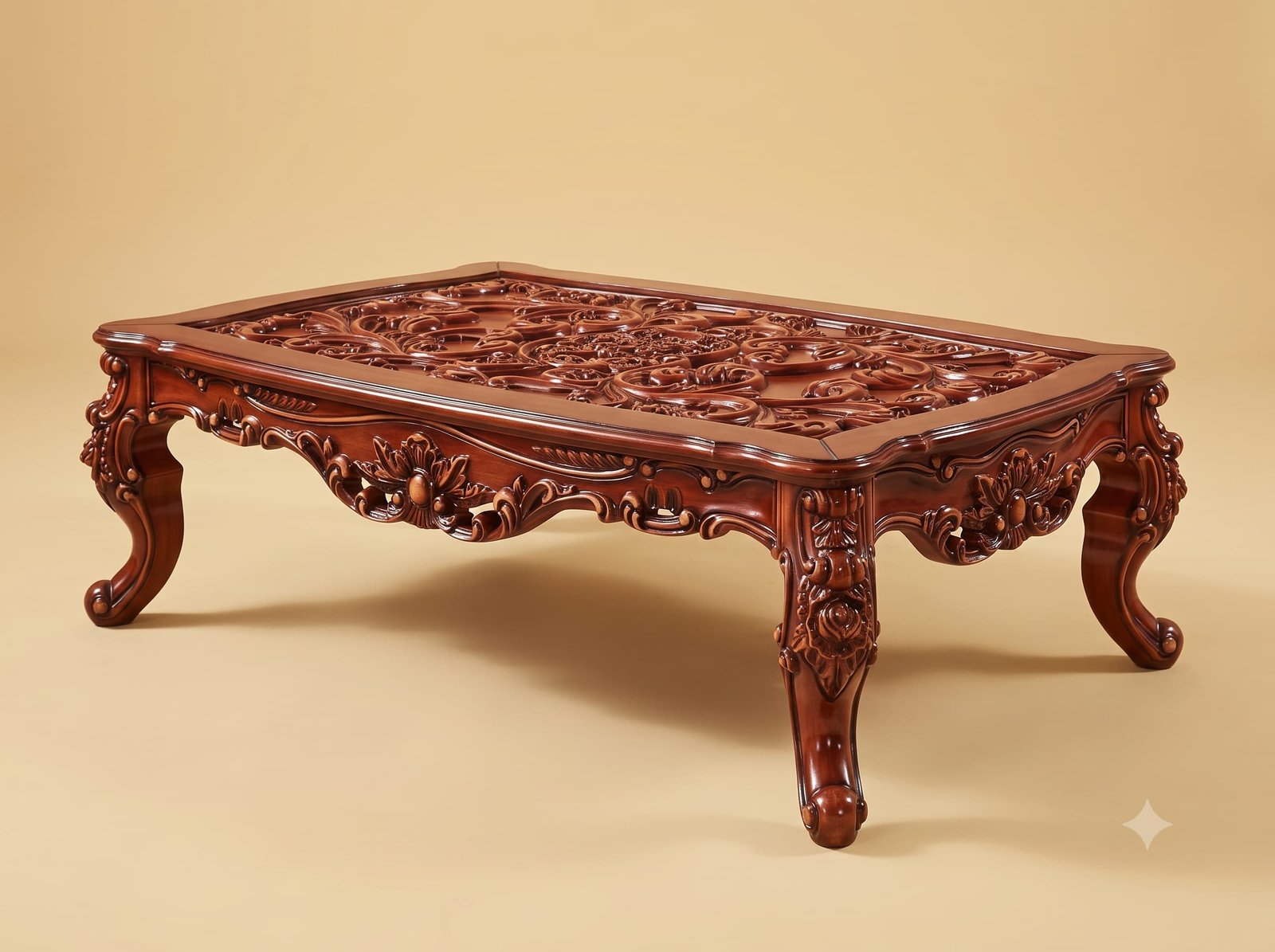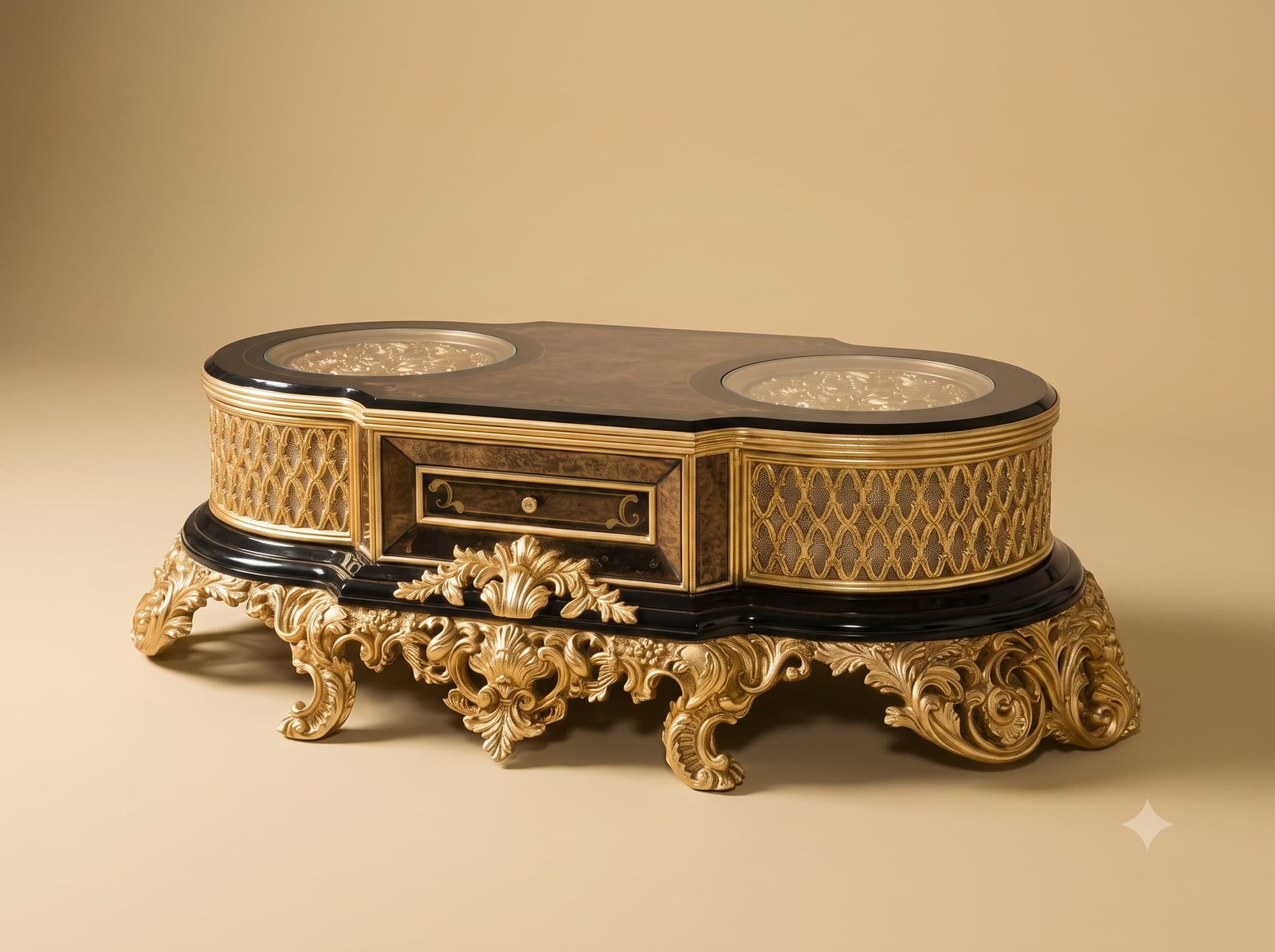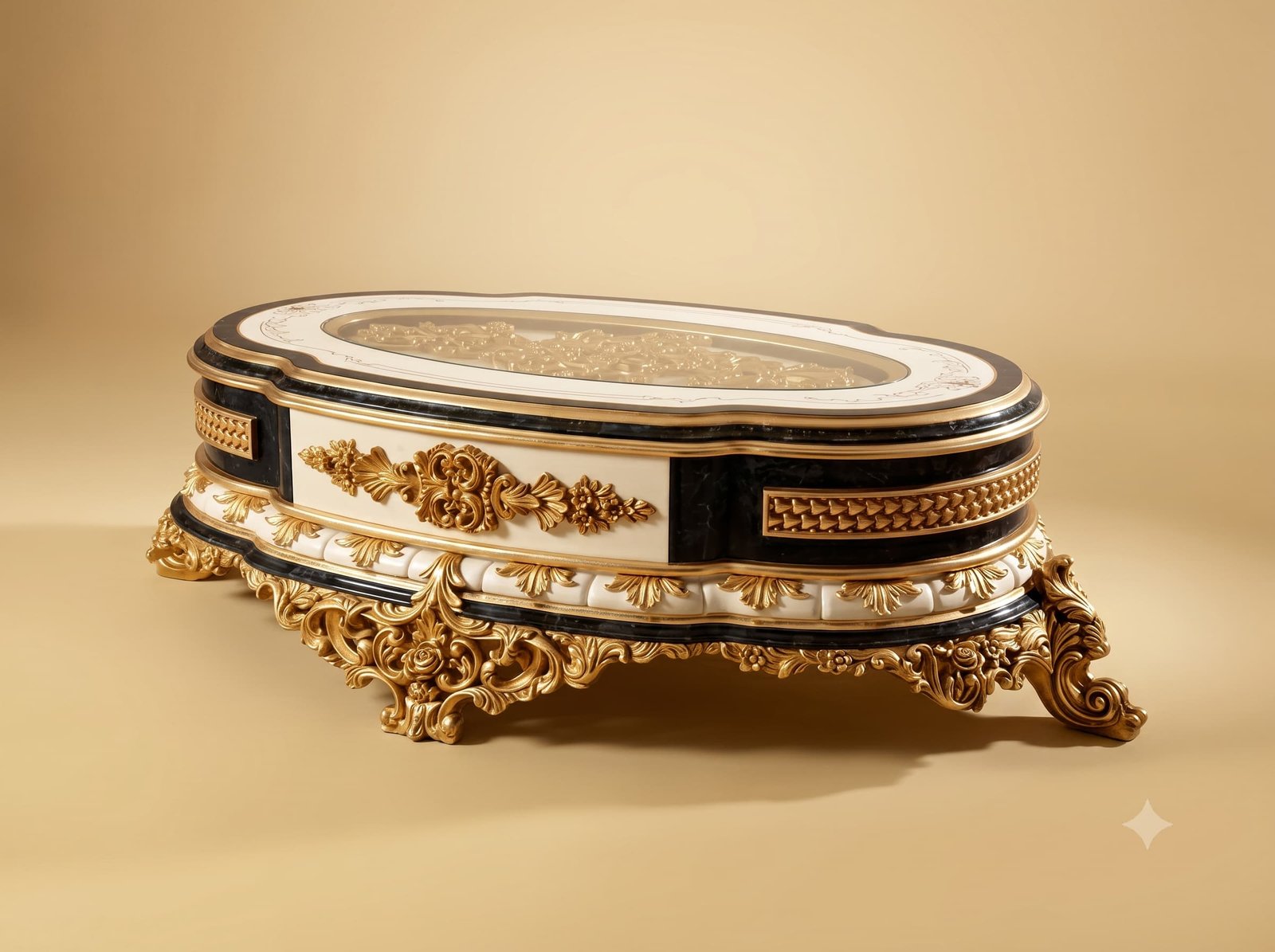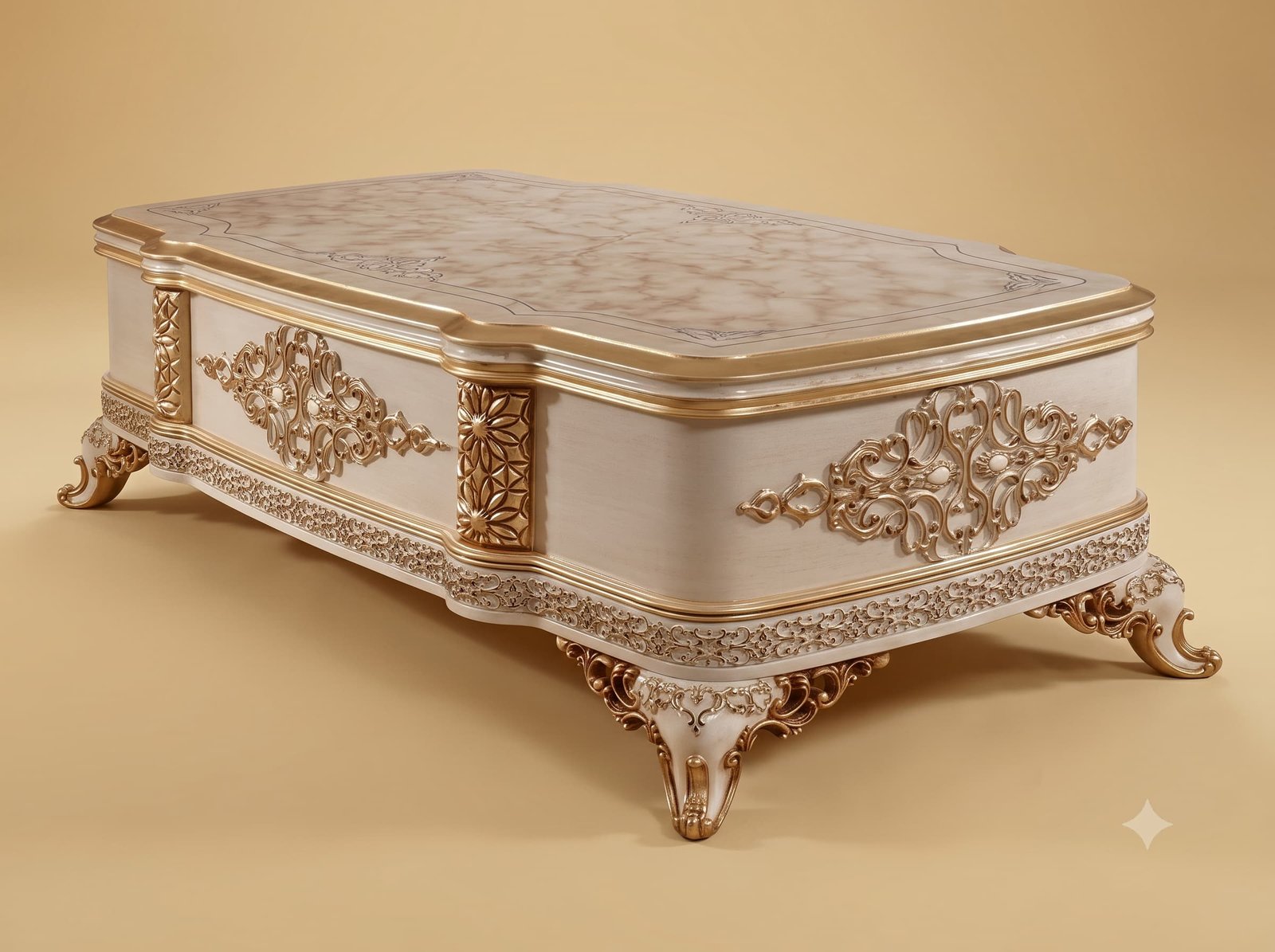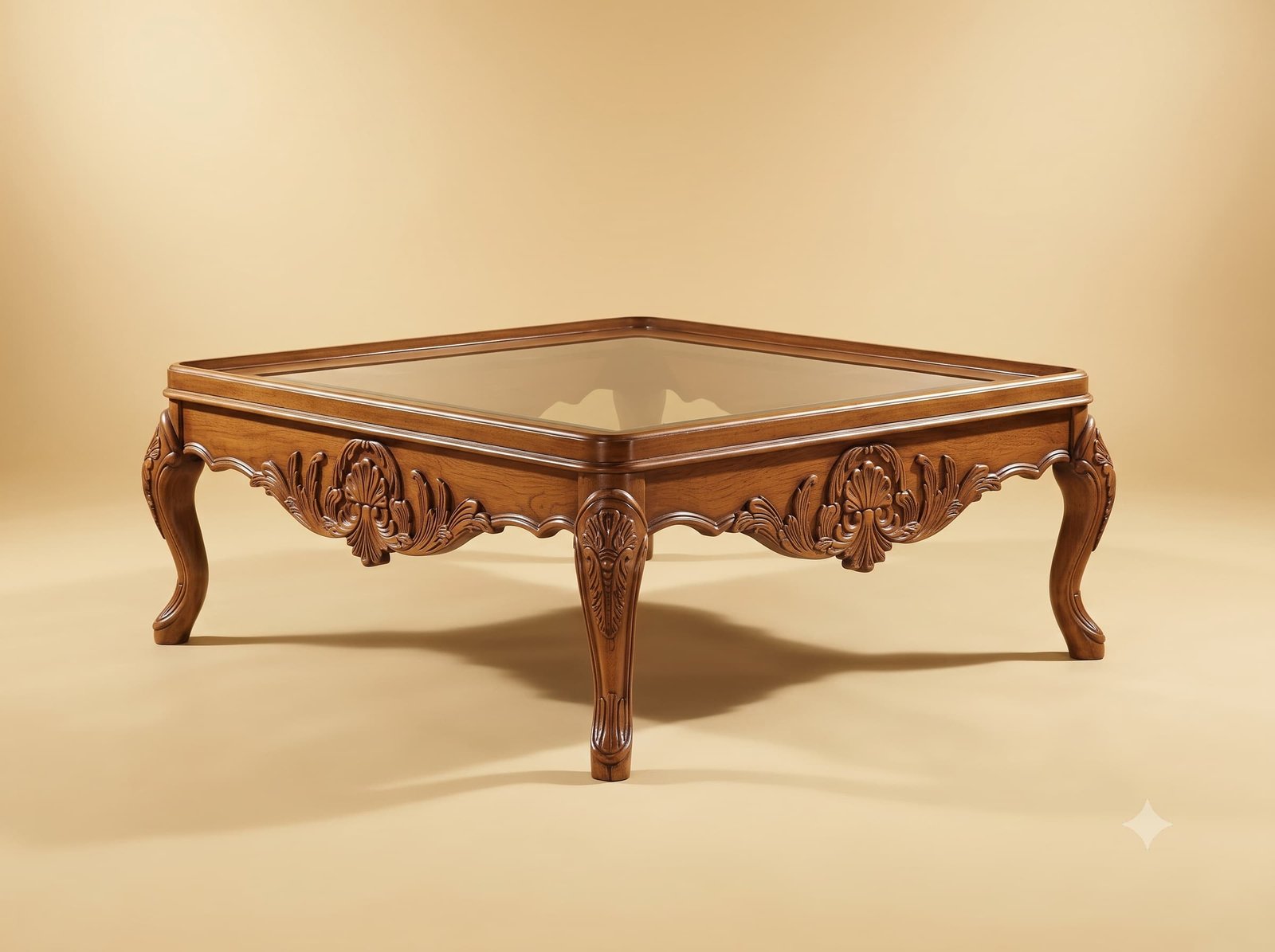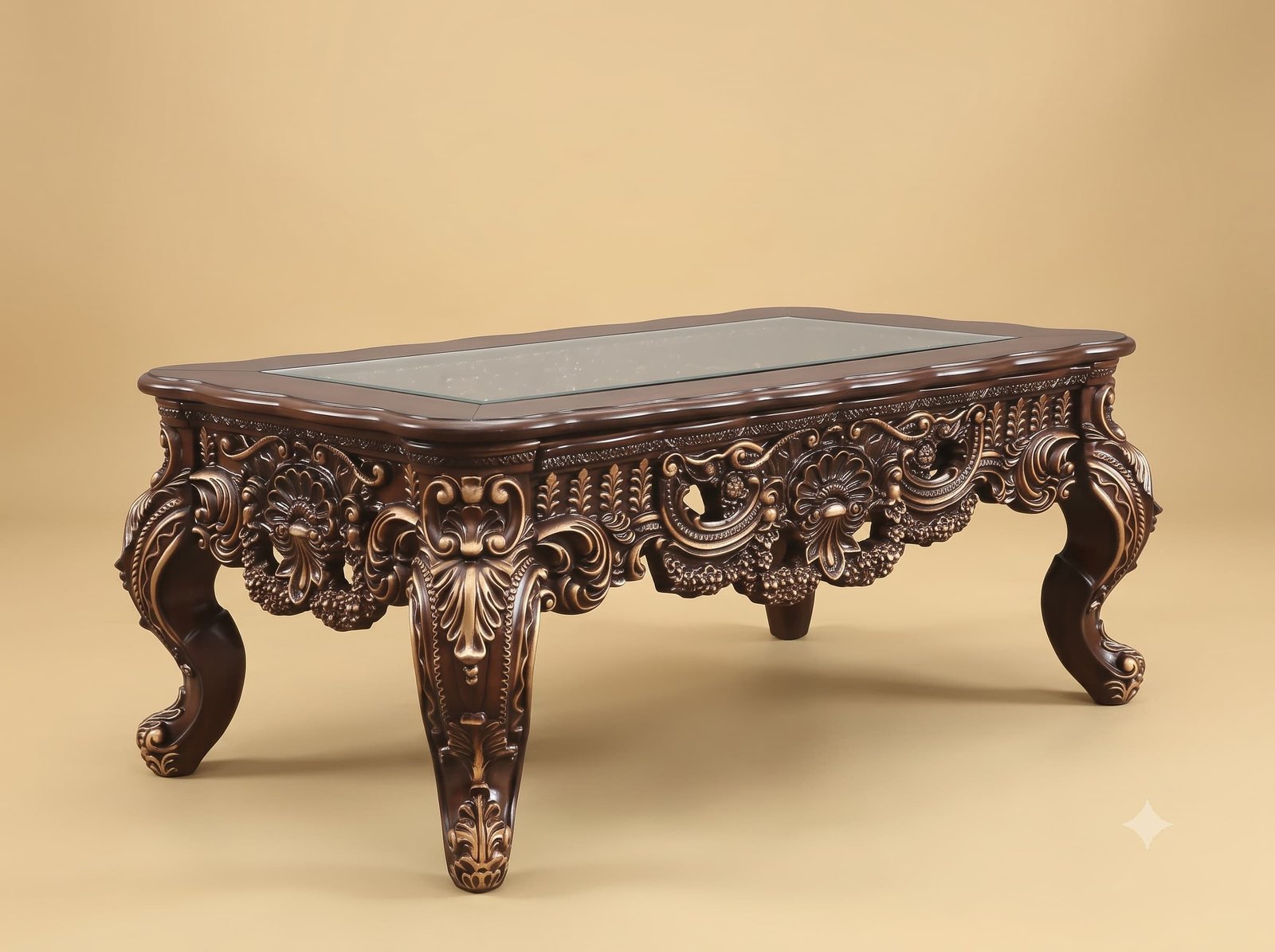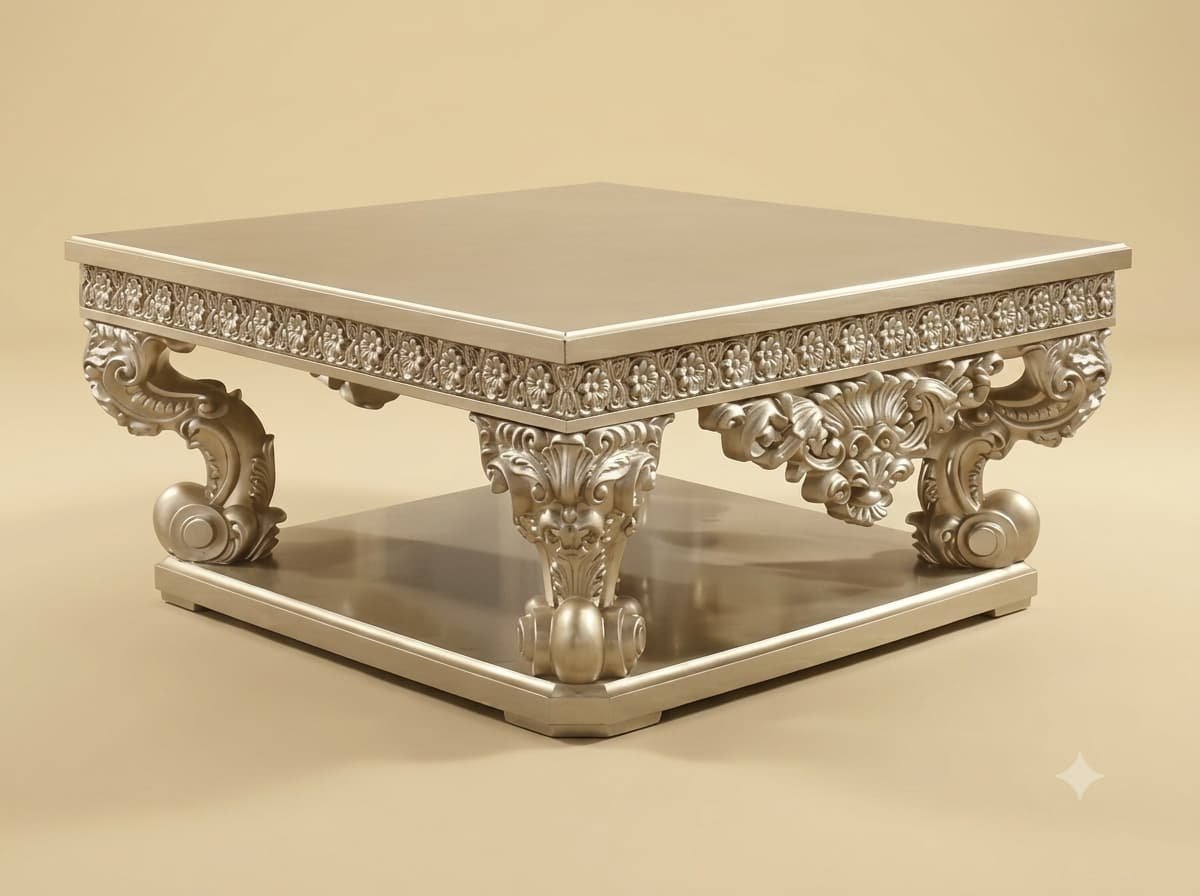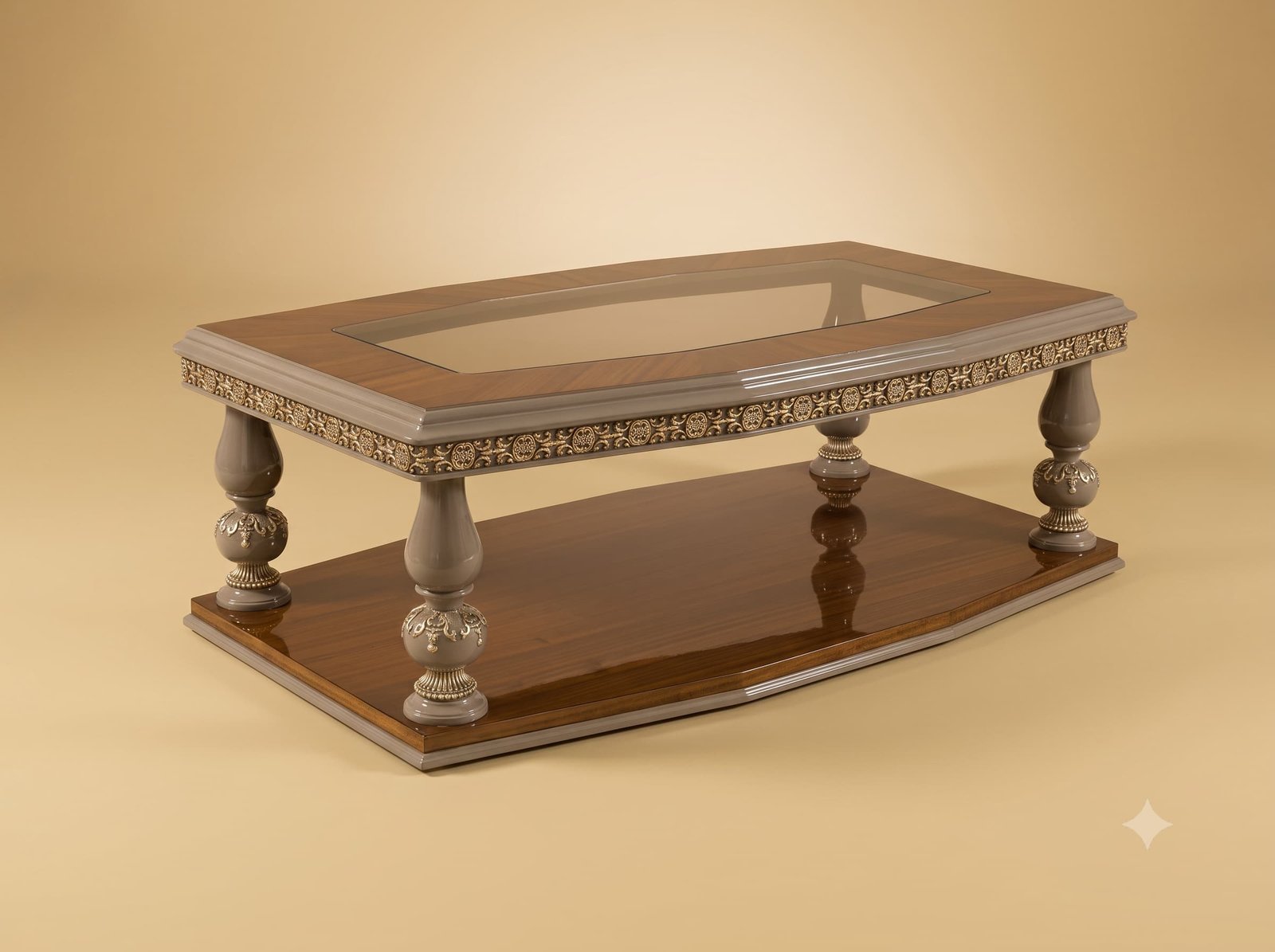
The lower shelf on this table is chosen for its grain, which is unusual for a shelf - because on this table you look down through the glass and see it.
On most tables a lower shelf is a working surface. Something is stacked on it, and nobody studies the wood. Here the top is part glass, so from a standing position the shelf is visible through it, in the middle of the room, at the exact angle where light rakes across the grain and shows it best.
So the shelf gets the treatment a top would normally get. The board is chosen for its figure rather than taken from whatever is in the rack; it is laid out so the grain runs along the length rather than across it, and if two boards are needed they are matched at the joint so the pattern continues rather than stopping dead.
Then it is polished to the same standard as the top, on the face nobody would think to check.
It is a small decision that costs a better board. It is also the difference between glass that shows you something and glass that shows you a shelf.
 Ask Price On WhatsApp