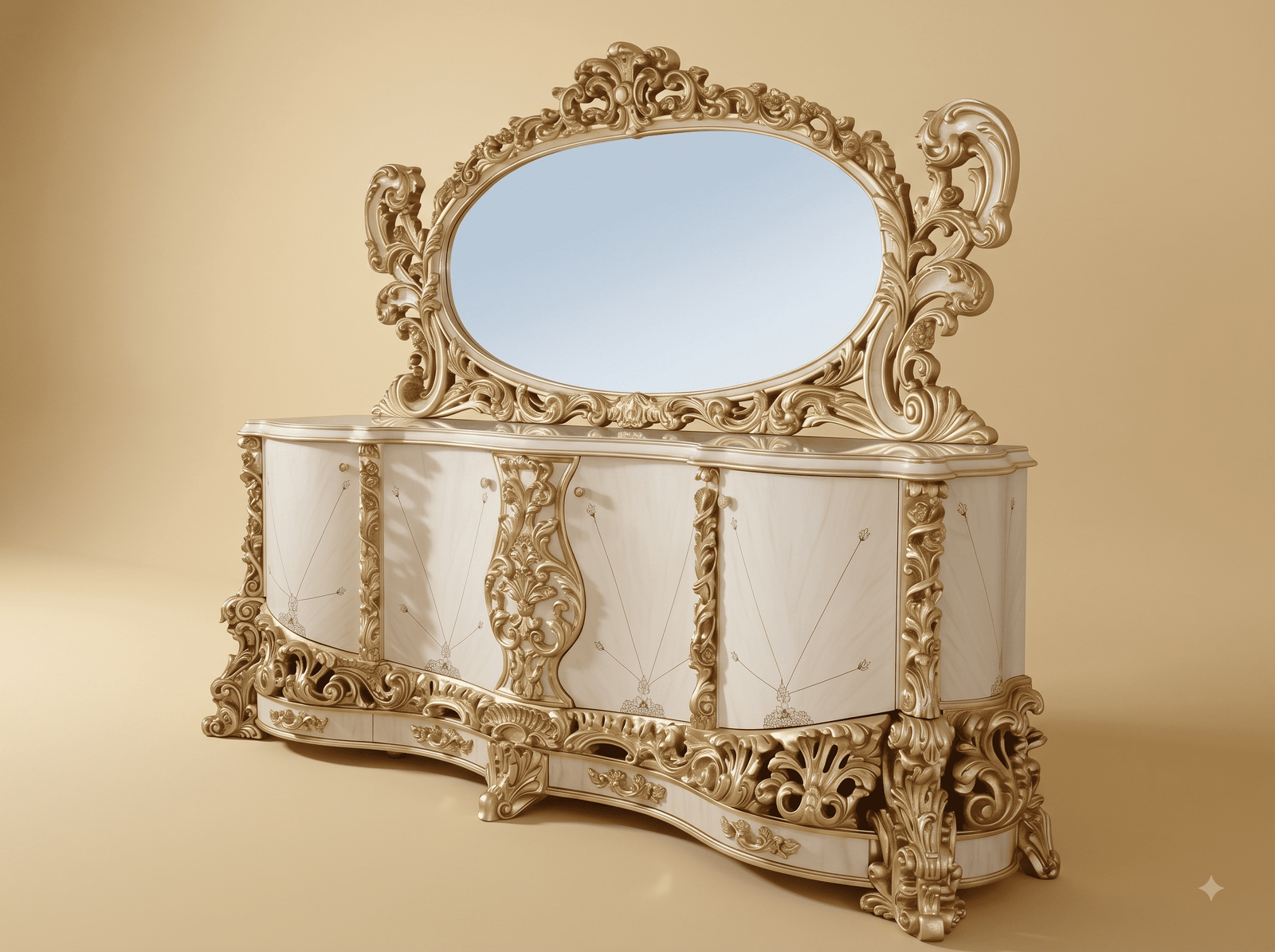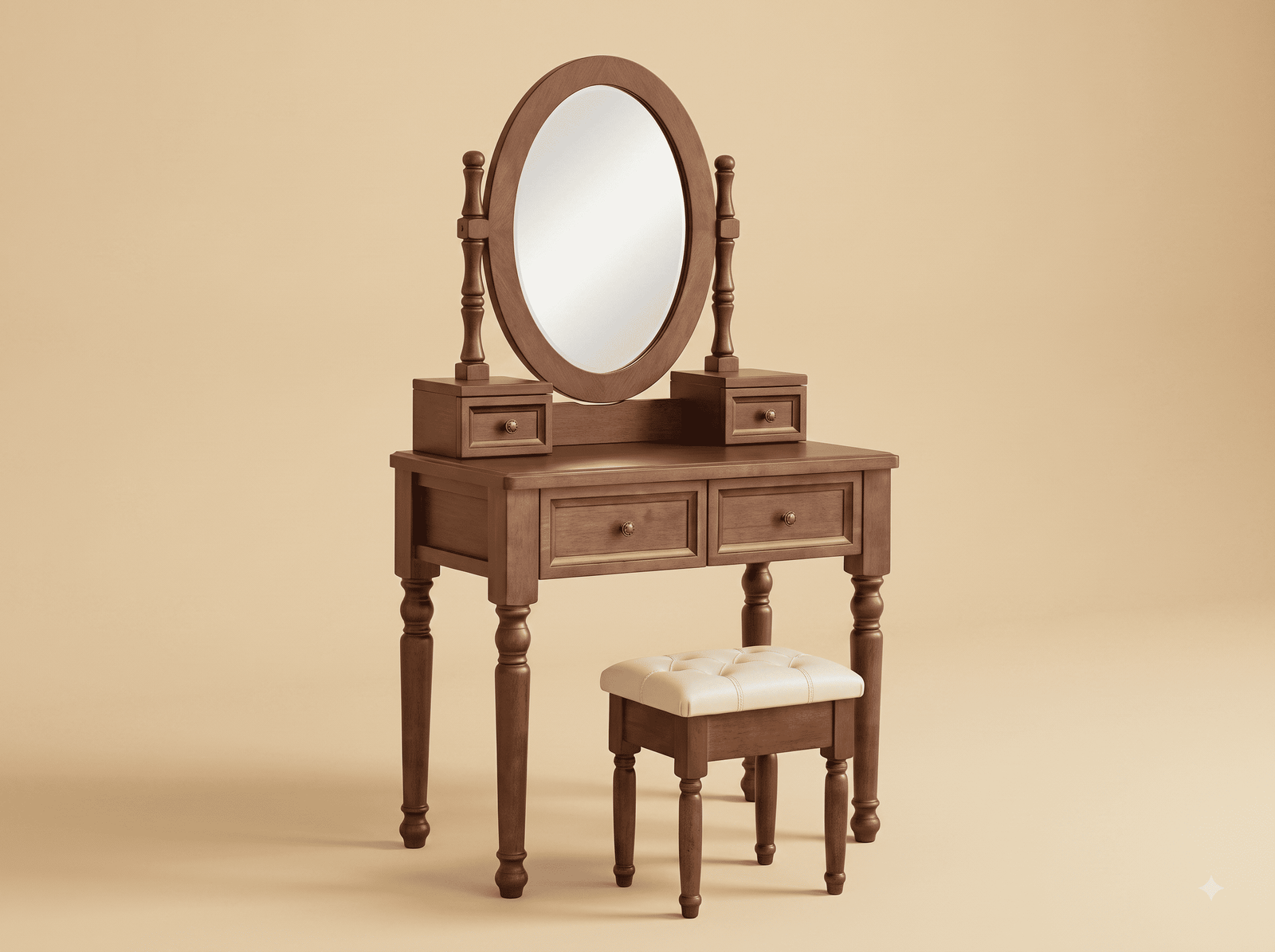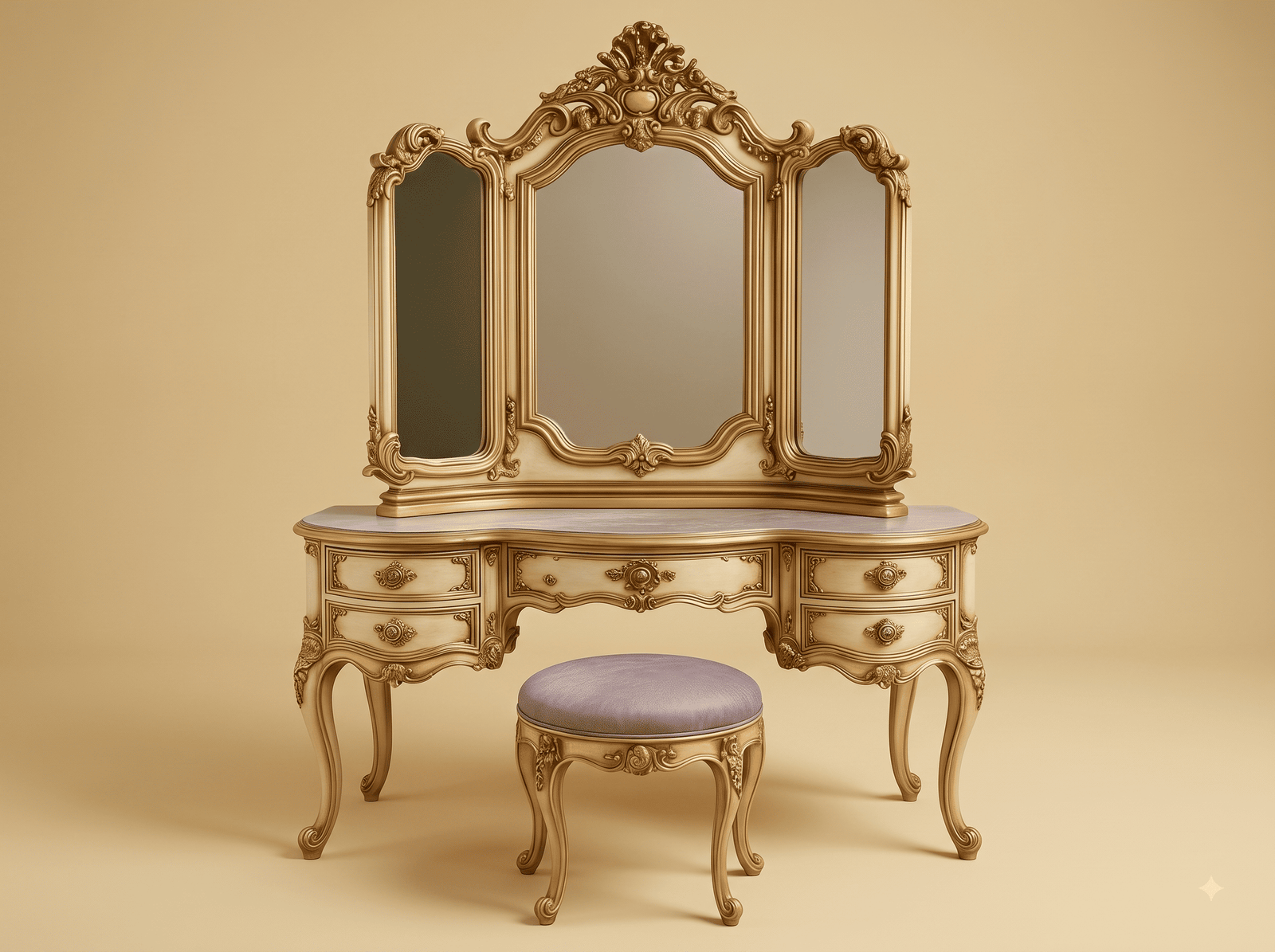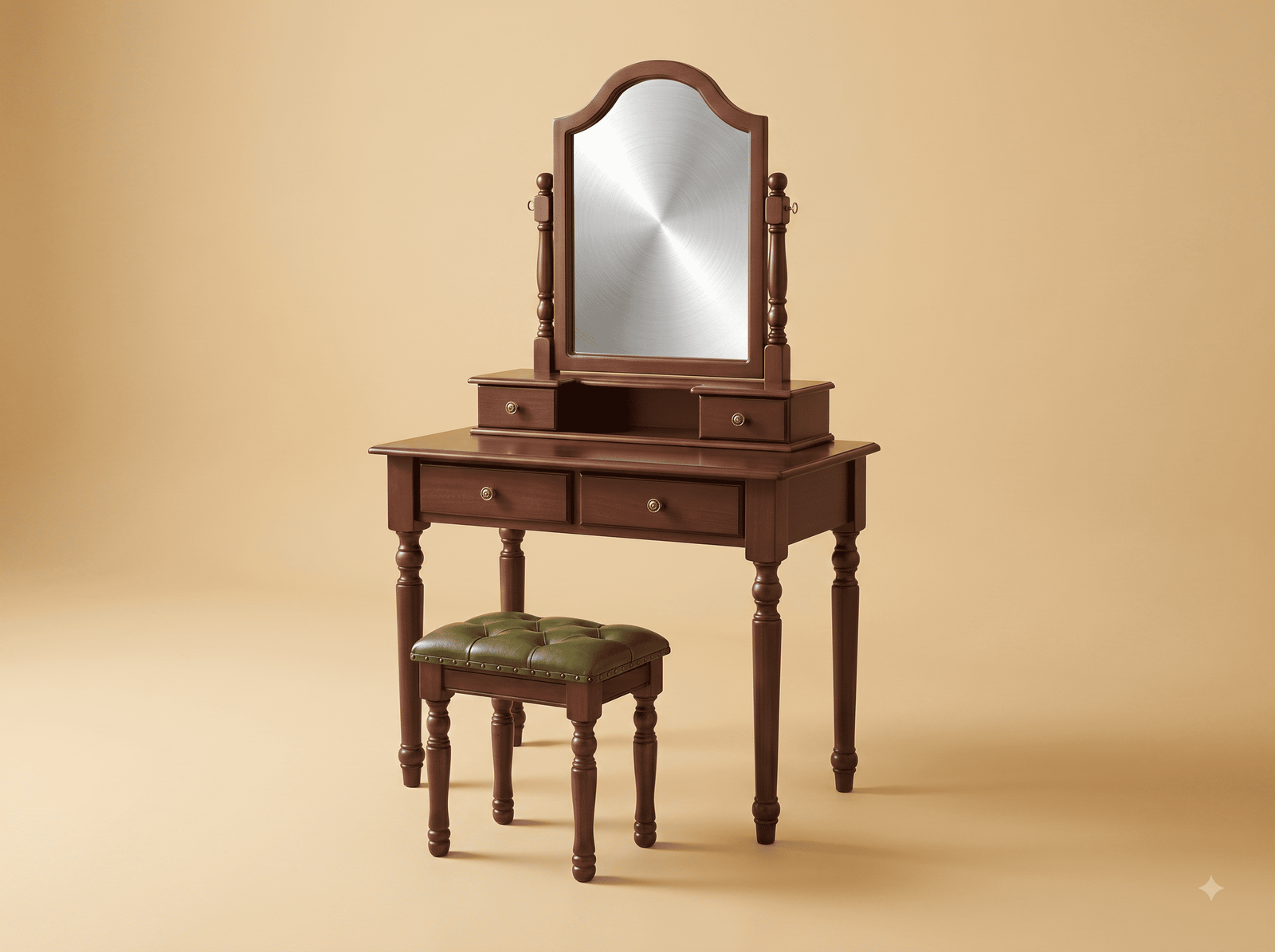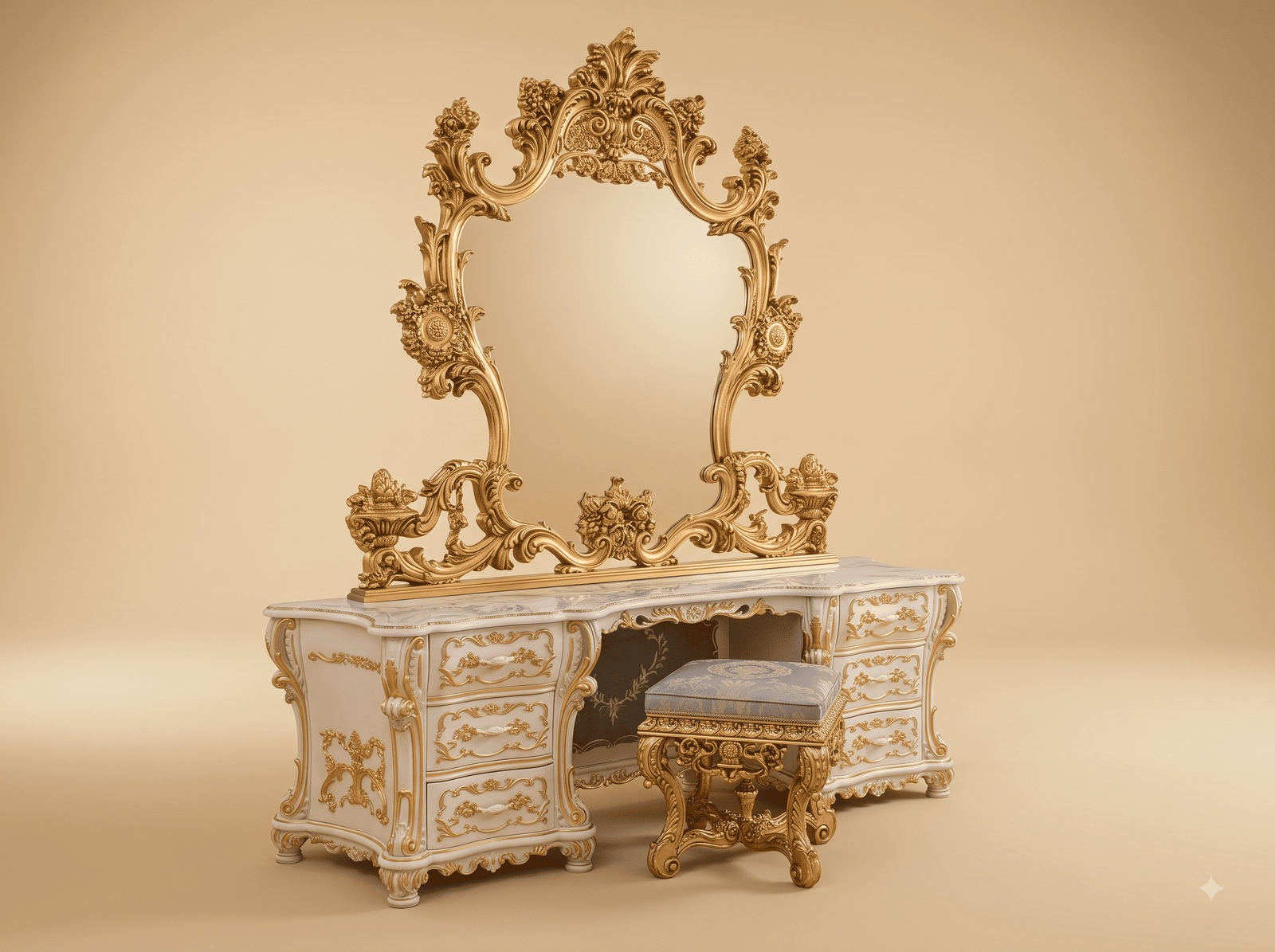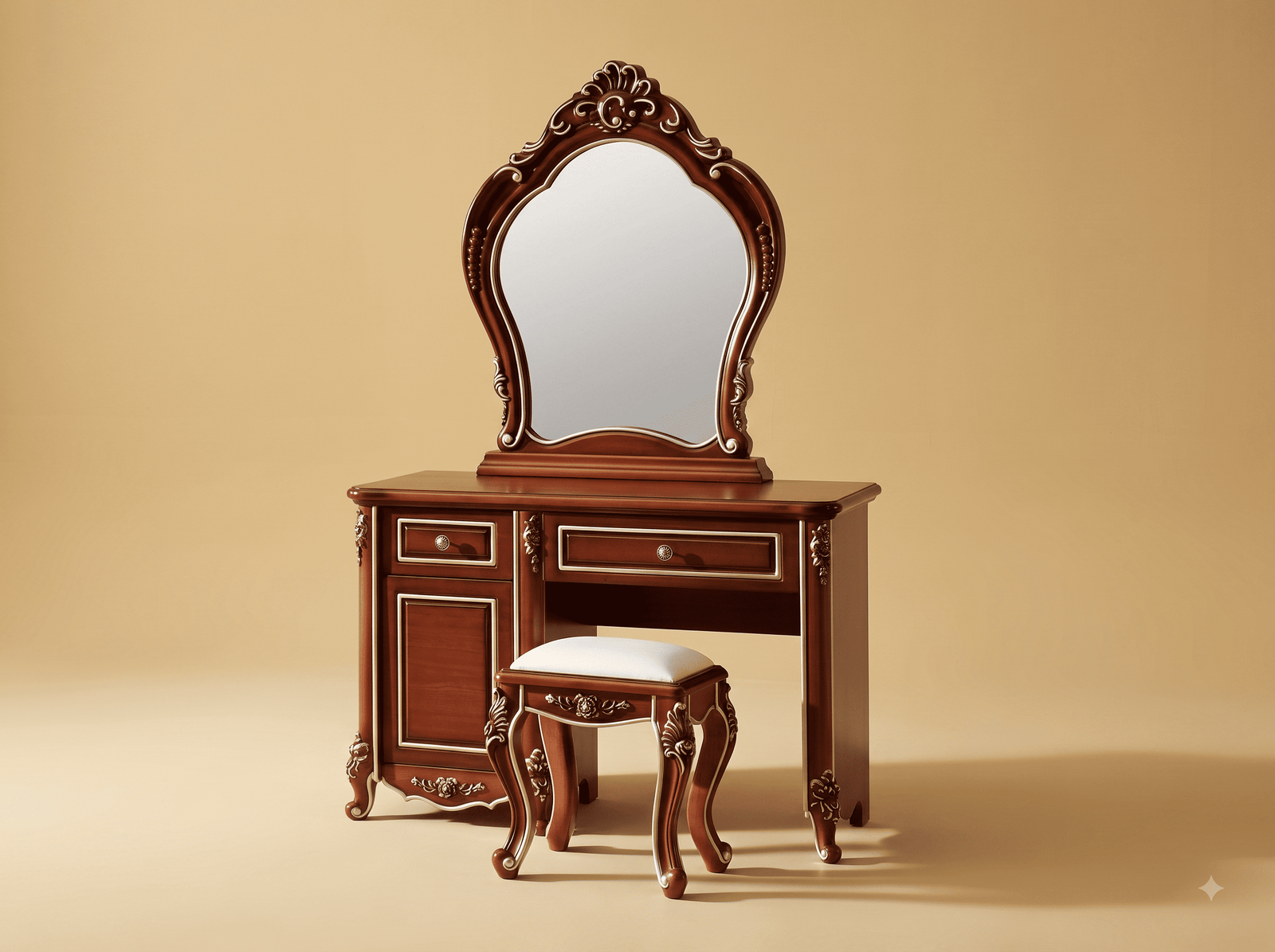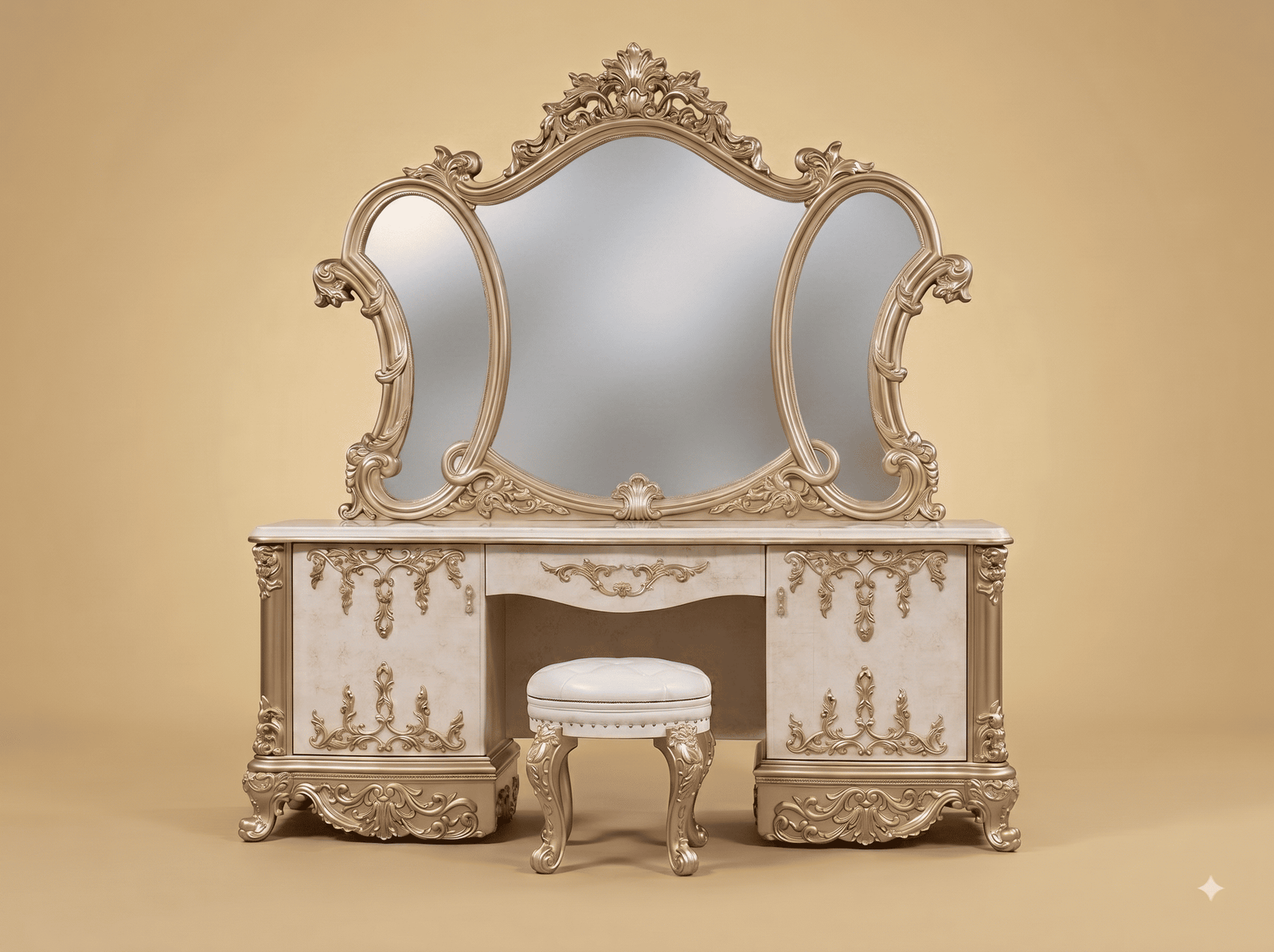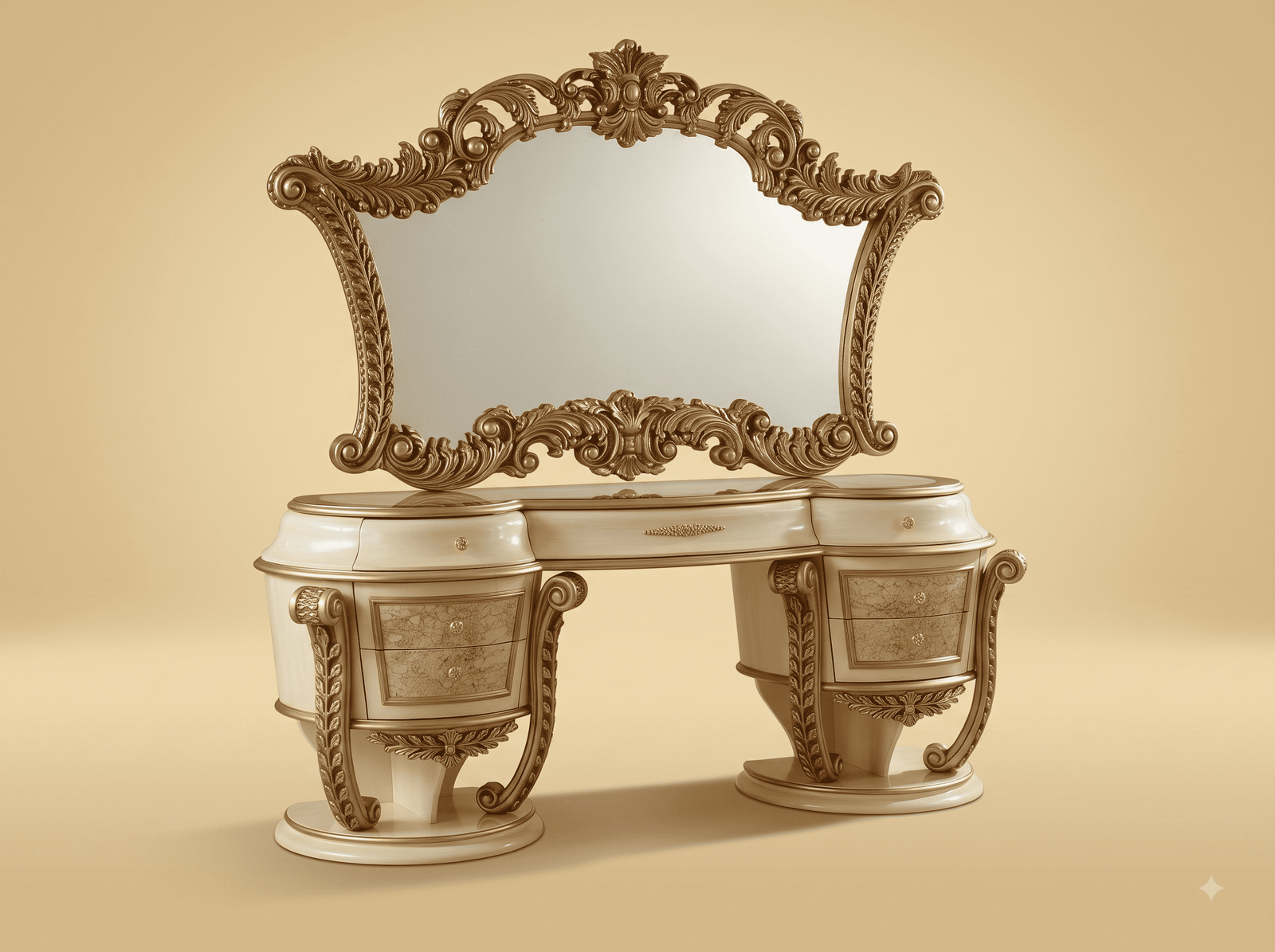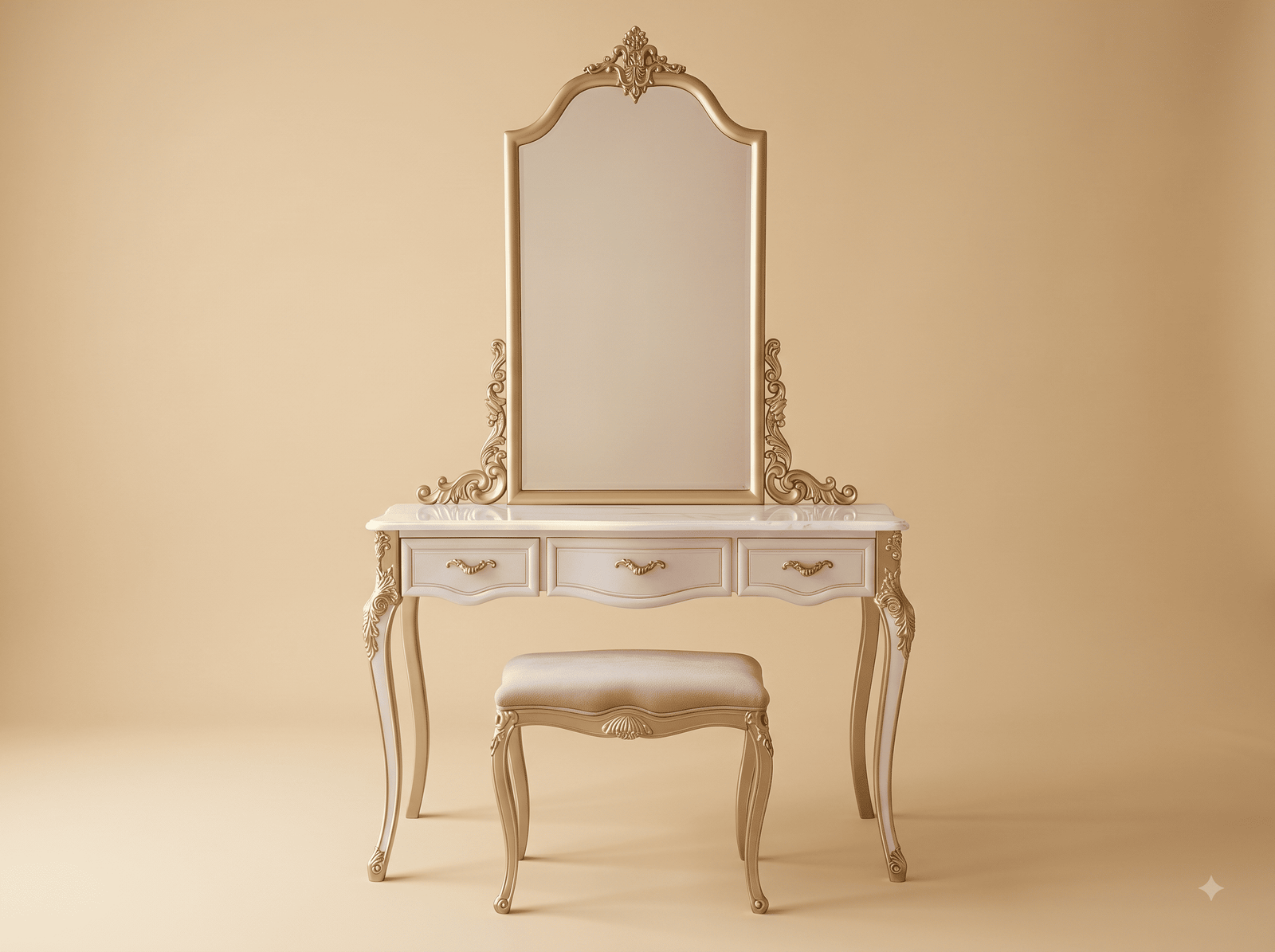
Look at the rail below the drawers. It is not straight - it dips gently between the legs and rises again as it meets them, in a long shallow wave that runs the width of the table.
That shaped frieze does more work than any other detail on this piece. A straight rail draws a hard horizontal line across the front, and the eye reads that line as the bottom of a solid block. Curve it, and the same rail reads as something suspended between the legs - the table appears to lift, and a piece with three drawers in it looks as light as one with none.
The catch is that the rail cannot be cut from a thin board and applied. It carries the drawers and ties the front legs together, so it has to be substantial, and the wave has to be shaped out of a thick piece of solid teak with the grain running along its length. Cut across the grain and the thinnest point of the dip becomes the weakest point in the table.
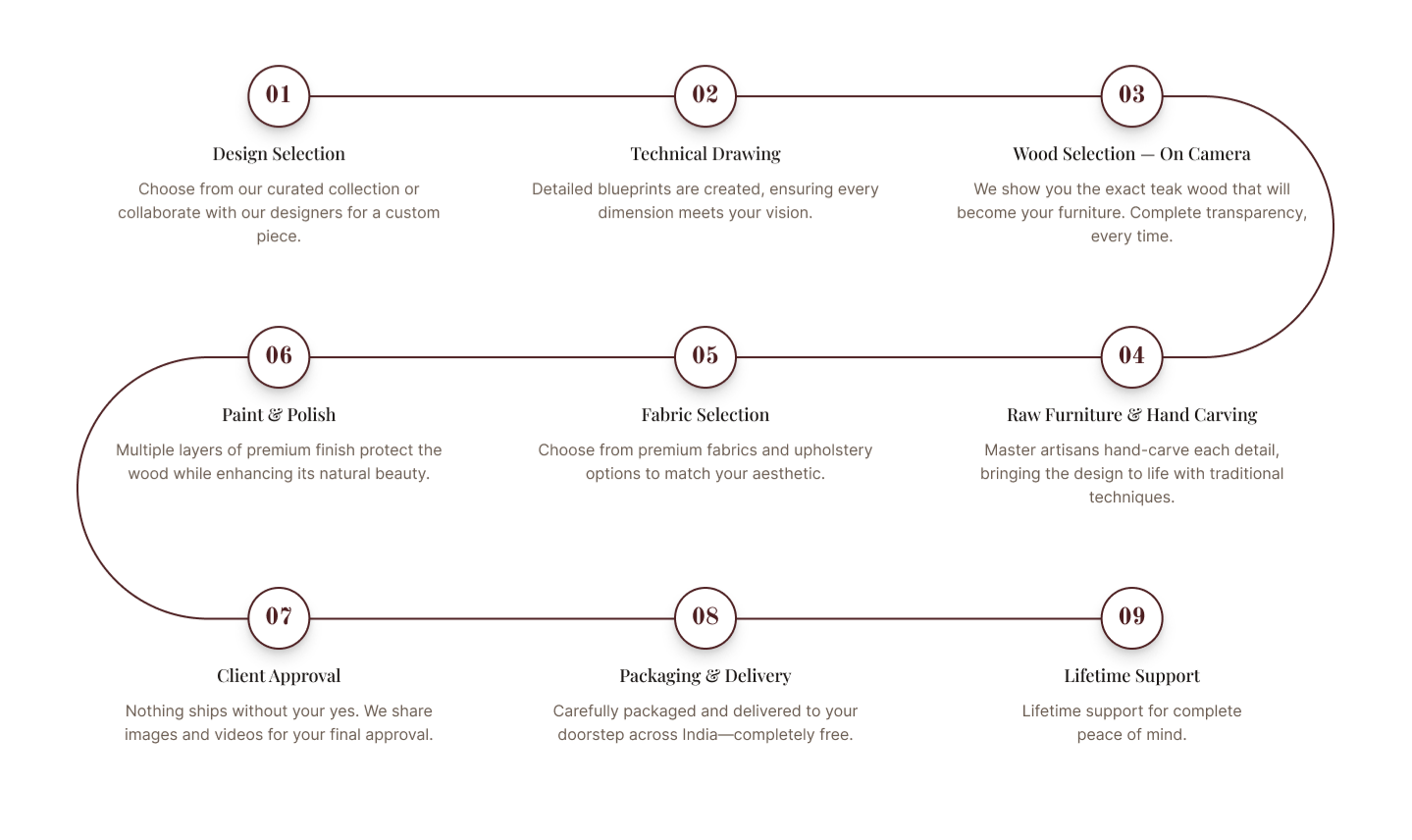
Our craftsmen mark the curve from a template, cut close to the line, then work the final profile by hand with the piece held against the assembled legs - so the wave is judged in place, against the actual spacing it will live with, rather than in isolation on a bench.
 Ask Price On WhatsApp