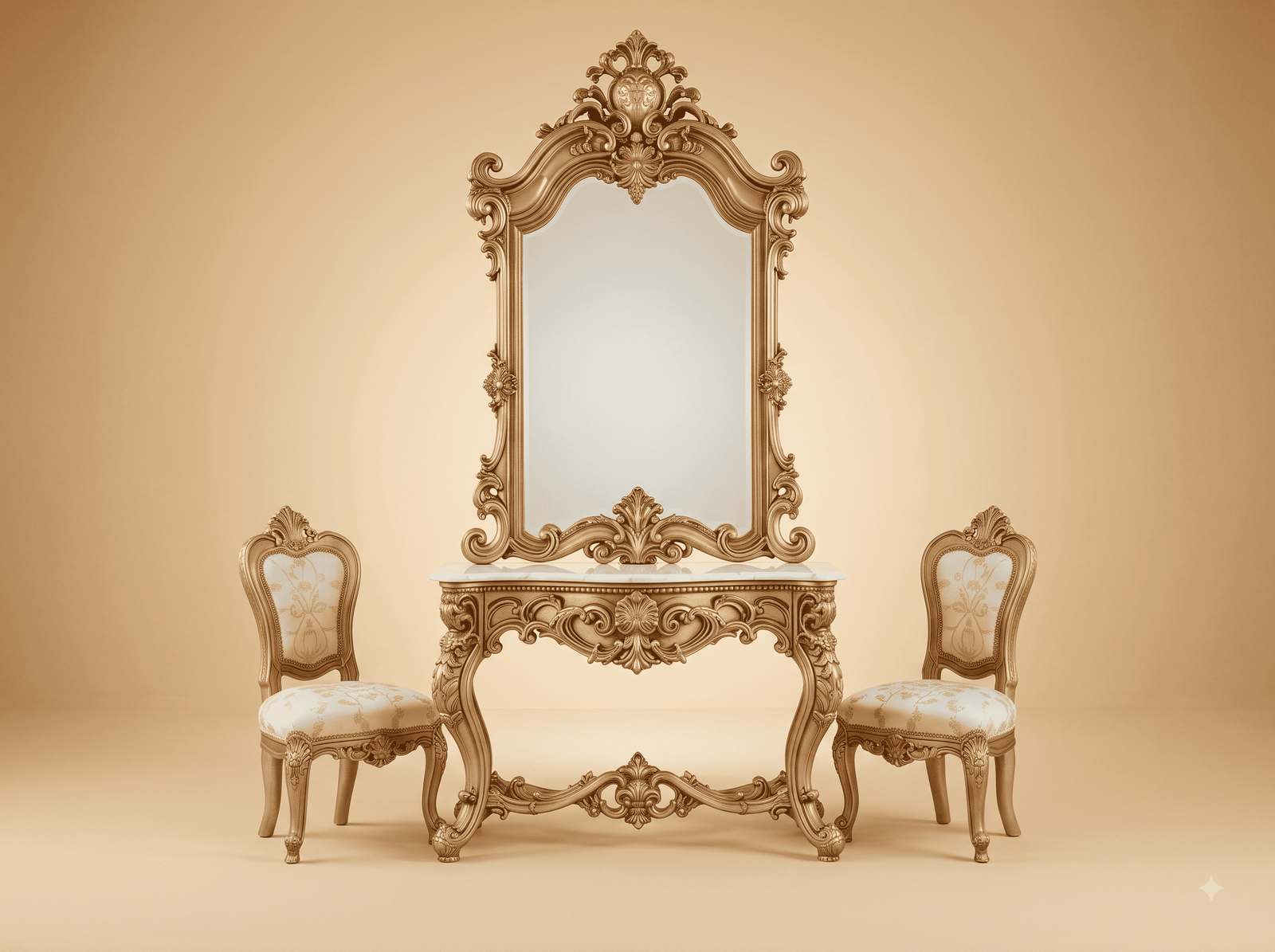
Putting a large mirror over a small table is a balancing problem before it is a decorative one. The visual mass sits high and the support sits low and narrow, and if that relationship is handled carelessly the whole arrangement looks precarious even when it is perfectly safe.
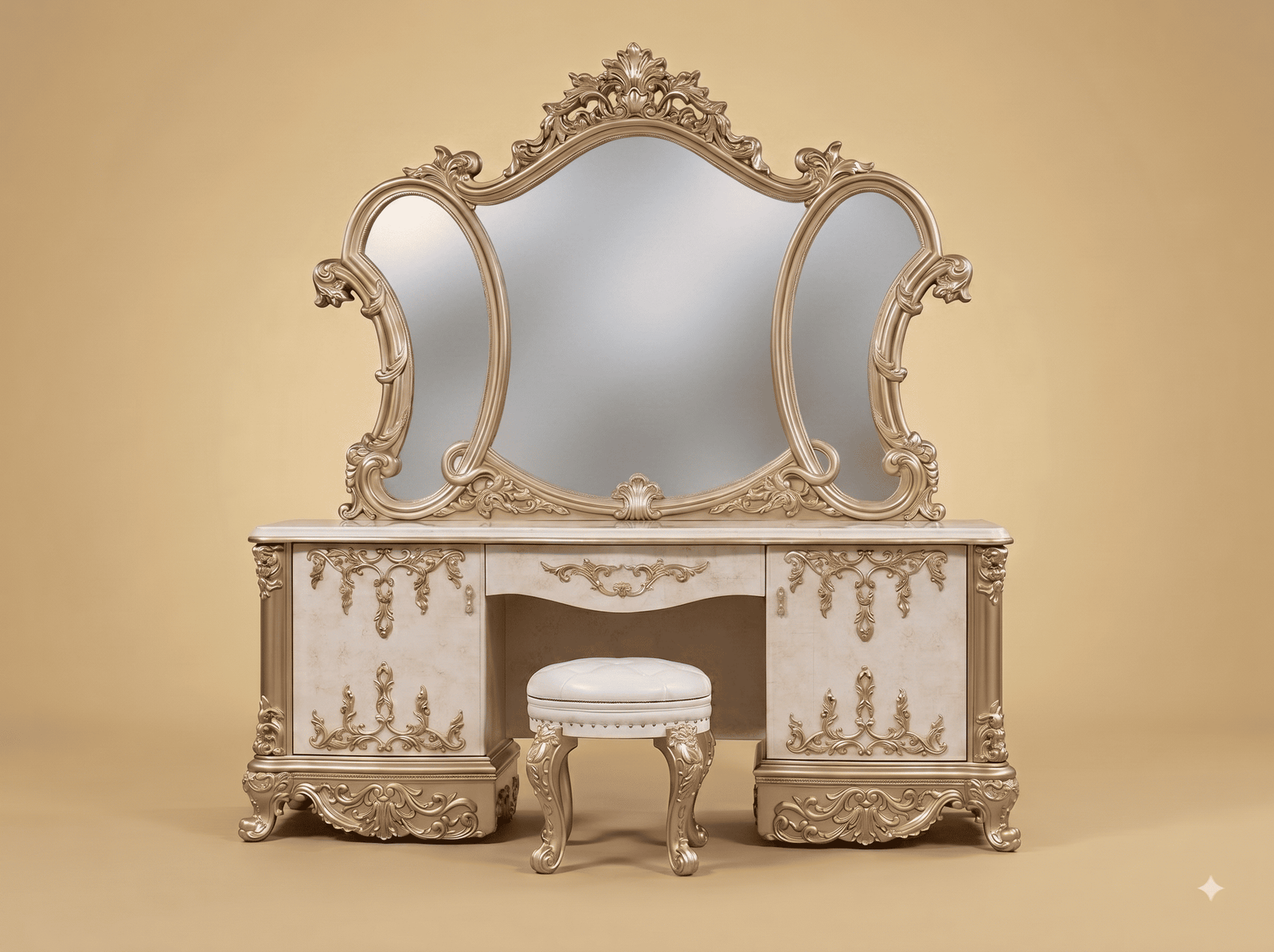
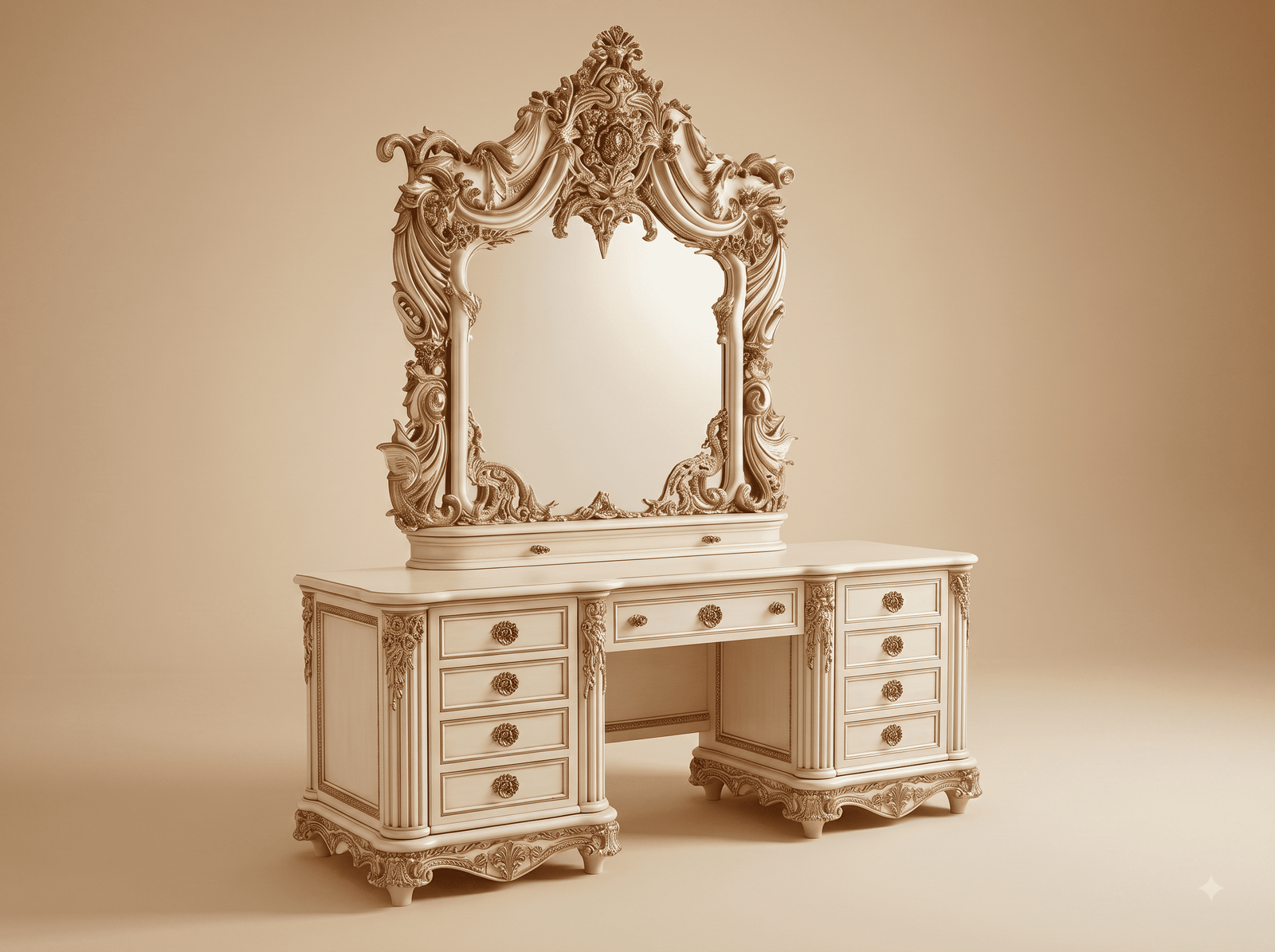
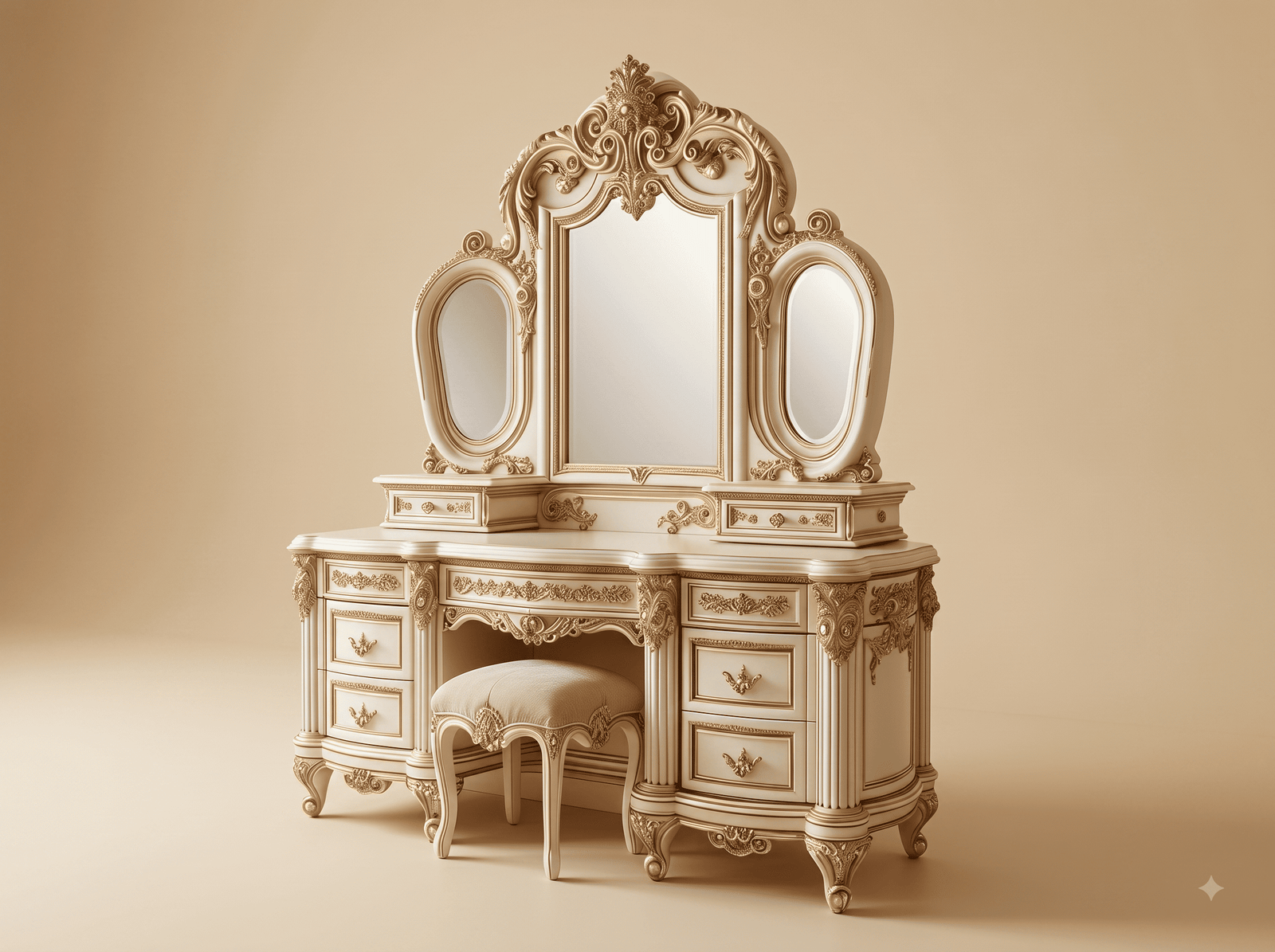
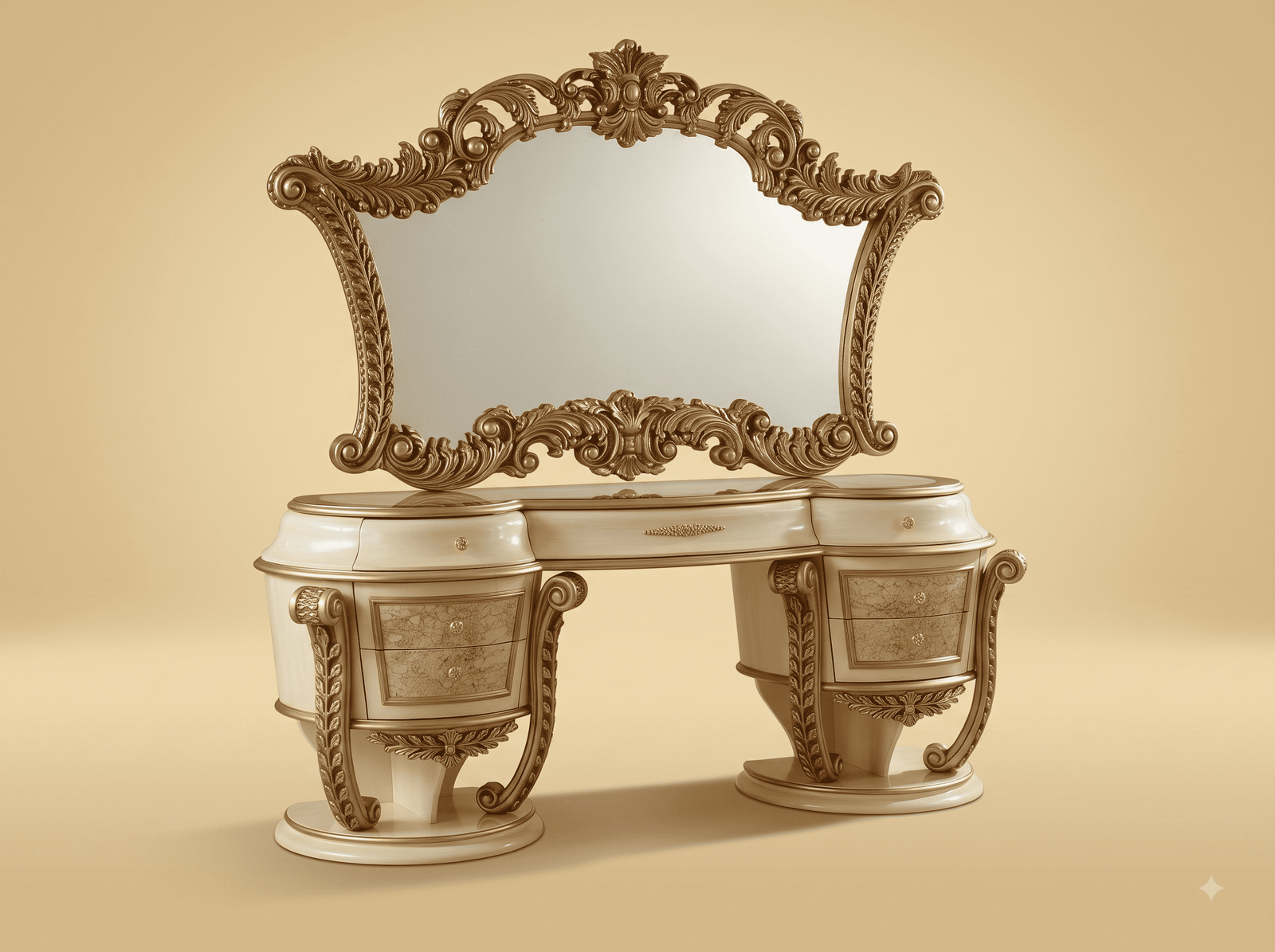
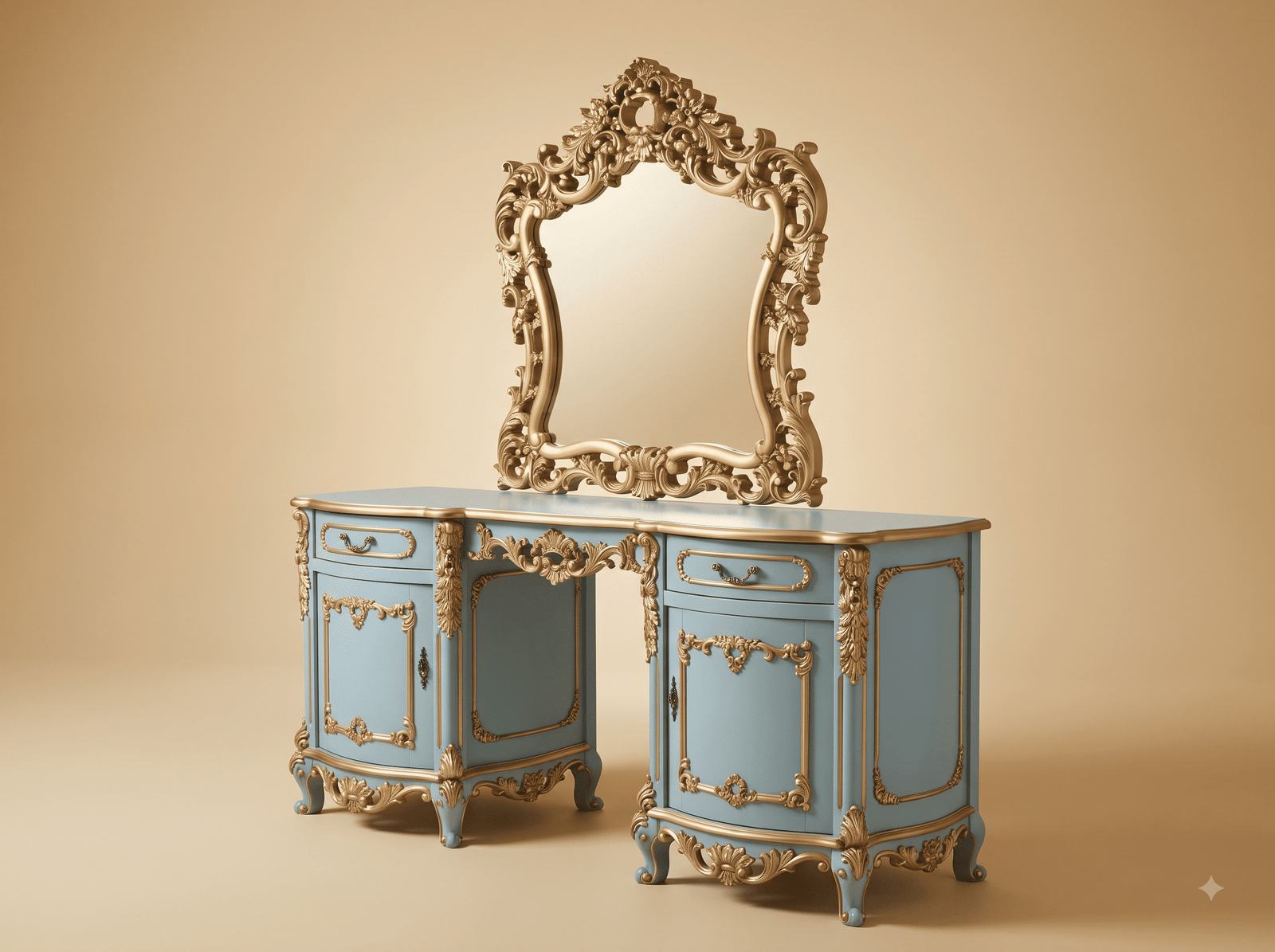
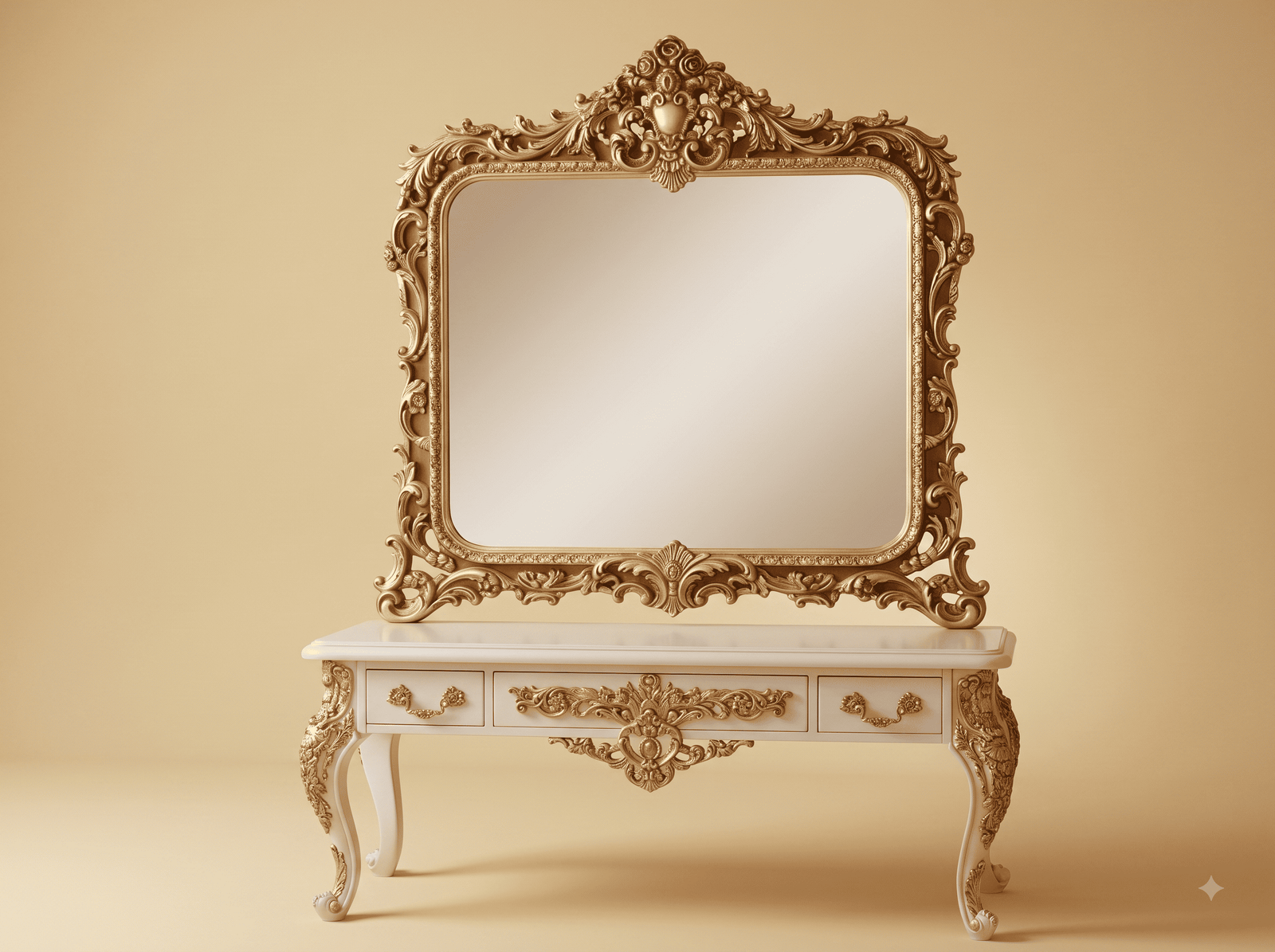
The solution is in the frame's outline. Notice that the openwork does not simply stop at the sides - it sweeps outward and downward at the lower corners, dropping toward the console and widening the base of the composition exactly where the eye is looking for support. The frame is drawn to have shoulders at the top and feet at the bottom, so it reads as standing rather than as floating above the table.
Physically it is anchored too. A mirror at this scale is fixed back to the wall rather than resting on the console alone, which is why the table beneath can stay as slim as it is. Our team fits that anchoring on delivery.
The third element is the gold. Because the gilding runs on the frame, the apron and the legs but not on the table body, the eye connects the mirror to the legs directly and reads a continuous structure passing behind the plain white console - which is precisely the impression the design is built to give.
 Ask Price On WhatsApp