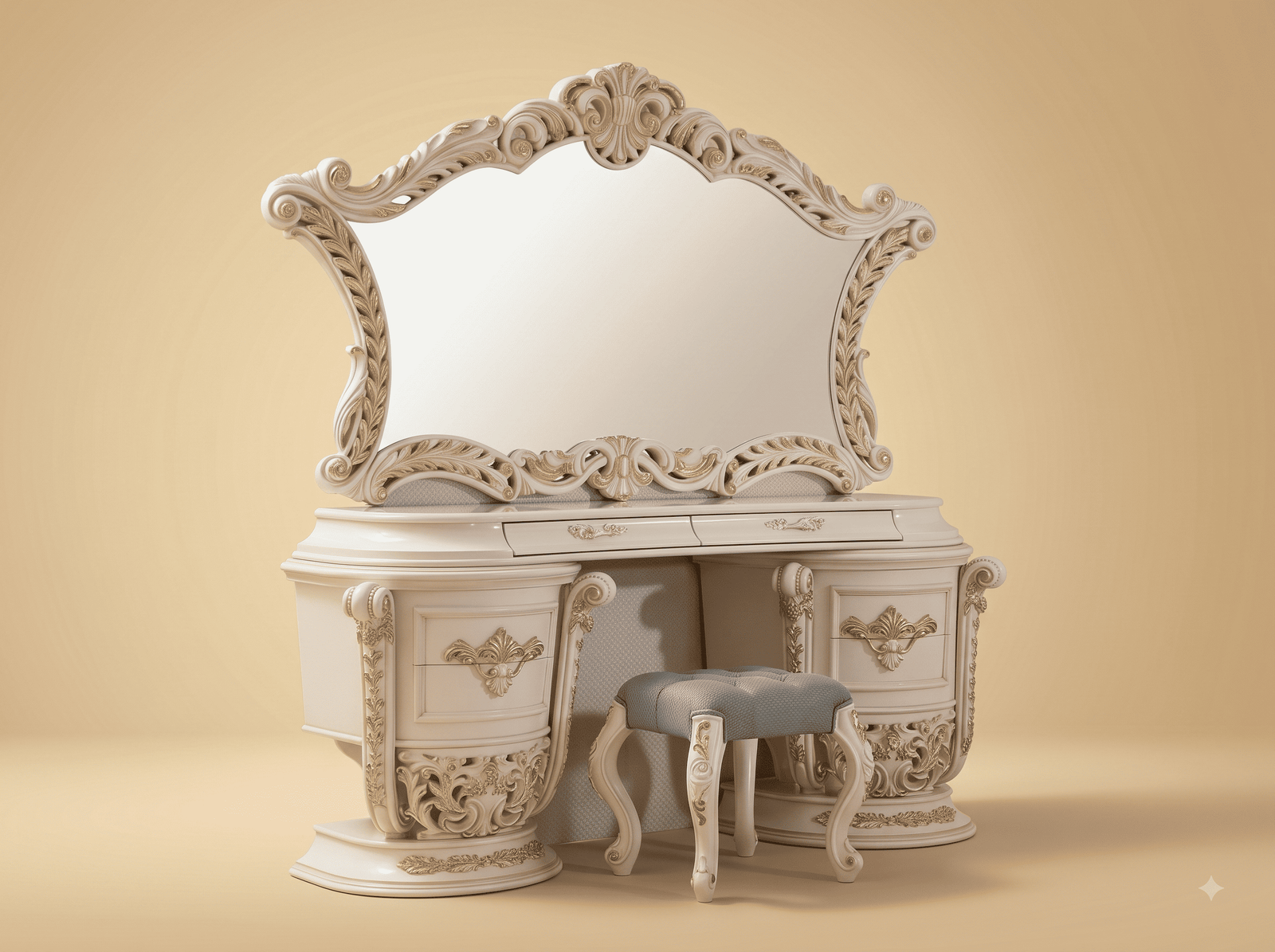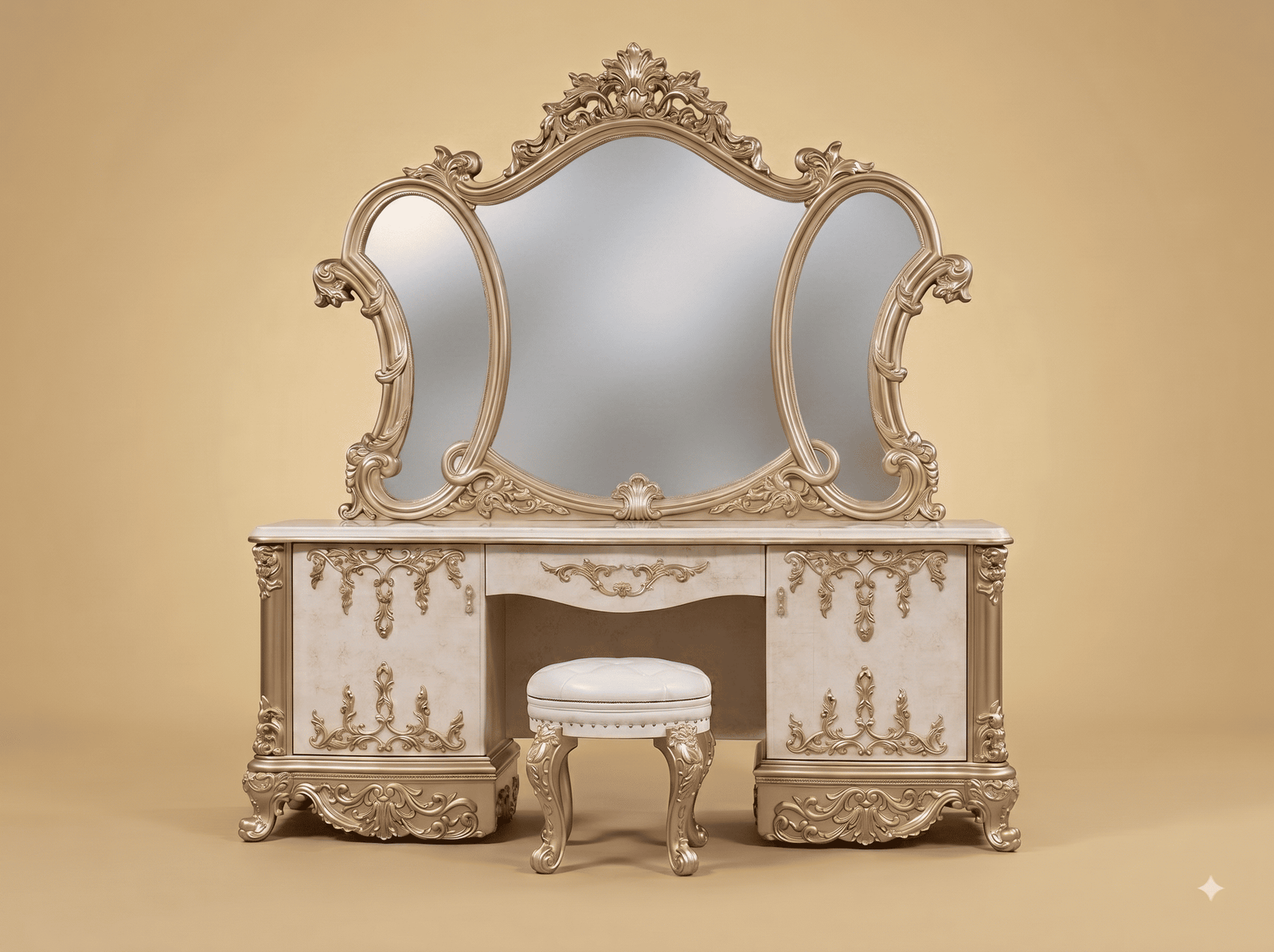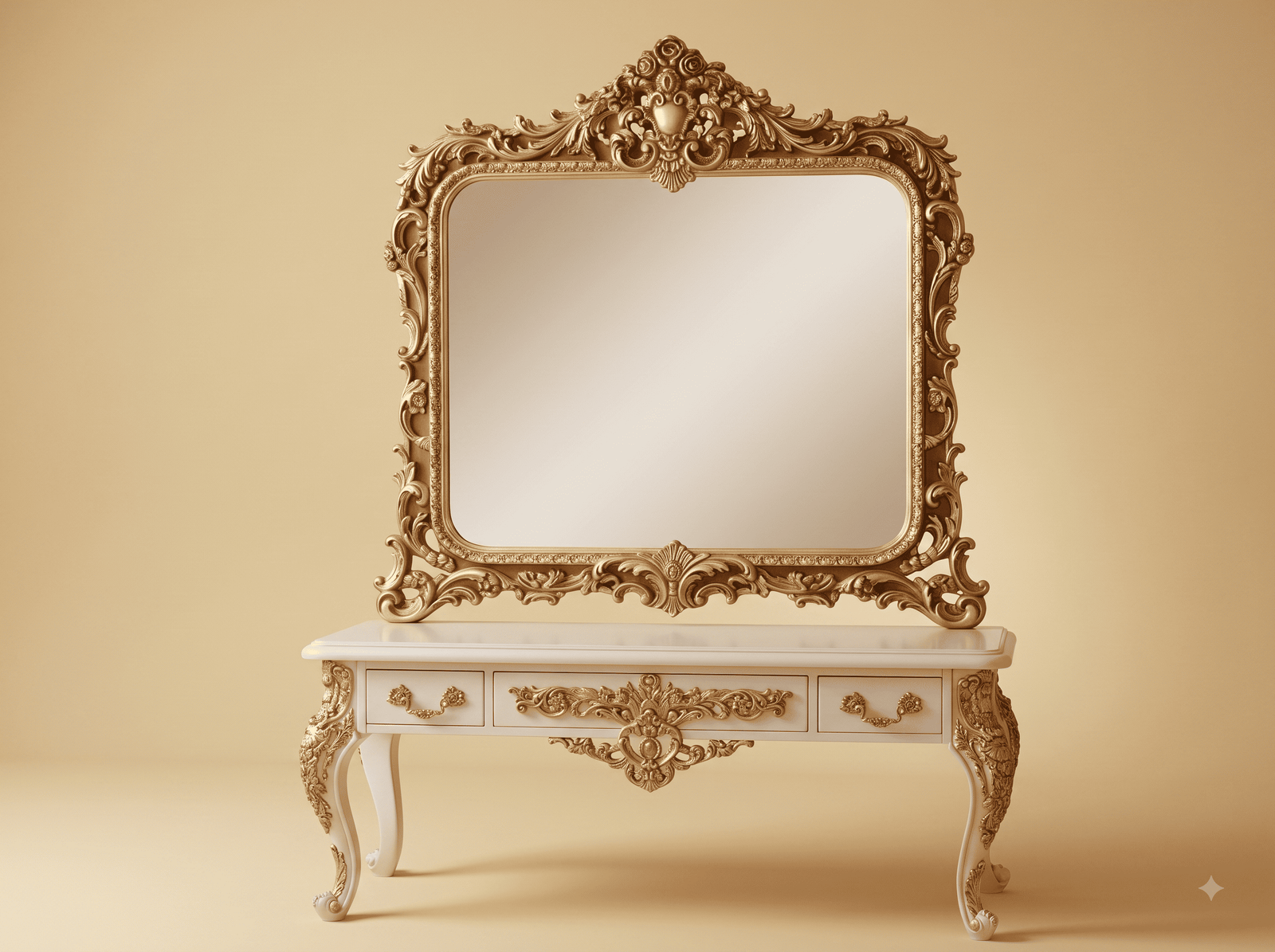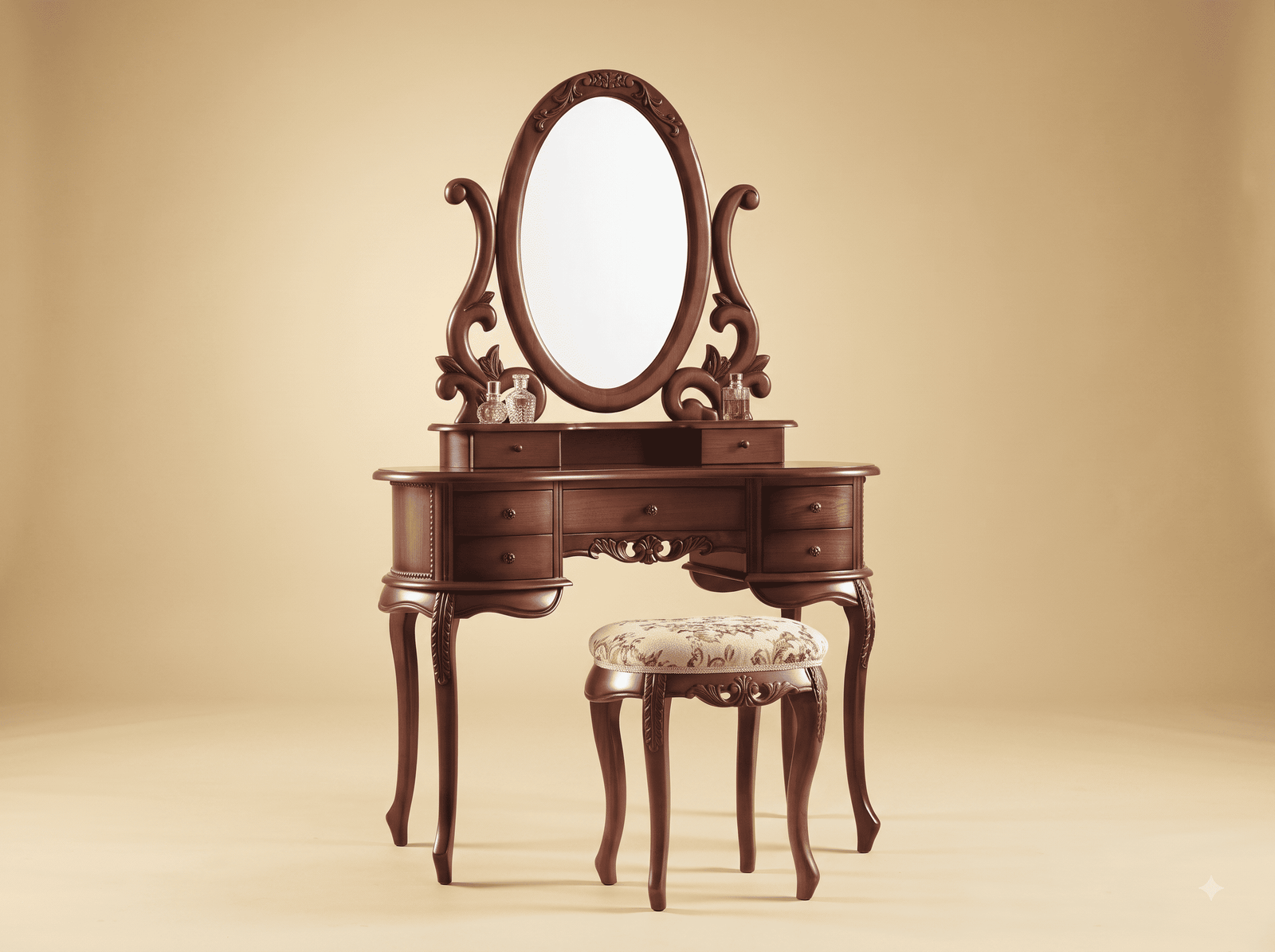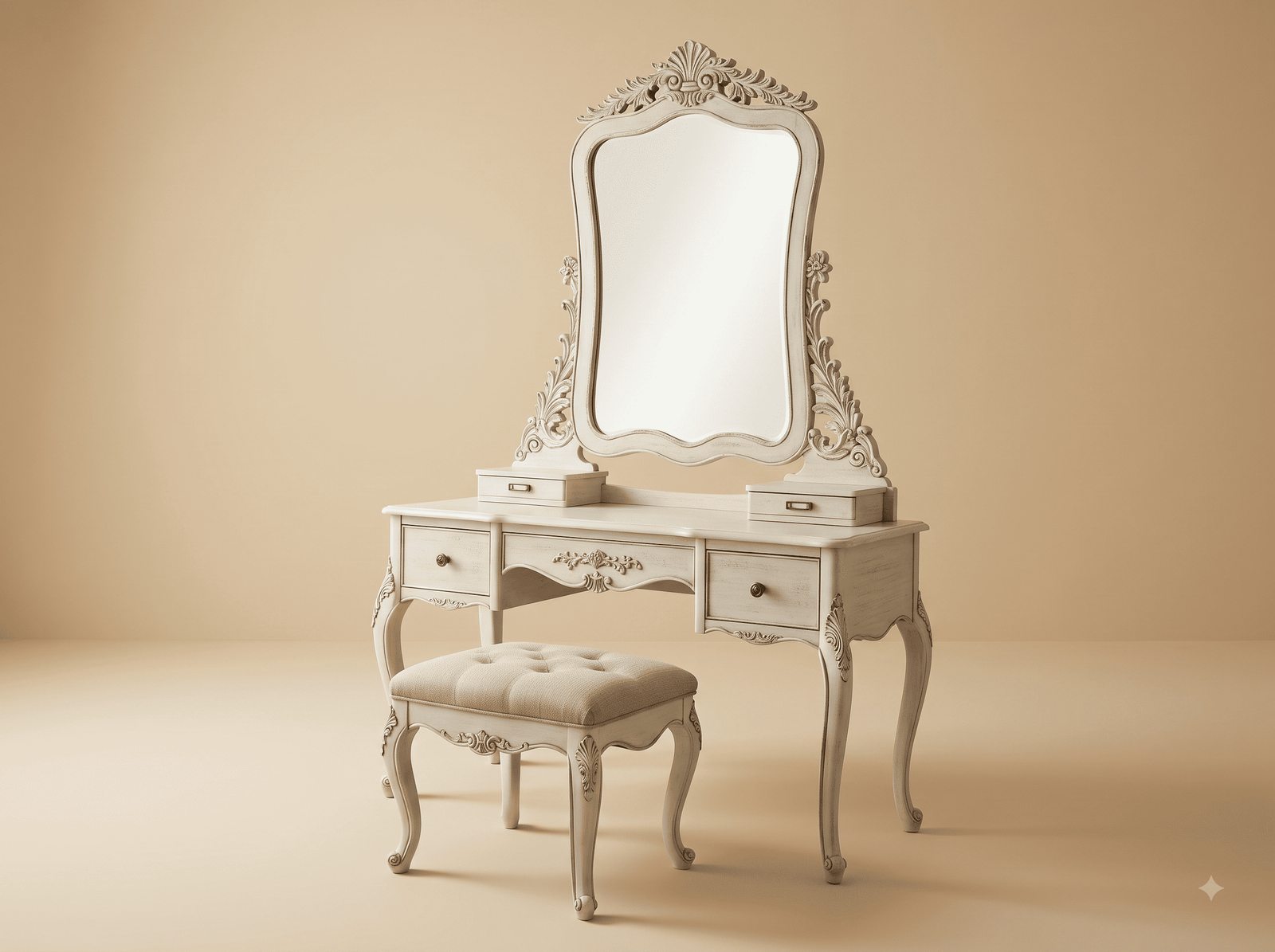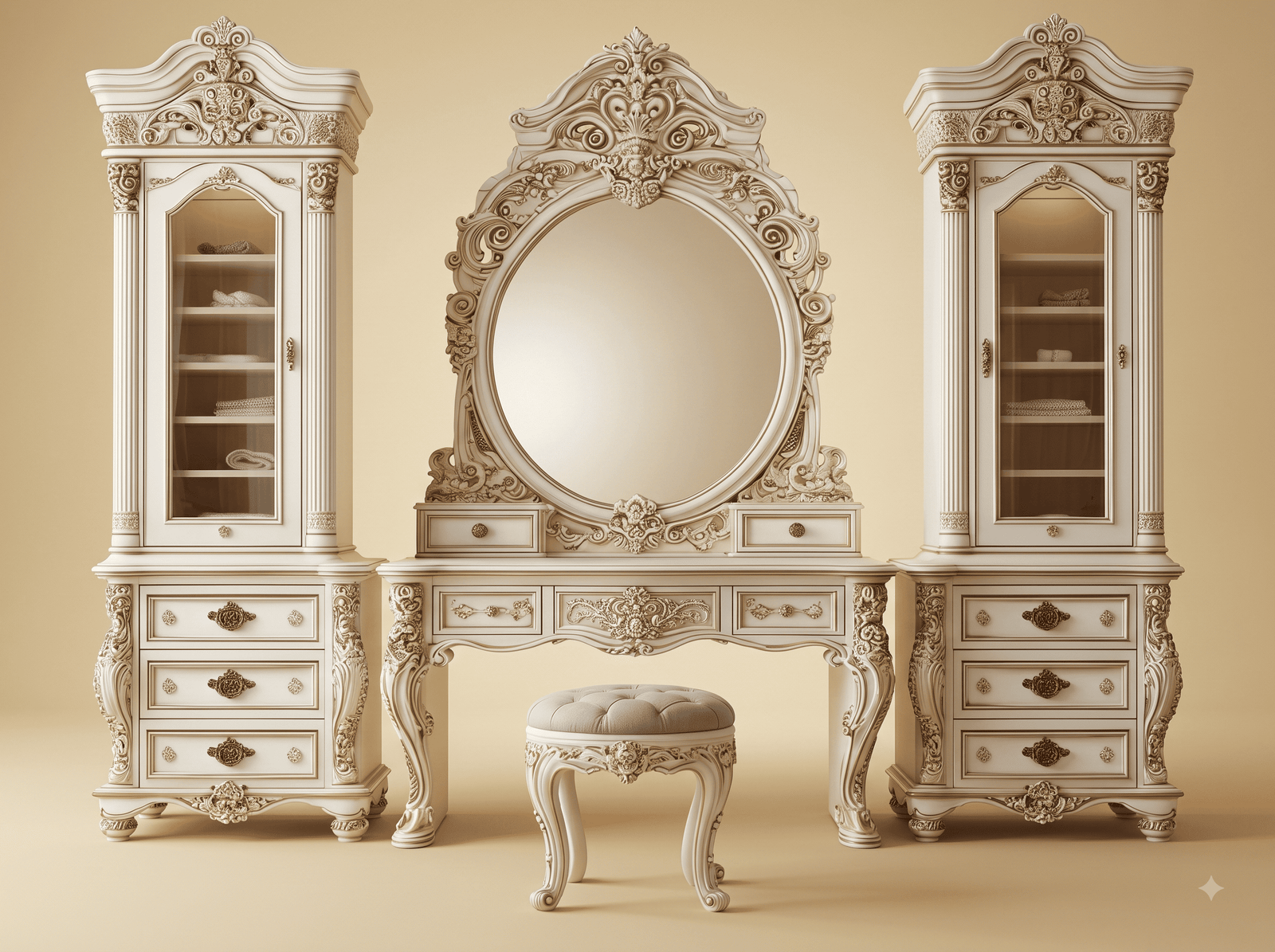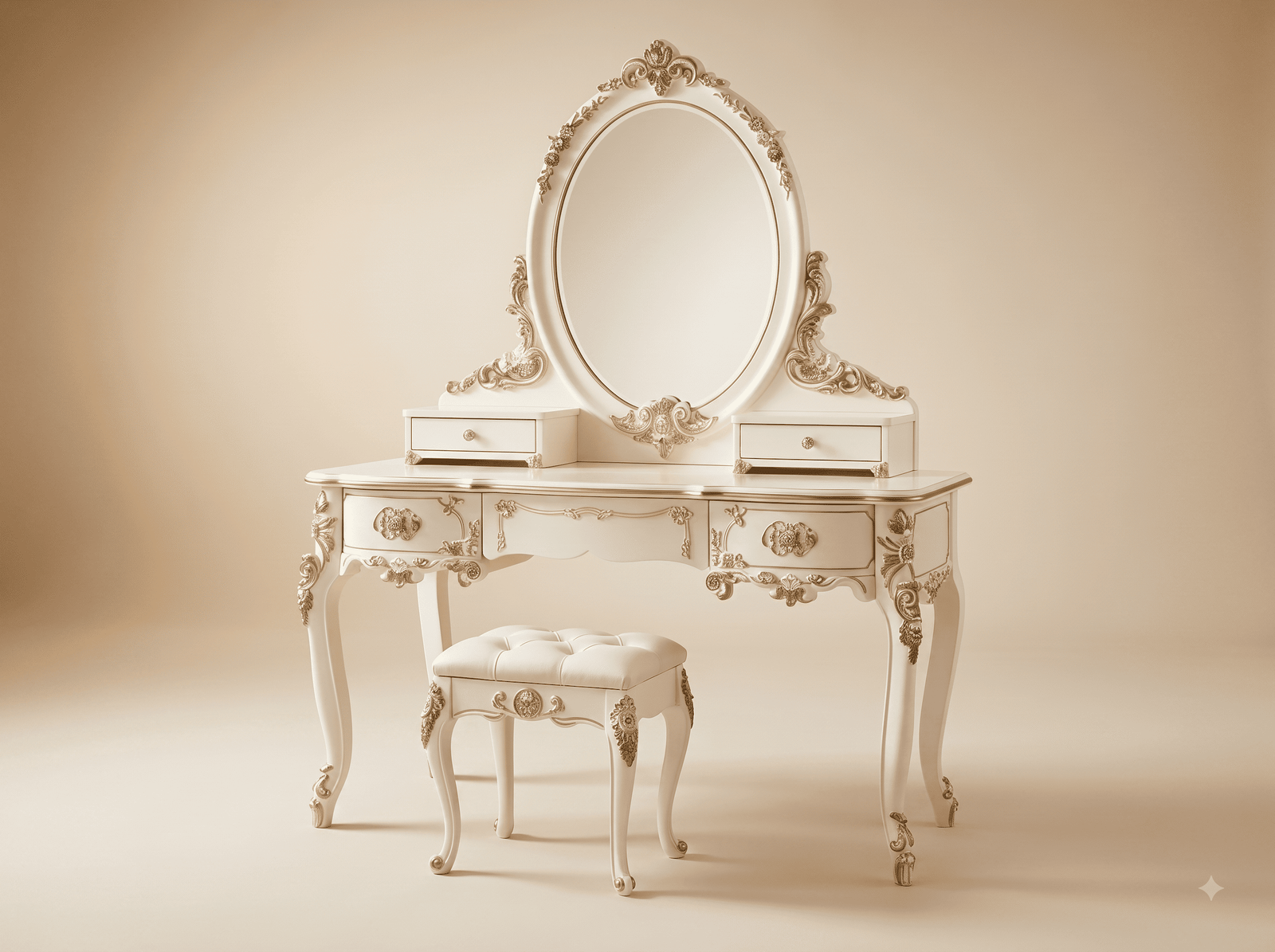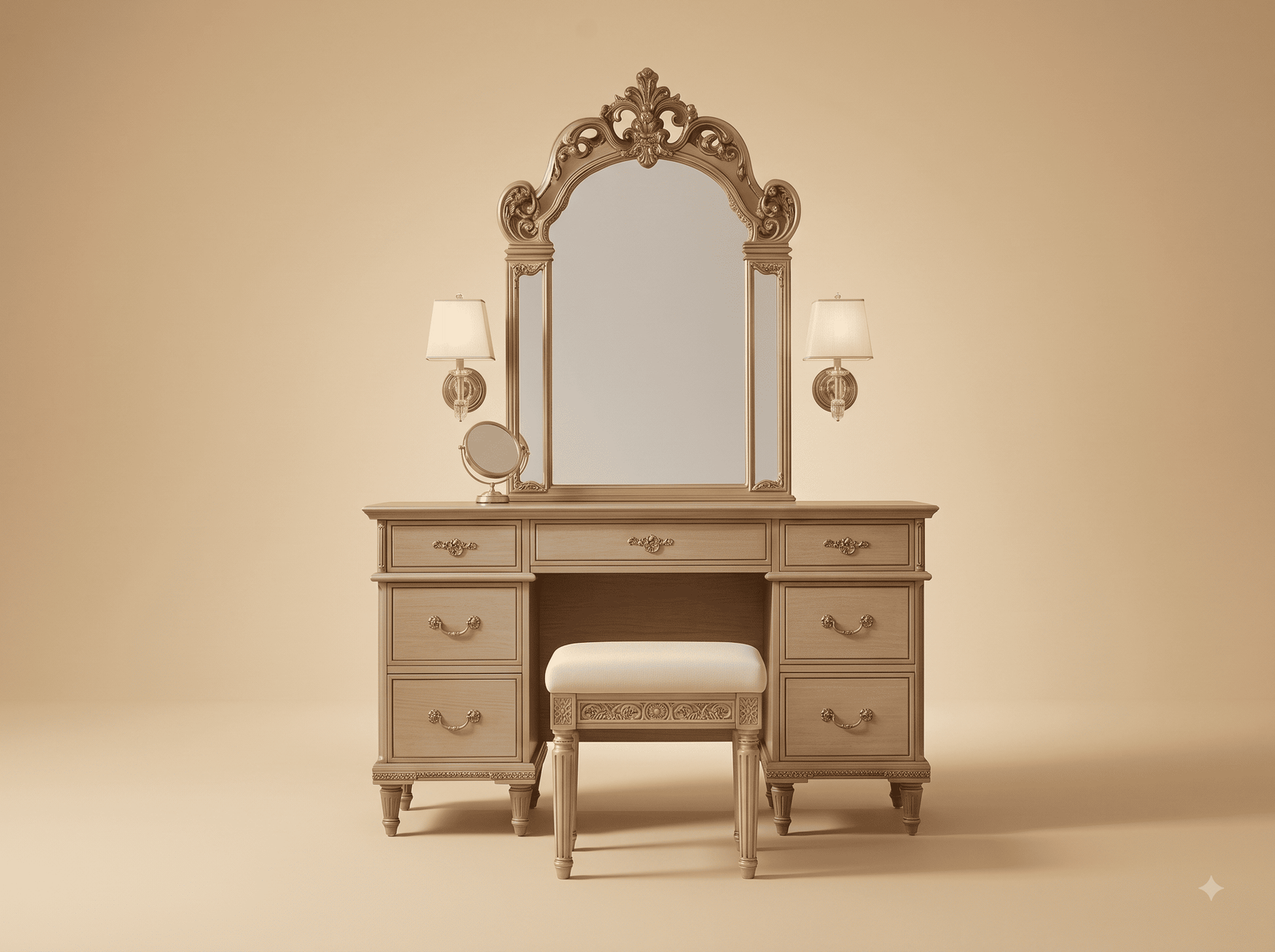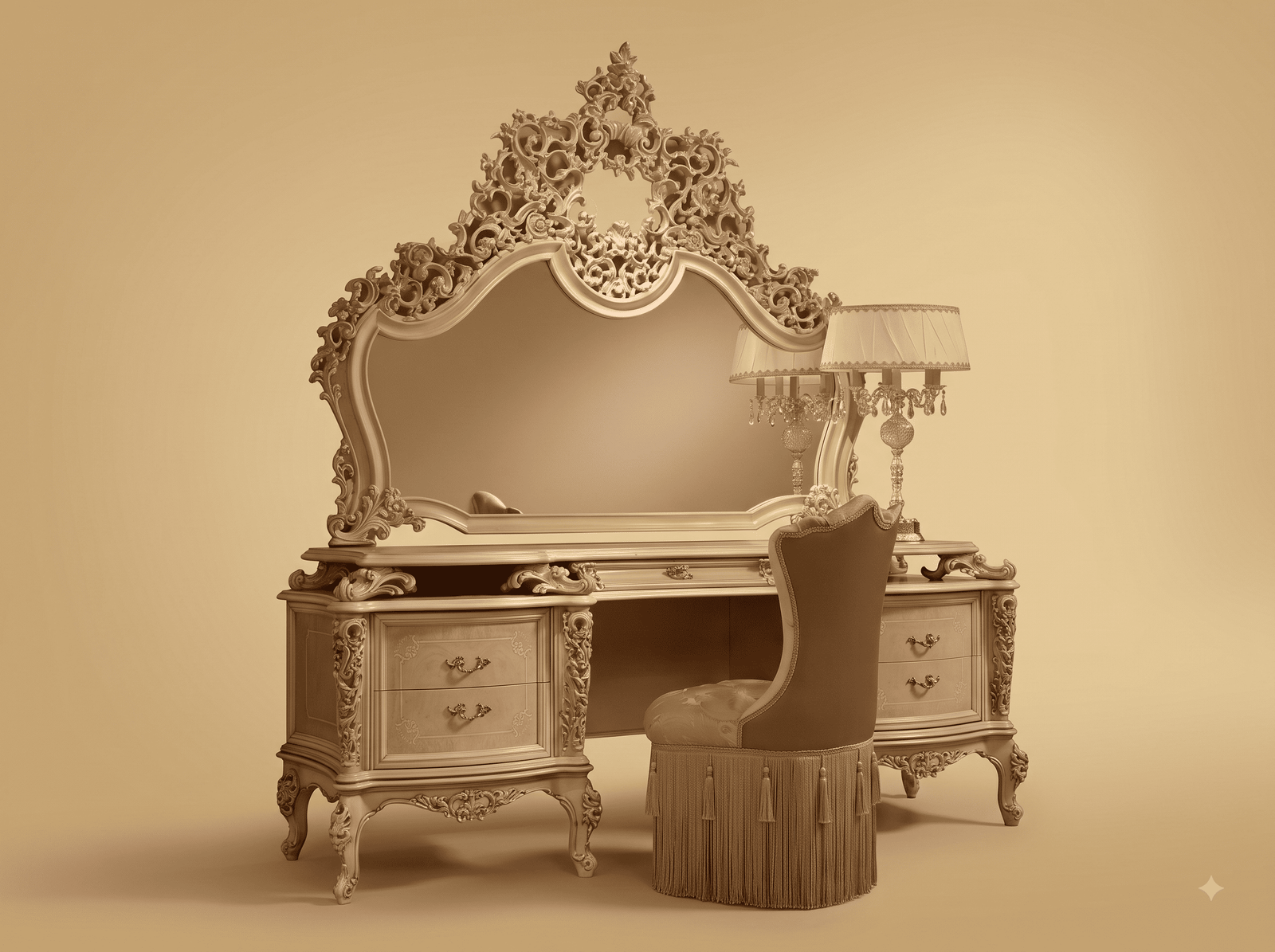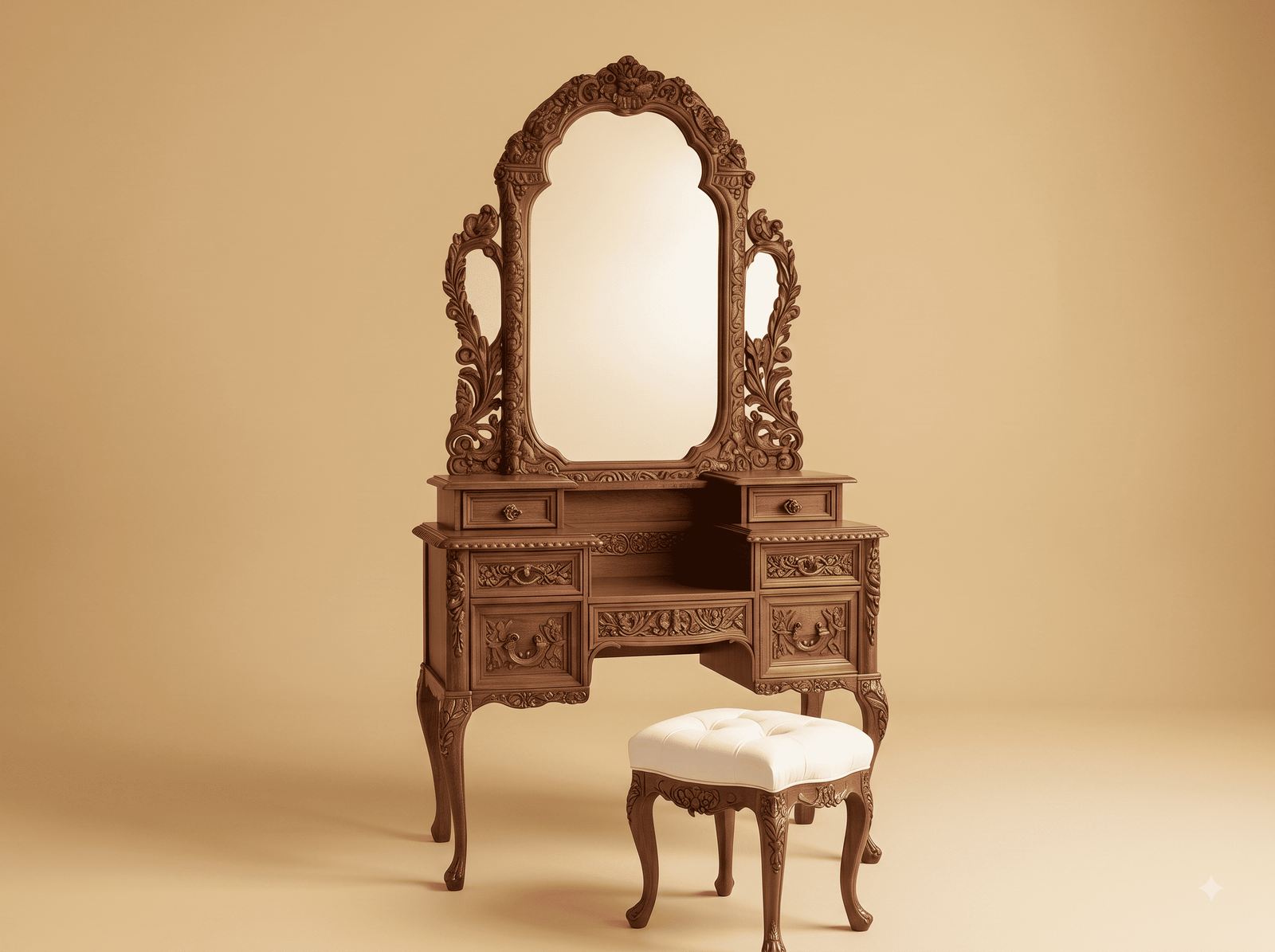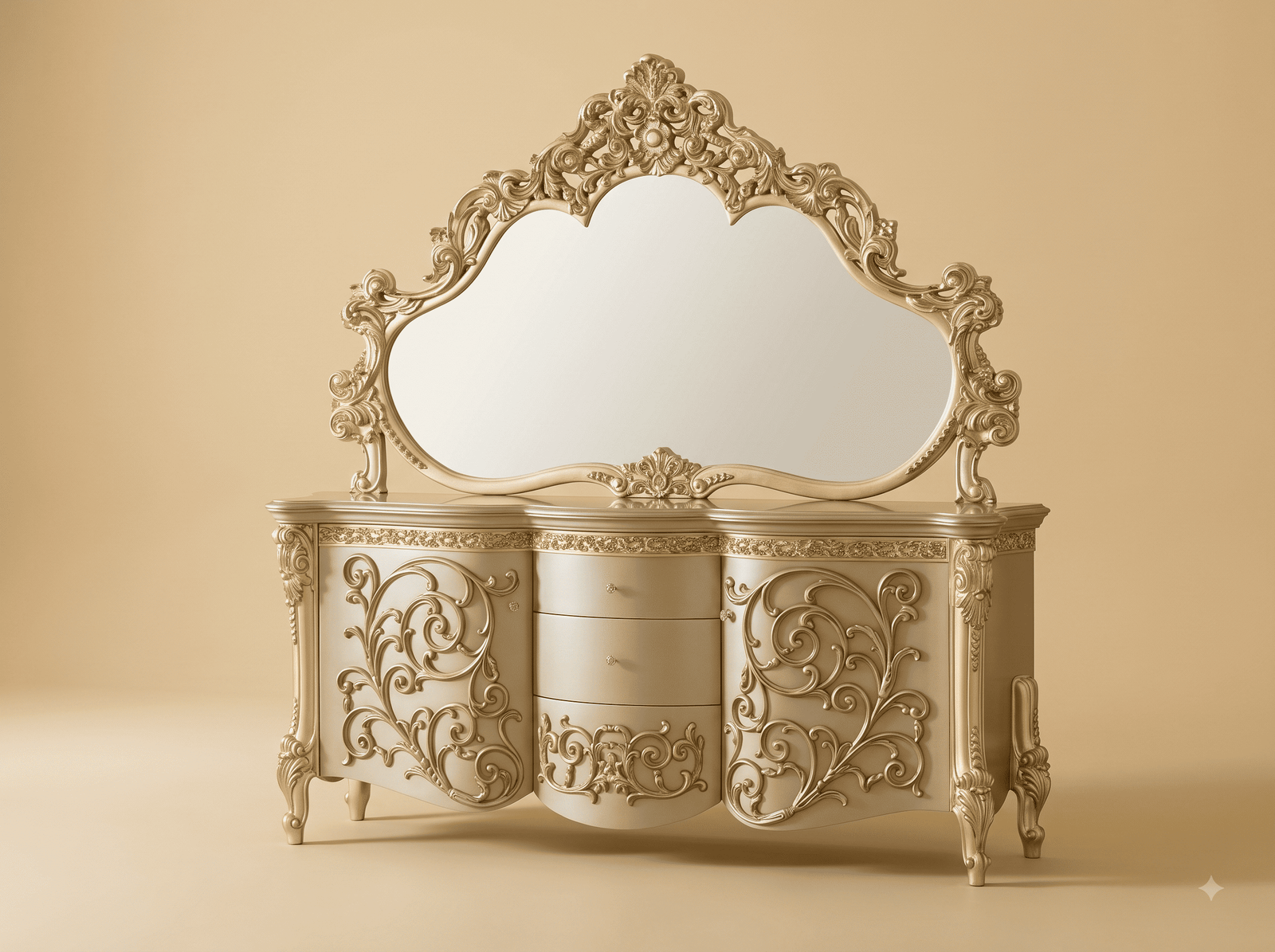
The mirror on this piece is not a rectangle hidden behind a shaped frame. The glass itself is cut to the scalloped outline, three lobes across the top, and that is a far less common thing than it looks.
Mirror glass does not like curves. A straight cut is scored once and snapped along the line, and the break follows the score because the stress runs cleanly. A curve has no such cooperation - the score wants to run off tangentially at every point, and a mirror this size will part in the wrong direction and be lost if the pressure is applied even slightly unevenly.
So shaped glass is cut in stages. The outline is scored, then relieved with a series of shorter cuts running out to the waste edge, and the waste is taken away piece by piece rather than in one break. Each lobe is worked separately. Only after the shape is free is the edge ground back to the true line and polished.
Then it has to match the frame. The carved timber surround was shaped to a template, and the glass has to sit in it with an even reveal all round - so the frame is finished first and the glass is cut to the frame, never the other way round.
It is the reason we shape the frame and cut the glass as one operation rather than ordering a stock mirror to drop in.
 Ask Price On WhatsApp