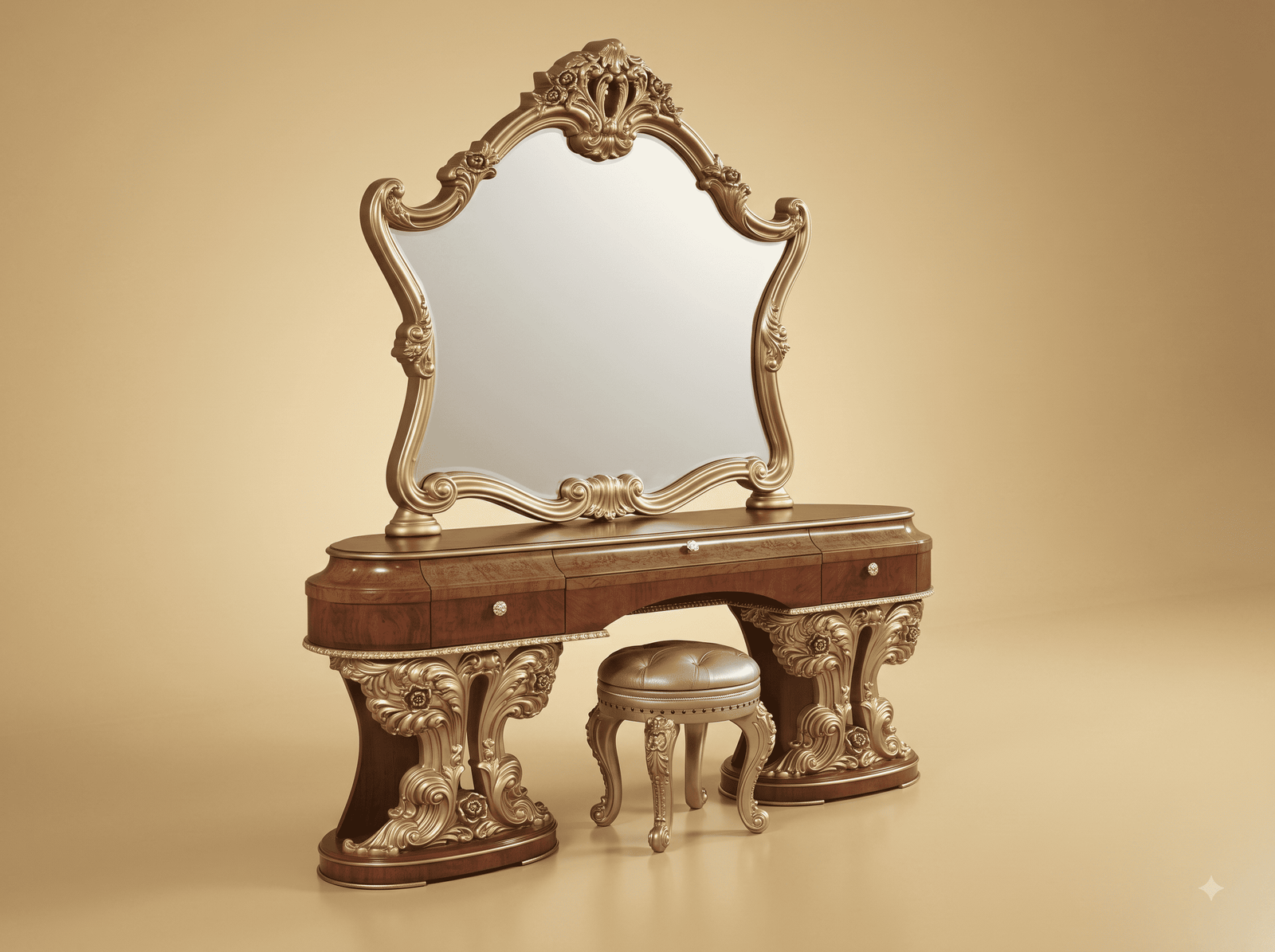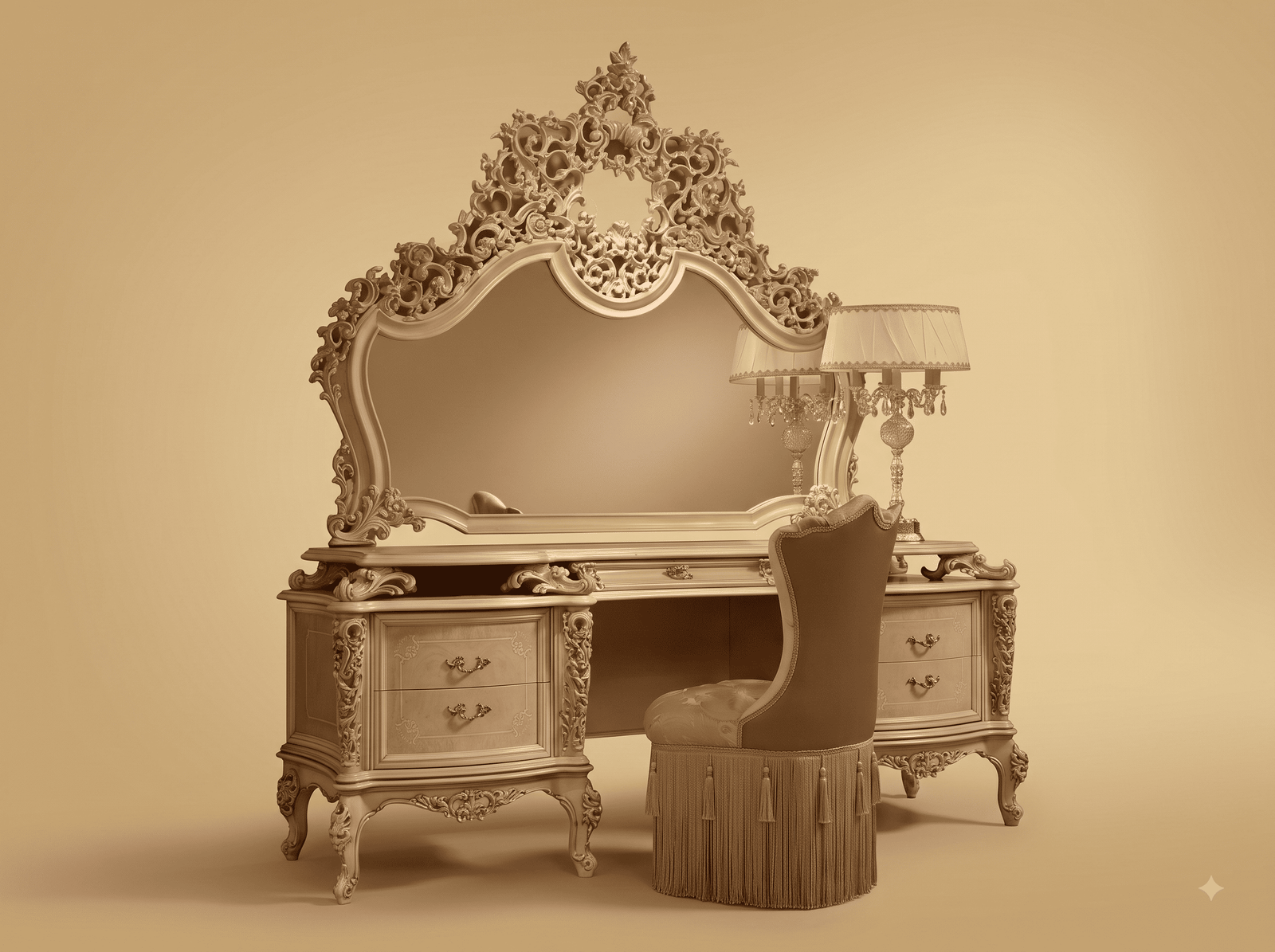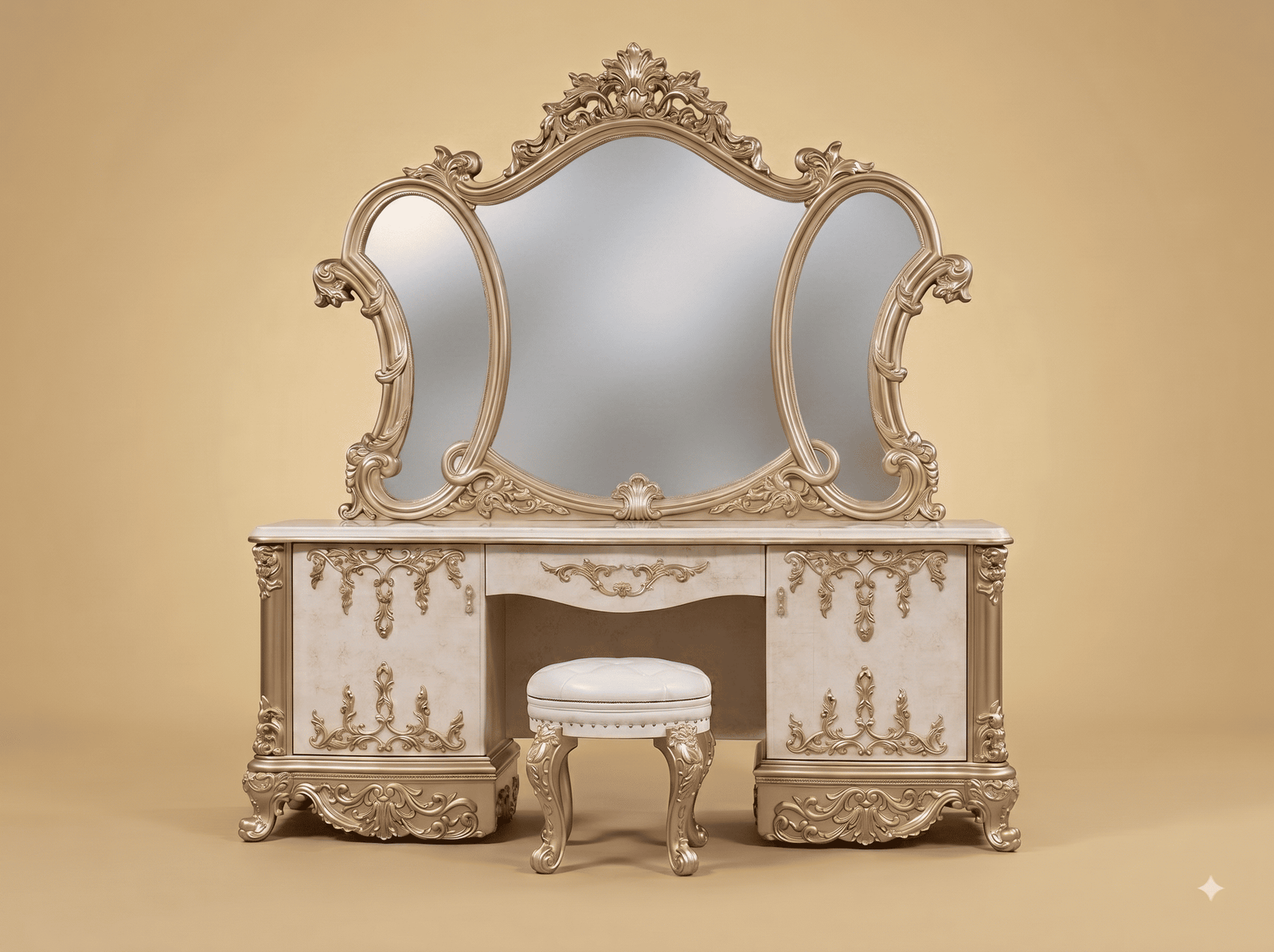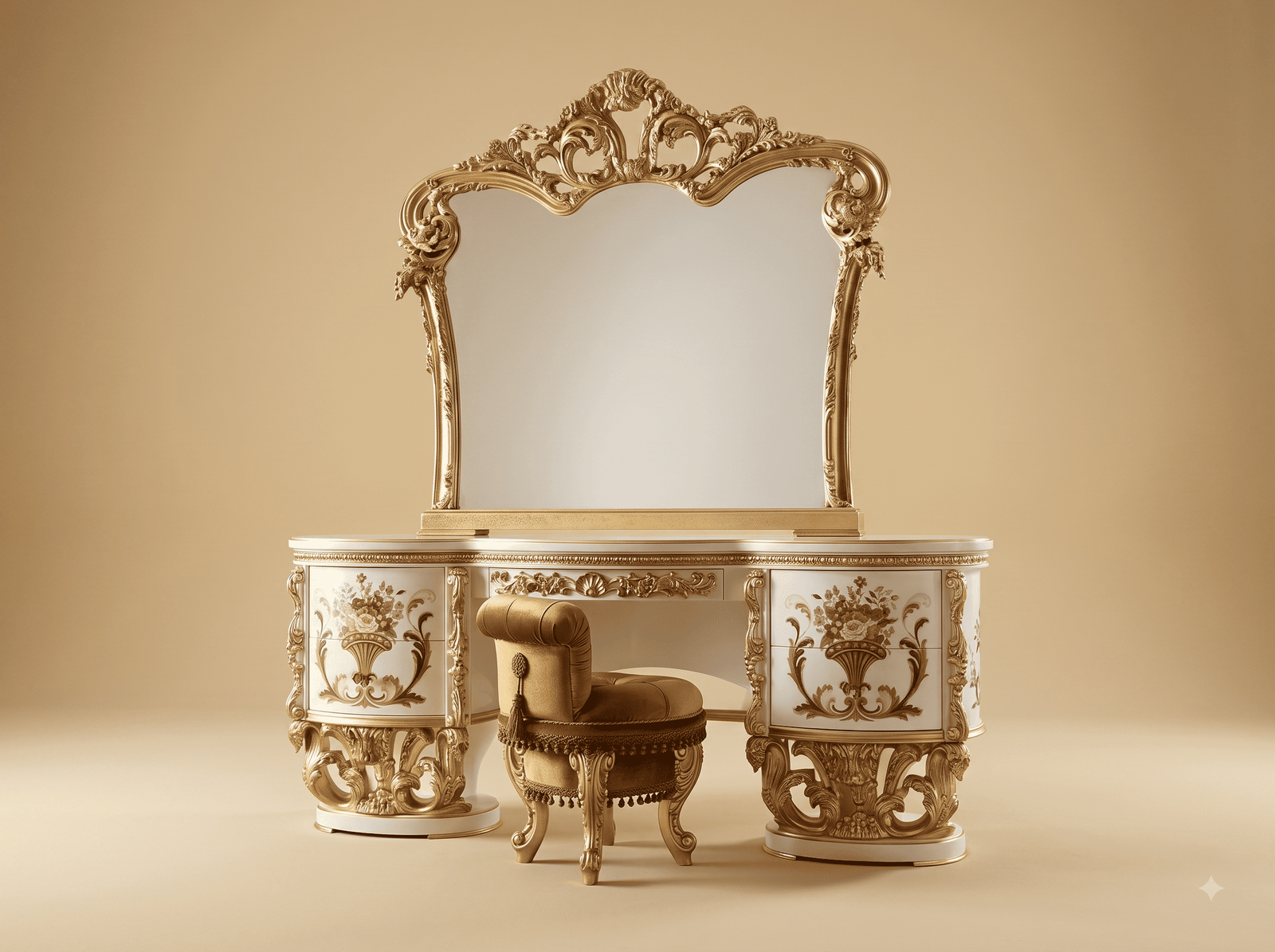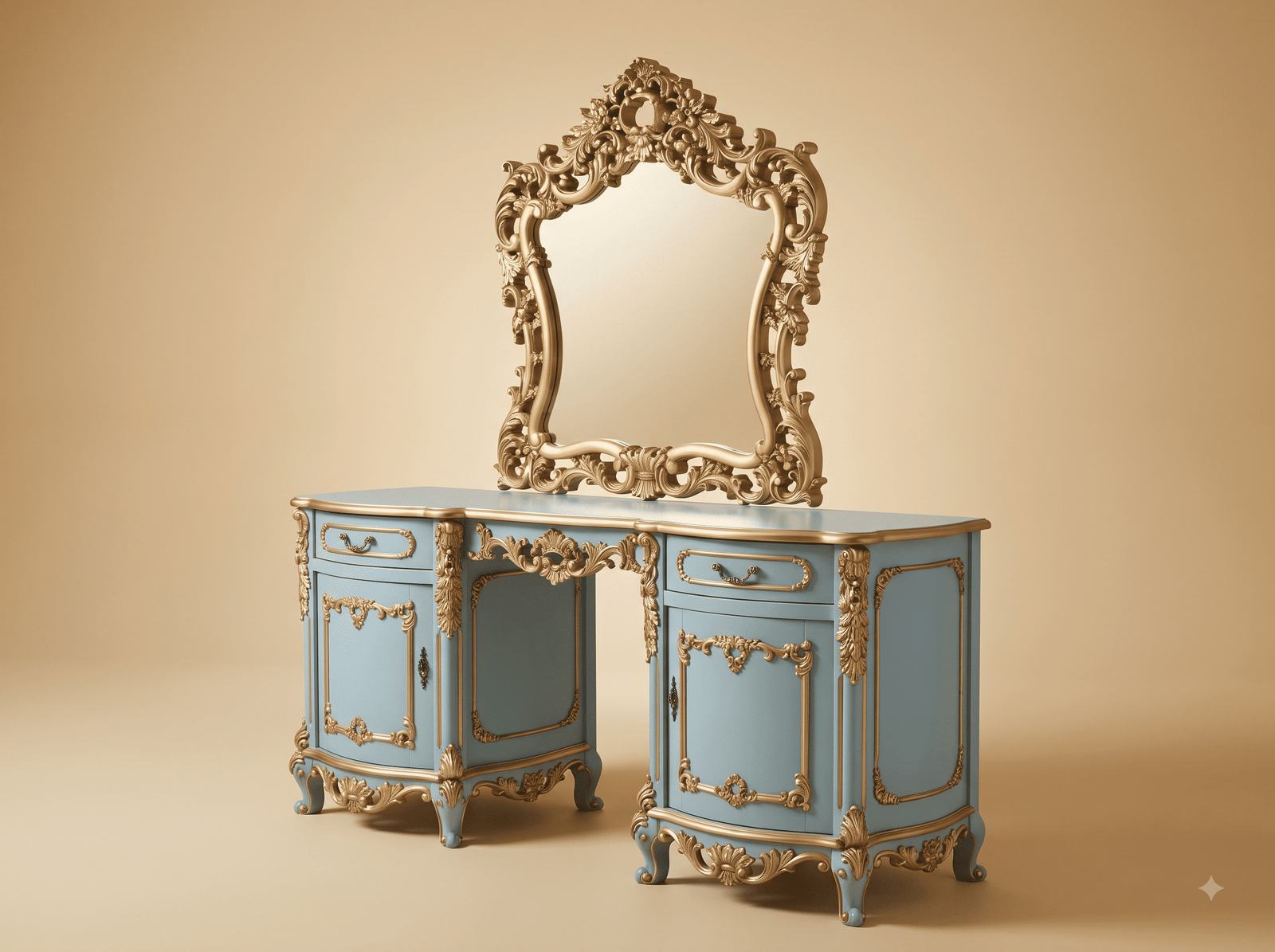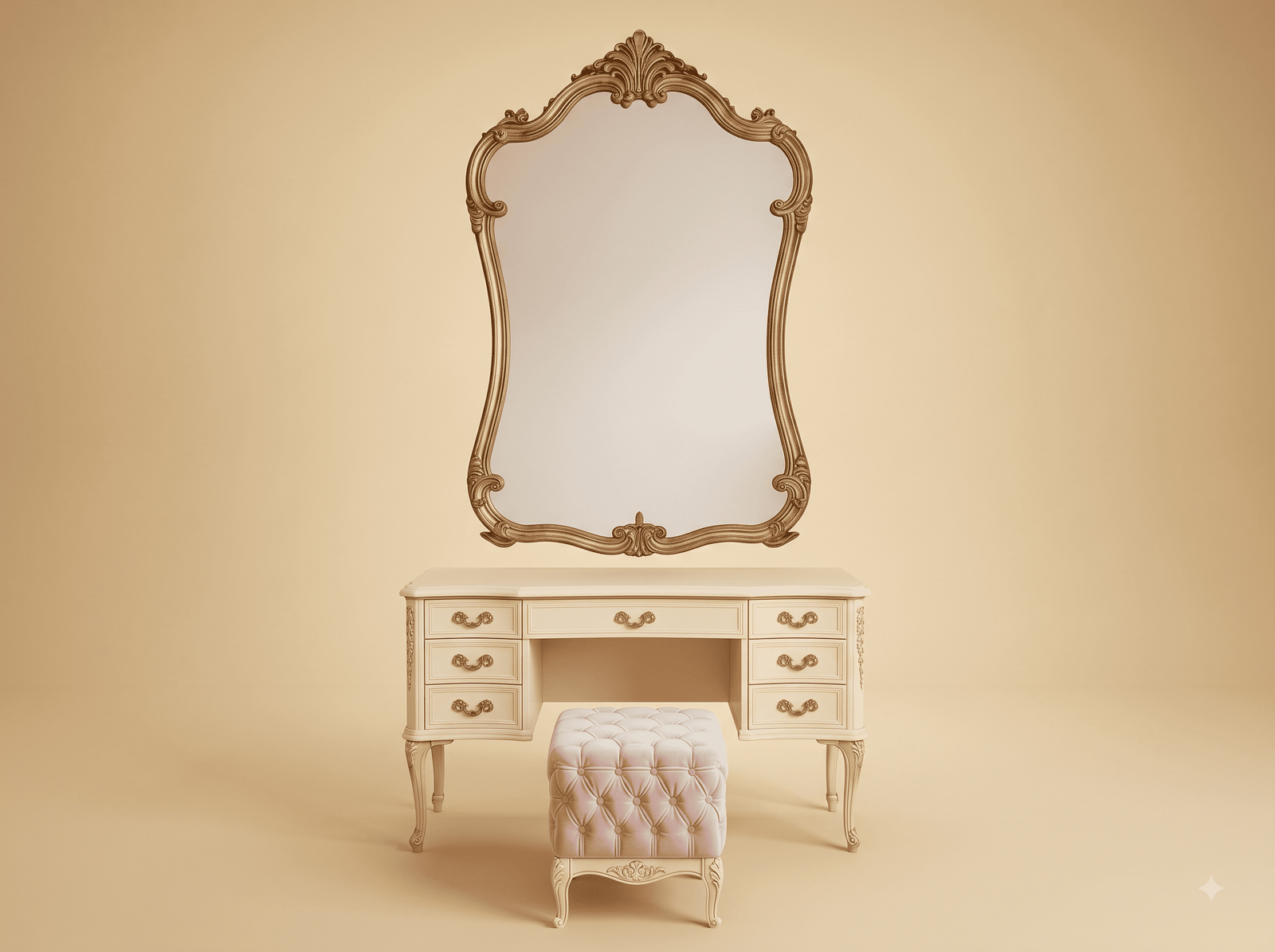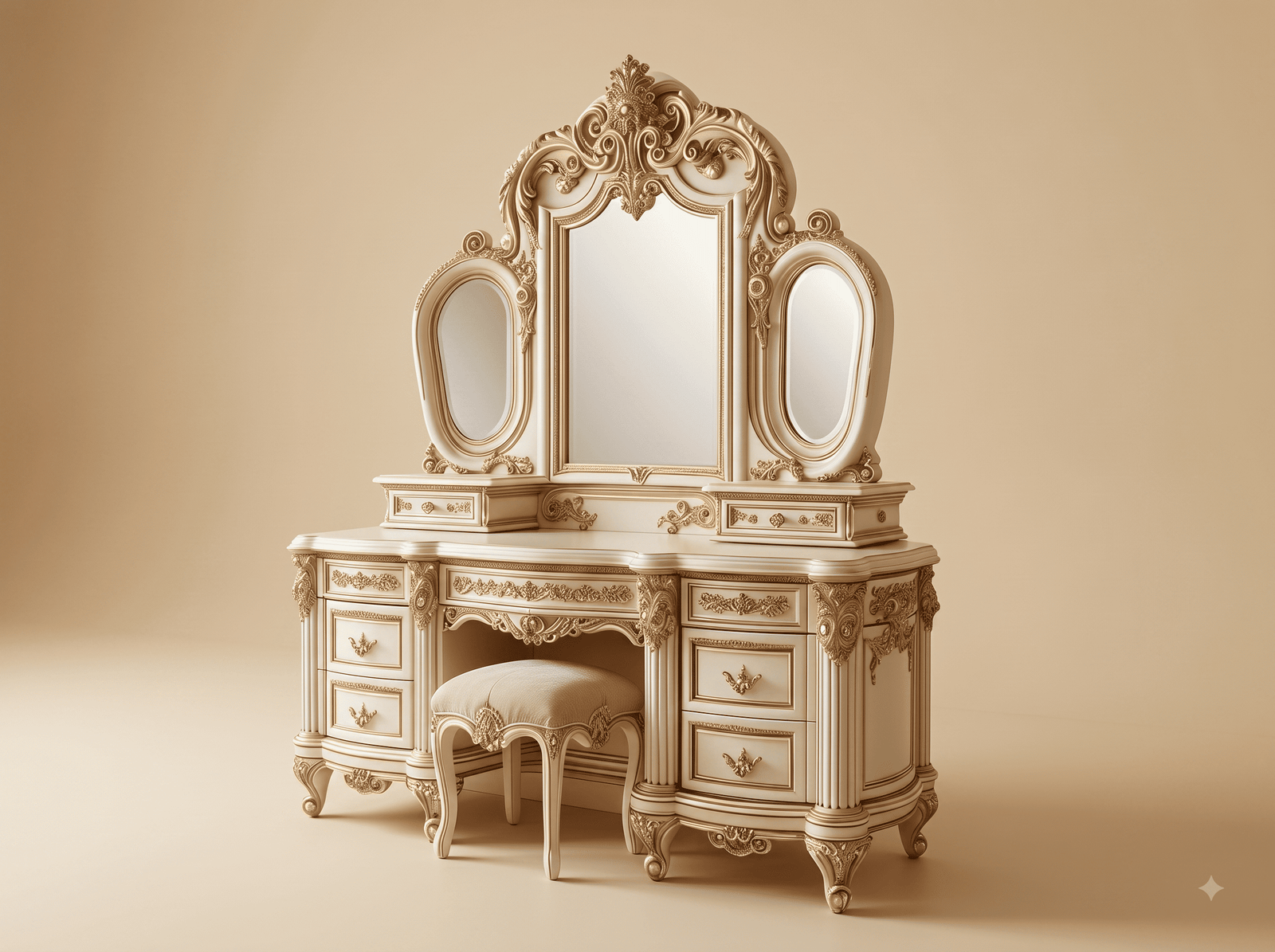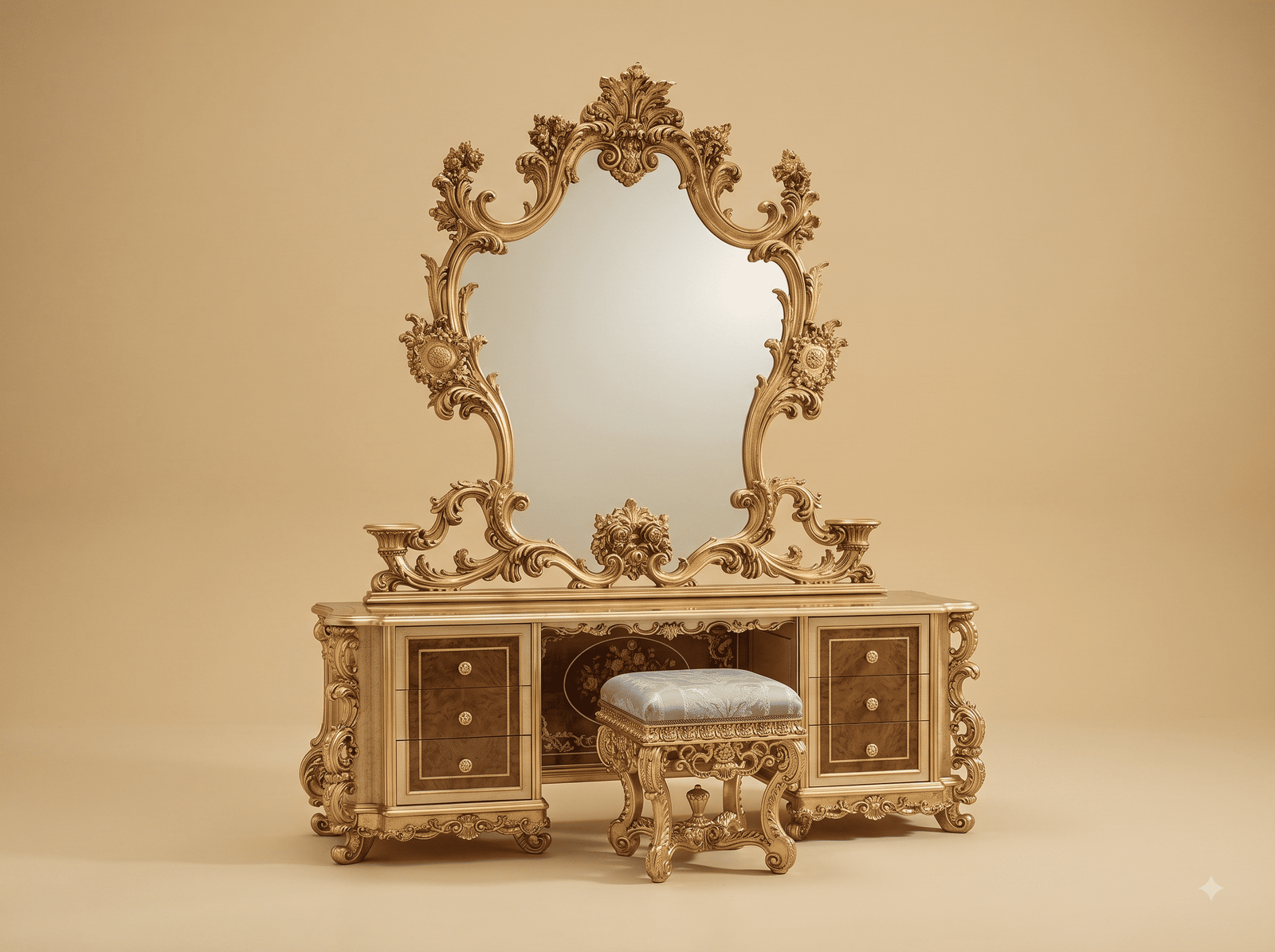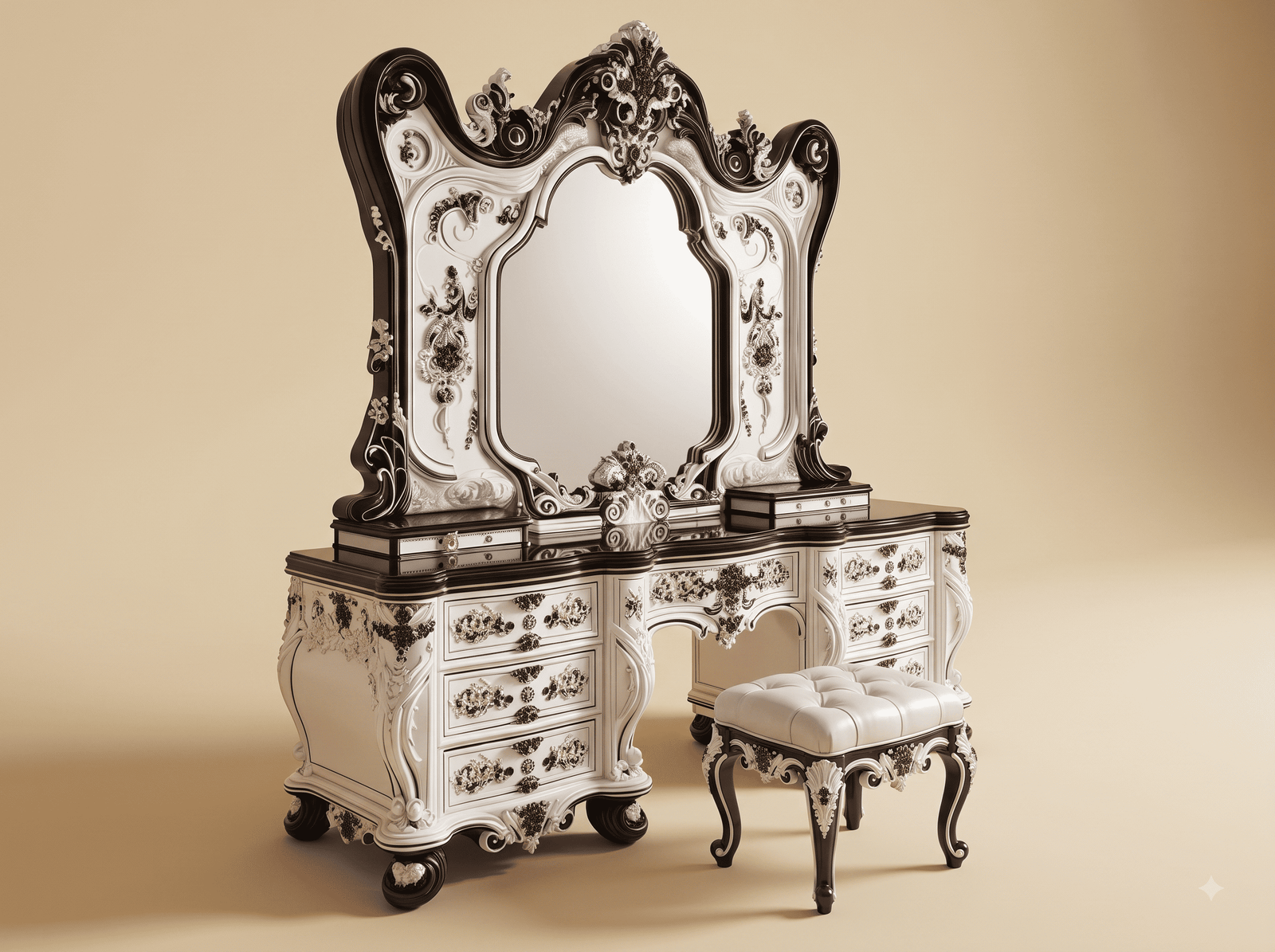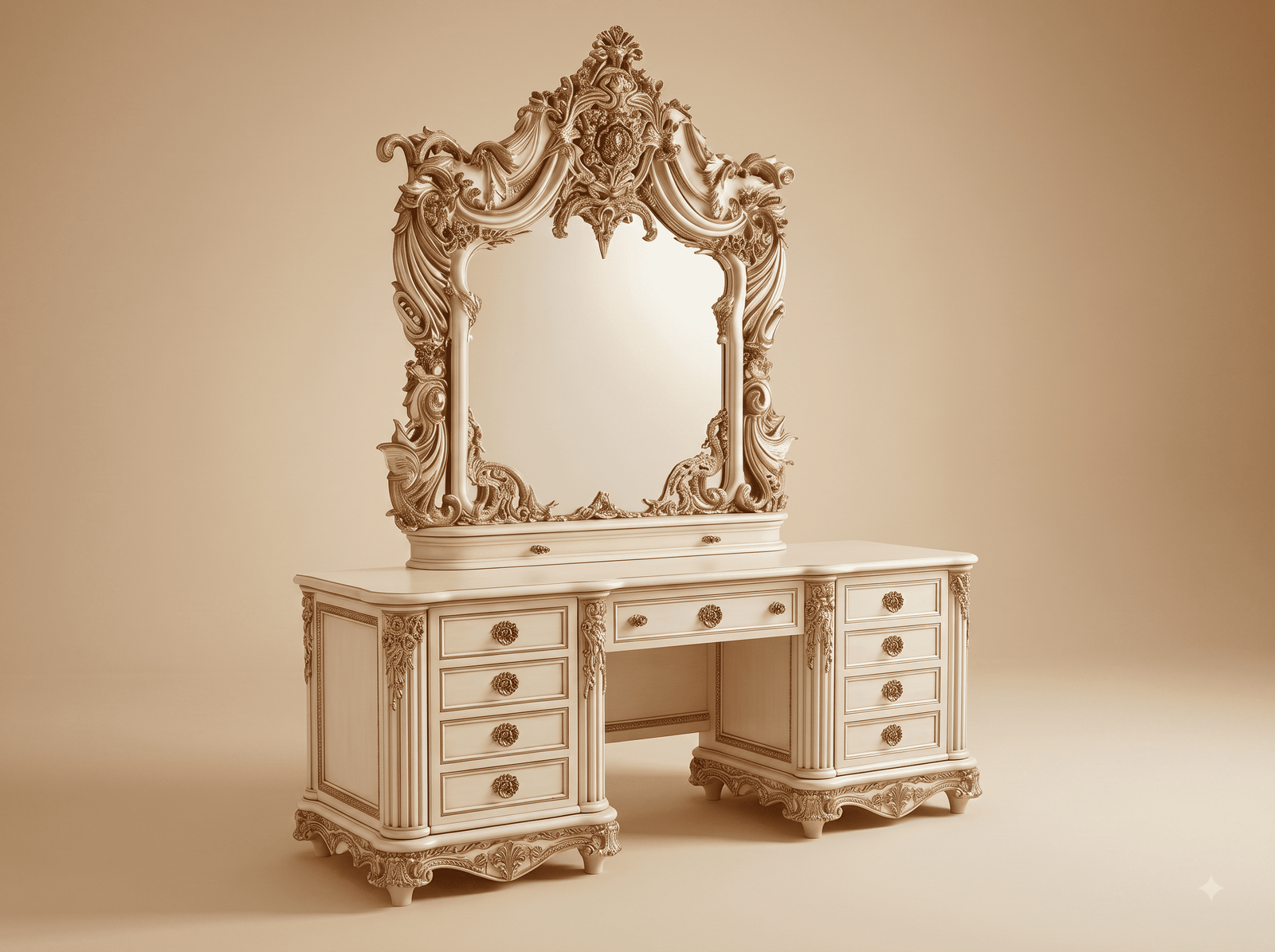
Undercutting is what separates carving that photographs well from carving that lives well. A shallow relief looks like a pattern pressed into a surface. An undercut scroll has its edge cut back underneath, so the carving stands free of its own background and daylight passes behind the outer curl.
That gap is where the shadow comes from, and shadow is what the eye reads as depth from ten feet away. It is also the reason a frame like this one looks different at every hour - as light moves across the room, the shadow lines shift and the acanthus appears to turn.
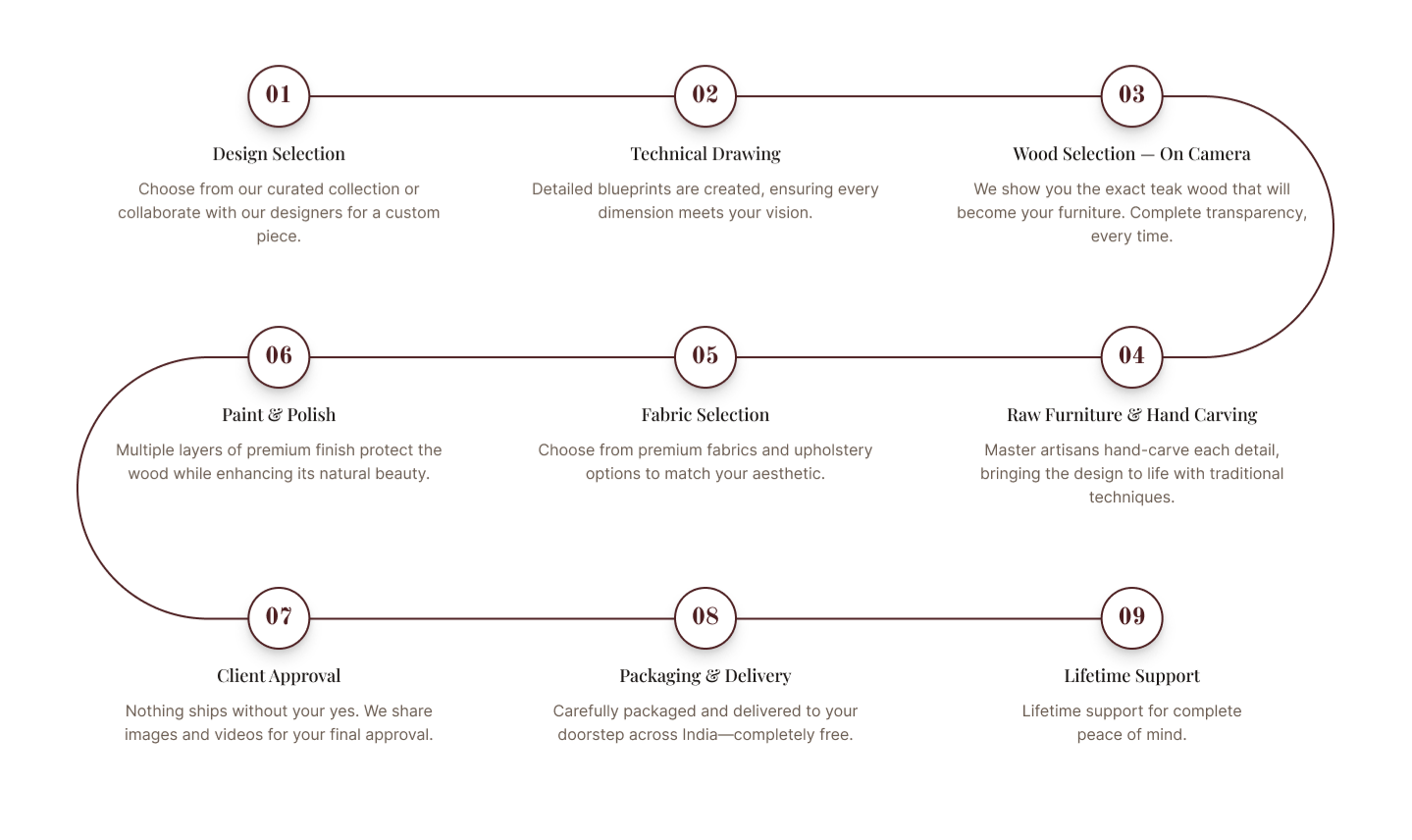
The cost is risk. Every millimetre of timber removed behind a scroll is strength taken out of it, and the carver has no way to put it back. Our artisans undercut from the outer edge inward, taking the most exposed curls first while the surrounding stock is still there to support the piece, and leaving the central cartouche until last.
They work with the mirror opening already cut, so the frame is at its weakest throughout the process. It is deliberate - it forces every judgement to account for the finished piece rather than a comfortable working blank.
 Ask Price On WhatsApp