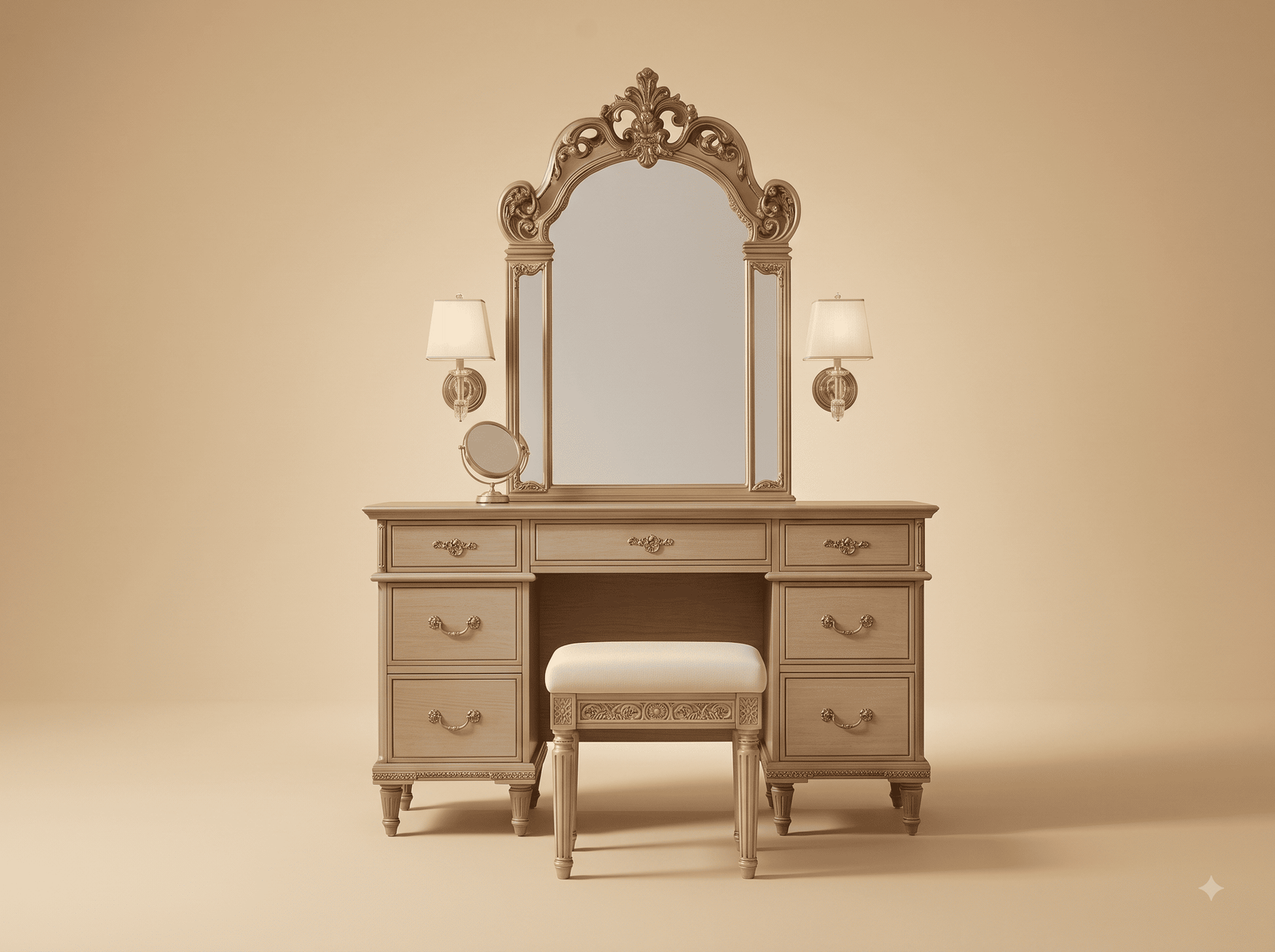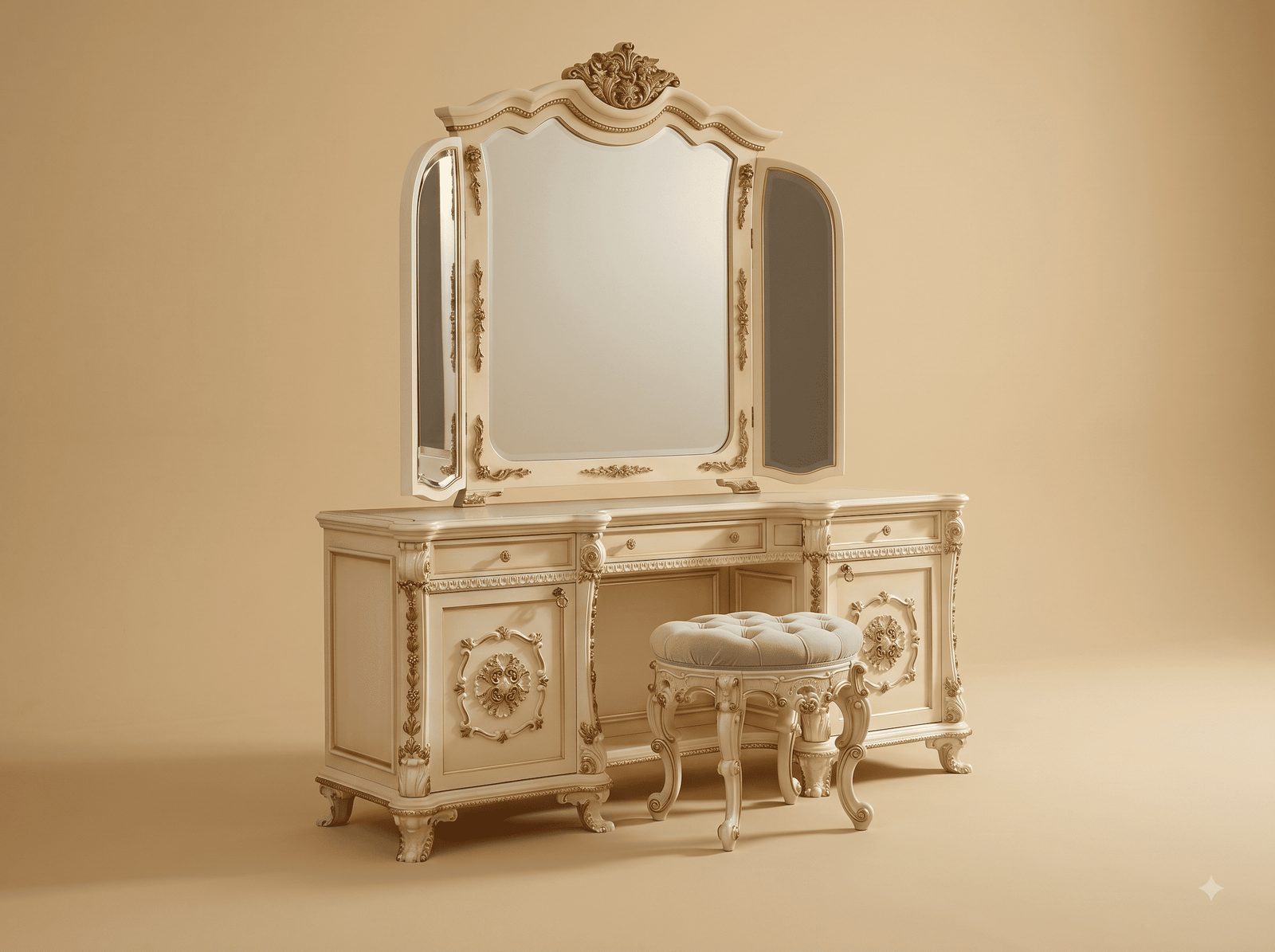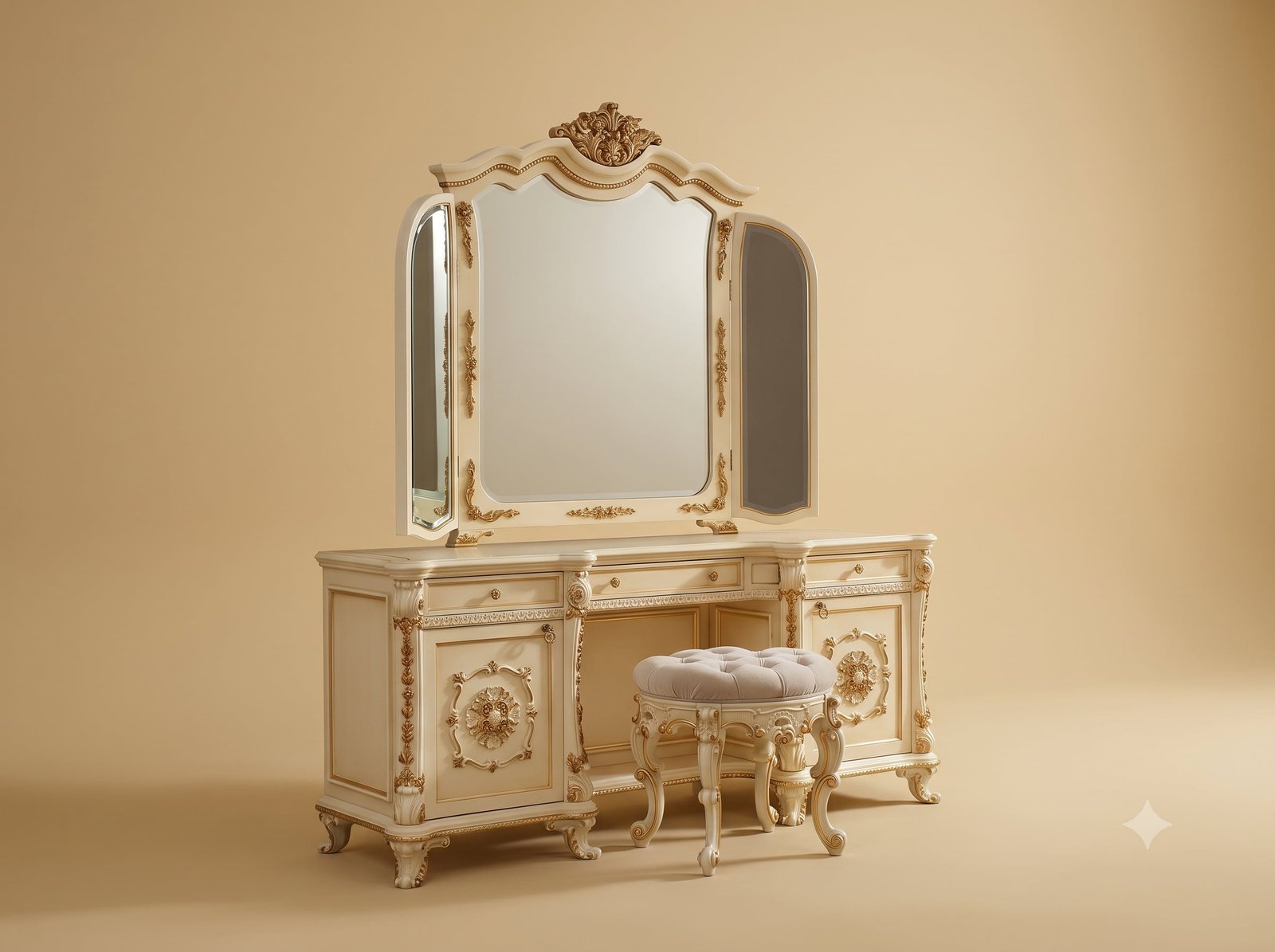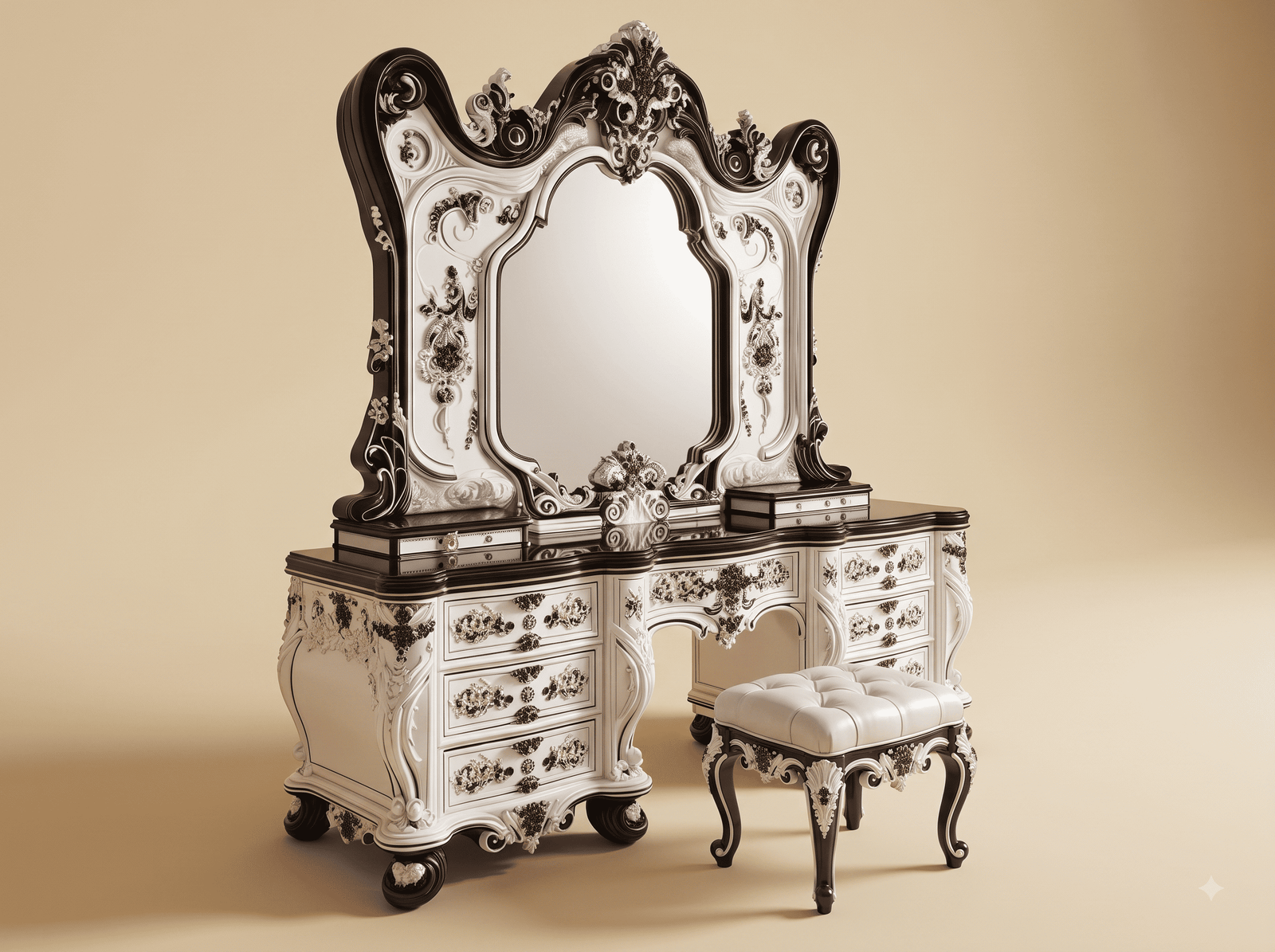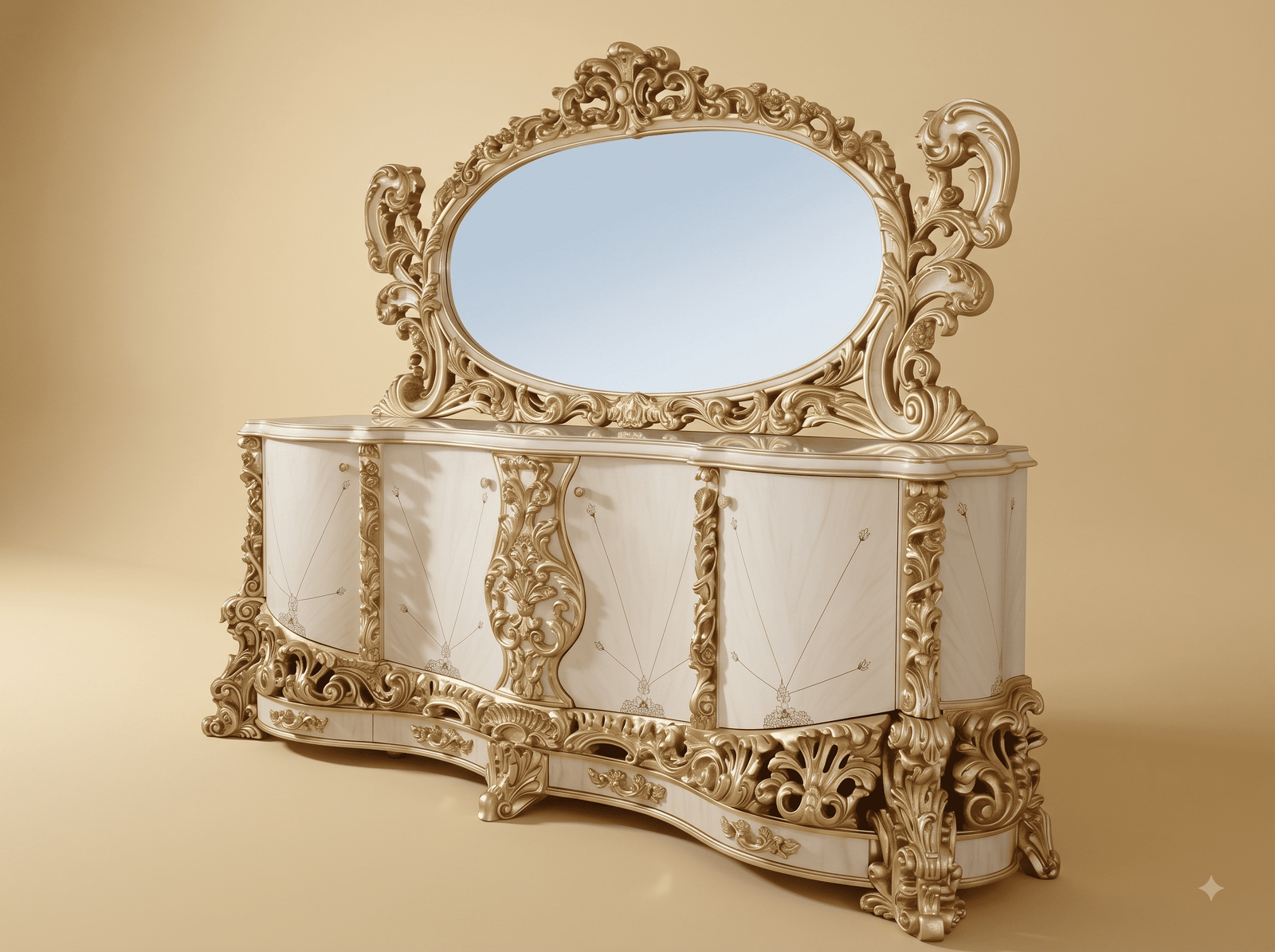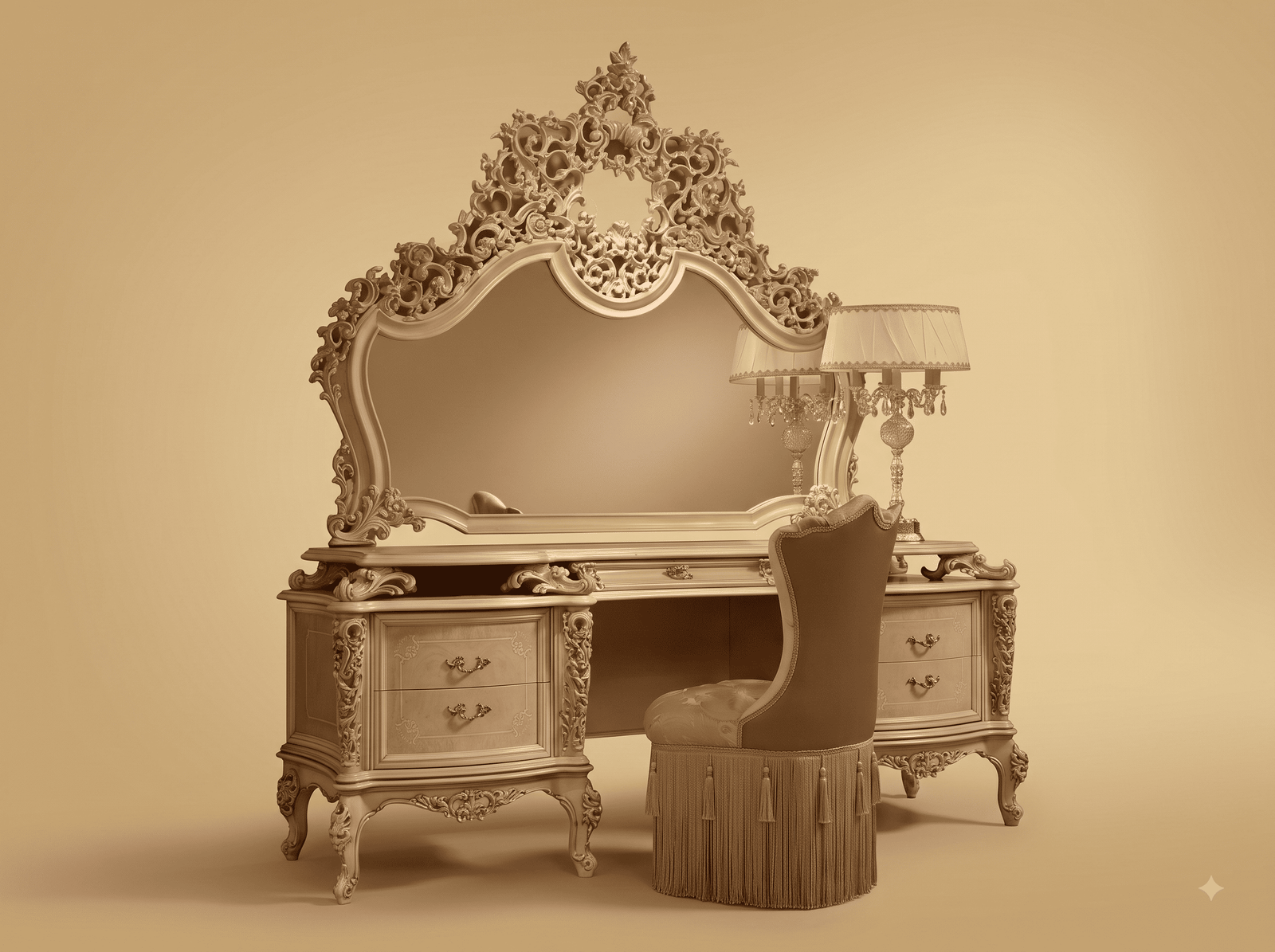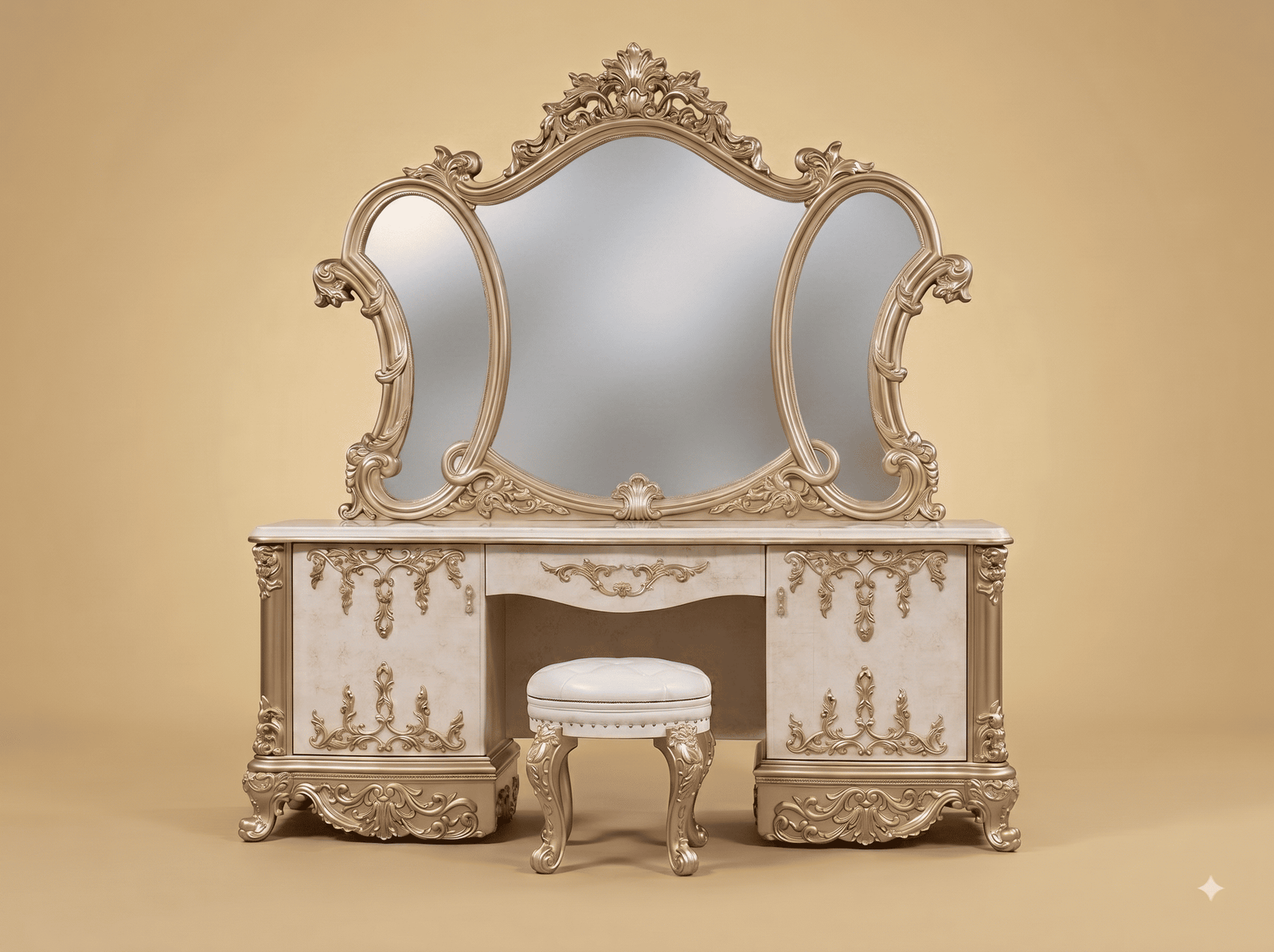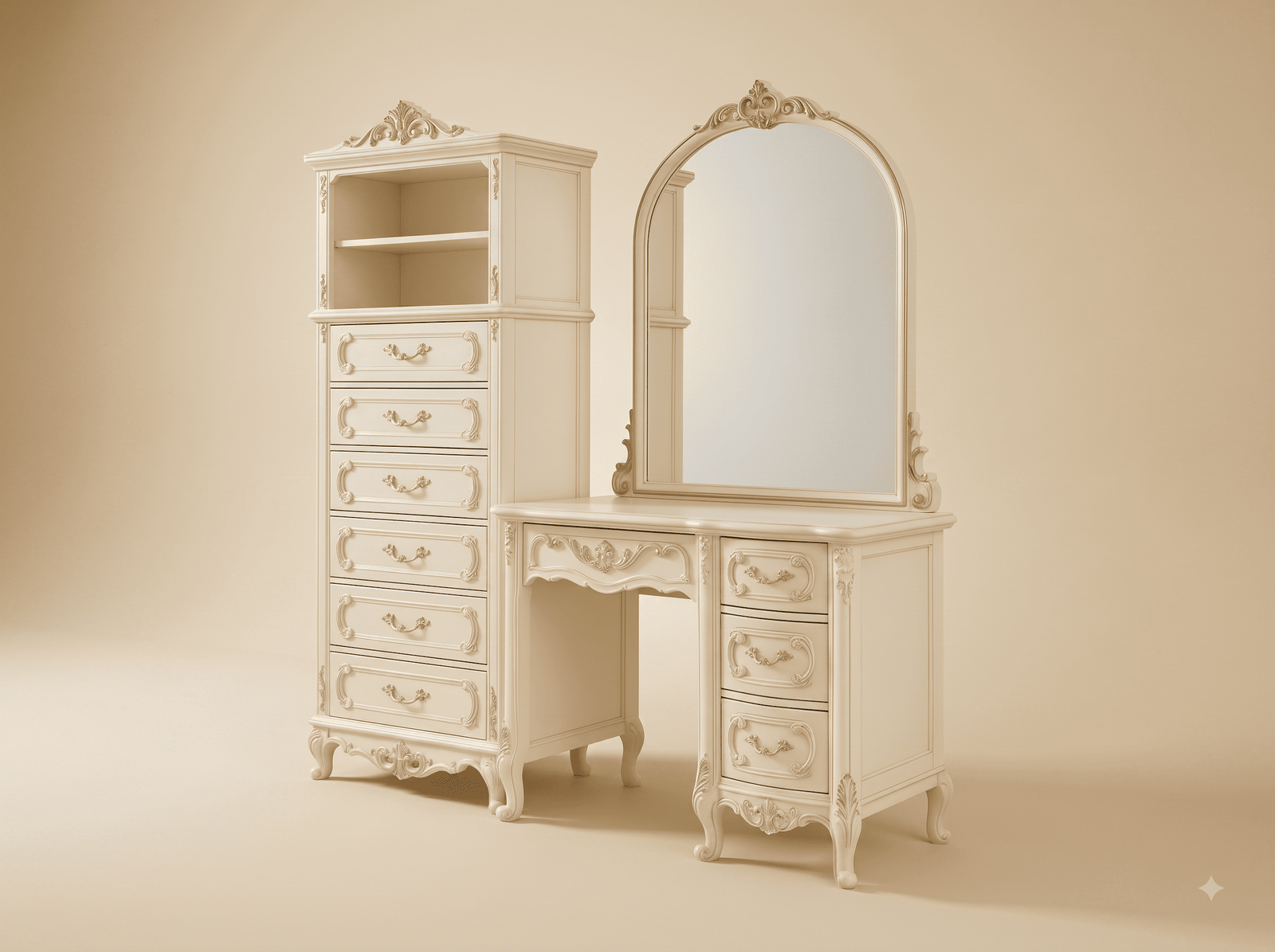
Turning is the oldest form of shaping wood on a machine, and it is unforgiving in a way carving is not. A carver can adjust as the shape emerges; a turner commits with every pass, because wood removed from a spinning blank cannot be put back. A taper that goes half a millimetre thin at the ankle is a leg that has to be started again.
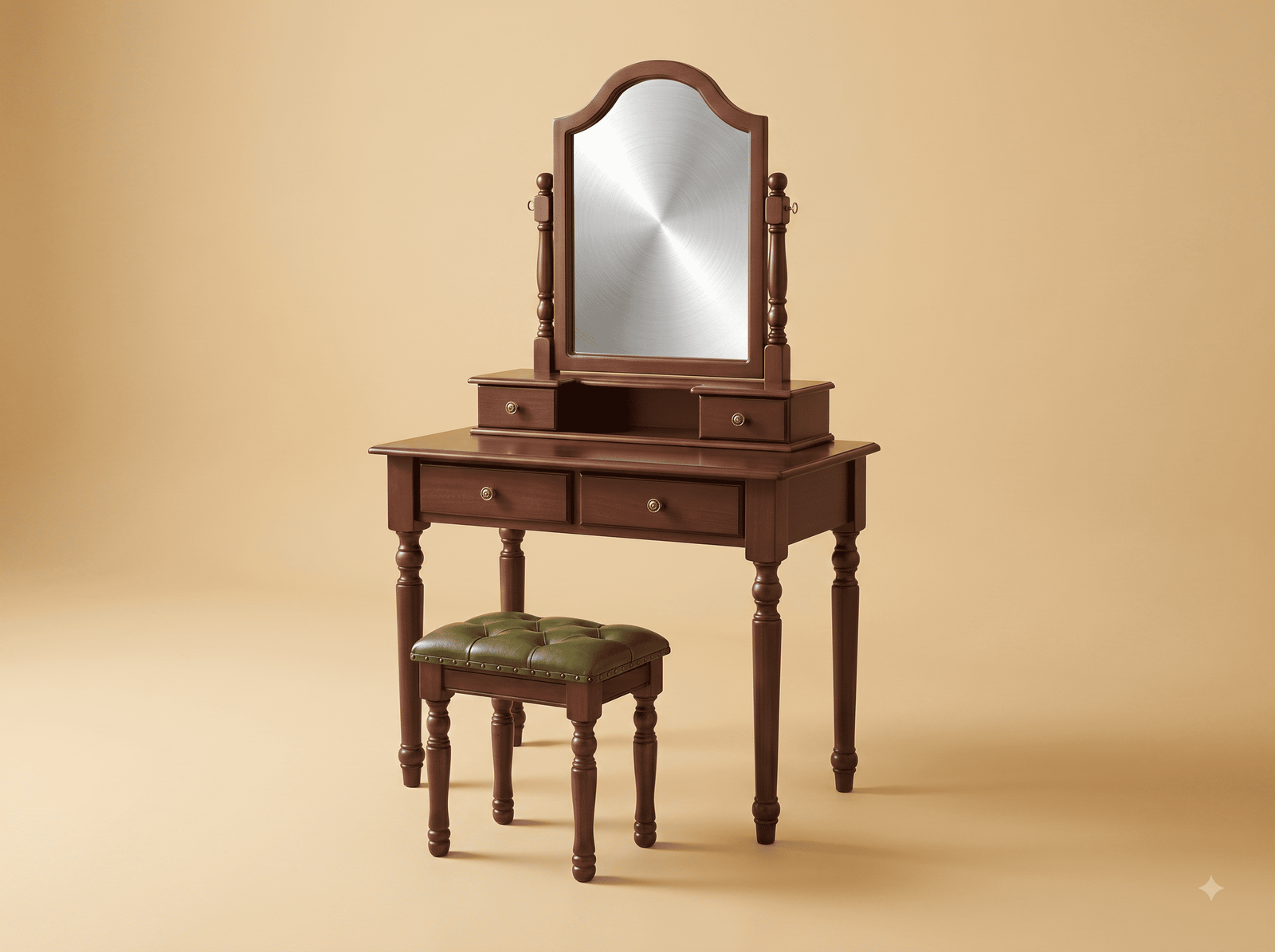
That is why the four legs and two mirror posts on this table are the real test of the piece. They must match each other closely enough that the eye cannot separate them, with the same ring positions, the same swell, the same rate of taper. Our craftsmen turn them in one sitting from stock cut off the same board, so grain and density stay consistent and the tool behaves the same way on each.
The mirror posts have an additional demand: they carry the pivot pins, so both must be bored at precisely the same height. We mark that point on the blank before turning starts, and the decorative rings are placed around it rather than the pivot being fitted afterwards wherever it lands.
It is quiet work that only shows if it goes wrong.
 Ask Price On WhatsApp