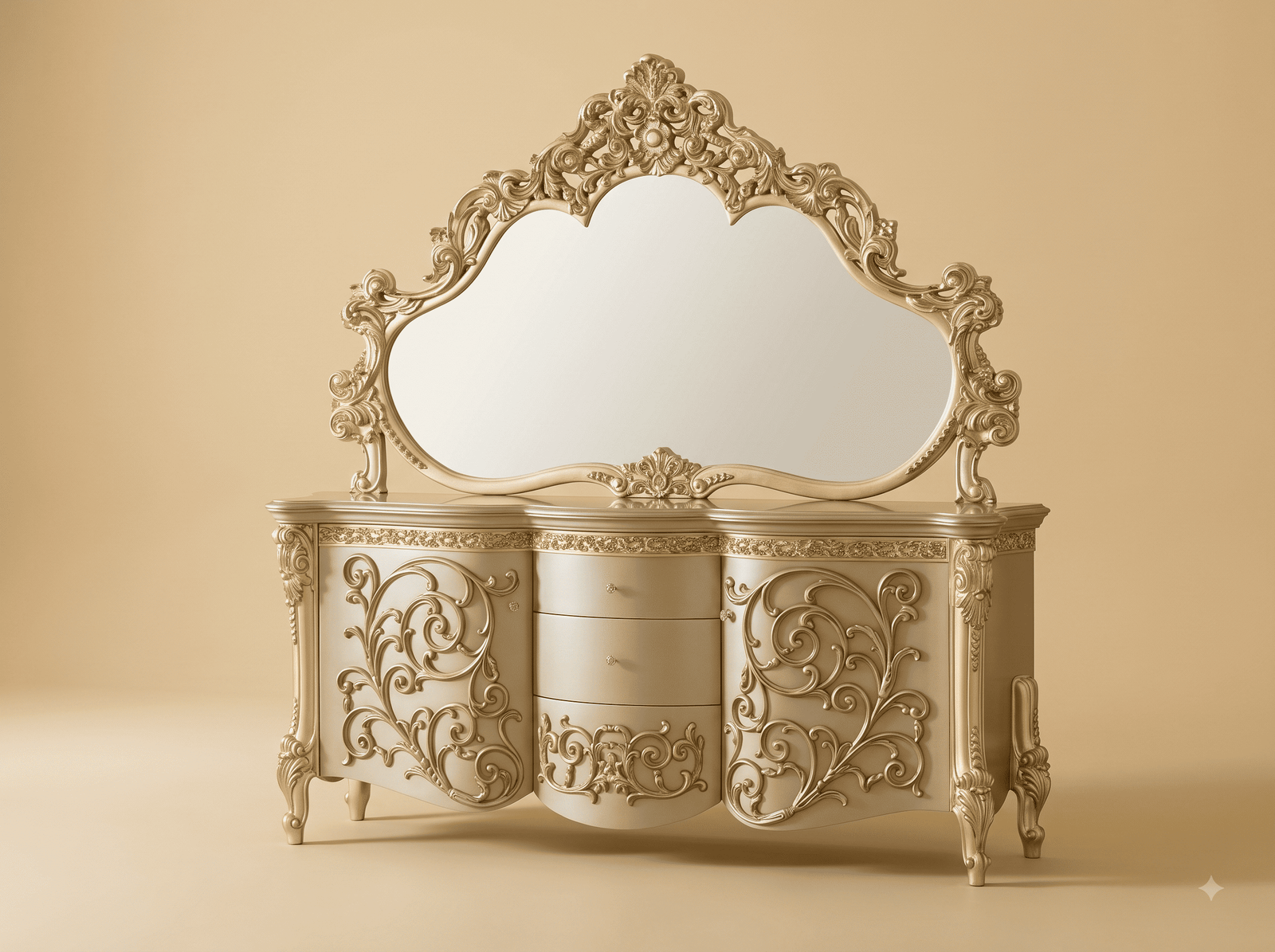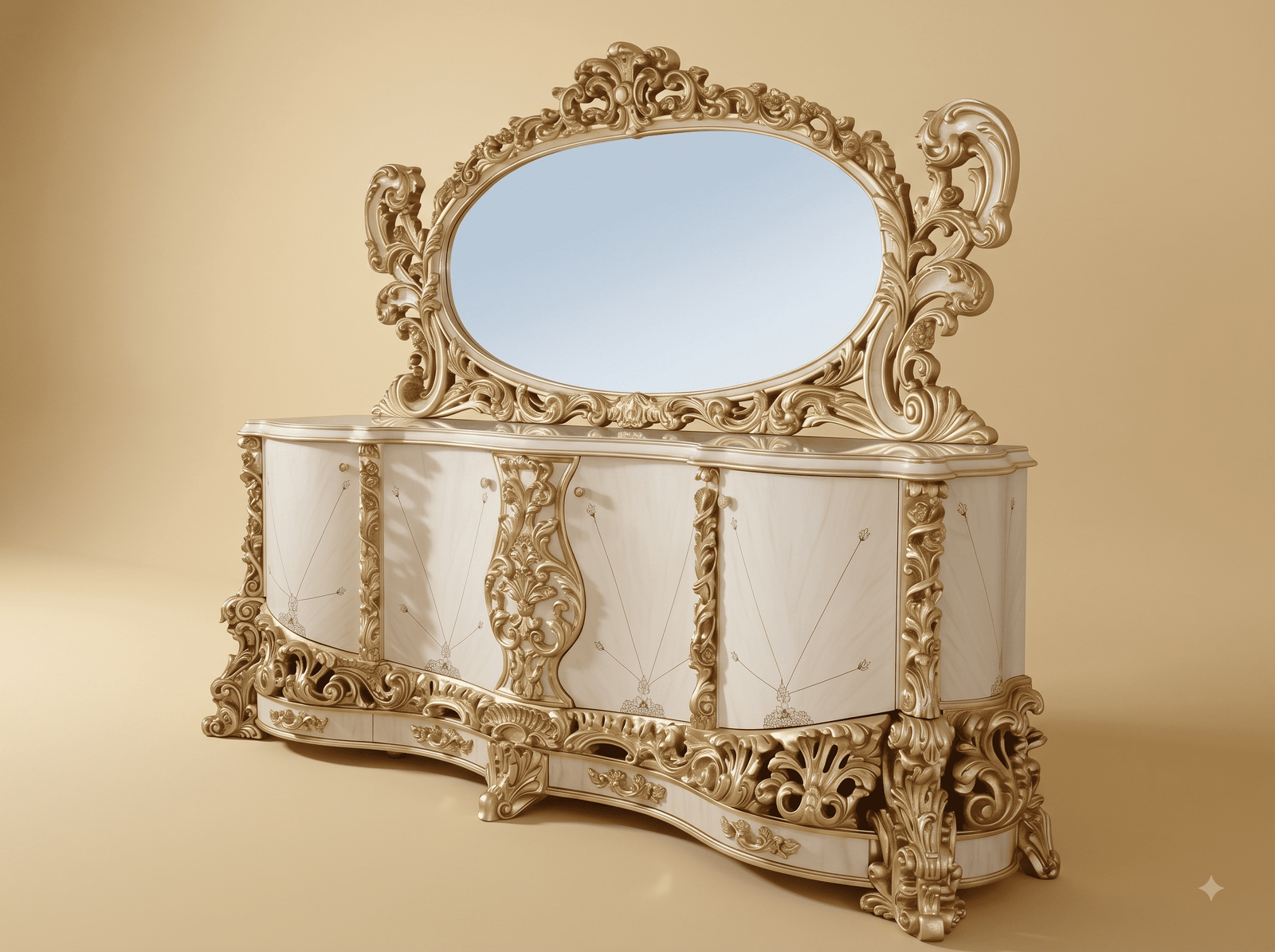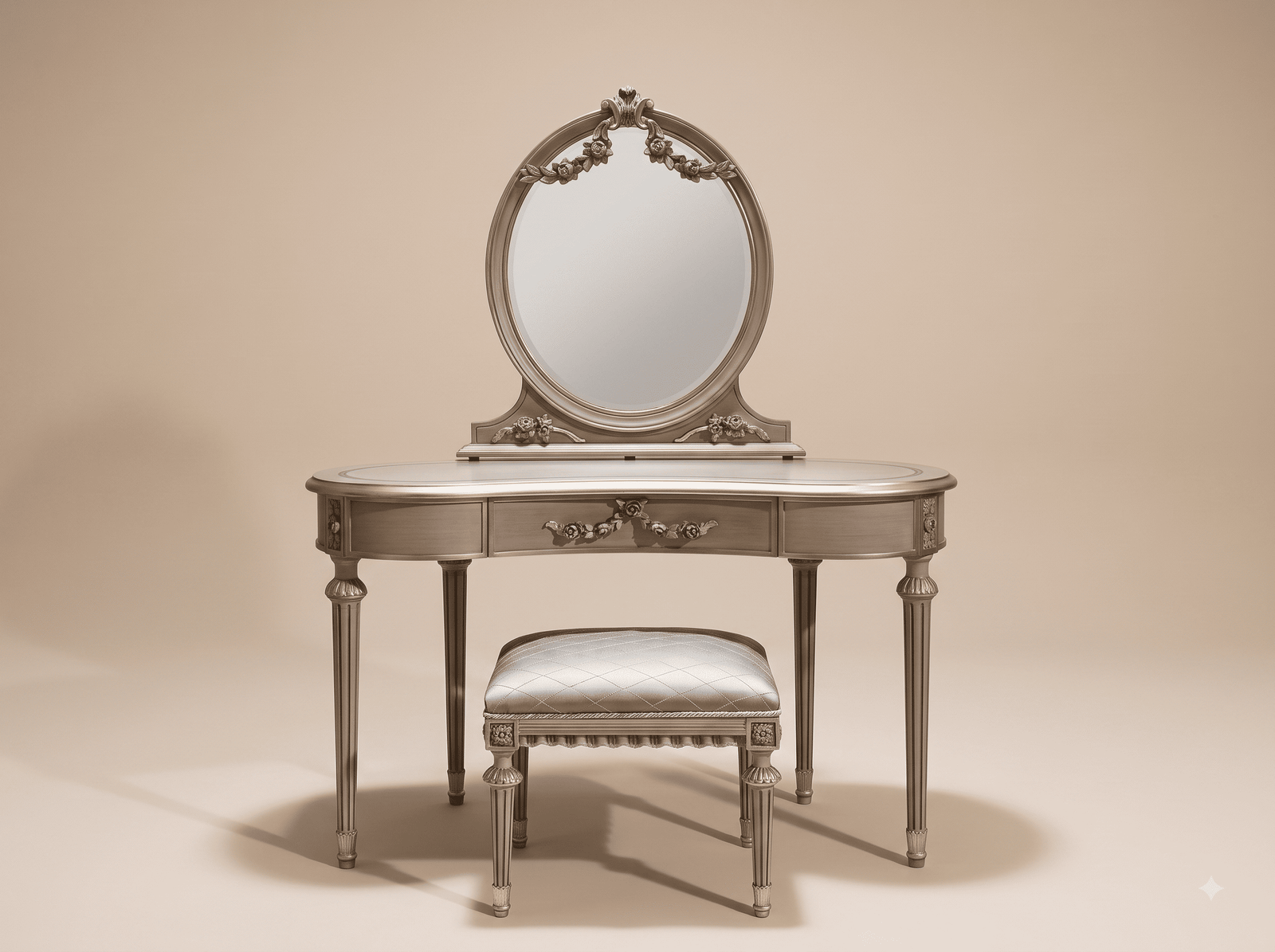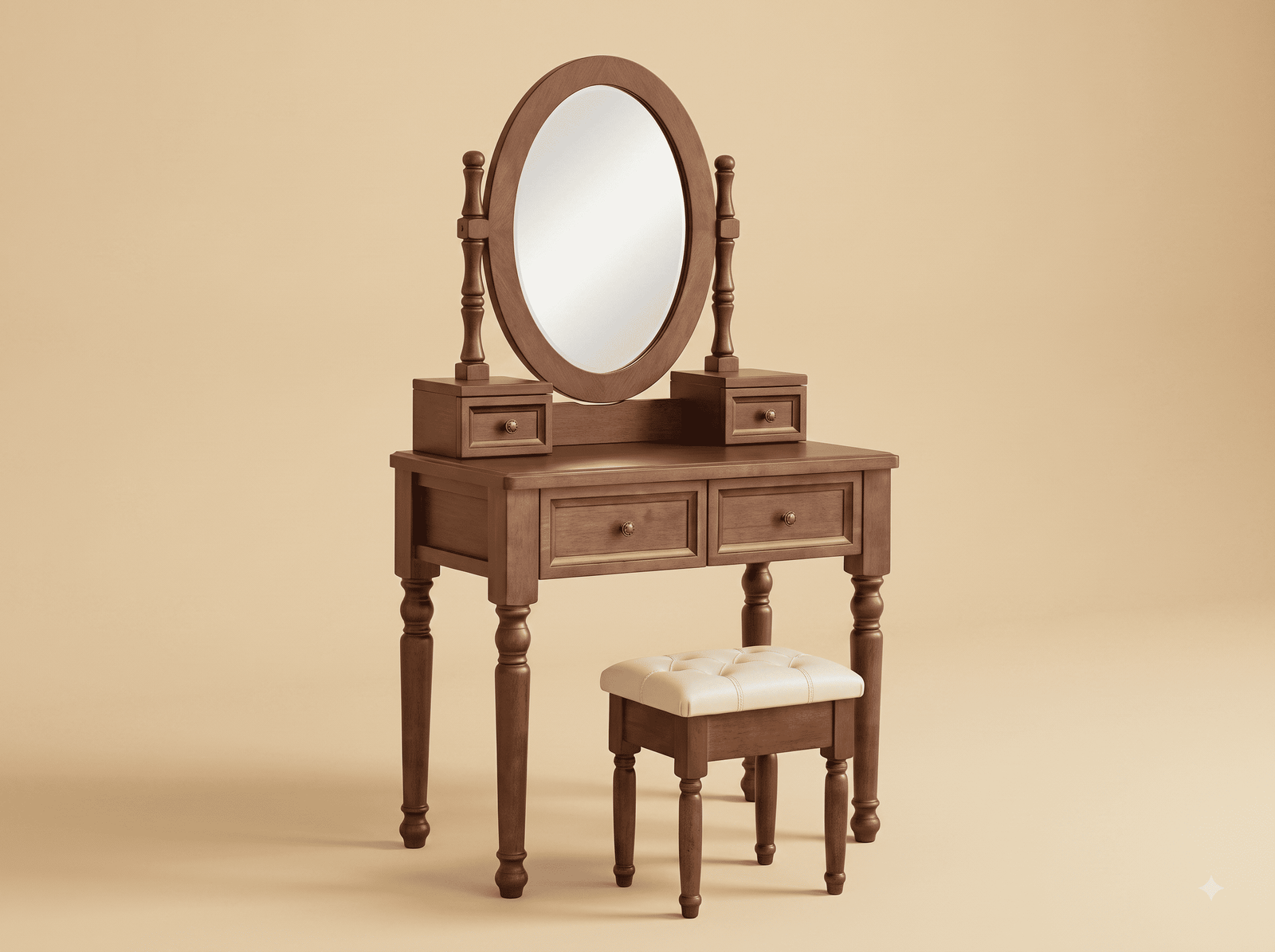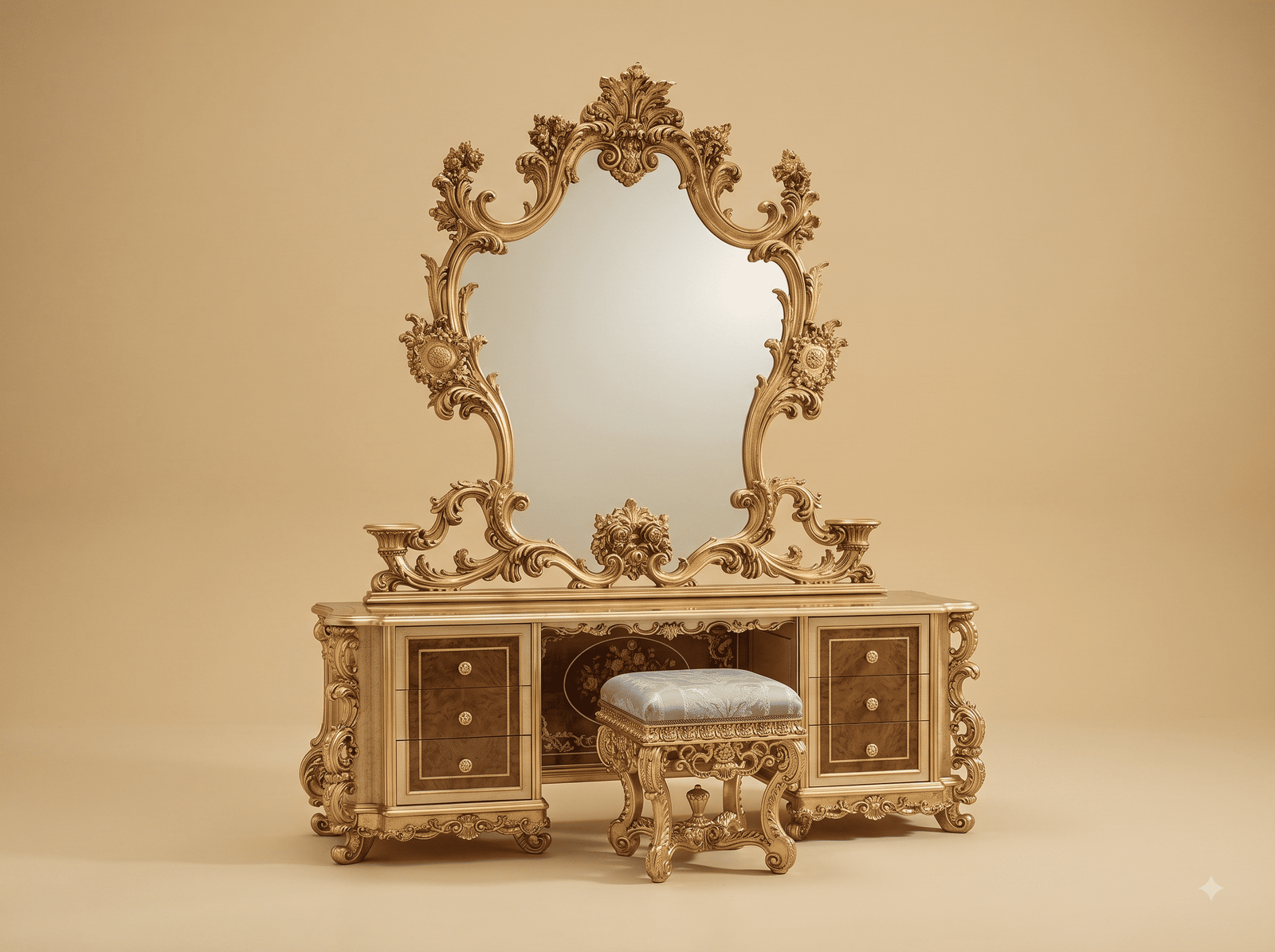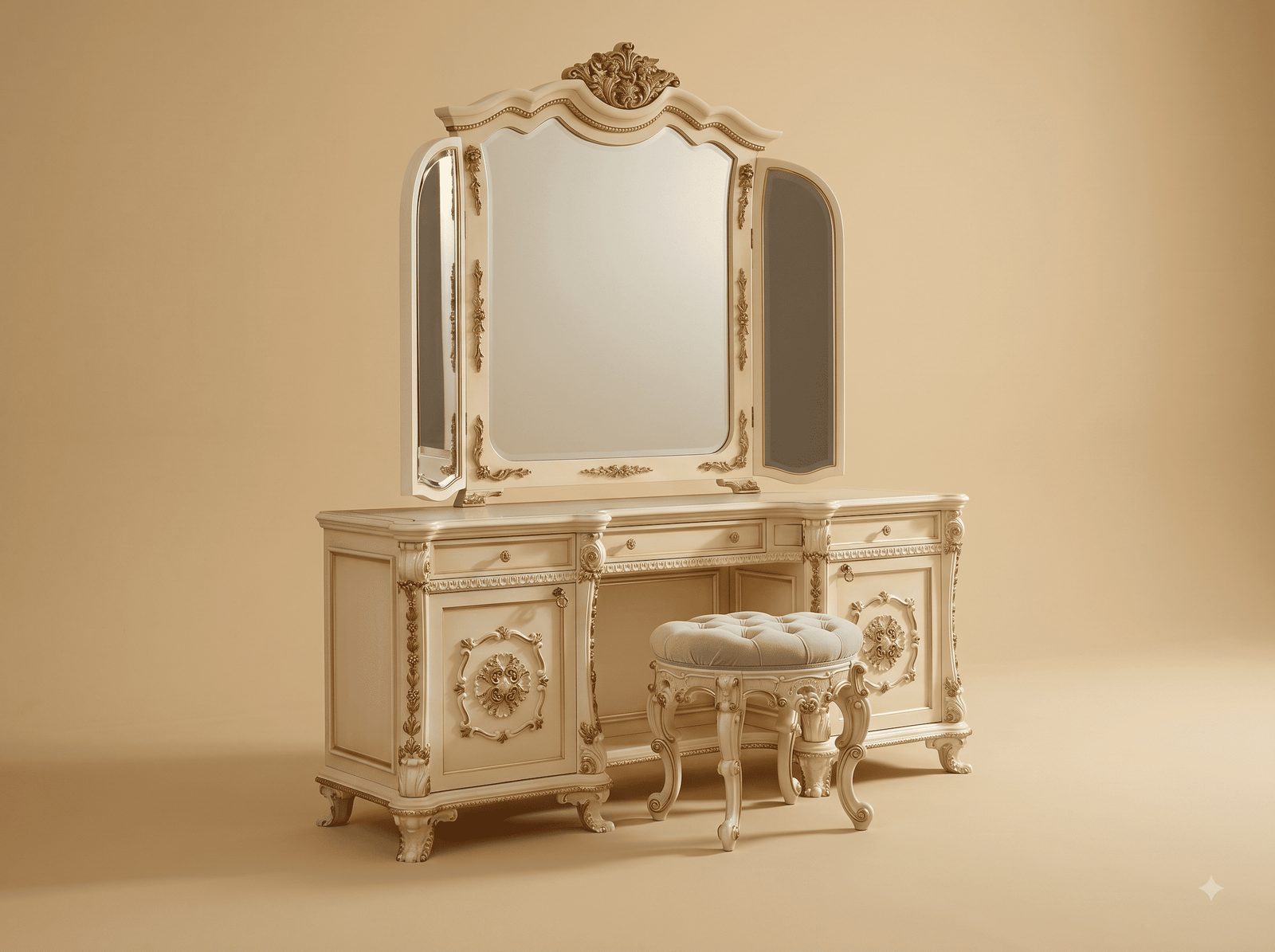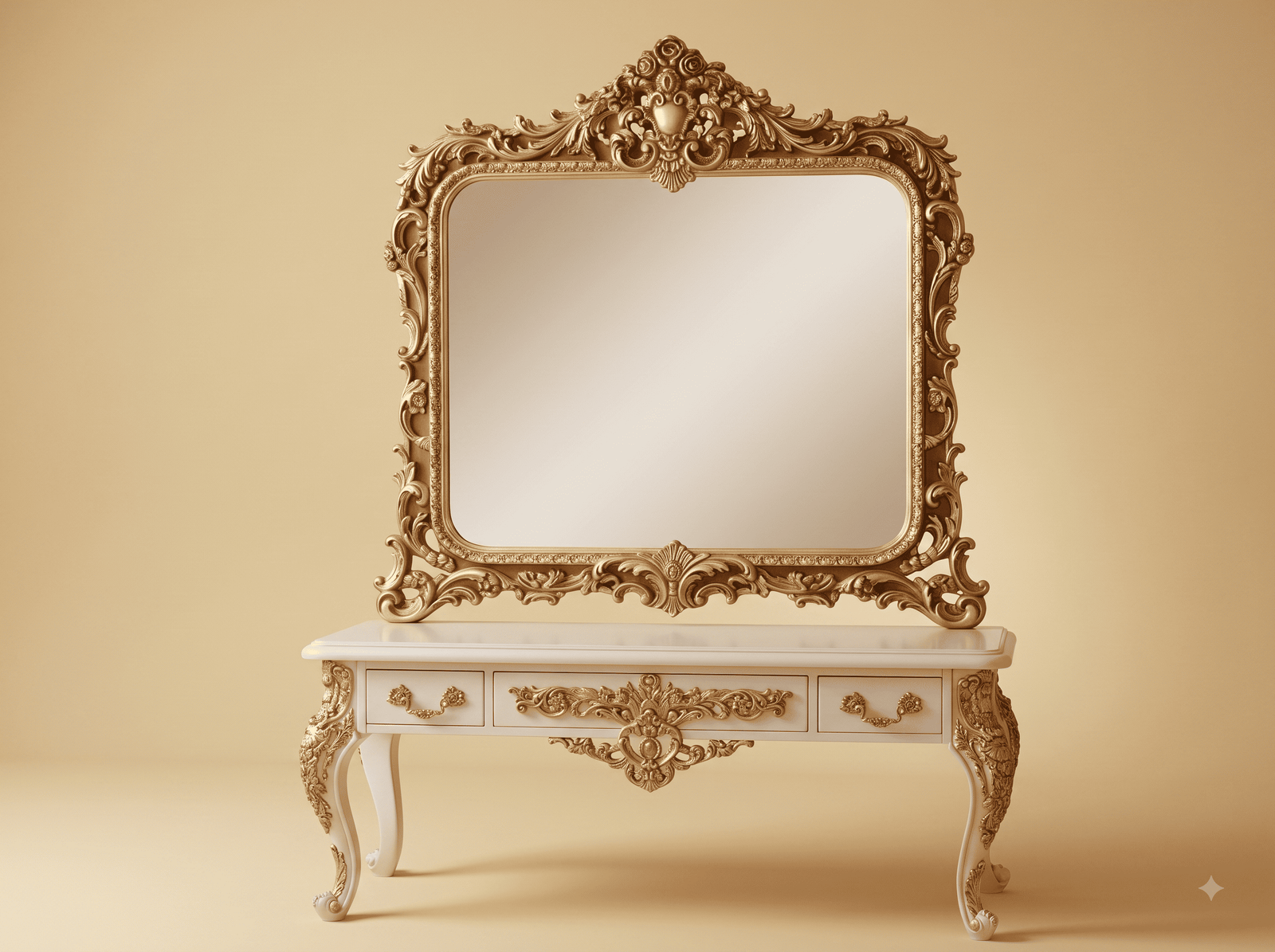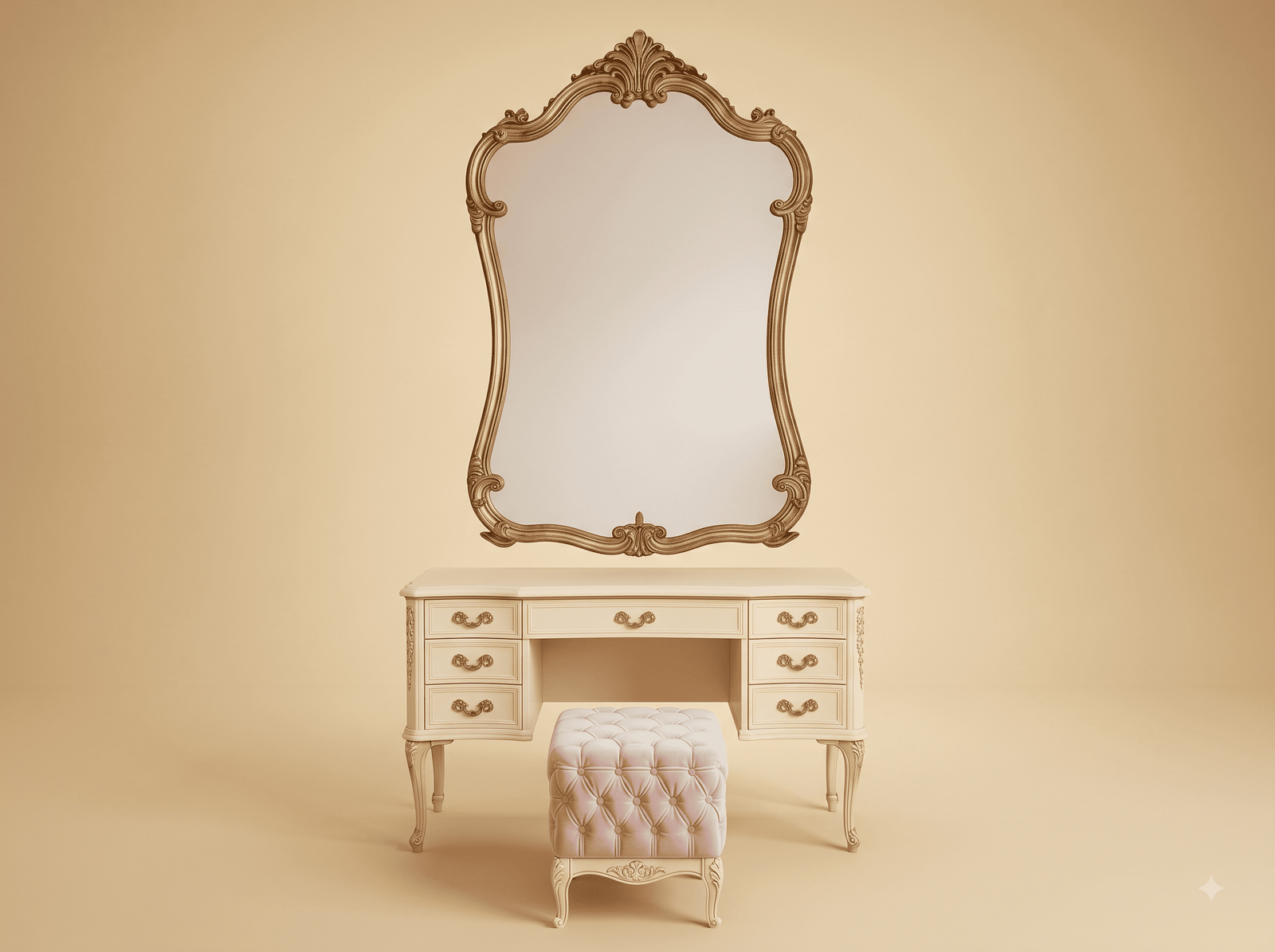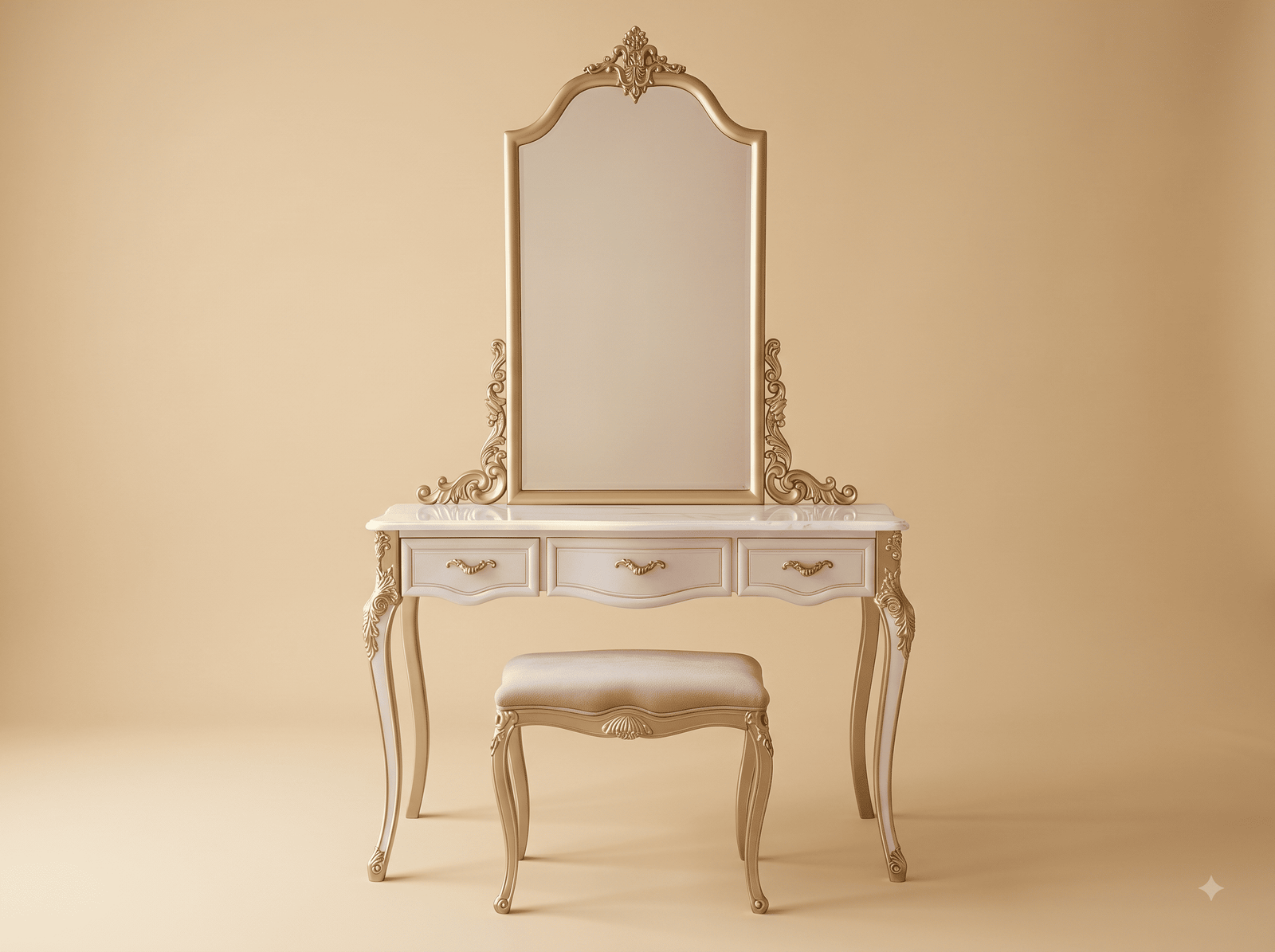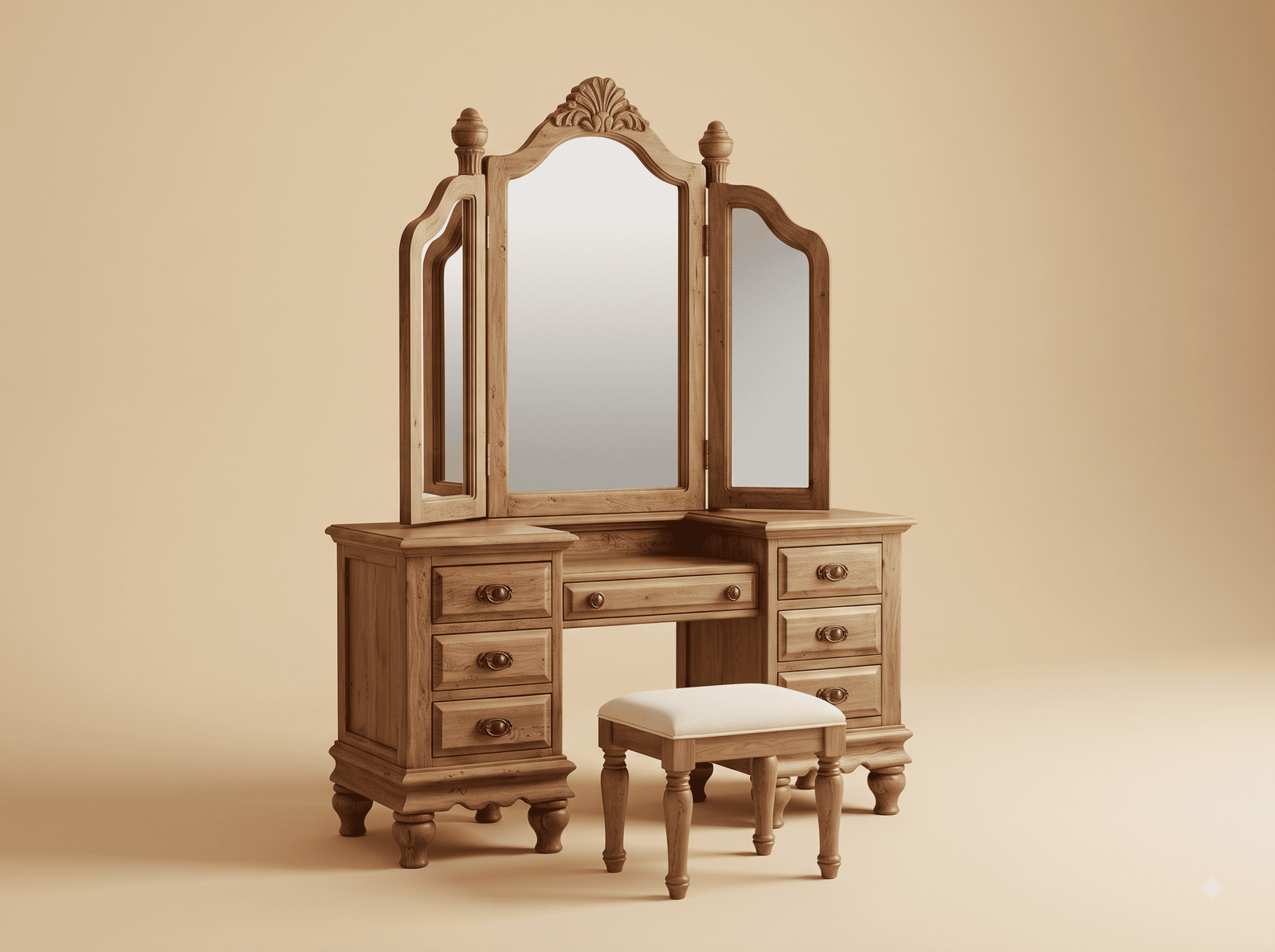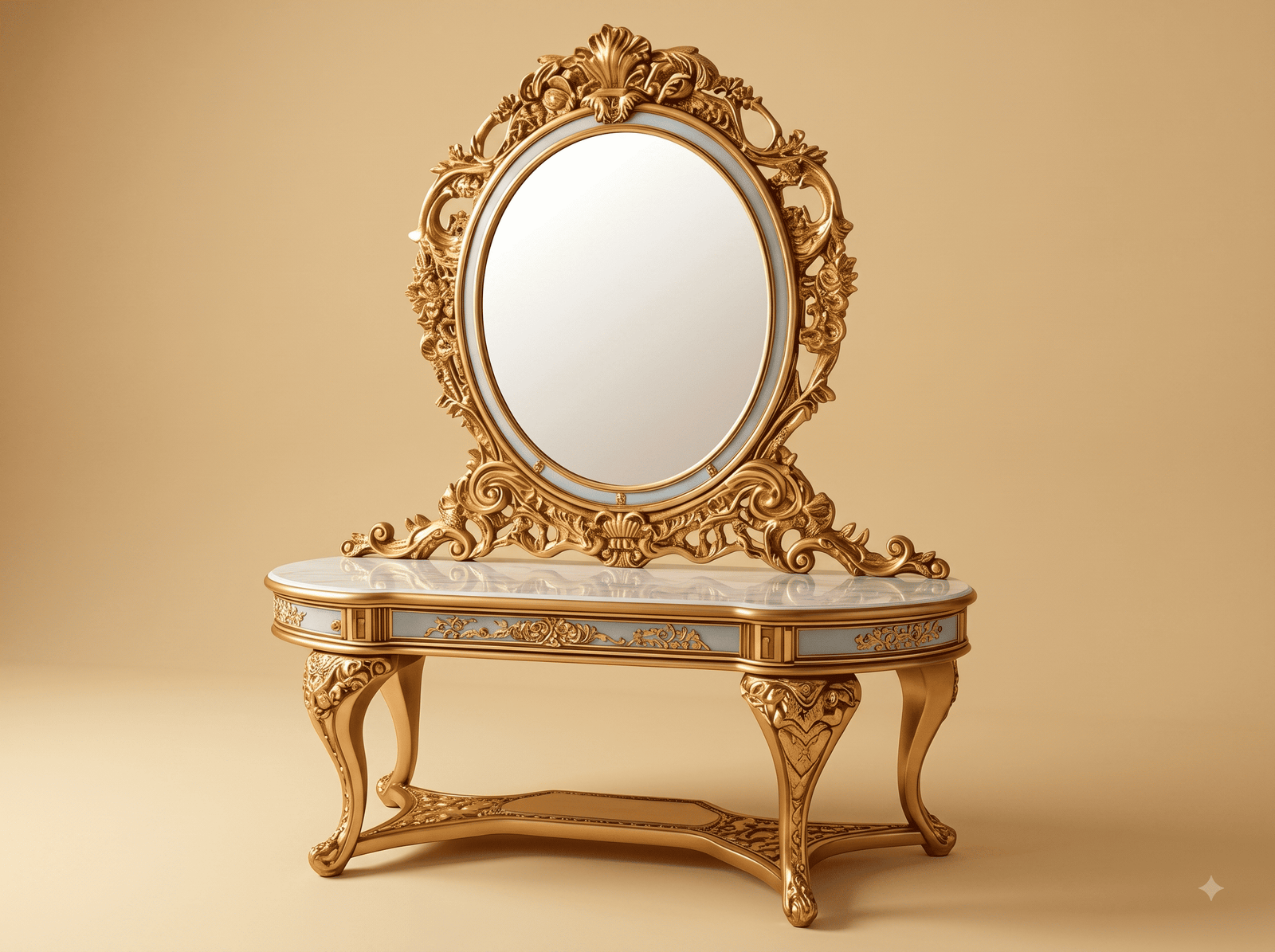
The curved shelf running between the four legs near the floor is called a stretcher, and it is one of the oldest pieces of engineering in furniture.
Four legs standing free are a weak arrangement. Each is joined only at the top, so any sideways push - someone leaning on the table, a stool knocked against it, a floor that is not quite flat - tries to fold the whole frame like a parallelogram. On a table with a stone top, that is a great deal of weight wanting to rock on four thin points.
A stretcher fixes it by tying the legs to one another near the ground, where the leverage is greatest. Once all four are connected low down, the frame becomes a box rather than four separate posts, and it stops moving entirely.
What makes this one interesting is that it does not take the shortest path. A straight cross-brace would be stronger still, but it would cut visually across the open space under the table and destroy the lightness the design is built for. So the stretcher is shaped - curving inward between the front legs, out again at the sides - which lengthens it, keeps the tie in place, and reads as a shelf rather than as a brace.
Our craftsmen cut it from solid stock with the grain running around the curve, and pierce its carved border only where the section is generous - never at the four points where it meets the legs and does its work.
 Ask Price On WhatsApp