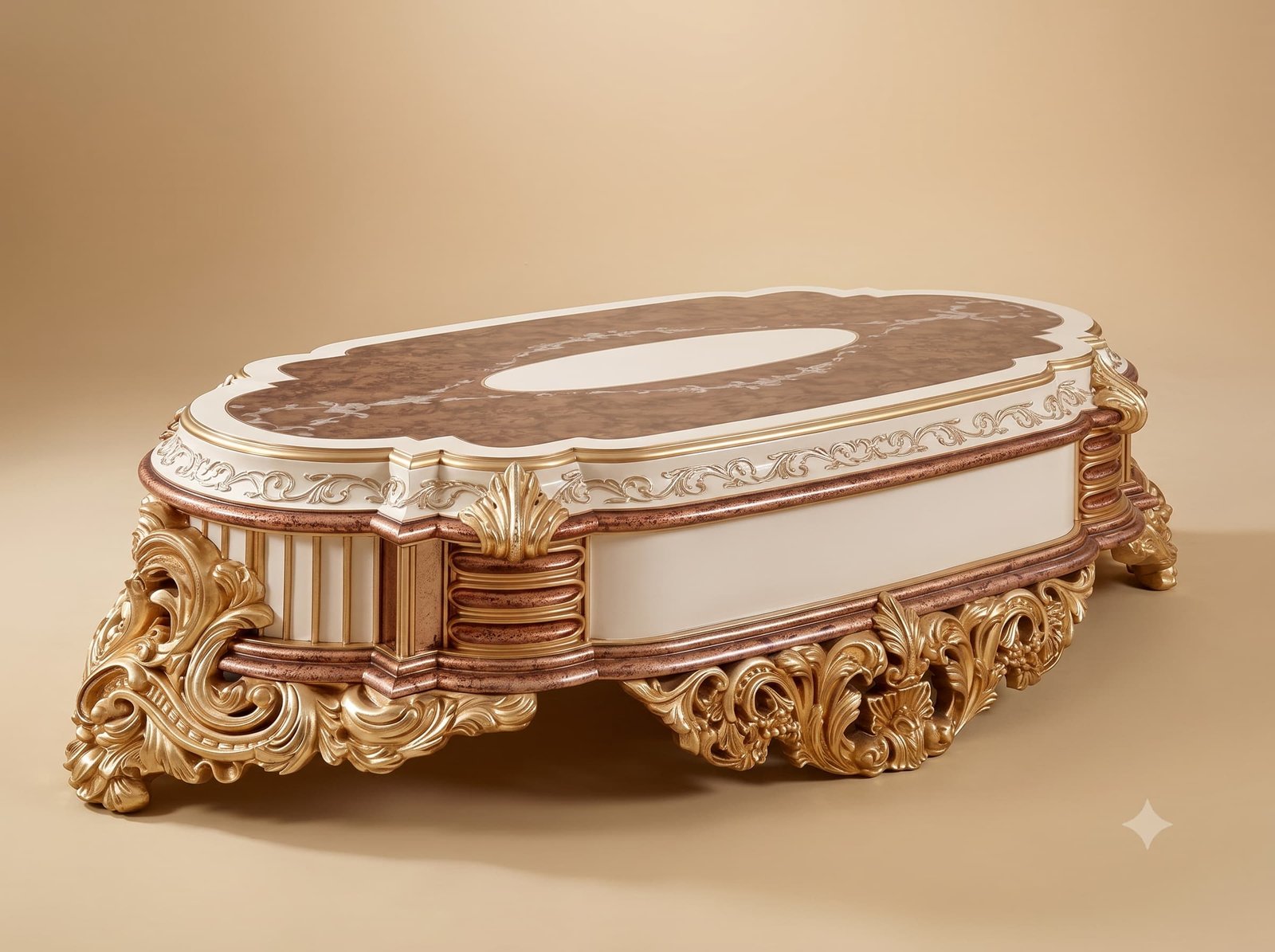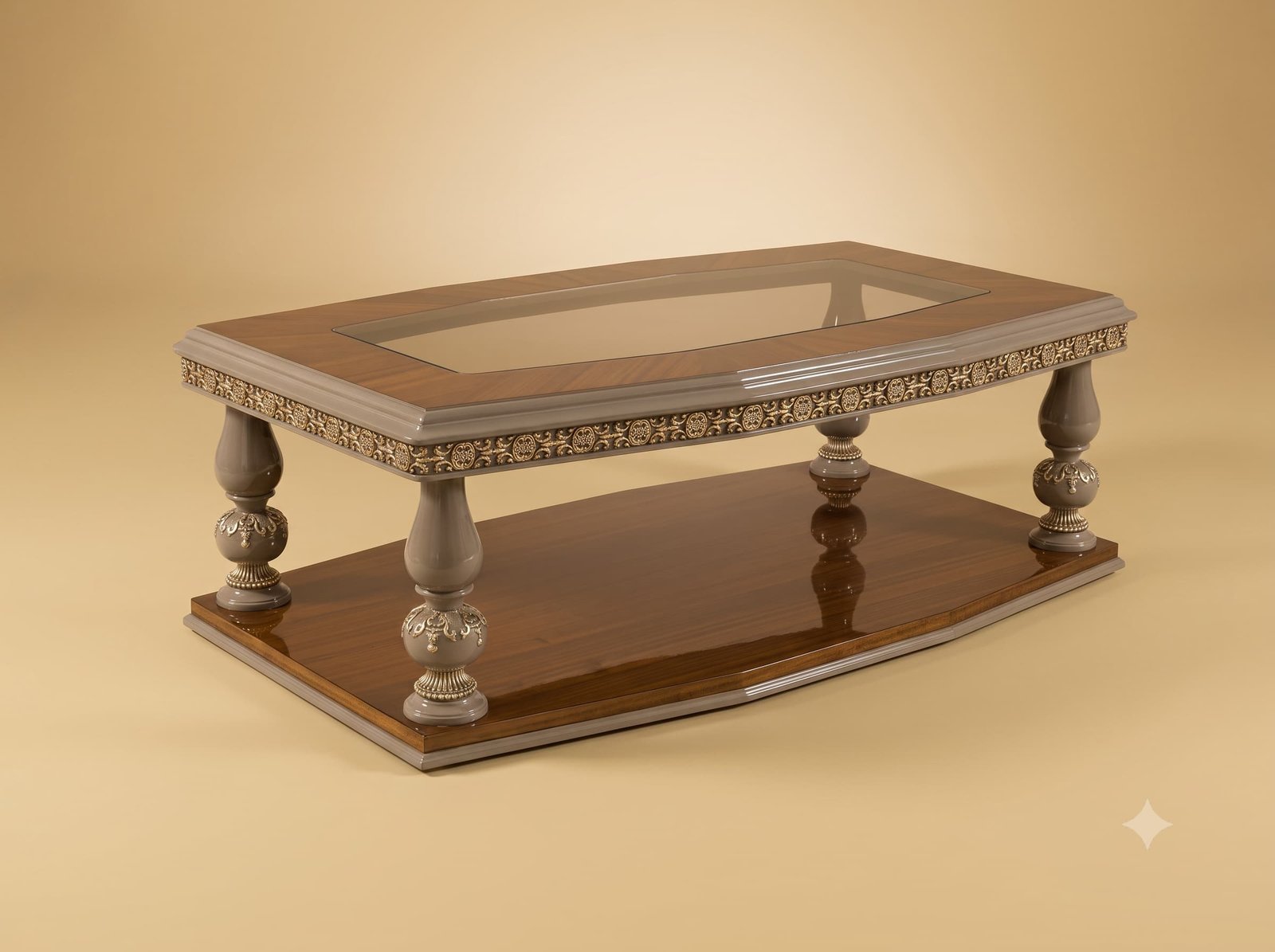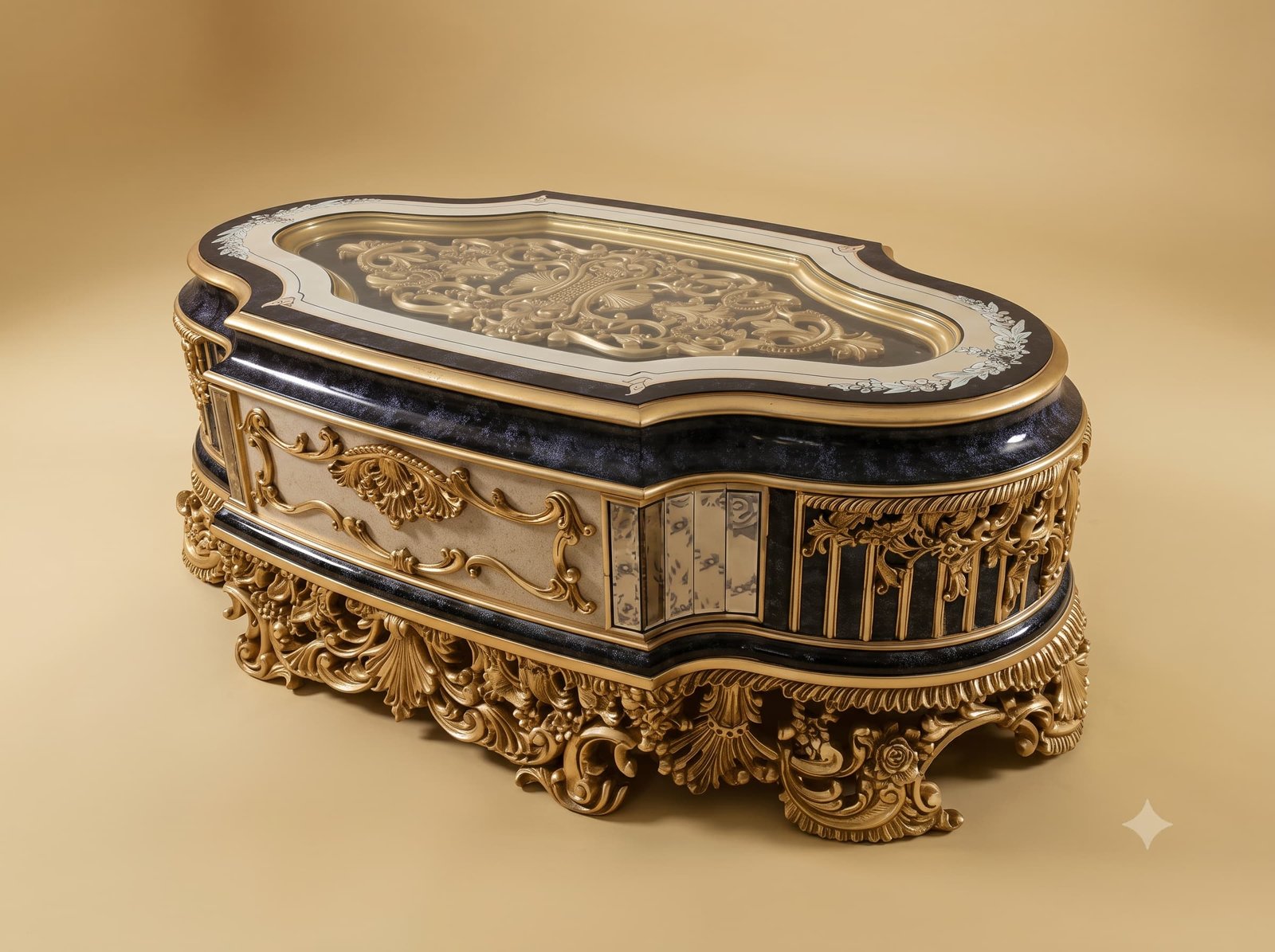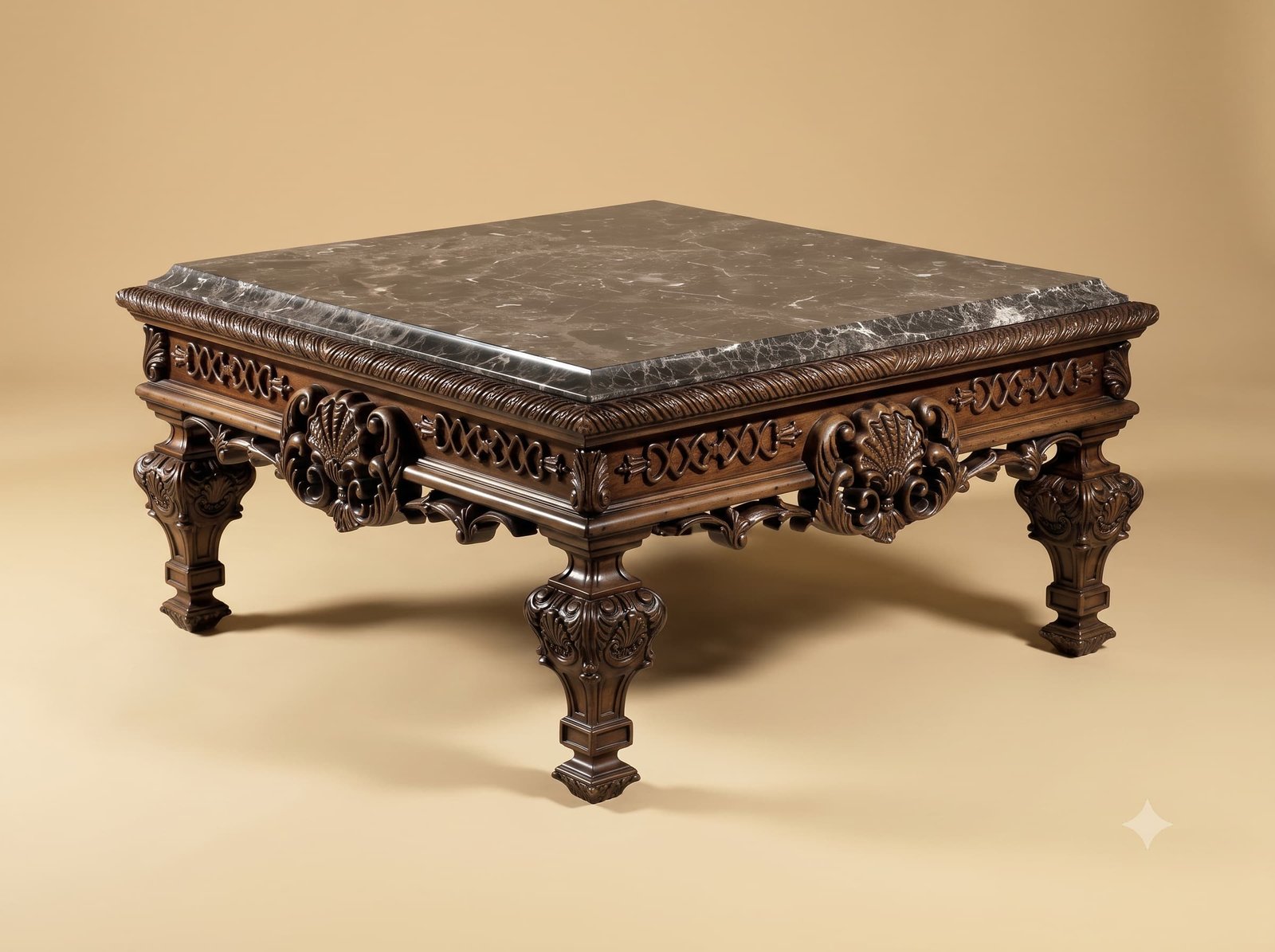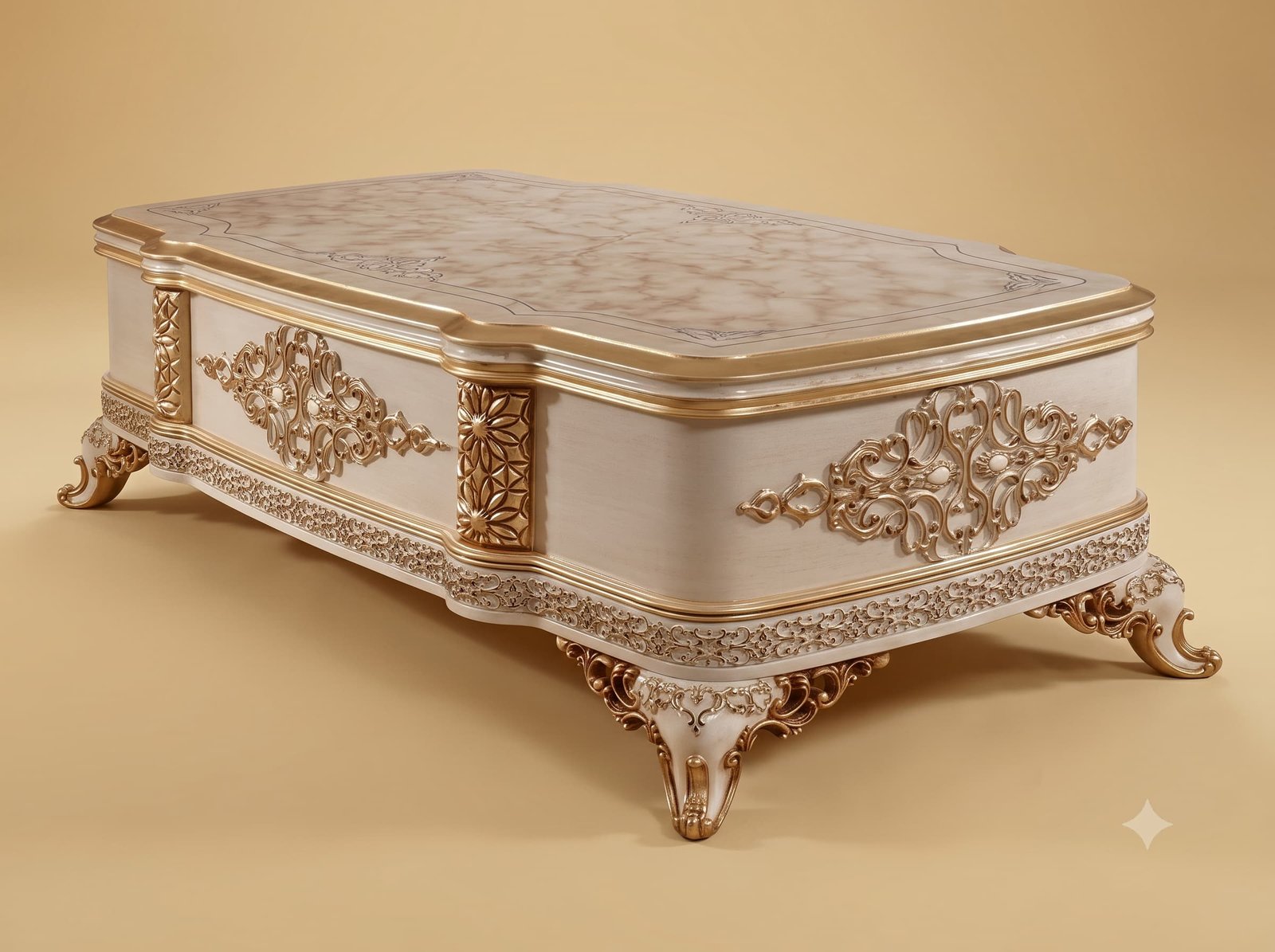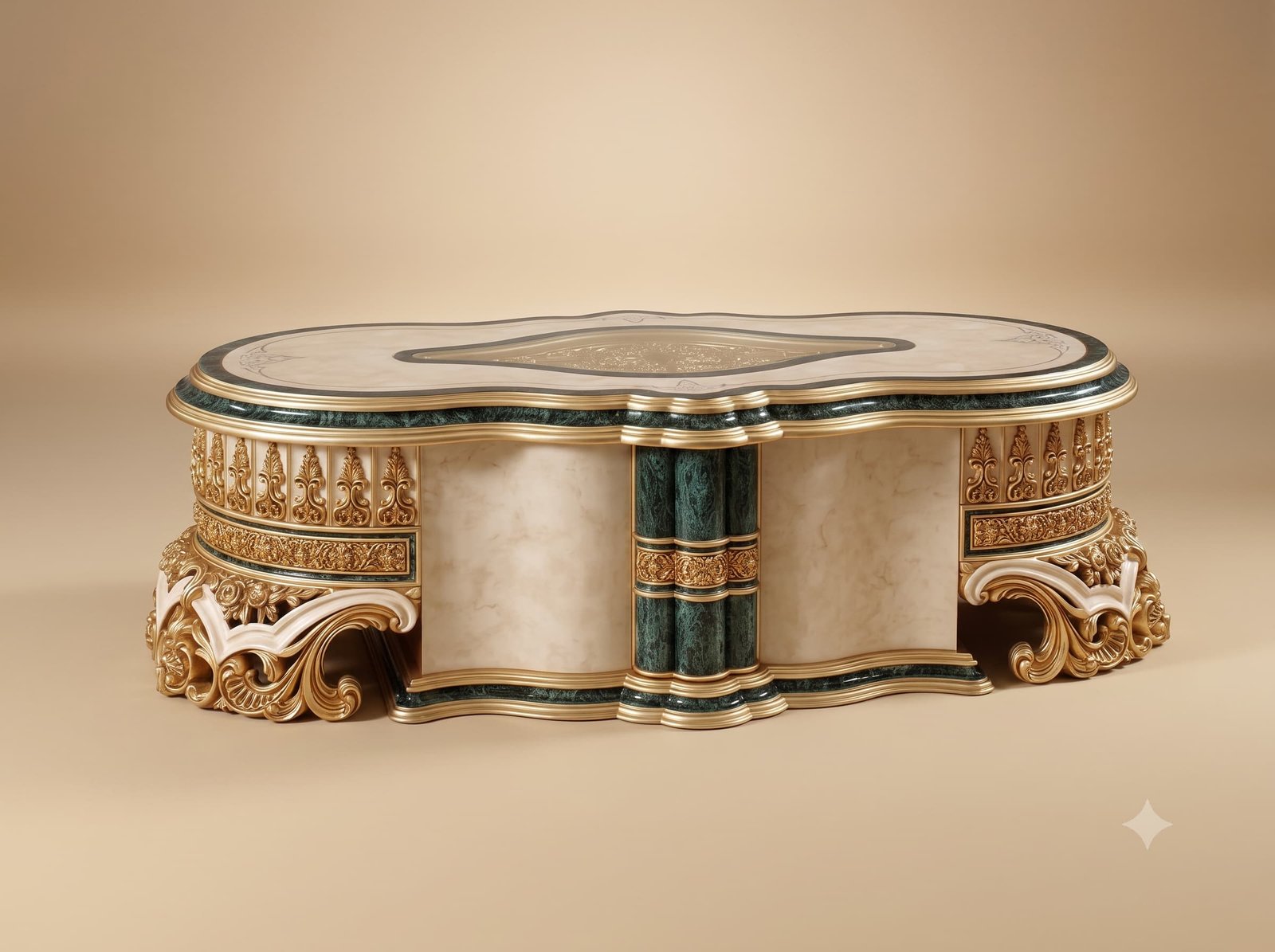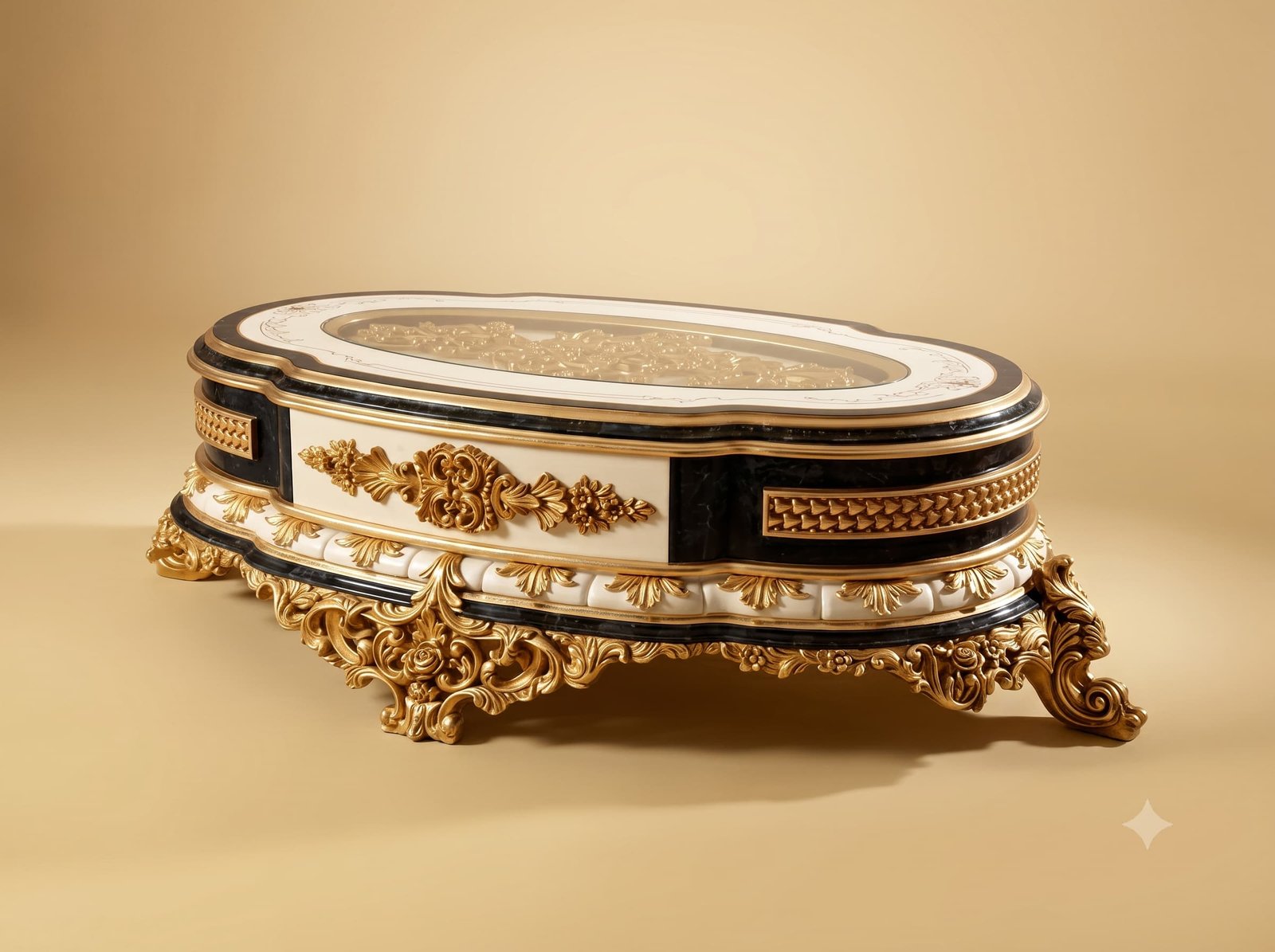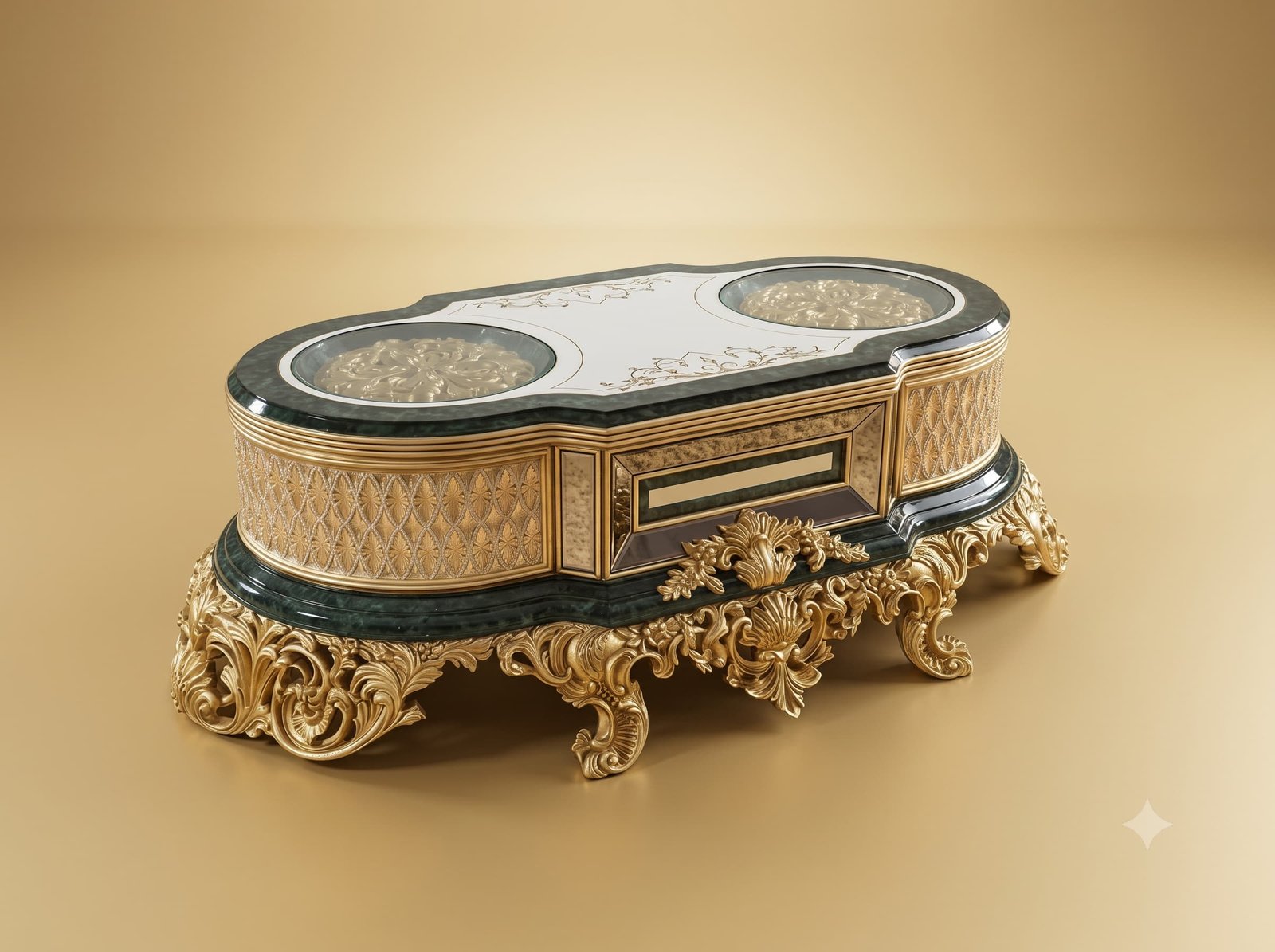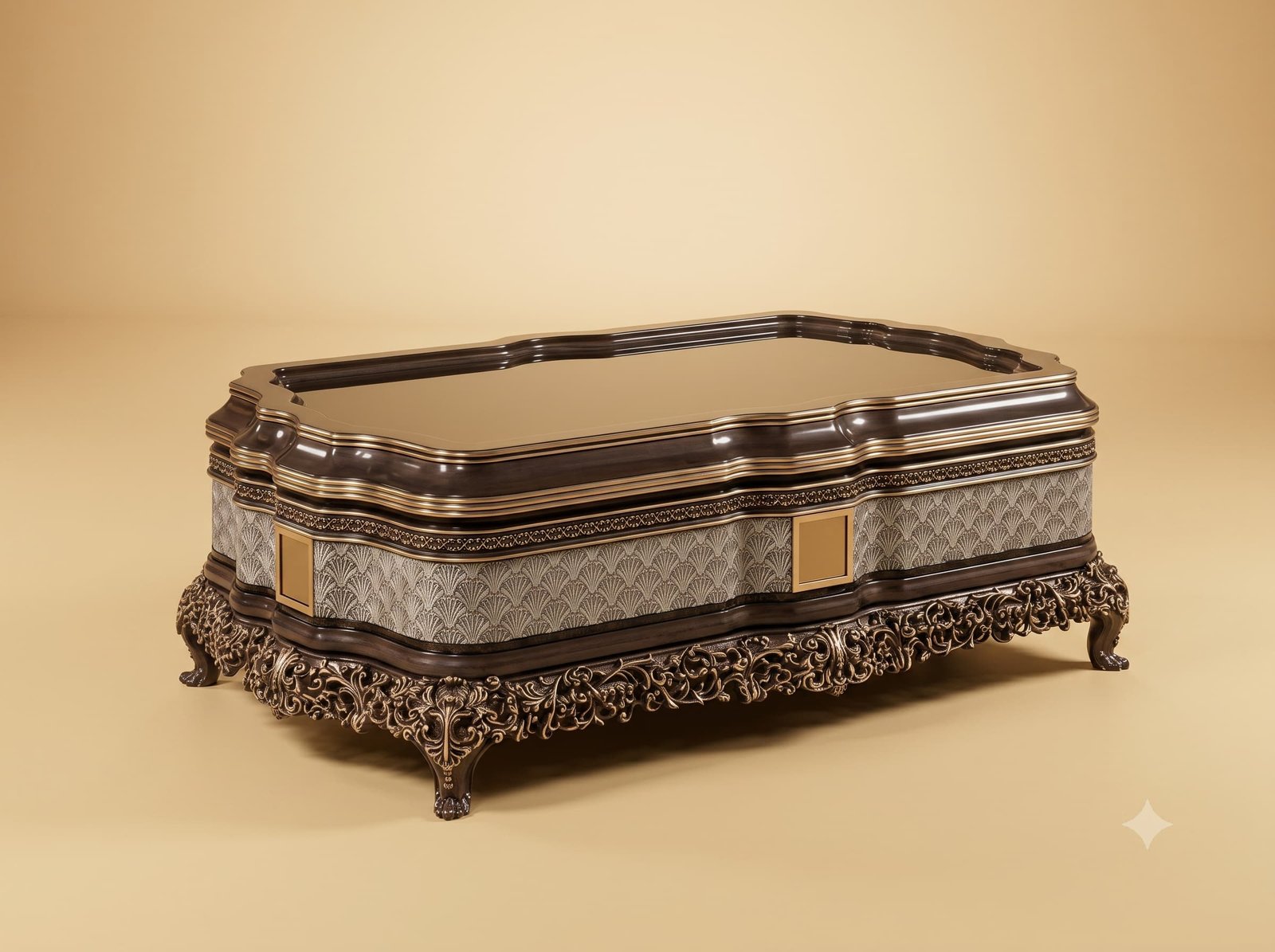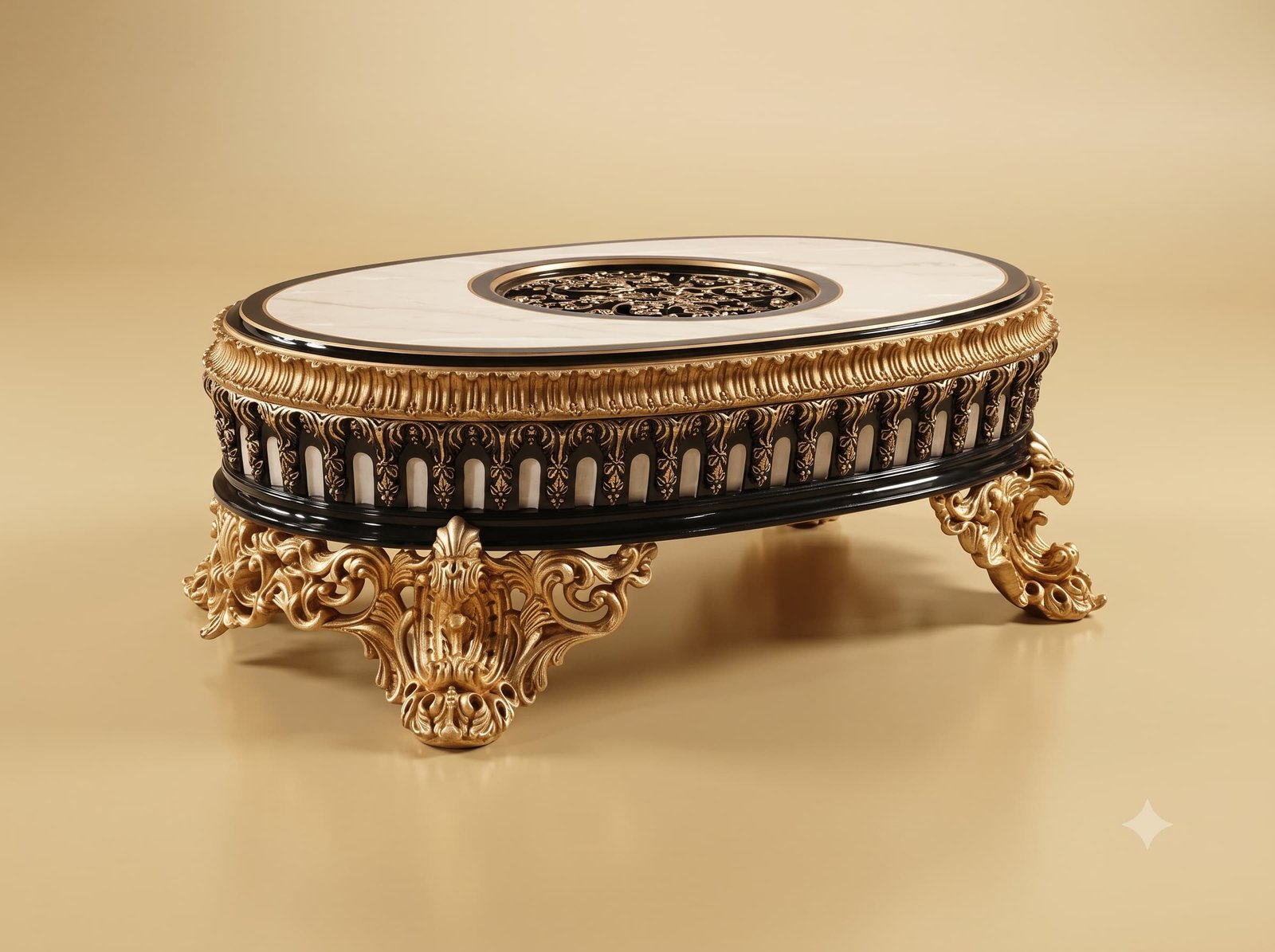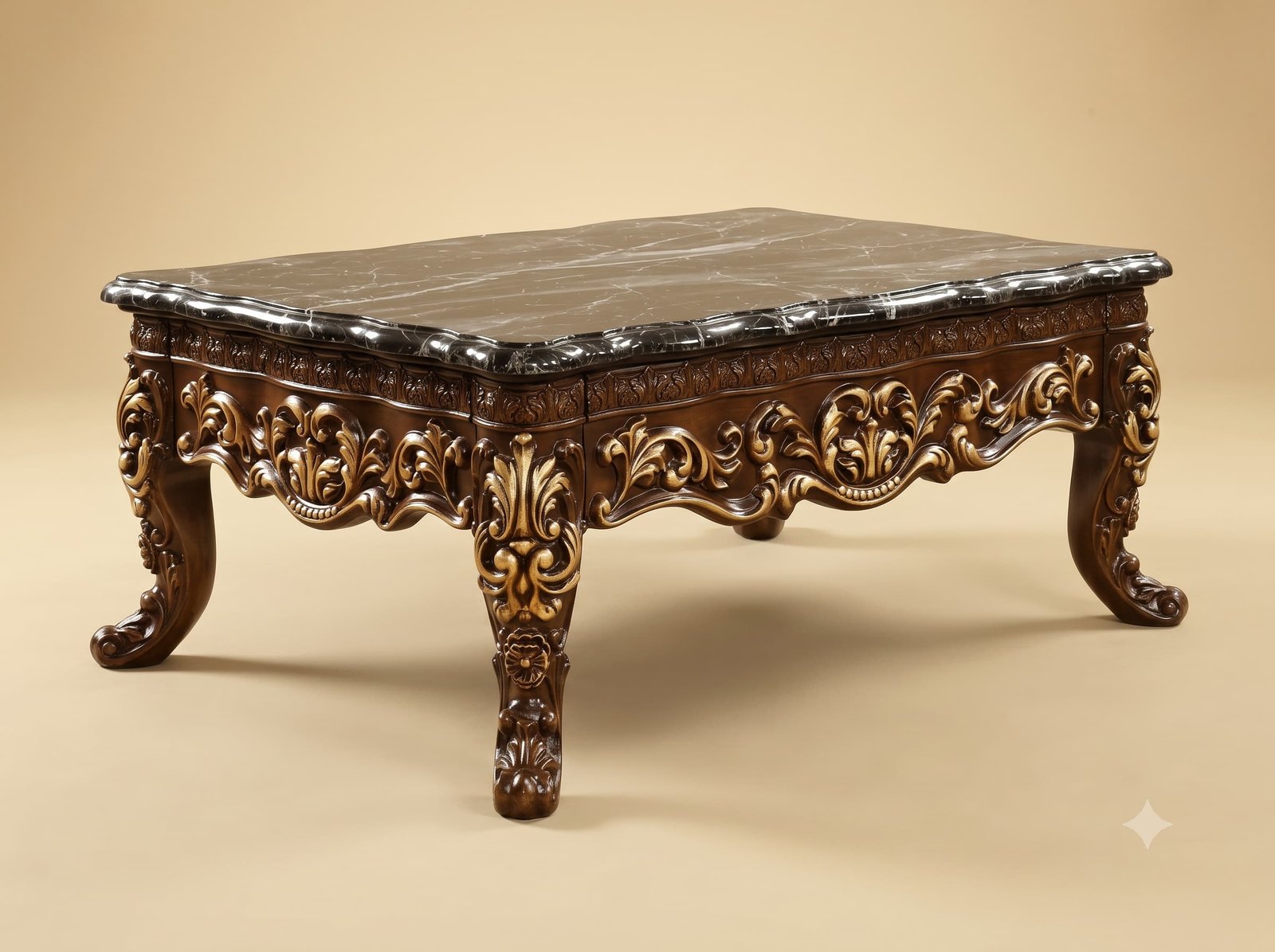
Look at the edge of the marble on this table. It is not a flat slab with a polished edge - it has a moulded profile worked into the stone itself, and that profile is the same one running in the timber below it.
Most stone-topped tables do not do this. A slab is cut, its edge is eased, and it is dropped onto a timber base whose mouldings are their own shape entirely. The two materials meet and simply stop, and the join reads as two objects stacked rather than one piece of furniture.
Here the timber moulding is drawn first, and its section is passed to the stone cutter as a template. The slab is then profiled to continue that line - the ogee in the wood carries on into the ogee in the stone, so the eye follows a single unbroken curve from the apron up over the edge of the top.
It is slow work on stone, done with progressively finer shaped abrasives rather than a cutter, and it has to be right at every point around a shaped outline. The reward is a table where nobody notices the join between two very different materials - which is the entire aim.
 Ask Price On WhatsApp