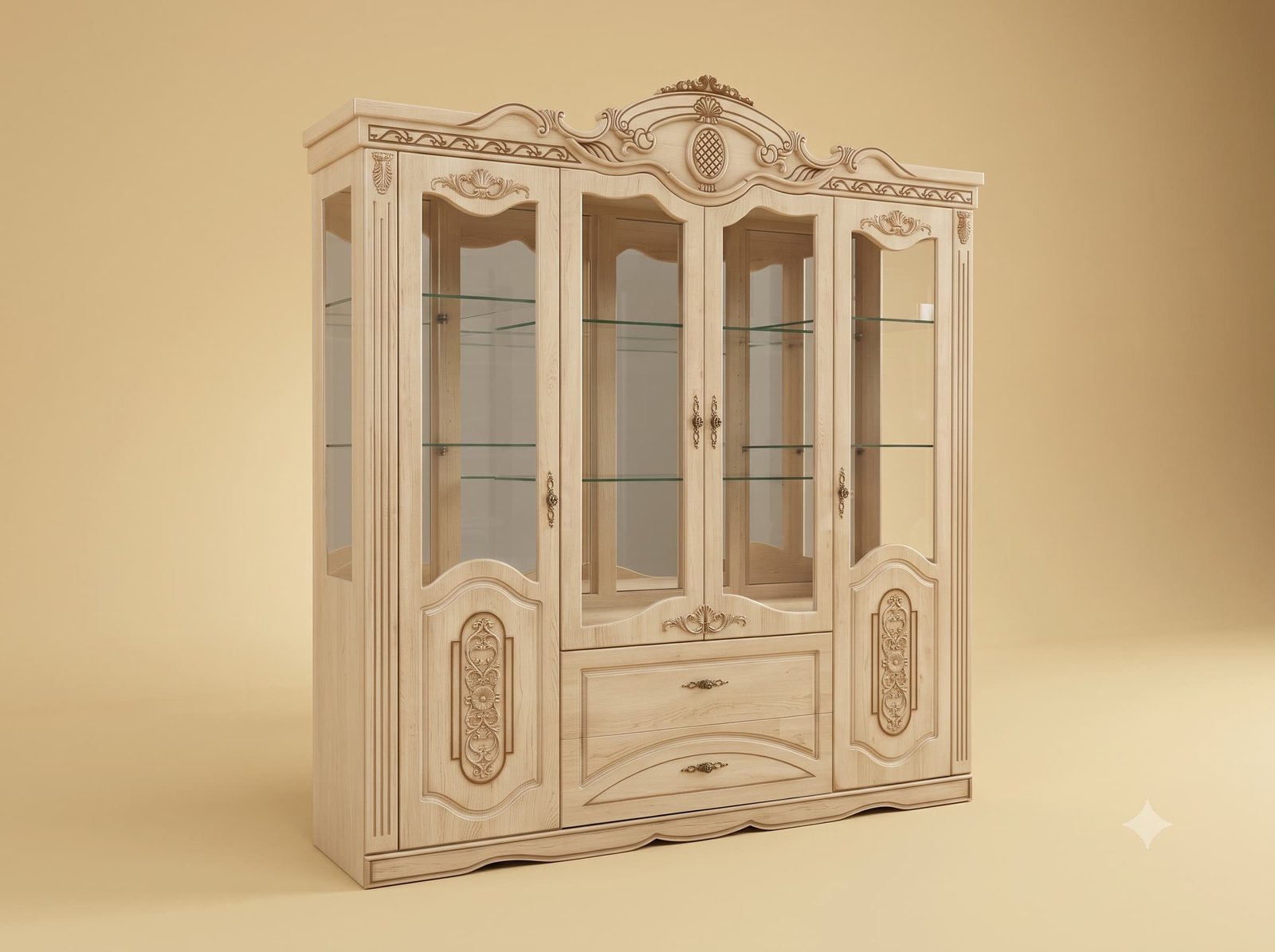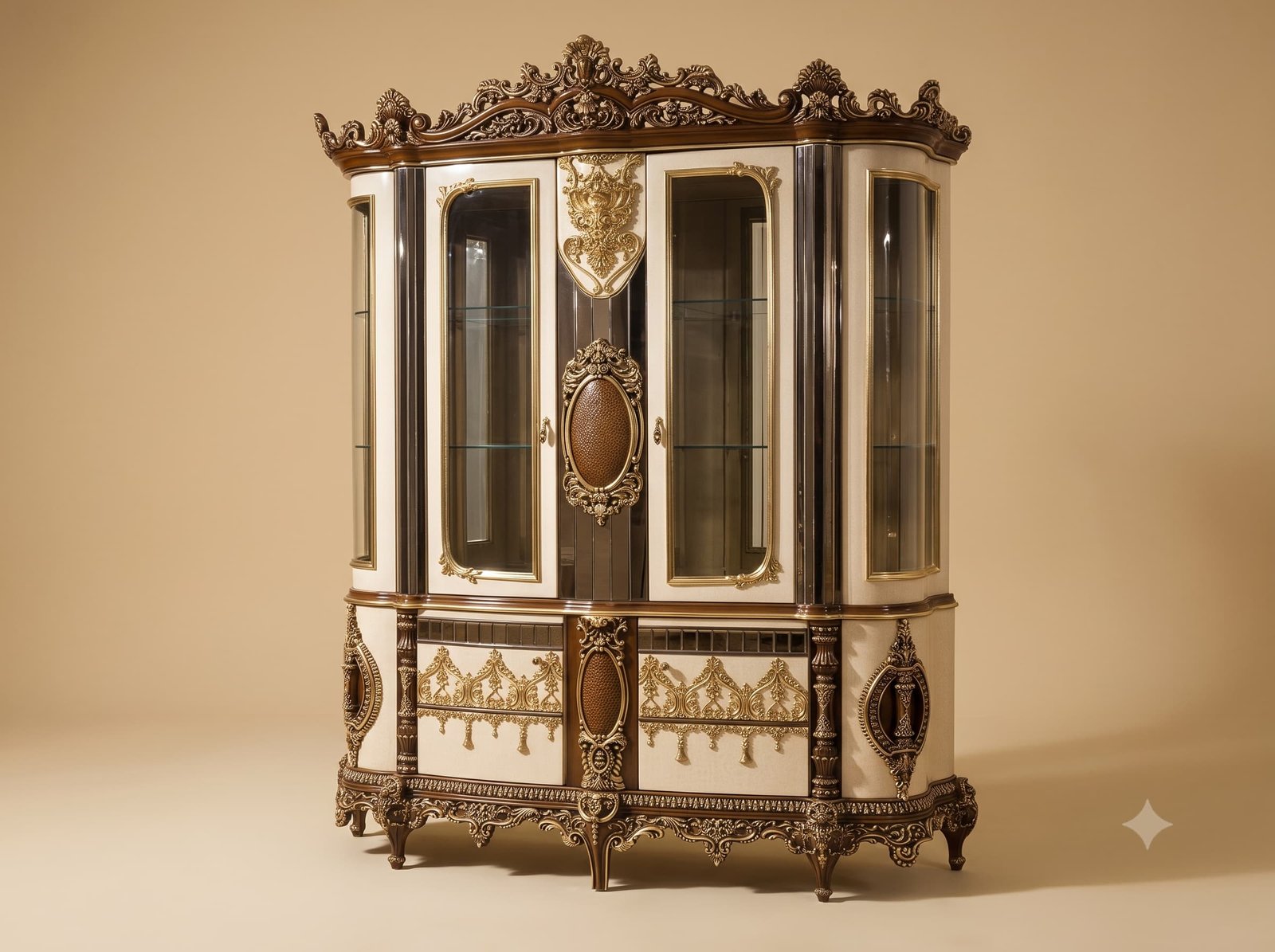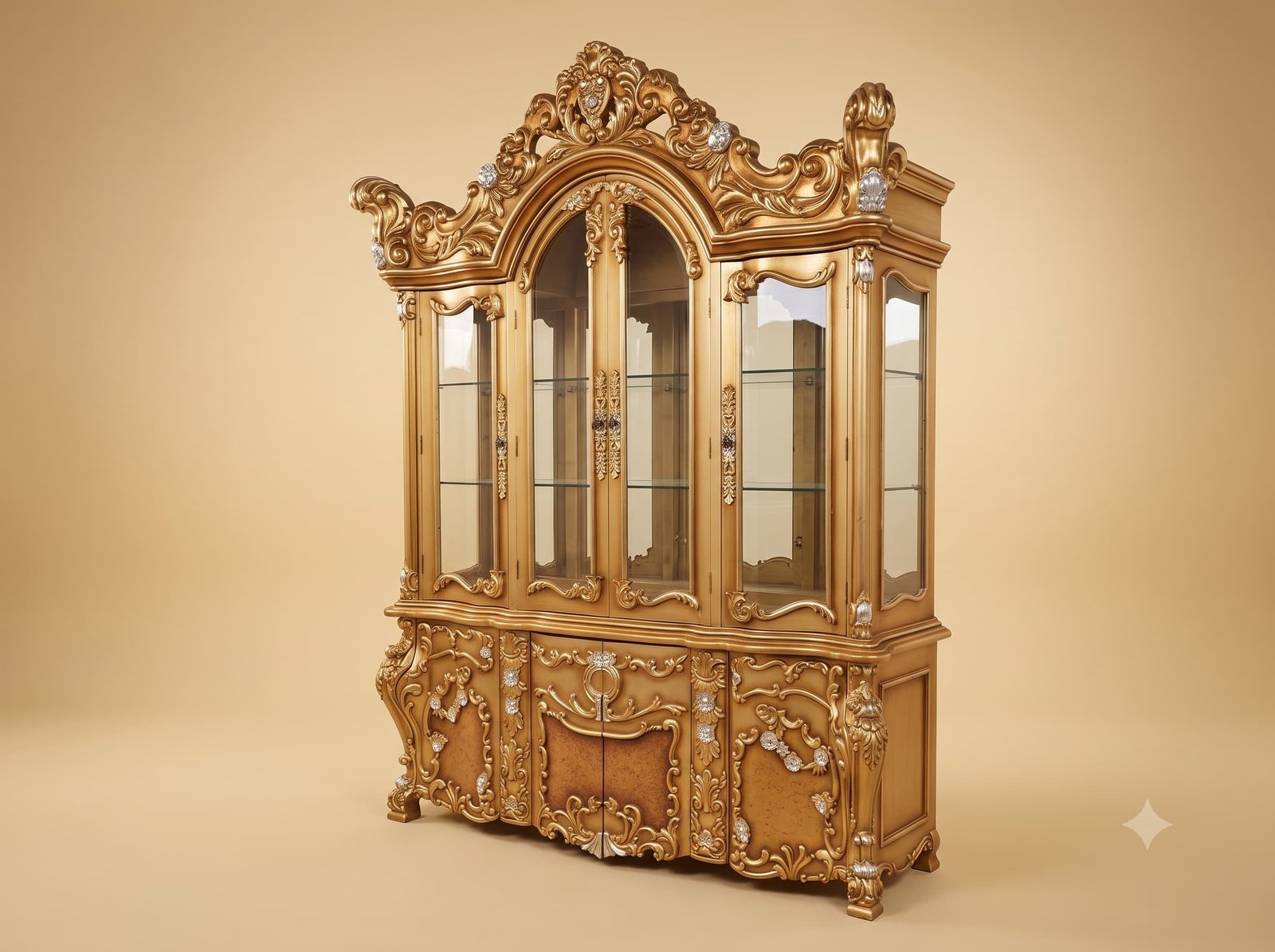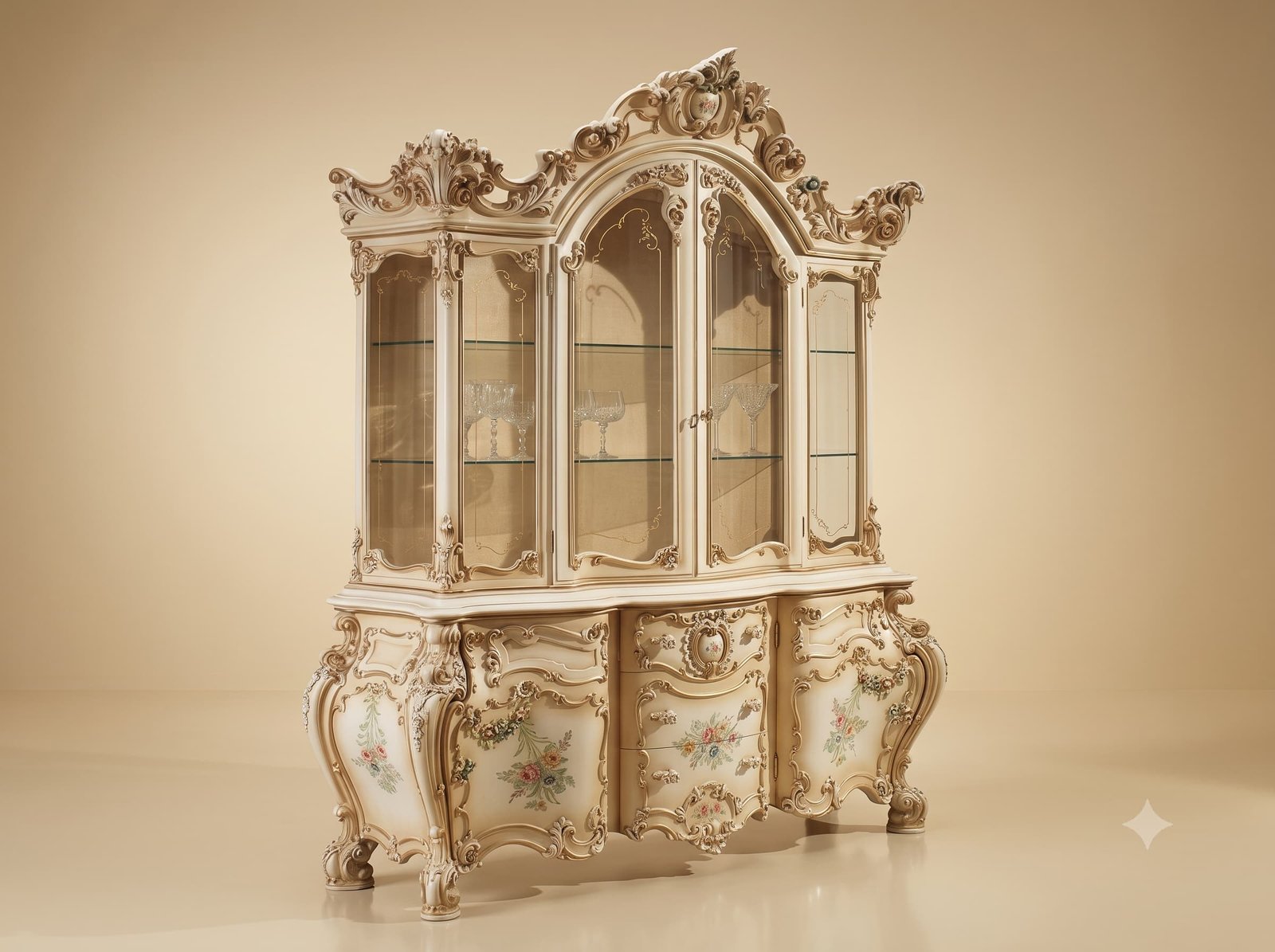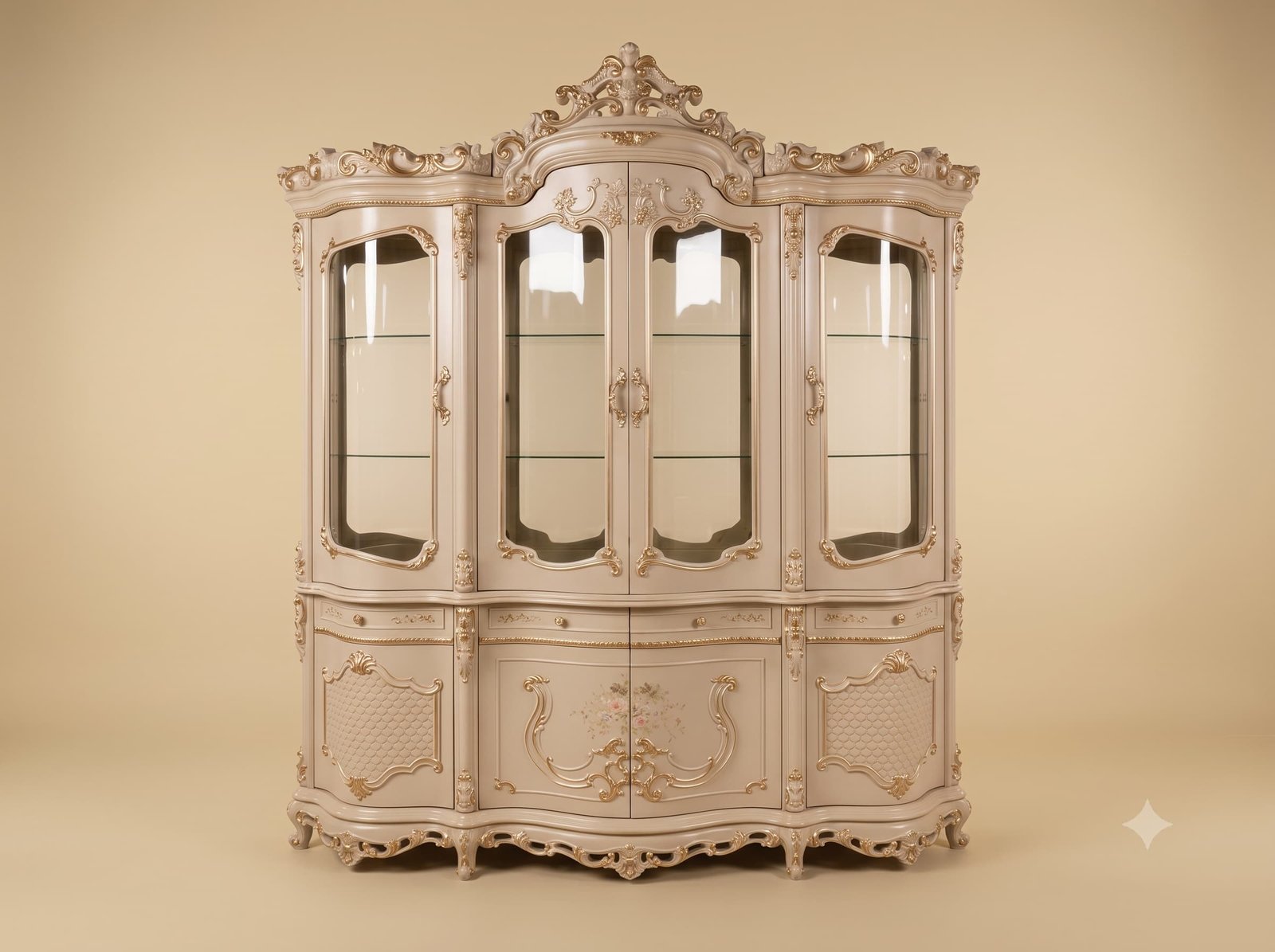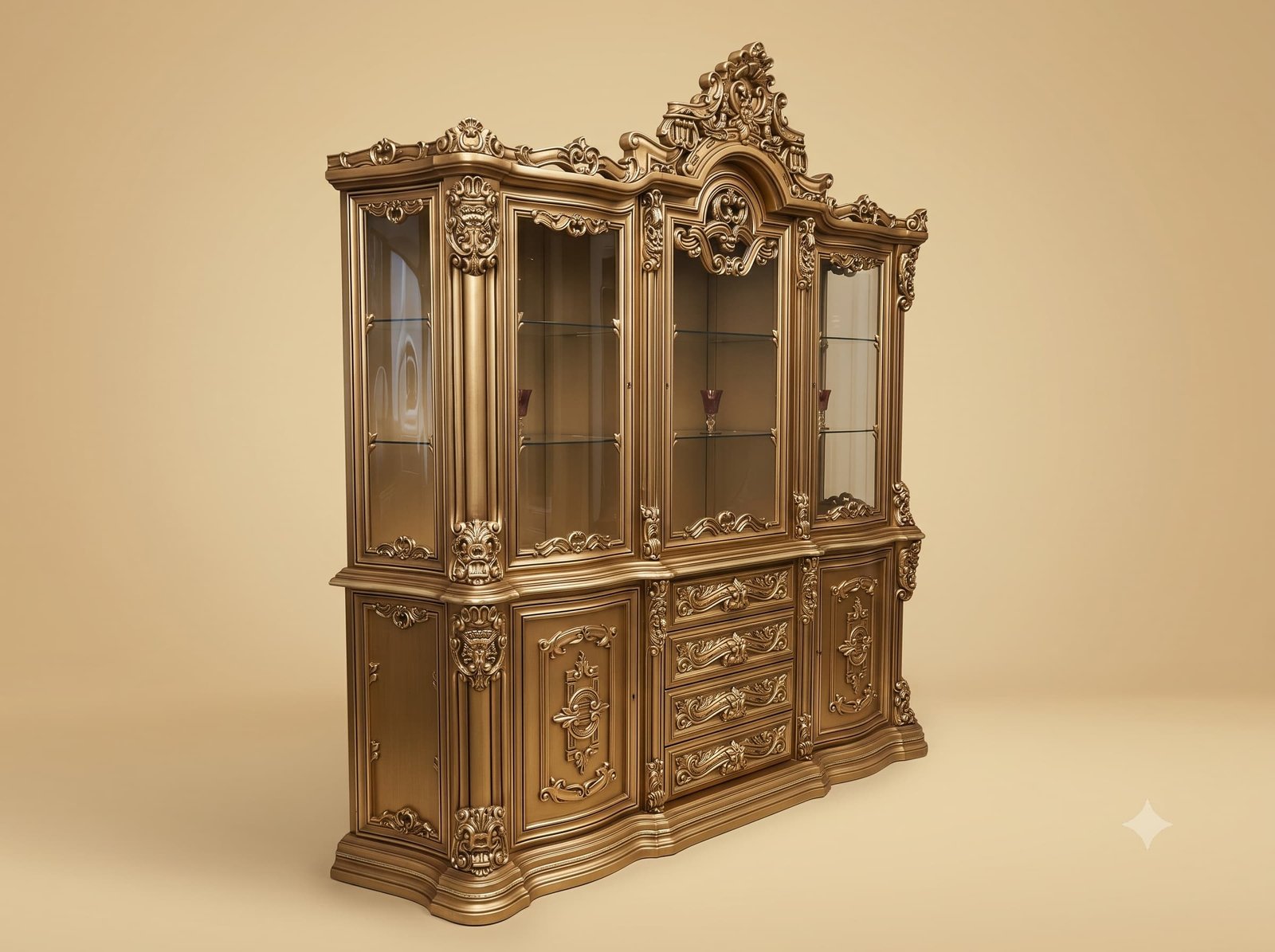
The four drawers stacked at the centre of this almirah are not the same size, and they are meant to look as though they are.
Stand in front of a stack of equal drawers and look down at it. You are above the lower drawers and level with the upper ones, so the lower fronts are seen at an increasingly oblique angle and foreshorten. A stack cut to identical heights appears to compress towards the floor, as if the bottom drawer were being squashed by the weight above it.
The old cabinet-makers answered it by graduating: each drawer is made slightly deeper than the one above, by a consistent step. Seen from standing height, the foreshortening and the graduation cancel, and the four read as equal.
Our master Indian artisans set that step from the height of the stack and where its centre sits relative to a standing eye - a low stack needs less graduation than a tall one, and a stack in a base under a glazed top needs more than one at table height.
Measure the drawers on the finished piece and they differ. Look at them and they do not. That is the whole intention.
 Ask Price On WhatsApp