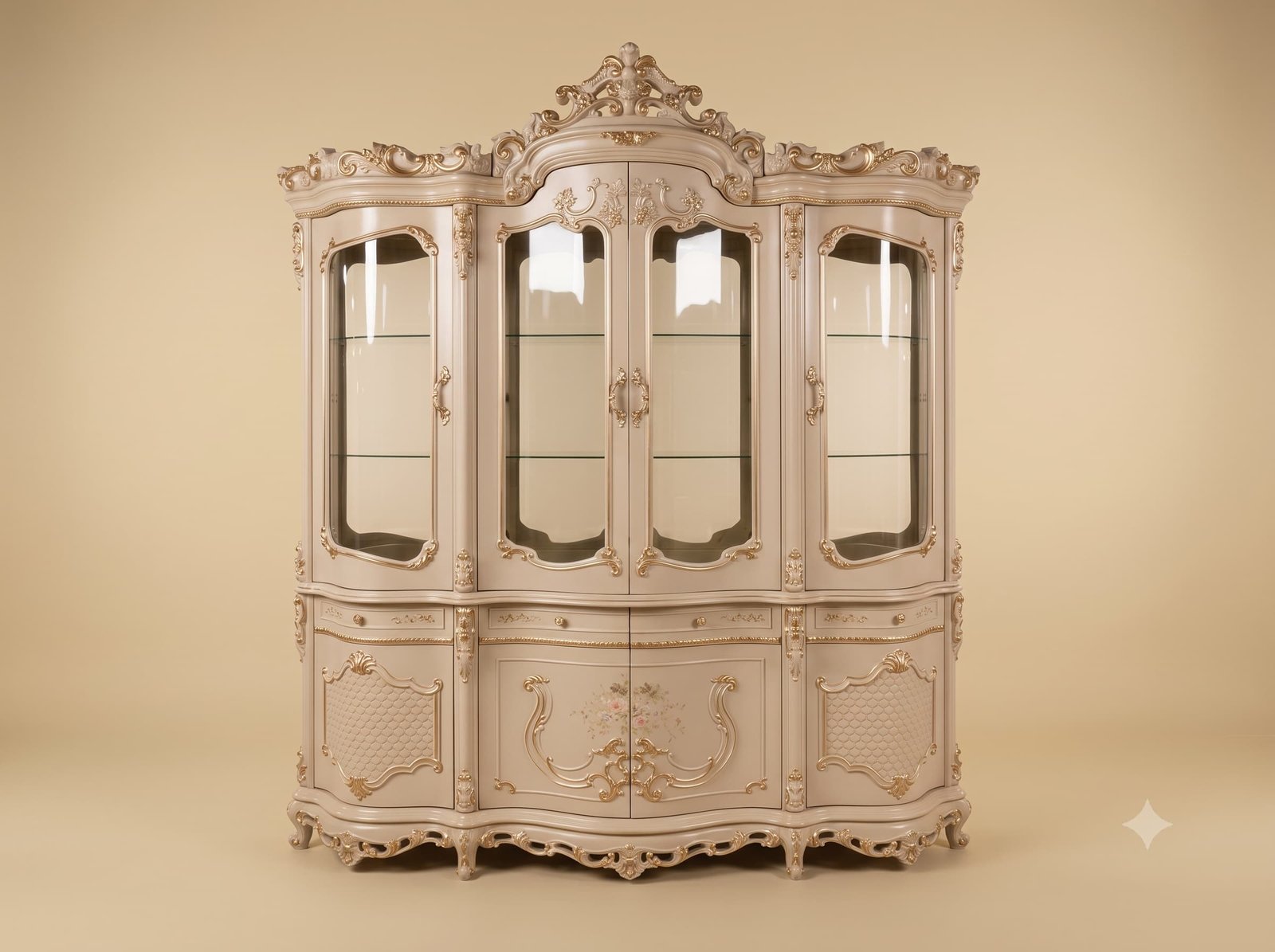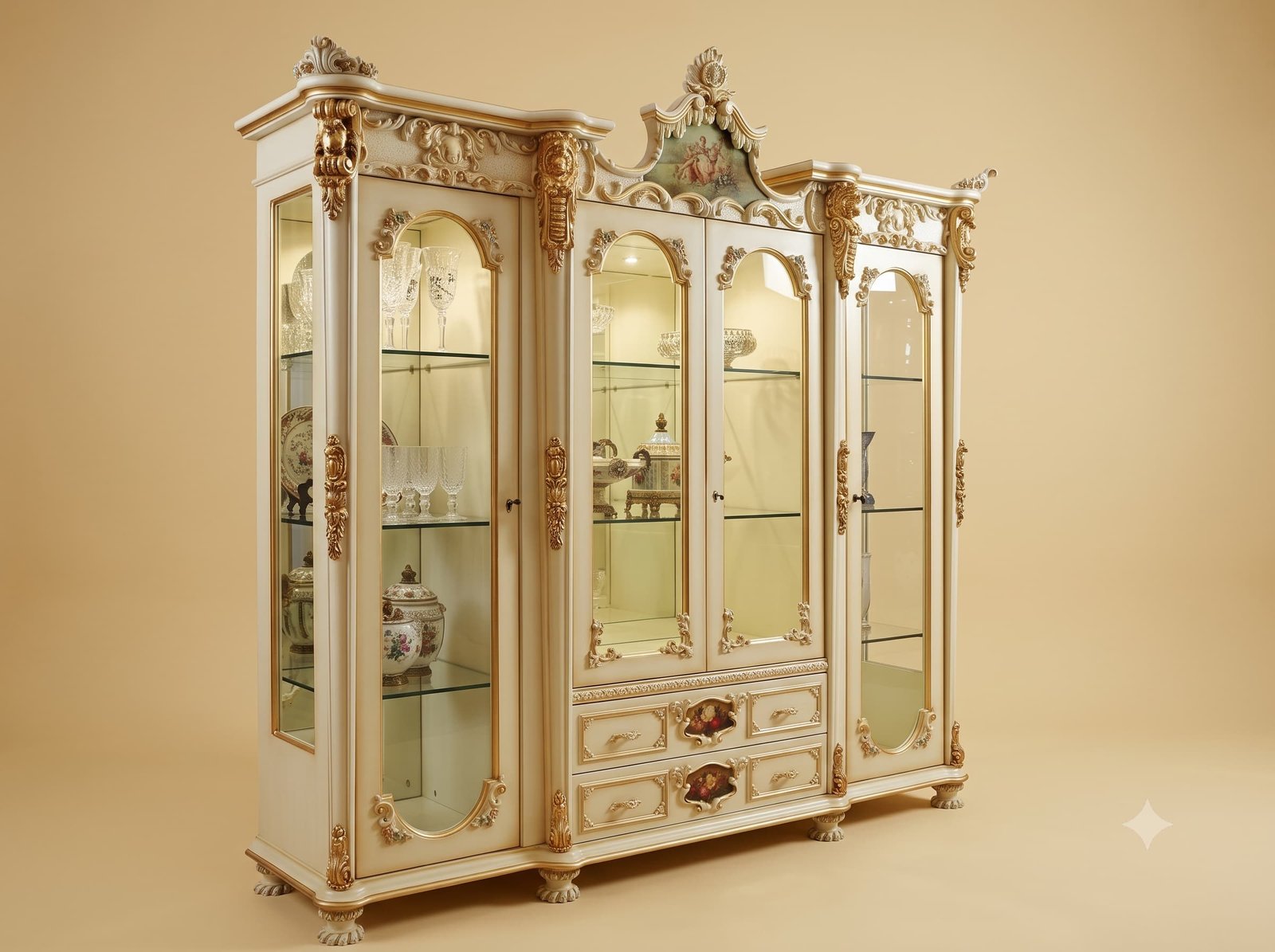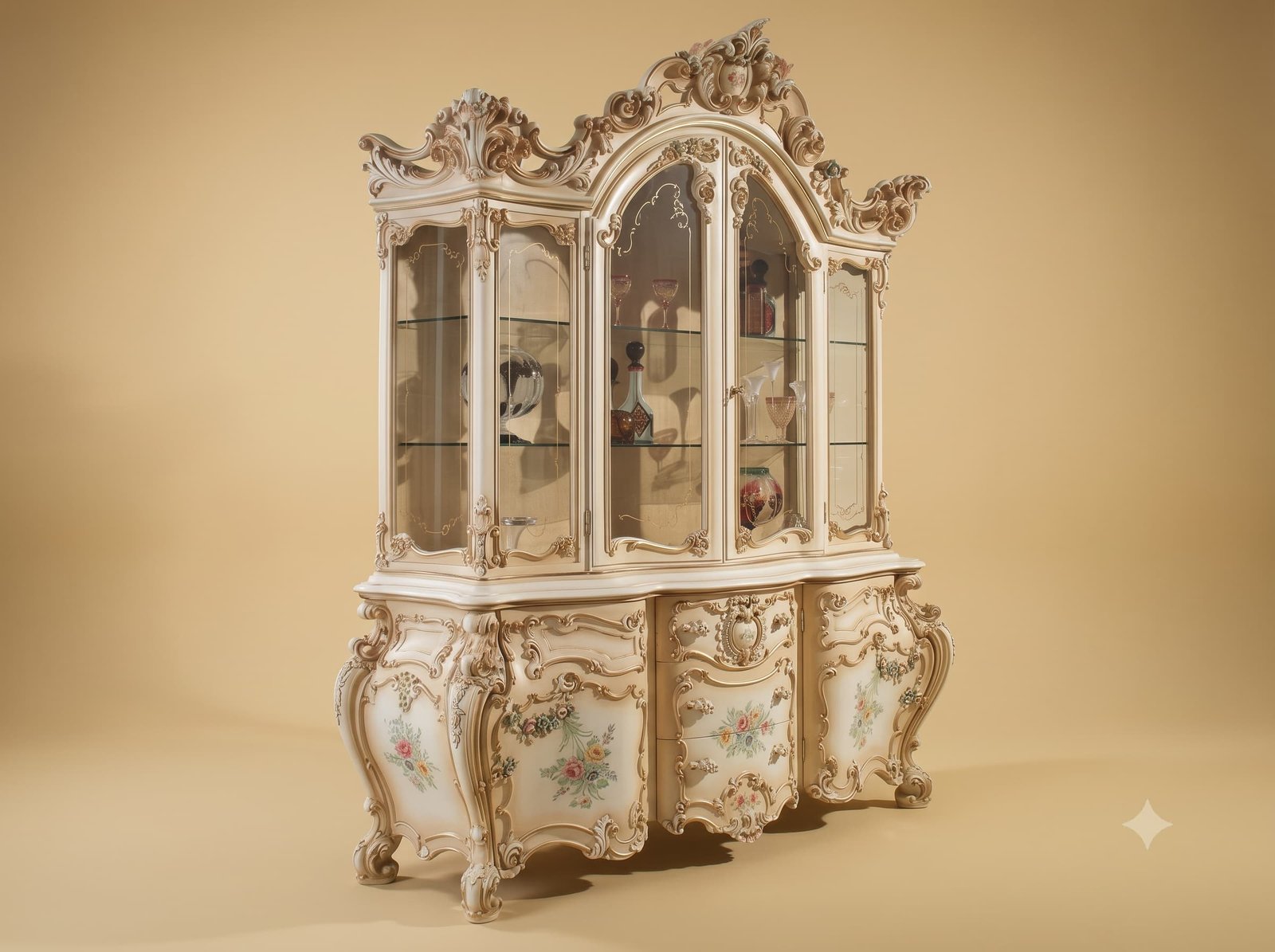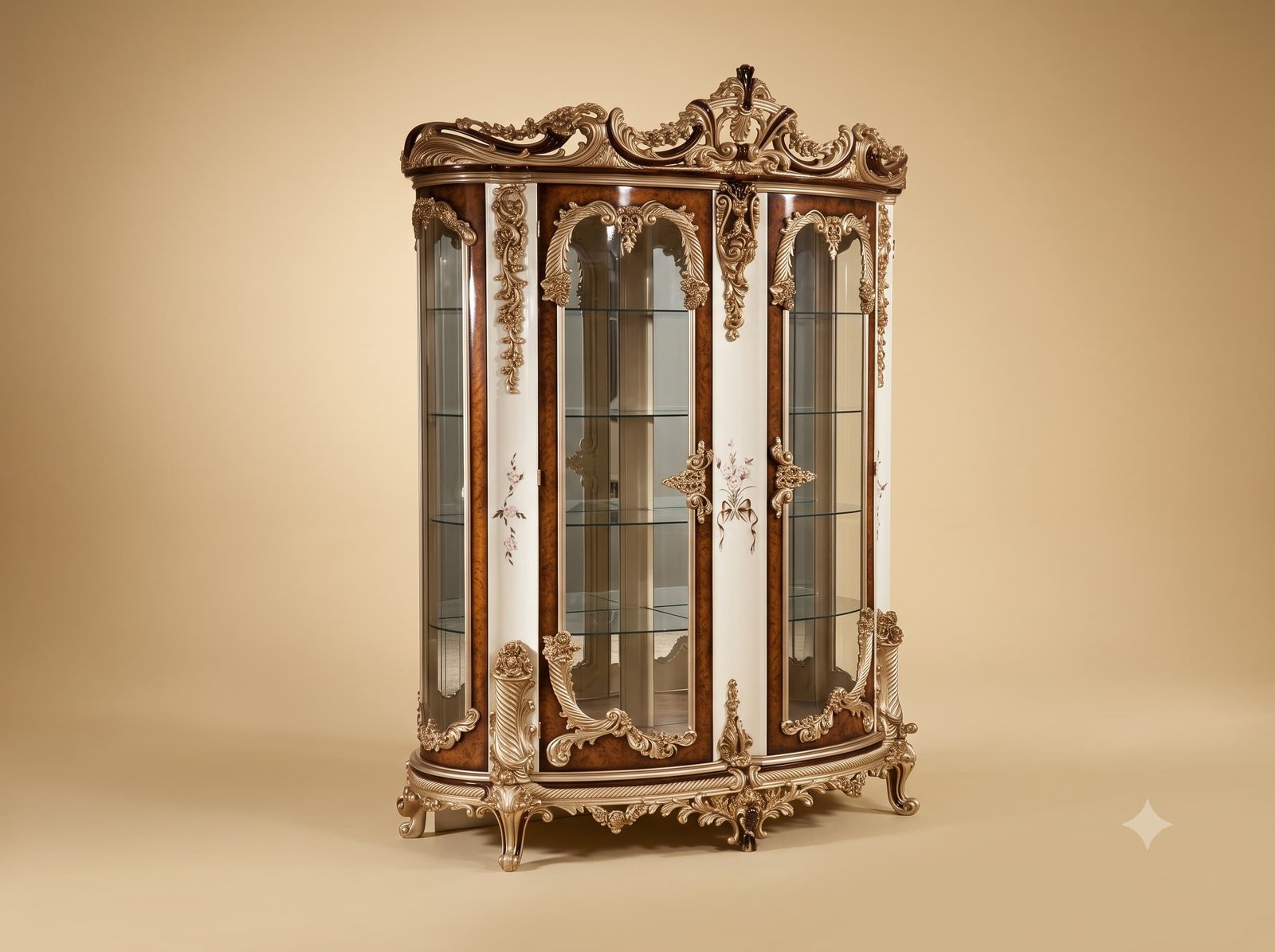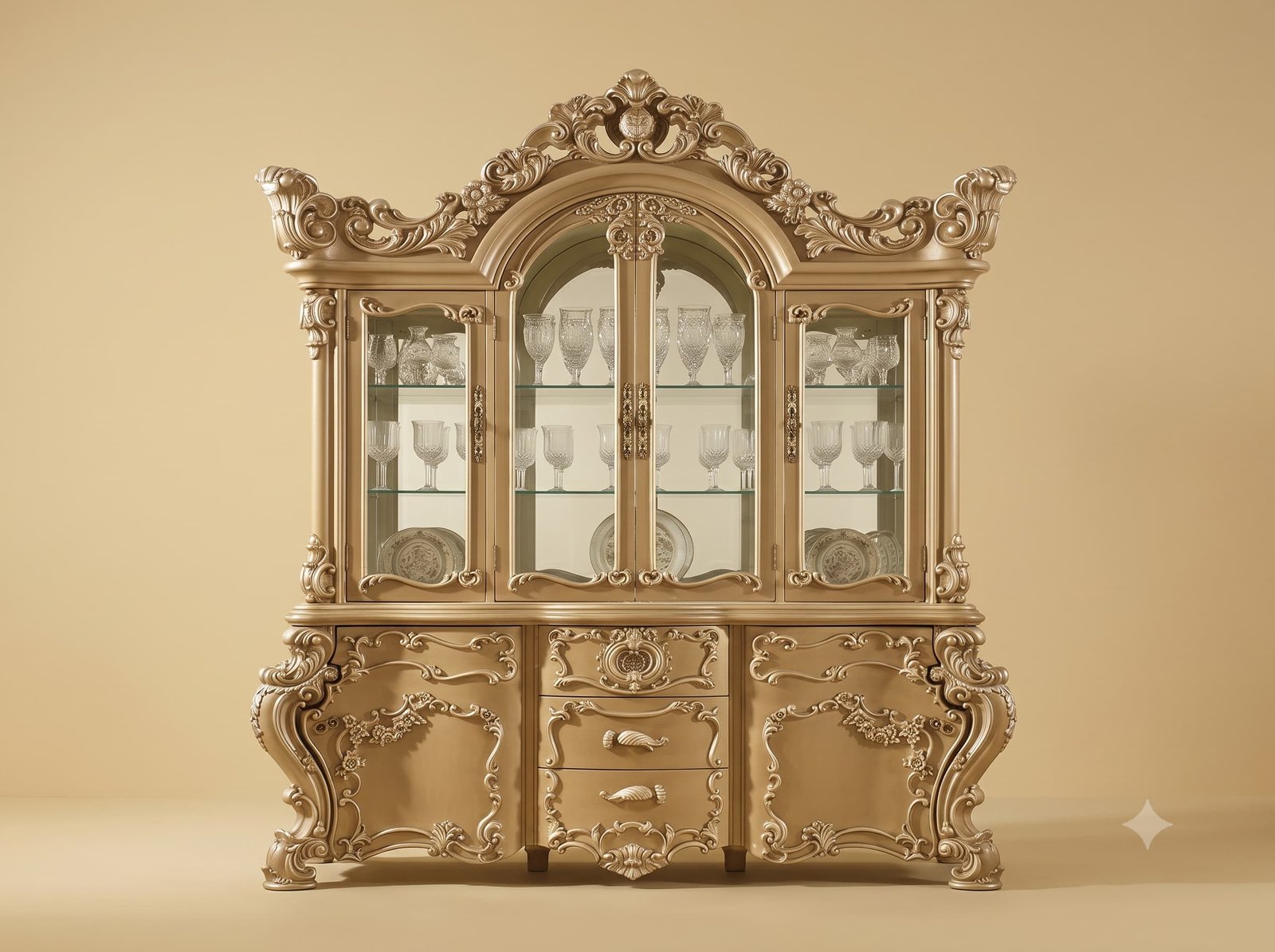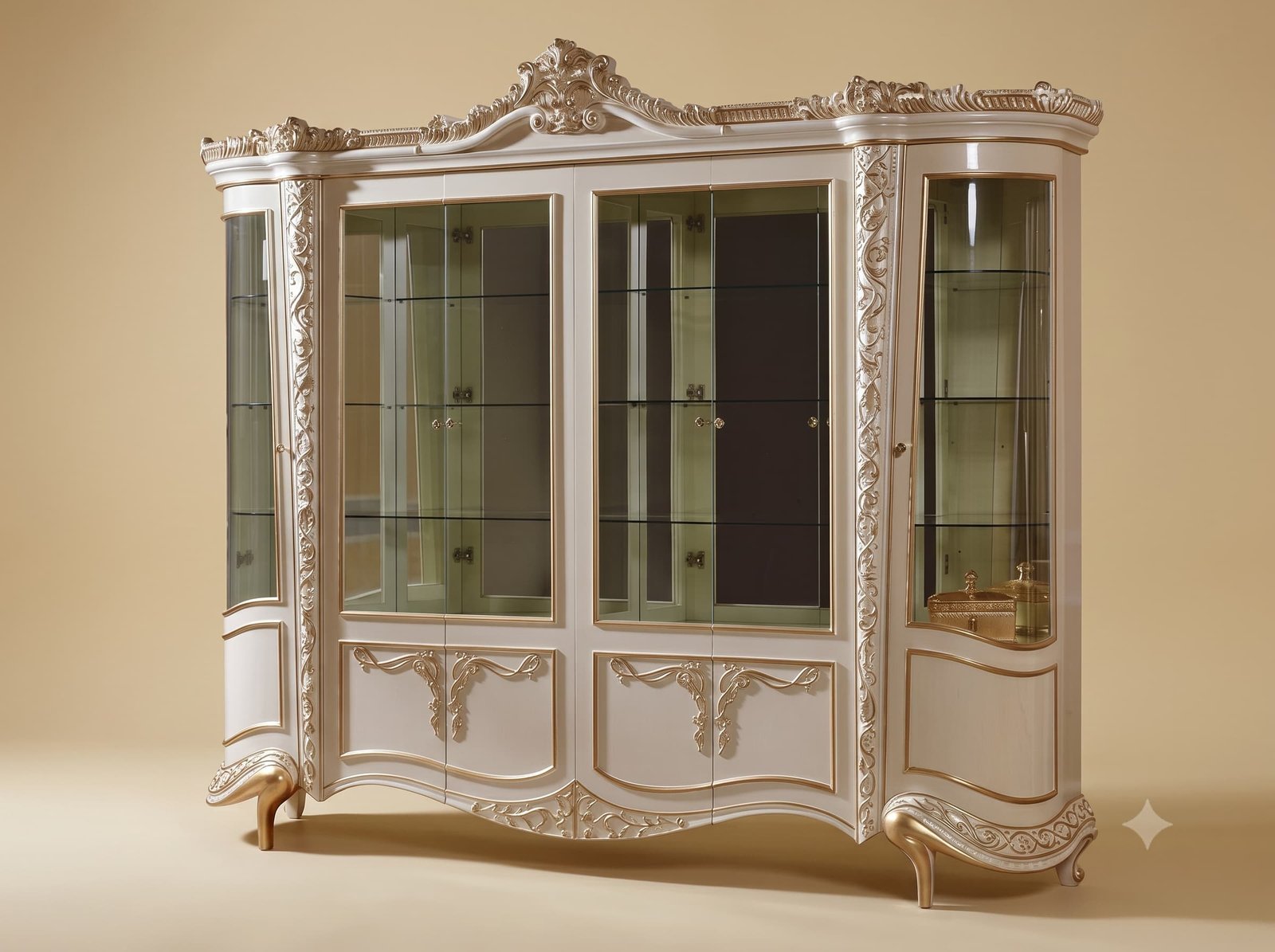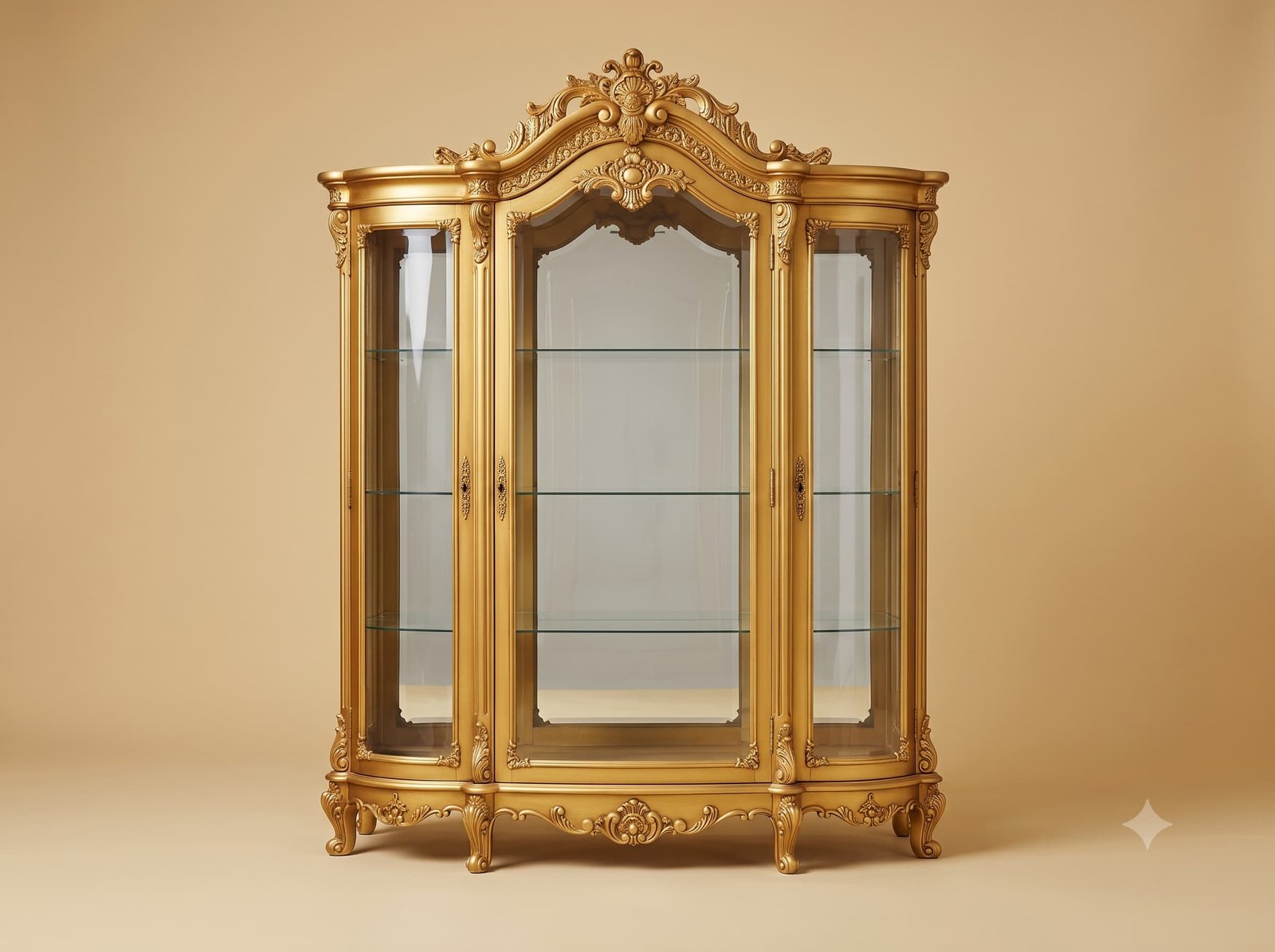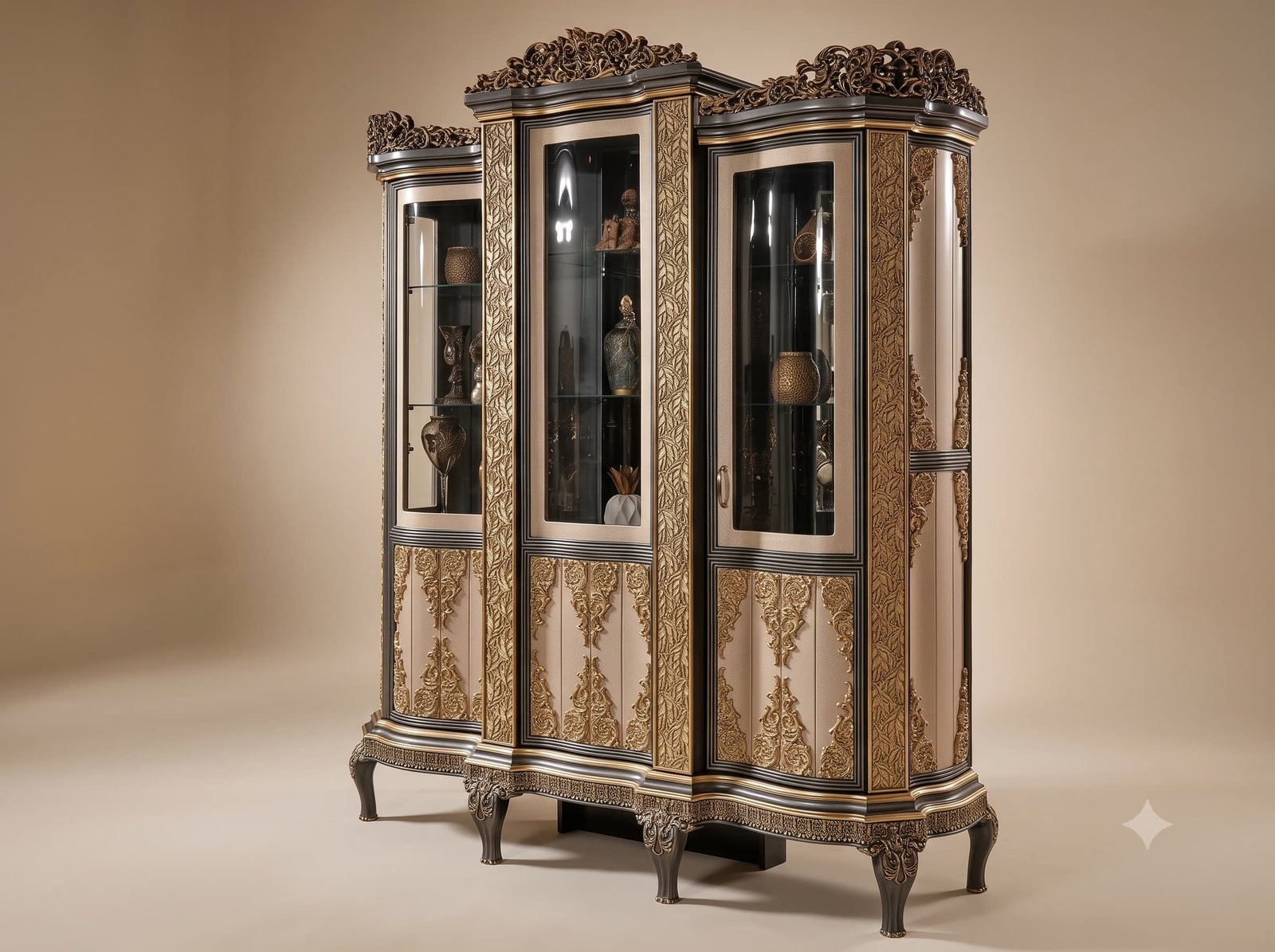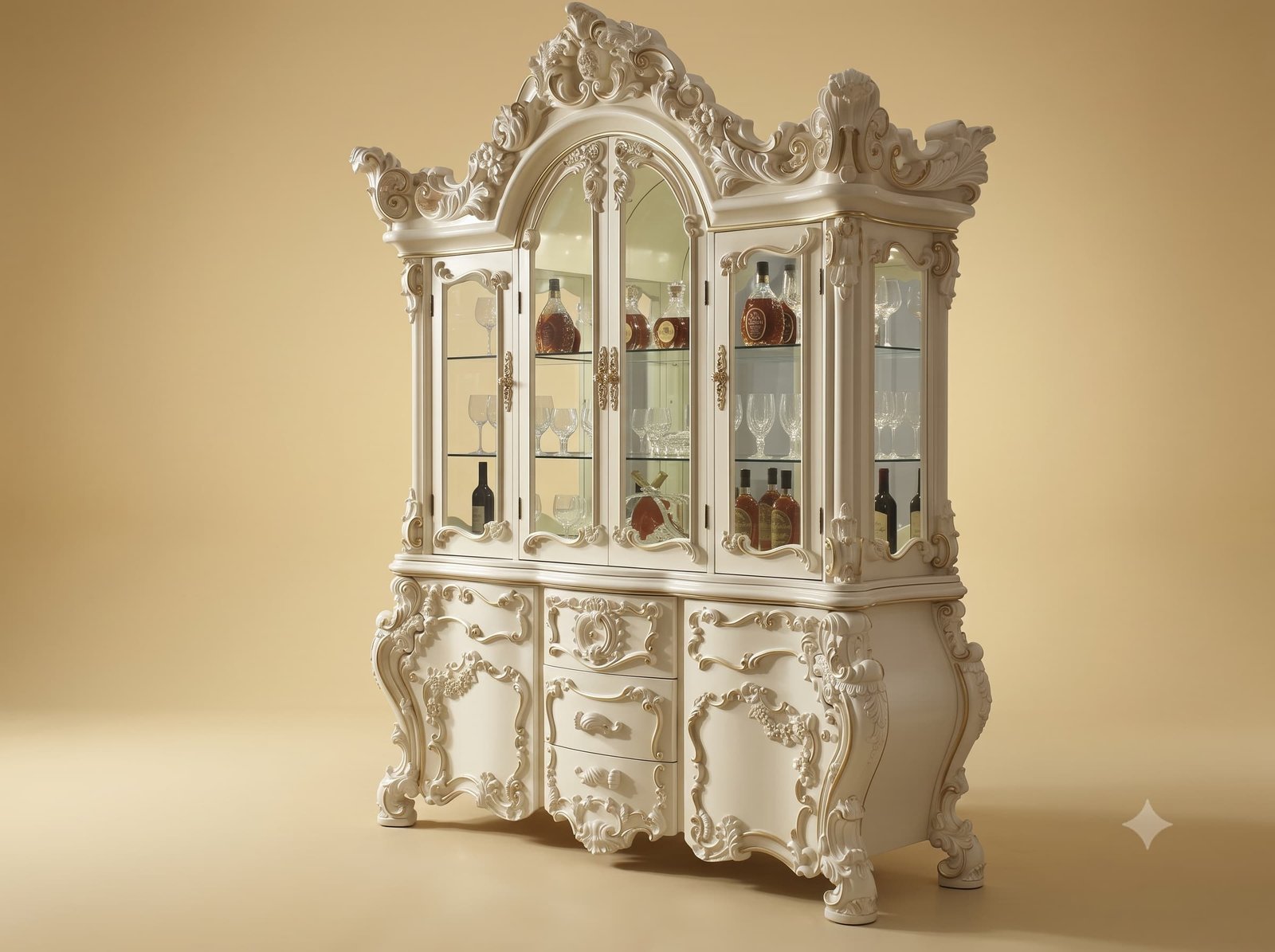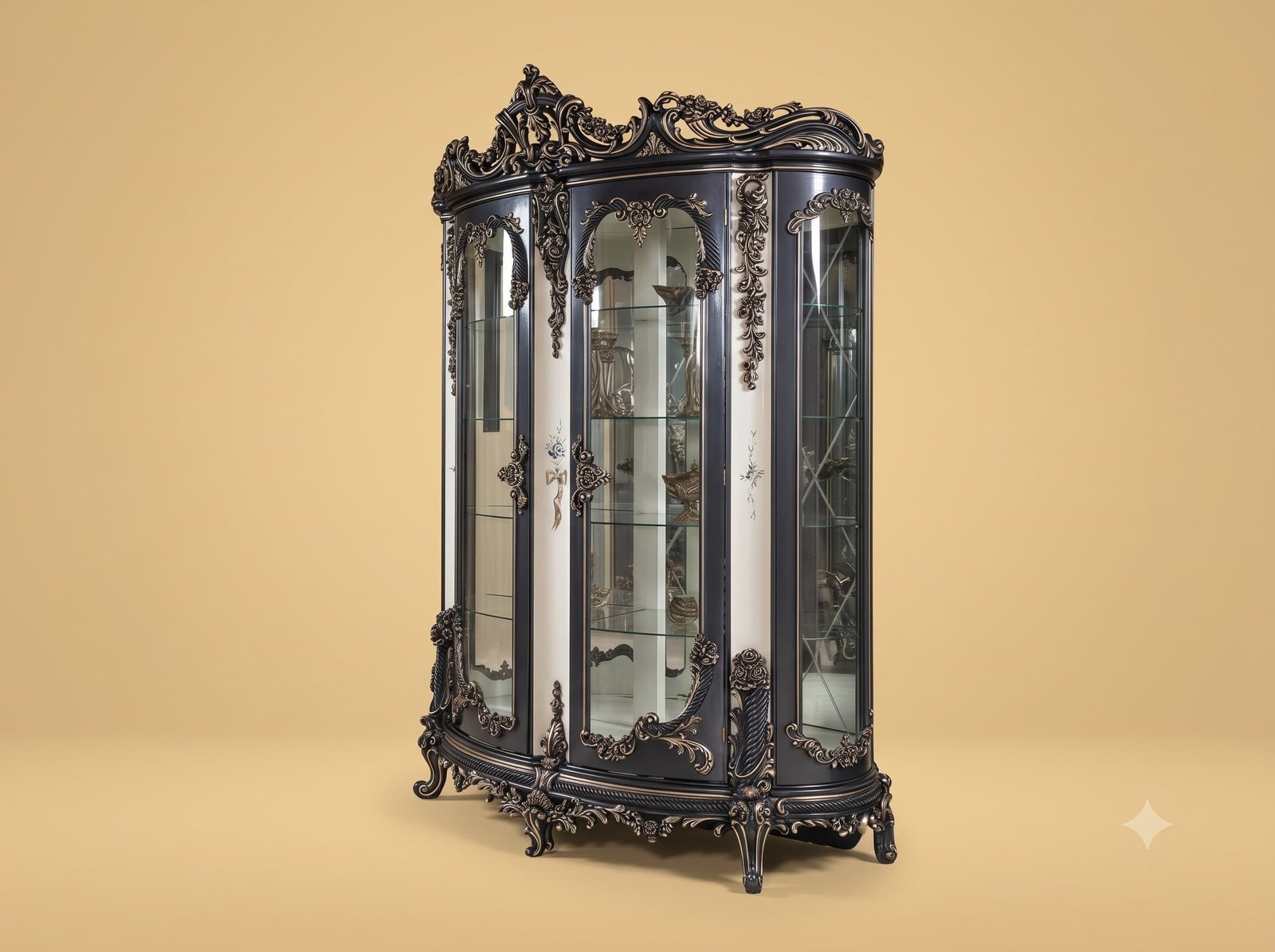
Glass is only transparent when what is behind it is brighter than what is in front of it. Below that threshold it stops being a window and becomes a mirror.
Everyone has seen this without naming it. A window at night reflects the room; the same window at noon shows the garden. Nothing about the glass changed - only the balance of light on its two sides.
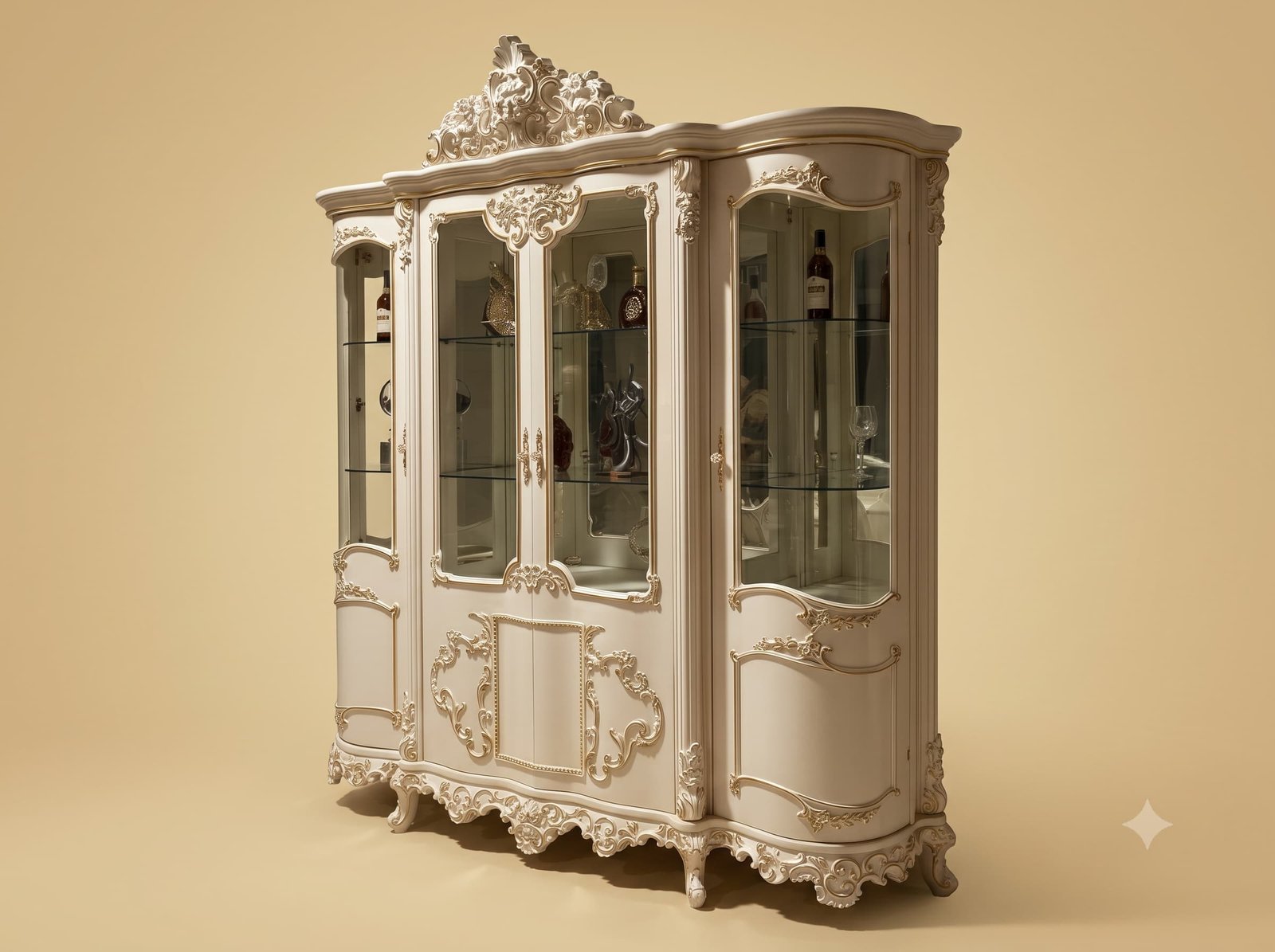
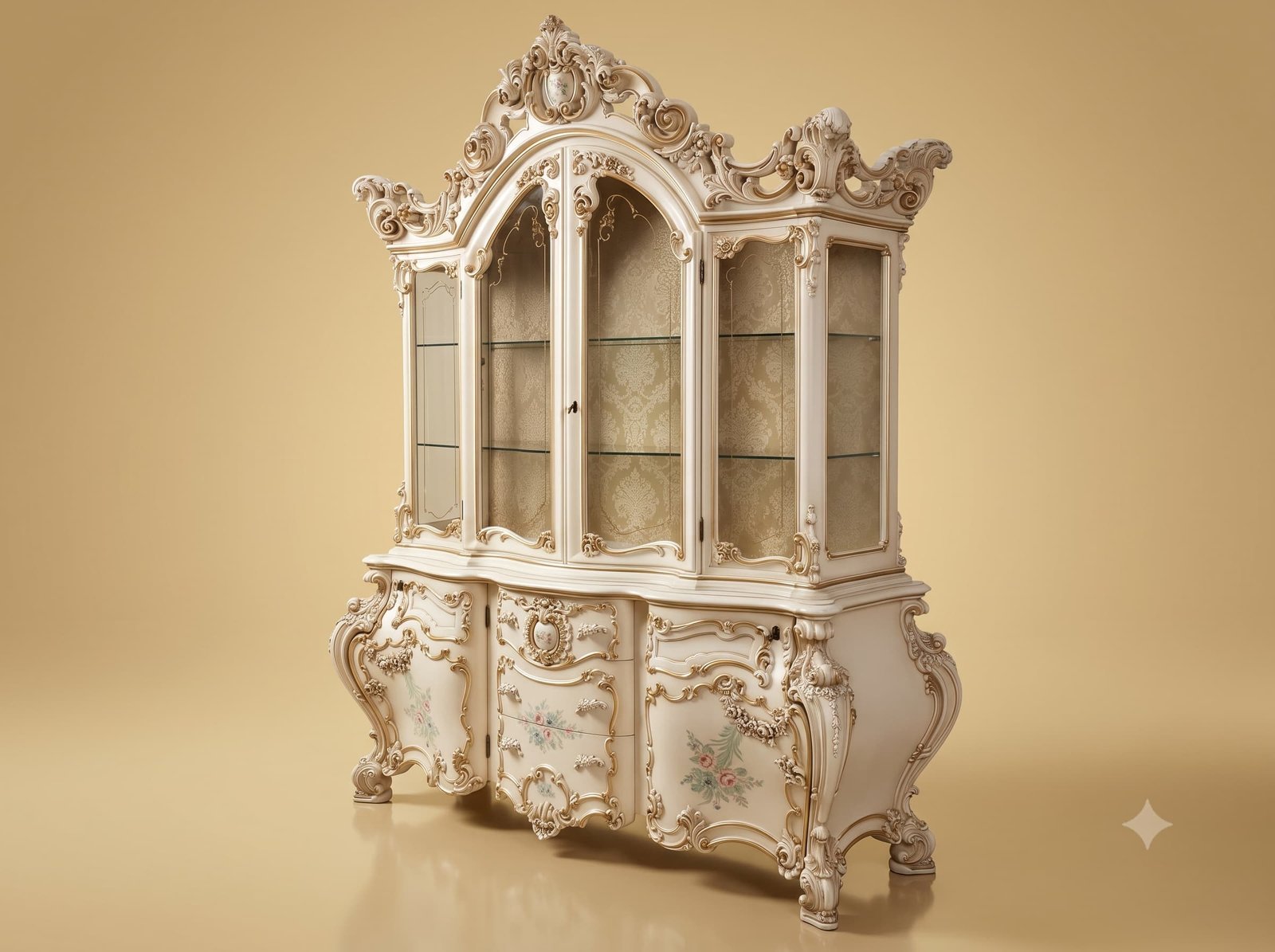
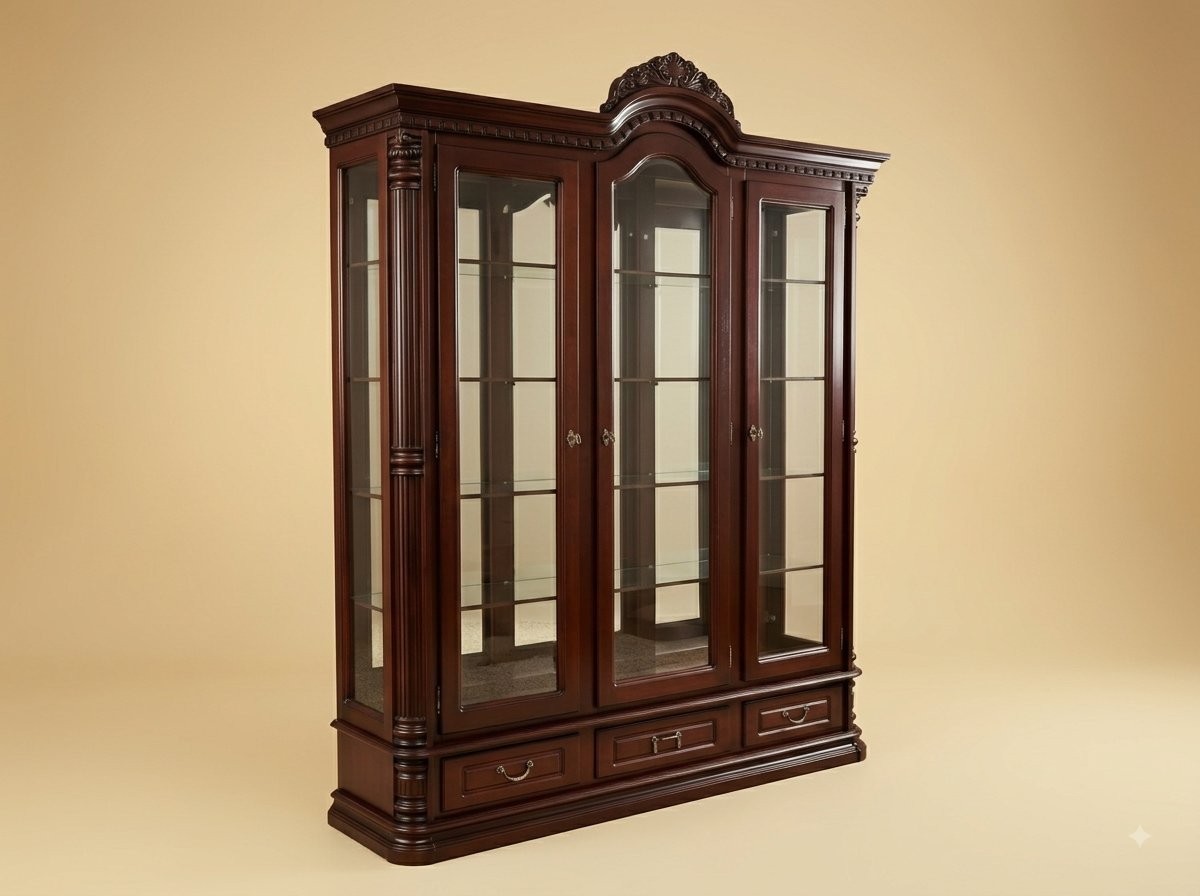
A dark showcase sits exactly on that threshold, and this is where dark cabinets are usually got wrong. Finish the inside in the same charcoal as the outside and the interior becomes darker than the room; the doors turn into mirrors and reflect the furniture behind you instead of showing what is inside. The cabinet stops working as a display entirely.
So our master Indian artisans finish the interior of every dark cabinet pale - a light ground on the back, the shelf supports and the underside of the top, so the inside is brighter than the reflected room. The glass reads as transparent and the dark frame reads as a frame.
Add lighting and the margin becomes generous. Without it, the pale interior is doing the work on its own, which is why it is not optional.
 Ask Price On WhatsApp