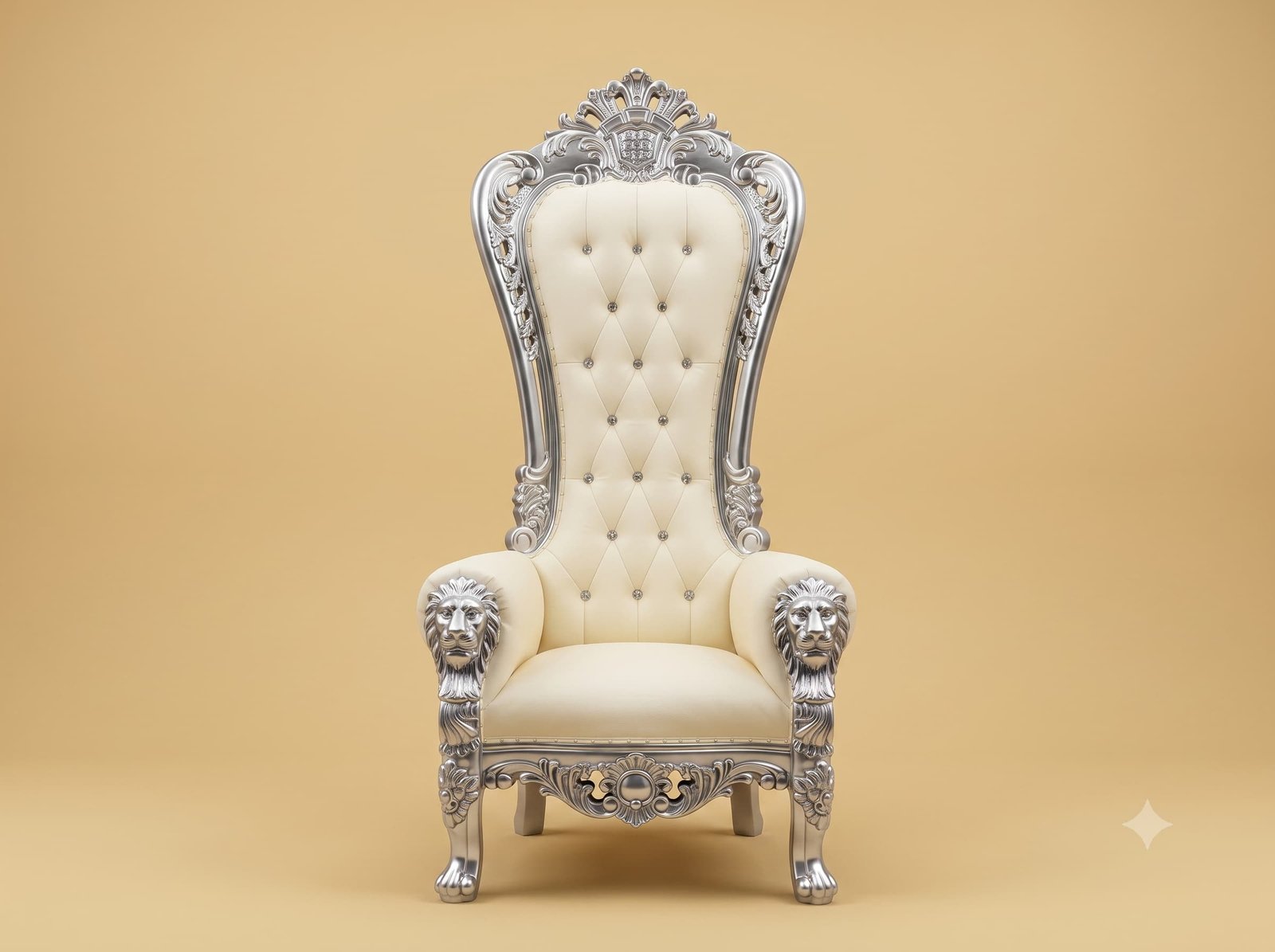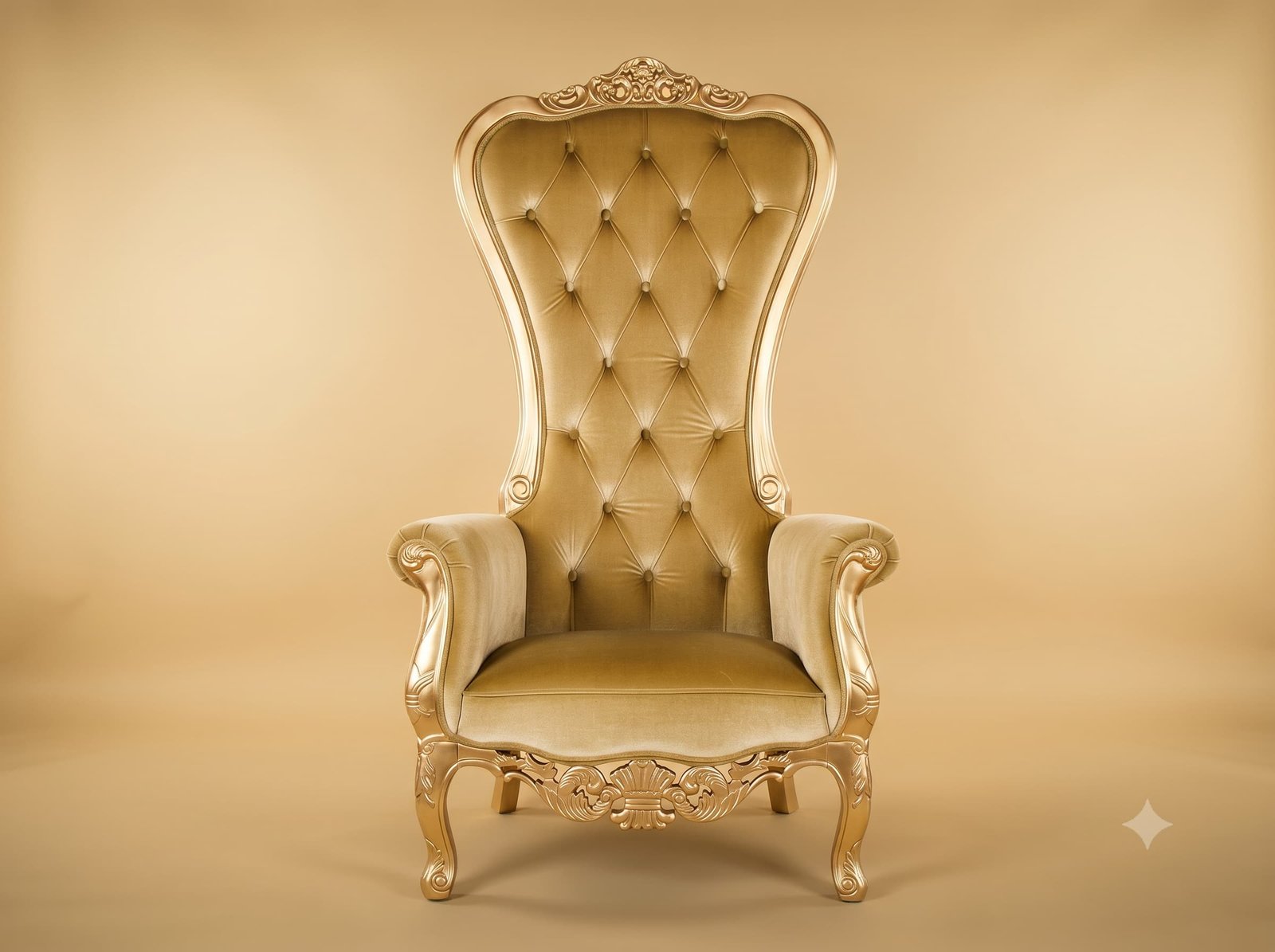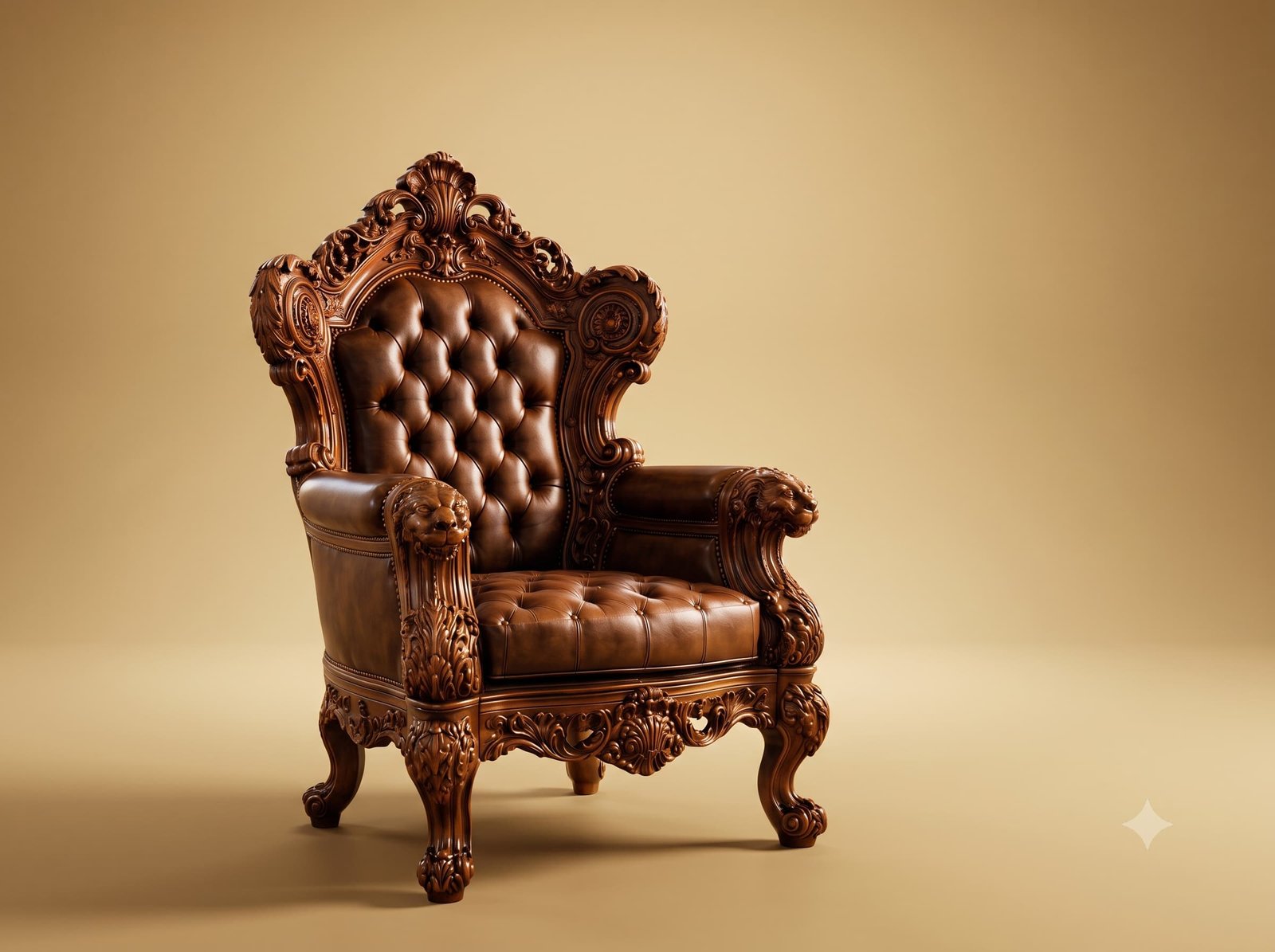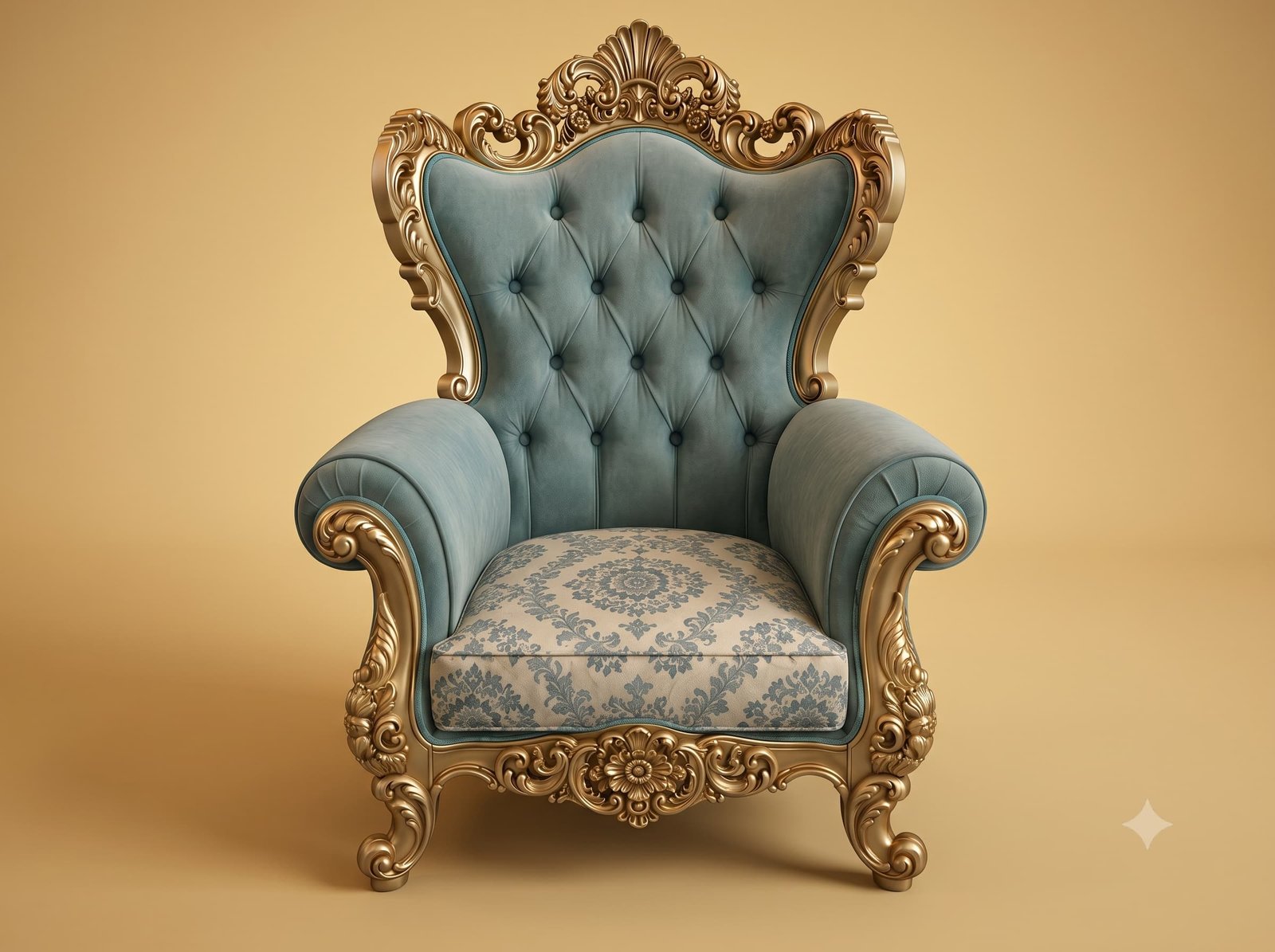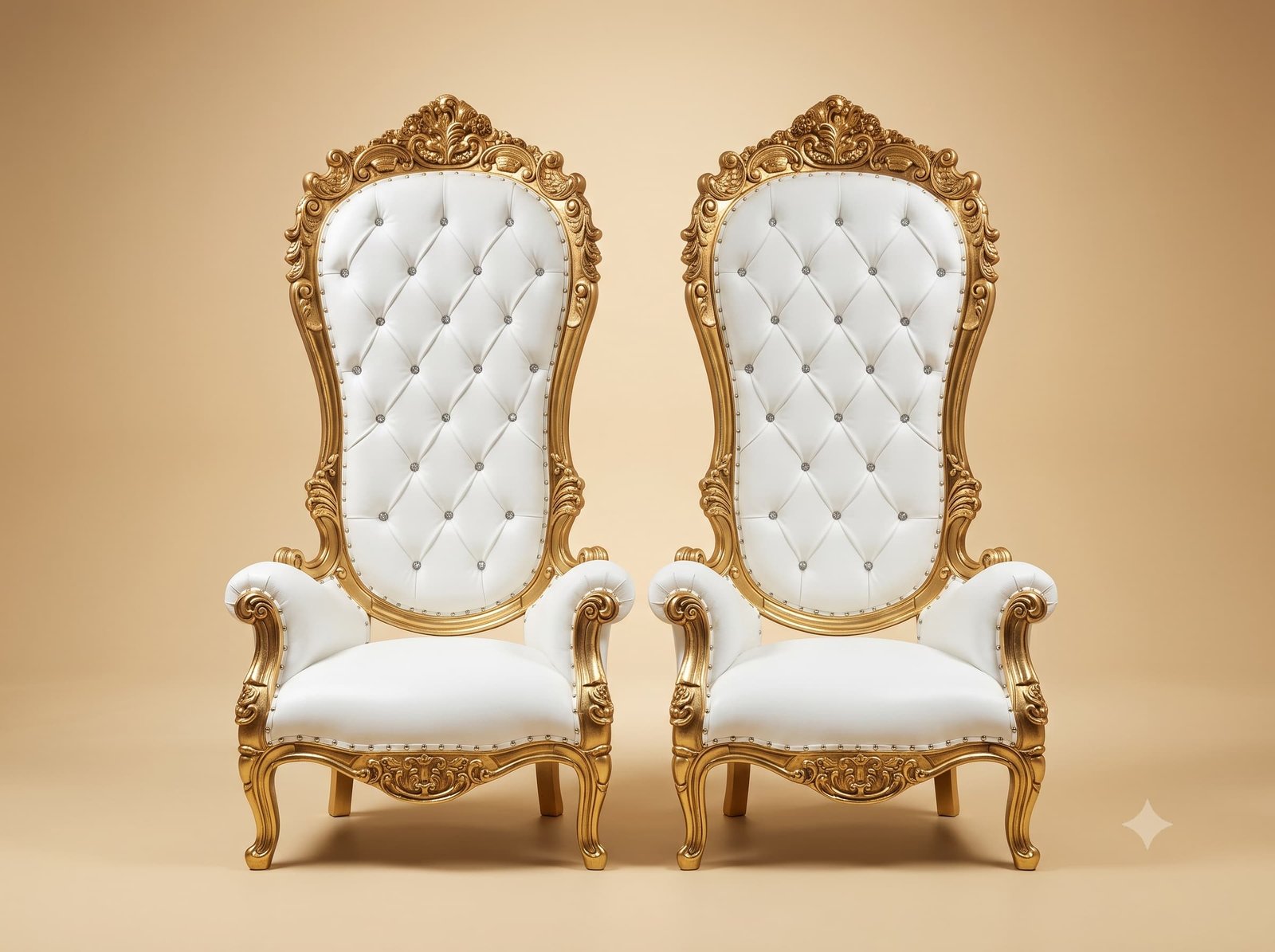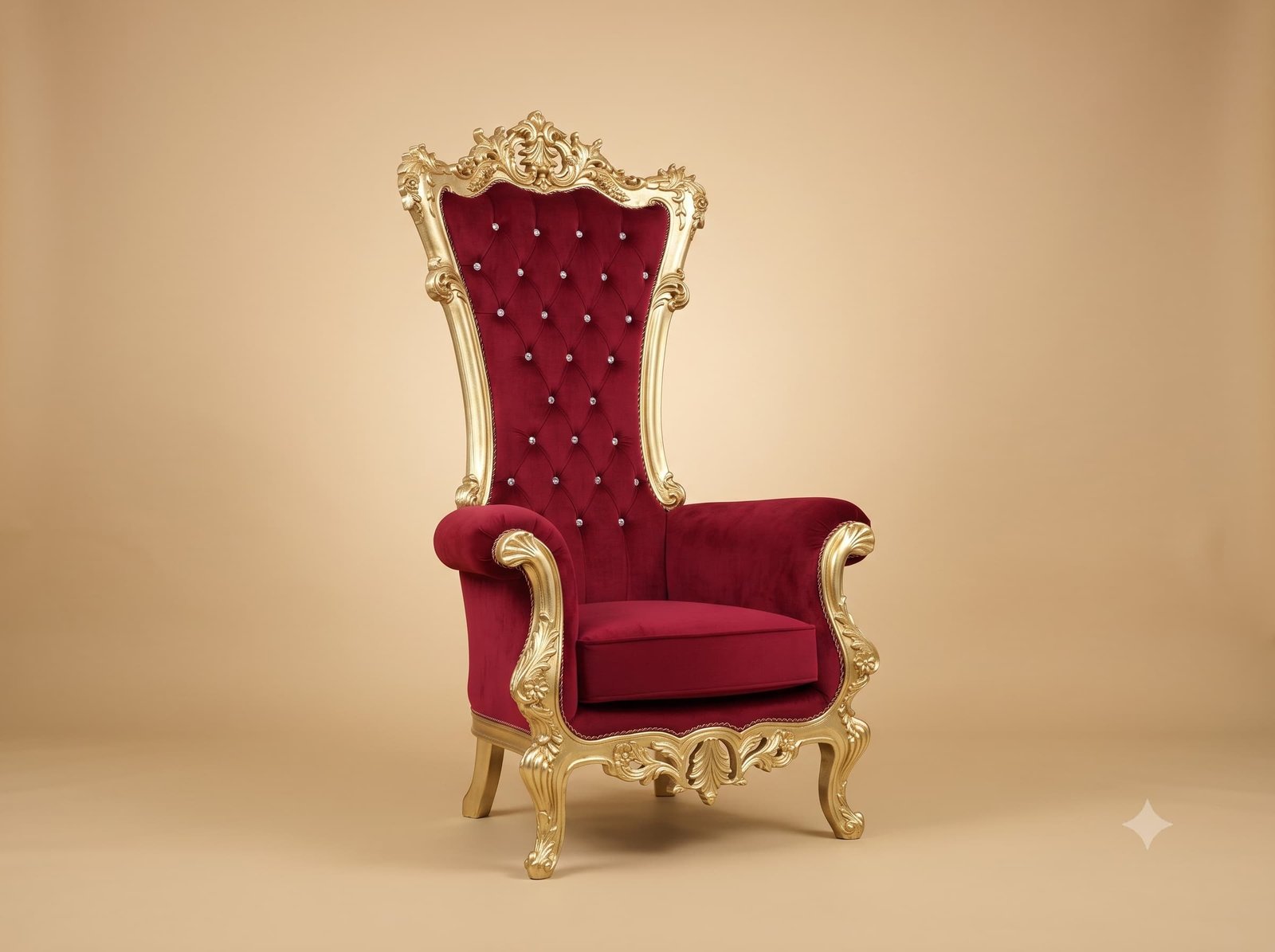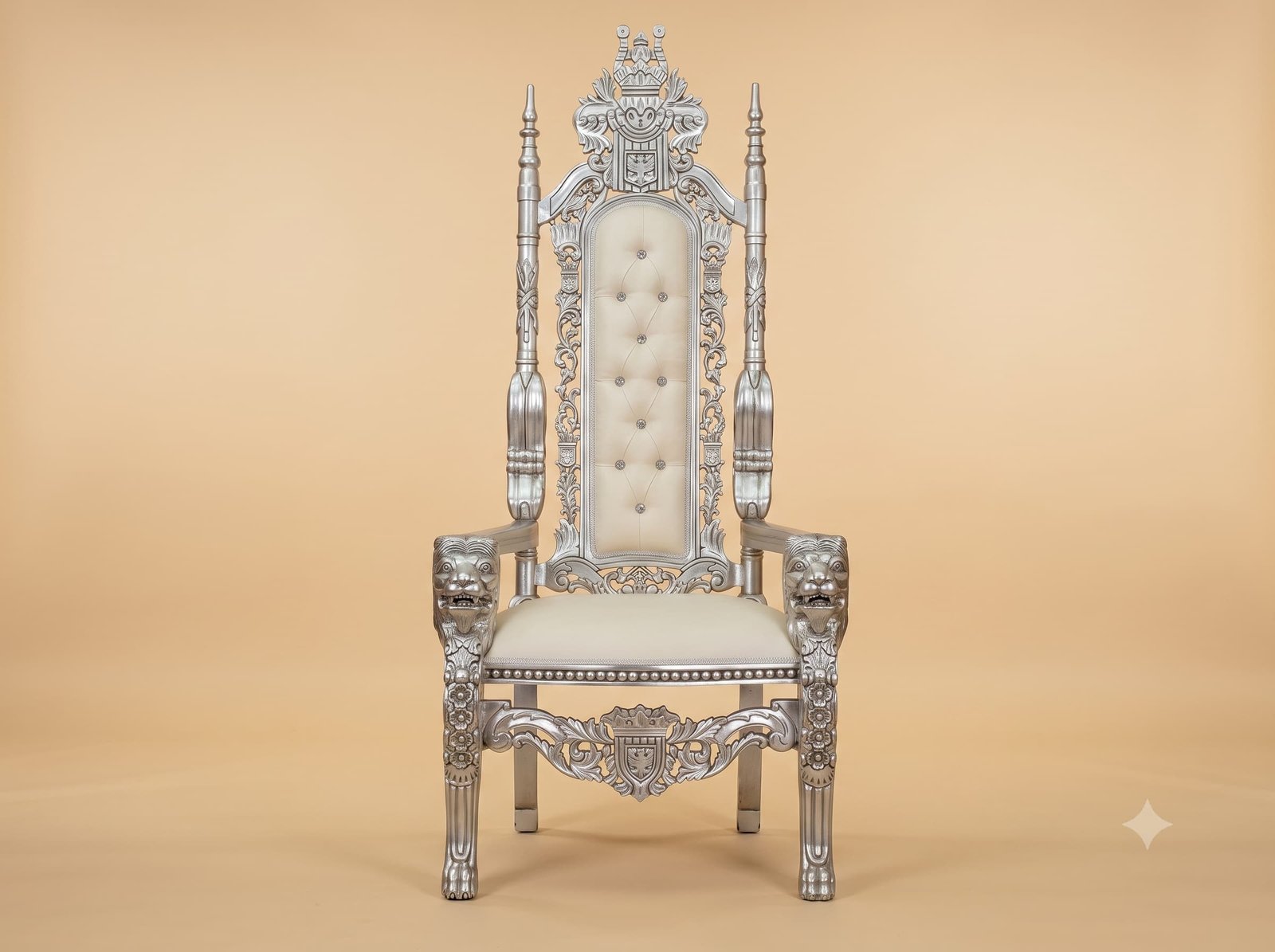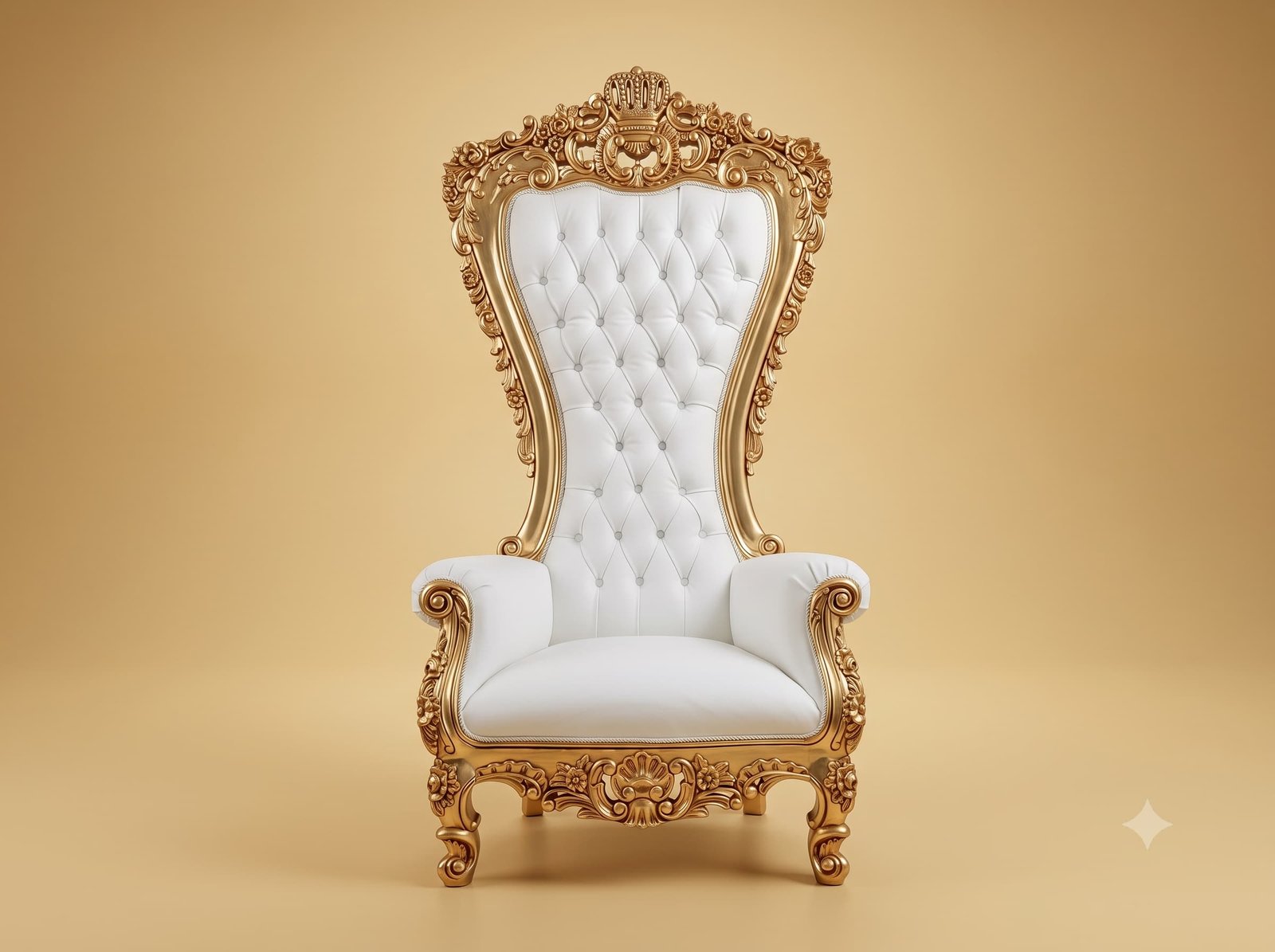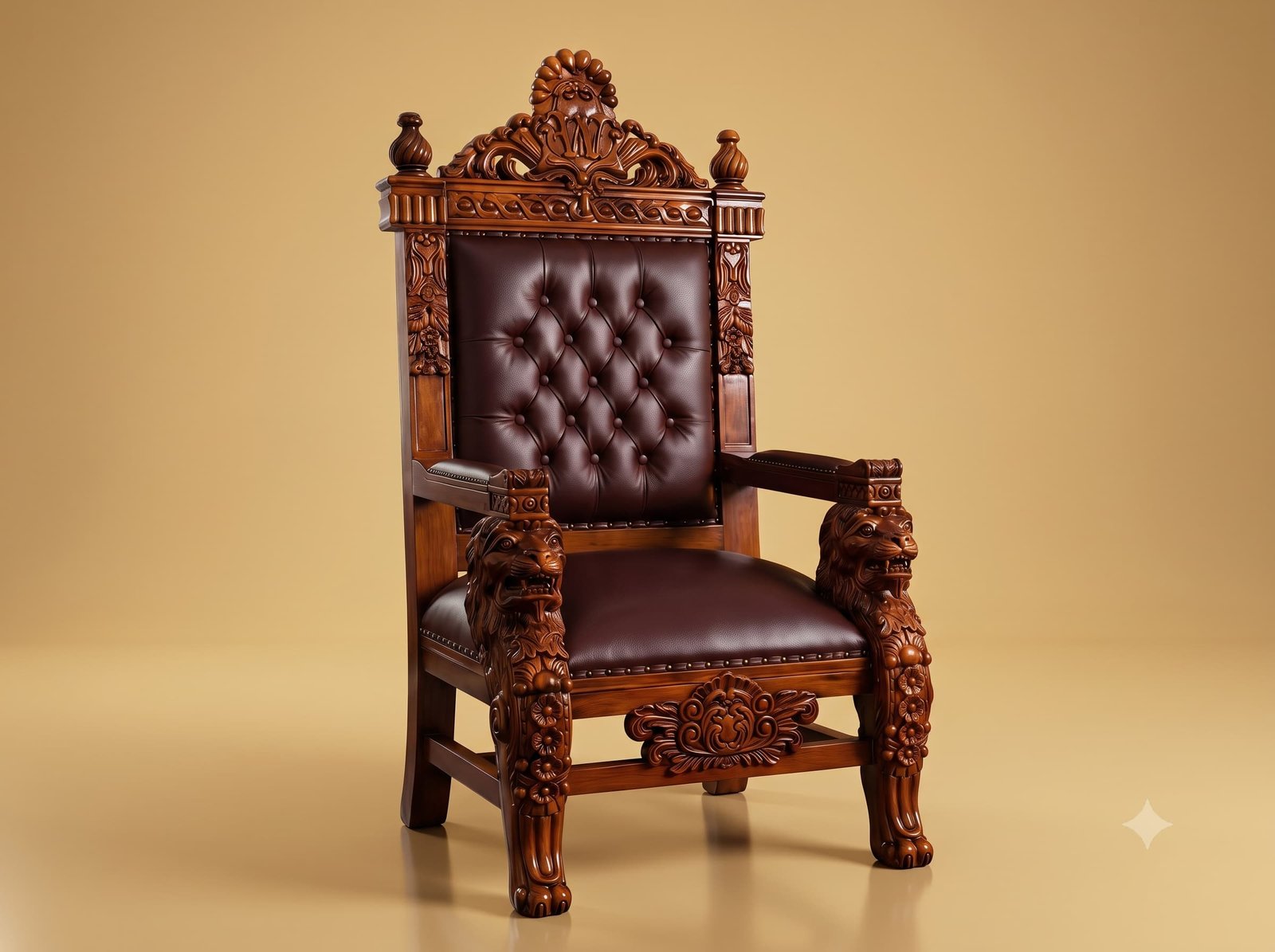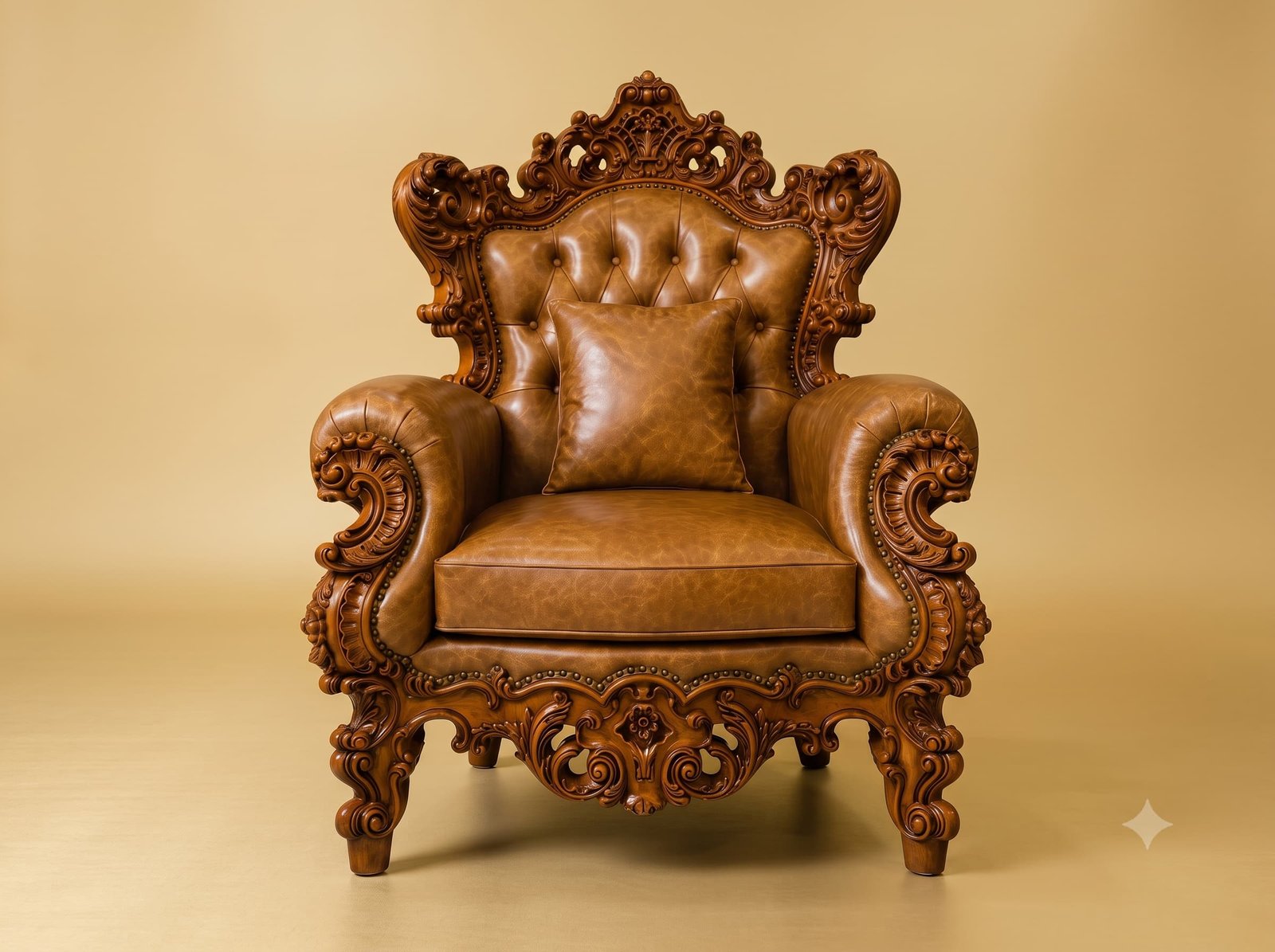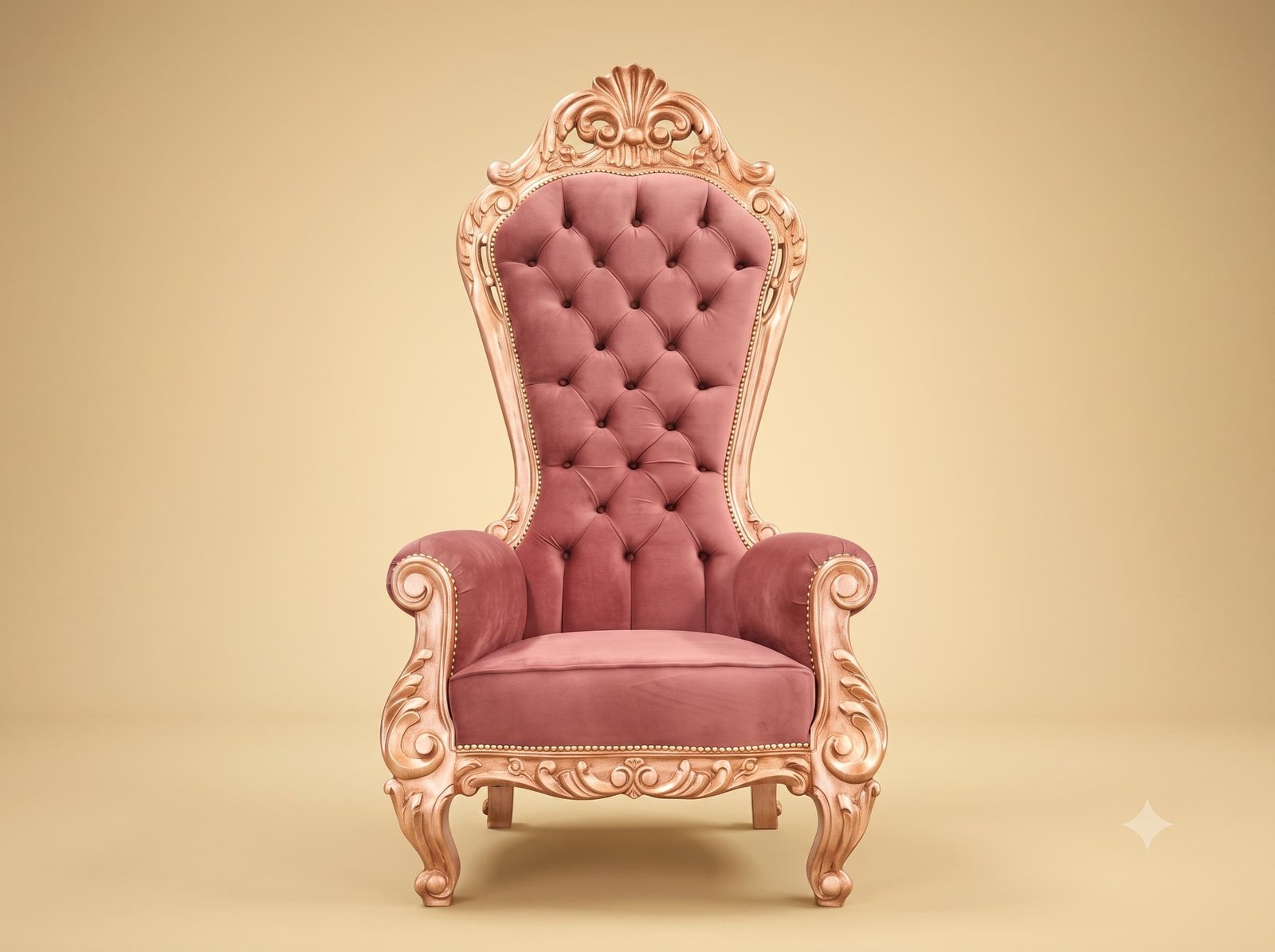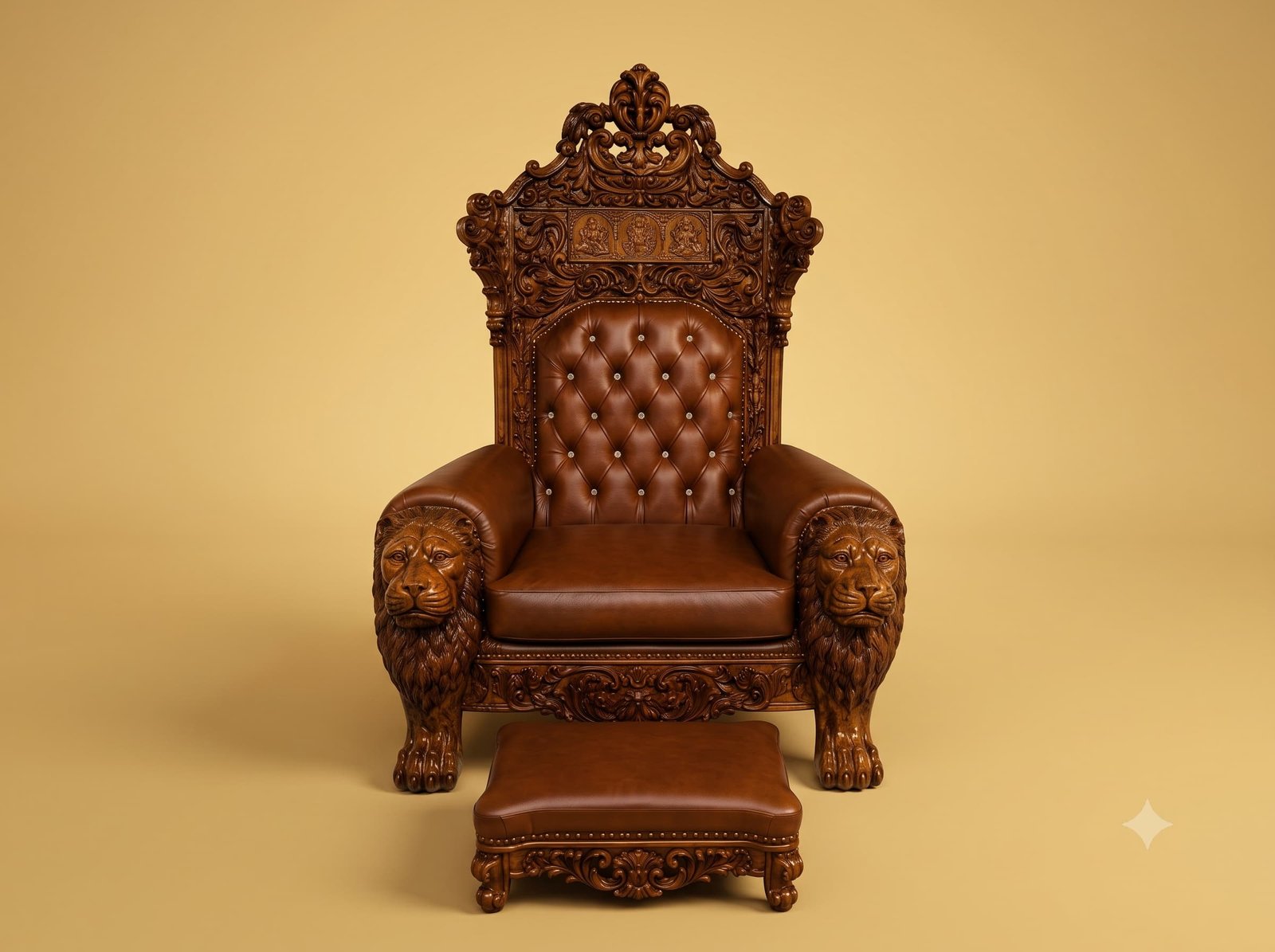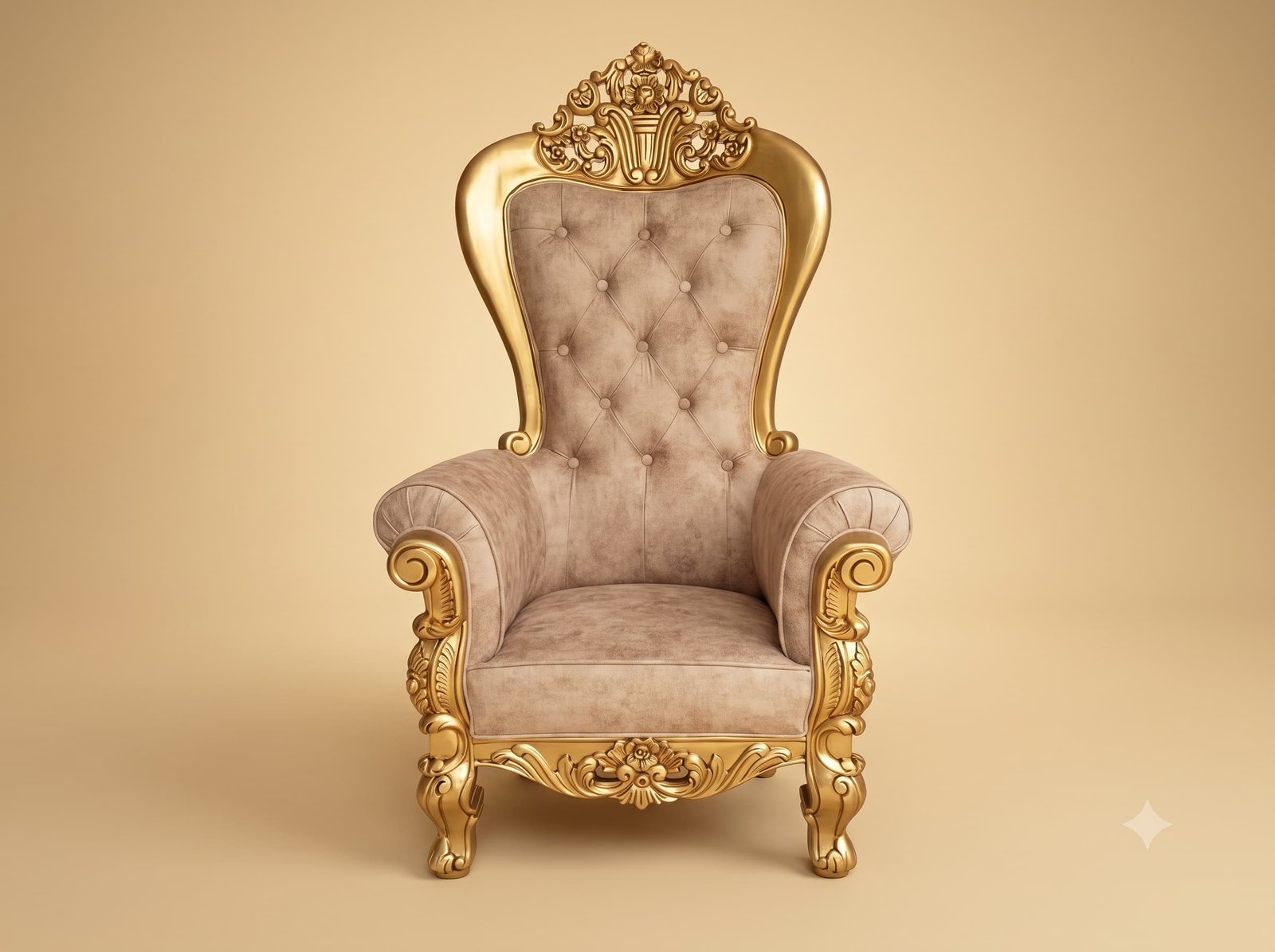
The frame on this chair is one continuous band from the seat rail up round the crest and down the other side, and it is not one piece of timber - it is several, jointed where nobody will look for a joint.
The decision is where those joints fall. The obvious place is at the top of each shoulder, where the frame changes direction most sharply - and that is exactly the wrong place, because a joint at a change of direction is both the weakest point and the most visible one.
So our artisans place the joints part way up each side, in the straightest section of the run, where the two pieces meet almost in line with each other. That gives a long gluing face, keeps short grain out of the corners, and puts the joint where the eye is travelling rather than where it stops.
The carving is then run continuously across each joint after assembly, not stopped either side of it, so the ornament crosses the junction and the frame reads as a single band. On a fully gilded piece, where there is no grain to give the joint away, it becomes genuinely invisible.
 Ask Price On WhatsApp