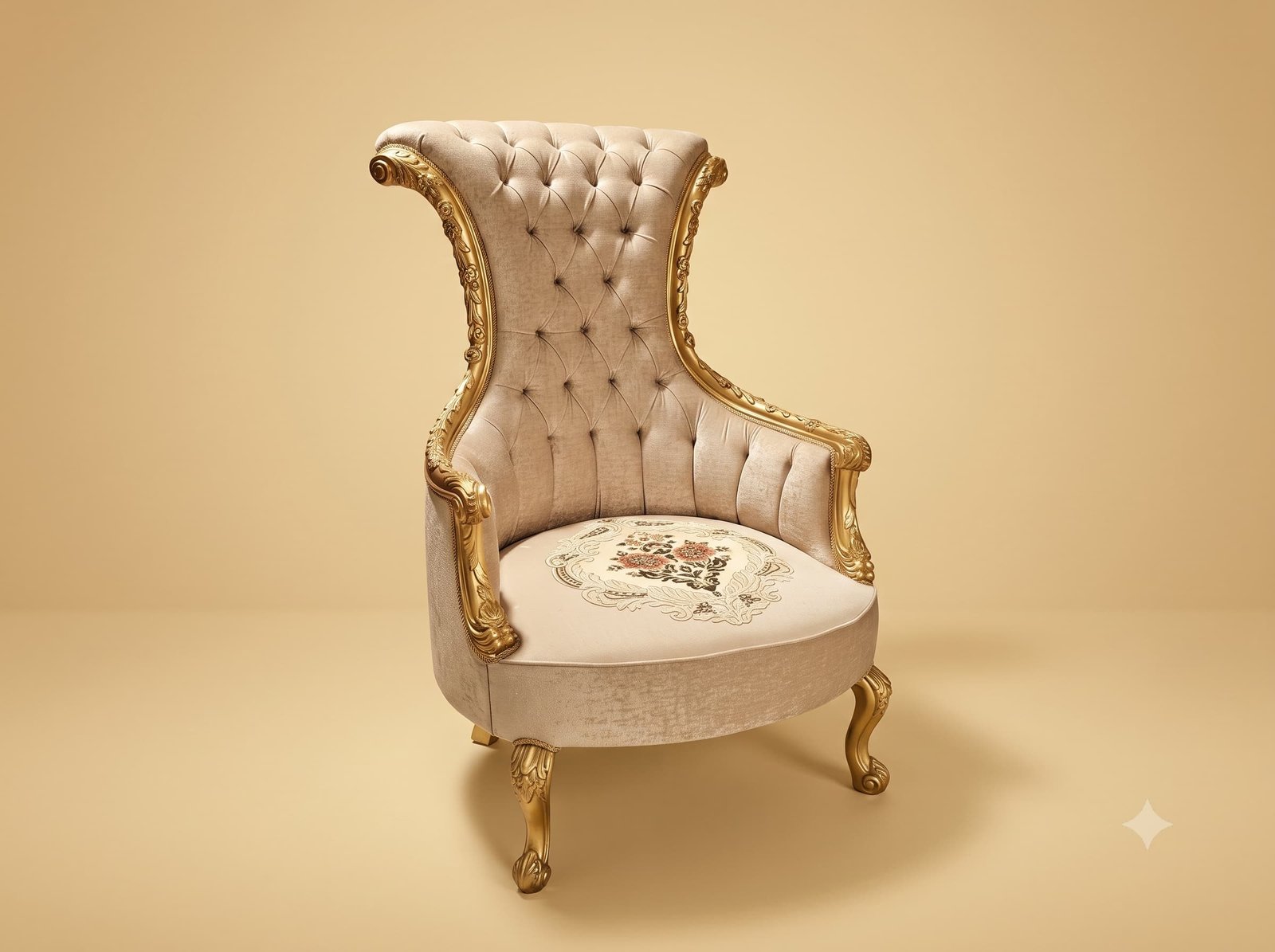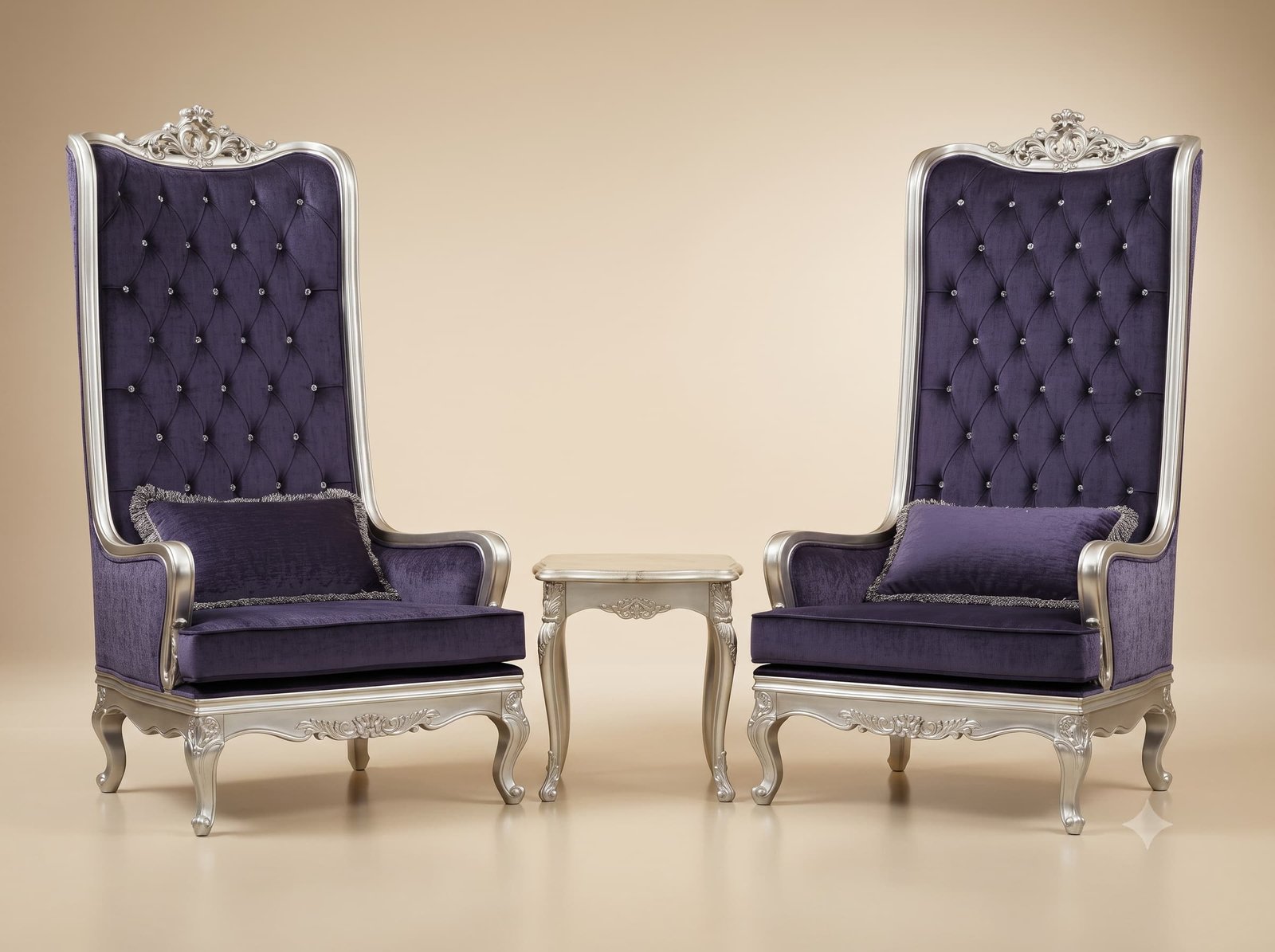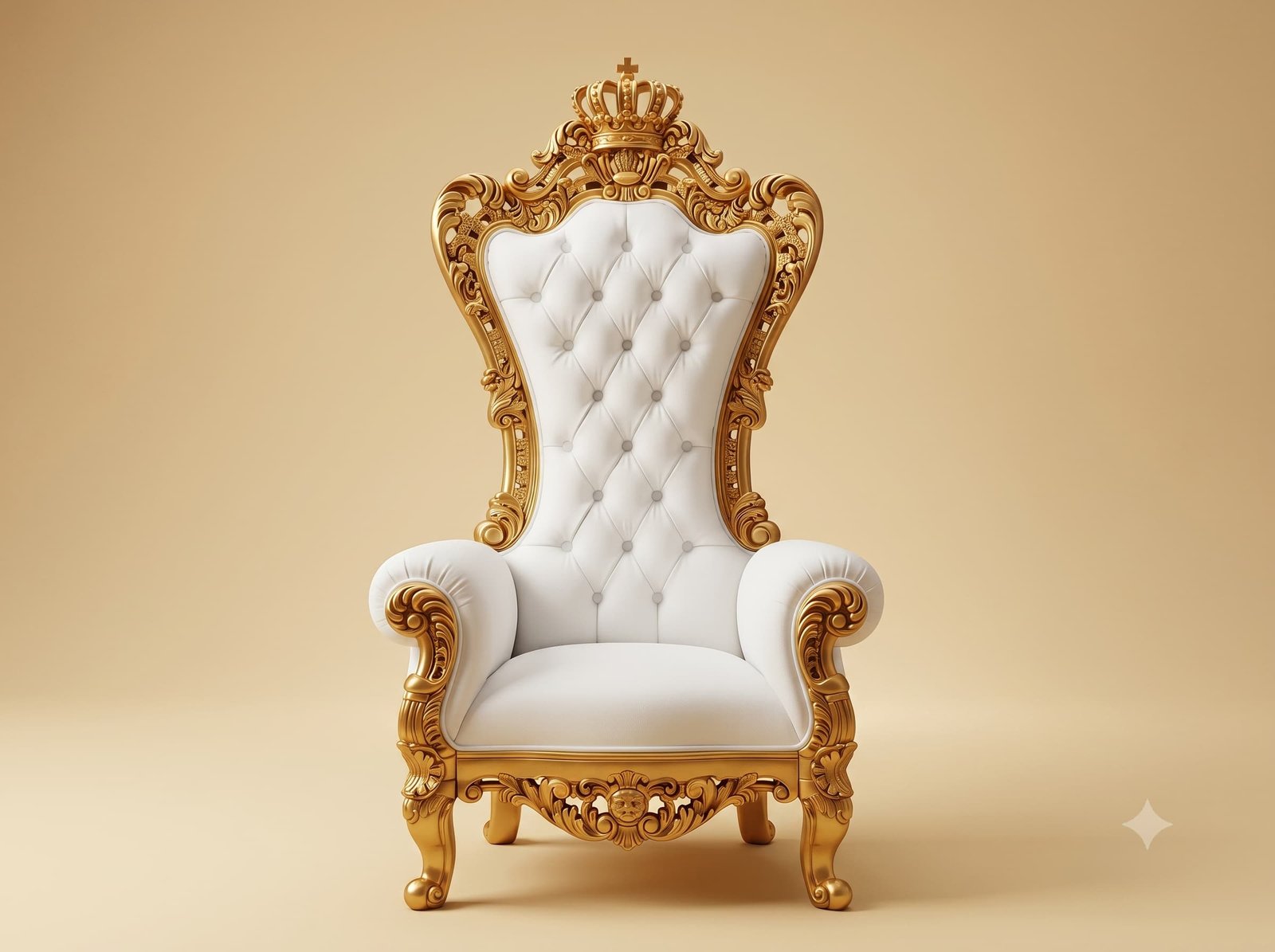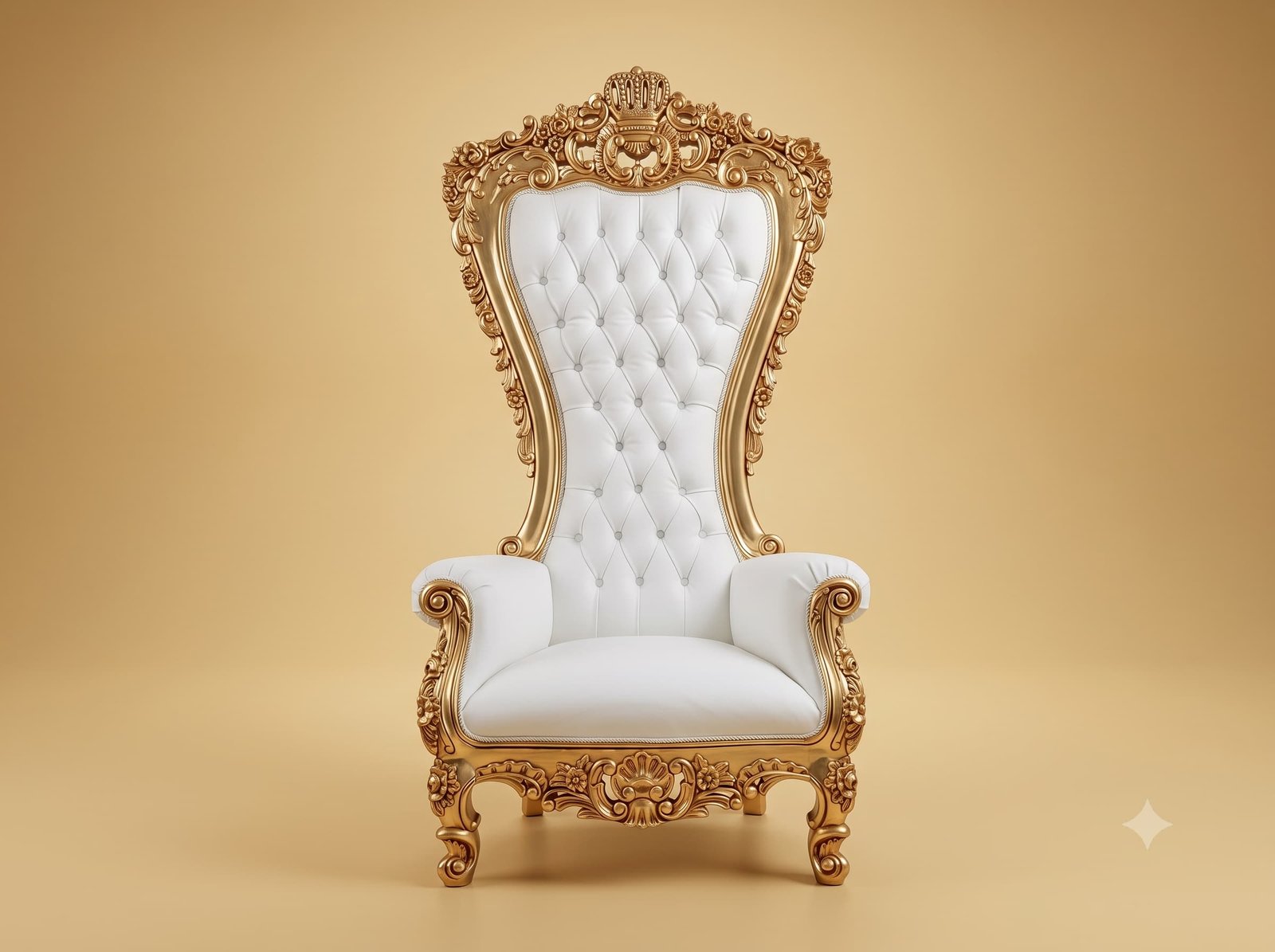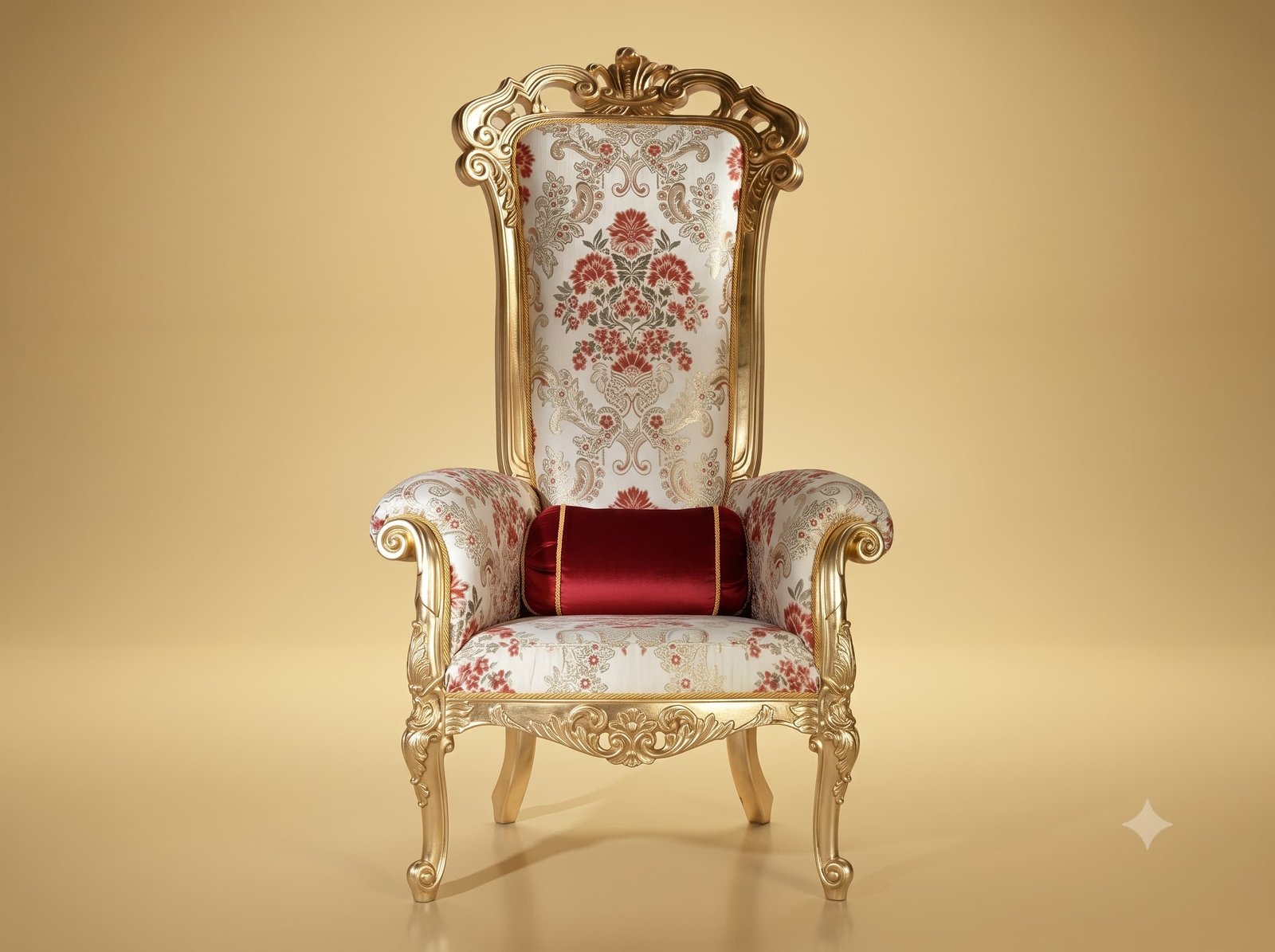
Where two fabrics meet on one chair, the seam between them has to be somewhere the design already changes - never in the middle of a plain surface.
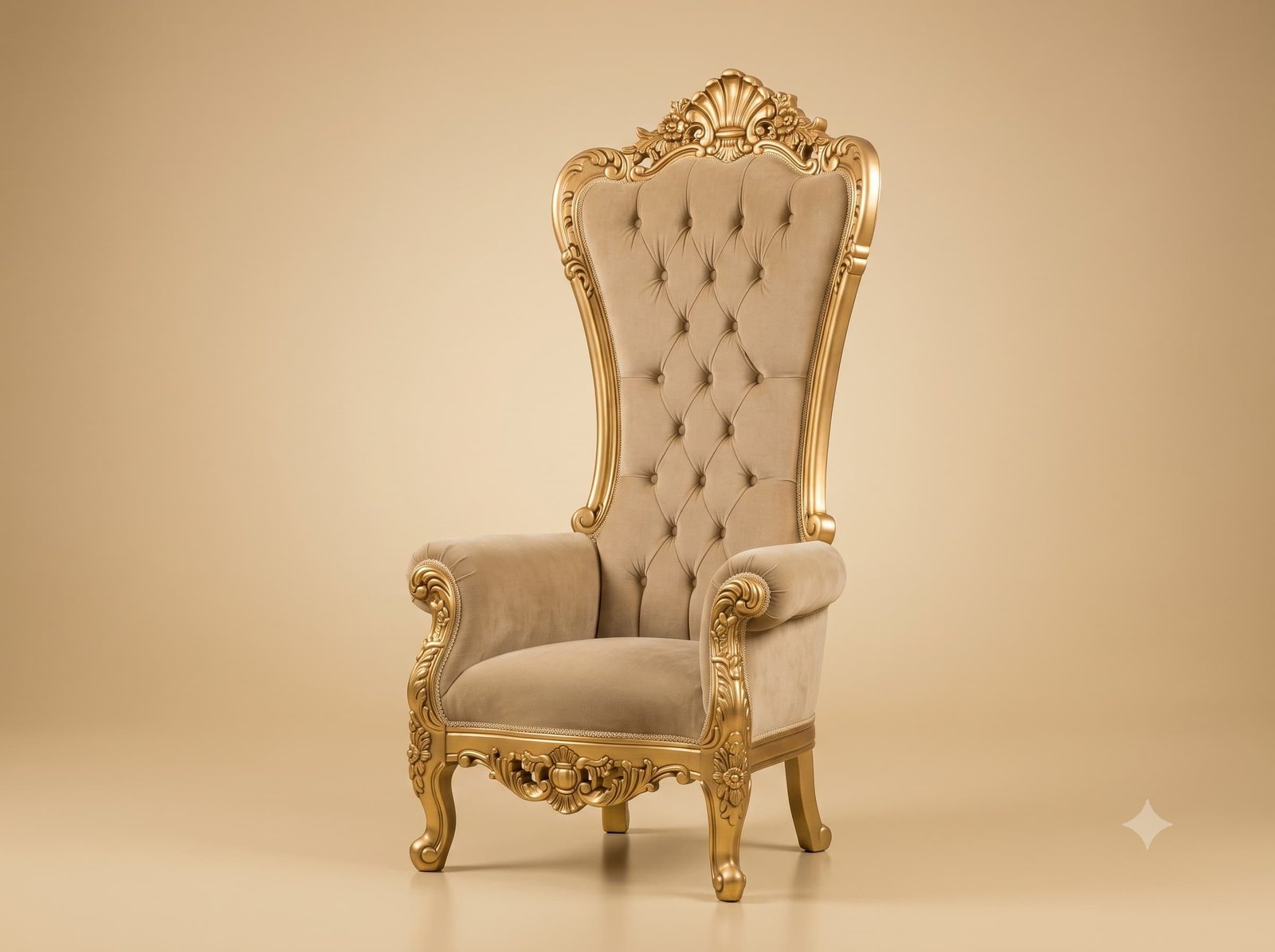
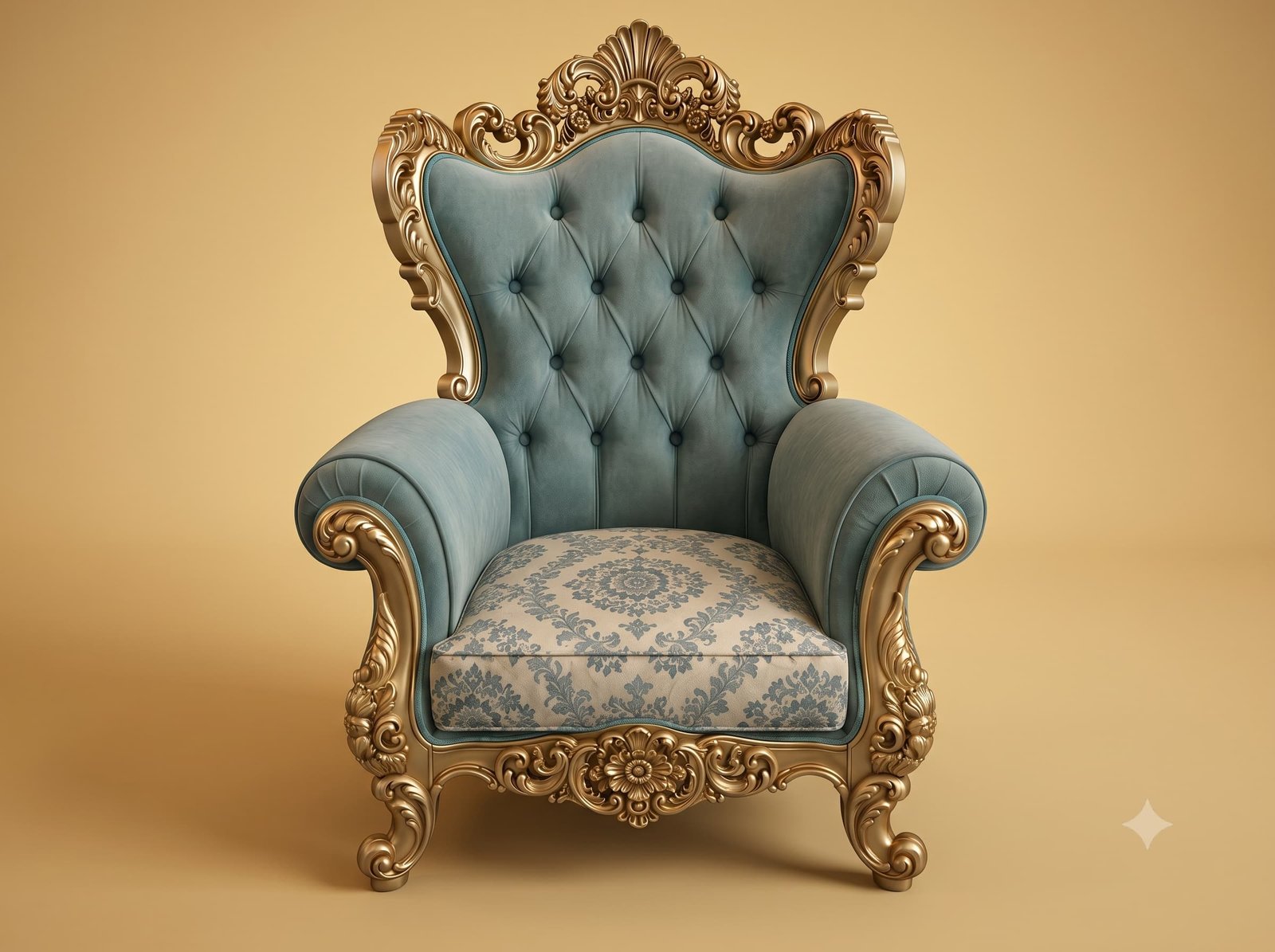
Here the change happens at the front edge of the seat cushion, which is a real edge in the chair's construction: the platform stops, the cushion begins, and the eye already expects a line there. So the damask is confined to the cushion and the velvet stops where the cushion sits, and neither fabric ever has to explain itself.
The second decision is which fabric goes where, and it is settled by wear rather than by looks. A seat cushion takes more use than any other part of a chair, and a patterned cloth carries the marks of use far better than a plain one, because the pattern breaks up any unevenness. Velvet on the back and arms stays looking new for longer because it is touched less.
So the arrangement that happens to look best is also the one that ages best. That is usually a sign a traditional formula is doing more than one job at once, which is generally why it became traditional.
 Ask Price On WhatsApp