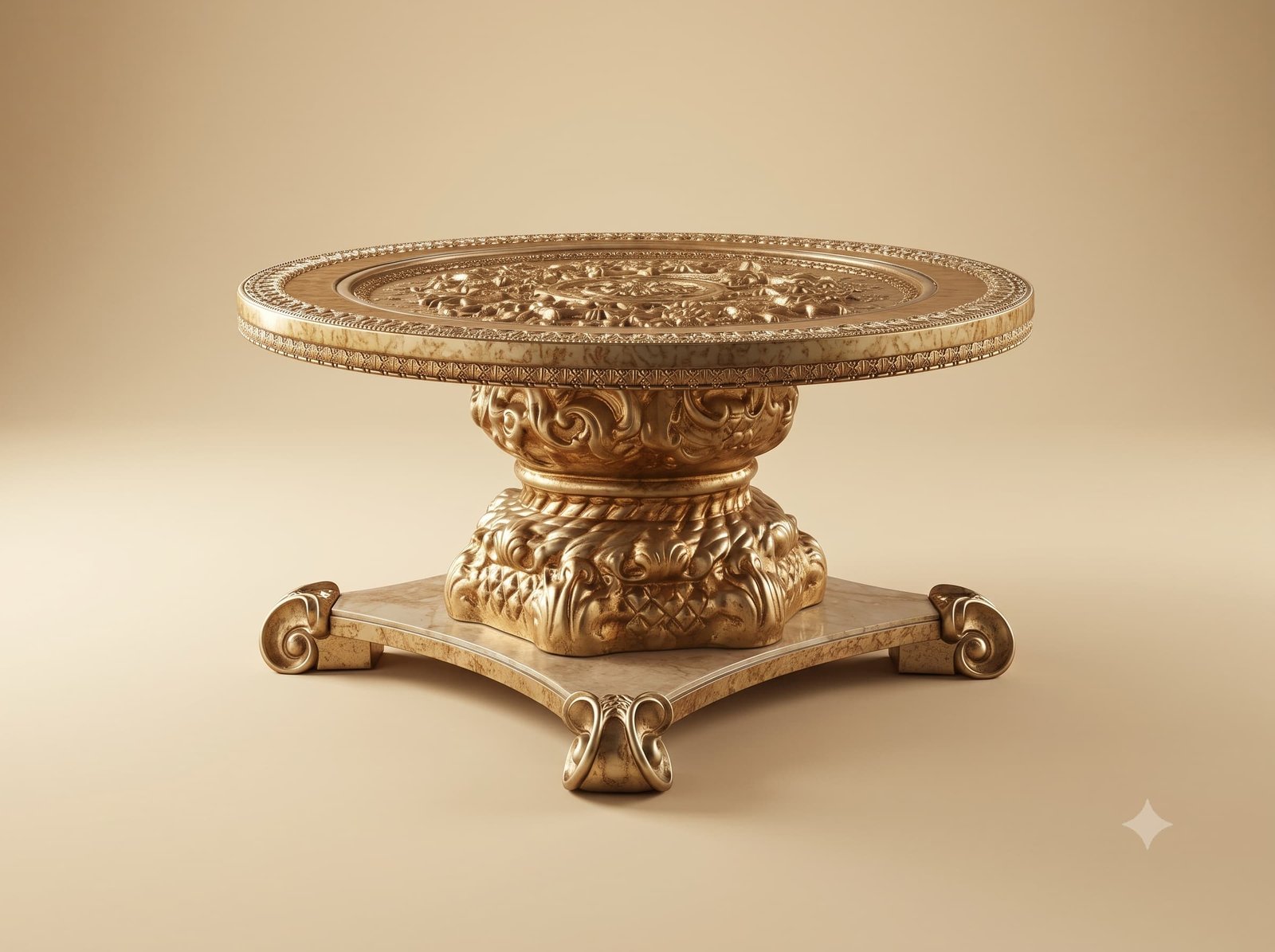
Everything about a pedestal table comes down to one question: how far do the feet have to reach?
A table on a single column is held up in the middle and loaded at the edge. Lean on the rim, or put something heavy there, and the whole piece wants to pivot over the foot nearest that point. Whether it does depends entirely on how far that foot sits from the centre.
The workshop rule is that the feet should reach out to roughly two-thirds of the top's radius. Less than that and the table becomes tippy at the edge - the classic fault of a pedestal table made to look elegant rather than to work. Much more and the feet stick out beyond the top, catching shins and looking clumsy.
So on this table the platform is drawn from the top downwards, not the other way round: the diameter is fixed first, the foot spread is calculated from it, and the pedestal is shaped to fill the space between them. If you order a wider top, the platform grows with it.
It is the least visible decision in the piece and the one that decides whether you trust the table.
 Ask Price On WhatsApp