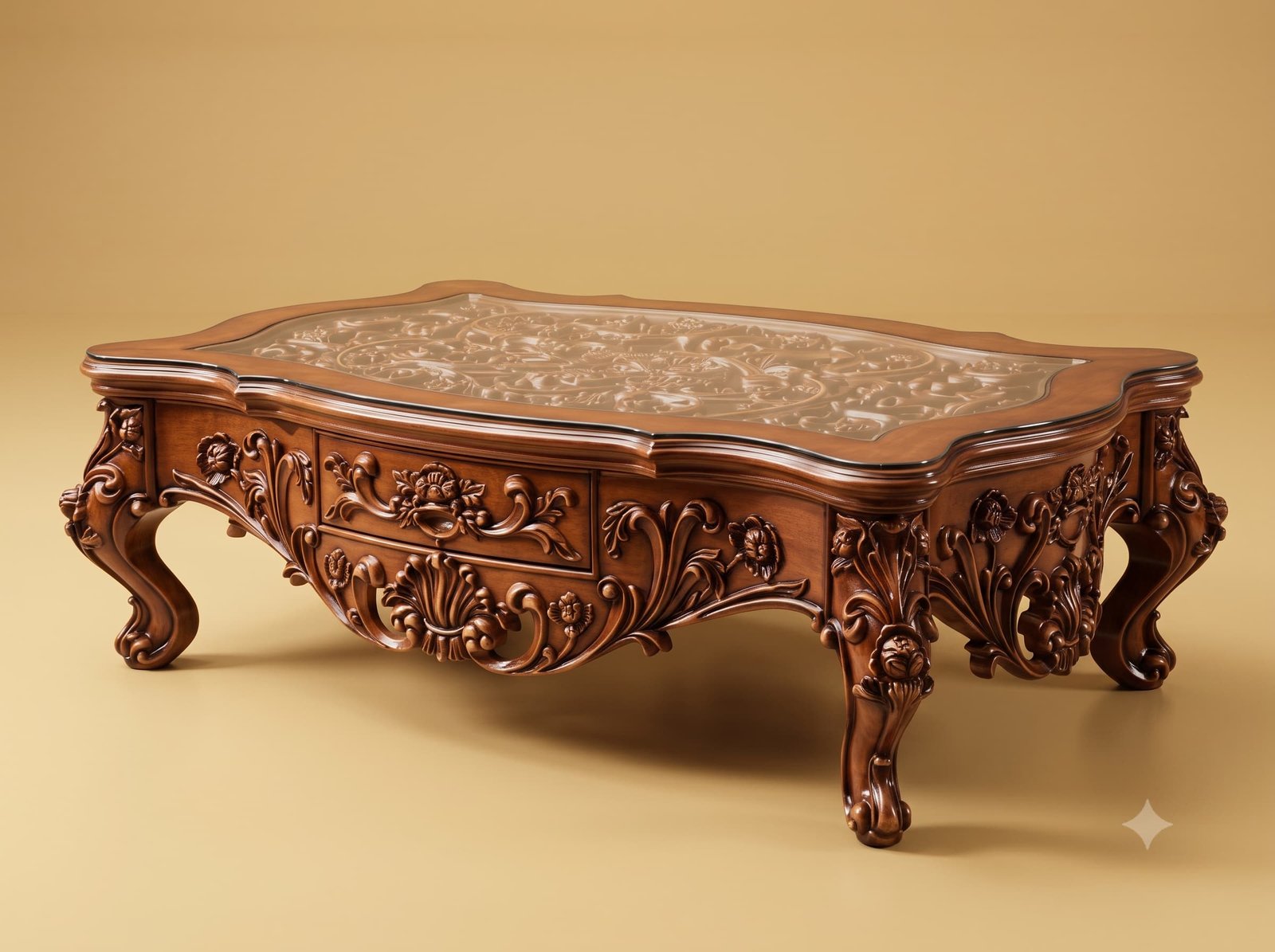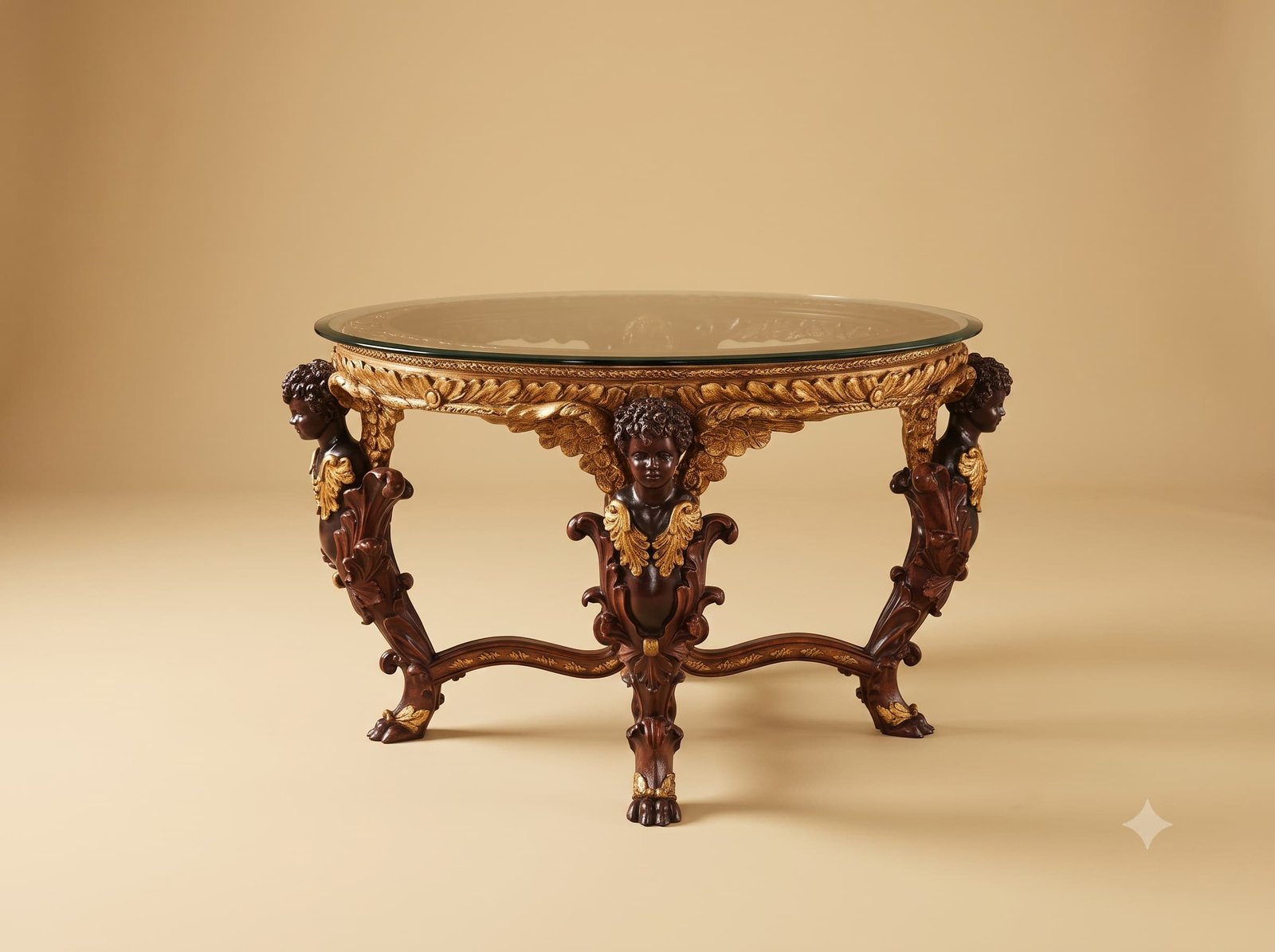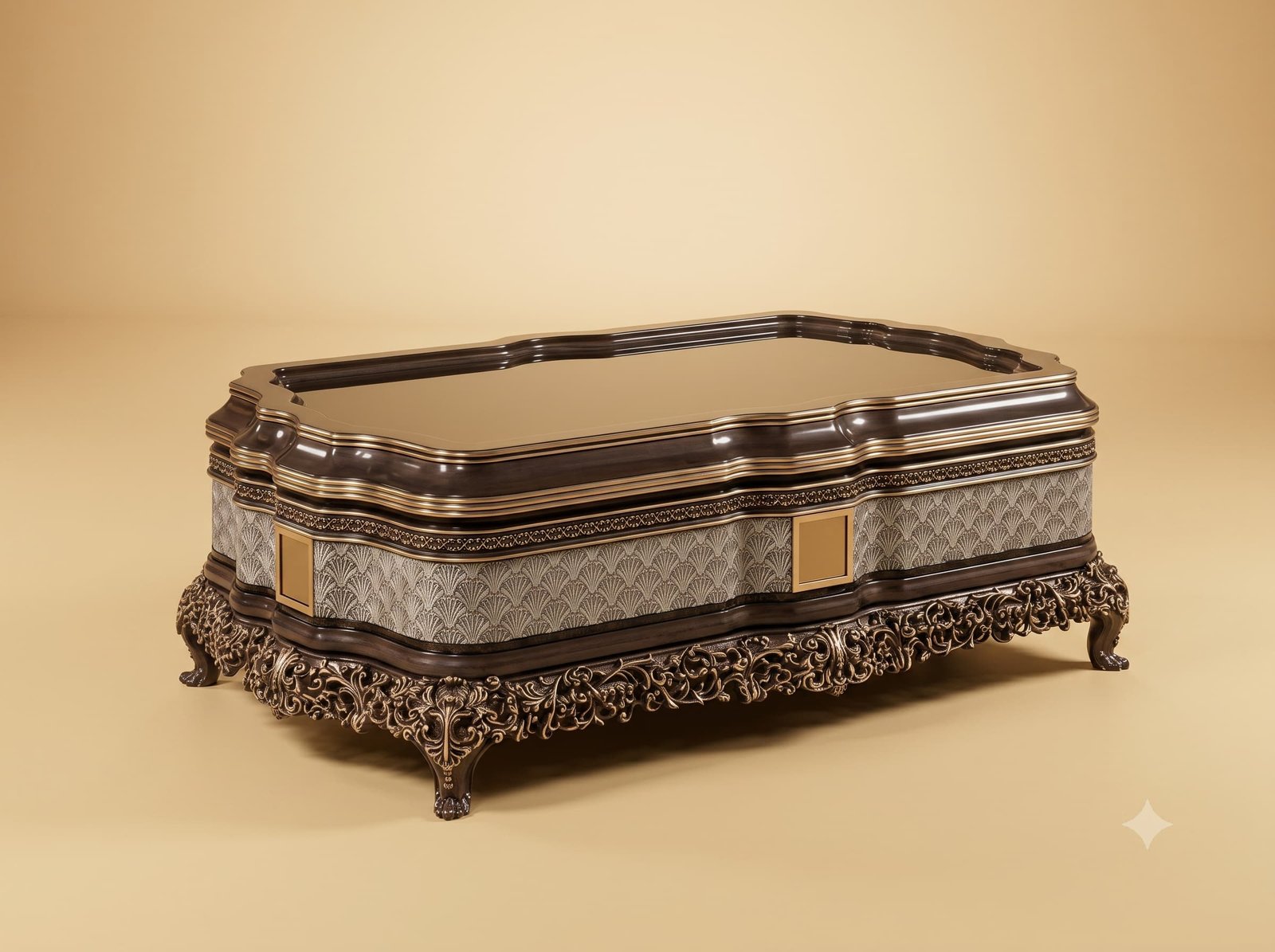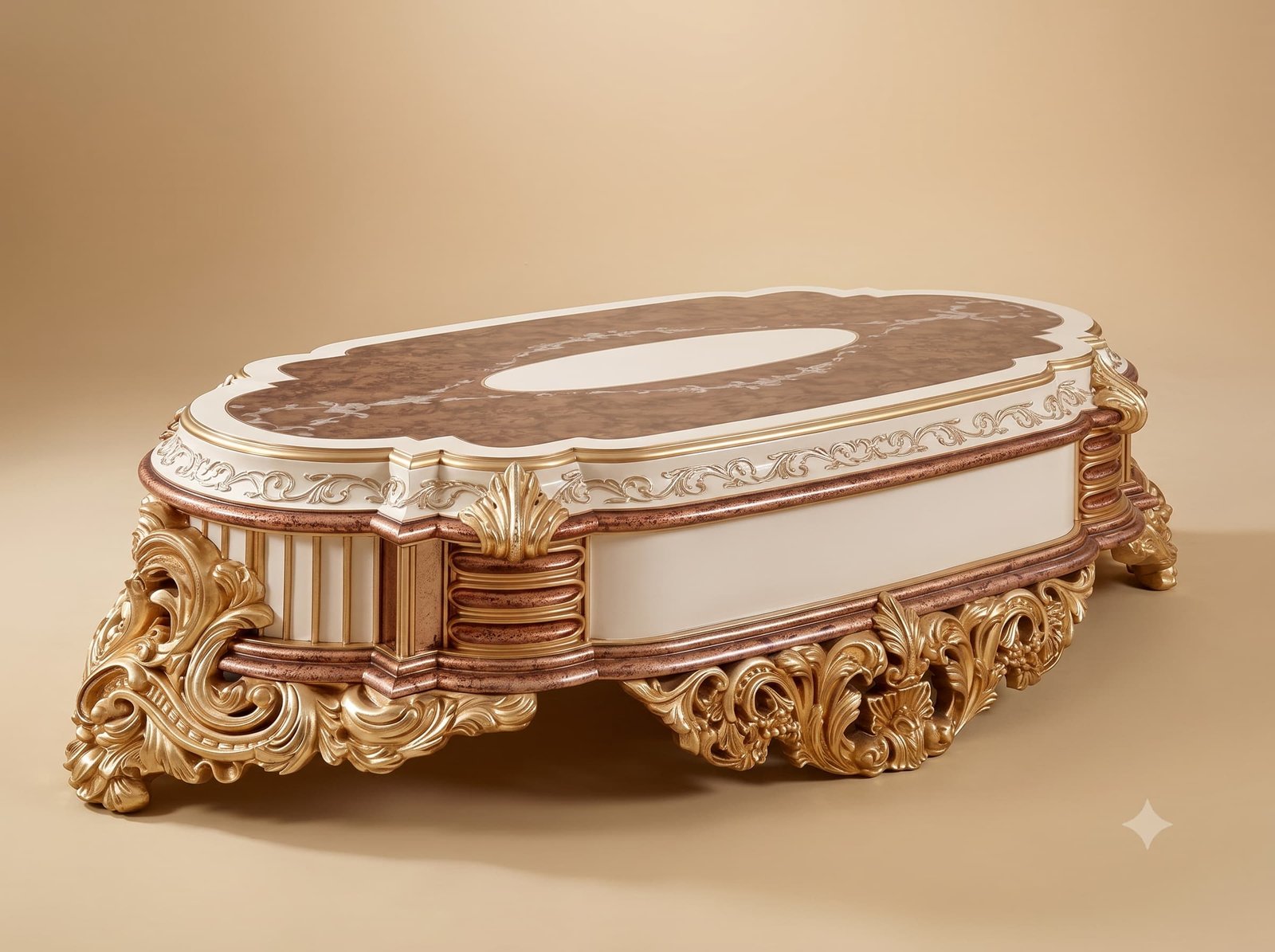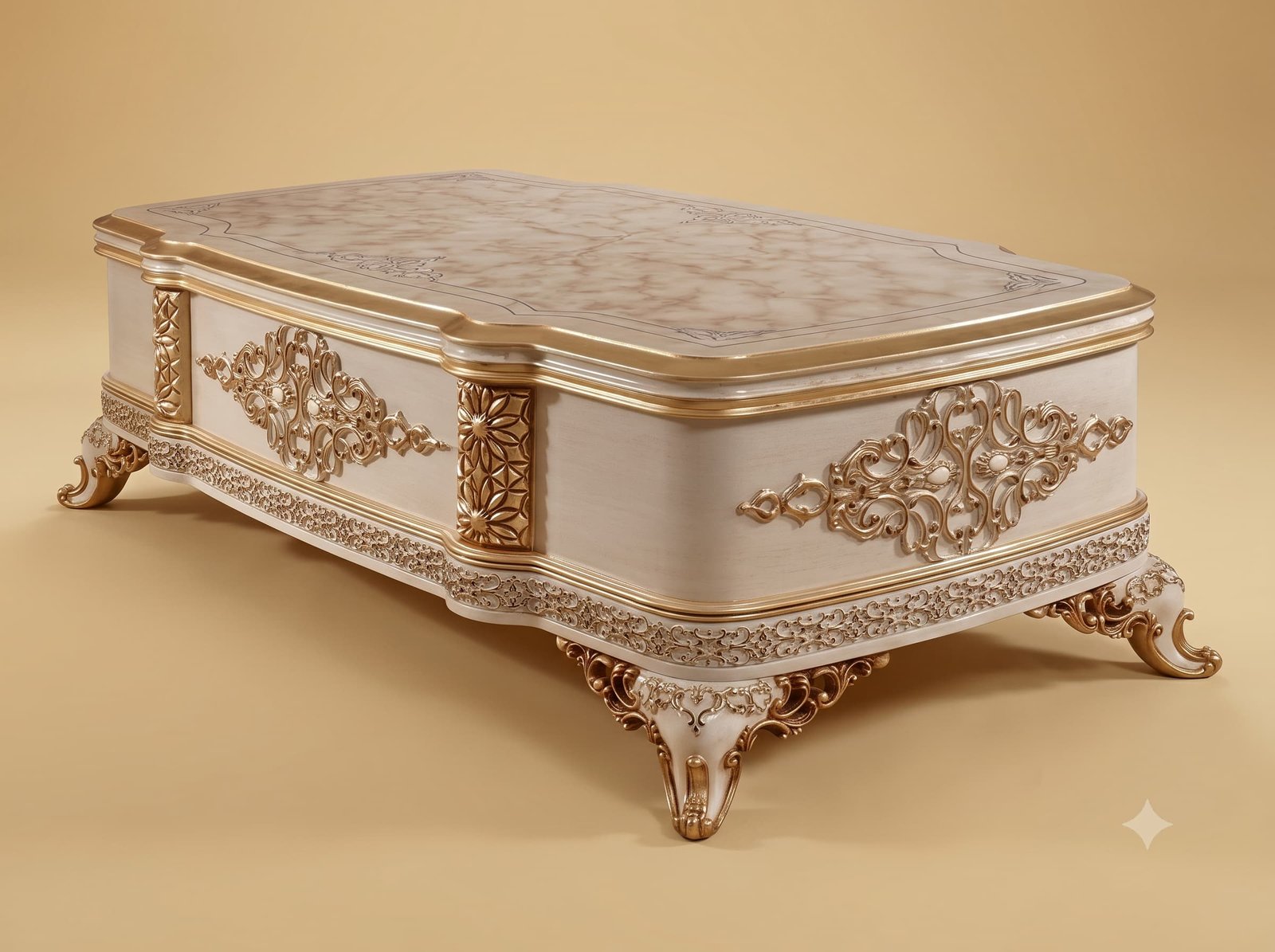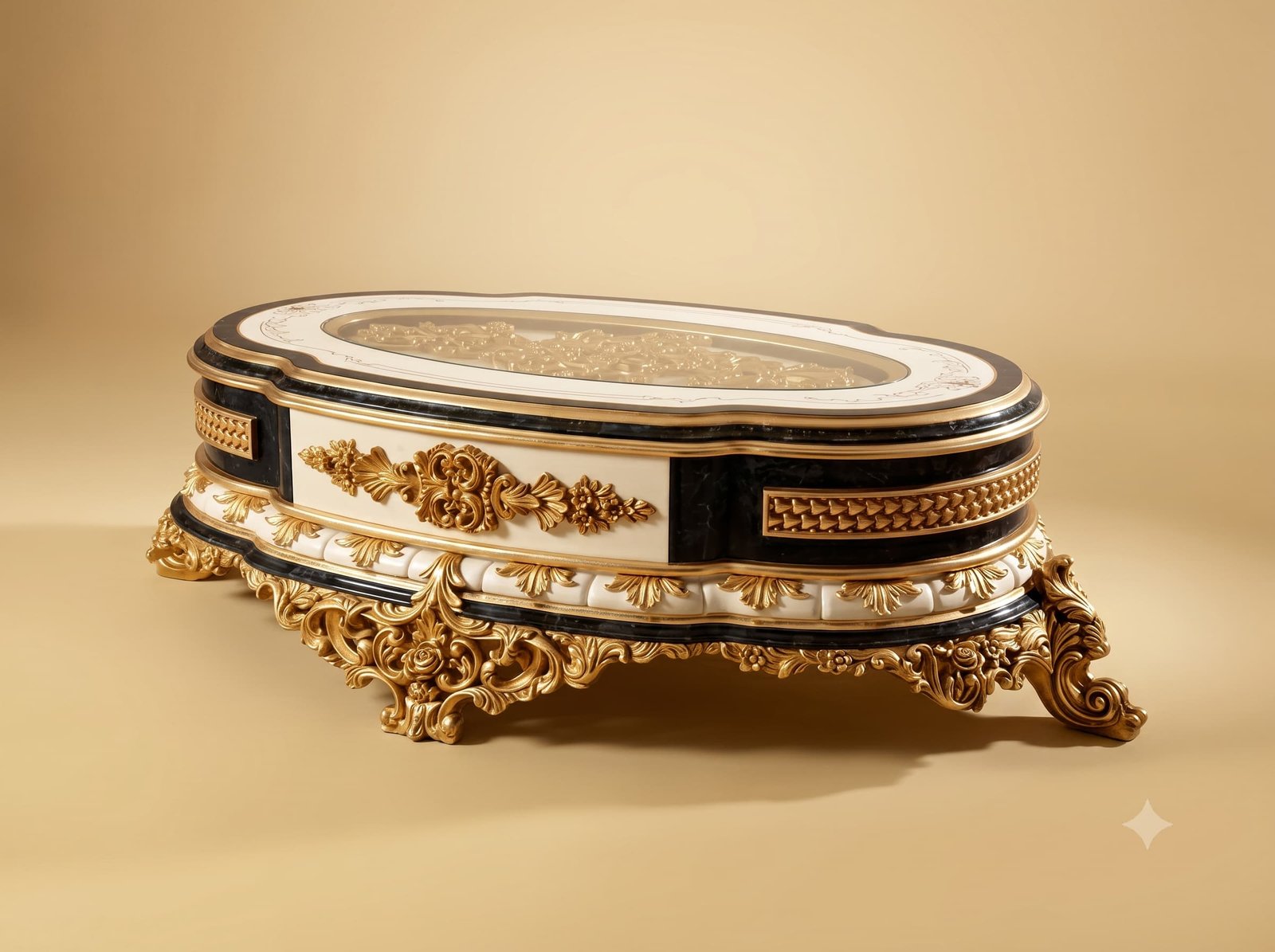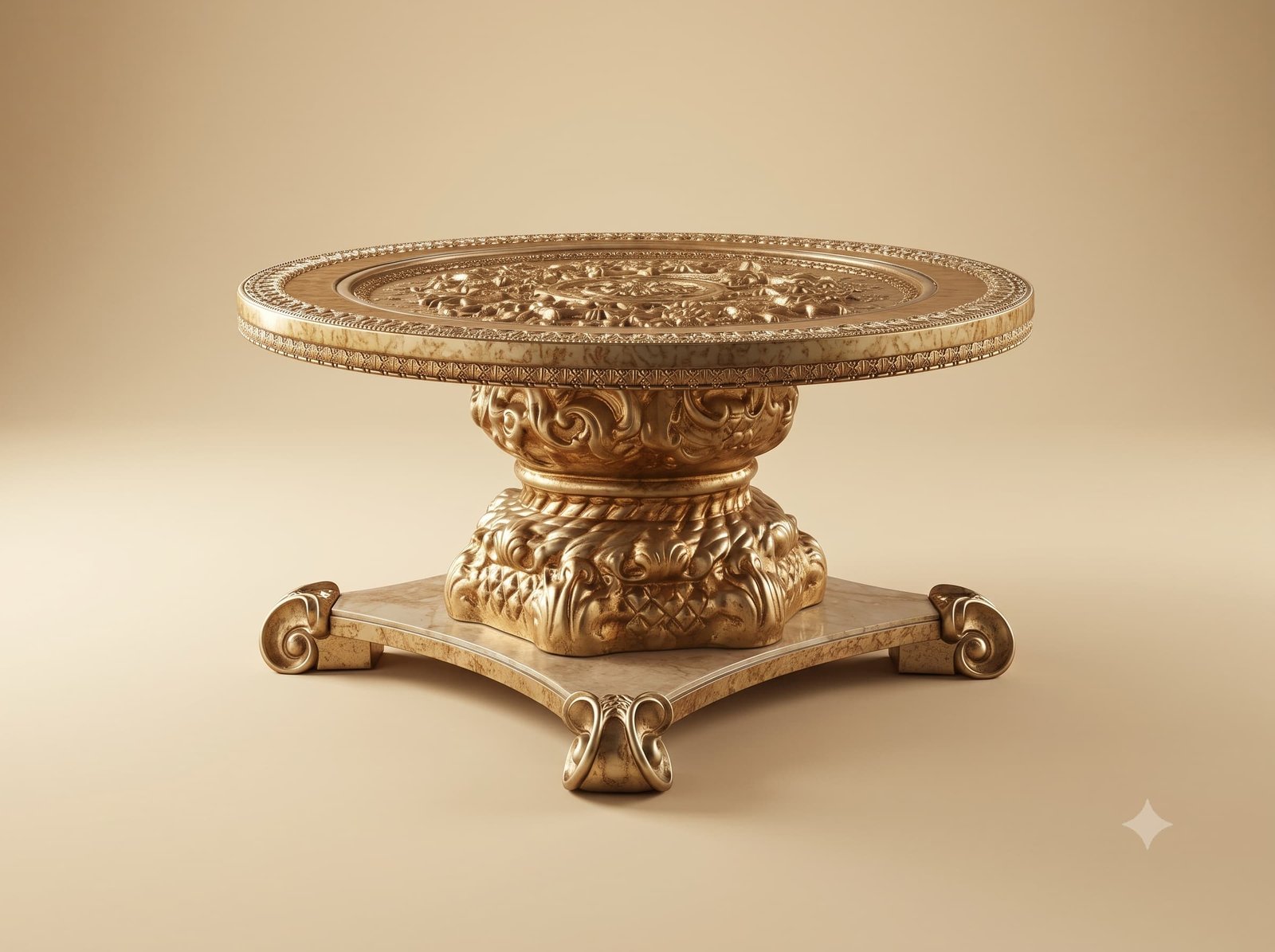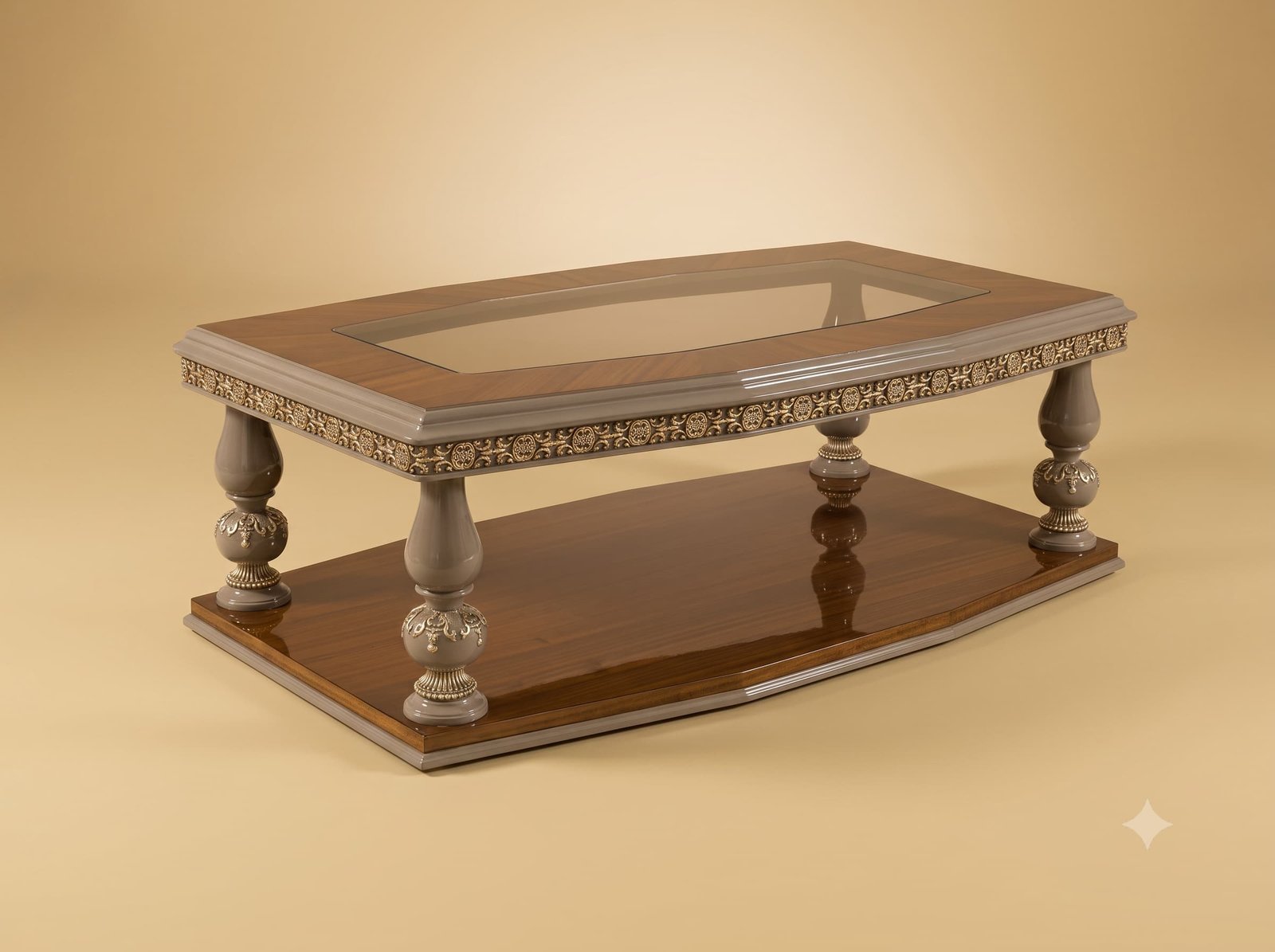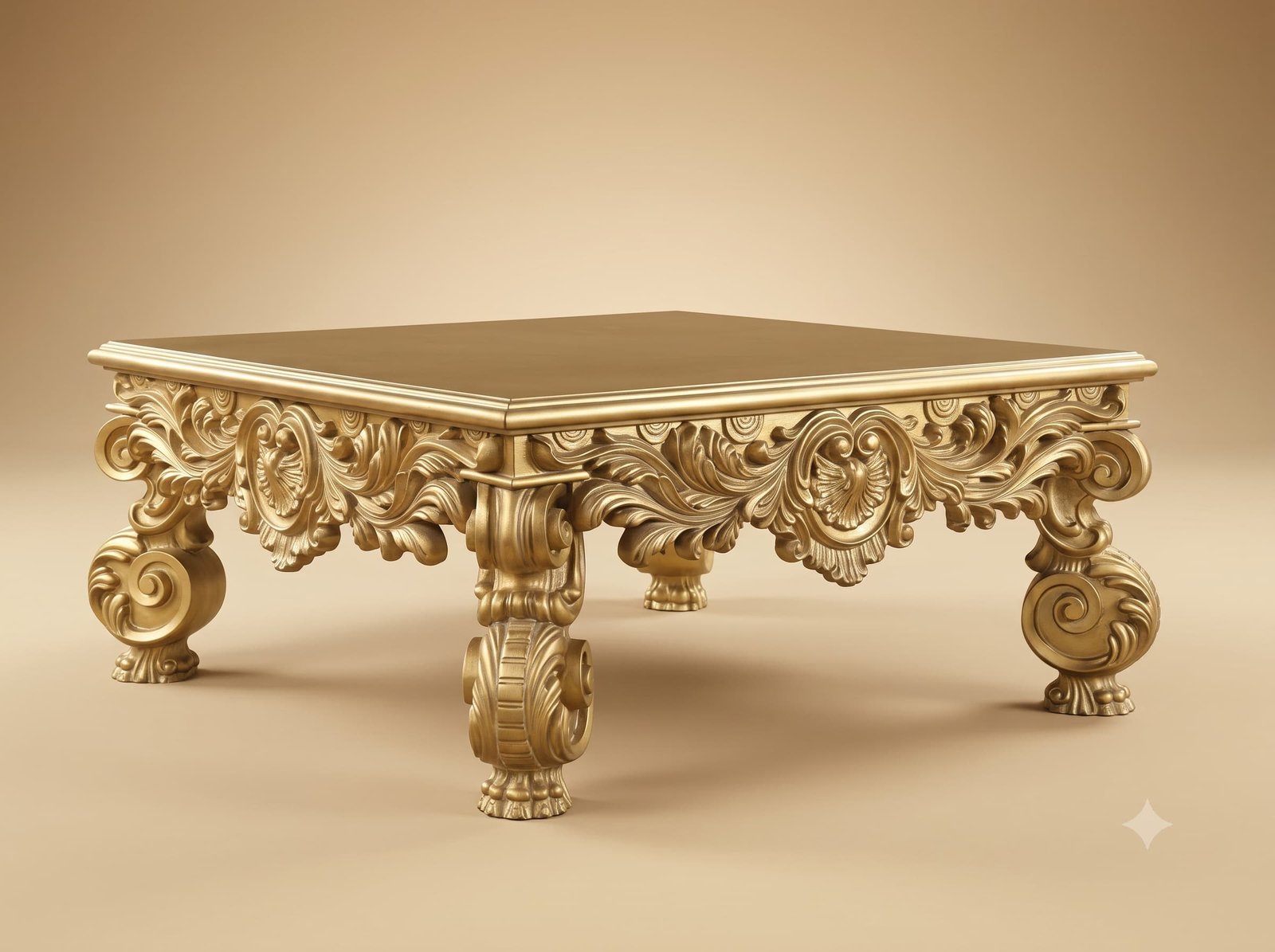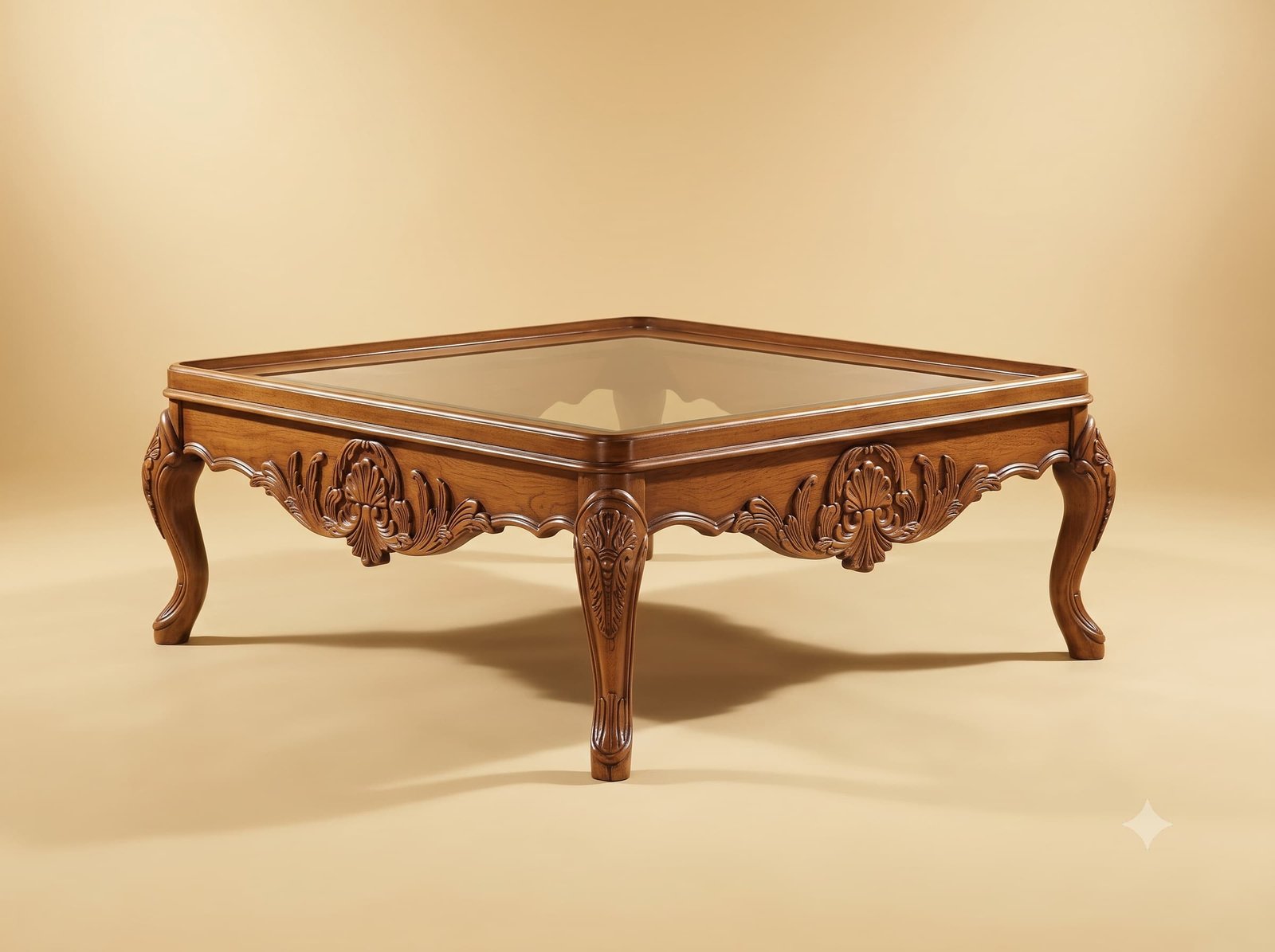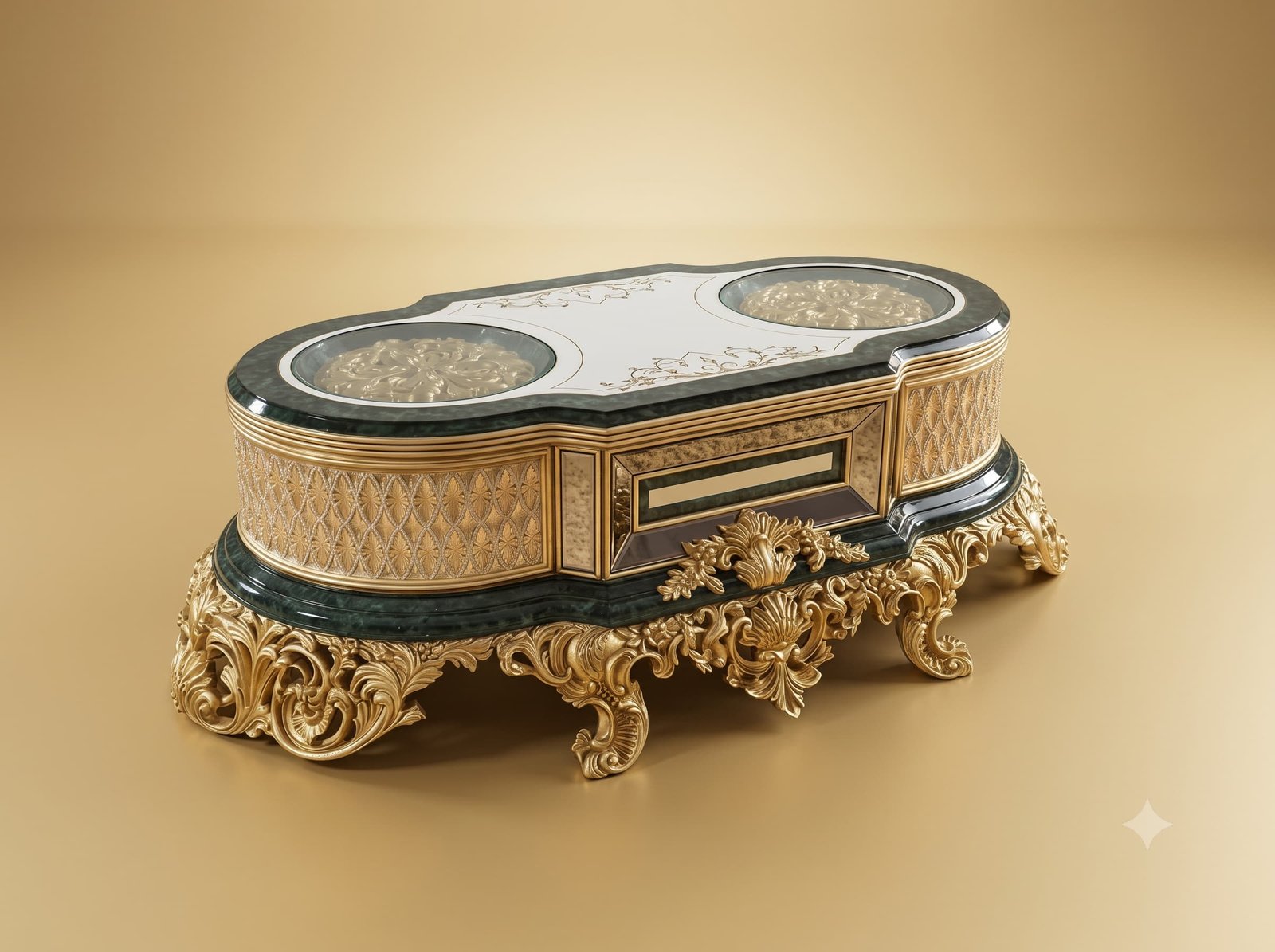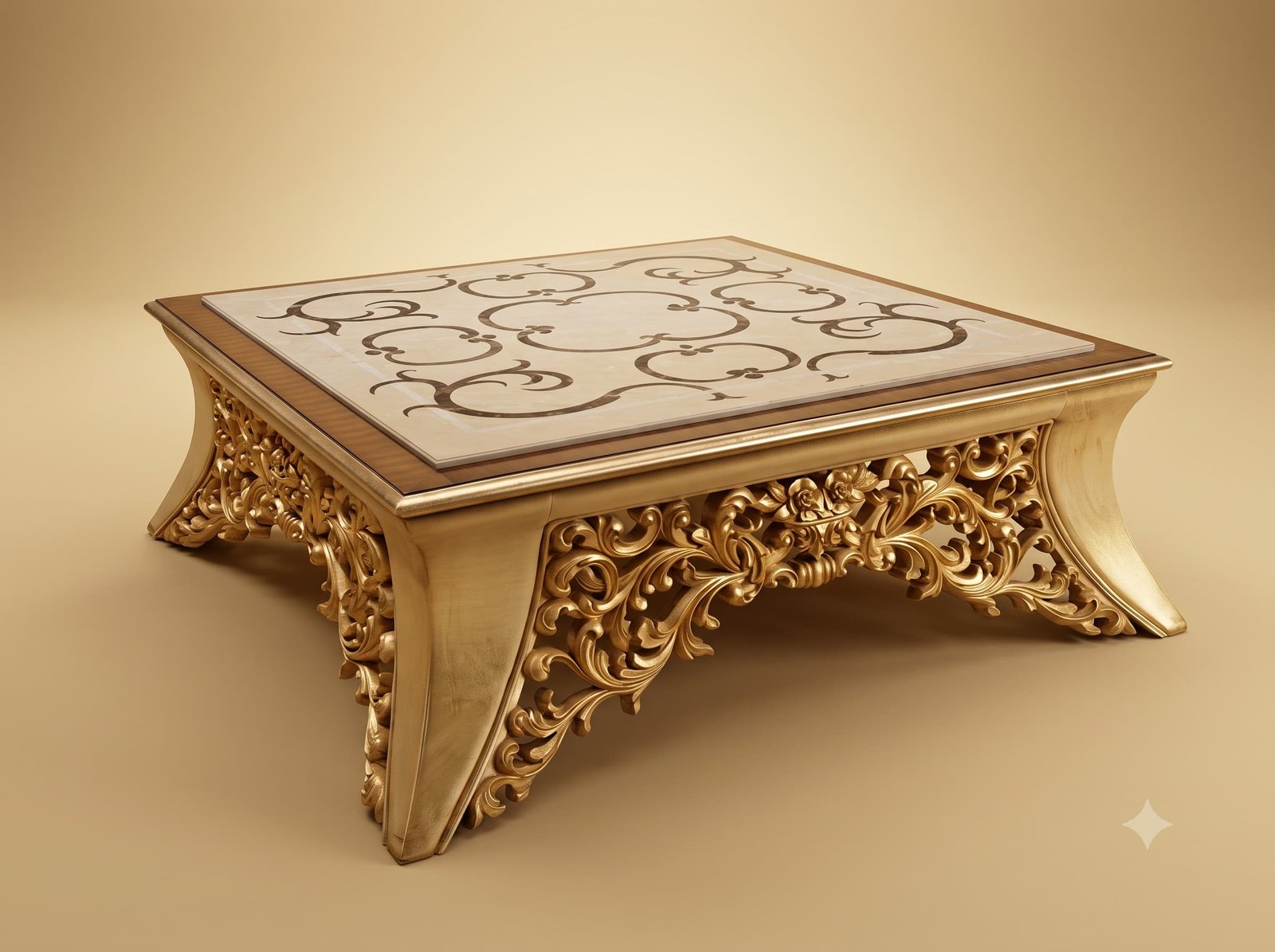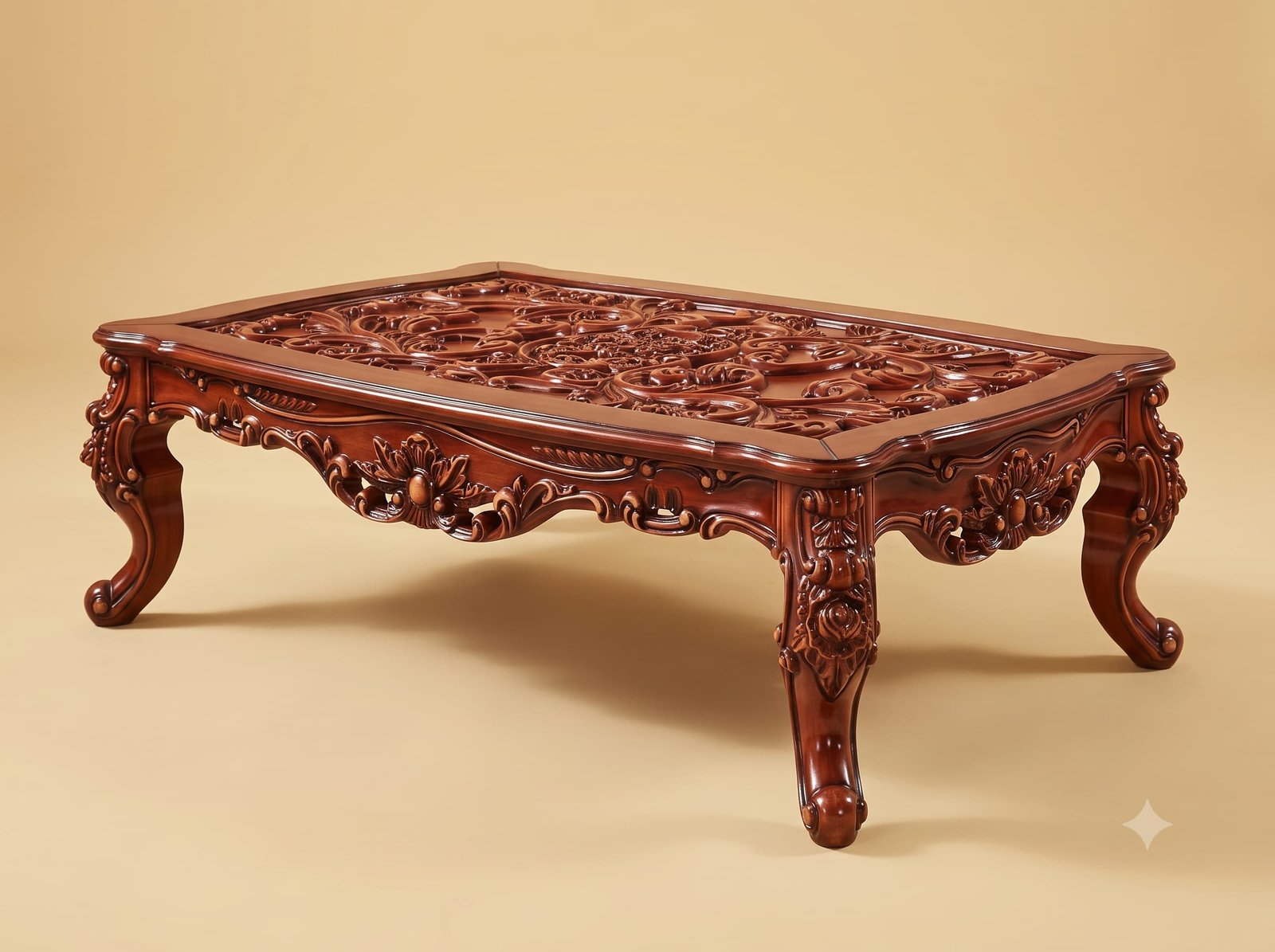
A carved top raises an obvious problem: you cannot put a cup on it. The way that problem is solved decides whether the carving survives.
The wrong answer is to carve the top flush with its rim and lay a glass sheet straight onto it. The glass then rests on the highest points of the relief - a rose here, a leaf edge there - and every weight put on the table is concentrated onto those few points. Over a year the highest details are crushed flat, and the pattern loses its peaks first, which is exactly where the carving was liveliest.
So the whole carved field is set below the level of the moulded rim, deeper than the tallest point of the relief. The glass lands on the rim alone, all the way round, and floats clear of the carving with air between them. Nothing ever touches the roses.
It sounds simple, and it is - but it has to be decided before the top is carved, because the depth of the recess governs how high the relief can stand. Carve first and you have already lost the choice.
 Ask Price On WhatsApp