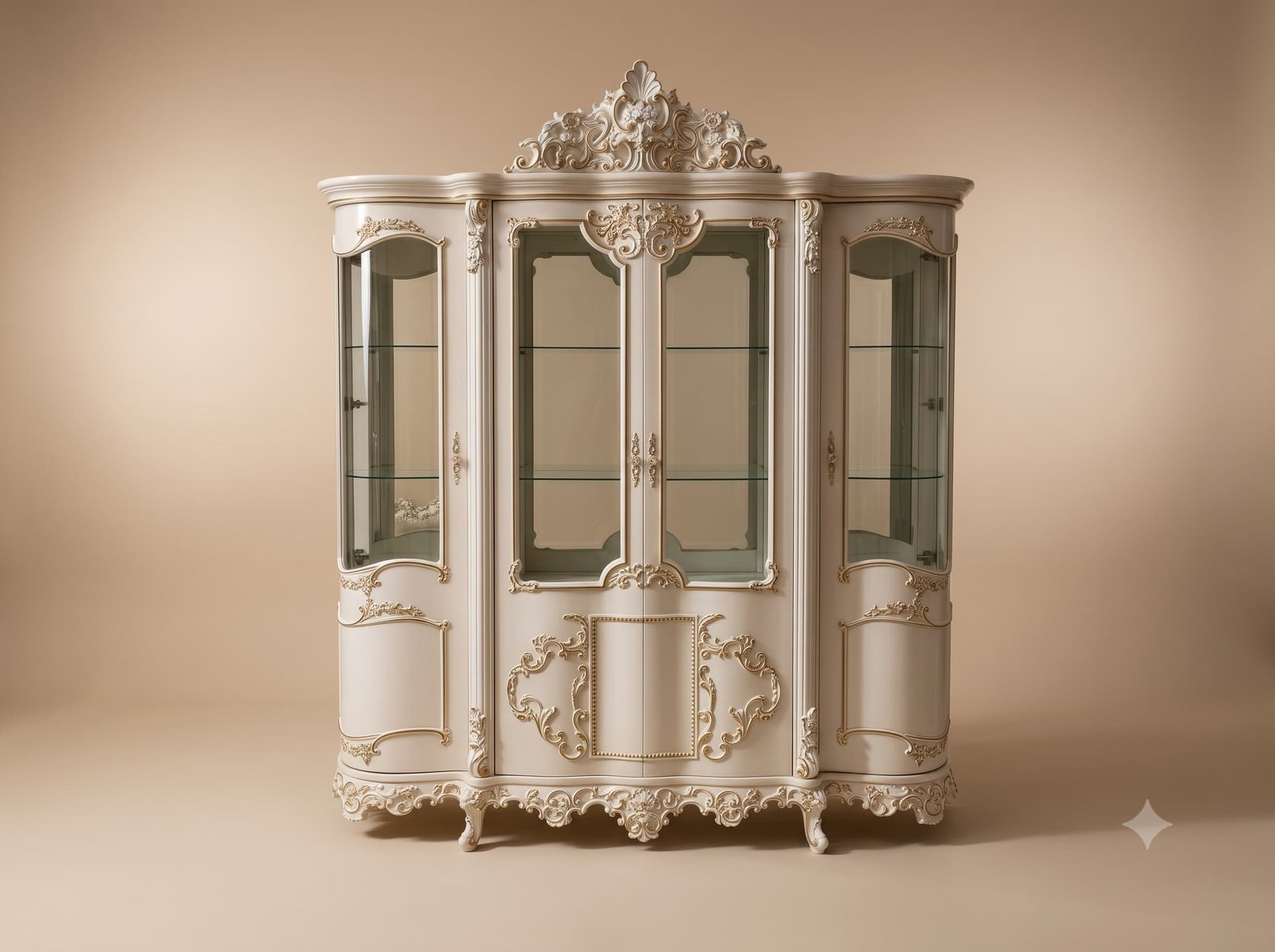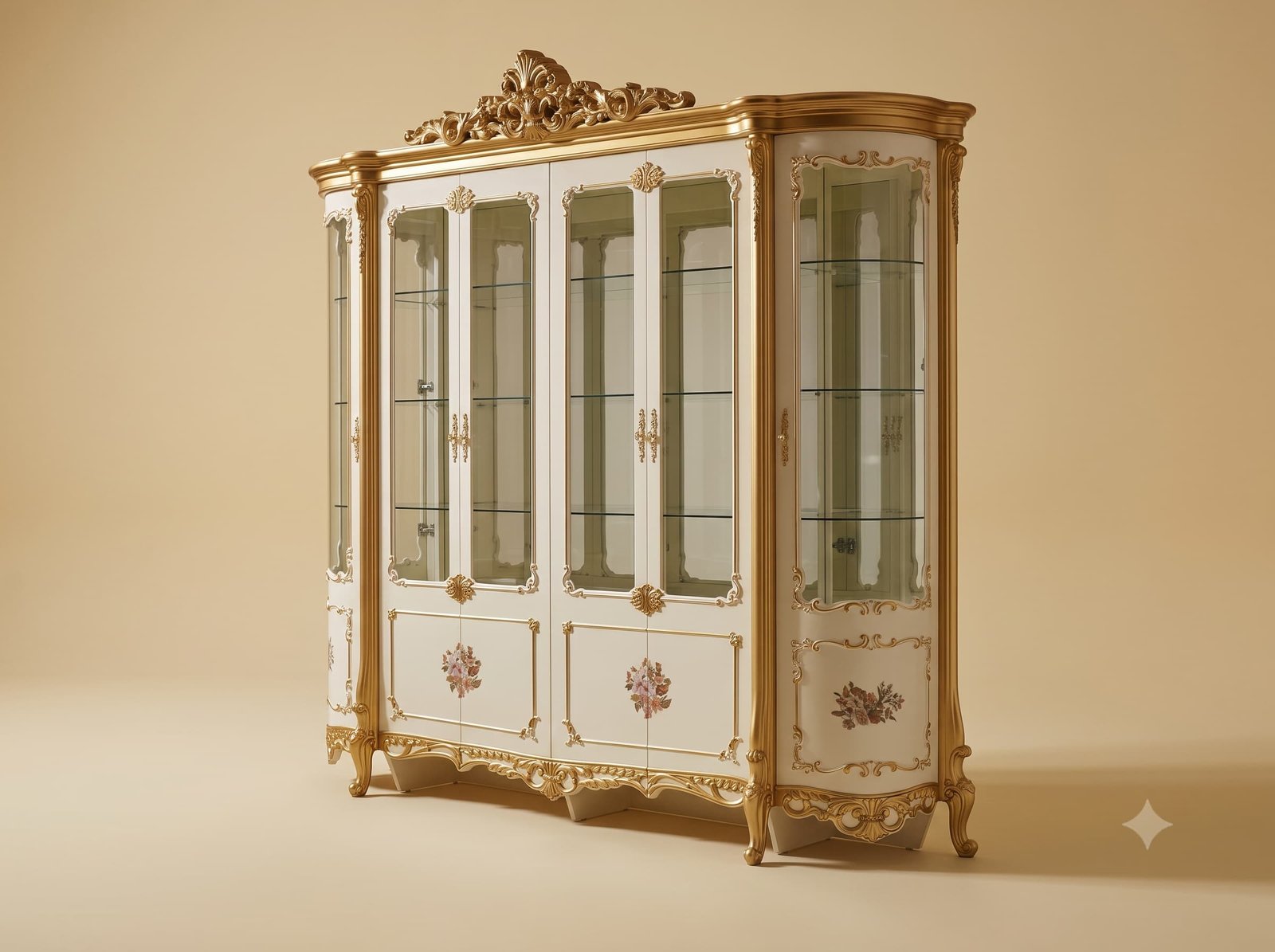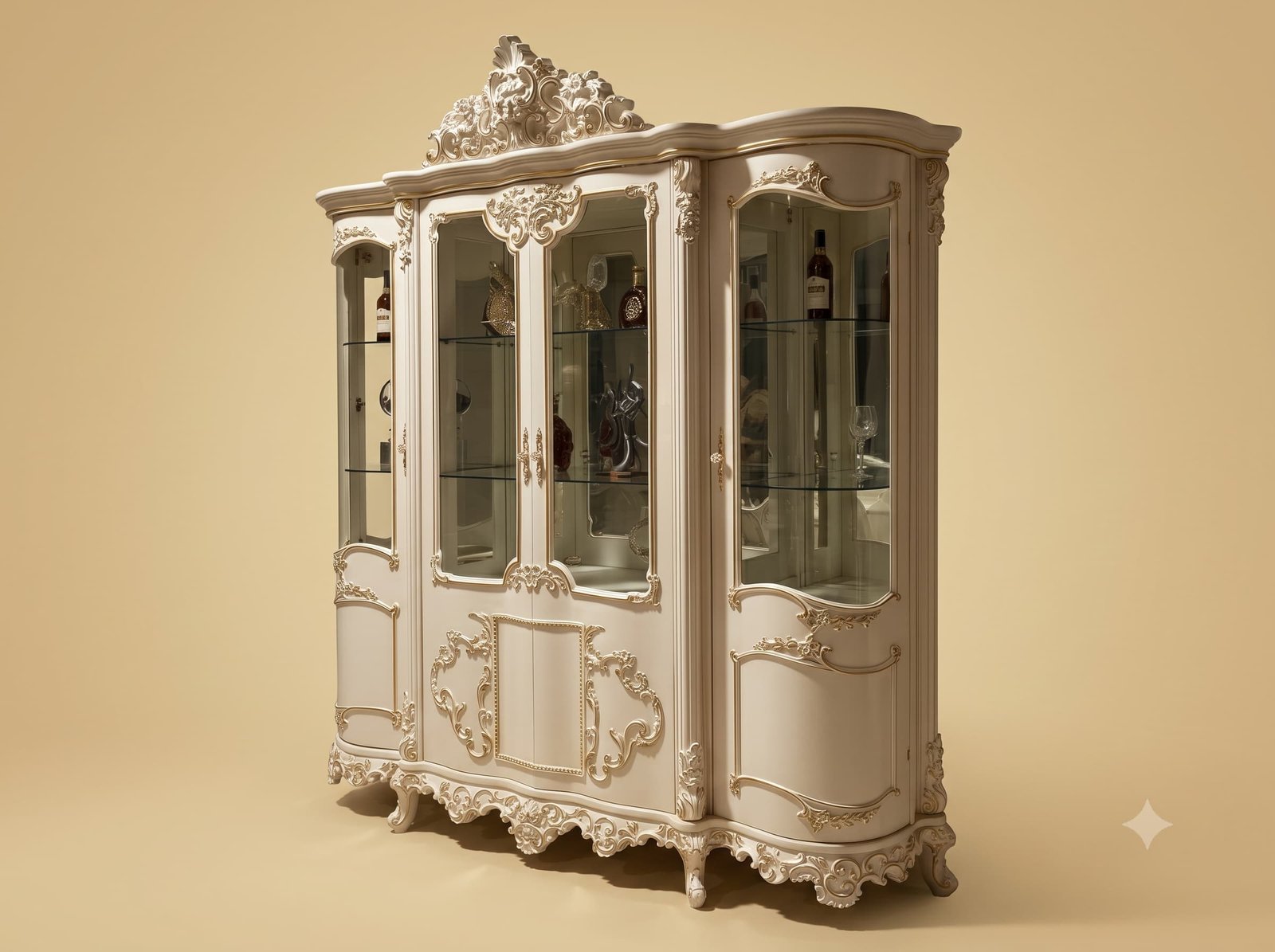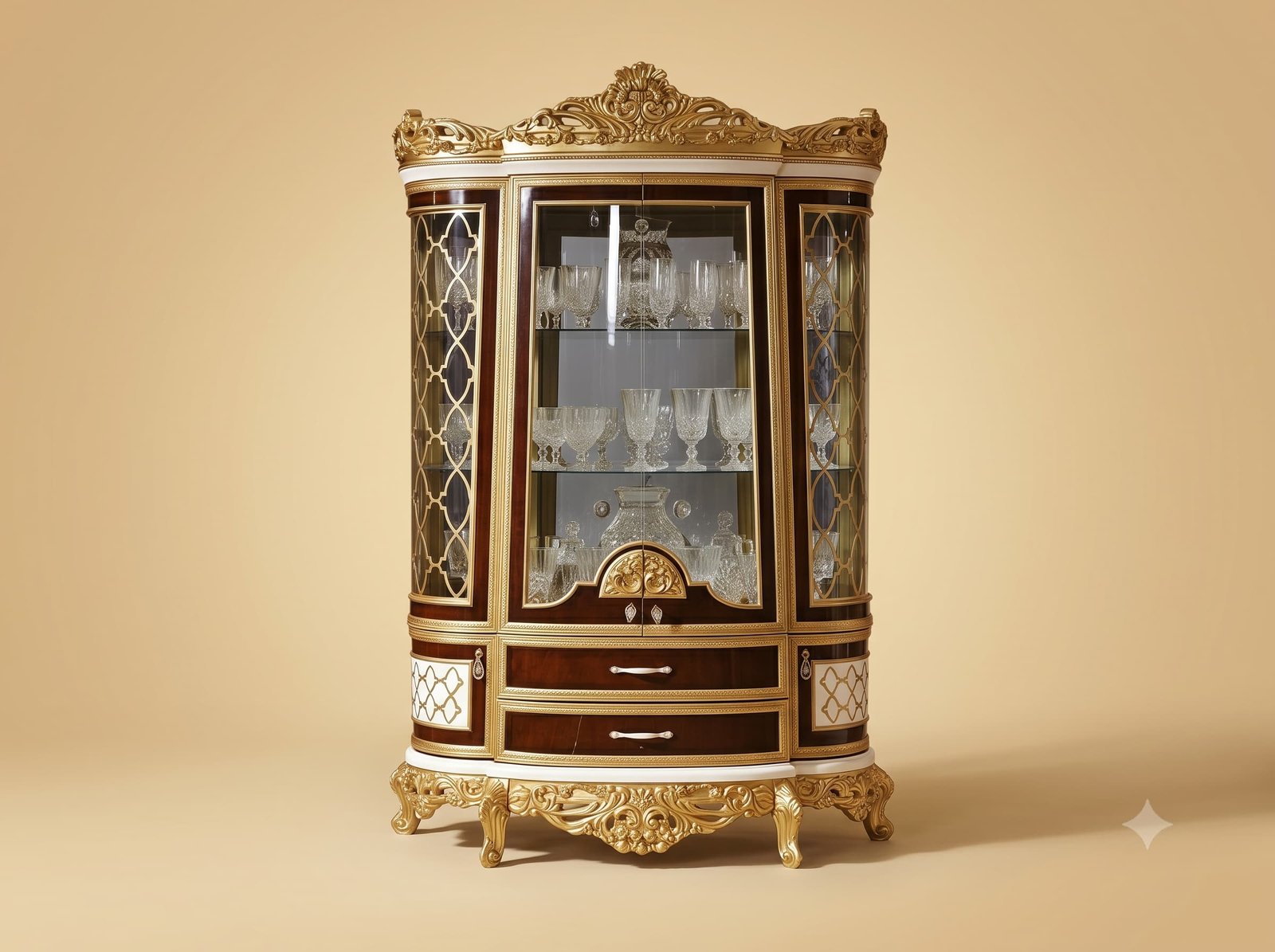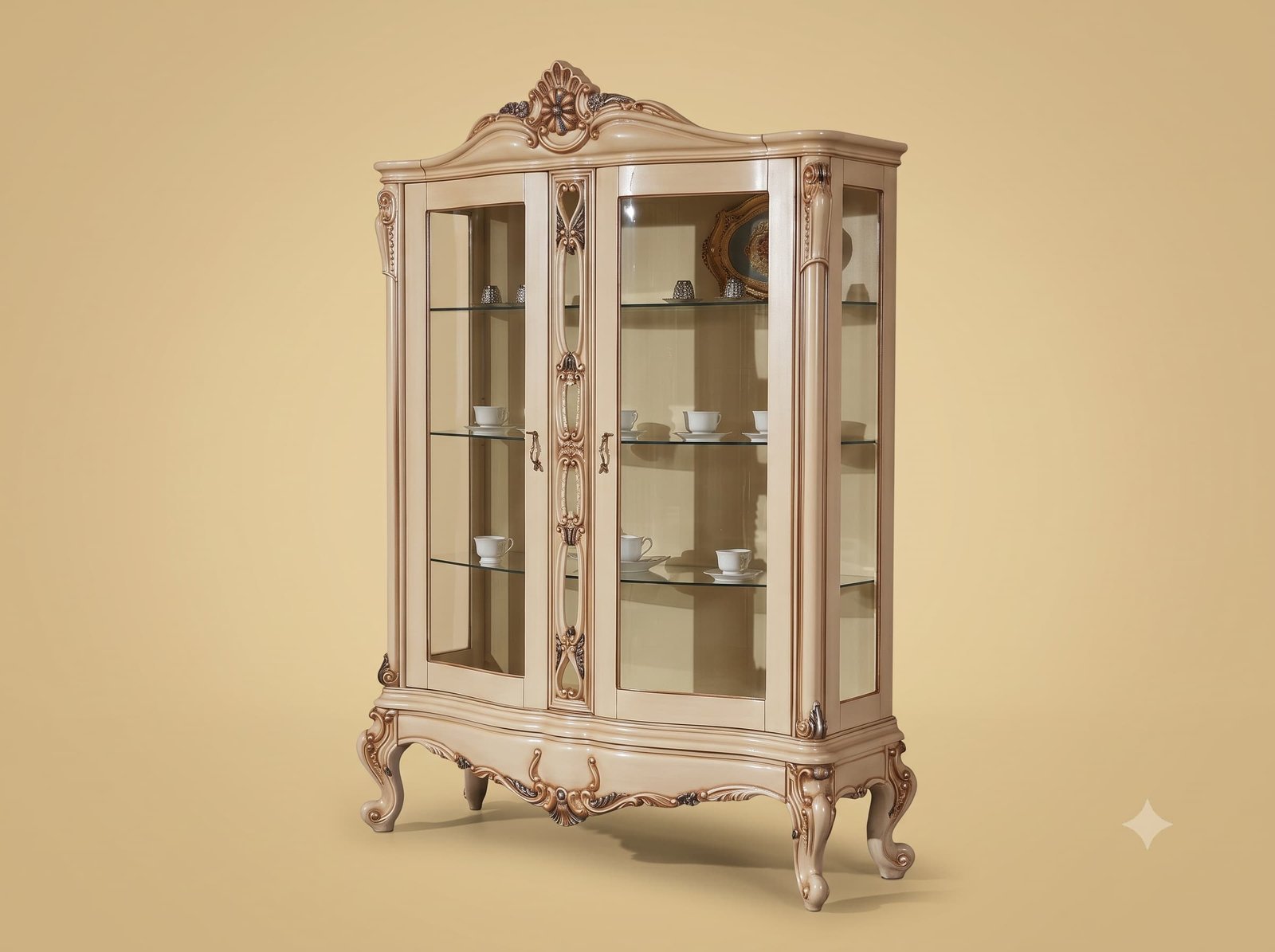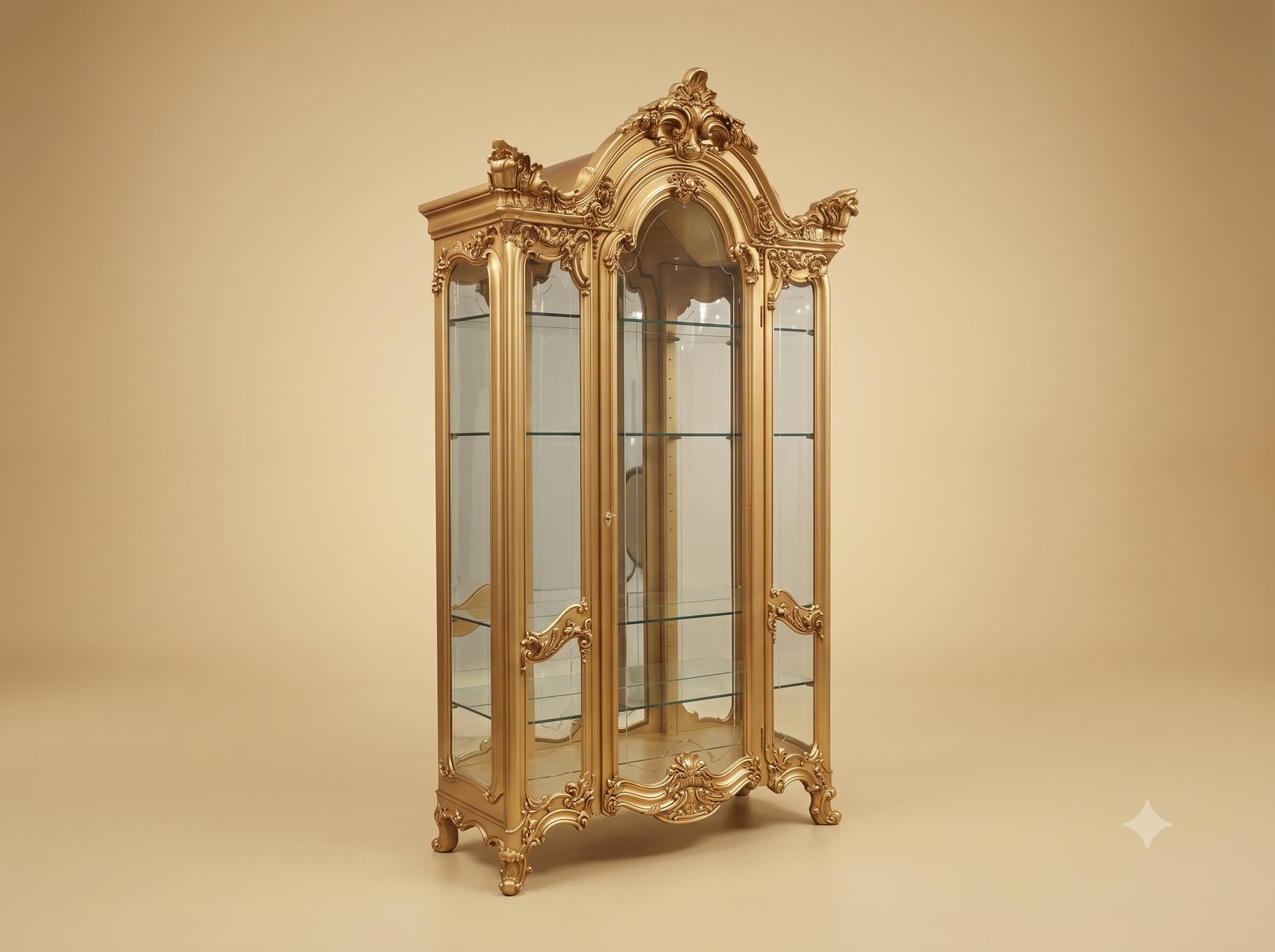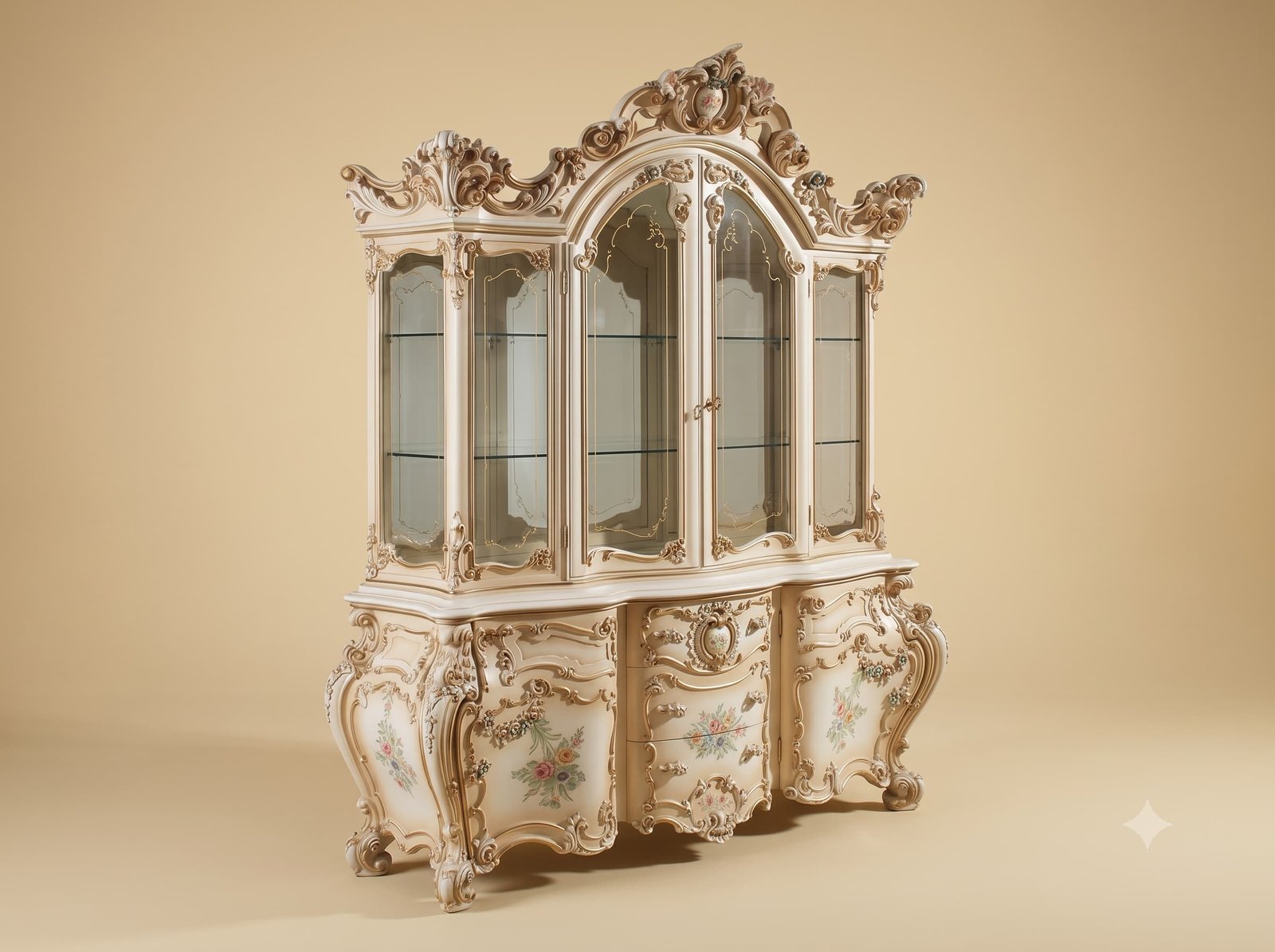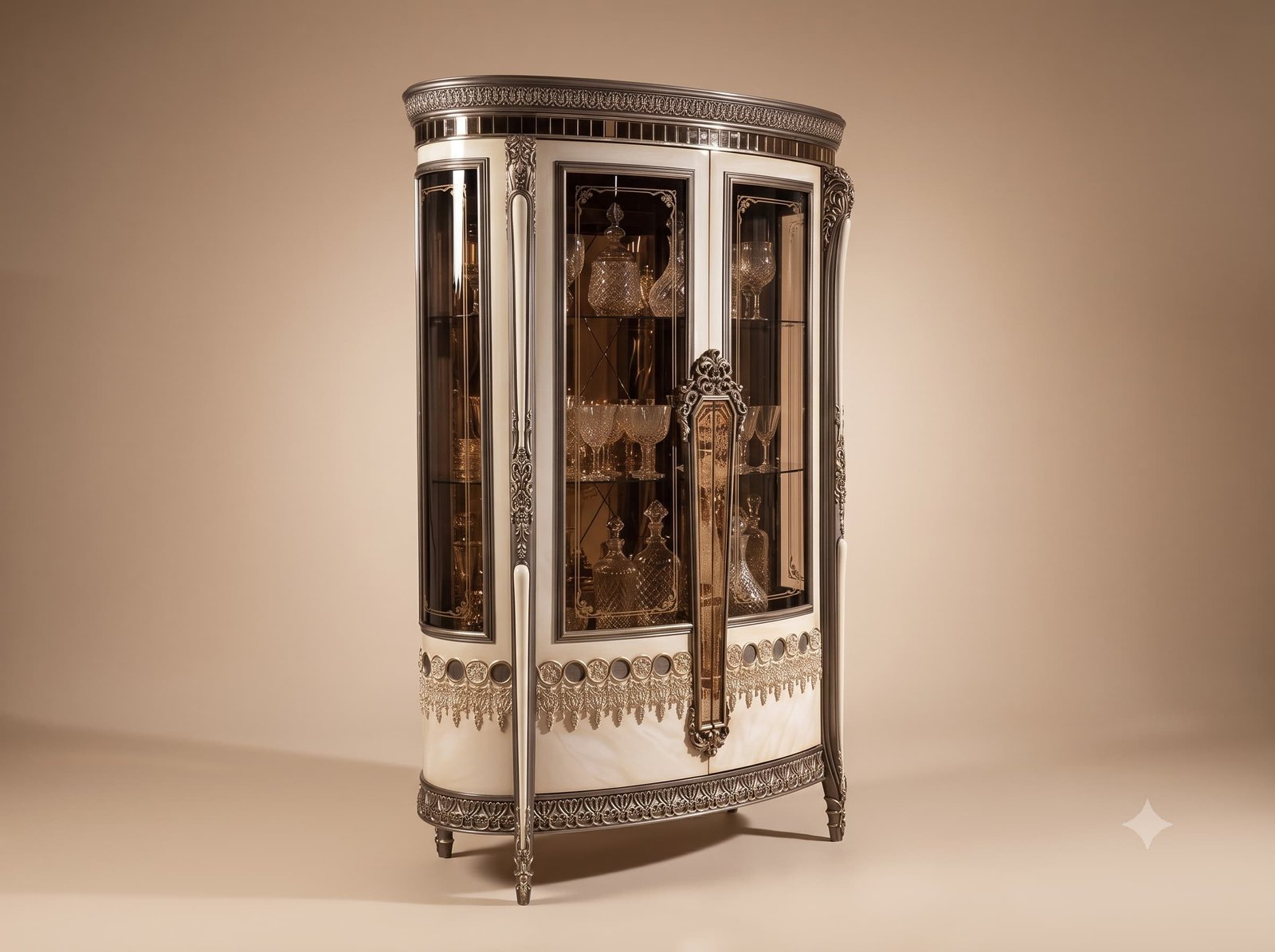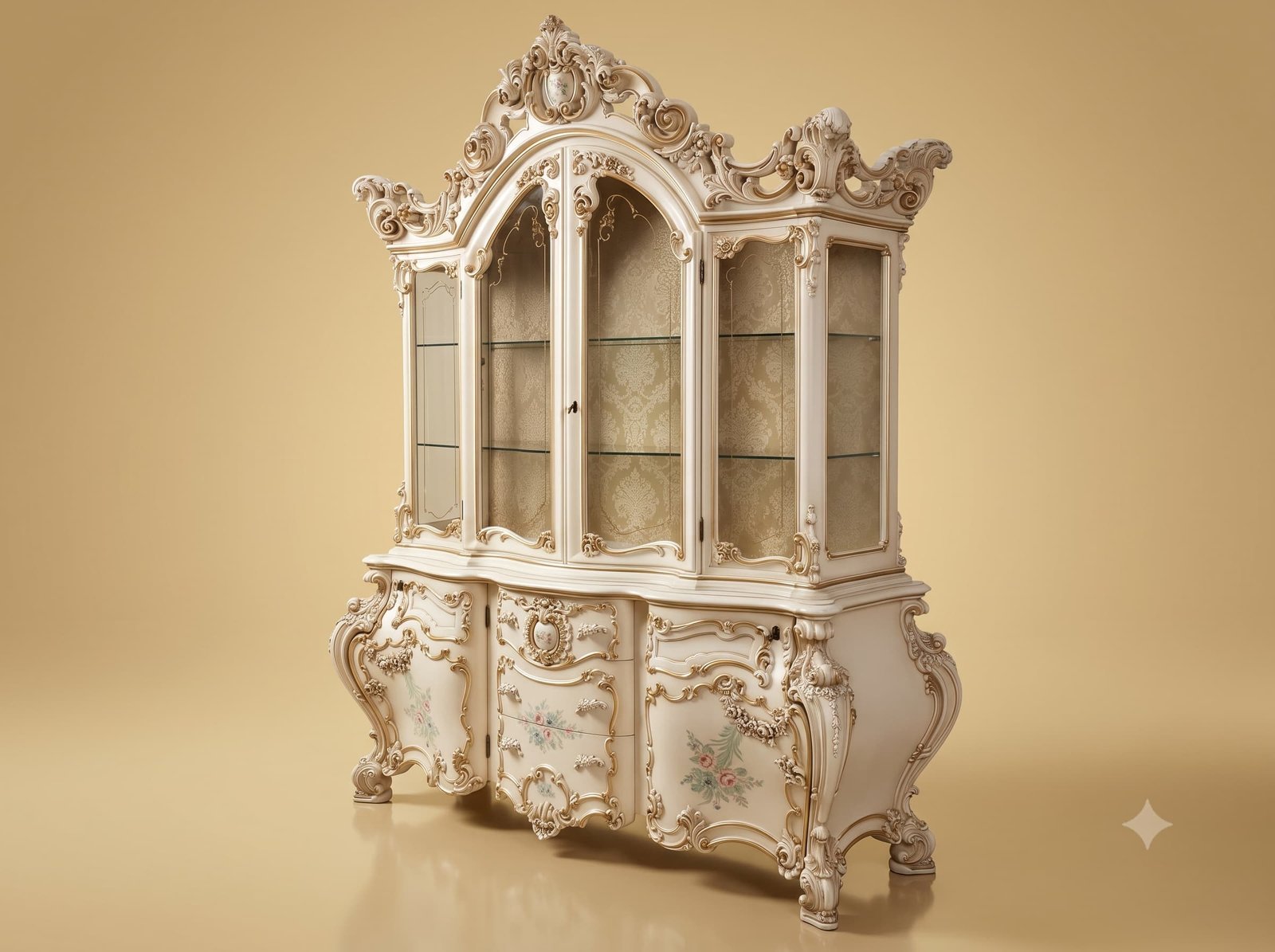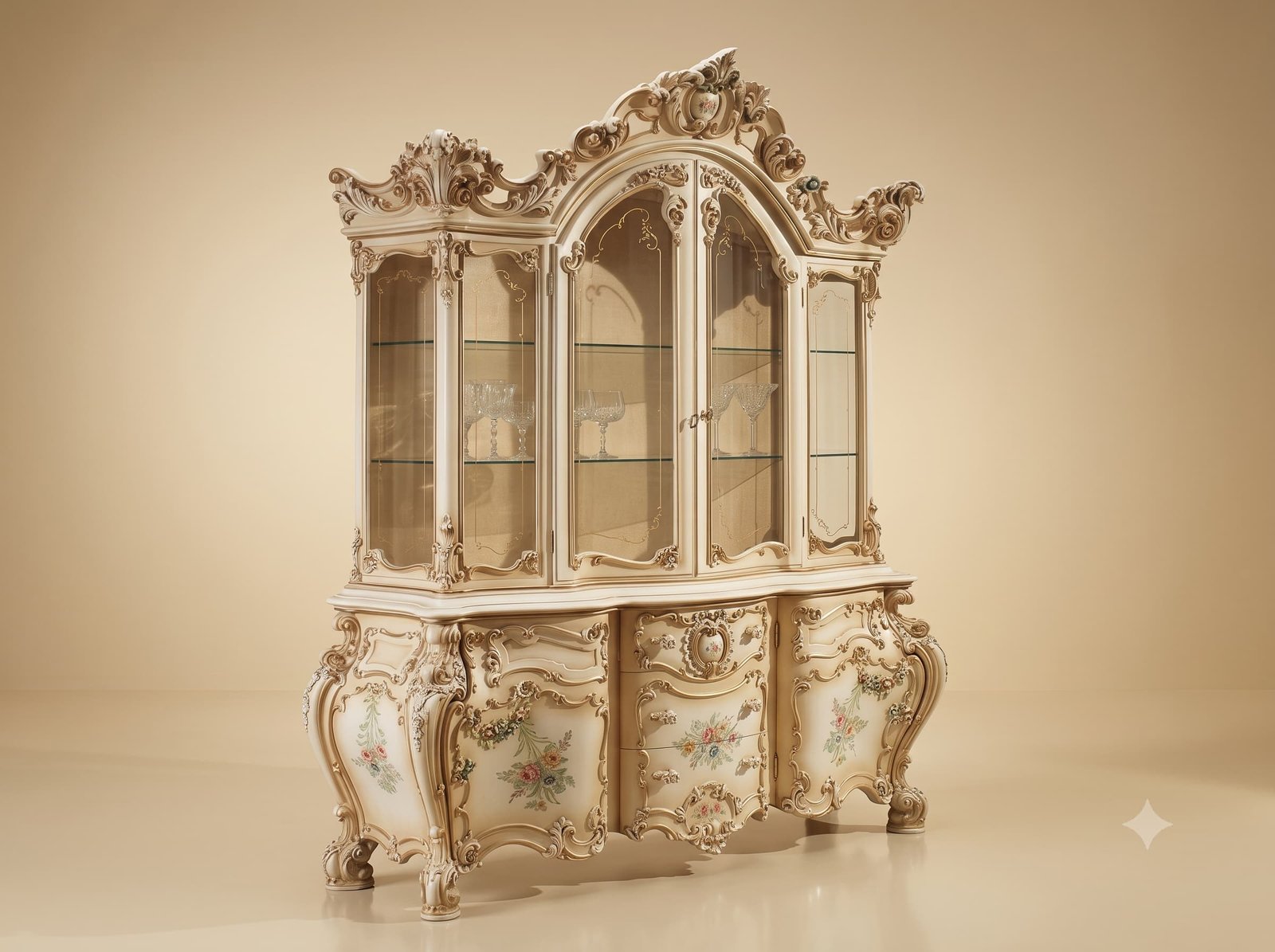
Standing a two-part cabinet on legs changes what the base has to be.
When a cabinet sits on a plinth, the whole carcass bears on the floor along its full perimeter, and the load spreads out through the bottom of the box. Nothing is concentrated. Lift the same cabinet onto four legs and every bit of it - the base, the glazed hutch above, the glass, the shelves and everything displayed on them - now arrives at four points.
The mistake is to joint the legs into the corners of the base carcass. A carcass corner is a meeting of two thin panels; it is a good place to make a box and a poor place to carry a point load, and over years the legs work loose or the corners split.
So our master Indian artisans build the base as a proper framed structure first - four rails jointed into four leg posts, a rigid box in its own right - and then build the carcass down onto that frame. The legs are not attached to the cabinet; the cabinet sits on the legs' own frame.
Look underneath and you can see it: a complete frame with the carcass resting inside it. It is why a cabinet on legs can carry a glazed hutch and still be moved in twenty years without anything shifting.
 Ask Price On WhatsApp