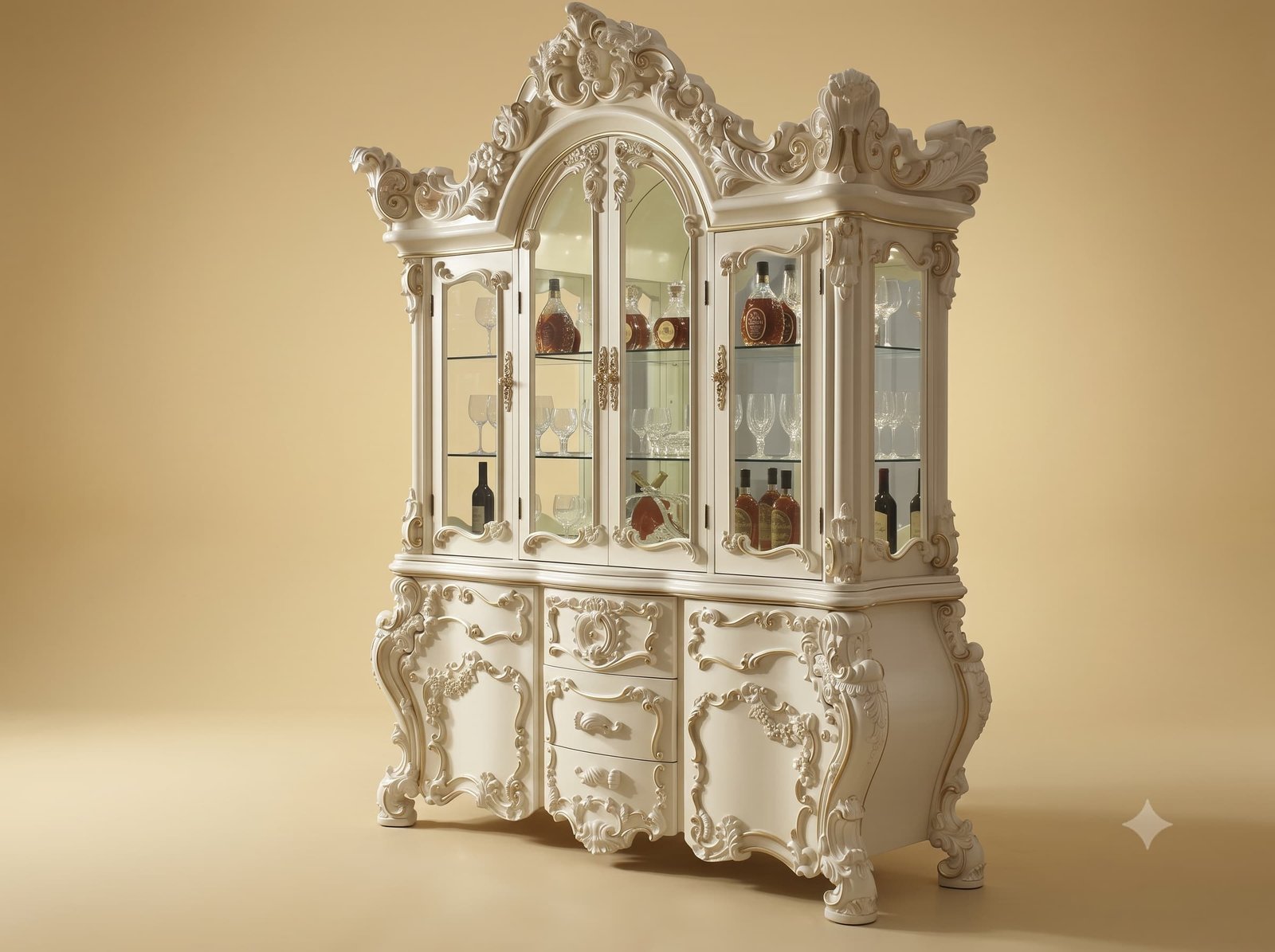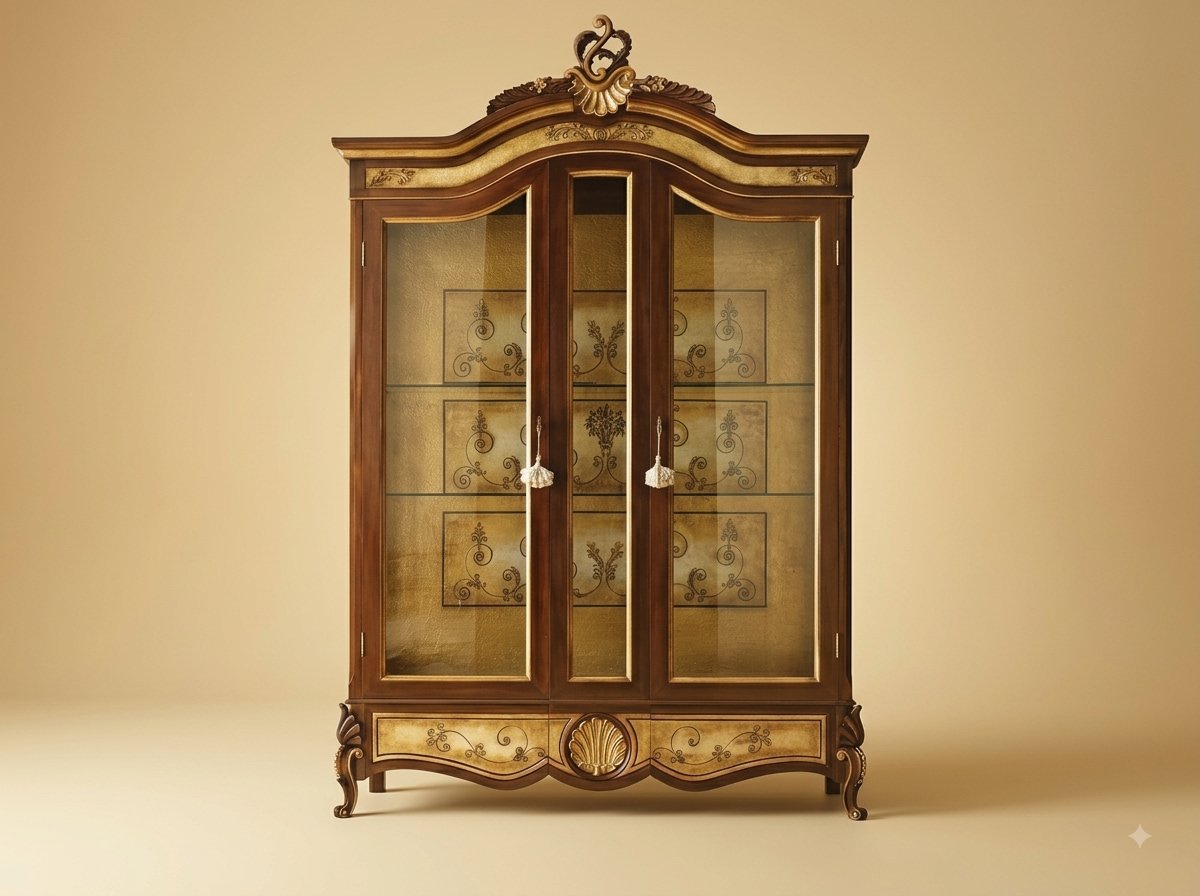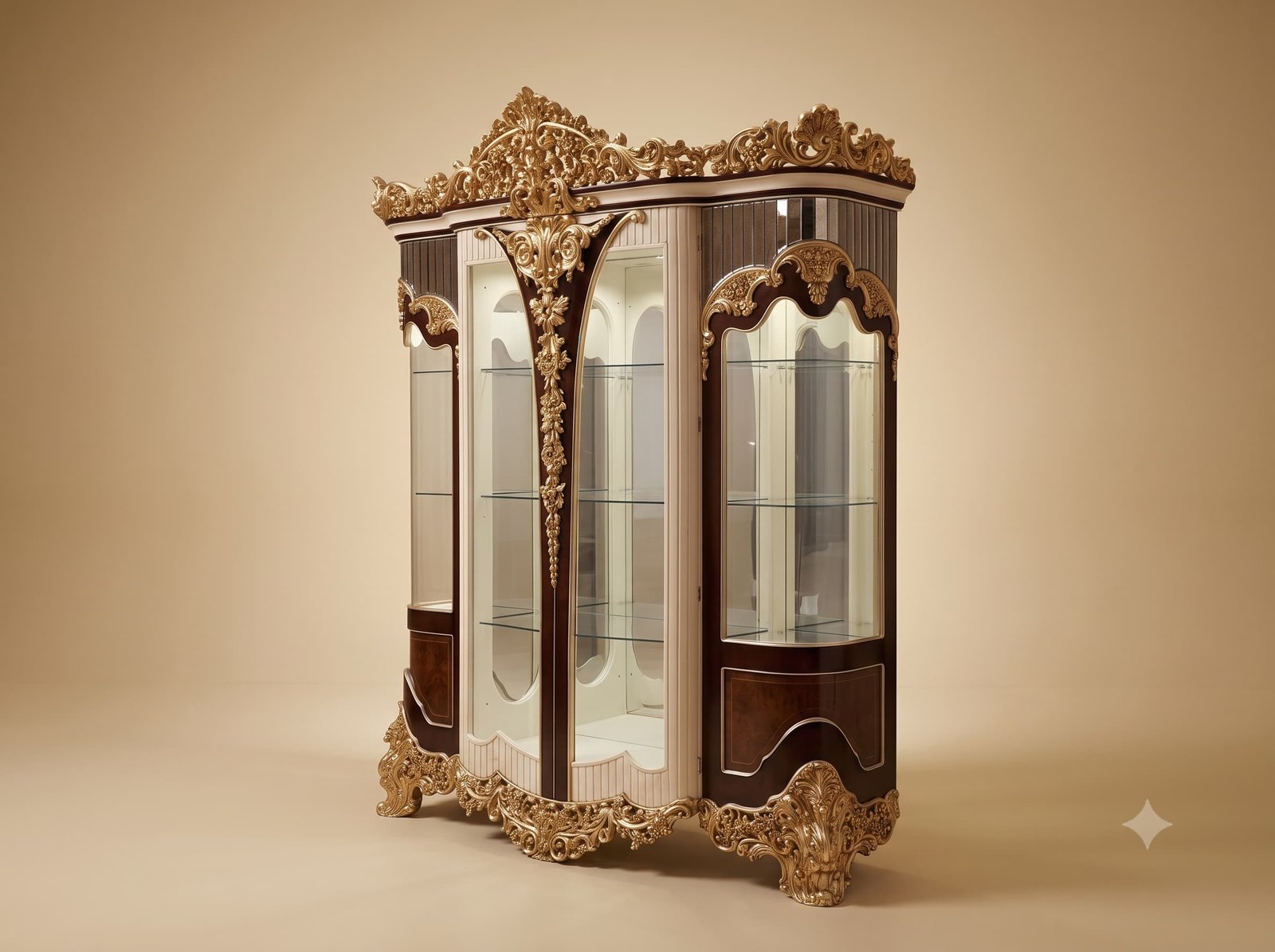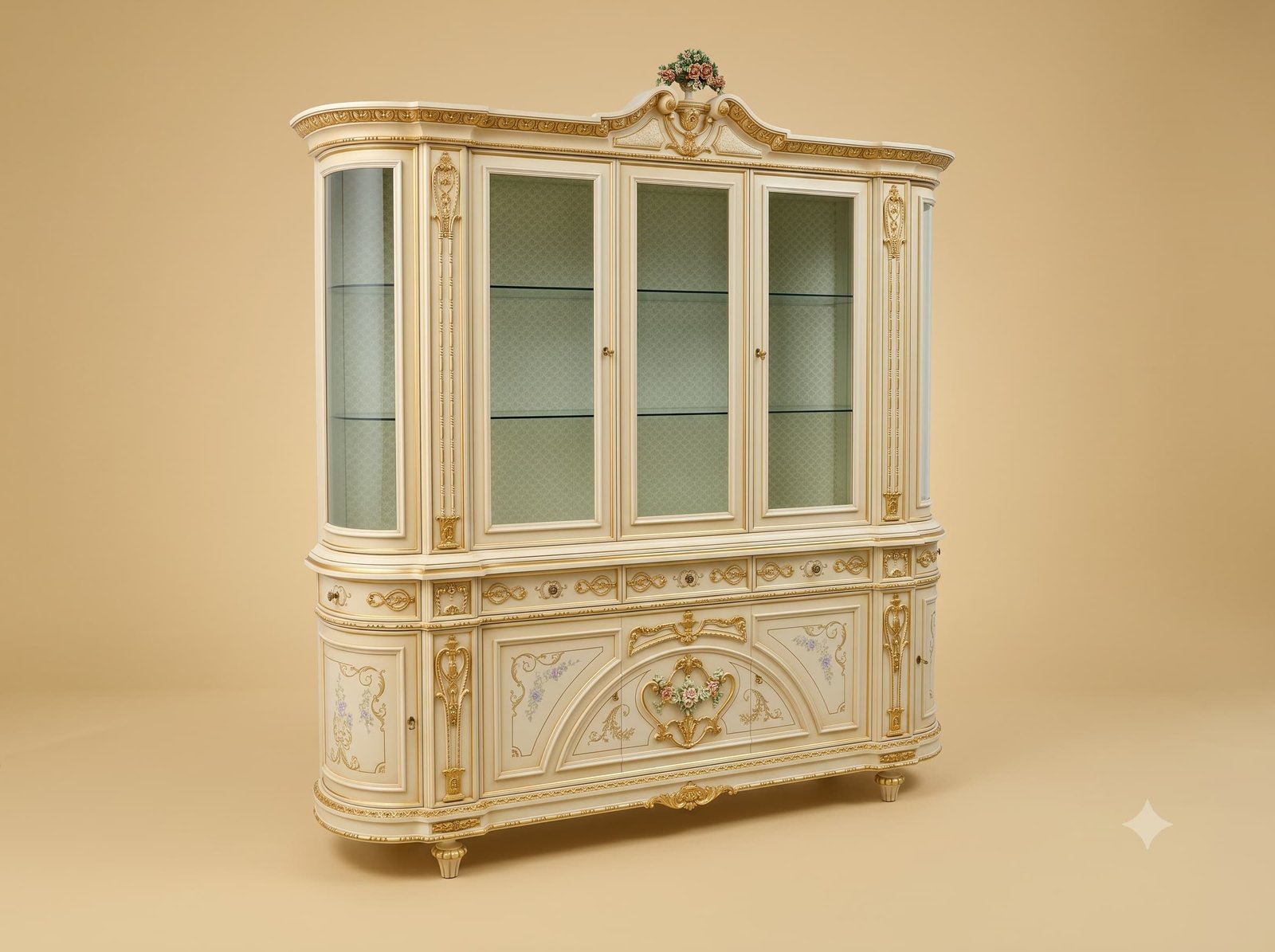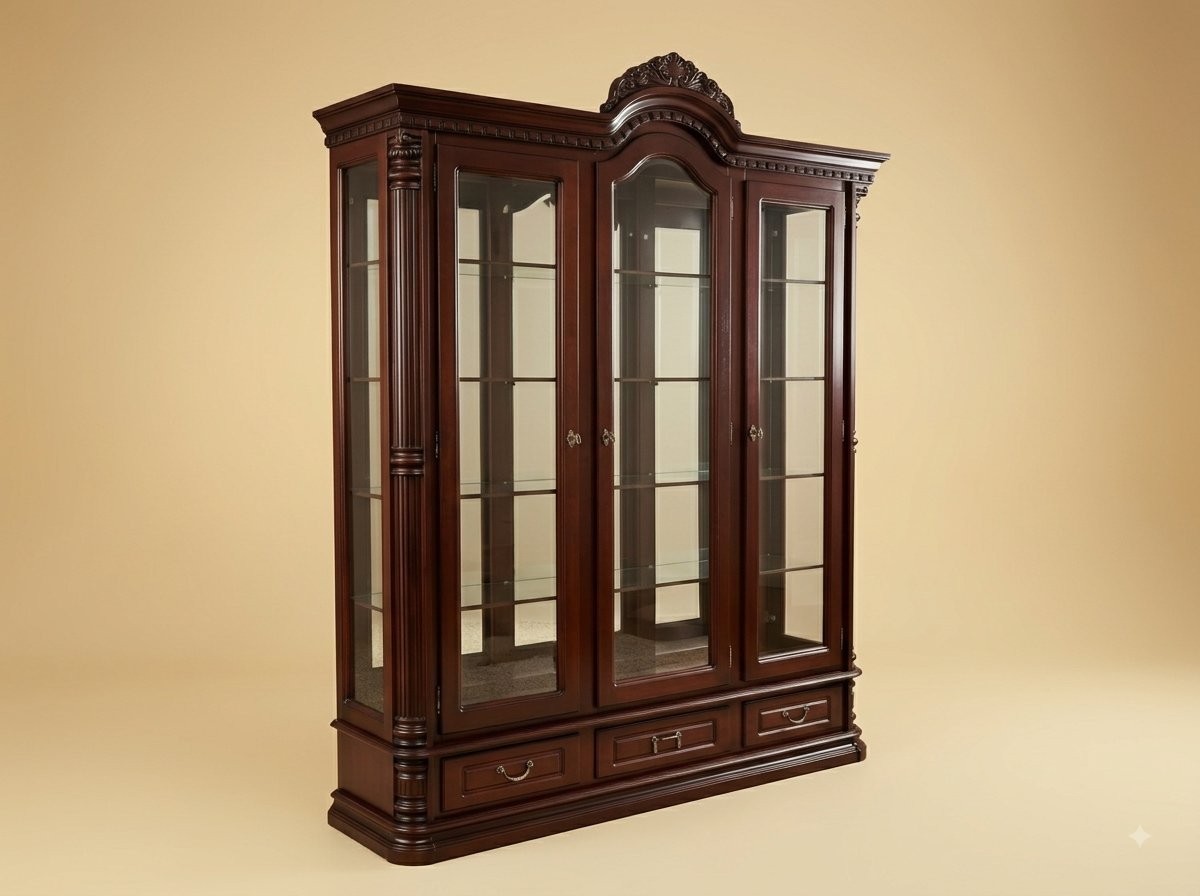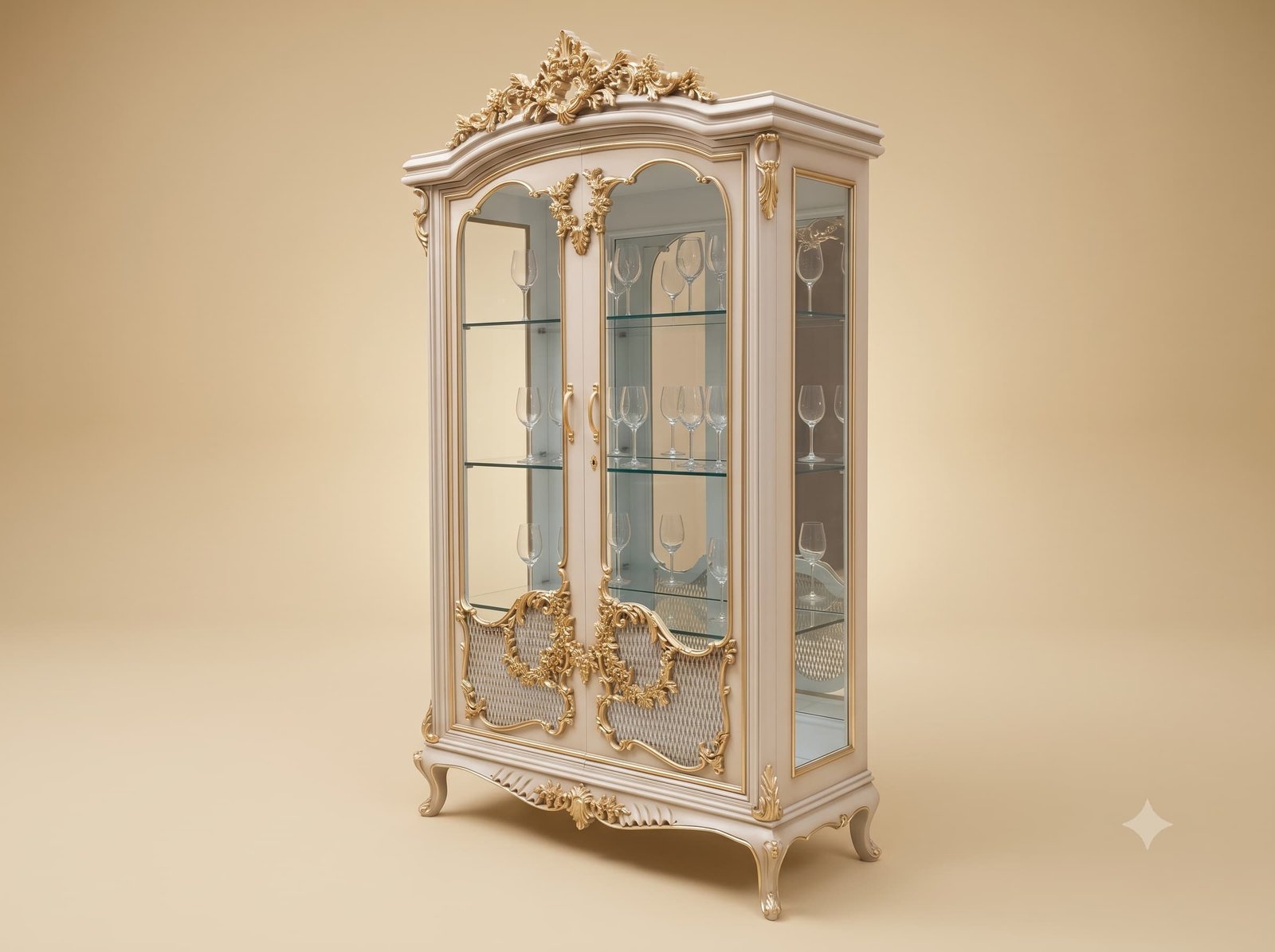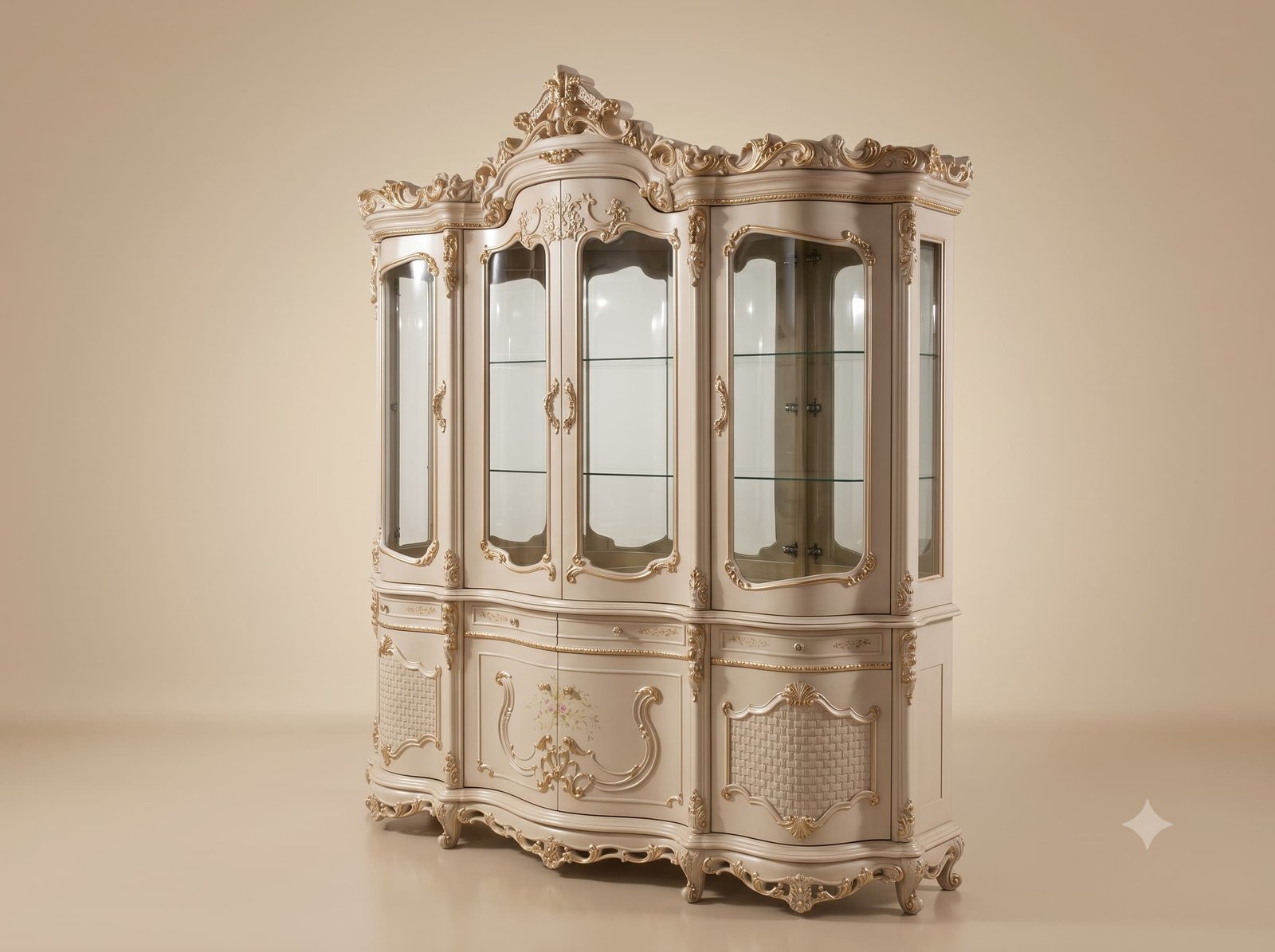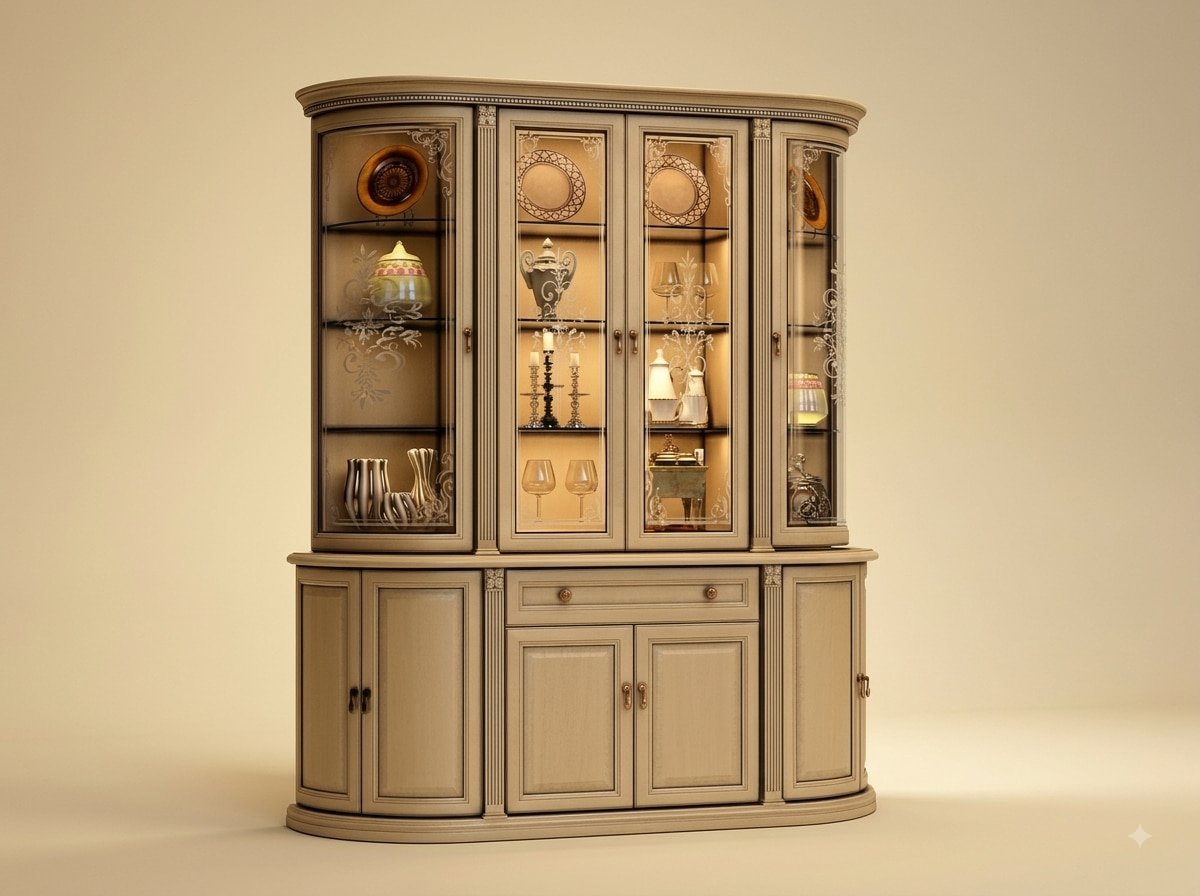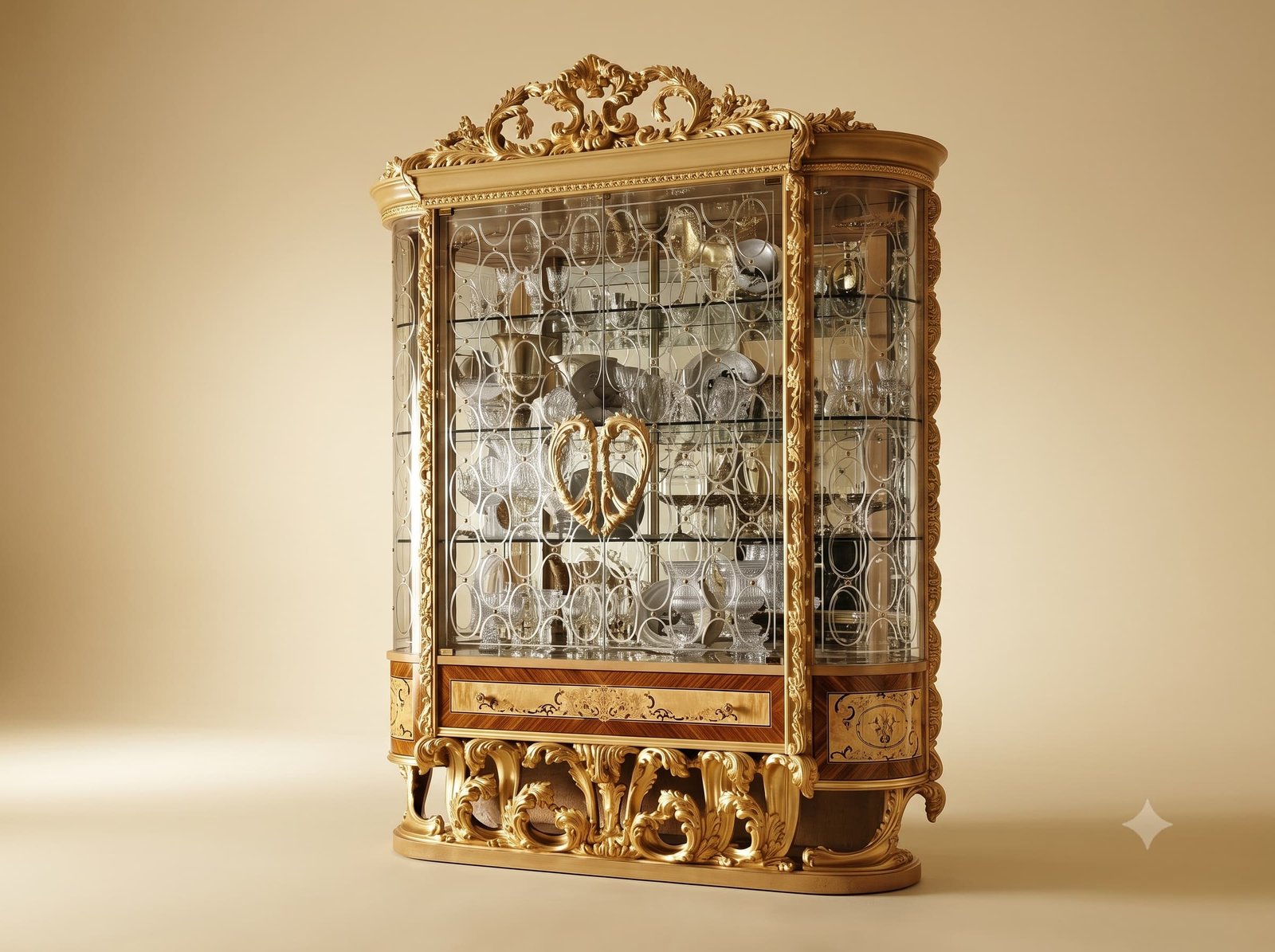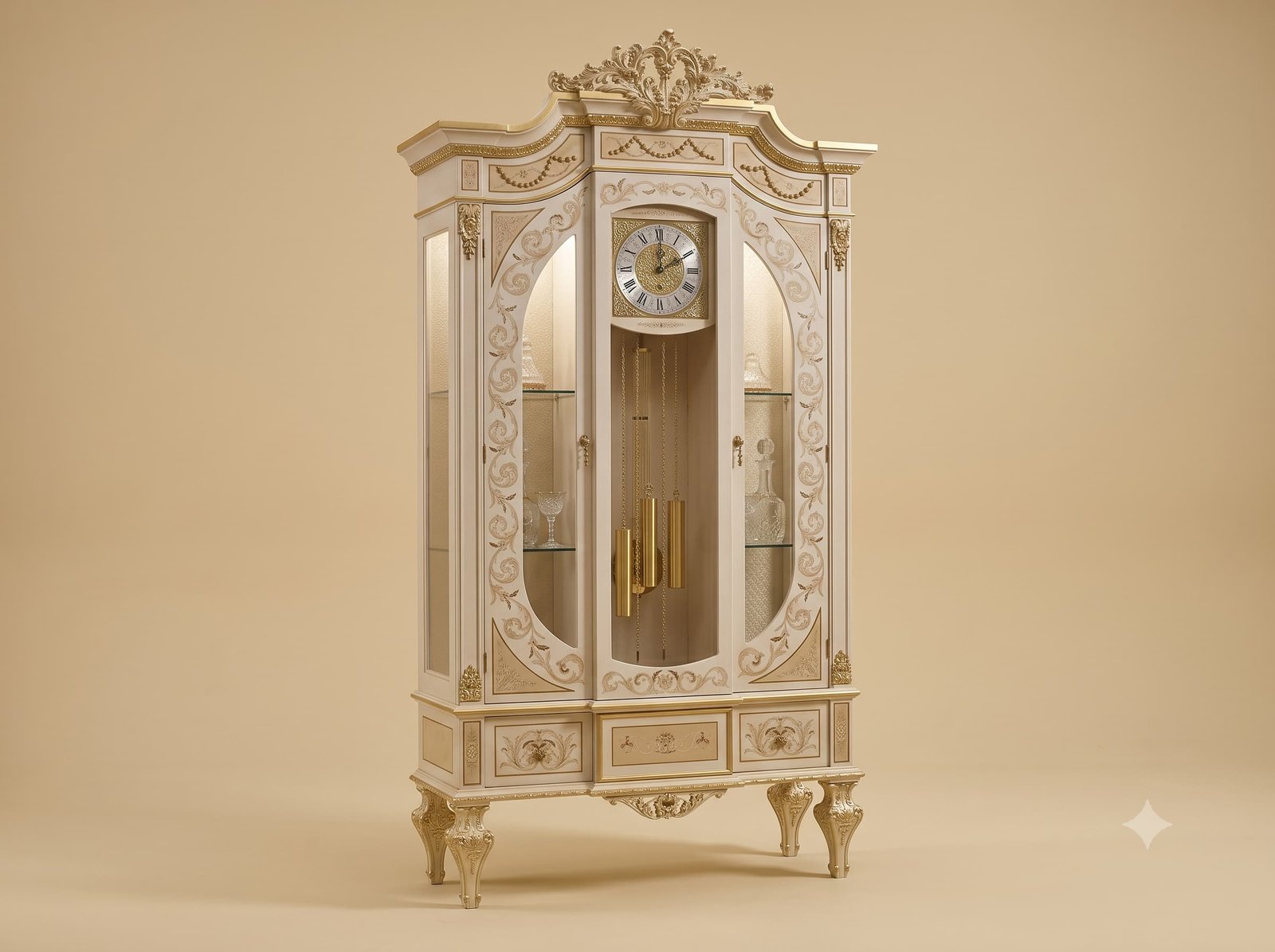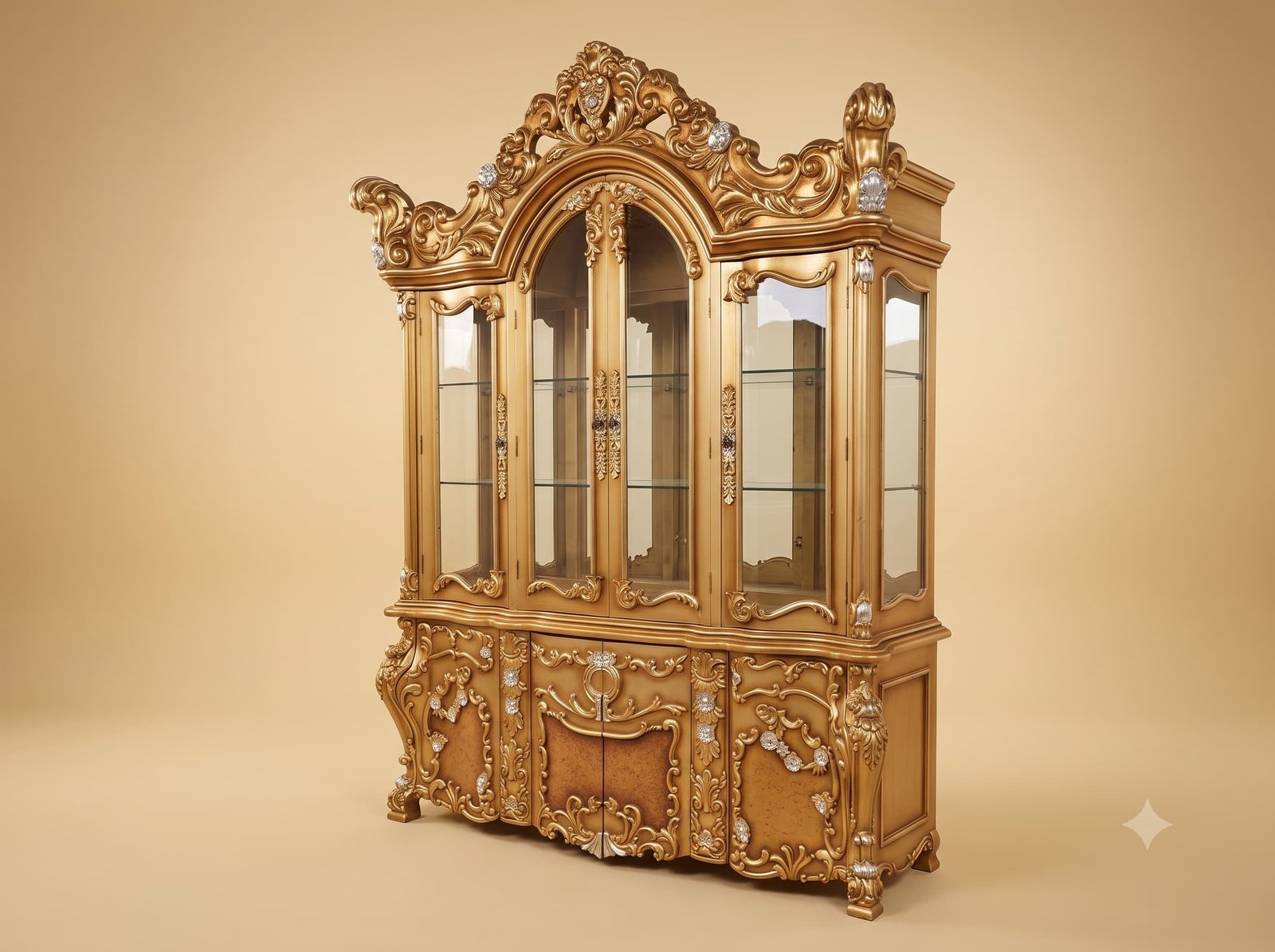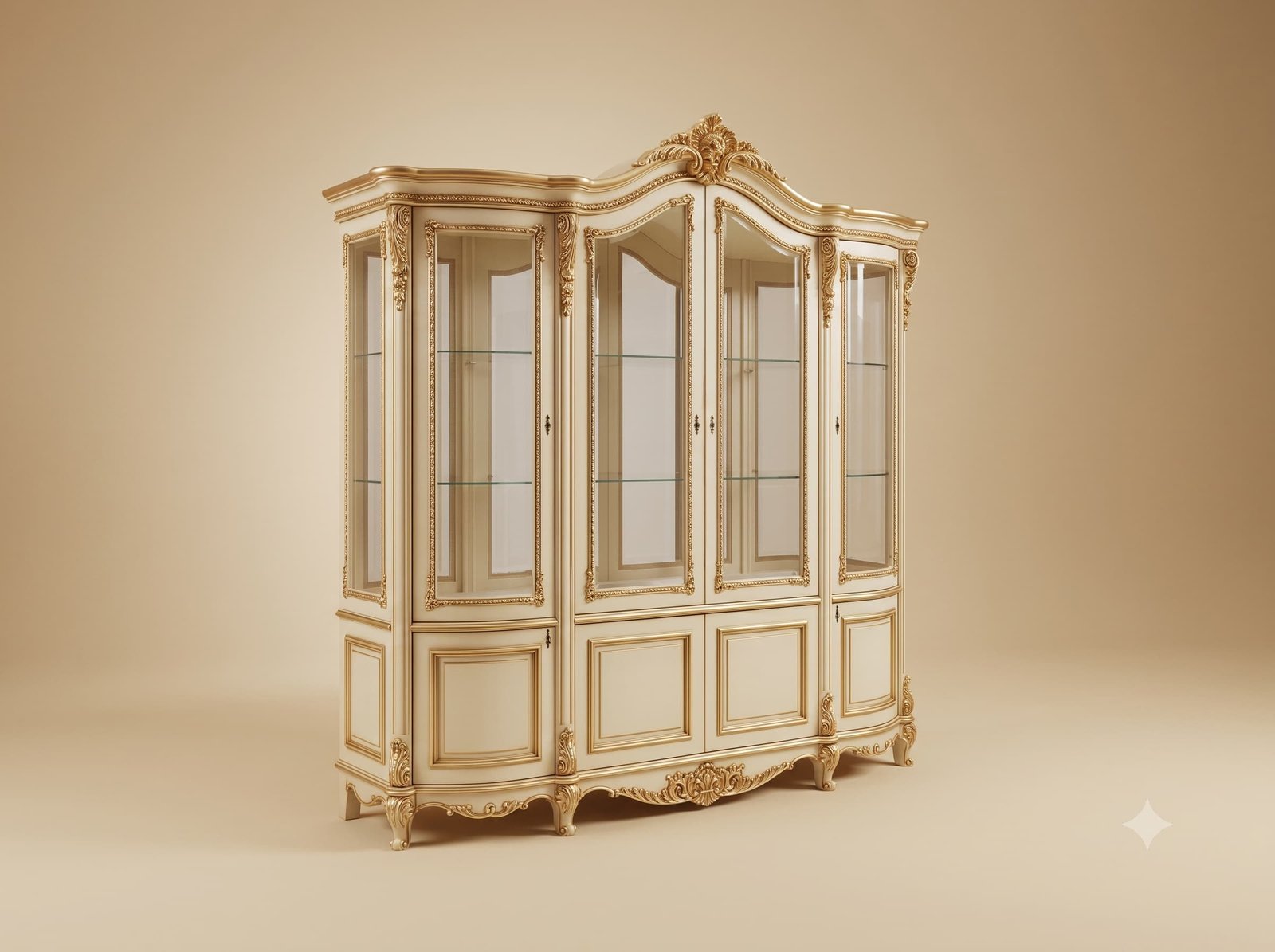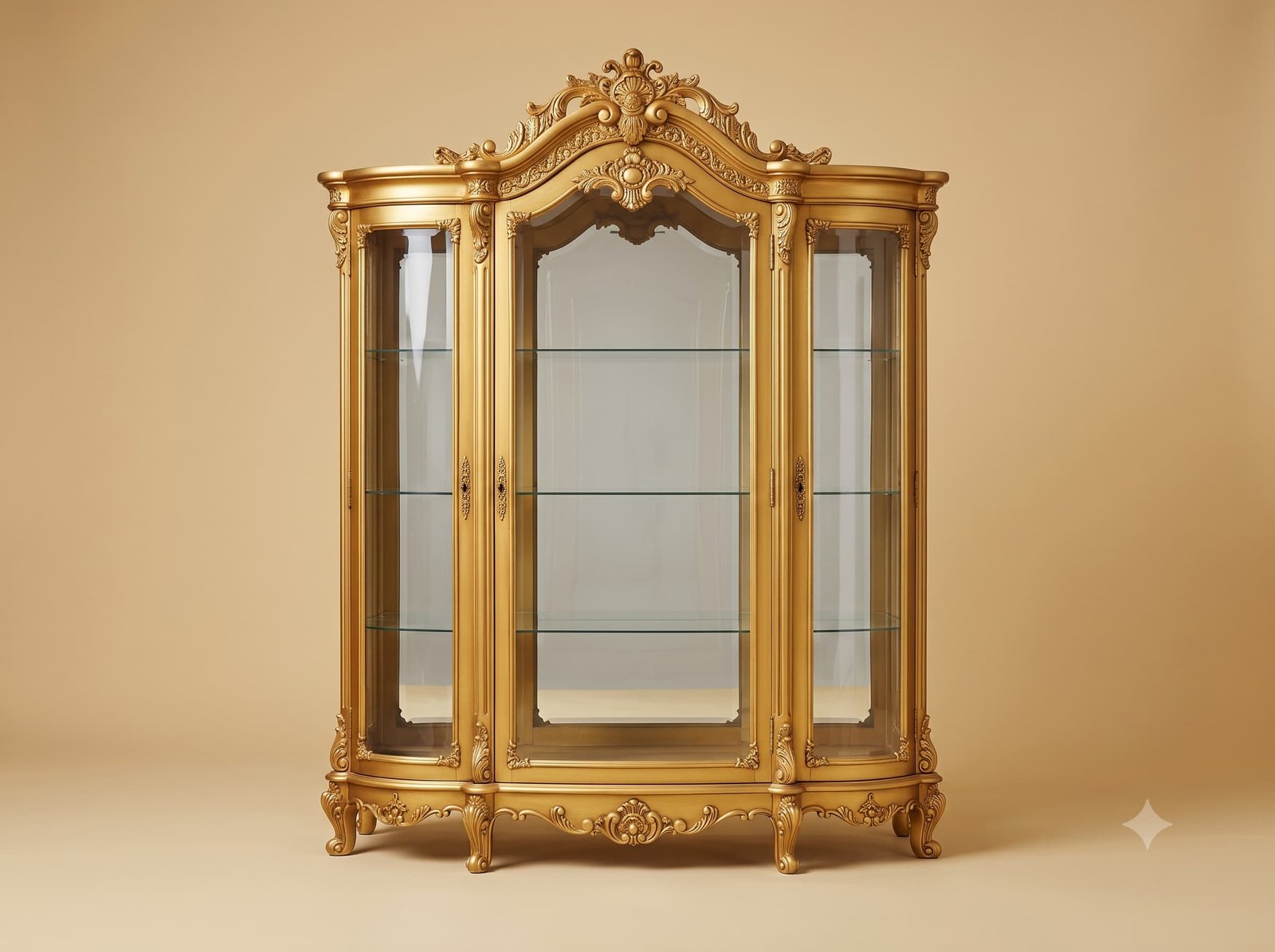
Glass never sits on its edge. That is the rule, and a cabinet glazed nearly to the floor is where ignoring it shows up.
A large pane looks like it should simply rest in the bottom of its groove along its whole lower edge. It must not. Timber is never perfectly straight, and a groove that is a hair high at one point becomes a single hard bearing point carrying the entire weight of the pane. Glass has no ability to spread that load. It concentrates there, and then one warm afternoon, or one firm door close, and the pane cracks upward from that spot.
So our master Indian artisans set every pane on two small blocks, positioned in from each end at the points where a supported sheet flexes least. The pane's weight is carried on those two blocks and nowhere else; along the rest of its edge it floats clear of the groove with a deliberate gap.
The same gap gives the timber somewhere to go. Wood moves a little through the year even in teak, and a pane packed tight into its groove has nothing to accommodate that movement except itself.
Two blocks and a gap. It costs nothing and it is the difference between glass that lasts a lifetime and glass that cracks for no visible reason.
 Ask Price On WhatsApp