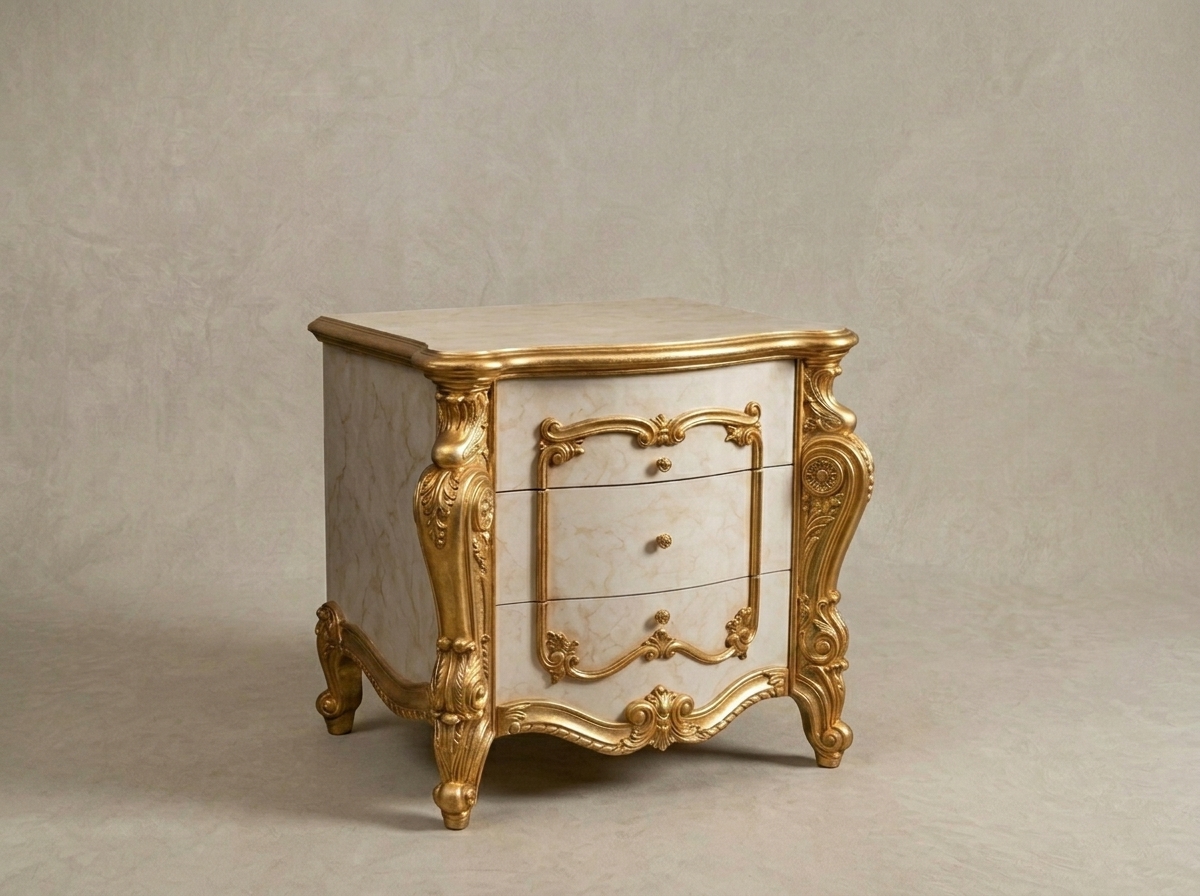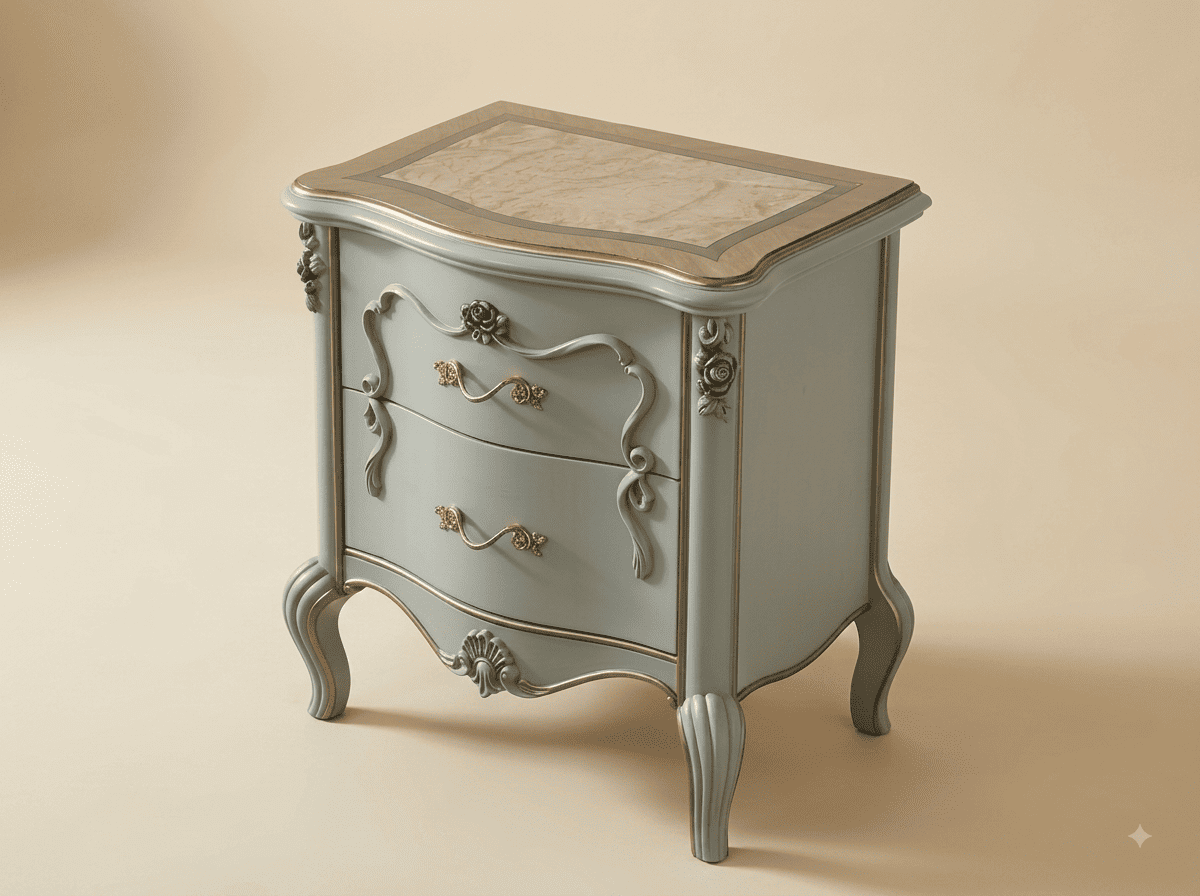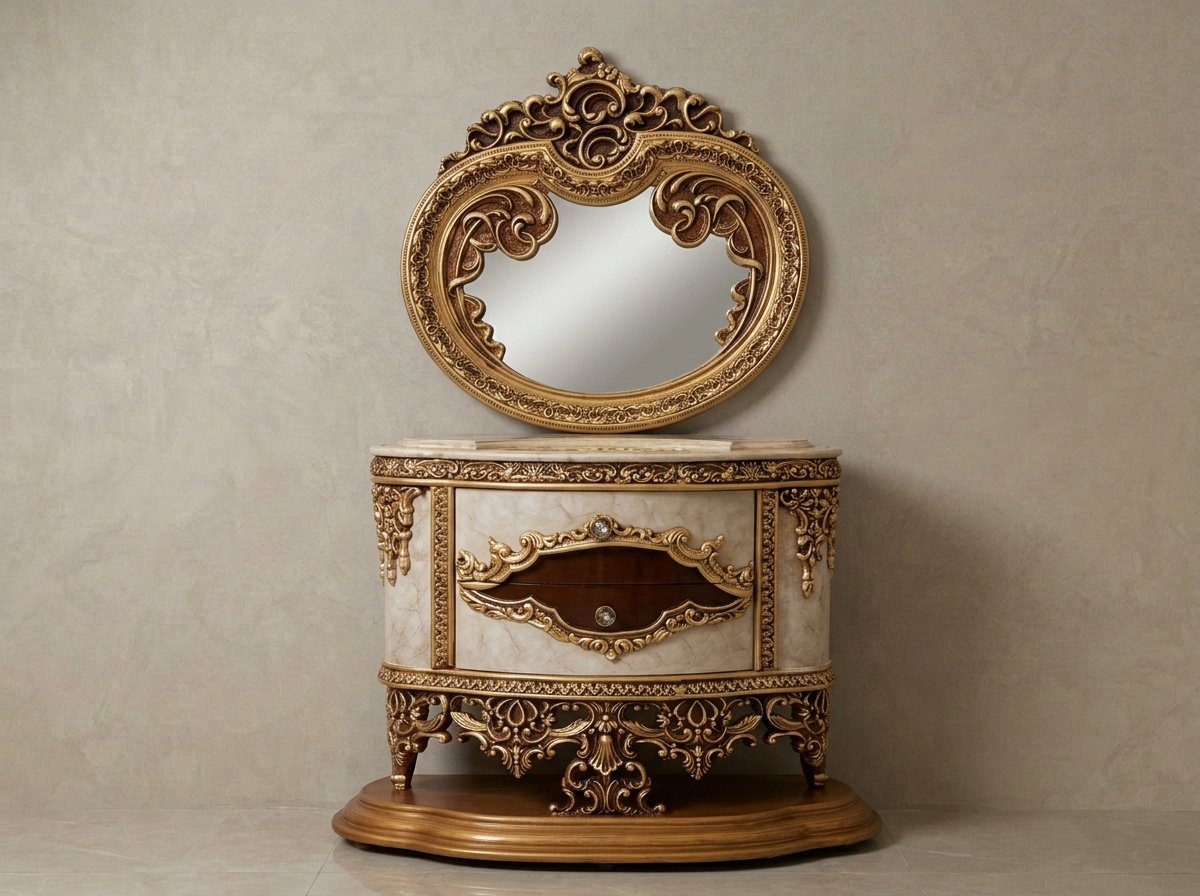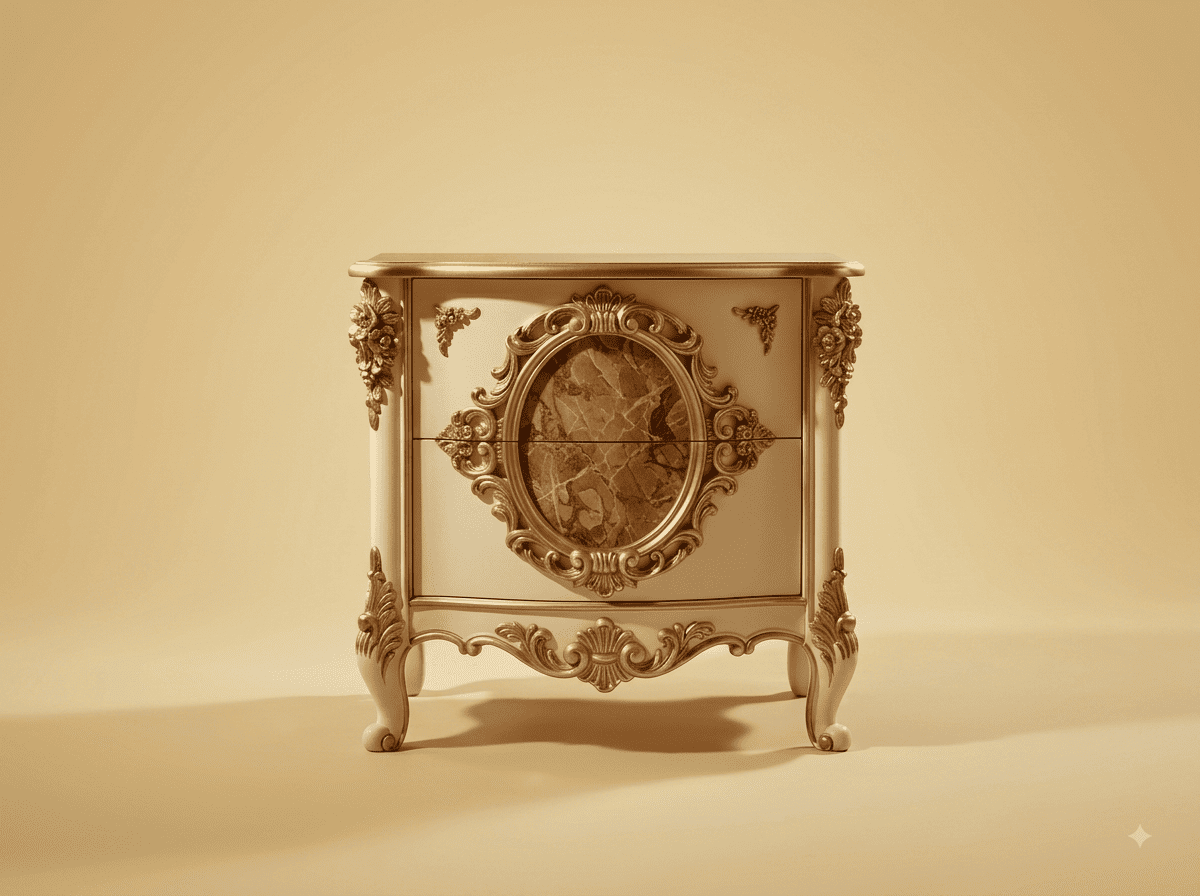
Cutting one stone oval in half and putting the halves on two different drawers sounds like an odd thing to do deliberately. It is the only way the detail works.
A medallion that sits entirely on one drawer front leaves the other front blank, and the two drawers then look like different objects. Spanning them ties the front together - but only if the join is right, and the join is where nearly everyone gets it wrong.
The two halves have to come from the same slab, cut one after the other with the saw kerf accounted for, and kept in order. Veining in stone does not repeat; take the second half from elsewhere in the slab and the pattern steps at the drawer line, which is worse than not attempting it at all.
Then each half is bedded into its own drawer front. Stone and timber move at different rates with humidity, so neither half is glued rigidly across its whole face - each sits in a recess with a bedding compound that allows the wood around it to move without loading the stone.
The carved gilt surround does the last job. It overlaps the edge of the stone on both drawers, so the two arcs of the frame close the oval visually while hiding the small clearance that lets the two materials live together.
 Ask Price On WhatsApp