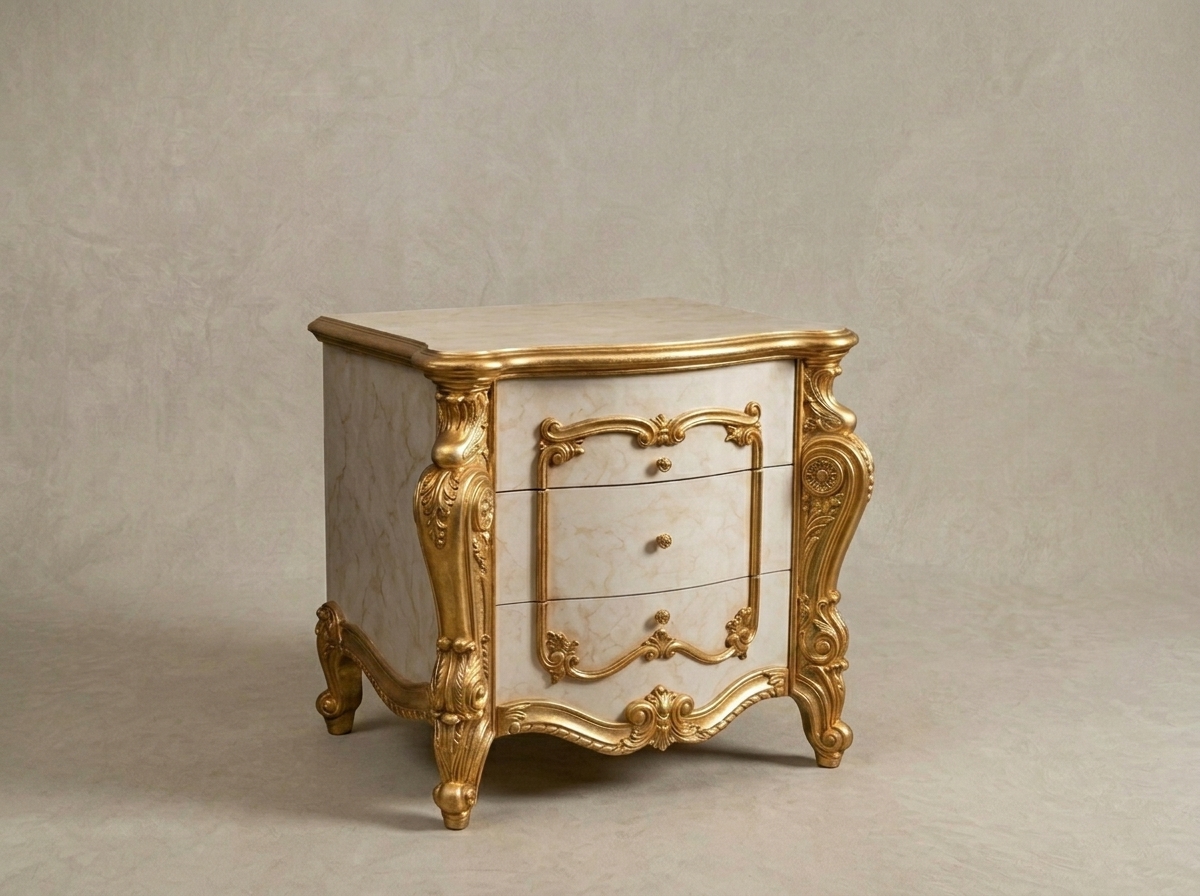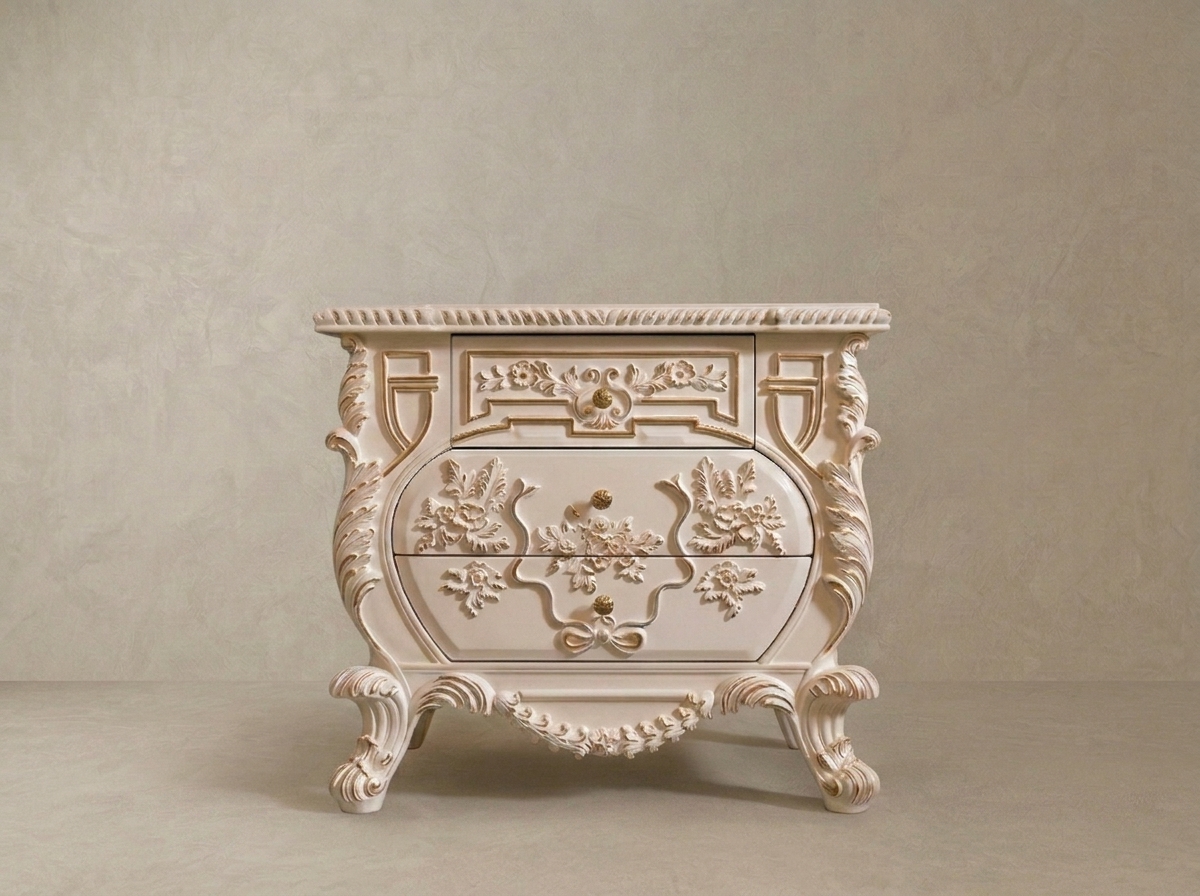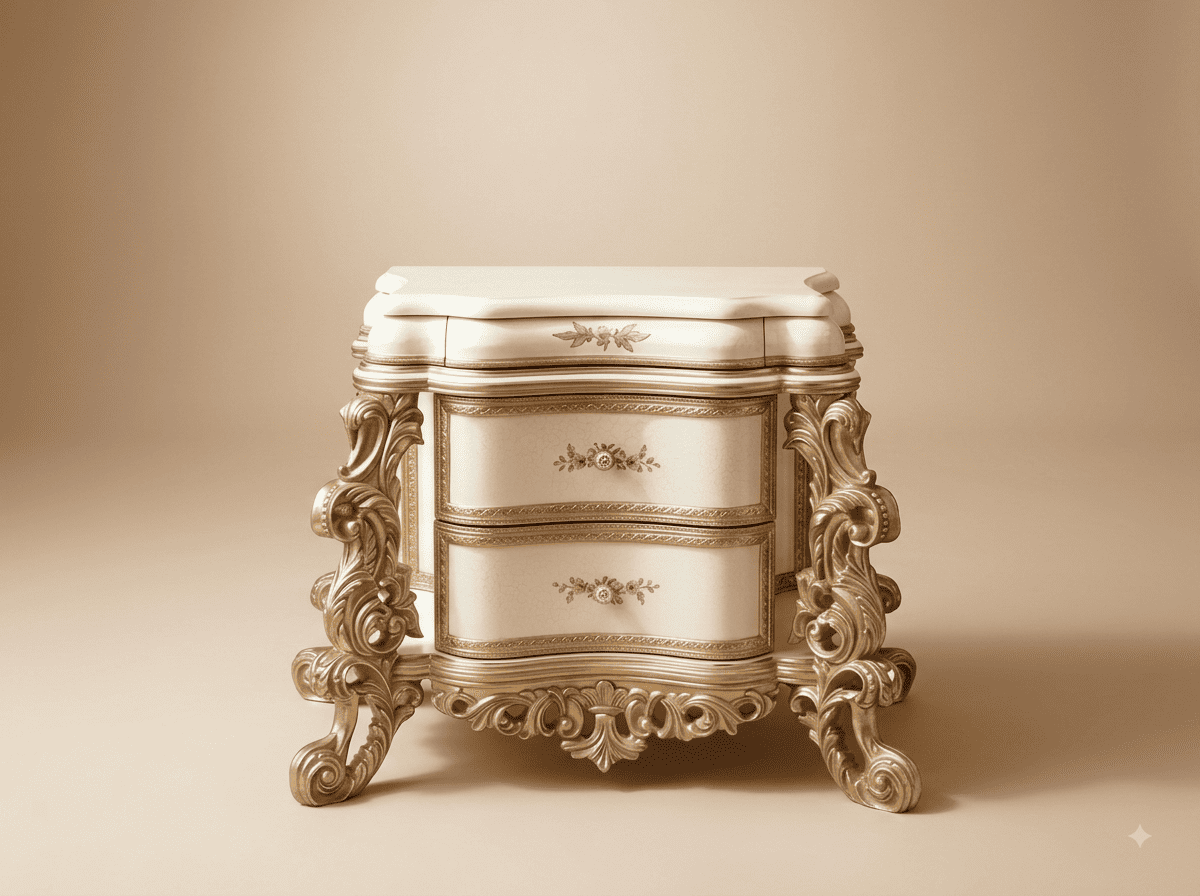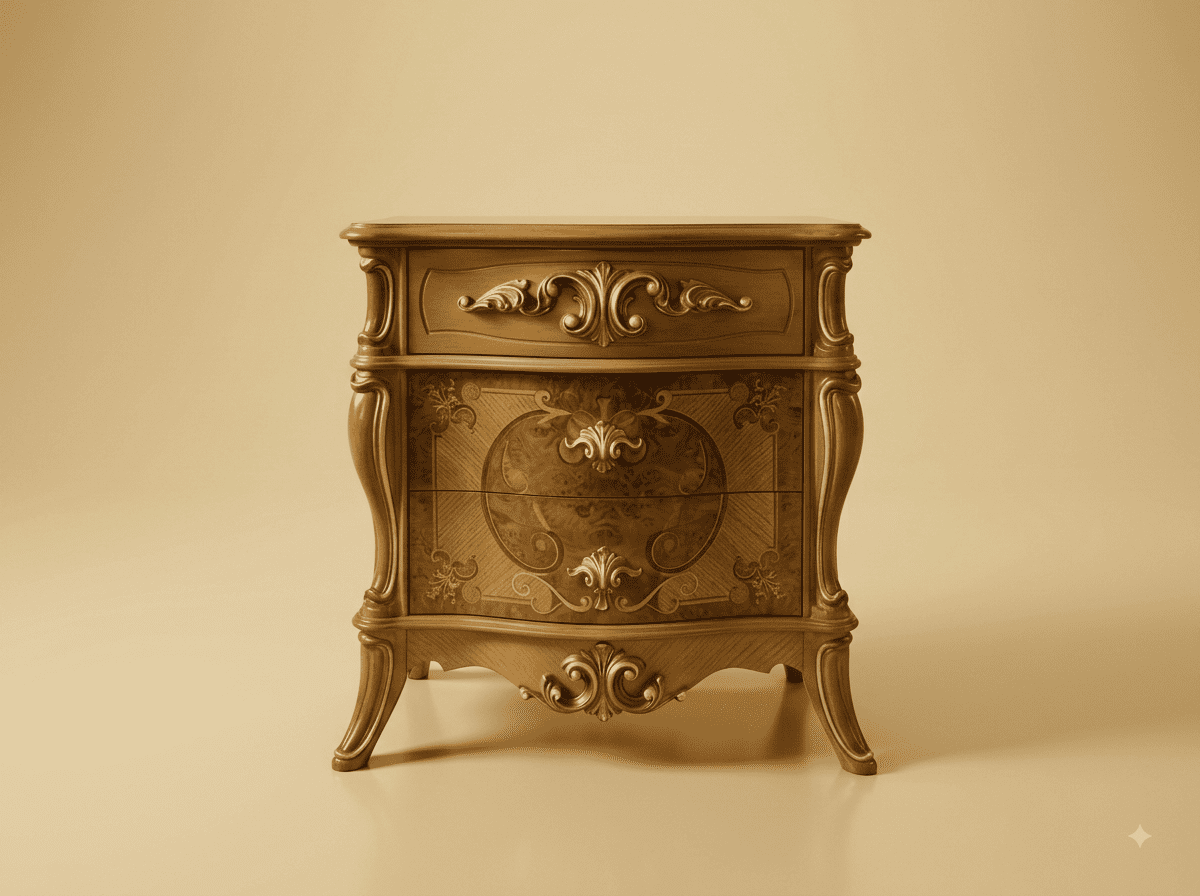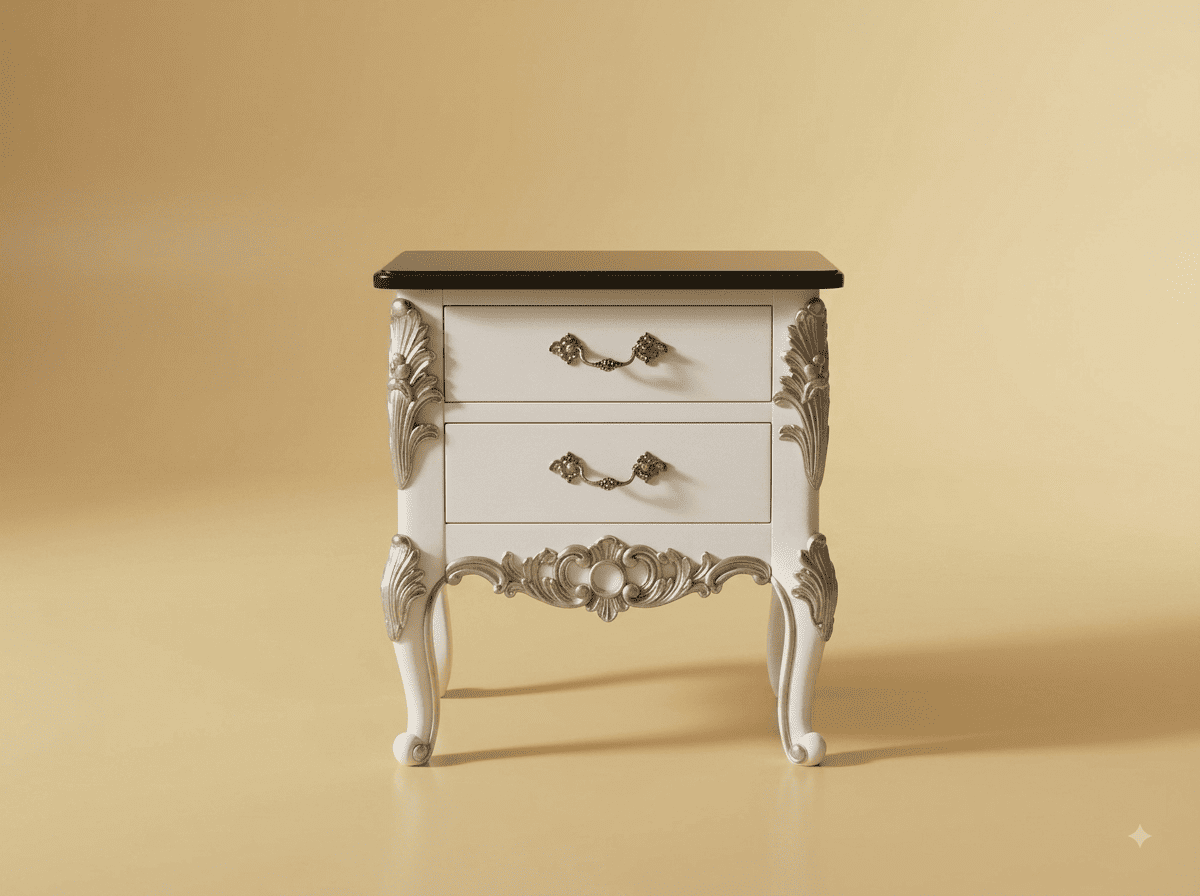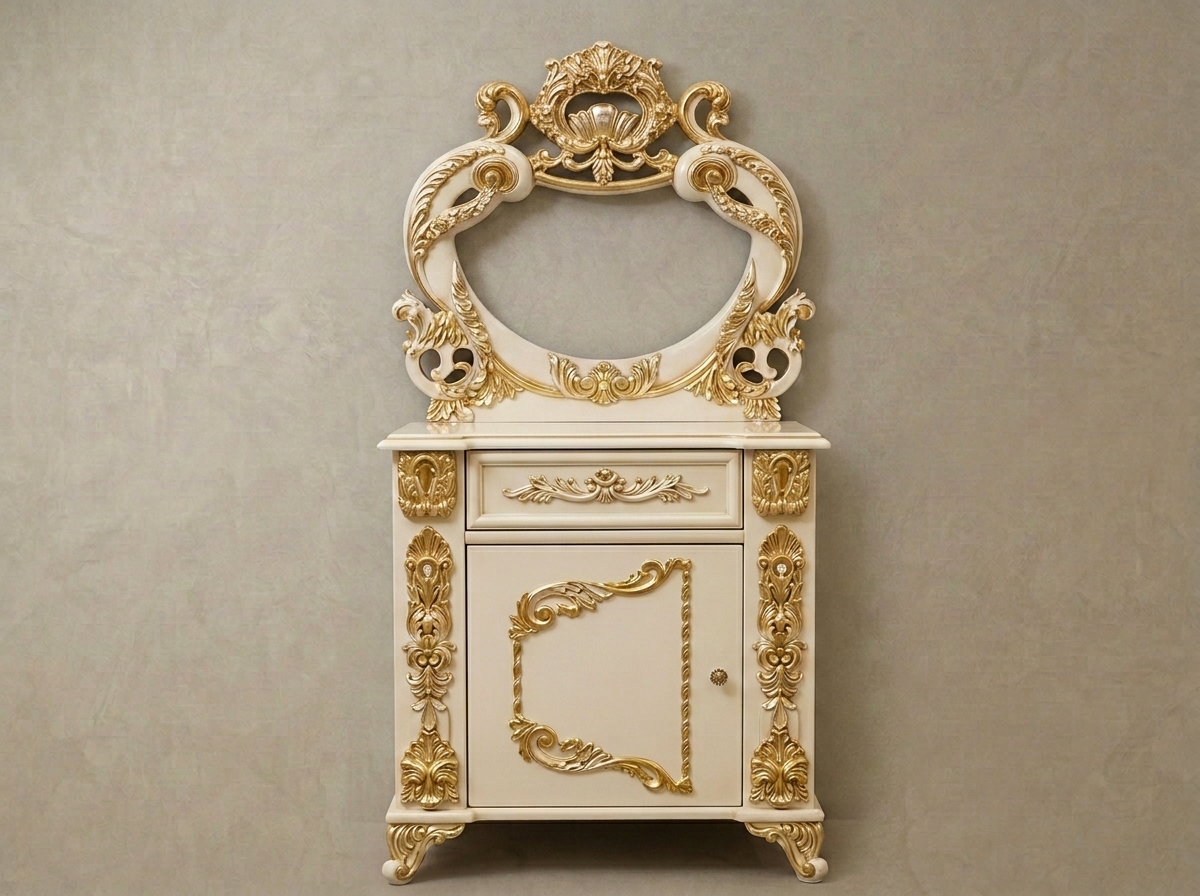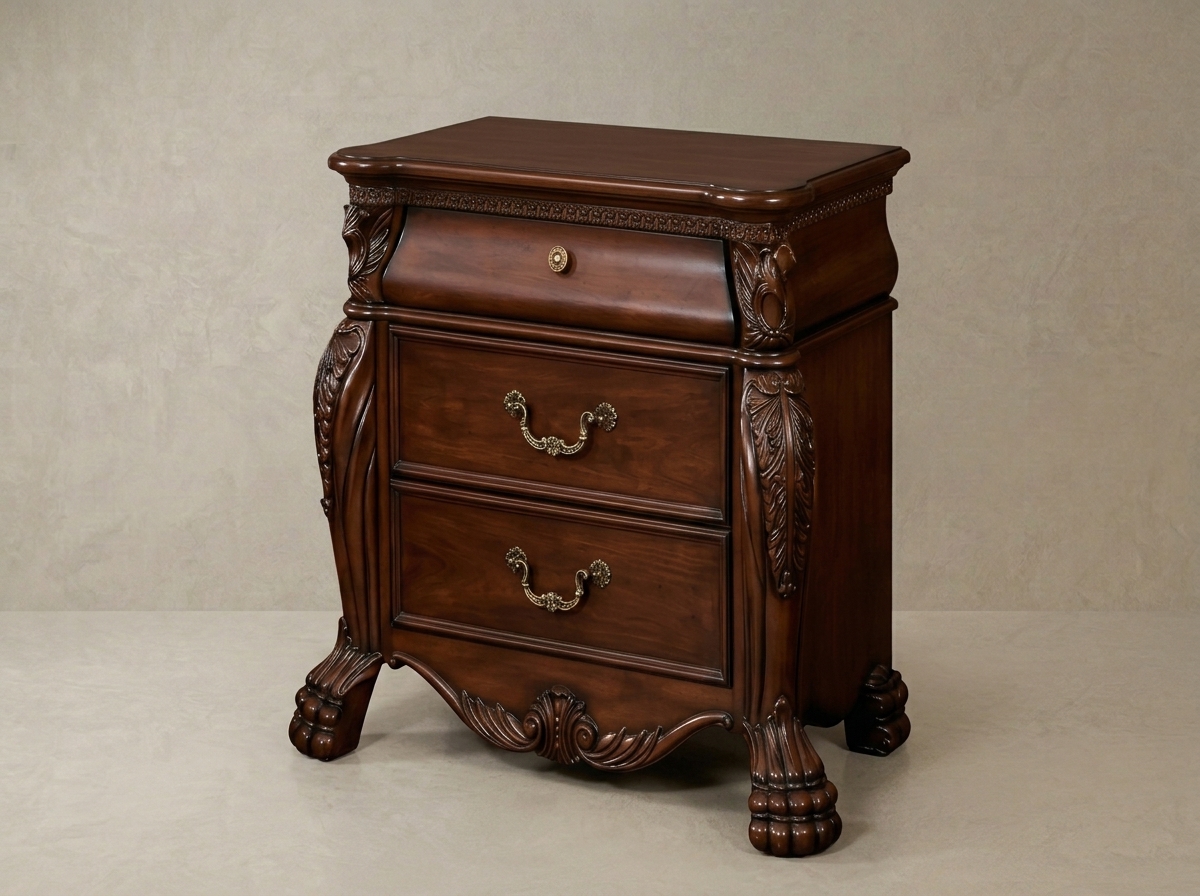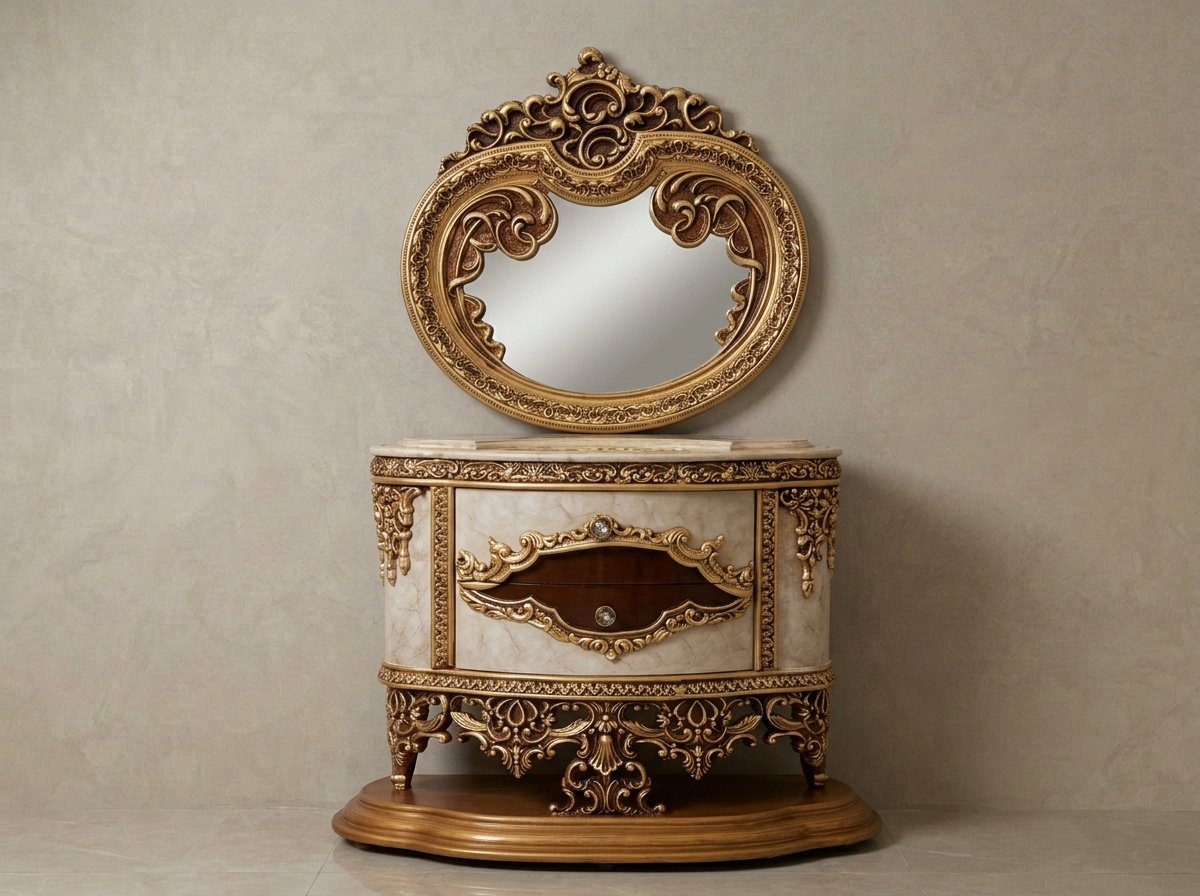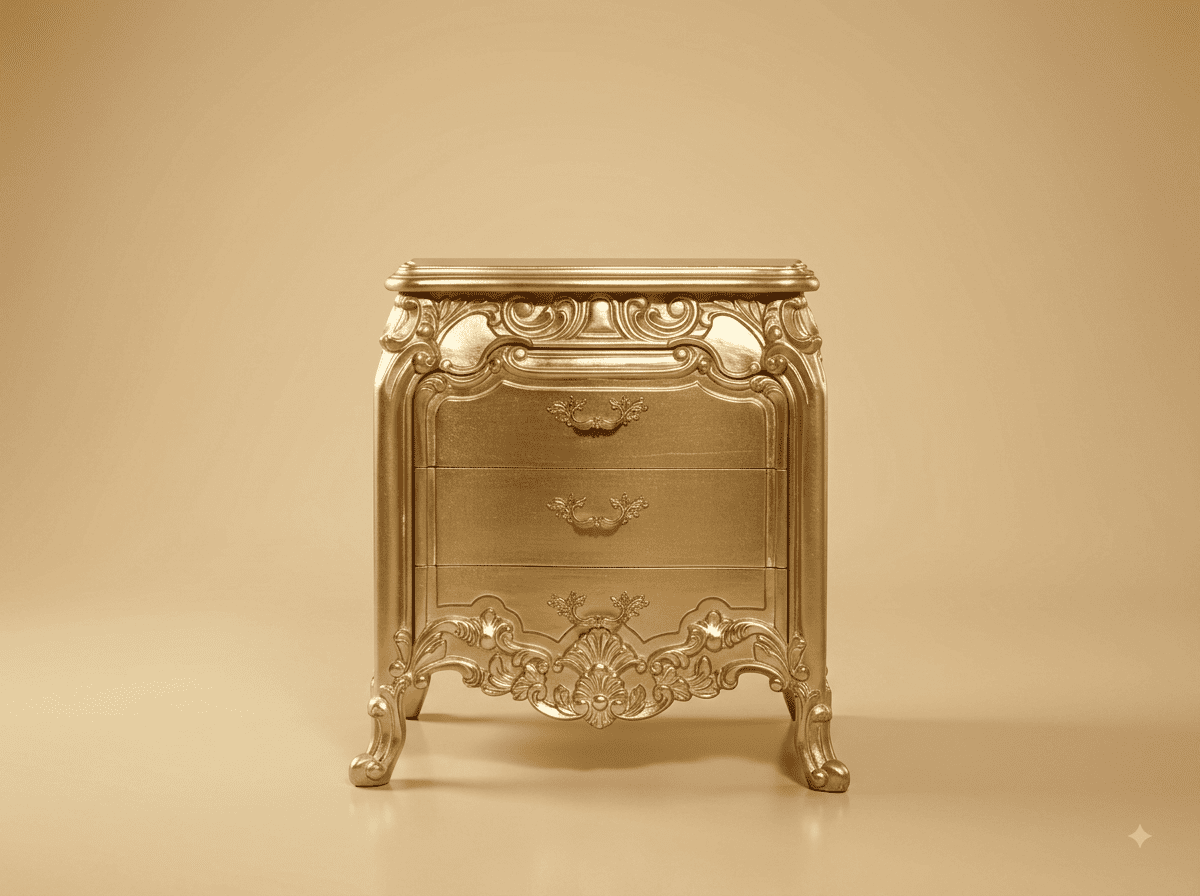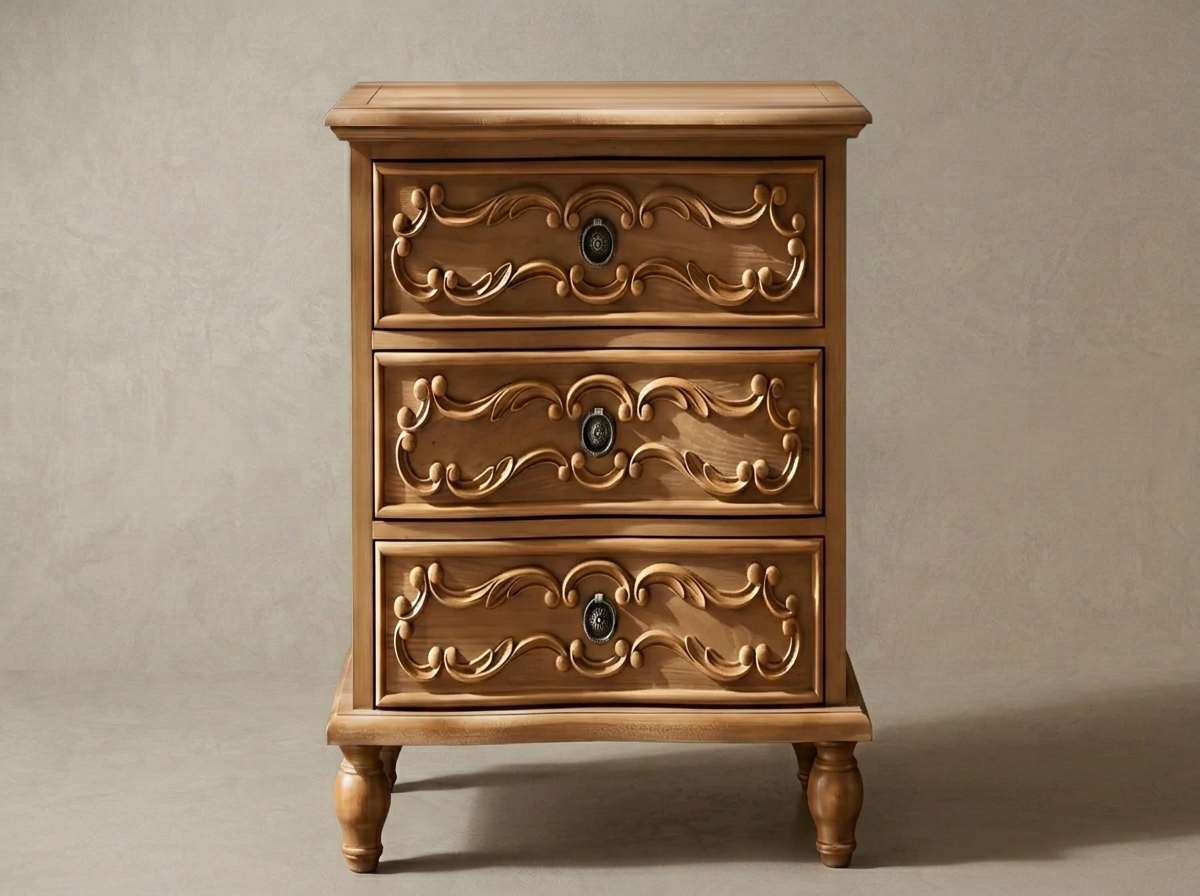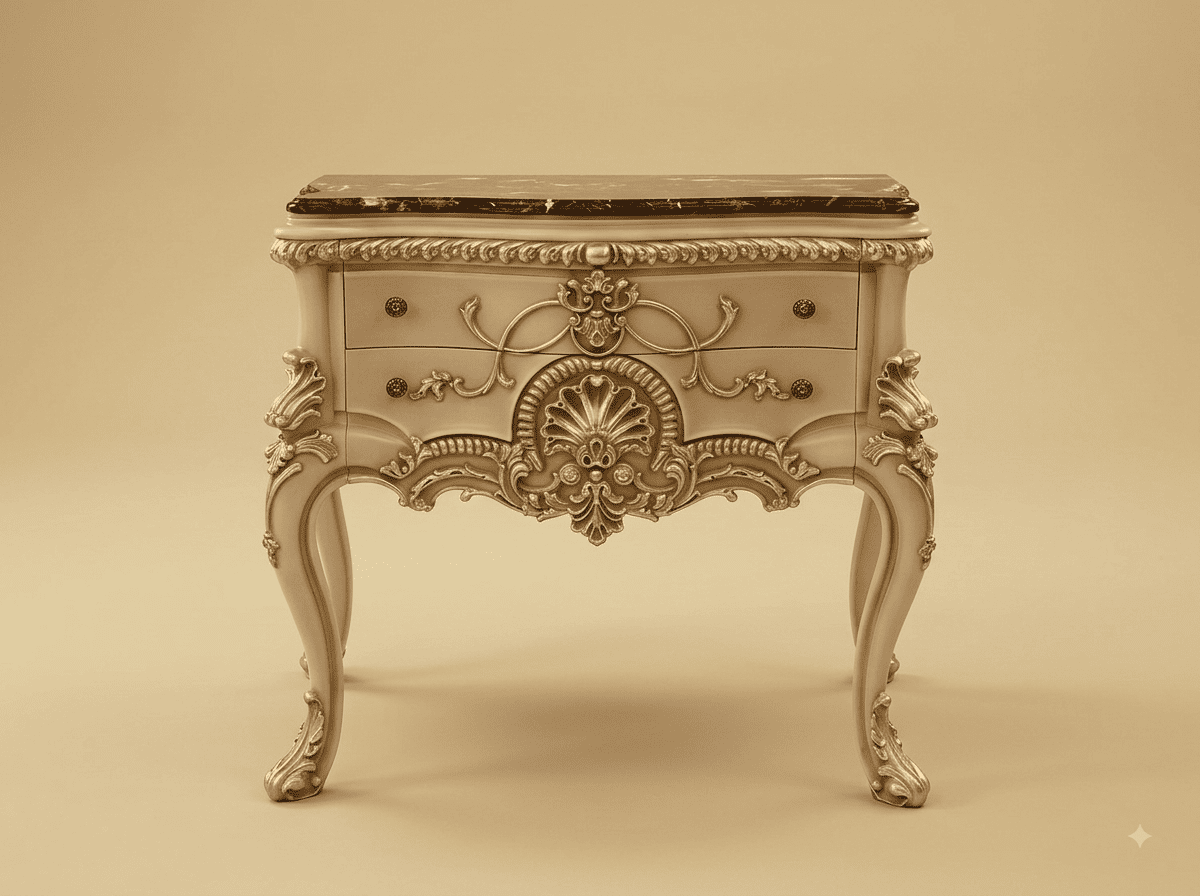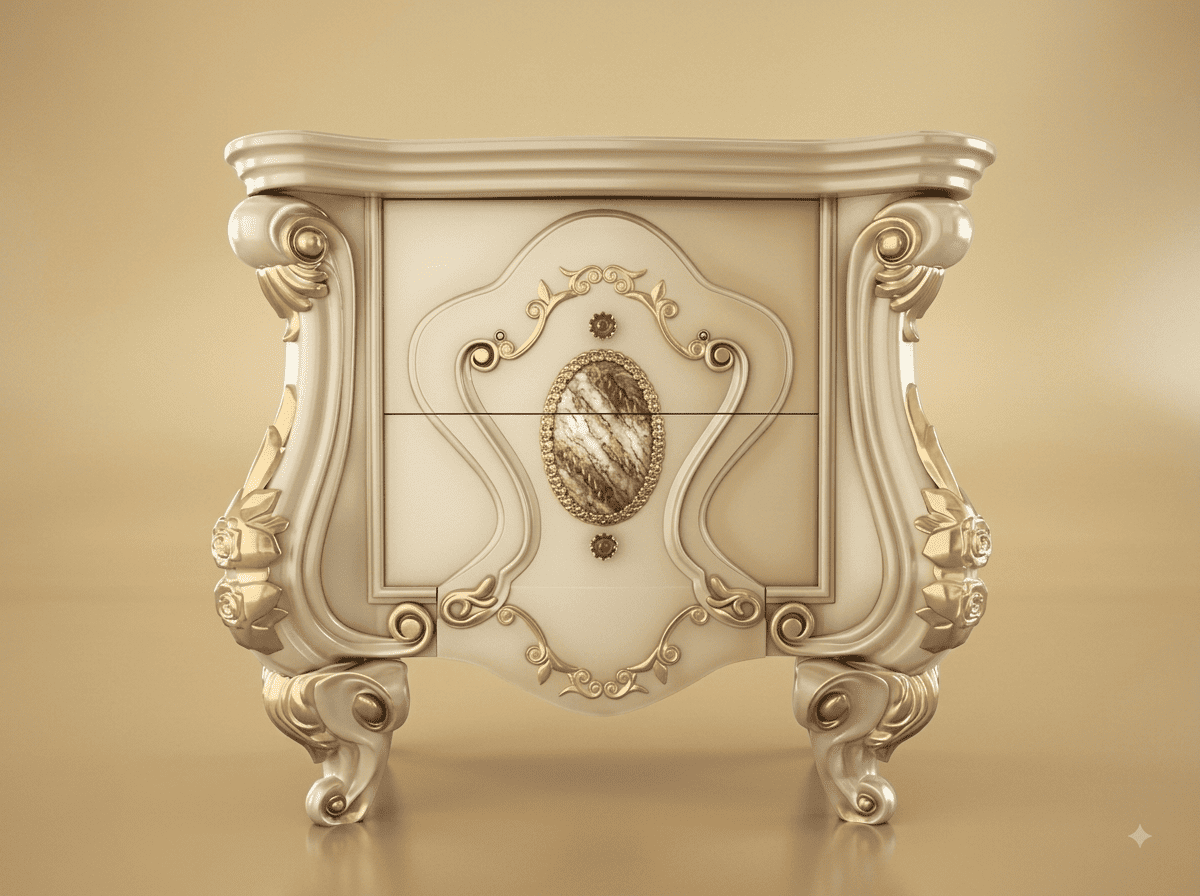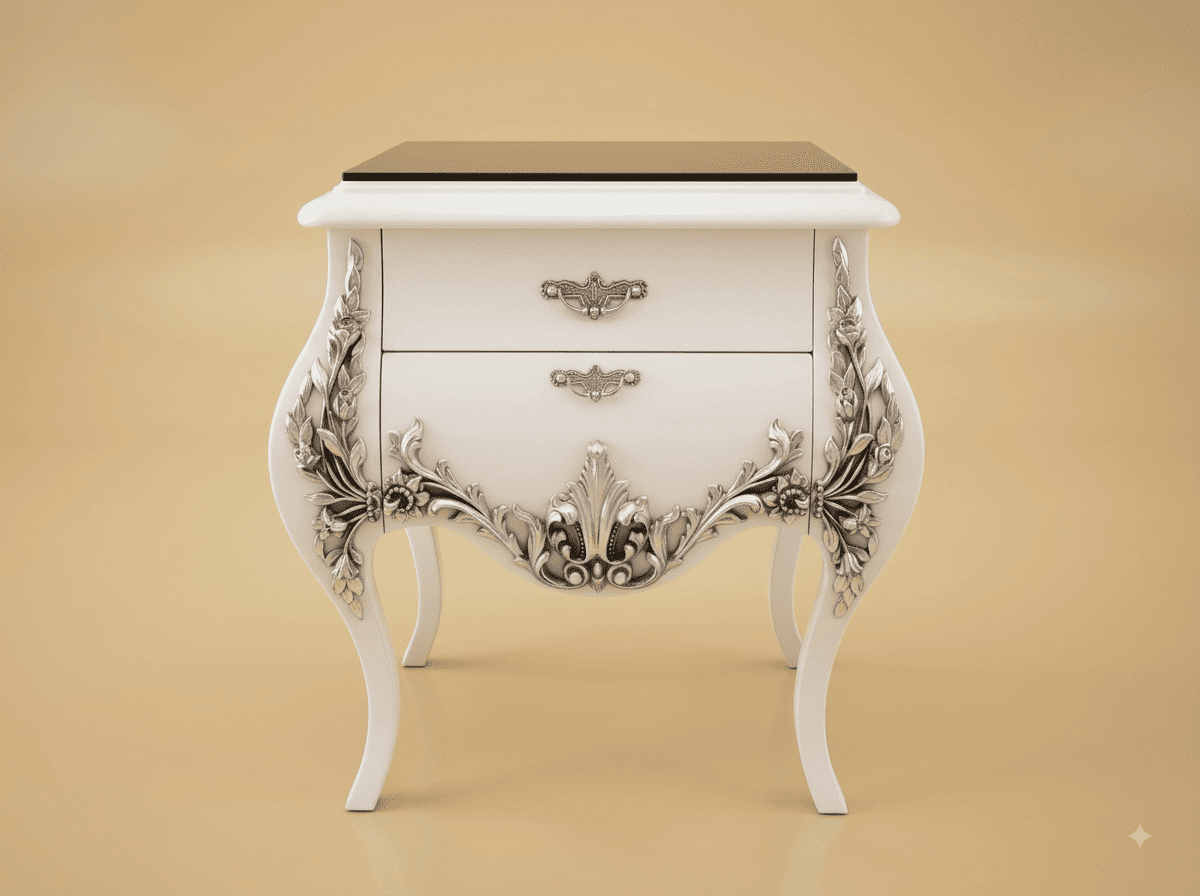
Highlighting is the finishing technique most often done badly, because it looks easy and is not.
The idea is simple: colour only the parts of a carving that stand highest, so they catch the eye the way a raised edge catches light. Done well, it is invisible as a technique - the carving simply looks brighter and deeper than it is. Done badly, it looks like someone has painted a pattern on top of a shape.
The difference is entirely in how the material is loaded and how it is moved. Our finishers take almost nothing on the brush - far less than seems useful - and work it out on a board until the brush is nearly dry. Then it is dragged across the carving at a low angle, so it can only touch the ridges and never reaches into the hollows. If any material is wet enough to run down into a recess, the effect is dead.
The direction matters too. The brush follows the carving - along the length of an acanthus leaf, around the curl of a scroll - never across it. A highlight applied across a form breaks it up rather than describing it.
It is done last, after the white is fully cured, and it cannot be corrected. A hollow that has taken silver stays silver, so the only remedy is to go back to the white and begin again.
 Ask Price On WhatsApp