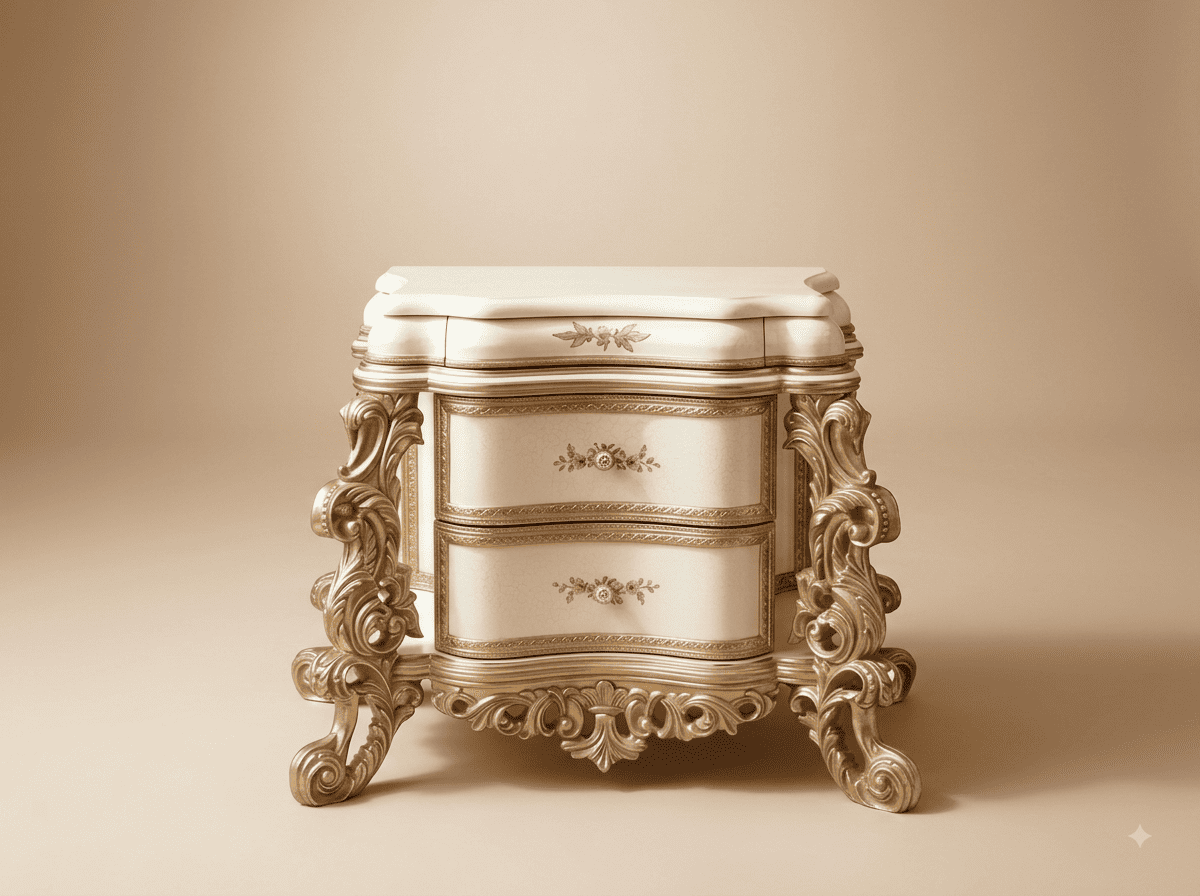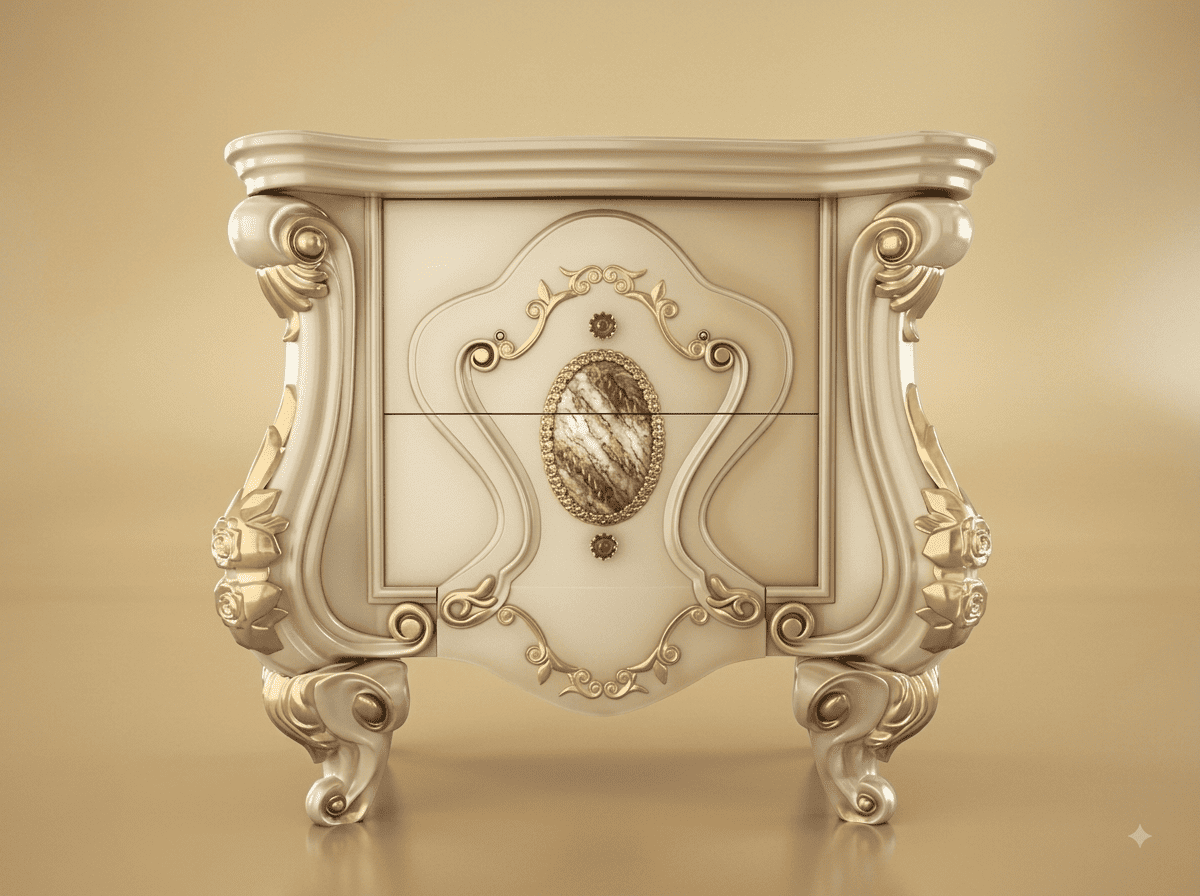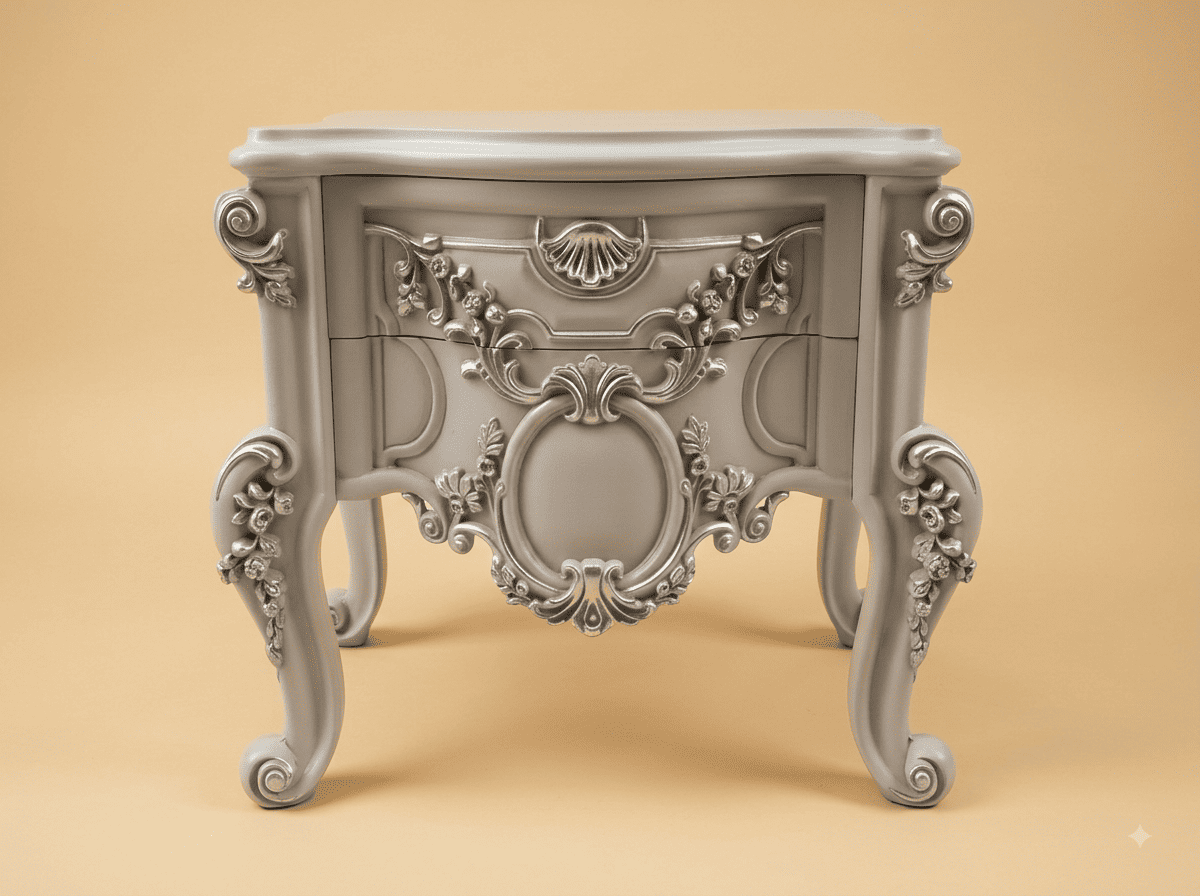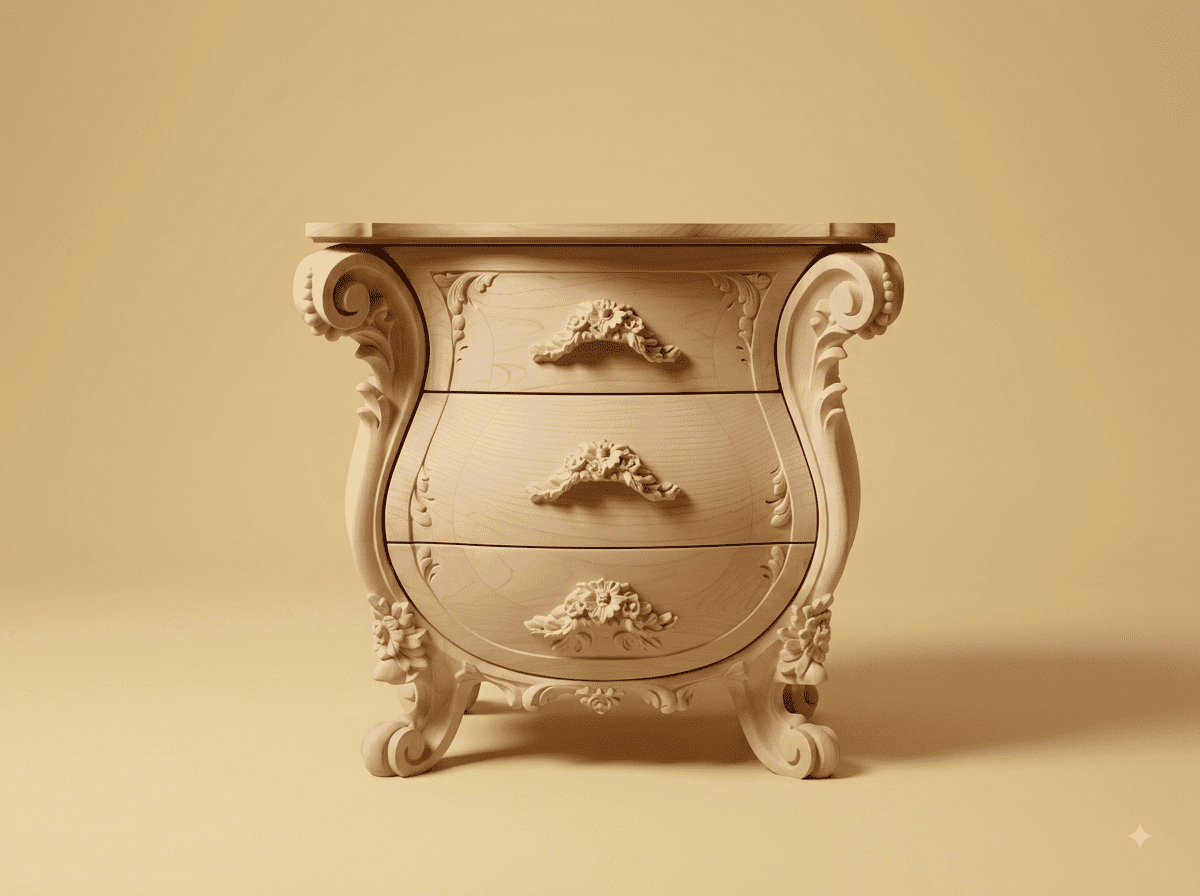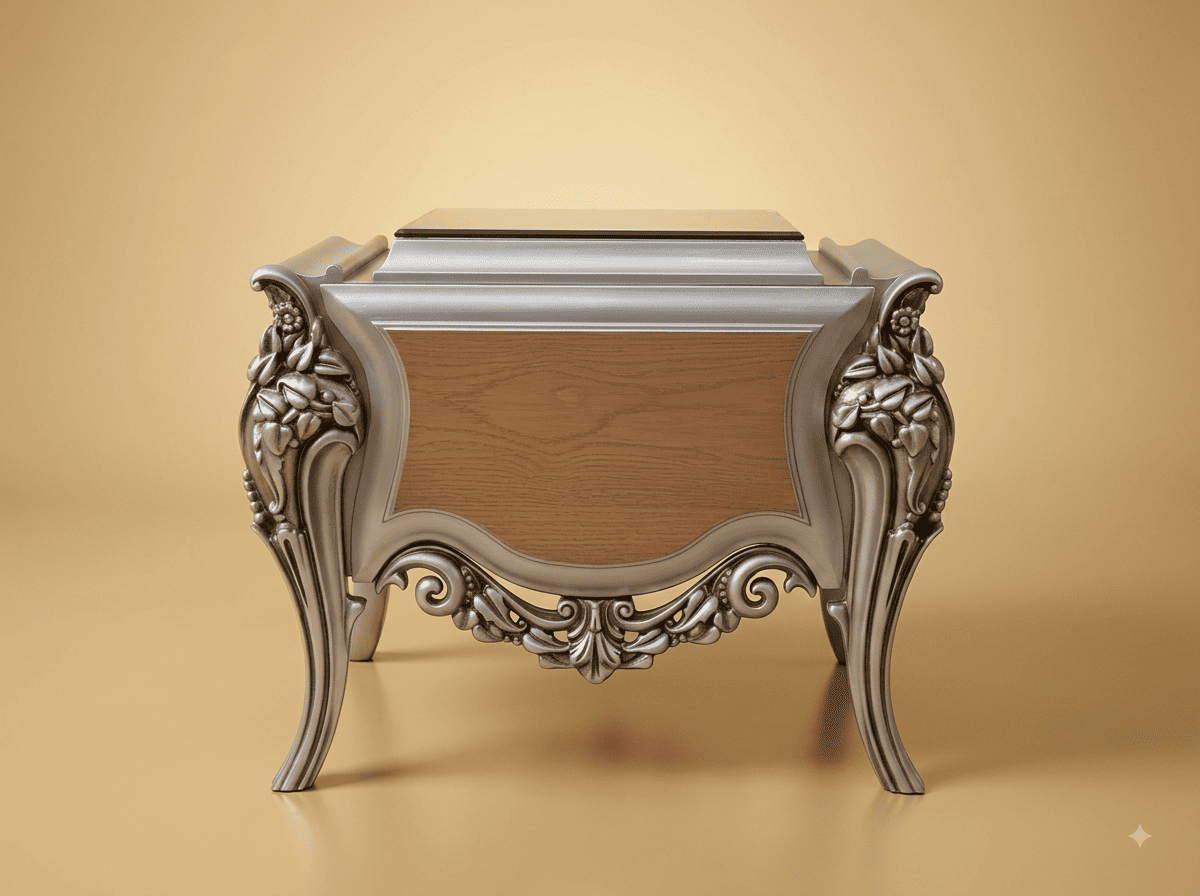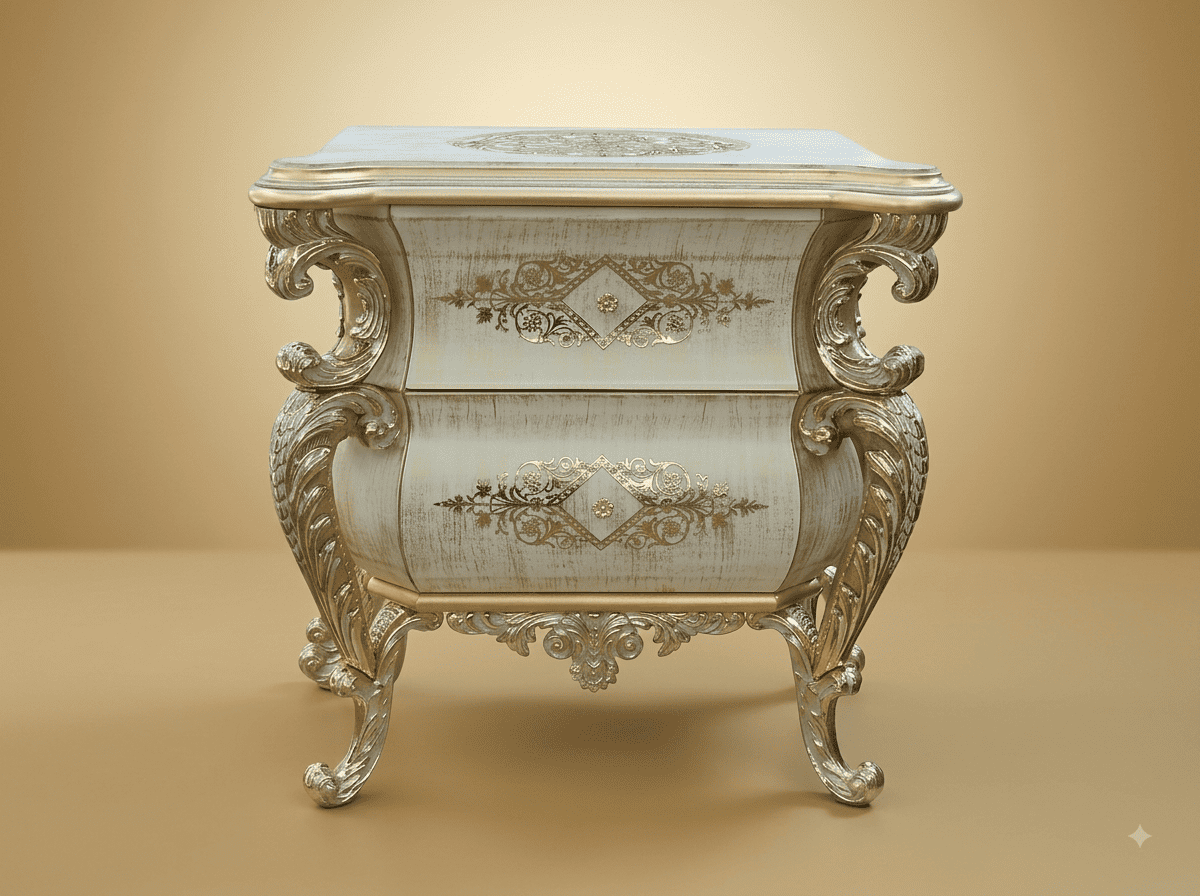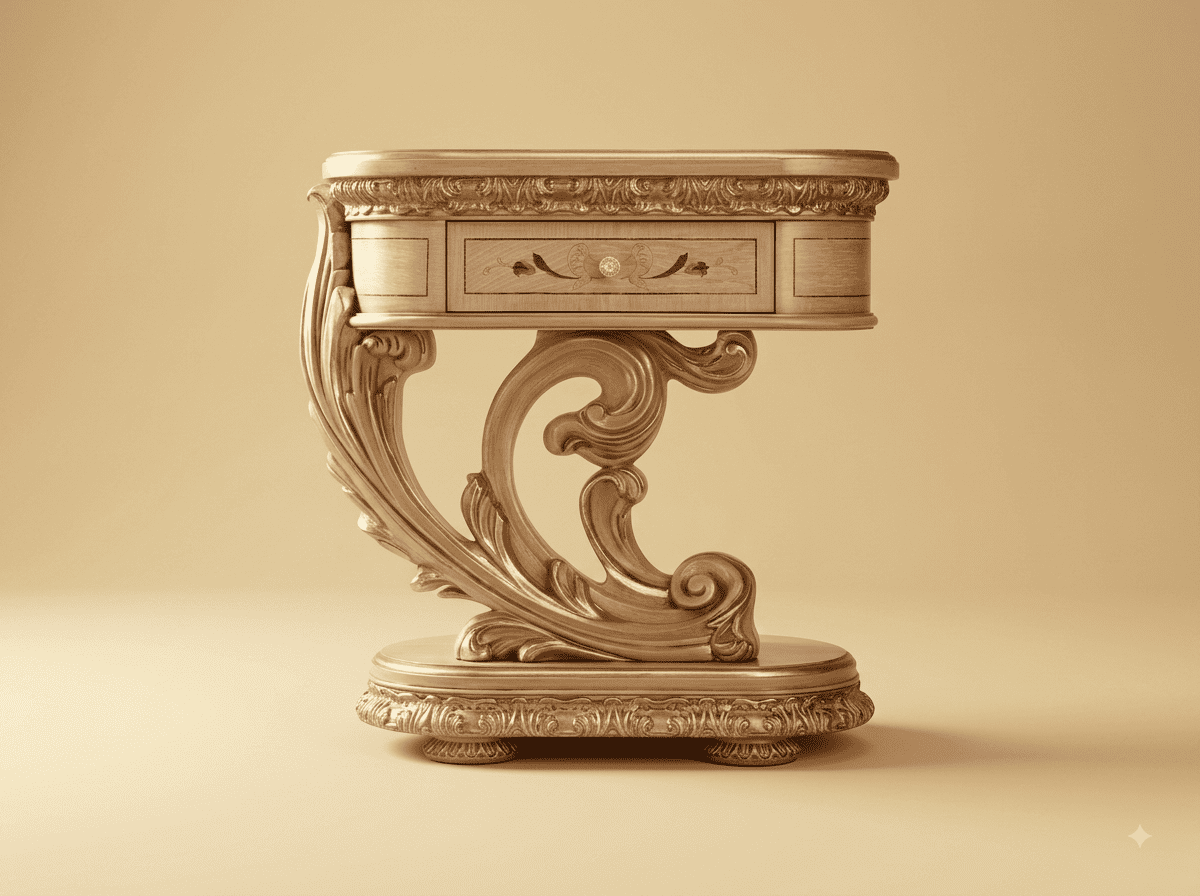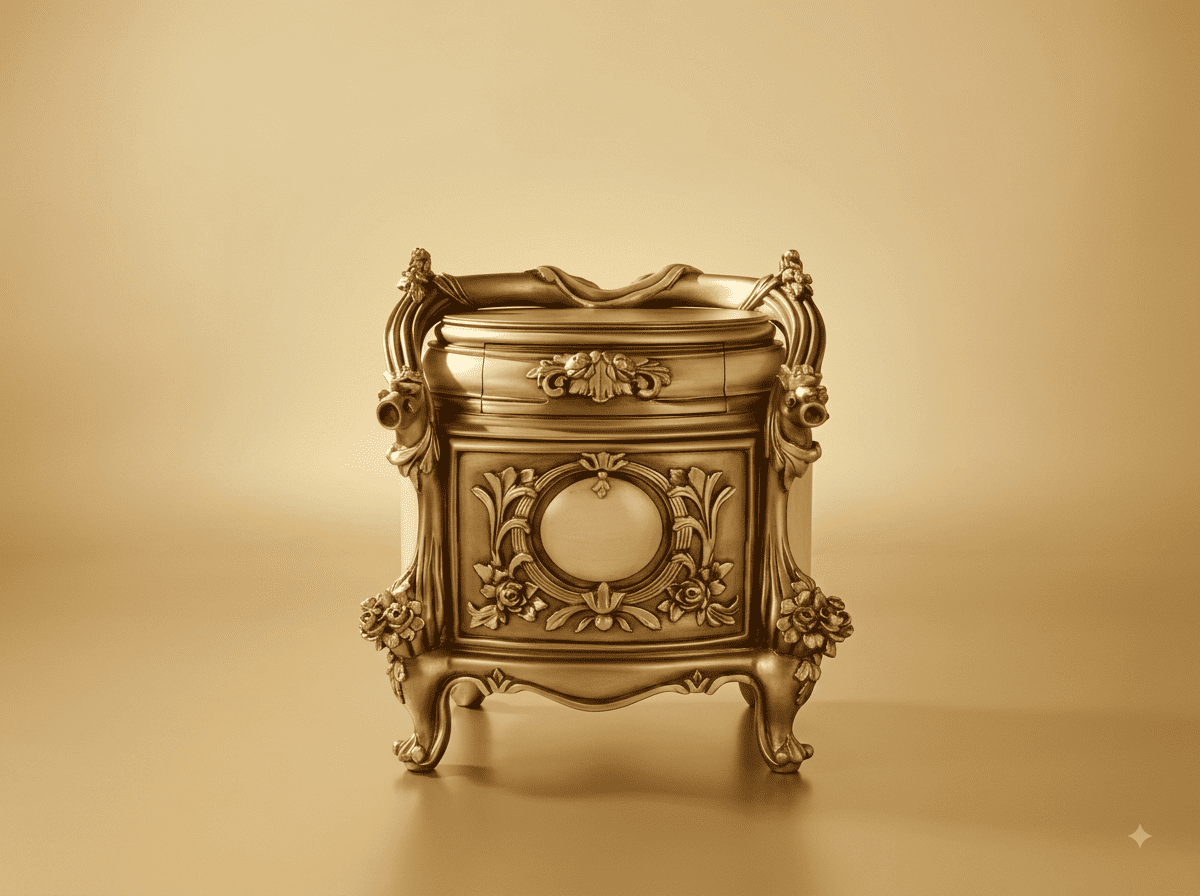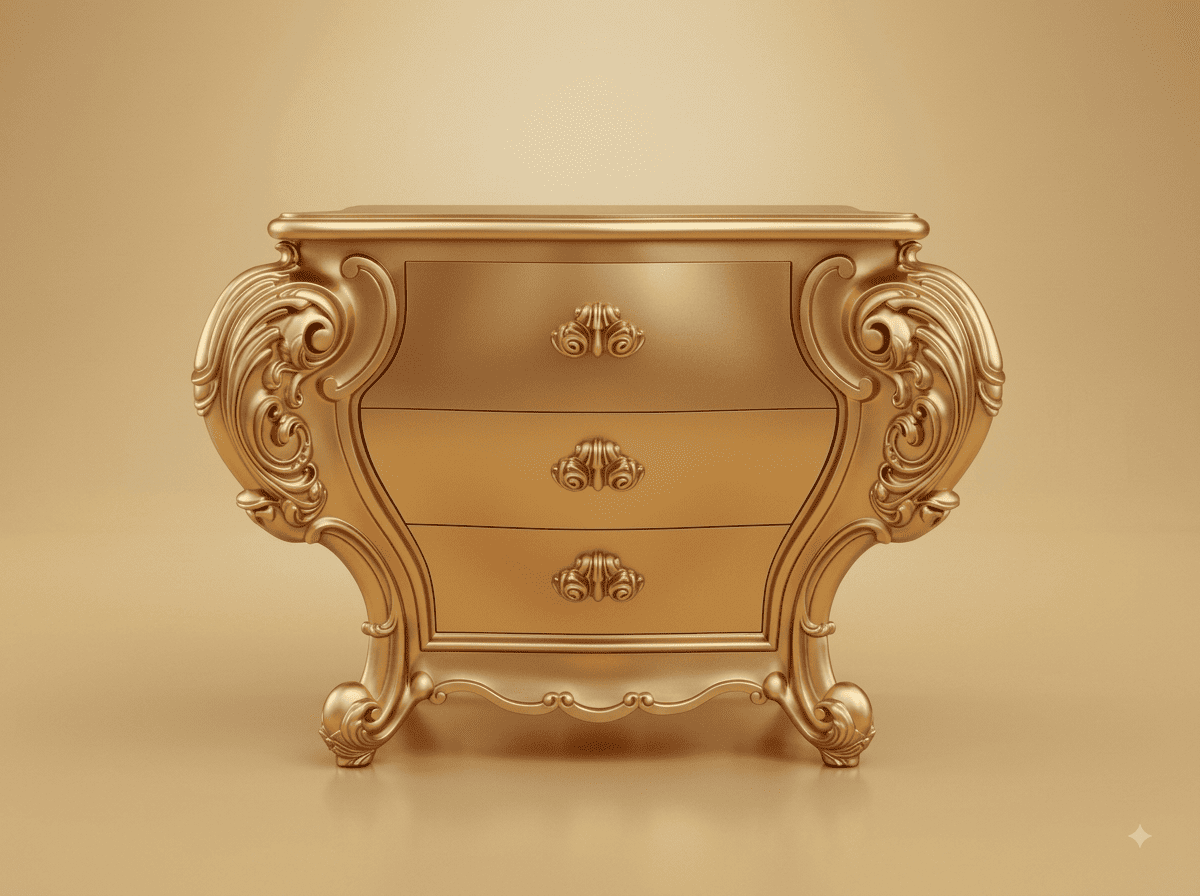
The two scroll wings on this table are the piece. Everything else is a box between them - and that is exactly the problem our carvers have to solve, because those wings are not ornament stuck onto a cabinet. They are the cabinet's sides, and they carry it.
Each one starts as a baulk of teak far thicker than any part of the finished carcass. The scroll at the shoulder curls inward and back on itself, the body sweeps down and outward, and the foot turns forward again - three changes of direction in one member, all of which the load has to travel through on its way to the floor.
So the blank is marked out at an angle, the same way a chair leg is, so the grain runs around the sweep rather than across the two points where it reverses. Waste is heavy and unavoidable; a wing this shape cannot be cut economically from a square blank without putting short grain exactly where the bending happens.
Only once both wings are shaped and jointed to the carcass is the acanthus cut into them. Working the other way round - carving first, jointing after - would mean cutting a joint into a surface already modelled, and no joint is ever invisible once the carving crosses it.
The two are carved in parallel, turn about, so that neither gets ahead of the other. A pair of scrolls that do not mirror each other is the one fault nobody can unsee.
 Ask Price On WhatsApp