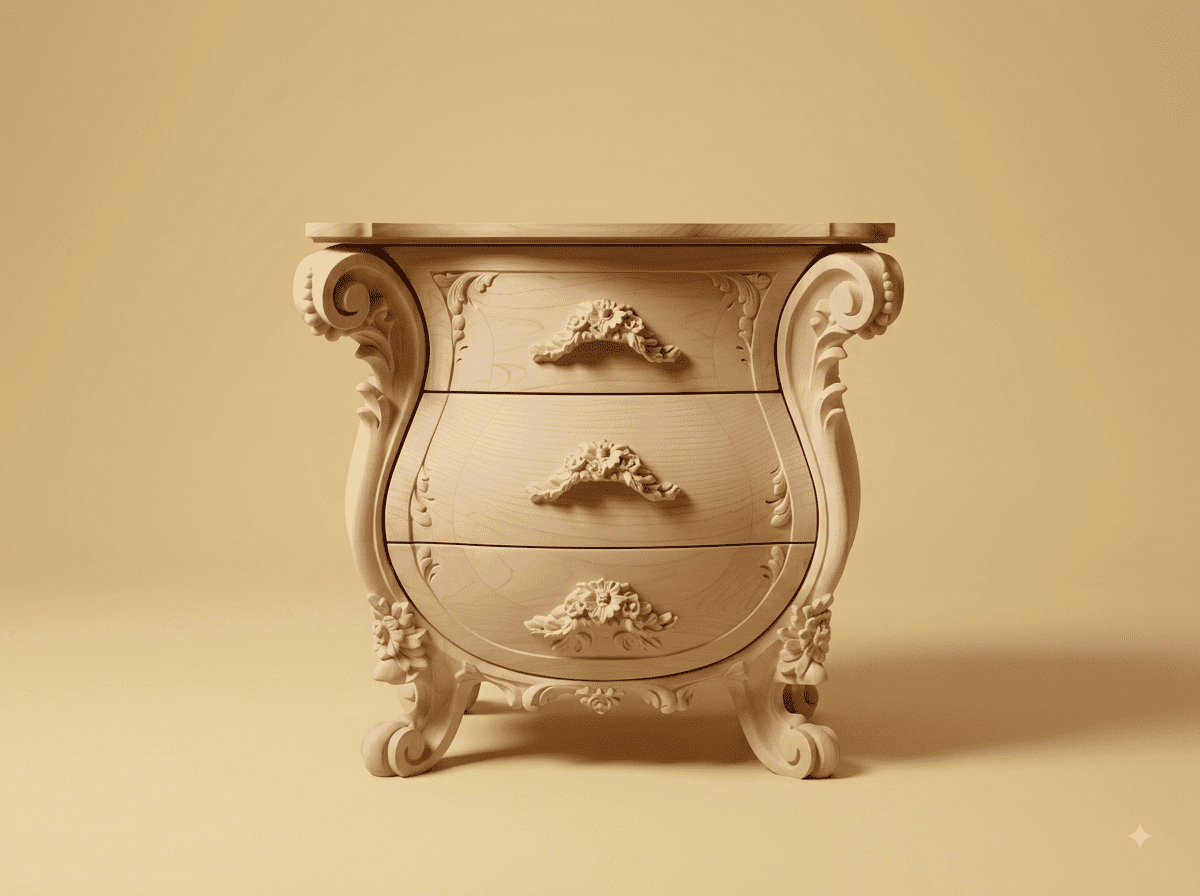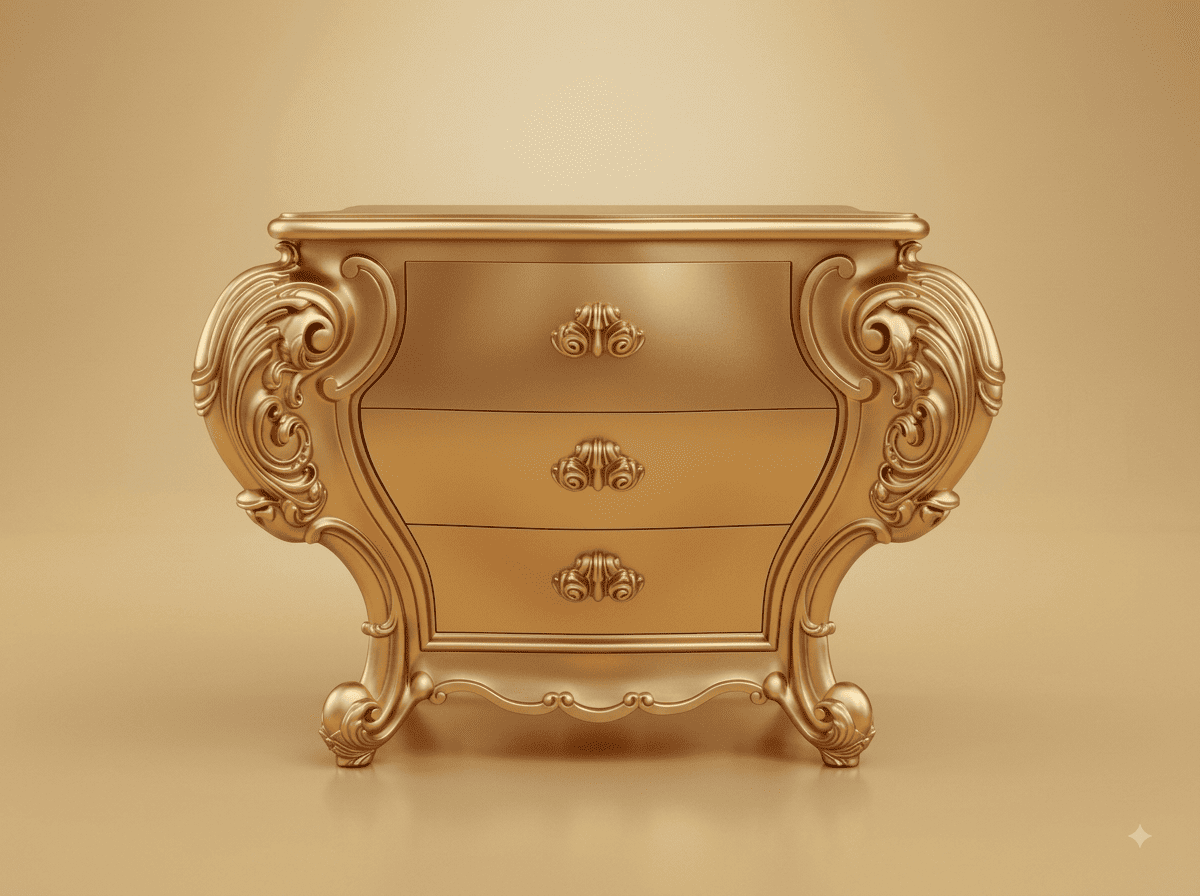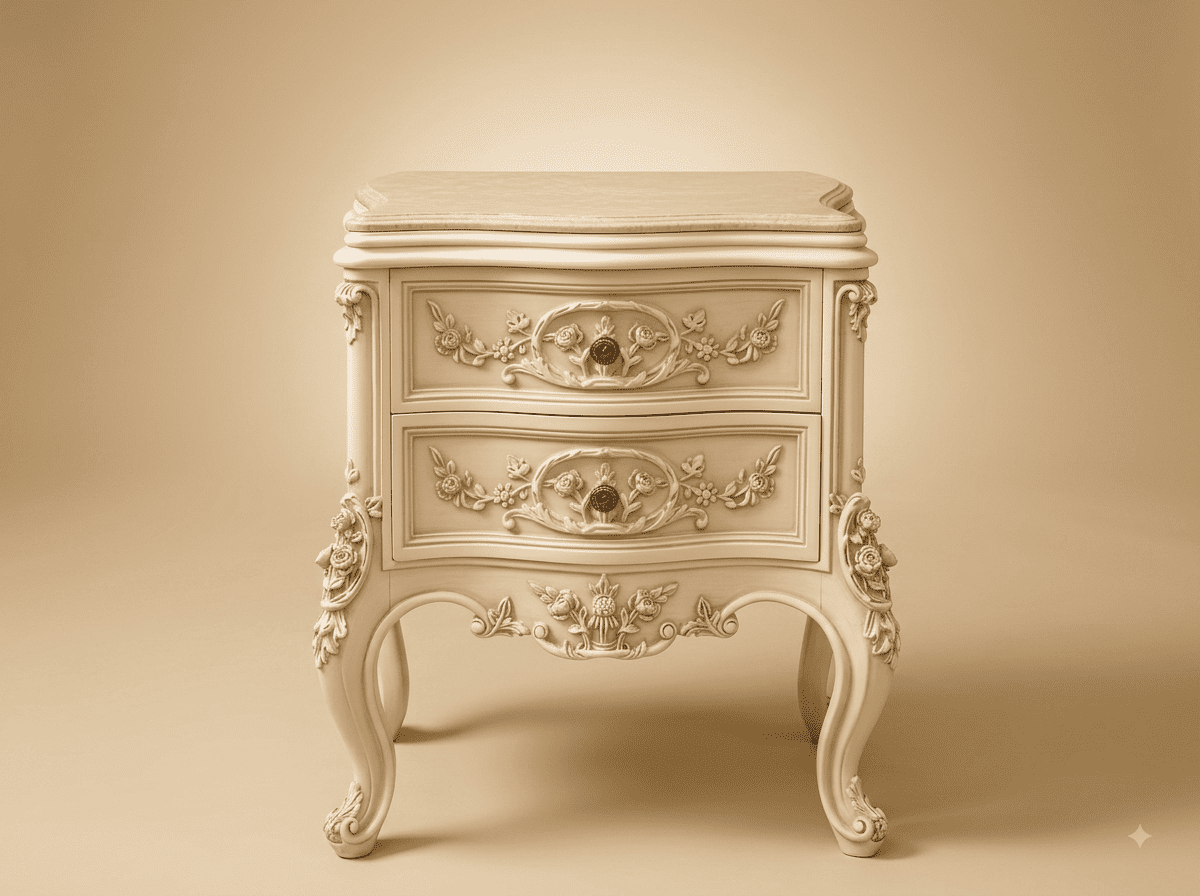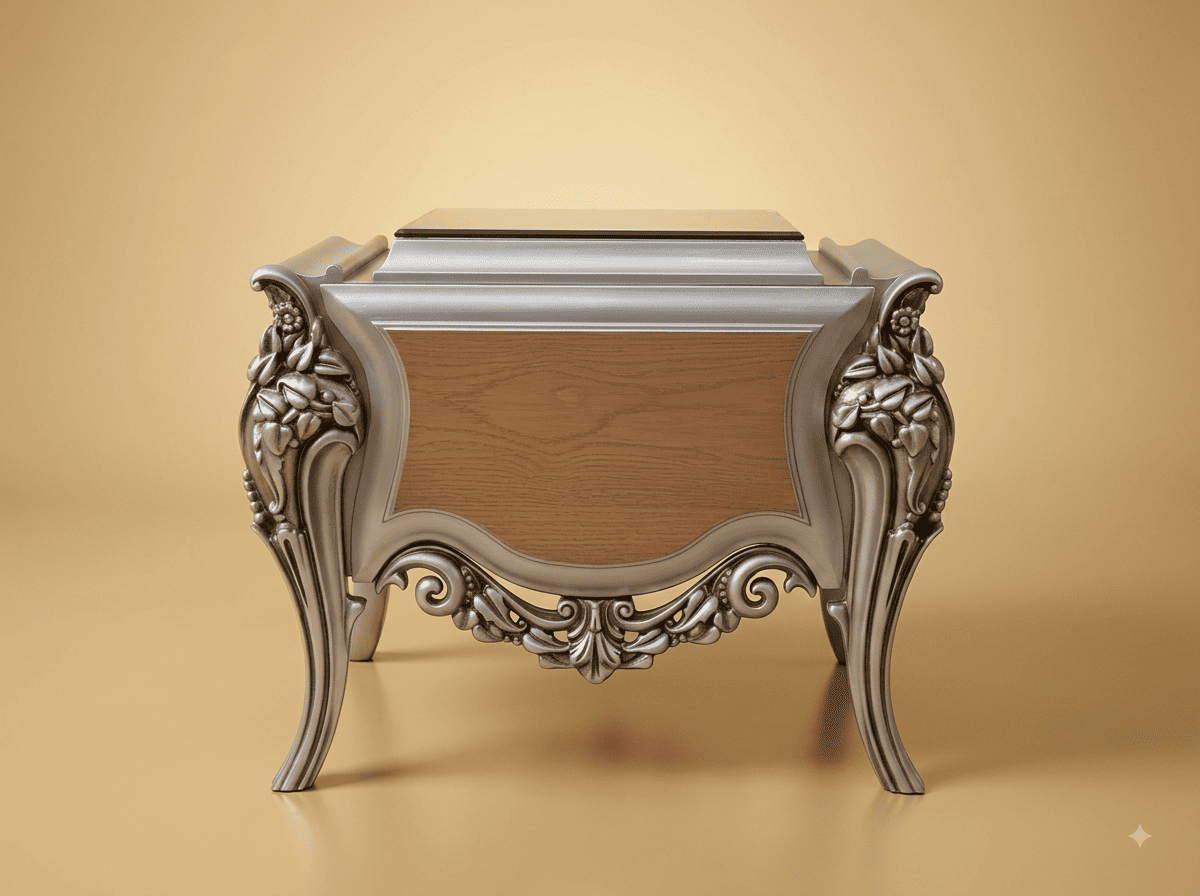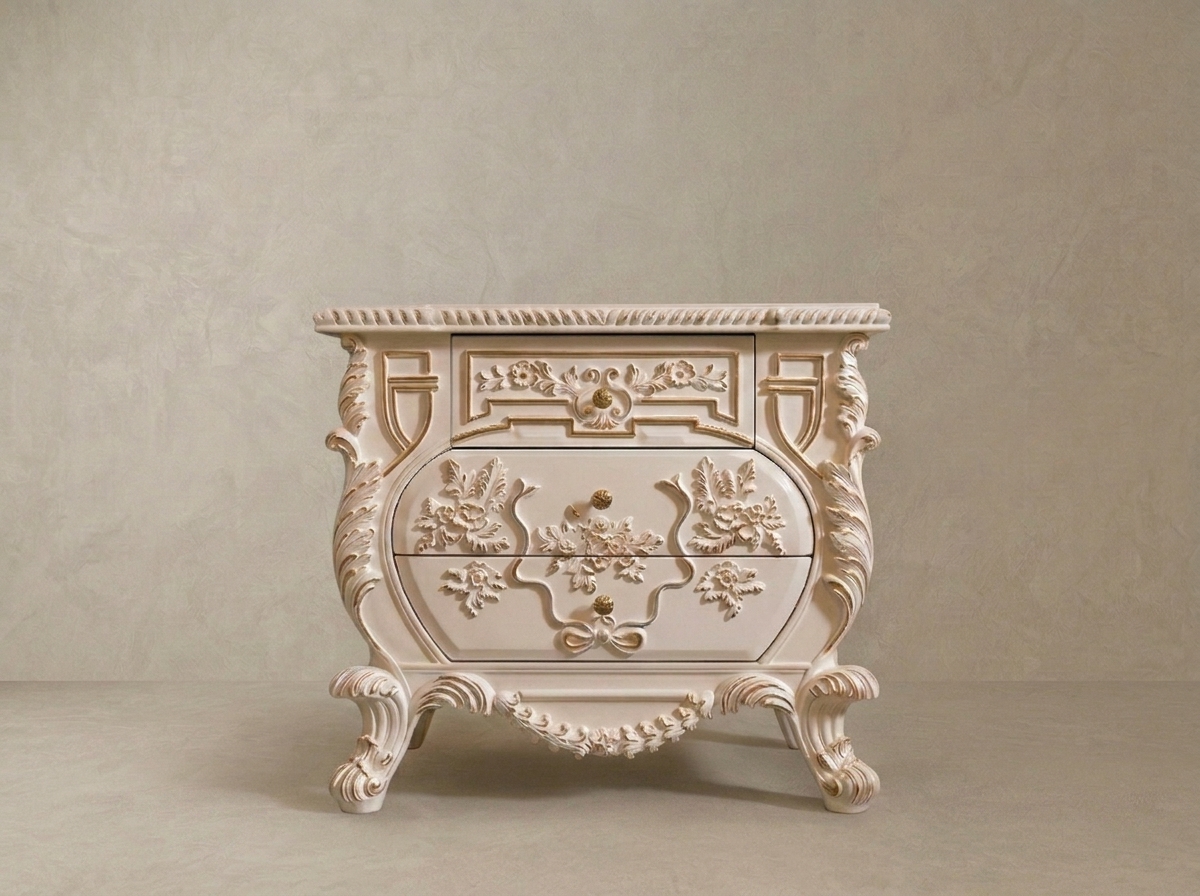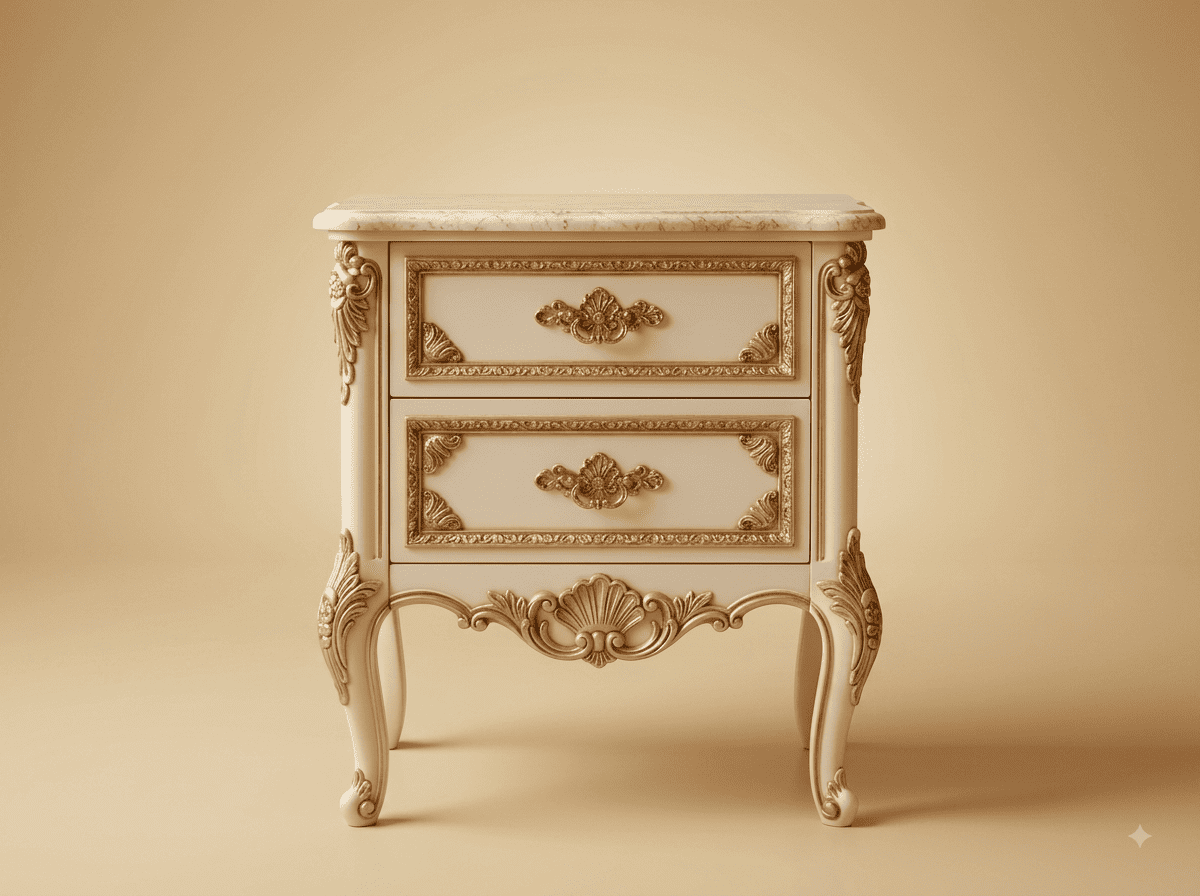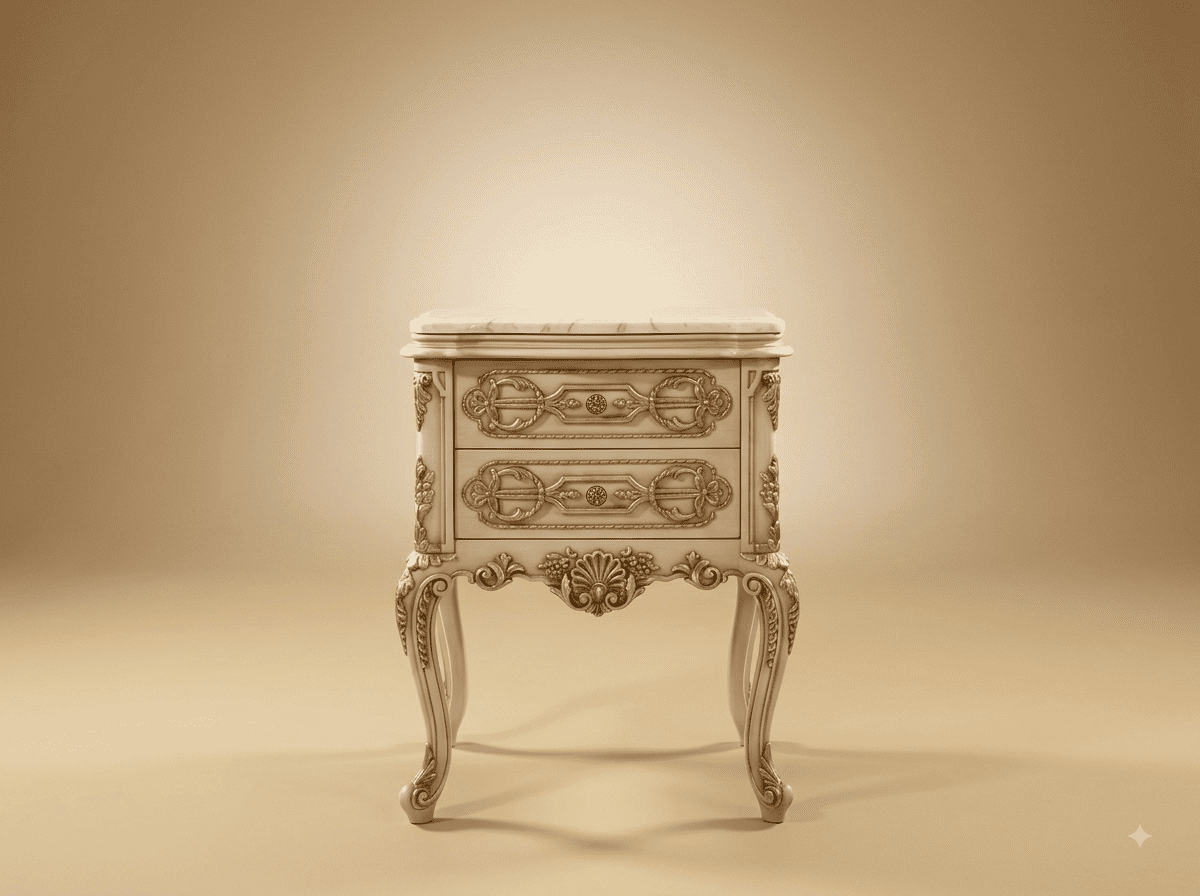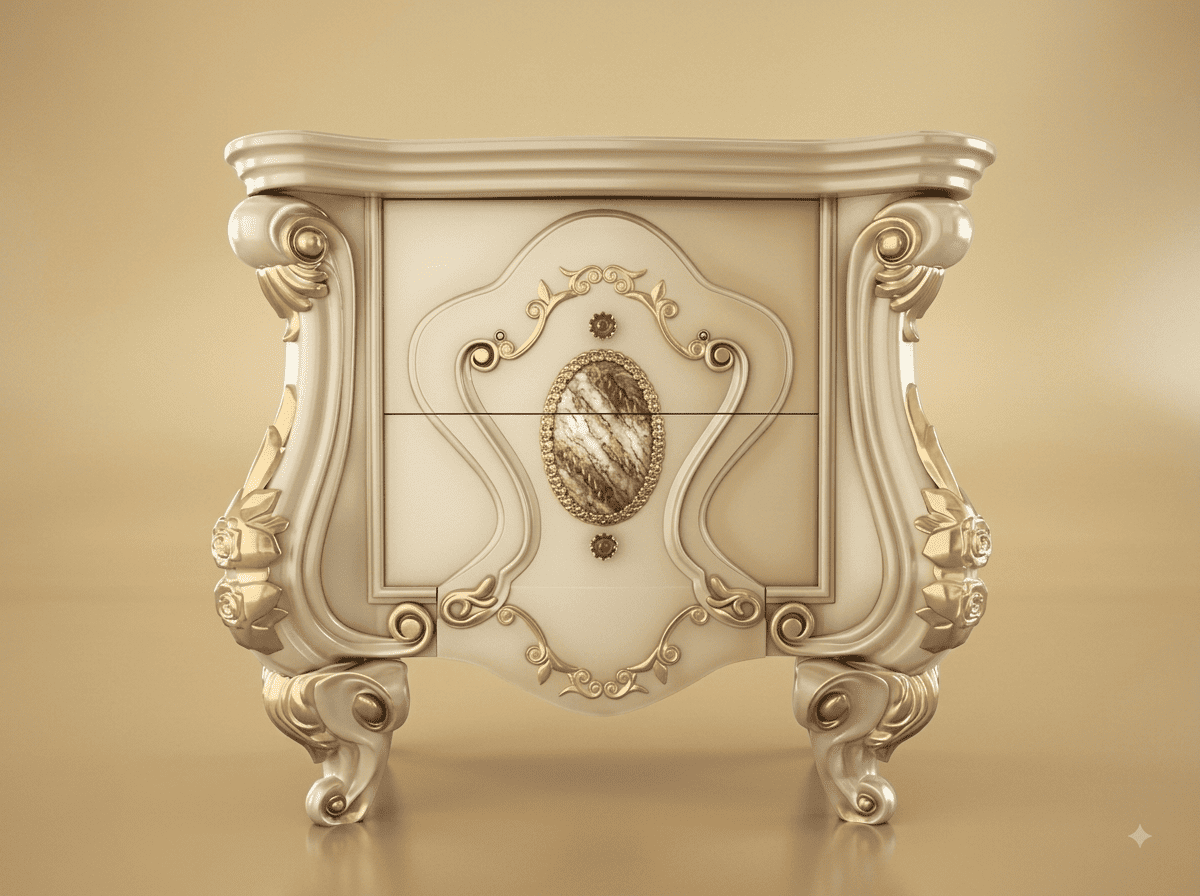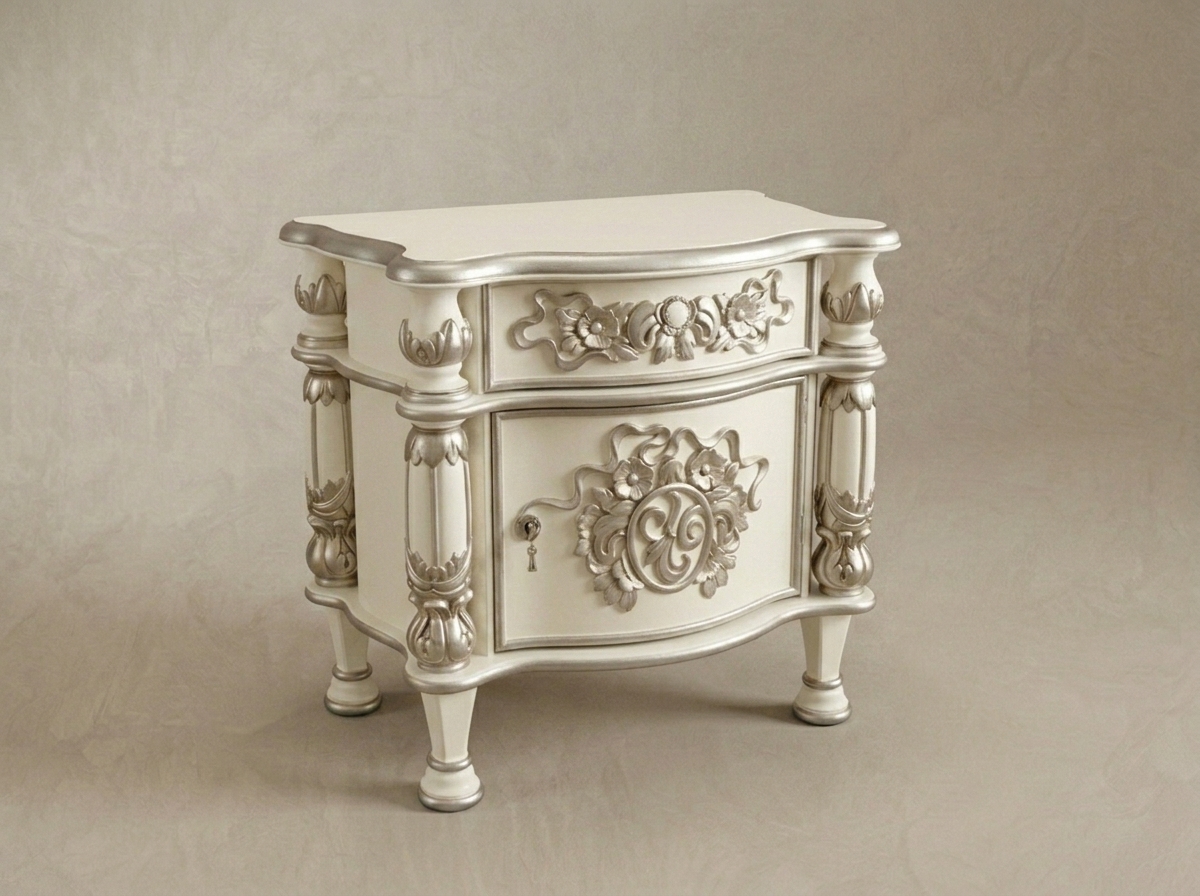
The four corner columns on this table are made two at a time, from one turning, and that is the only reliable way to get them to match.
Each column is only half-round: it stands against a curved carcass corner, so the back of it is flat and glued to the case. Turned individually, four half-columns would be four separate attempts at the same profile - and turned work is judged by eye against its neighbour, so any small difference in the swell of a bead or the length of a cove shows the moment two are seen together.
So they are turned as full rounds, complete with every bead and cove, and then split lengthwise down the middle. Each turning yields two halves that are identical by definition, because they were the same piece of wood a moment earlier.
The two halves from one turning are then placed where they will be seen together - the two front corners as a pair, the two back corners as a pair - so the matched halves face each other across the front of the table.
The carved caps and bases are cut after splitting, on the halves themselves, so nothing has to be resolved across the join.
 Ask Price On WhatsApp