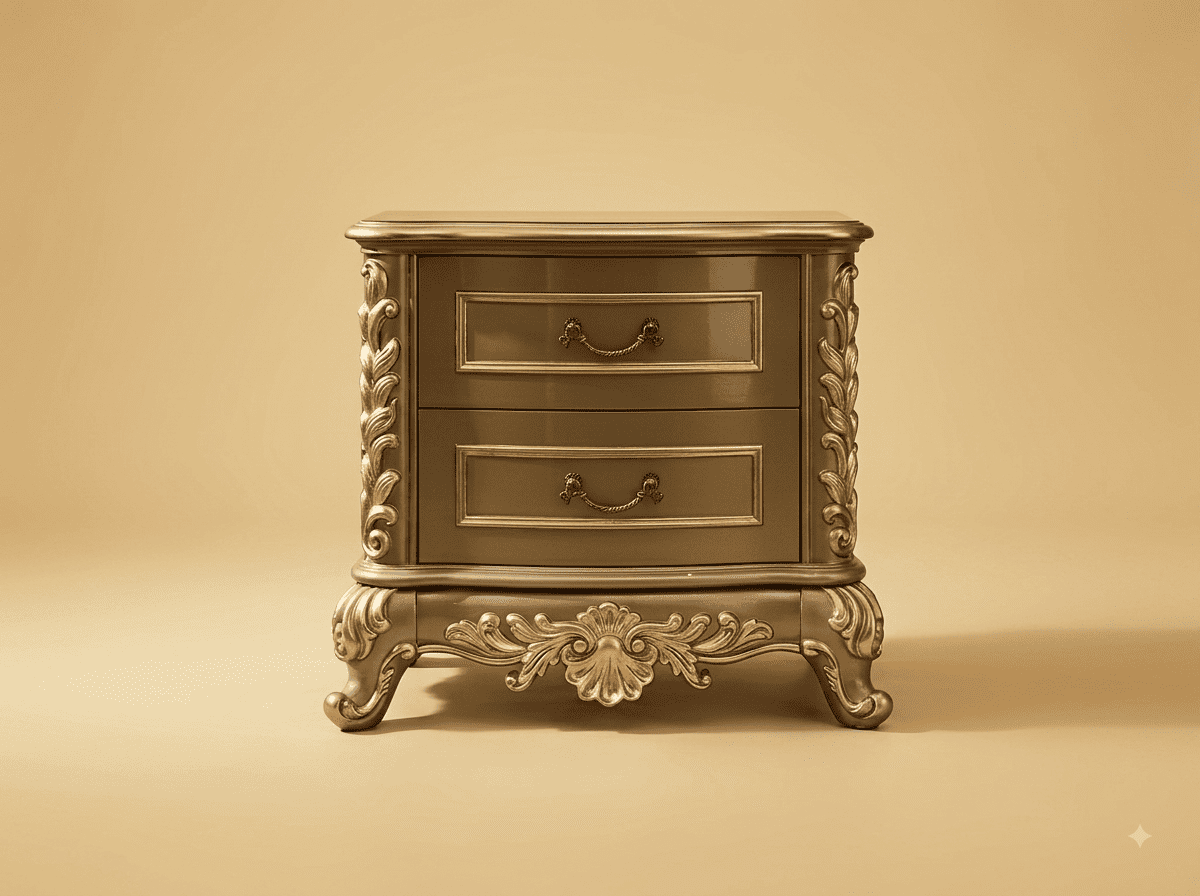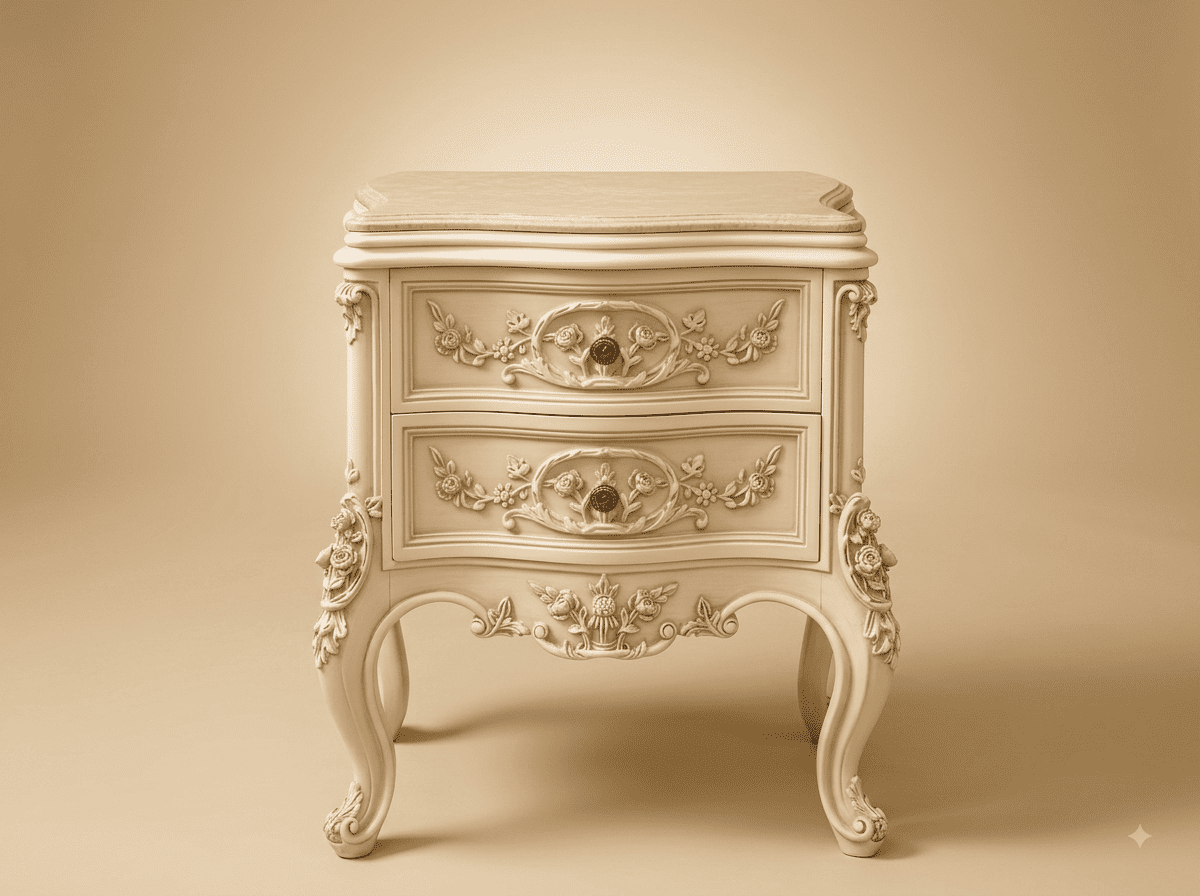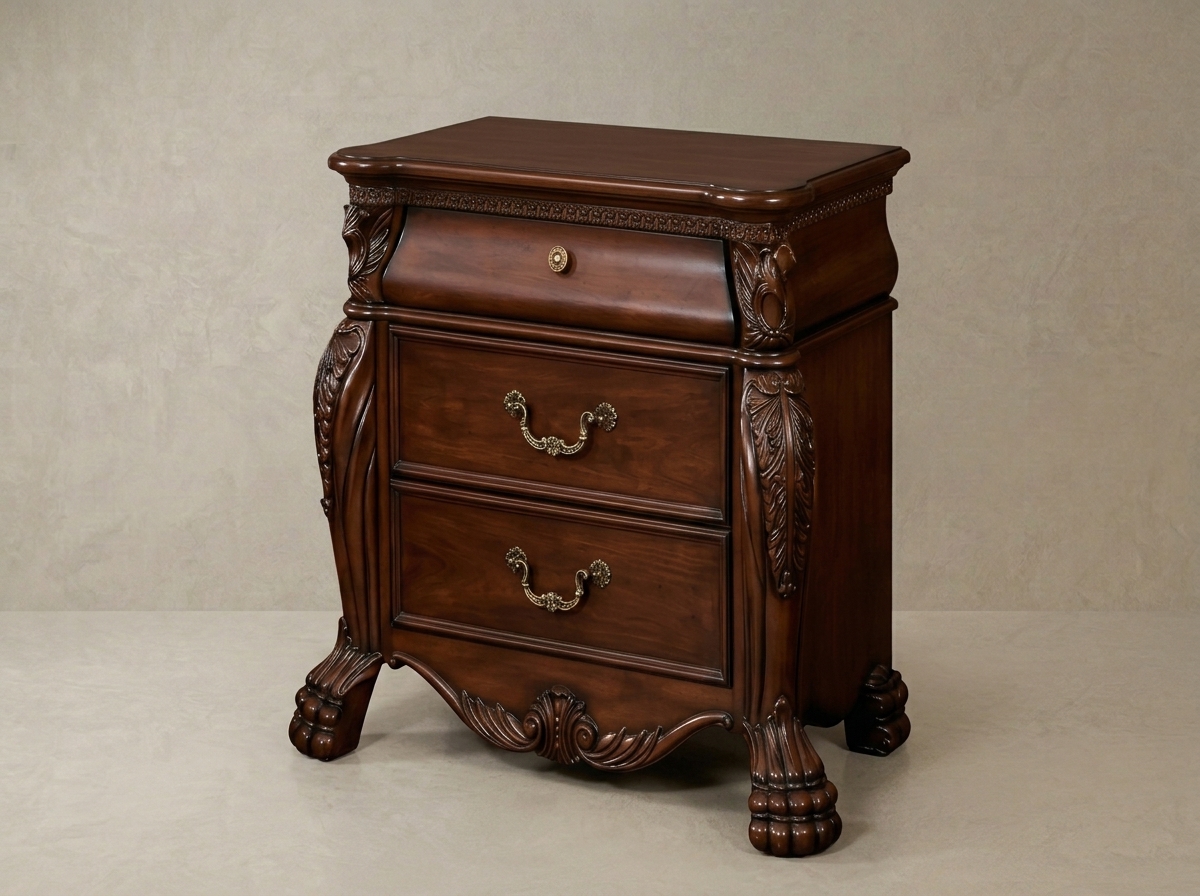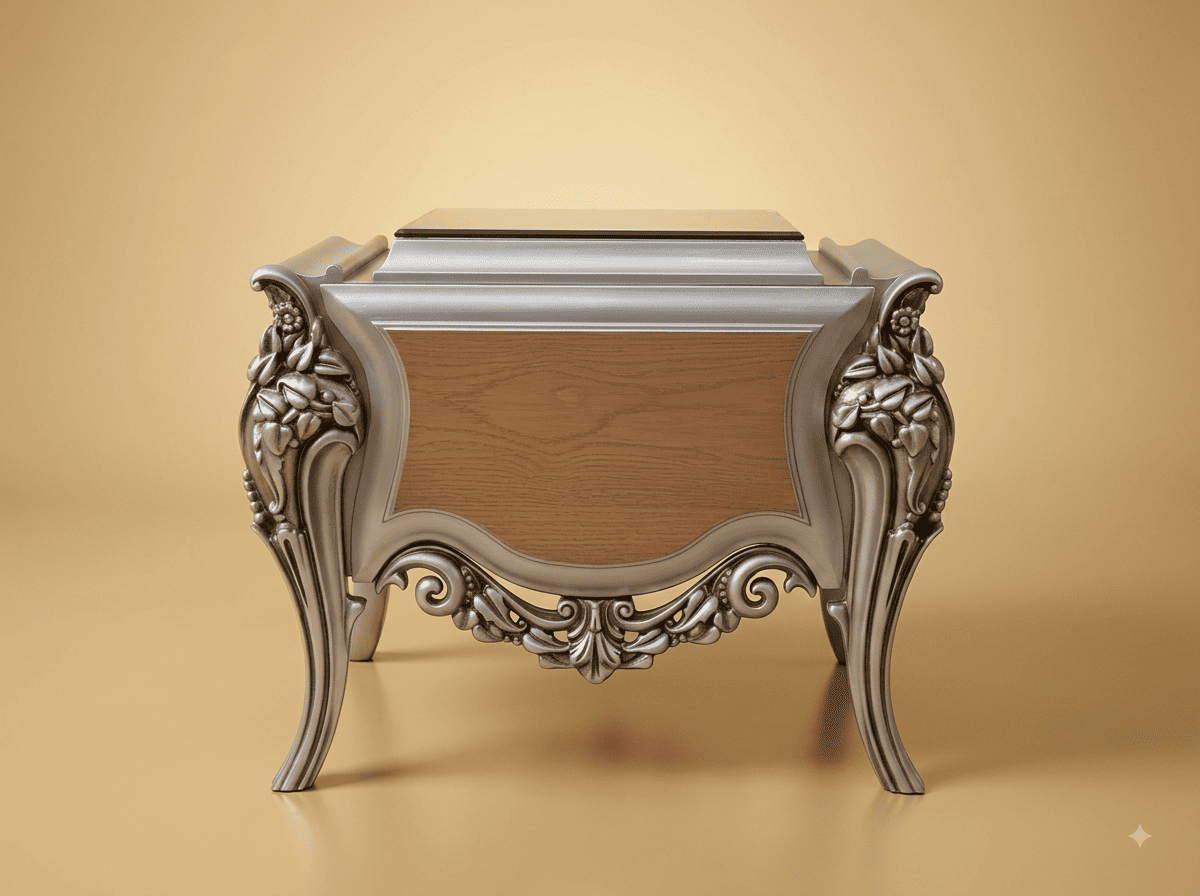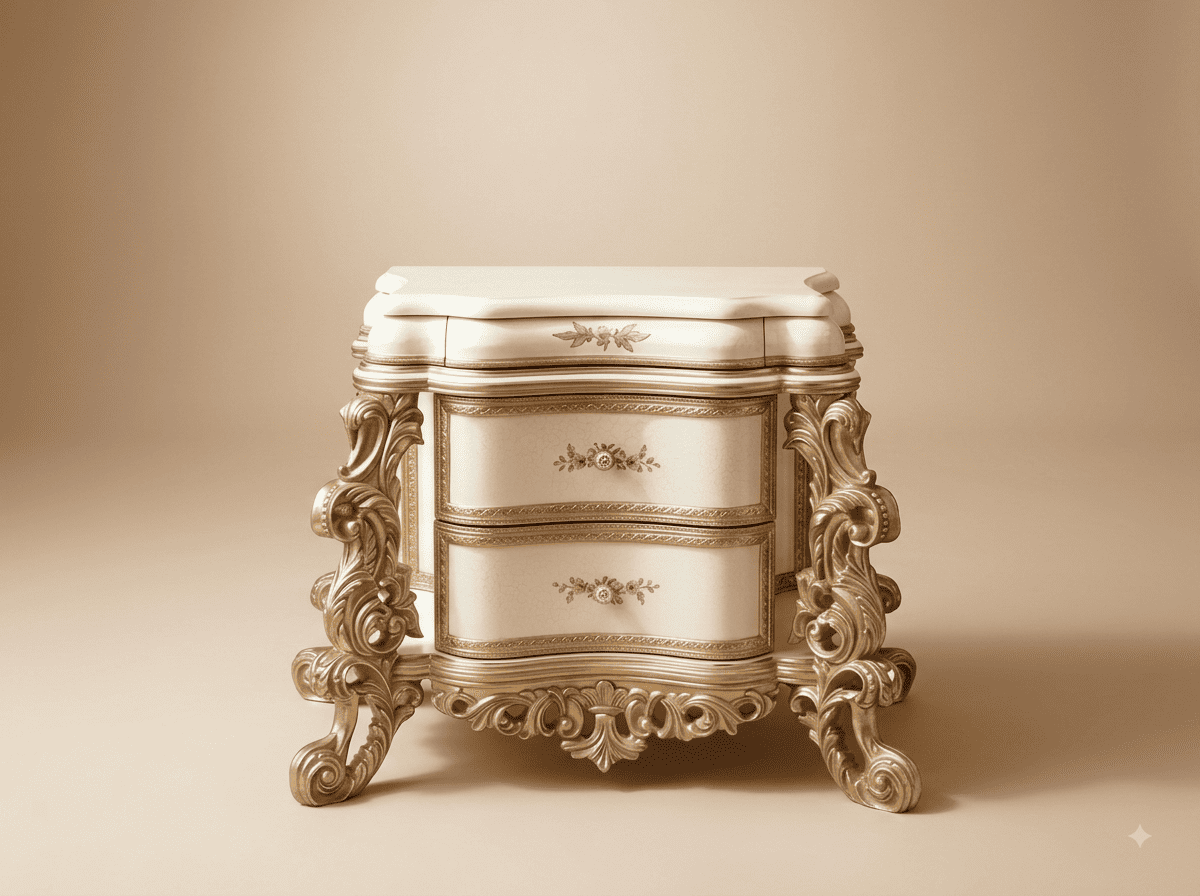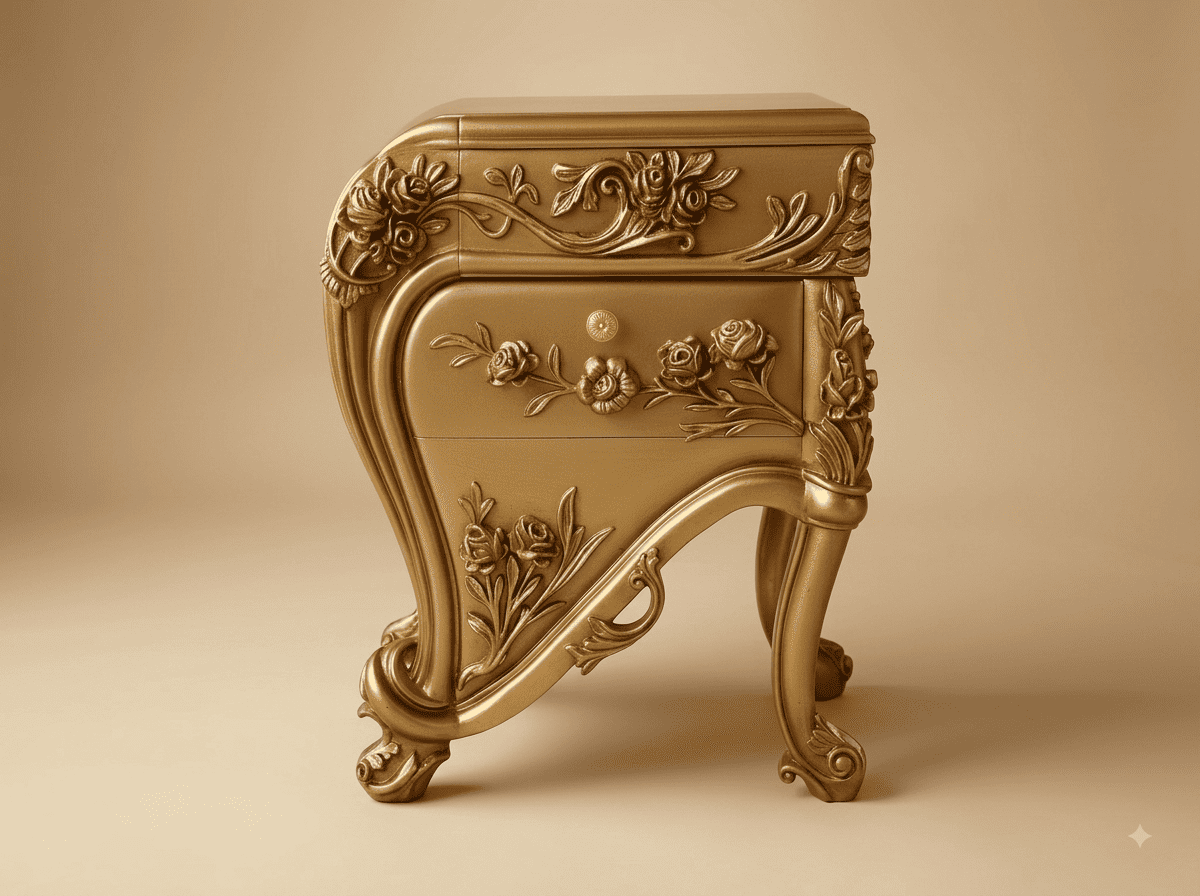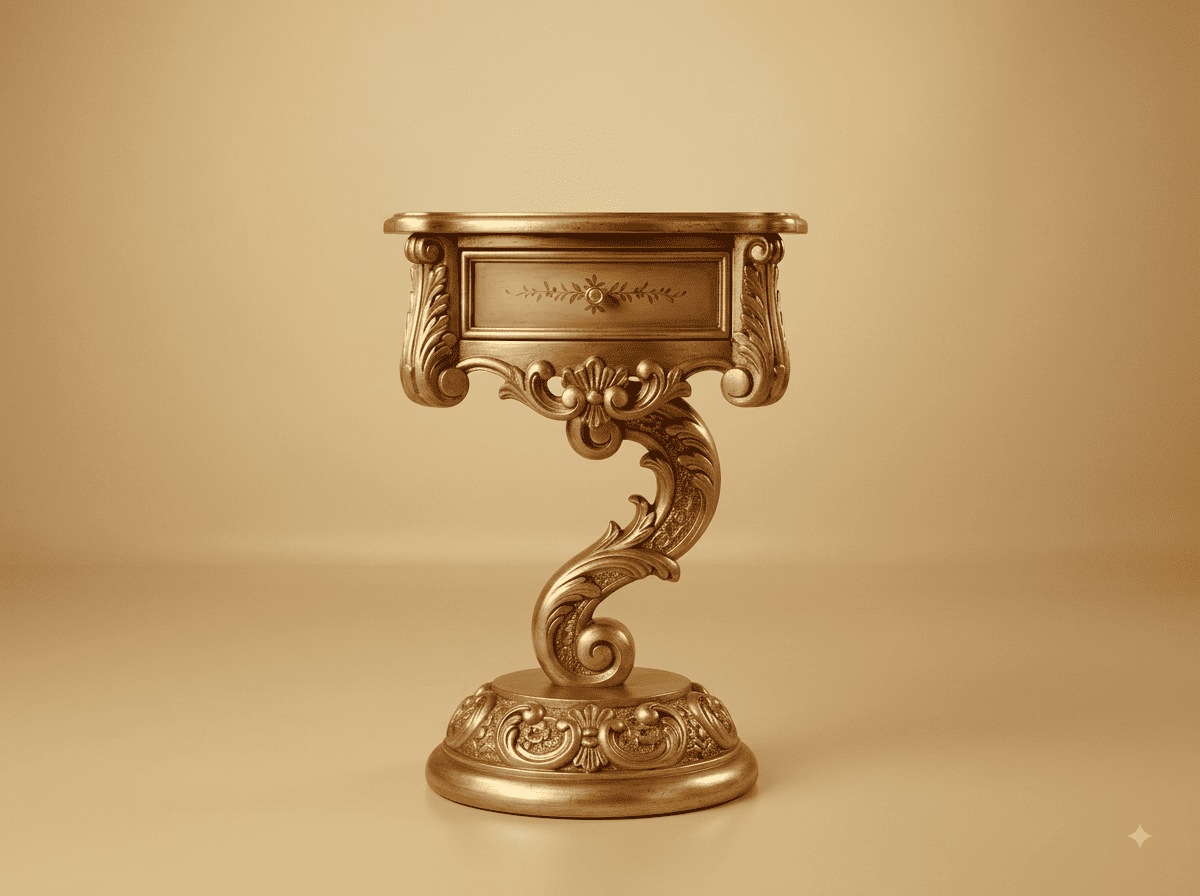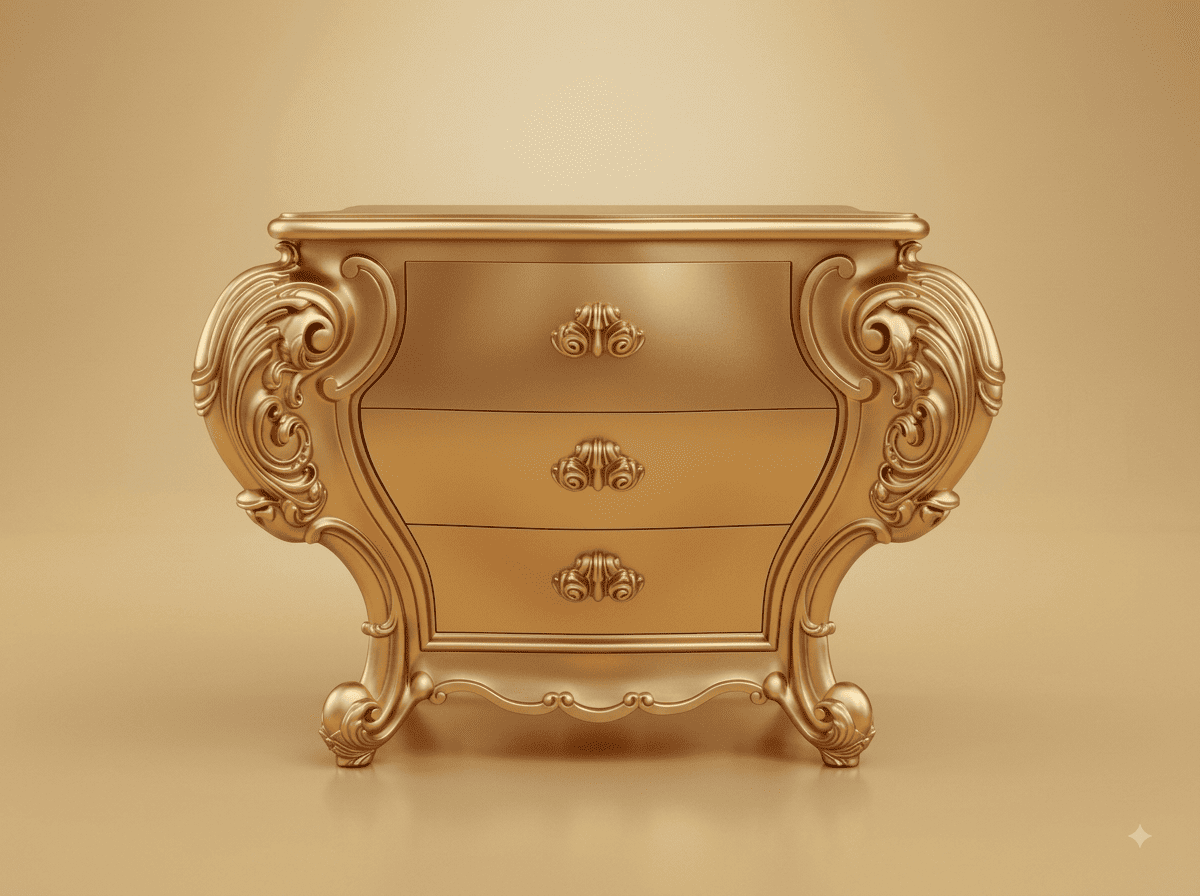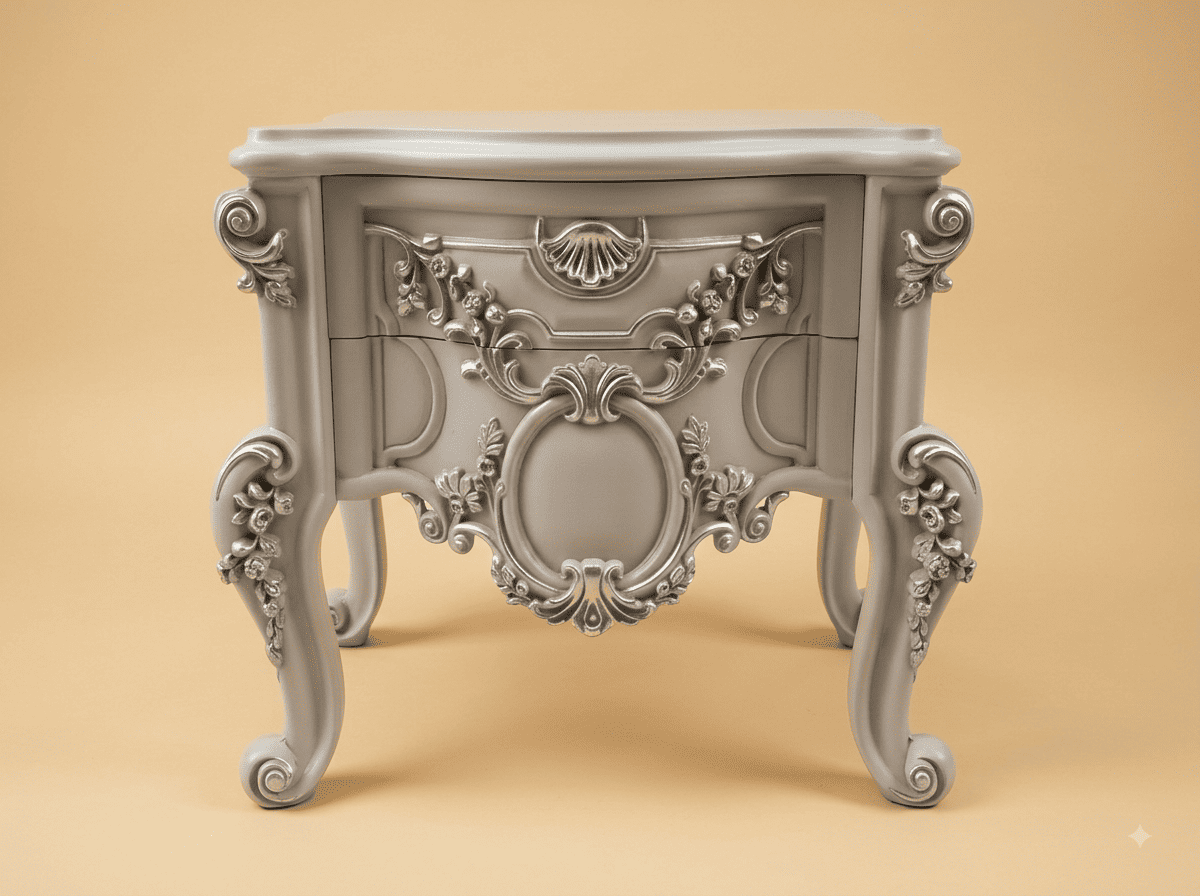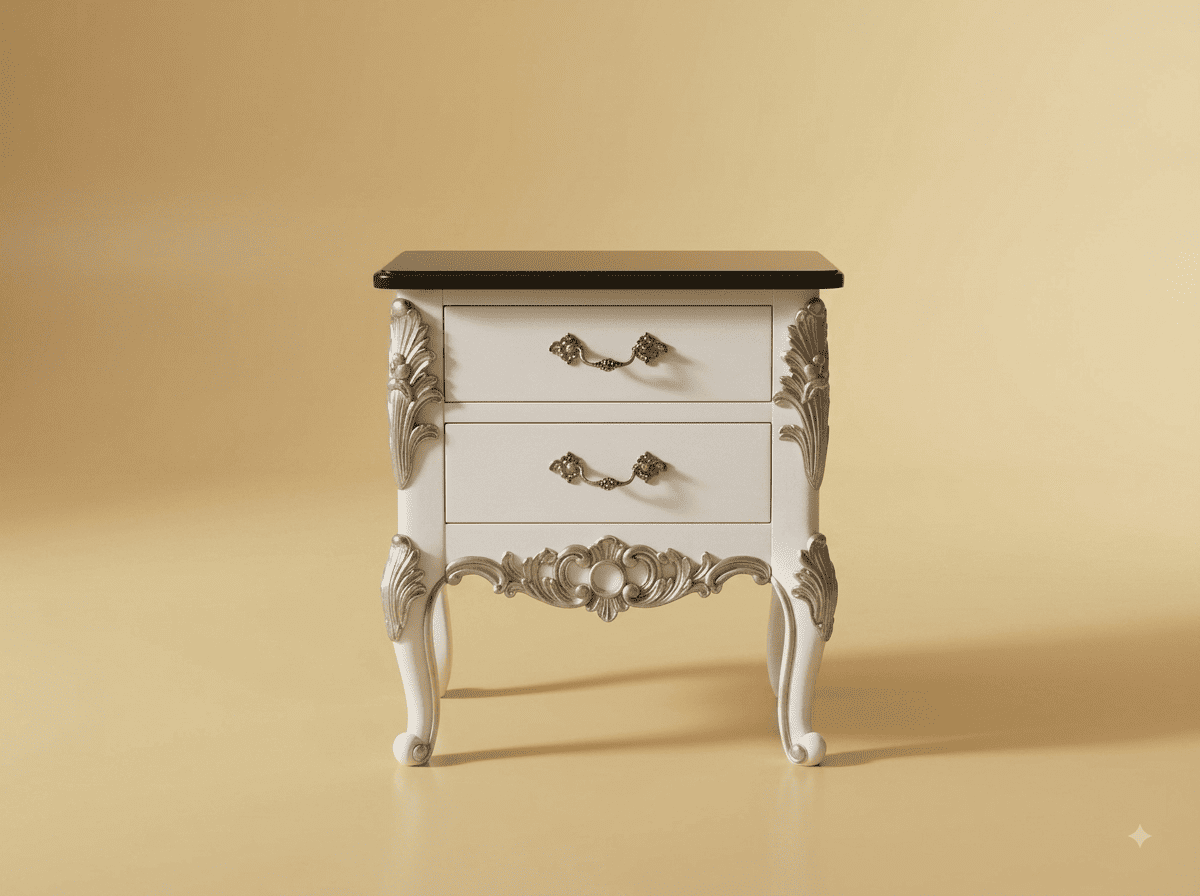
The carved acanthus leaf standing at each front corner of this table is doing something less obvious than decorating it.
Look at where it sits. It begins at the top of the carcass, runs down the corner, and continues onto the knee of the leg beneath. That means it crosses the single most vulnerable point on any small table - the junction where a leg meets the case - and it crosses it visually as one continuous shape.
There is a reason cabinetmakers put ornament exactly there. A bedside table lives in a corridor of movement: it gets knocked by knees, brushed past in the dark, pushed aside when the bed is made. The corner takes all of it. Building up a carved leaf on that corner adds real timber section where the impact lands, and it means a scuff falls on a modelled surface where it disappears rather than on a sharp arris where it shows as a bright line forever.
Our carvers work each leaf after the case and leg are joined, so the carving runs across the joint rather than stopping at it. The leaf tips are left slightly thicker than a purely decorative carving would be - a small compromise on delicacy, made deliberately, because this is a piece that will be touched every single day for decades.
 Ask Price On WhatsApp