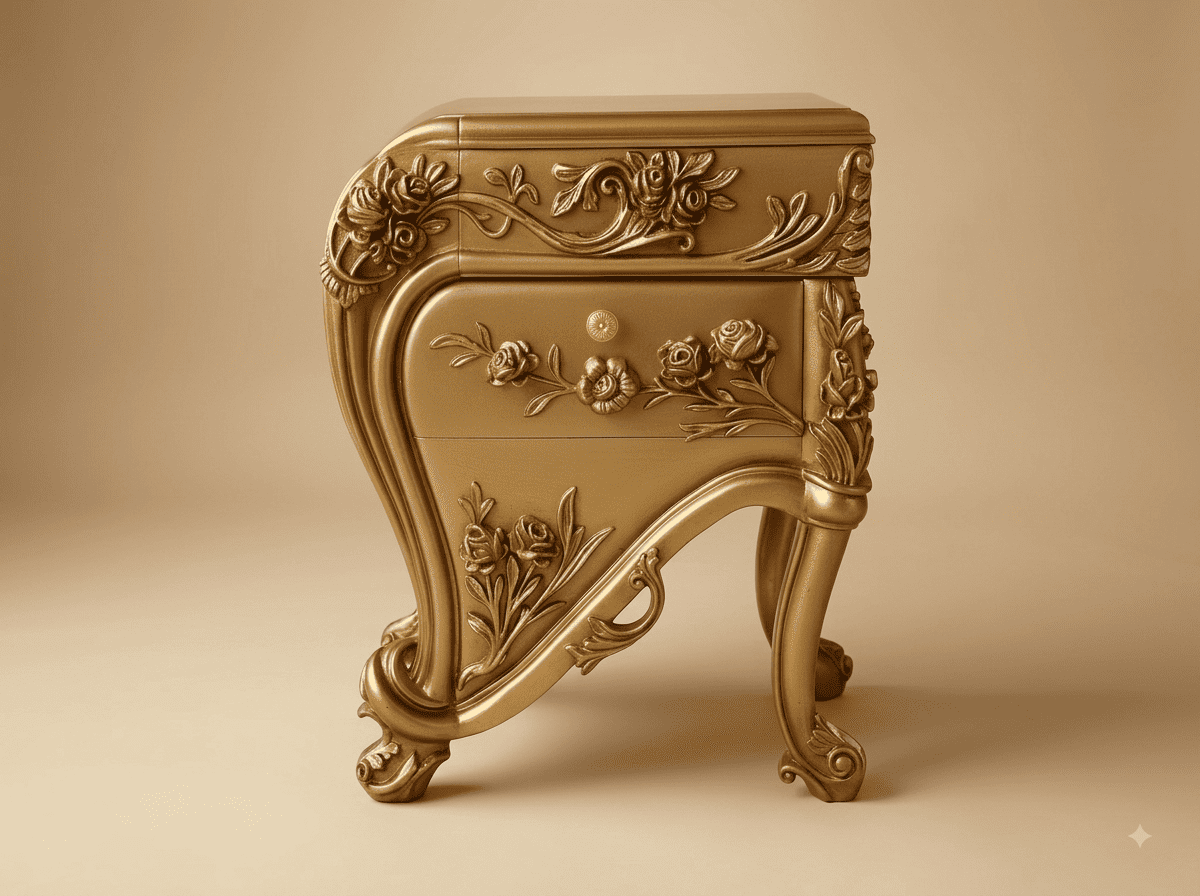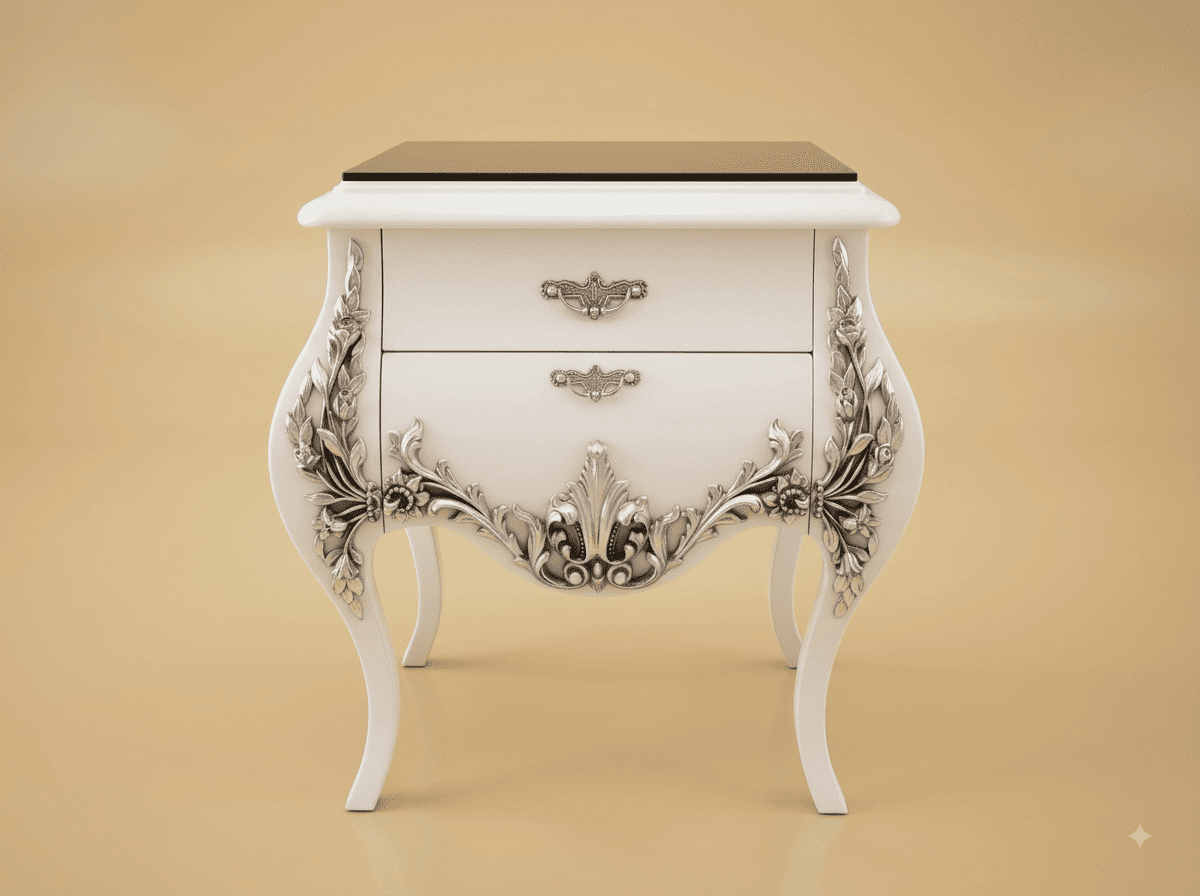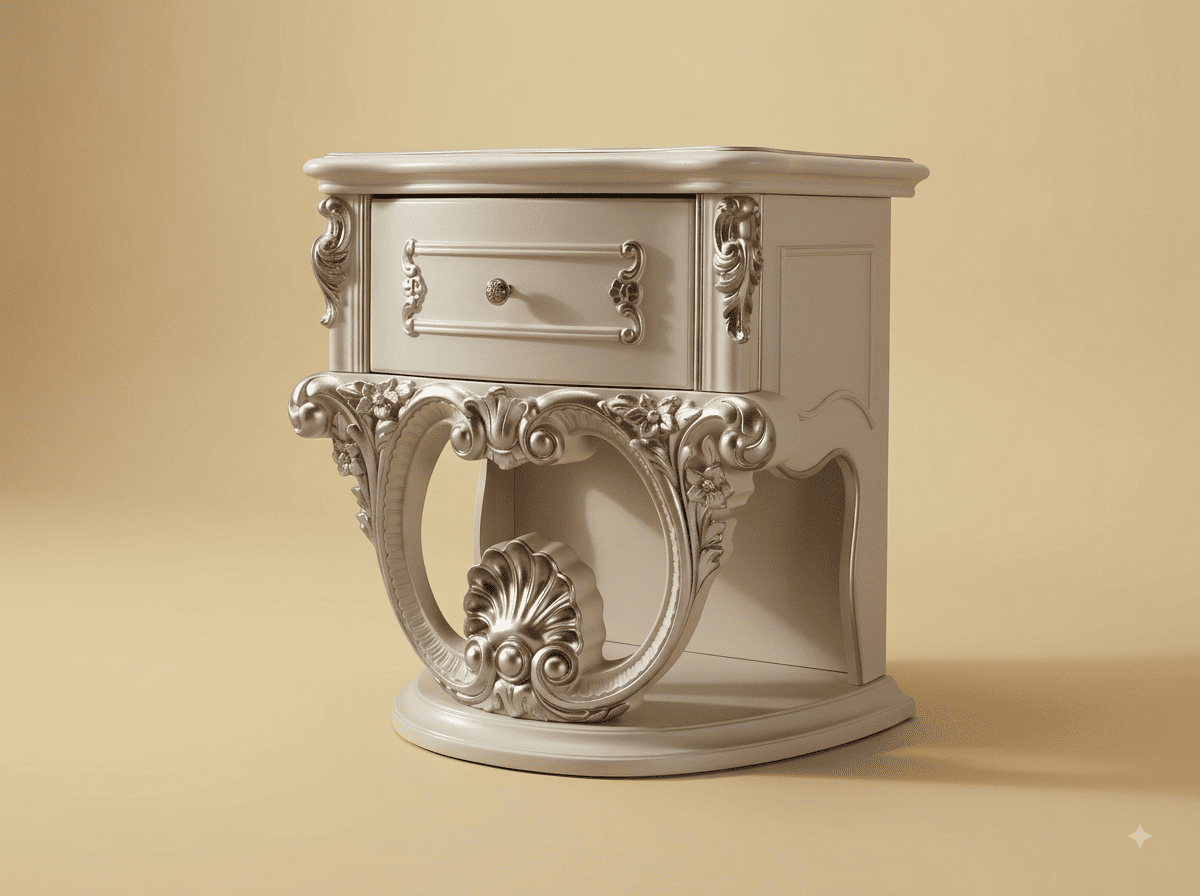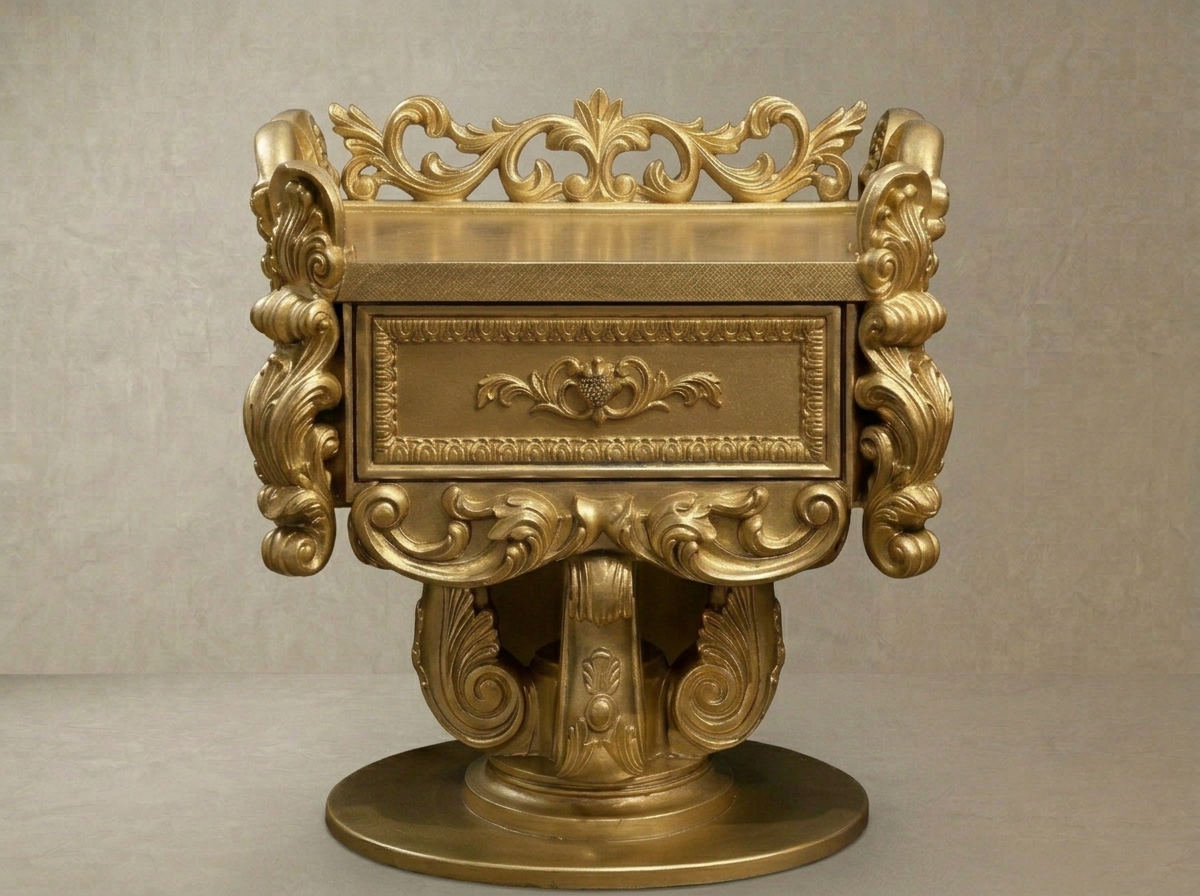
Take the legs away from under a table and you create a problem most people never think about: what carries the drawer.
In an ordinary table, a drawer runs on rails fixed to a frame, and that frame is held square by the four legs at its corners. Remove the legs and the frame has nothing at the front to hold it - so the drawer's runners, its guides and the rail it slides against all have to be carried from the sides of the case and from the single support beneath the middle.
That changes how the case is built. The two side panels become the structure, jointed into the top and into each other through the back, and the runners are housed into them rather than pinned to a corner post. The rail above the drawer front is jointed into both sides so it cannot bow when the drawer is pulled - because on a table like this, there is no leg at either end of it to help.
The single carved support then meets the case not at a point but along a wide seating, spreading the load across the underside rather than concentrating it under the middle of a drawer opening.
Done properly, the drawer runs as smoothly as one in a four-legged table. Done carelessly, it drops at the front the first time it is loaded - which is the usual reason pedestal tables are made without drawers at all.
 Ask Price On WhatsApp