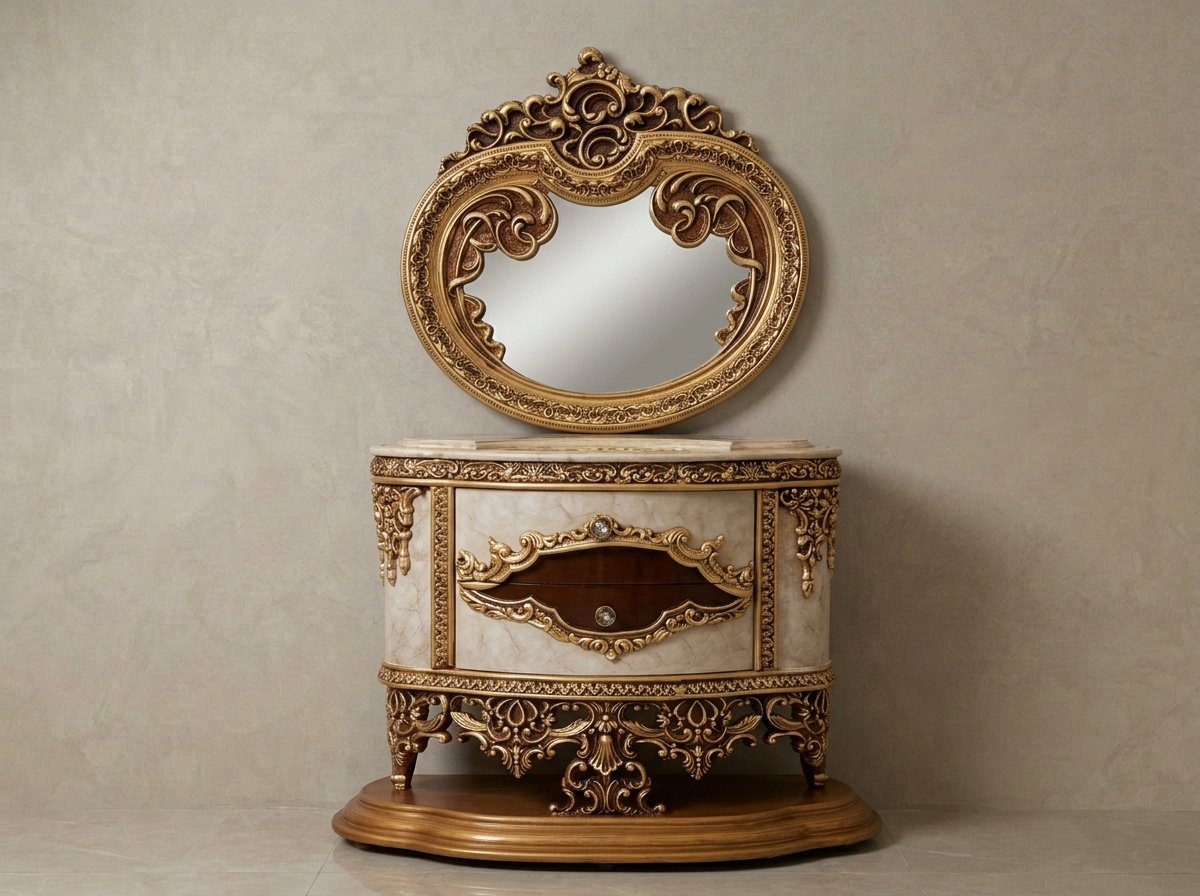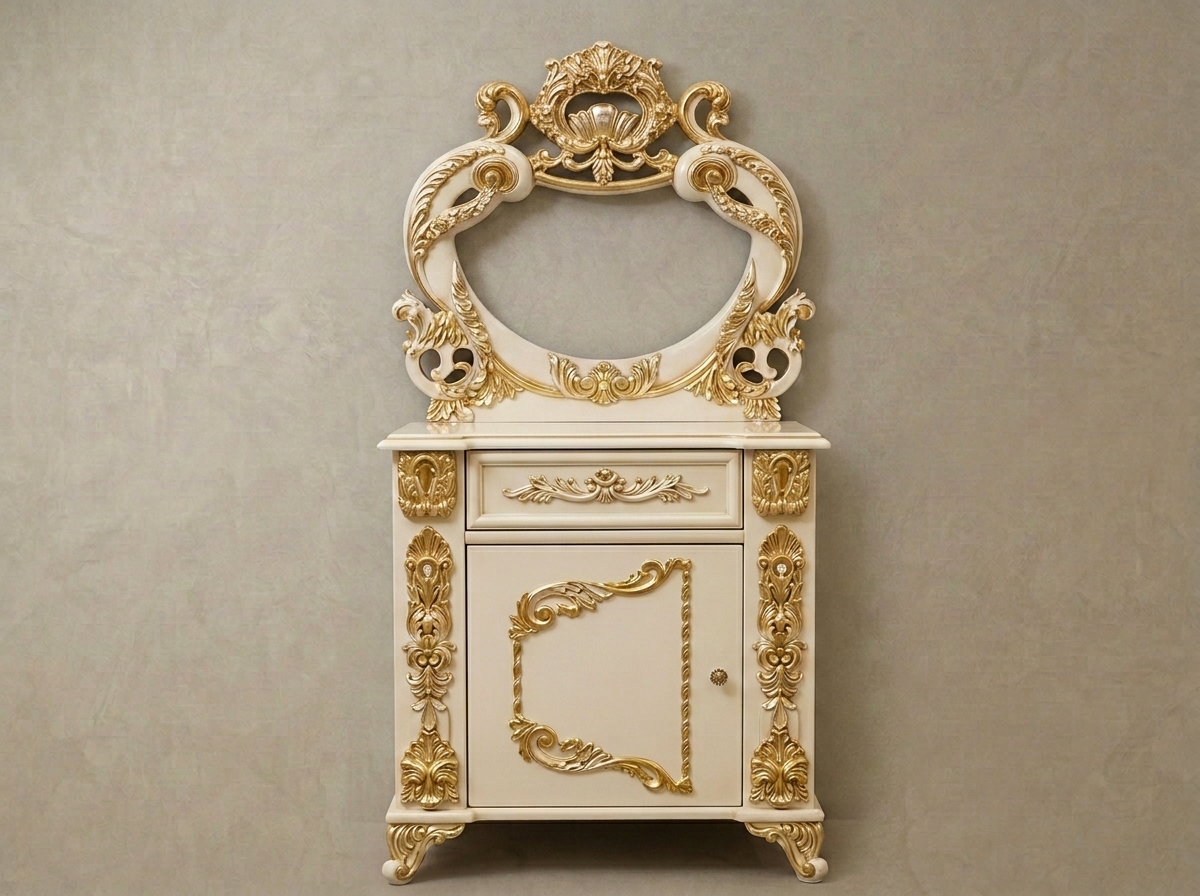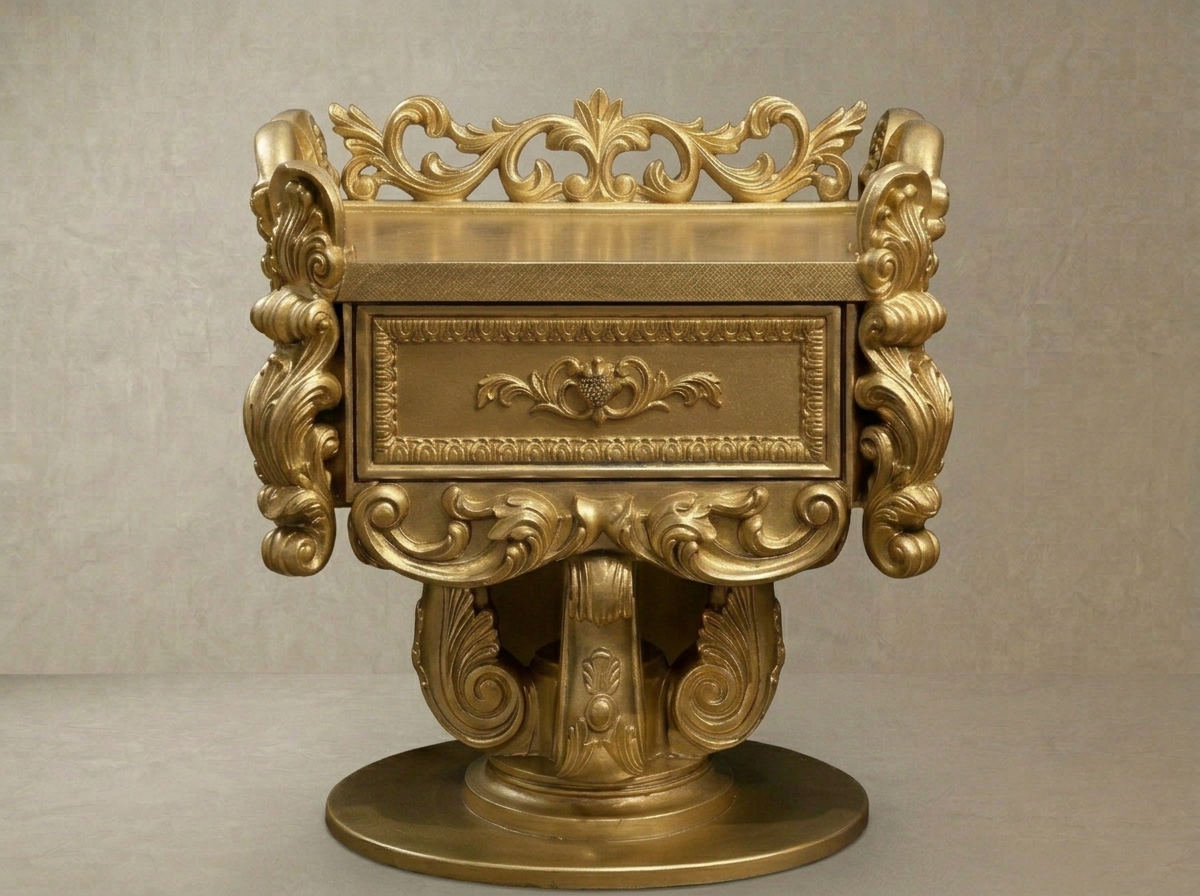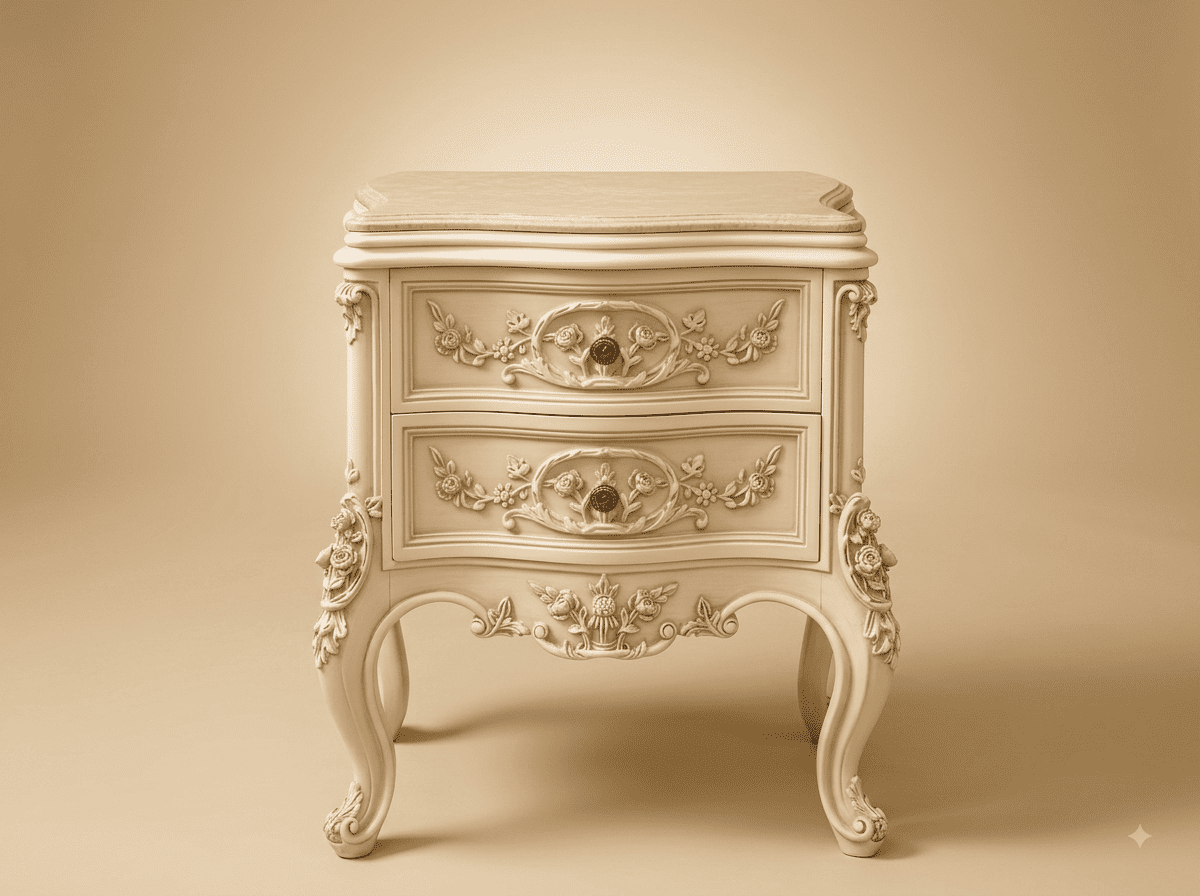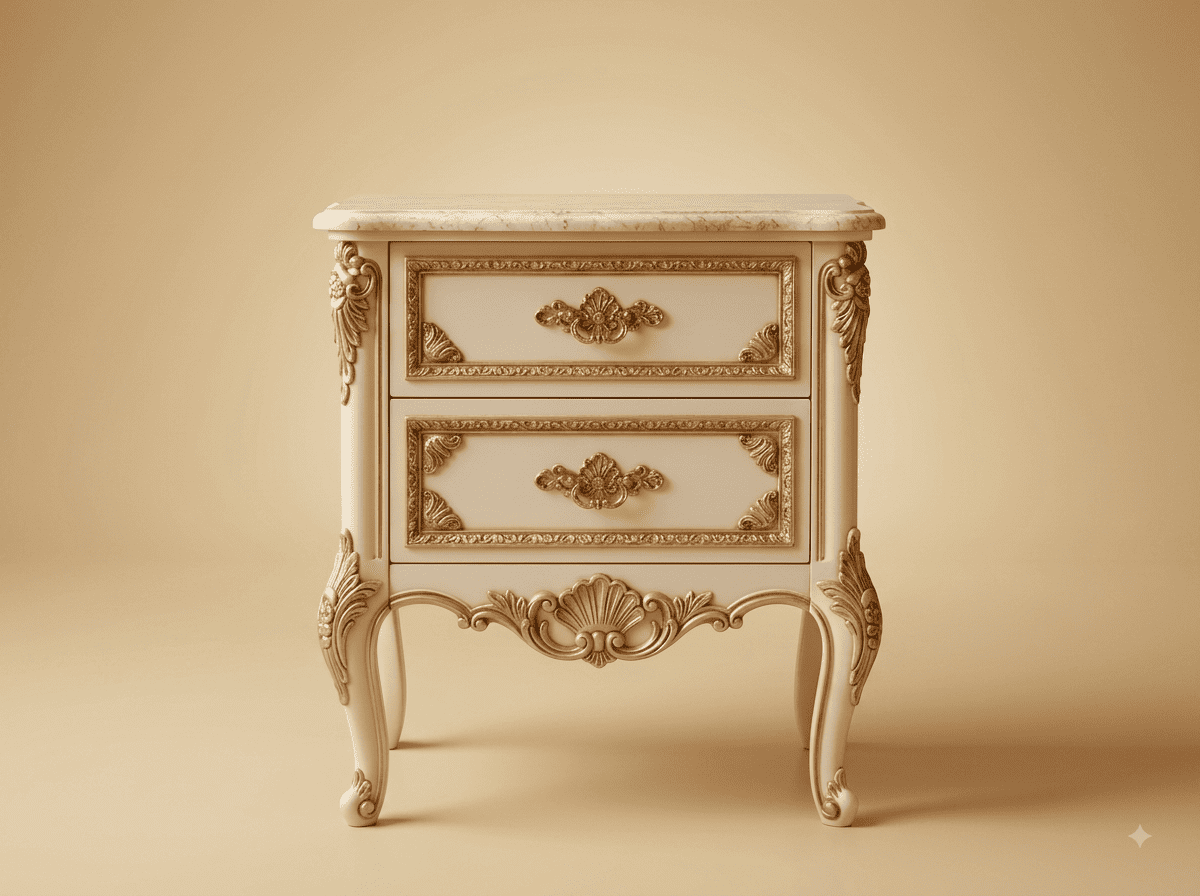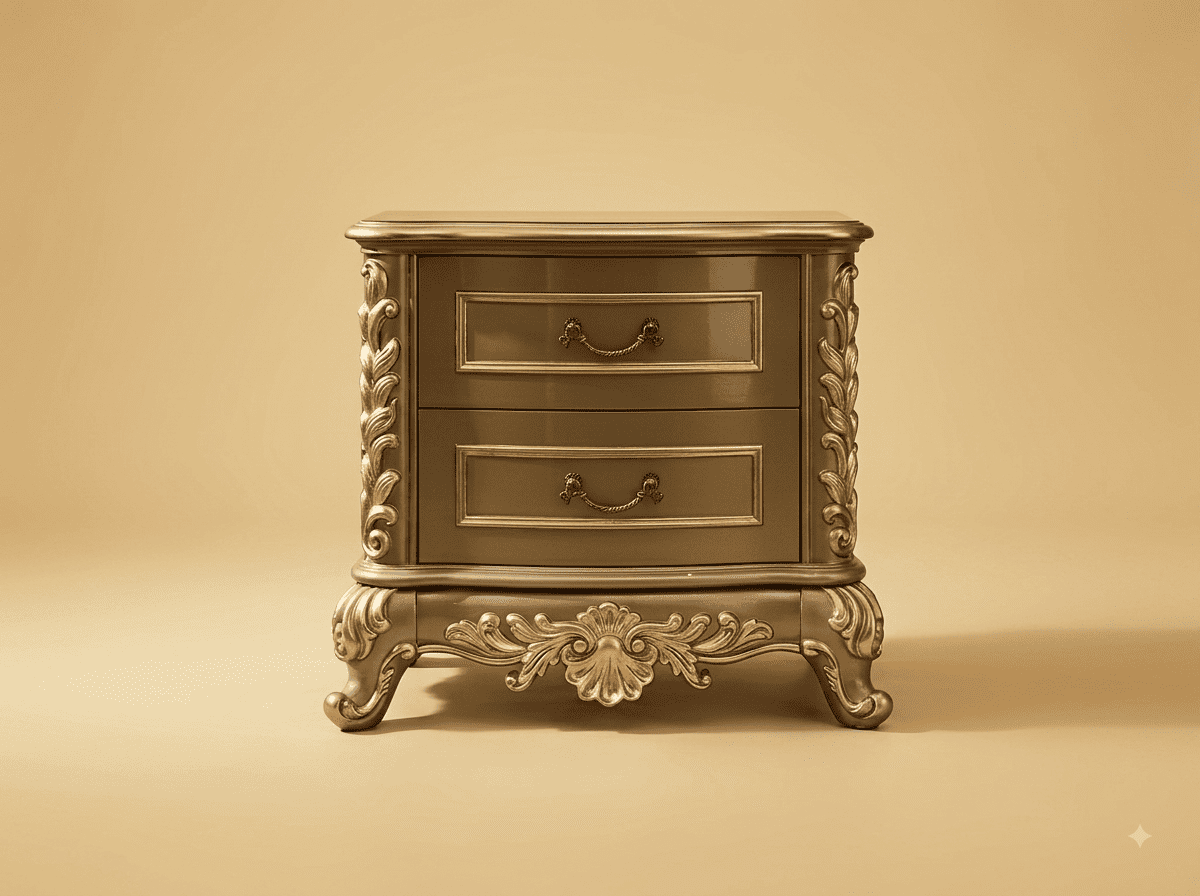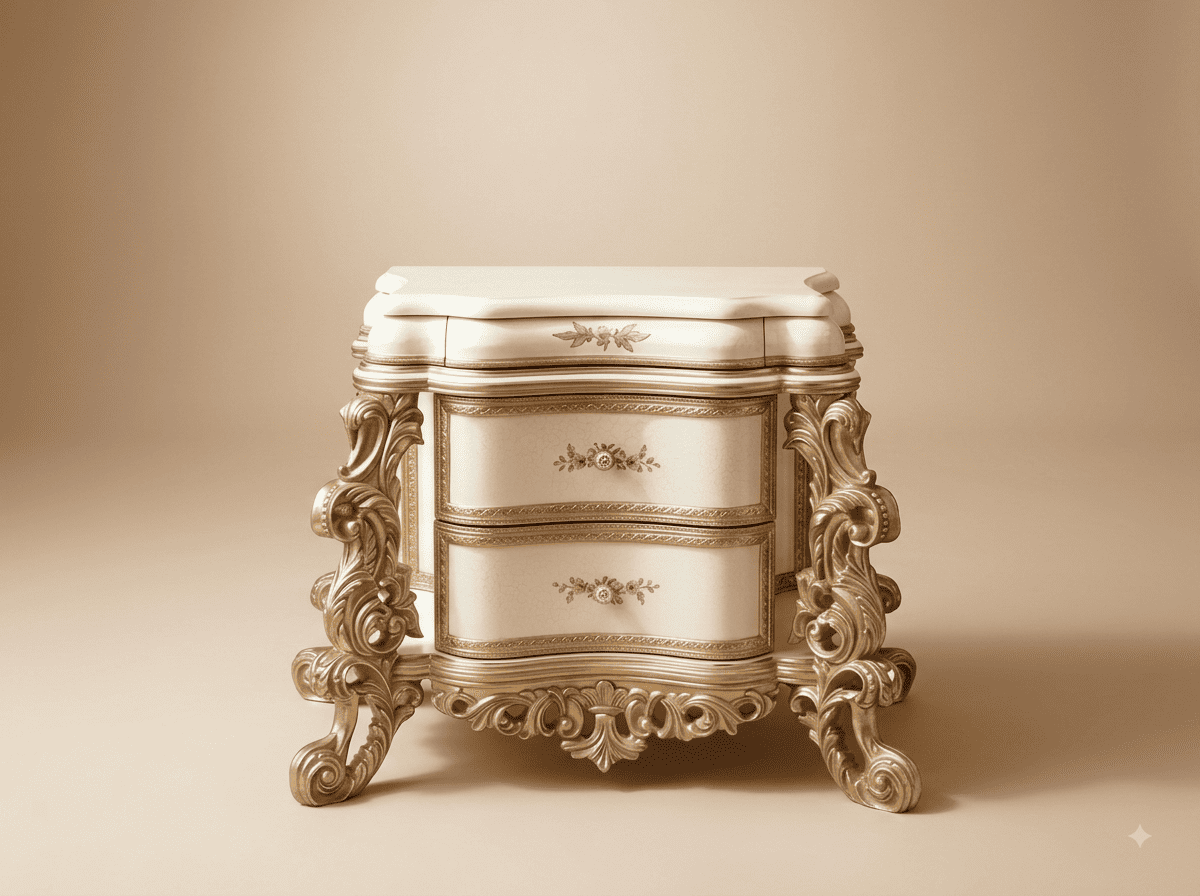
Ornament does not scale. That is the problem with a small carved table, and it is the reason most of them are disappointing.
If you take a scroll designed for a large cabinet and reduce it by half, everything reduces - including the depth of the cuts and the width of the shadows they throw. The design is still there but the eye can no longer read it, because relief carving is legible through shadow, and shadow at half scale is not half as visible. It is barely visible at all.
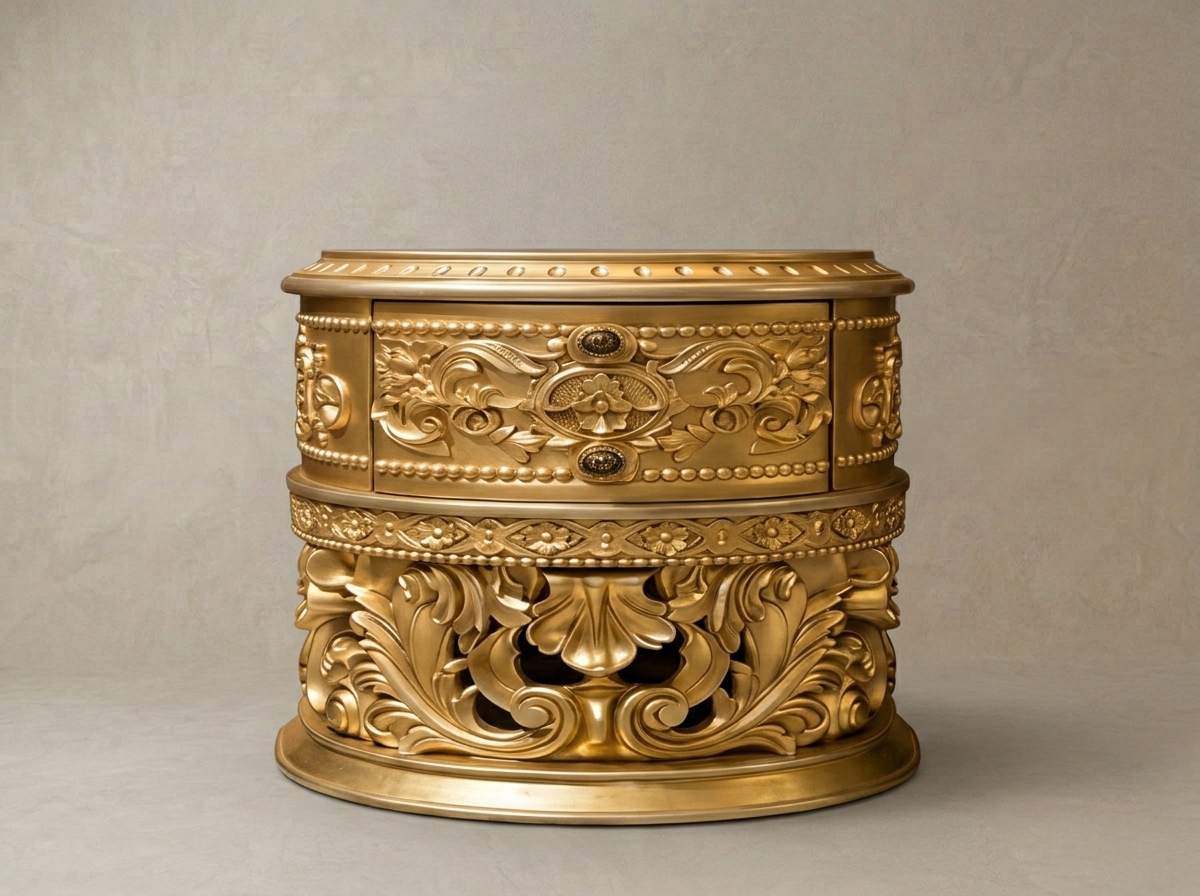
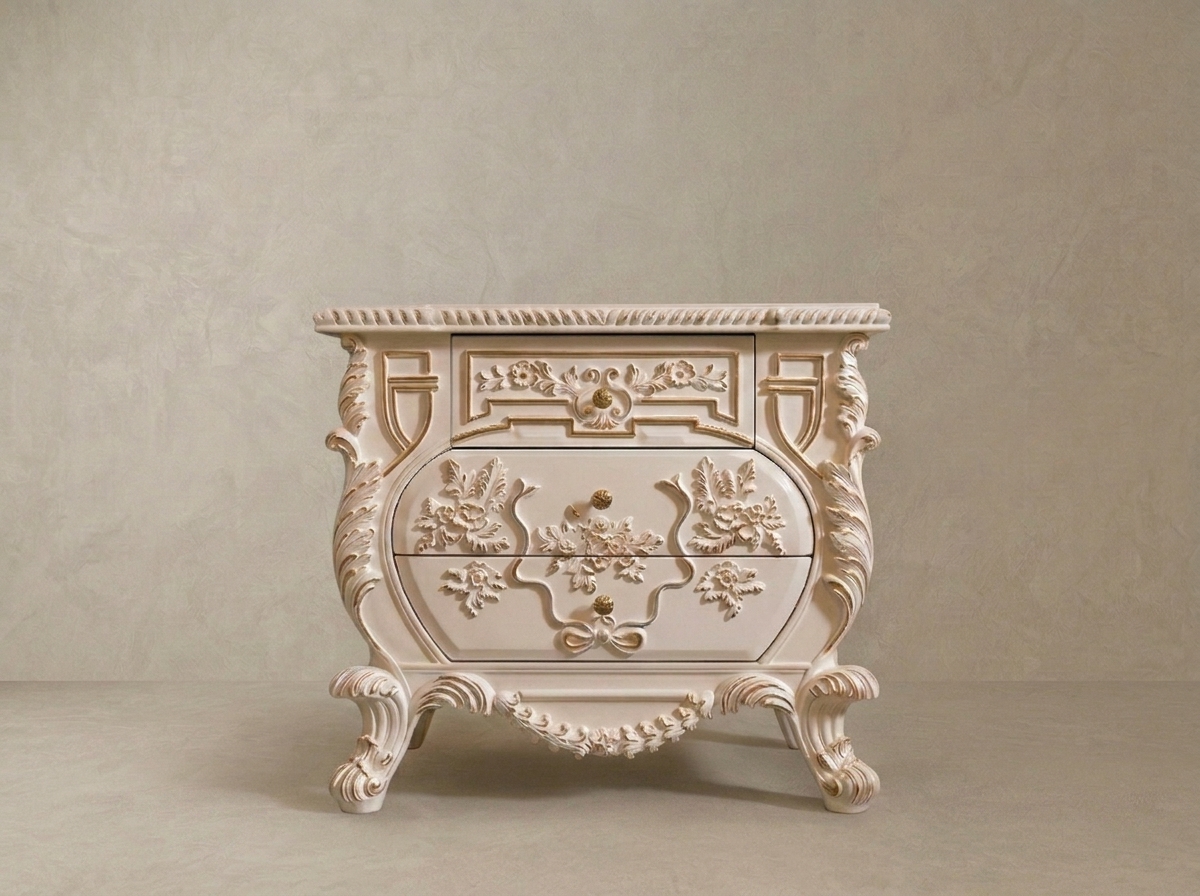
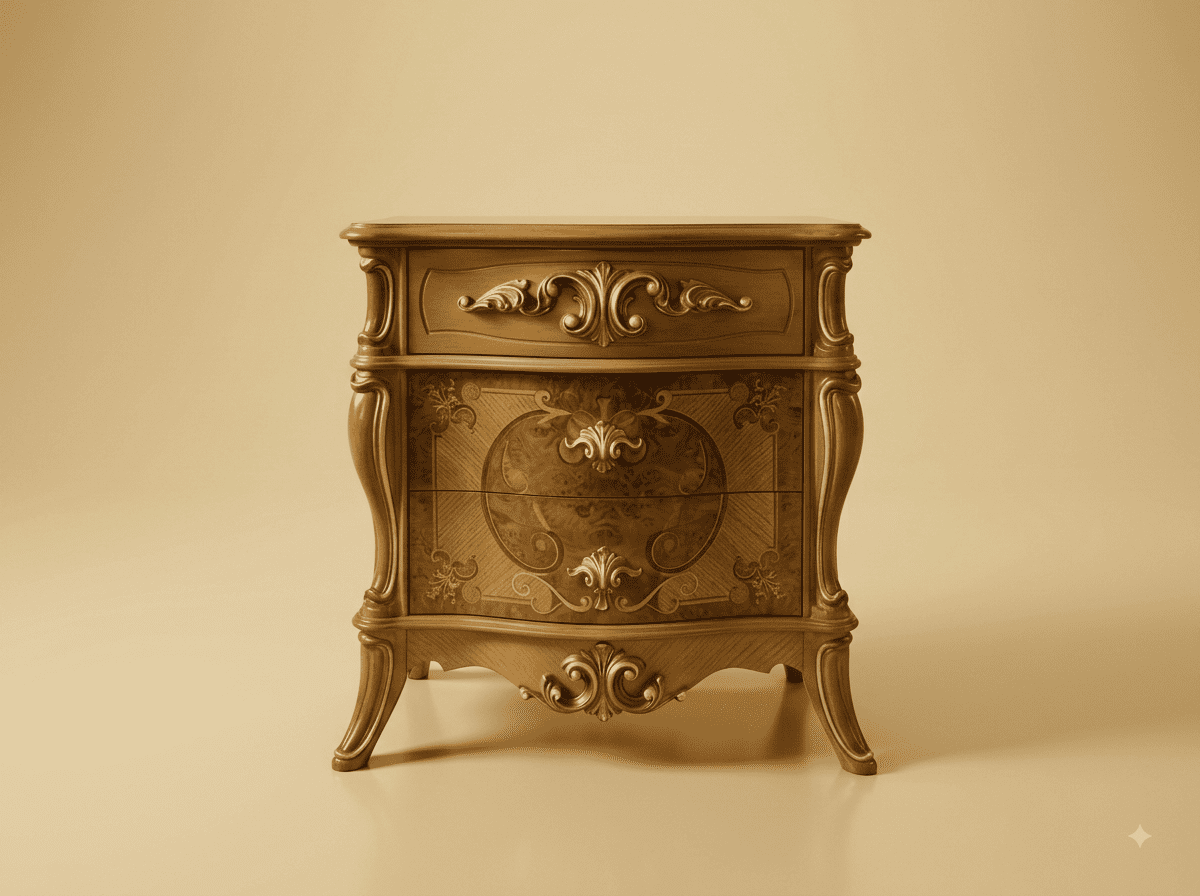
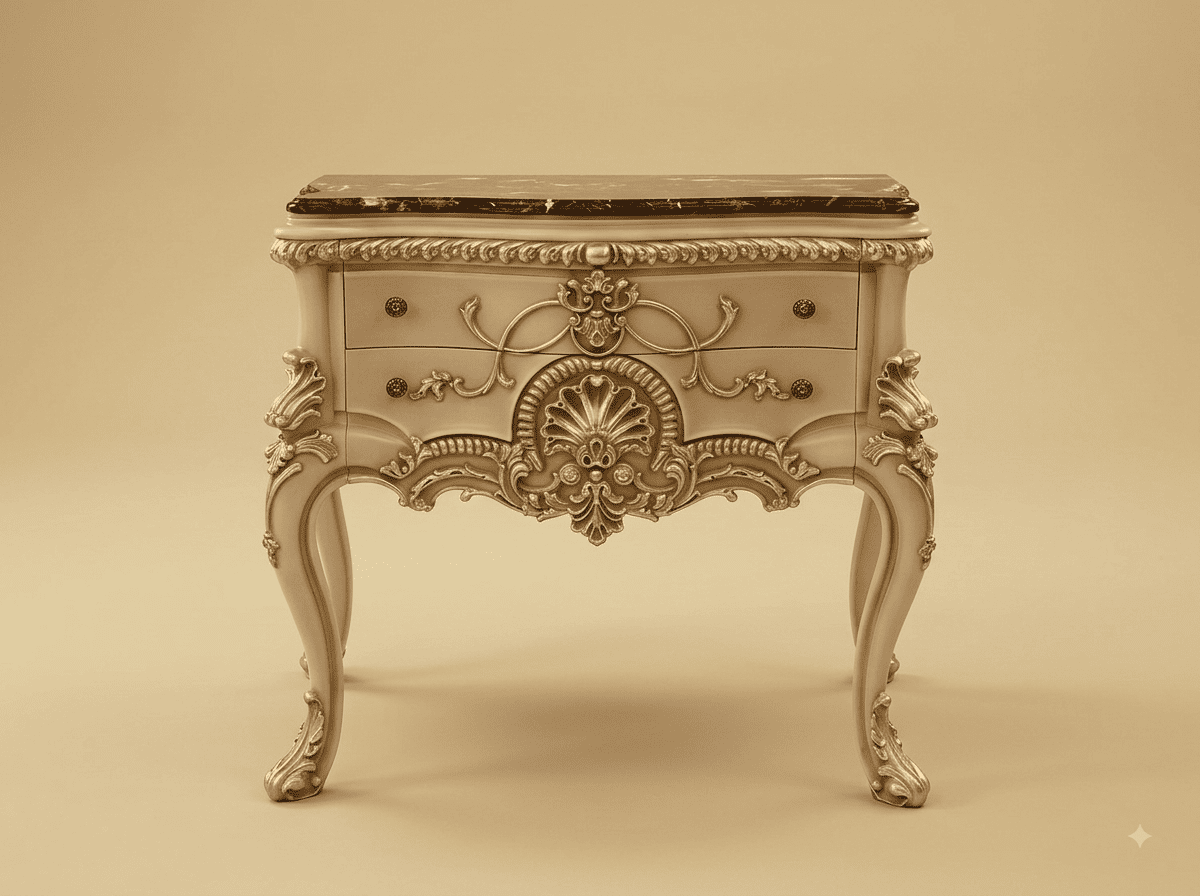
So carving for a small piece is redrawn rather than shrunk. Our carvers reduce the number of elements instead of the size of each one - fewer scrolls, fewer leaves, but each cut kept close to full depth relative to the timber it sits in. The result is a piece with less ornament but ornament you can actually see.
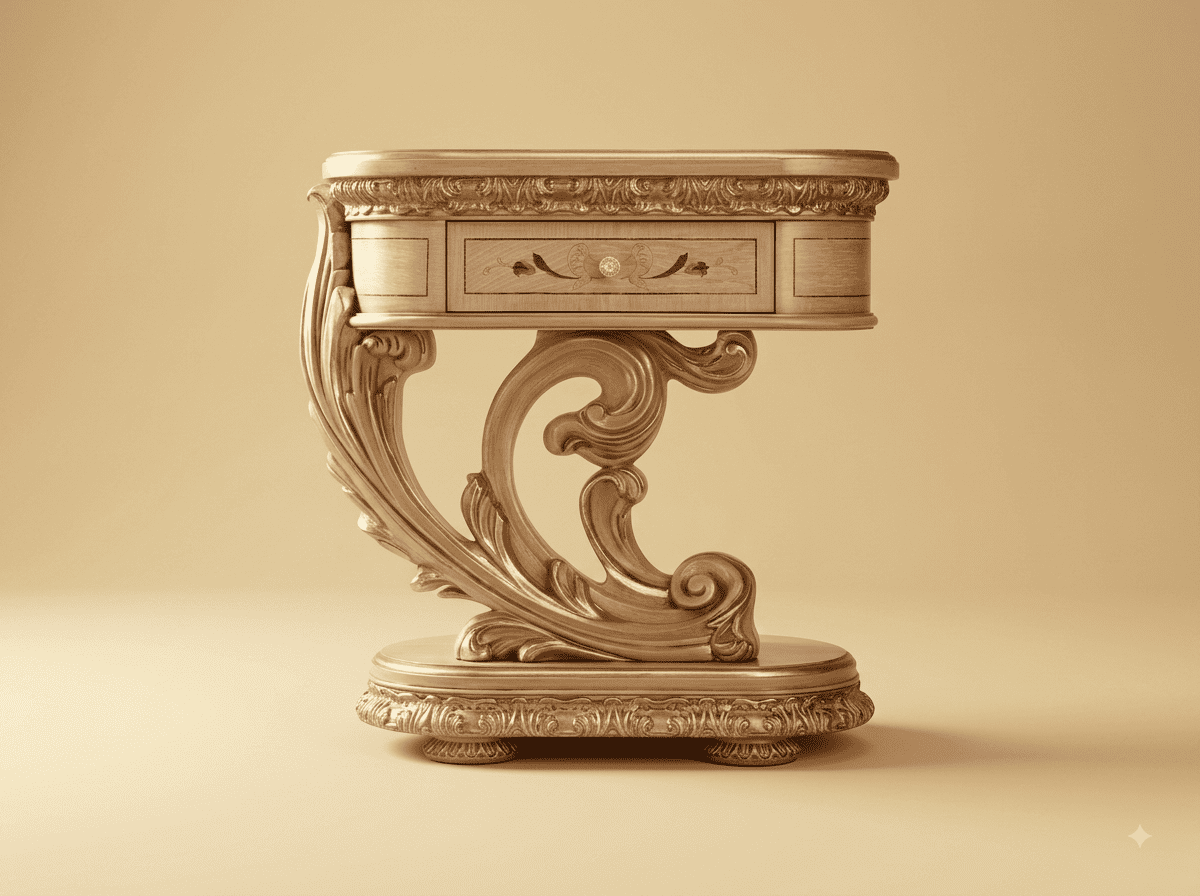
The piercing helps for the same reason. An opening cut right through gives a hard black shape rather than a soft shadow, and a hard shape stays legible at any size. That is why the legs on this table are openwork rather than carved in relief - at this scale, relief alone would not hold.
The highlight finishing is the third part of the answer. Picking the raised edges out a shade brighter adds the contrast that small-scale shadow cannot supply on its own.
 Ask Price On WhatsApp