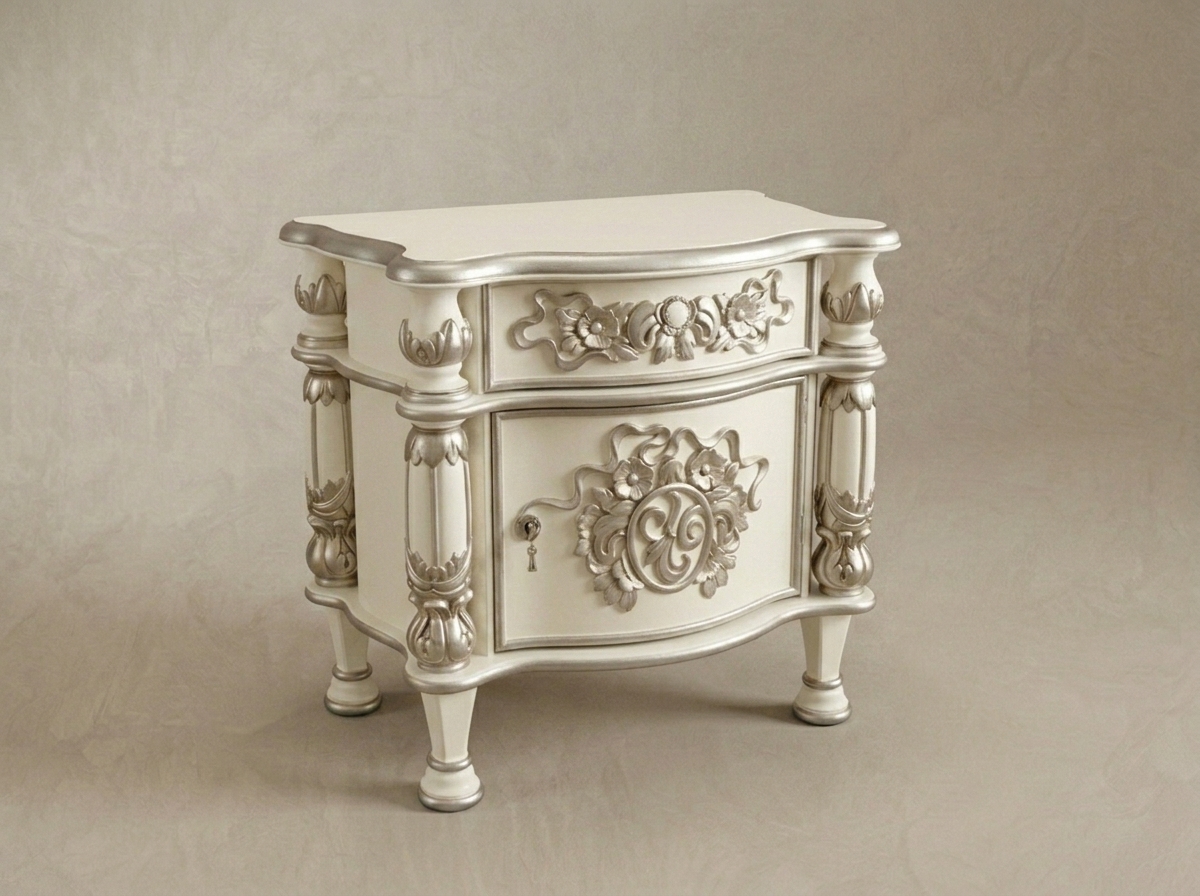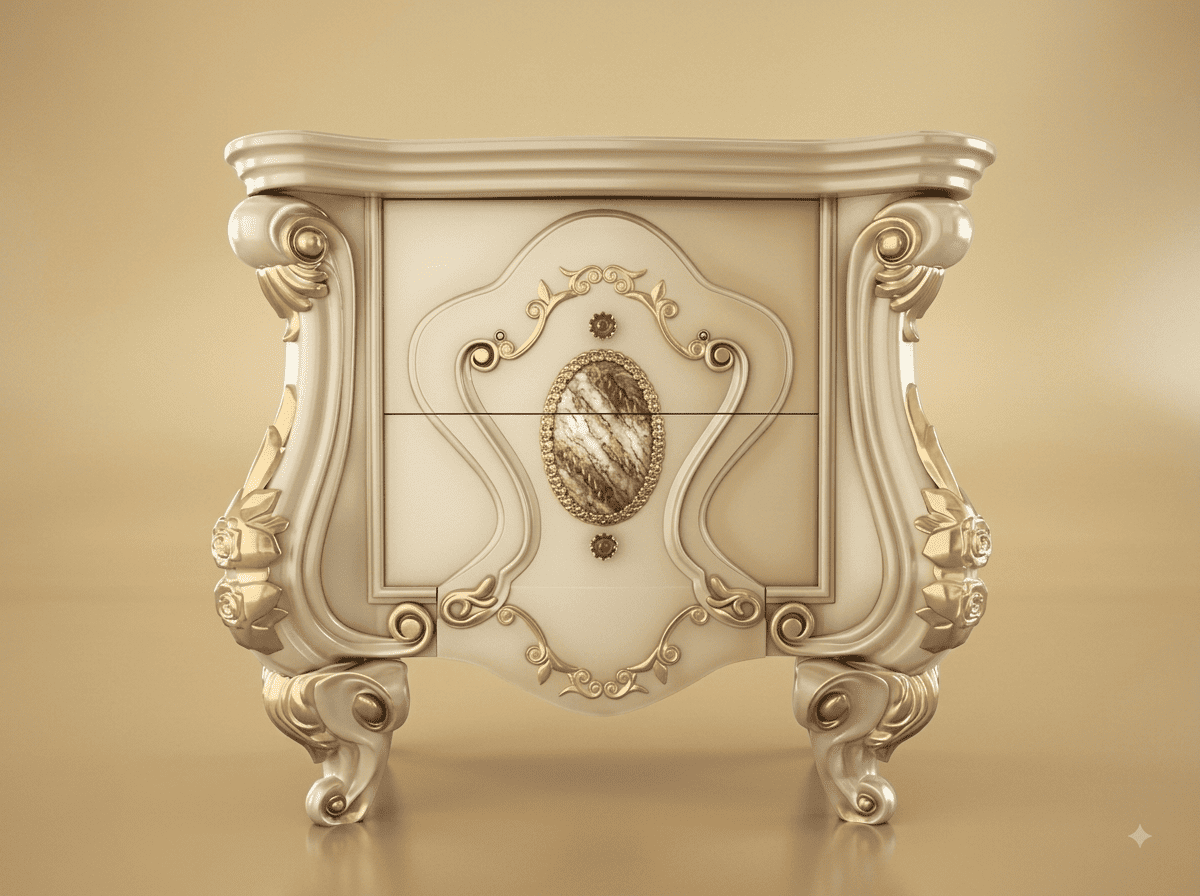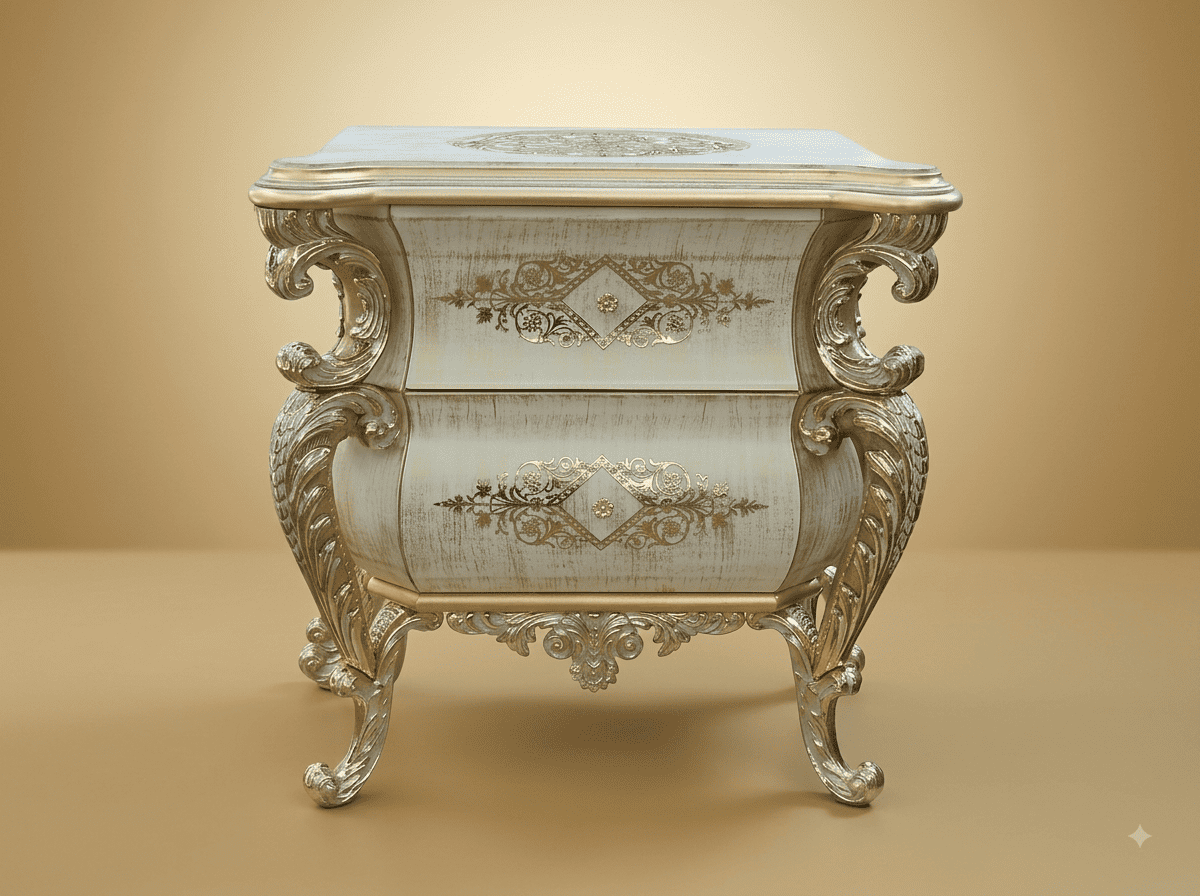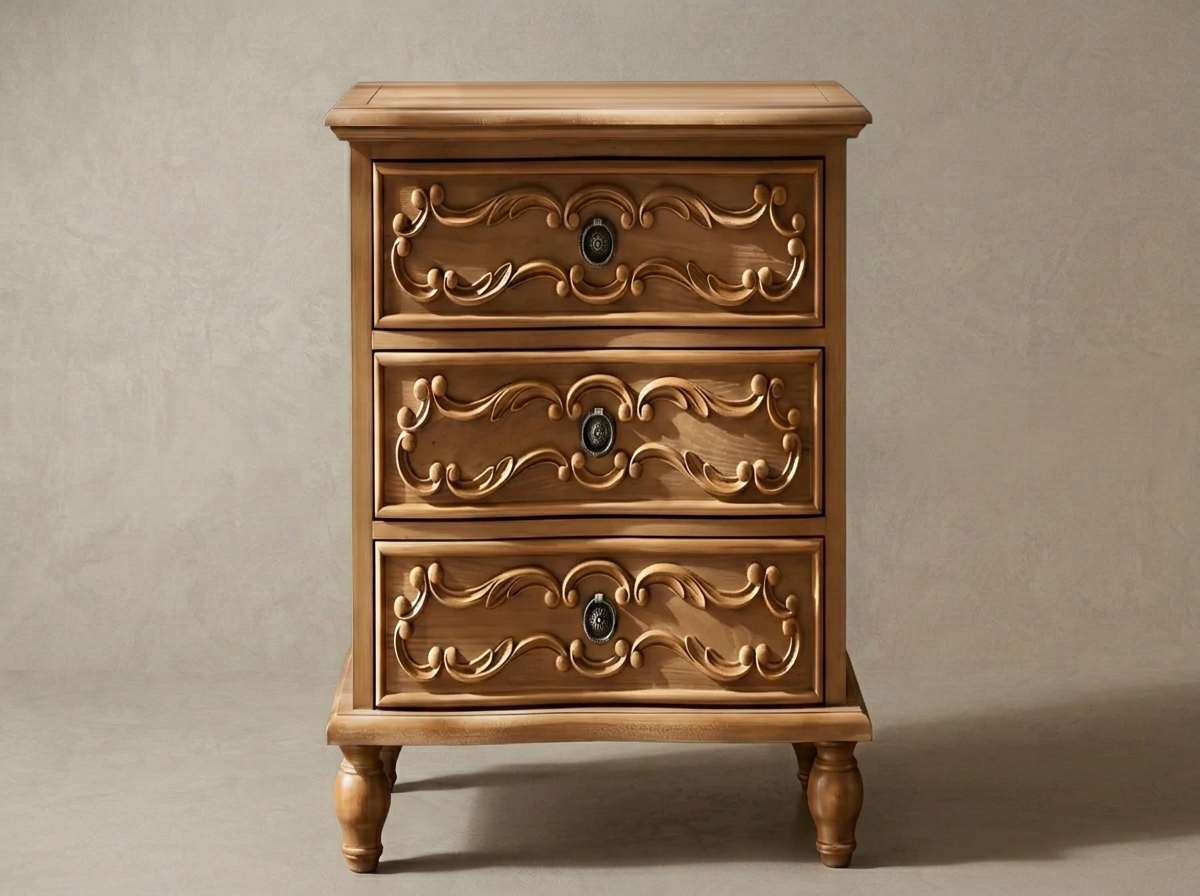
The hardest part of a two-finish piece is not either finish. It is the line where they meet.
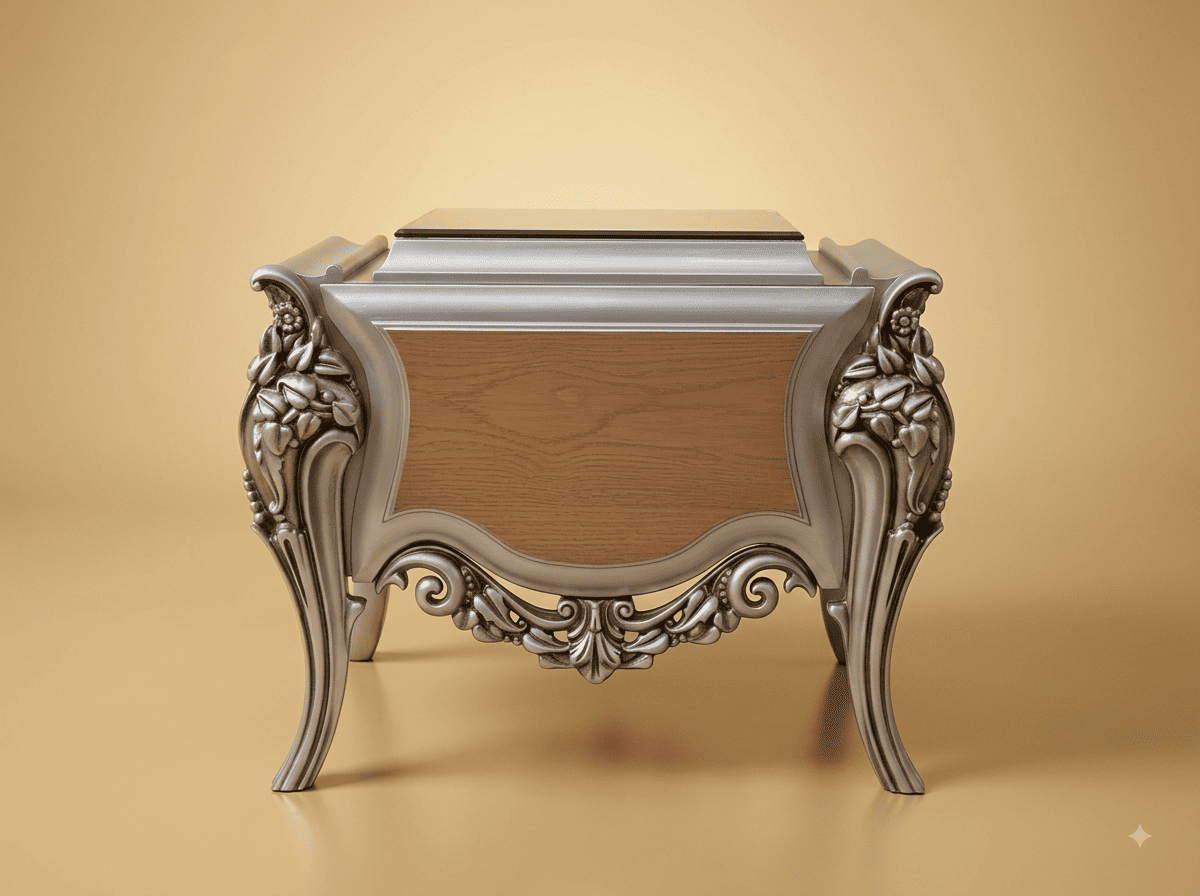
Silver leaf laid up to a bare wood panel has to stop somewhere, and if it stops on a flat surface the boundary will always be slightly ragged - leaf is thinner than paper and it tears rather than cuts, so no amount of care produces a truly clean edge in the middle of an open field.
So the edge is built before the finish is even considered. Where the silvered frame meets the natural panel, our craftsmen cut a quirk - a narrow, deliberate groove running the whole way around the opening. The leaf is laid up to and into that groove, and the groove's own shadow line hides the last fraction of a millimetre where the leaf terminates. The eye reads a crisp boundary because the geometry gives it one.
The sequence matters just as much. The panel is finished first and protected, then the ground for the leaf is laid, then the leaf, then the burnishing - because gilding materials will stain bare teak permanently if they reach it, and there is no way to sand a stain out of a panel that is already the finished surface.
It is a detail nobody is meant to notice. Noticing it means it has gone wrong.
 Ask Price On WhatsApp